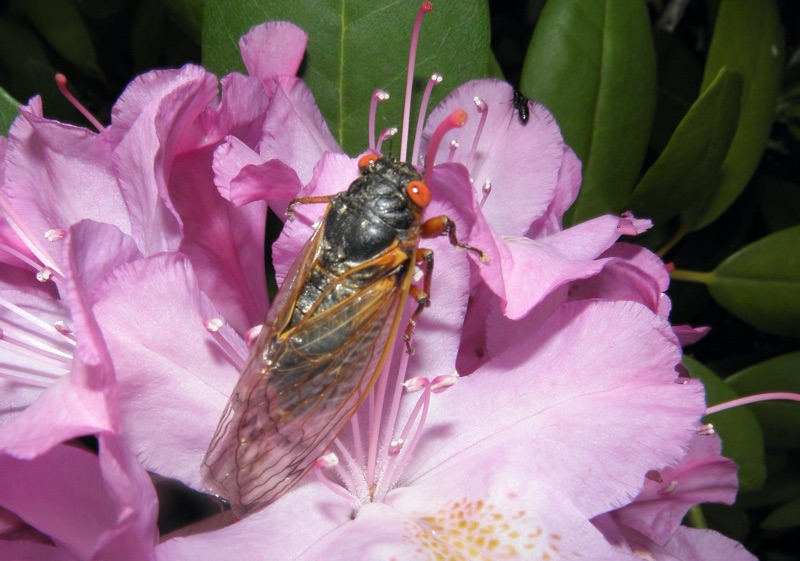
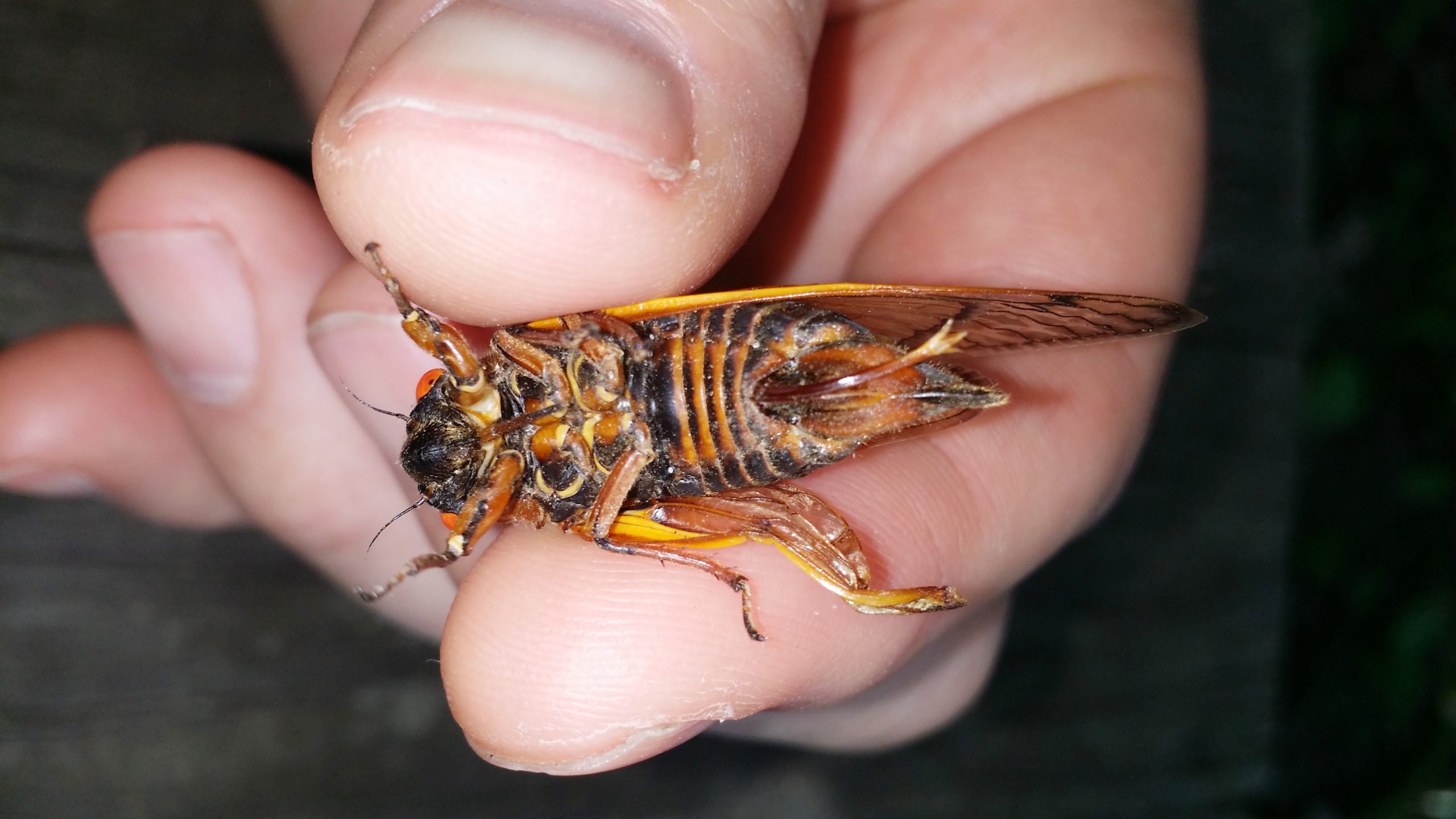
Magicicada septendecim cicada from Brood IX in Greenbrier County, WV. Photo by Tony Maro. Thanks Tony!
 Cicada Mania
Magicicada periodical cicada Broods.
Magicicada septendecim cicada from Brood IX in Greenbrier County, WV. Photo by Tony Maro. Thanks Tony!
Skip to a section: Broods | Your Town | Pre Emergence Signs | Compare Magicicada Species.
The next periodical cicada emergence is Brood XXII (22) in 2027.
The Brood Chart features the names of the broods (Roman numerals), emergence years, cycle-length, straggler-years, species and states where they may emerge.
| Brood | Year | Cycle | States |
|---|---|---|---|
| I | 2029 | 17 | TN, VA, WV |
| II | 2030 | 17 | CT, GA, MD, NC, NJ, NY, OK, PA, VA |
| III | 2031 | 17 | IA, IL, MO |
| IV | 2032 | 17 | IA, KS, MO, NE, OK, TX |
| V | 2033 | 17 | LI NY, MD, OH, PA, VA, WV |
| VI | 2034 | 17 | GA, NC, SC, OH, OK |
| VII | 2035 | 17 | NY |
| VIII | 2036 | 17 | OH, PA, WV, OK |
| IX | 2037 | 17 | NC, VA, WV |
| X | 2038 | 17 | DE, GA, IL, IN, KY, MD, MI, NC, NJ, NY, OH, PA, TN, VA, WV, DC |
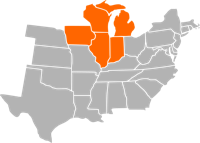
| XIII | 2041 | 17 | IA, IL, IN, MI, WI |
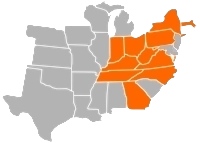
| XIV | 2042 | 17 | GA, IN, KY, MA, NC, NY, OH, PA, TN, VA, WV |
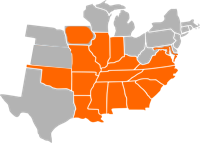
| XIX | 2037 | 13 | AL, AR, GA, IA, IL, IN, KY, LA, MD, MO, MS, NC, OK, SC, TN, VA |
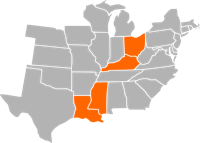
| XXII | 2027 | 13 | KY, LA, MS, OH |
| XXIII | 2028 | 13 | AR, IL, IN, KY, LA, MO, MS, TN |
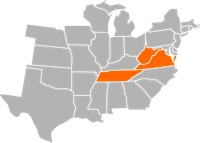
Emergences: 2029, 2012, 1995, 1978, 1961.
Cycle: 17-Year.
Stragglers: 2025 (-4), 2028 (-1).
Species: M. septendecim, M. cassini, M. septendecula.
States: TN, VA, WV
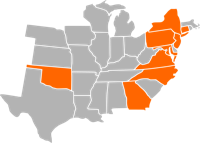
Emergences: 2030, 2013, 1996, 1979, 1962.
Cycle: 17-Year.
Stragglers: 2026 (-4), 2029 (-1)
Species: M. septendecim, M. cassini, M. septendecula.
States: CT, GA, MD, NC, NJ, NY, OK, PA, VA
Emergences: 2031, 2014, 1997, 1980, 1963.
Cycle: 17-Year.
Stragglers: 2027 (-4), 2030 (-1)
Species: M. septendecim, M. cassini, M. septendecula.
States: IA, IL, MO
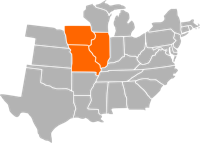
Emergences: 2032, 2015, 1998, 1981, 1964.
Cycle: 17-Year.
Stragglers: 2028 (-4), 2031 (-1)
Species: M. septendecim, M. cassini, M. septendecula.
States: IA, KS, MO, NE, OK, TX
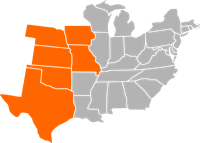
Emergences: 2033, 2016, 1999, 1982, 1965.
Cycle: 17-Year.
Stragglers: 2029 (-4), 2032 (-1)
Species: M. septendecim, M. cassini, M. septendecula.
States: LI NY, MD, OH, PA, VA, WV
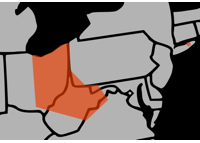
Emergences: 2034, 2017, 2000, 1983, 1966.
Cycle: 17-Year.
Stragglers: 2030 (-4), 2933 (-1)
Species: M. septendecim, M. septendecula.
States: GA, NC, SC, OH, OK
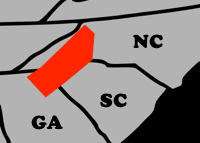
Emergences: 2035, 2018, 2001, 1984, 1967.
Cycle: 17-Year.
Stragglers: 2031 (-4), 2034 (-1)
Species: M. septendecim.
States: NY
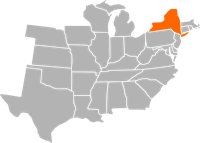
Emergences: 2036, 2019, 2002, 1985, 1968.
Cycle: 17-Year.
Stragglers: 2032(-4), 2035(-1)
Species: M. septendecim, M. cassini, M. septendecula.
States: OH, PA, WV and OK
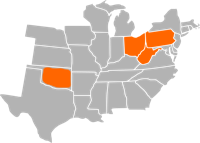
Emergences: 2037, 2020, 2003, 1986, 1969.
Cycle: 17-Year.
Stragglers: 2033(-4), 2036(-1)
Species: M. septendecim, M. cassini, M. septendecula.
States: NC, VA, WV
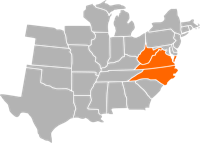
Emergences: 2038, 2021, 2004, 1987, 1970.
Cycle: 17-Year.
Stragglers: 2034(-4), 2037(-1)
Species: M. septendecim, M. cassini, M. septendecula.
States: DE, GA, IL, IN, KY, MD, MI, NC, NJ, NY, OH, PA, TN, VA, WV, DC
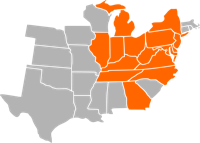
Emergences: 2041, 2024, 2007, 1990, 1973.
Cycle: 17-Year.
Stragglers: 2037(-4)
Species: M. septendecim, M. cassini, M. septendecula.
States: IA, IL, IN, MI, WI
Emergences: 2042, 2025, 2008, 1991, 1974, 1957.
Cycle: 17-Year.
Stragglers: 2038(-4)
Species: M. septendecim, M. cassini, M. septendecula.
States: GA, IN, KY, MA, NC, NY, OH, PA, TN, VA, WV
Emergences: 2037, 2024, 2011, 1998, 1985.
Cycle: 13-Year.
Stragglers: 2025(+1), 2028(+4)
Species: M. tredecim, M. neotredecim, M. tredecassini, M. tredecula.
States: AL, AR, GA, IA, IL, IN, KY, LA, MD, MO, MS, NC, OK, SC, TN, VA
Emergences: 2027, 2014, 2001, 1988, 1975.
Cycle: 13-Year.
Stragglers: 2026(-1), 2032(+4)
Species: M. tredecim, M. tredecassini, M. tredecula.
States: KY, LA, MS, OH
Emergences: 2028, 2015, 2002, 1989, 1976.
Cycle: 13-Year.
Stragglers: 2027(-1), 2032(+4)
Species: M. tredecim, M. neotredecim, M. tredecassini, M. tredecula.
States: AR, IL, IN, KY, LA, MO, MS, TN
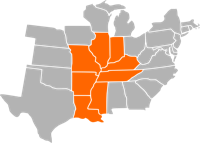
Here is a map of all Broods from the Cicadas @ UCONN site. Zoom in and click the pins to see which Brood it represents. (May not work on older devices.)
Generally speaking, these cicadas will begin to emerge when the soil 8″ beneath the ground reaches 64 degrees Fahrenheit (Heath, 1968). A nice, warm rain will often trigger an emergence. They can emerge anytime from early April to early June. It all depends on the weather.
Look for cicada chimneys a.k.a. turrets. These are structures cicadas build out of the soil, positioned above the hole where they will emerge.
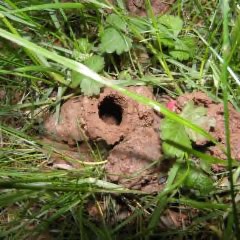
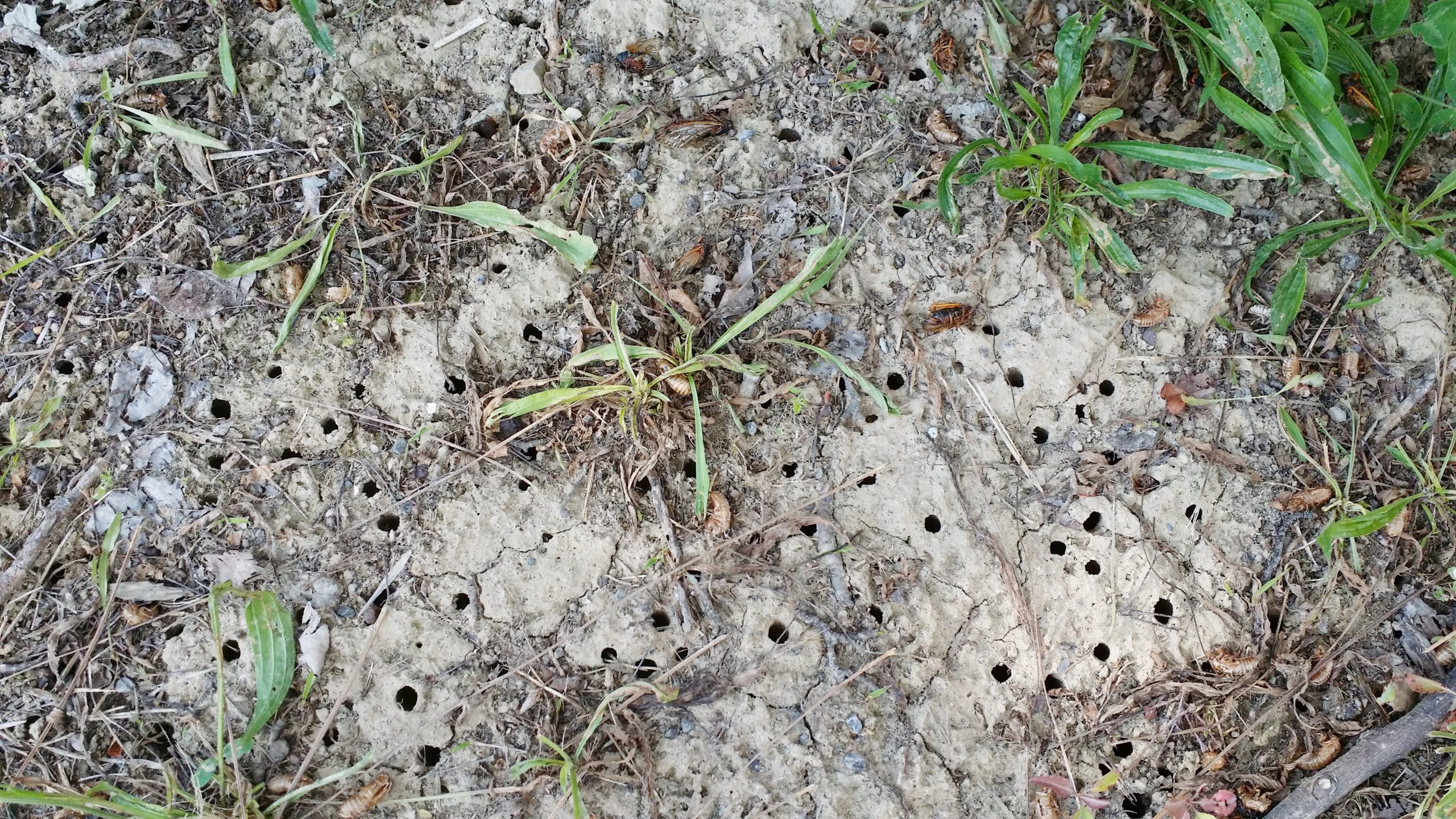
Look for holes in the diameter of an adult’s finger near the root system of a tree. These are sure signs that cicadas will emerge in the area.
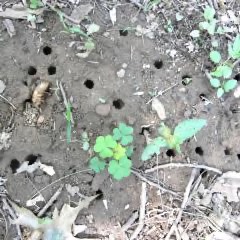
You might discover some cicada nymphs while turning over stones or when performing landscaping chores.
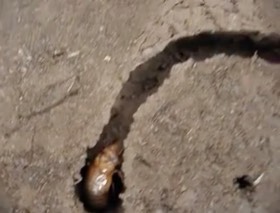
Here is a great video of Magicicada nymphs once they have emerged from the ground:
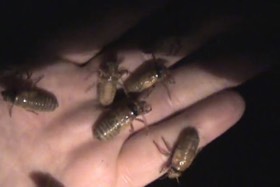
This is a recently emerged nymph crawling up a tree. Note that its eyes are red.
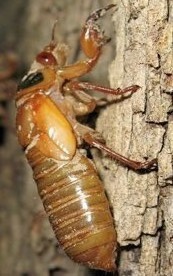
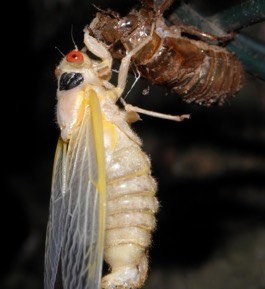
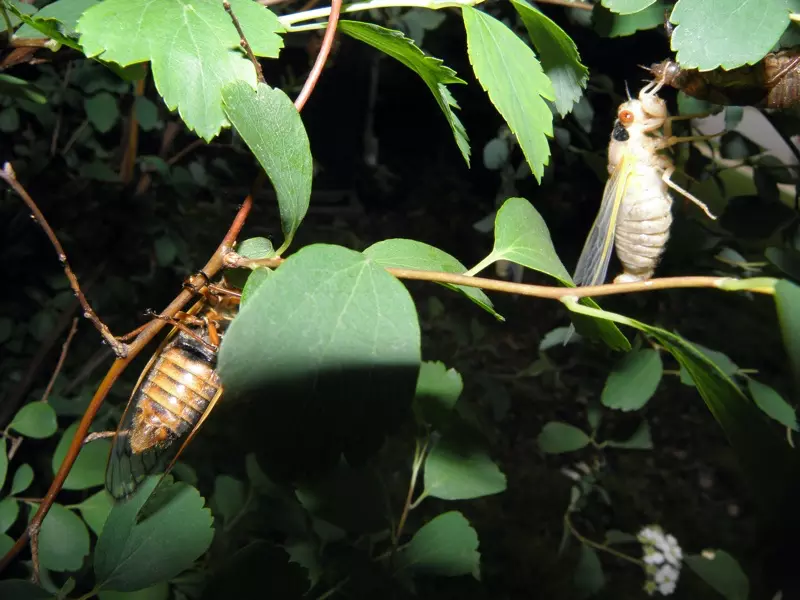
Once cicadas nymphs have emerged from the ground, they will try to find a tree (or similar vertical surface), and then begin the process of shedding their old nymph skins (ecdysis), expanding their wings, and changing to their adult coloring. Watch this amazing transformation.
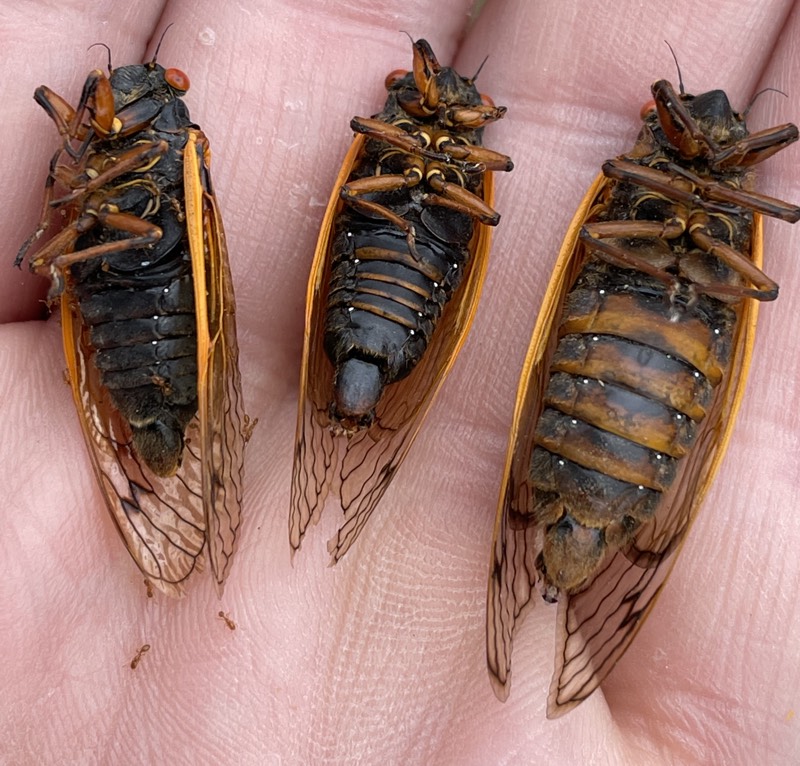
Left to right: Magicicada cassini, Magicicada septendecula, Magicicada septendecim:
The first way is based on the Brood. Take a look at the Brood chart above, and see which species appear with the Brood.
There are 3 basic types of Magicicada: “‘Decims”, “‘Cassini” and “‘Deculas”.
There are three species in this category:
Their songs are very similar, however, when M. neotredecim & M. tredecim emerge in the same location, M. neotredecim’s song takes a higher pitch. Sounds like “Pharaoh, Pharaoh!”.
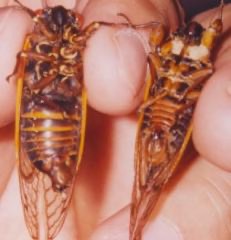
Male on left; Female on right.
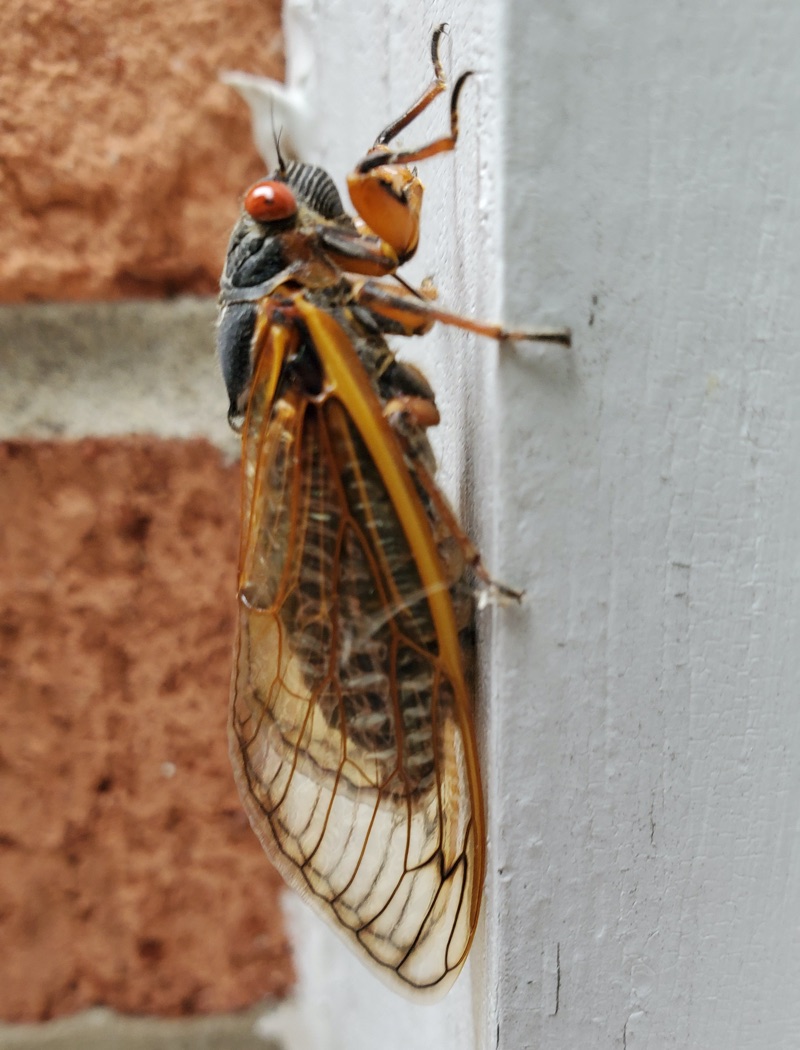
M. neotredecim & M. septendecim have broad orange stripes with more orange than black on their abdomens.
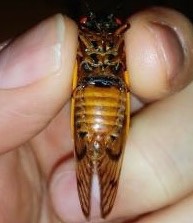
M. tredecim, by comparison, have almost entirely orange abdomens.
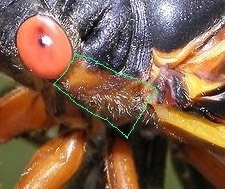
M. septendecim cicadas also have an area of orange coloring between the eye and the wing (pronotal extension).
There are two species in this category:
Their songs are essentially identical:
Note how it makes a quick burst of sound, followed by some rapid clicks.
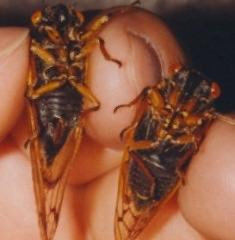
Female on left; Male on right.
M. tredecassin & M. cassini cicadas have black abdomens with virtually no orange at all. Orange stripes are possible in the mid-west (important to note for Brood IV).
There are two species in this category:
Their songs are essentially identical:
Note the “tick, tick, tick” rhythm of the call.
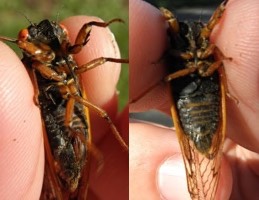
Female on left; Male on right.
M. septendecula & M. tredecula have stripes that feature more black than orange. Otherwise, they’re very similar to M. cassini.
Question: Why do I have cicadas in my neighborhood, but your chart indicates that I shouldn’t?
Answer: Some possibilities: 1) they are stragglers, periodical cicadas that emerge too soon or late, 2) they are not periodical cicadas but are a different North American species, 3) you live on a continent other than North America, in which case, try one of these pages, or 4) SURPRISE! The U.S. is a big place and some cicada populations have yet to be documented.
Question: Why don’t I have periodical cicadas in my area, but the information on your website indicates that I should?
Answer: Two possibilities: 1) they went extinct or otherwise died off in your area, or 2) they aren’t everywhere in a state – normally there are large gaps in their range.
Question: What are stragglers?
Answer: Stragglers can emerge 1 or 4 years early or 1 or 4 years late. Don’t be surprised if you see some periodical cicadas emerge earlier than planned this year. 17-year brood members are most likely to straggle 4 years early, and 13-year brood members are most likely to straggle 4 years late. Straggler probability chart.
Question: Are there other types of Periodical cicadas?
Answer: There are two known species of periodical cicadas that are not Magicicada . One lives in India and the other in Fiji.
Question: Why are there no Brood XI, XII, XV, or XVI?
Answer: Perhaps you’ve noticed there are no Broods XI (11), XII (12), XV (15), XVI (16), XVII (17), XVIII (18), XX (20), XXI (21), XXIV (24), etc. Don’t worry about that. They never existed or are extinct (XI, XXI).
Question: In total, how often do periodical cicadas emerge?
Answer: Over the next 10 years (including 2025), there’s a 90% chance at least one Magicicada brood will emerge somewhere in the U.S.A. Across time, that percentage falls to 77%. Next year (2026) no Broods will emerge. The next 3 year gap (max gap) is 2043-2045.
This is an example of a typical cicada emergence. The exact dates will depend on the weather and density of the emergence in your location. Hot weather means an early start and quicker finish to the season — cool weather means a later start and a protracted season.

Here’s an Excel version of the chart. Feel free to use it and adjust it to match your experience.
Or watch the video version:
Periodical cicada Brood IX (9) will emerge in the spring of 2037 in North Carolina, Virginia and West Virginia. The last time this brood emerged was in 2020.
What, when, where, and why:
What:
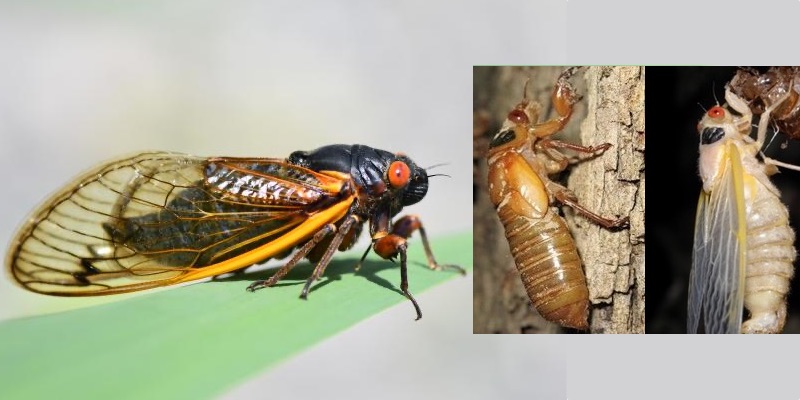
When: Typically beginning in mid-May and ending in late June. These cicadas will begin to emerge approximately when the soil 8" beneath the ground reaches 64 degrees Fahrenheit (Heath, 1968). A nice, warm rain will often trigger an emergence.
Other tips: these cicadas will emerge after the trees have grown leaves, and, by my own observation, around the same time Iris flowers bloom.
Where:
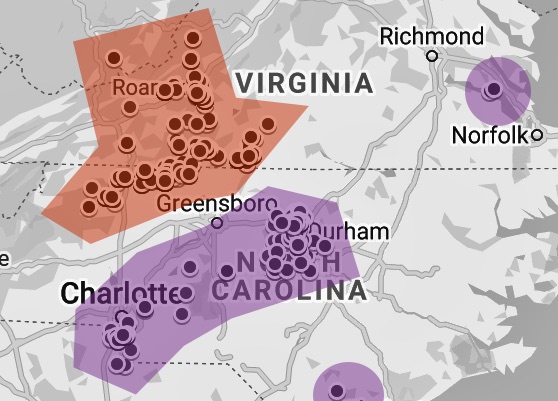
A quick tip using data from the Cicada Safari app team:
Cicadas in the north-west areas are Brood IX (red). Cicadas south & east of that area (purple) are Brood XIX emerging early.
Maps, Apps, and Tips:
Why: Why do they stay underground for 17-years? The prevailing research suggests they’ve evolved a long, 17-year lifecycle to avoid predators that can sync up with their lifecycle & emergence. Why are there so many?! Research suggests that their huge numbers allow them to overwhelm predators, so enough of them will live on to breed and perpetuate the brood.
More facts and fun:
The larger dots are valid. Tiny dots, no. See a modern map, or the Live Map from the Cicada Safari app.
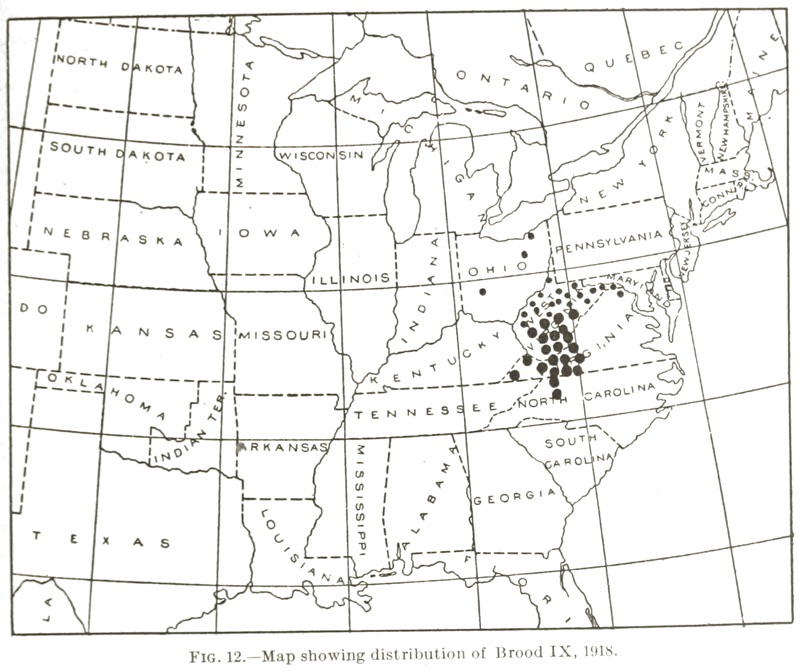
The pandemic interfered with researchers going into the field and studying cicadas. Brood IX is interesting to researchers because it’s located very close to 5 other broods. In a normal year, researchers would be able to drive the roads of the area and map the location of the brood so we can get data as to where the broods intersect, but because of the current situation in the U.S., most if not all researchers will be able to travel — so we need you to let us know where they’re at. Read more on Cicadas @ UCONN (formerly Magicicada.org).
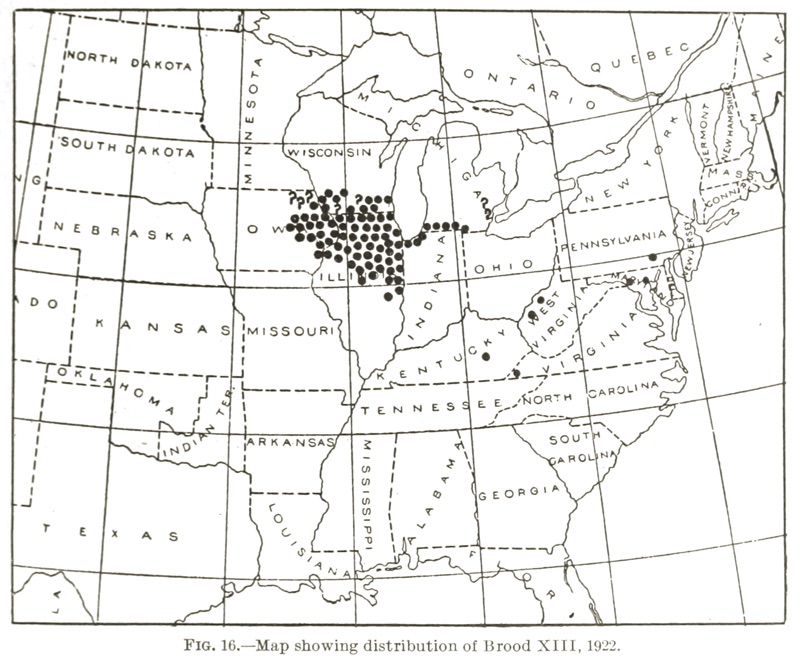
Periodical cicada Brood XIII (13) will emerge in the spring of 2041 in Iowa, Wisconsin, Illinois, Indiana, and Michigan (in one or two places).
What, when, where, and why:
What:
Millions of these:
Videos from 2009:
When: Typically beginning in mid-May and ending in late June. These cicadas will begin to emerge approximately when the soil 8 inches beneath the ground reaches 64 degrees Fahrenheit. A nice, warm rain will often trigger an emergence.
Other tips: these cicadas will emerge after the trees have grown leaves, and, by my own observation, around the same time Iris flowers bloom.
Where:
Check out the iNaturalist live map.
More Location Tips:
Local Events
Lake County Forest Preserve in Illinois: 1) A cicada exhibit opening at the Dunn Museum in Libertyville, IL on April 27th. 2) Cicadas of Lake County on 5/2. 3) Celebrating Cicadas on 5/16. 4) On Sunday, June 9th, they plan to hold CicadaFest at Ryerson Woods. Insects, and of course, cicadas will be featured.
Why: Why do they stay underground for 17 years? The prevailing research suggests they have evolved a long lifecycle allowing them to avoid predators that would sync up with their lifecycle & emergence. Why are there so many?! Research suggests that their huge numbers allow them to overwhelm predators, so enough of them will live on to breed and perpetuate the brood.
More facts and fun:
See a modern map or the Live Map from the Cicada Safari app.
Get the retro 2007 Brood XIII shirt:

Brood XIII: rotten, but not forgotten. See you in 2041 (Yikes). Relive the memories: Gene Kritsky released a new book. See what people found iNaturalist: Flagging (Brown Leaves), Brood XIII, Massospora, and Blue and White eyes. Buy a shirt. Yes, Brood XIX also emerged in 2024, they did not overlap, but came close in the Springfield, Illinois area.

This is a gallery of Magicicadas taken at West Virginia University’s Core Arboretum from the 2013 Brood V emergence.
Click/tap the images for larger versions.
Visit Gallery #2 from more photos From the Core Arboretum, Morgantown, and Brood V.
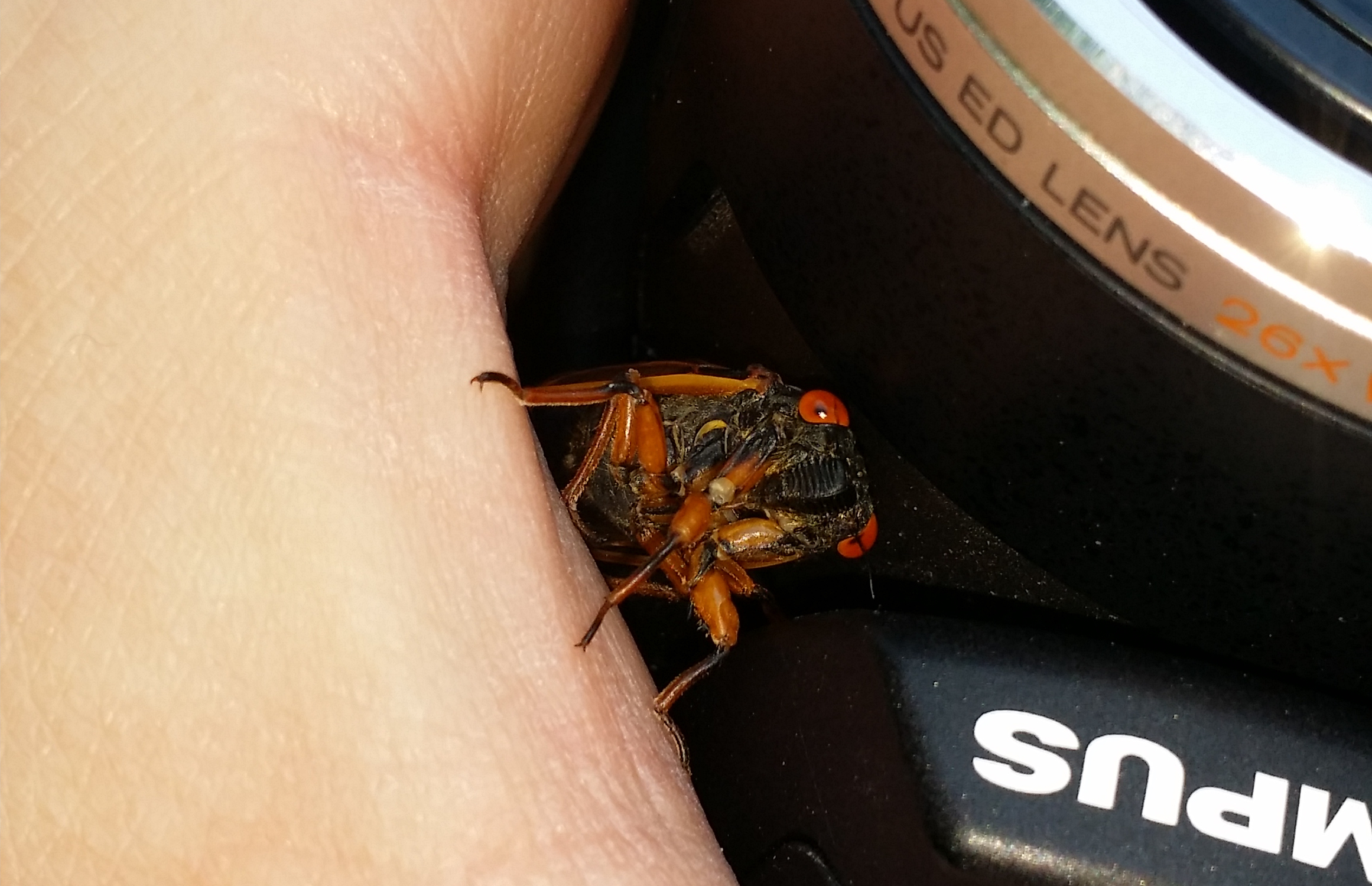
Magicicada cassini next to camera lens:
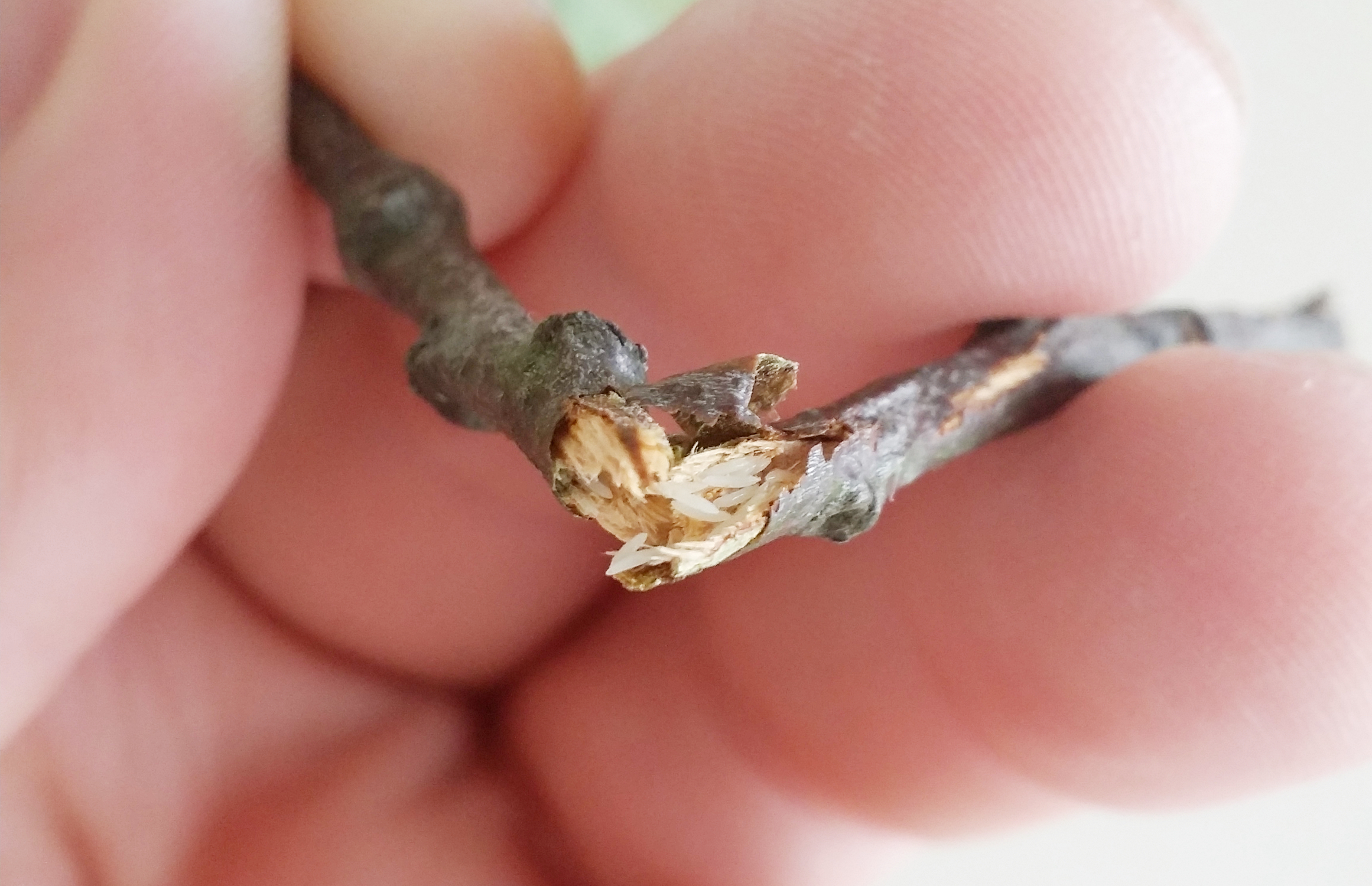
Magicicada cassini eggs:
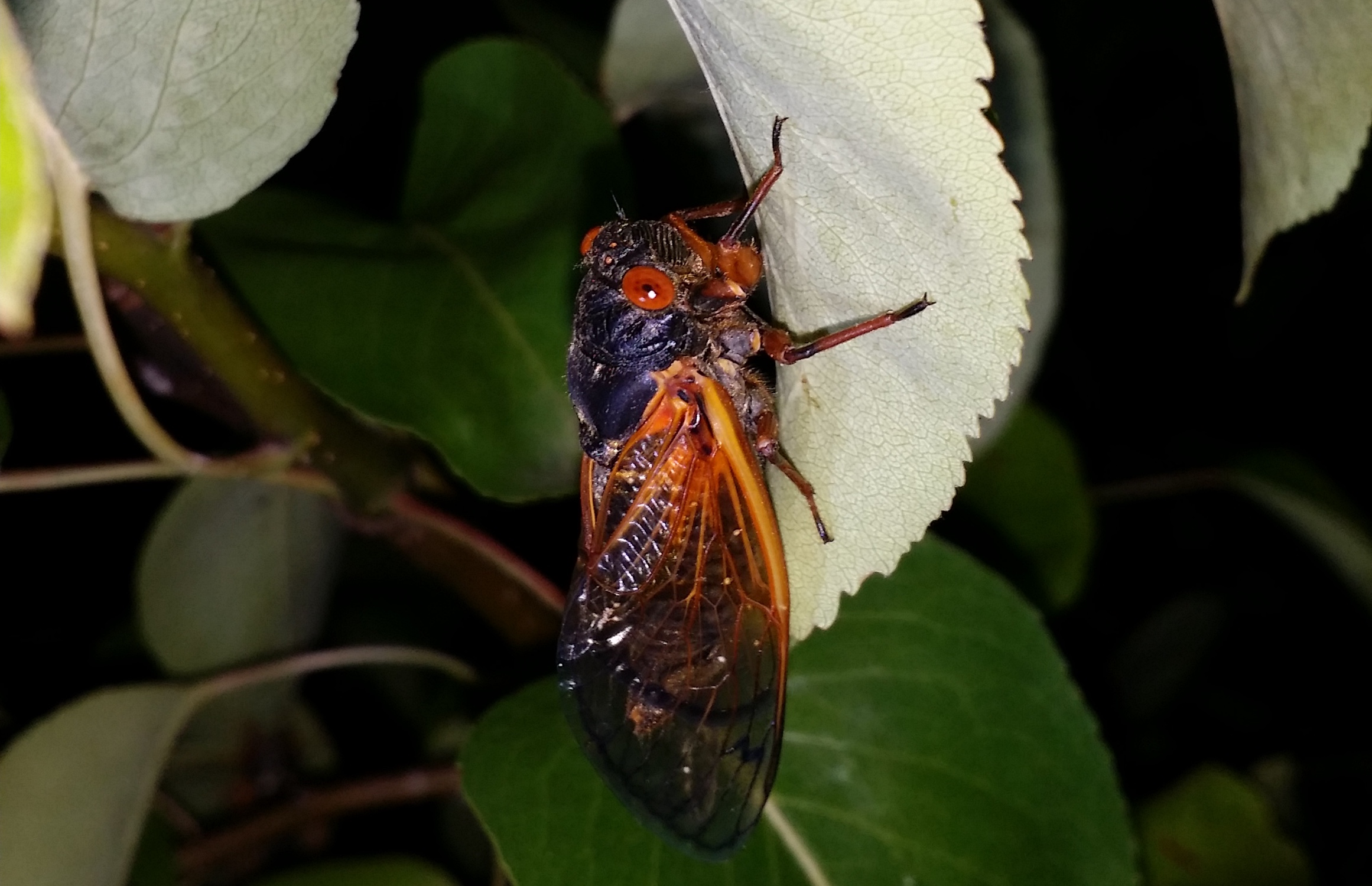
Magicicada adult hanging on leaf:
Female with exposed ovipositor:
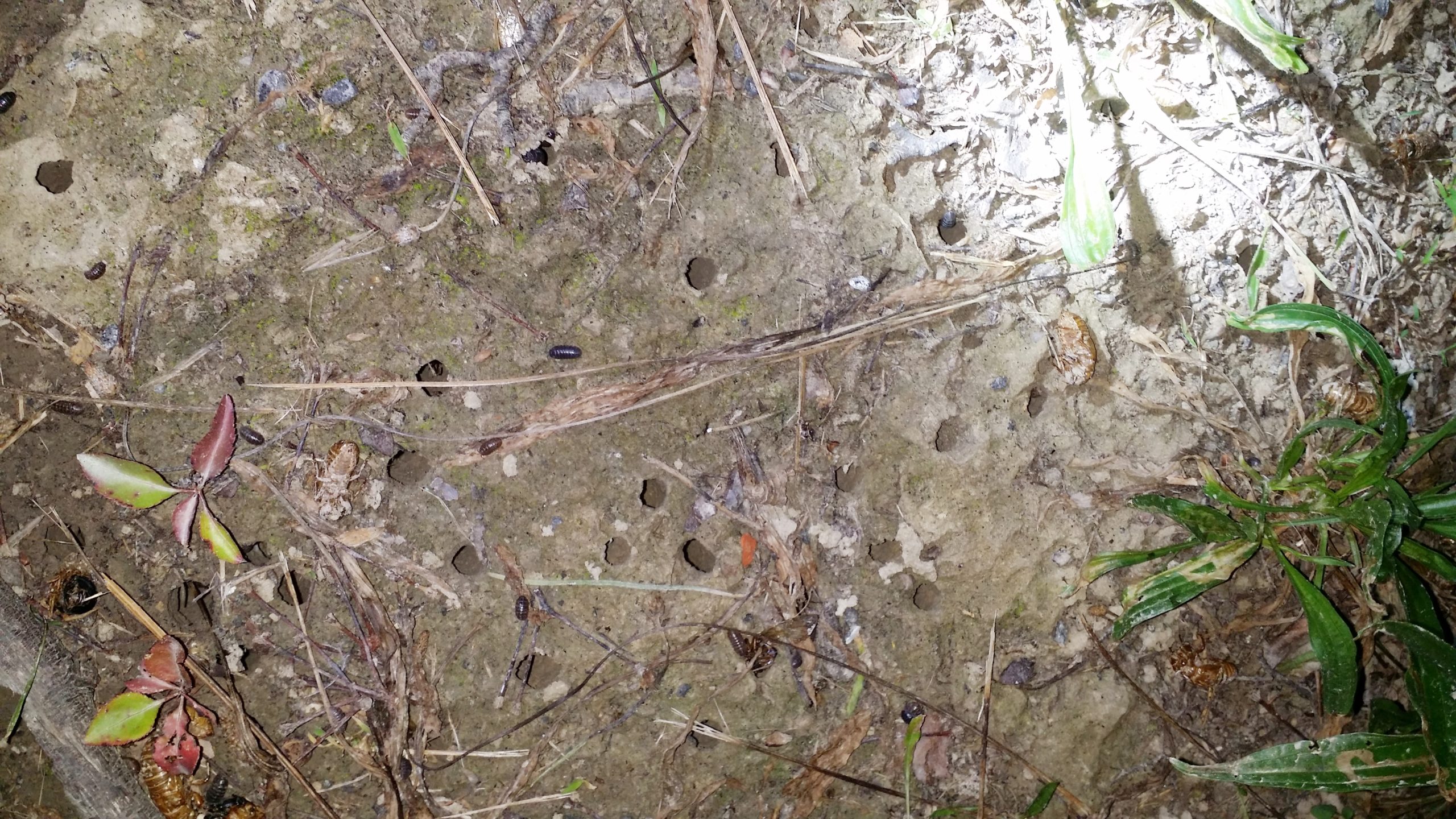
Cicada Exit Holes:
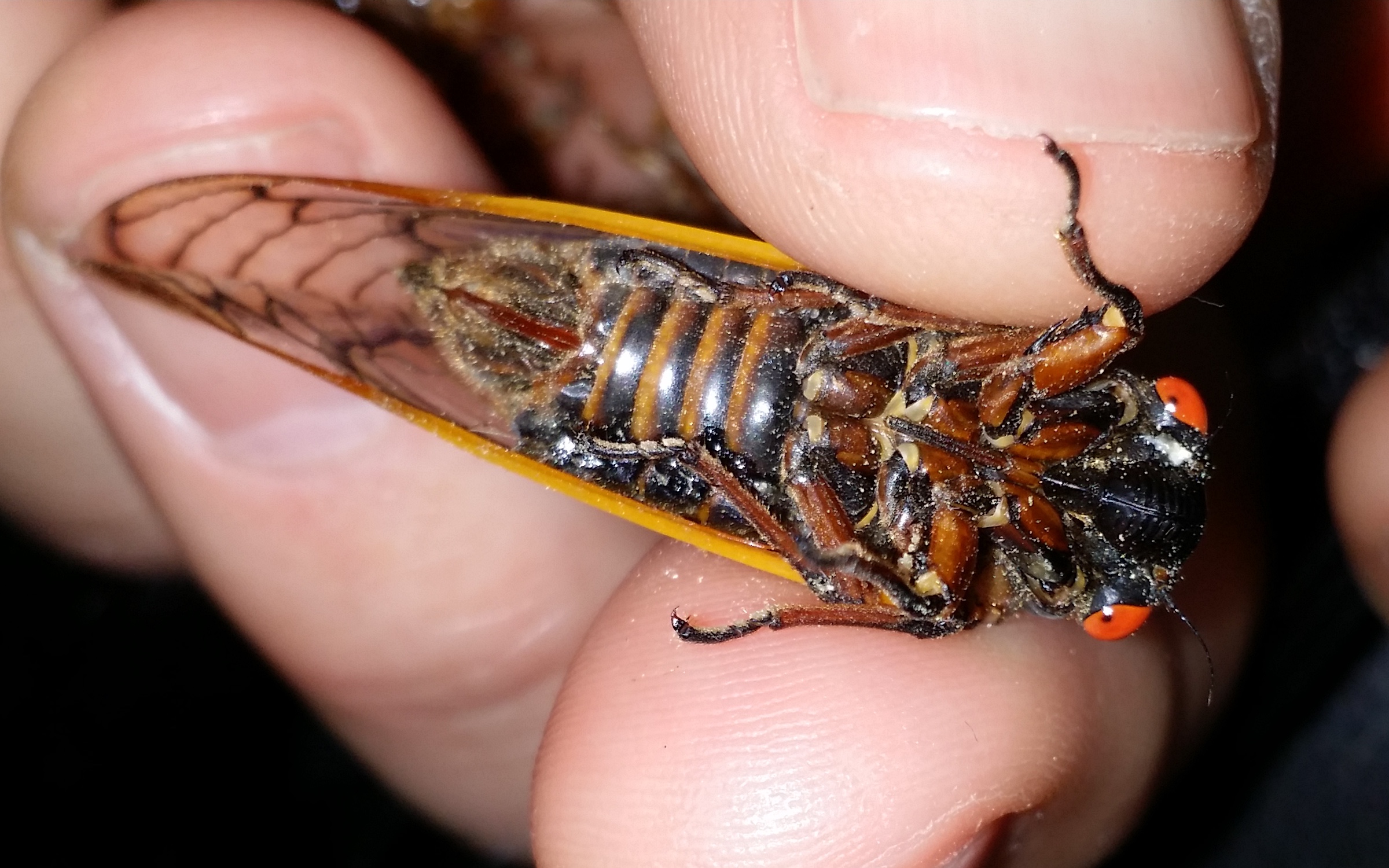
Female Magicicada septendecula abdomen:
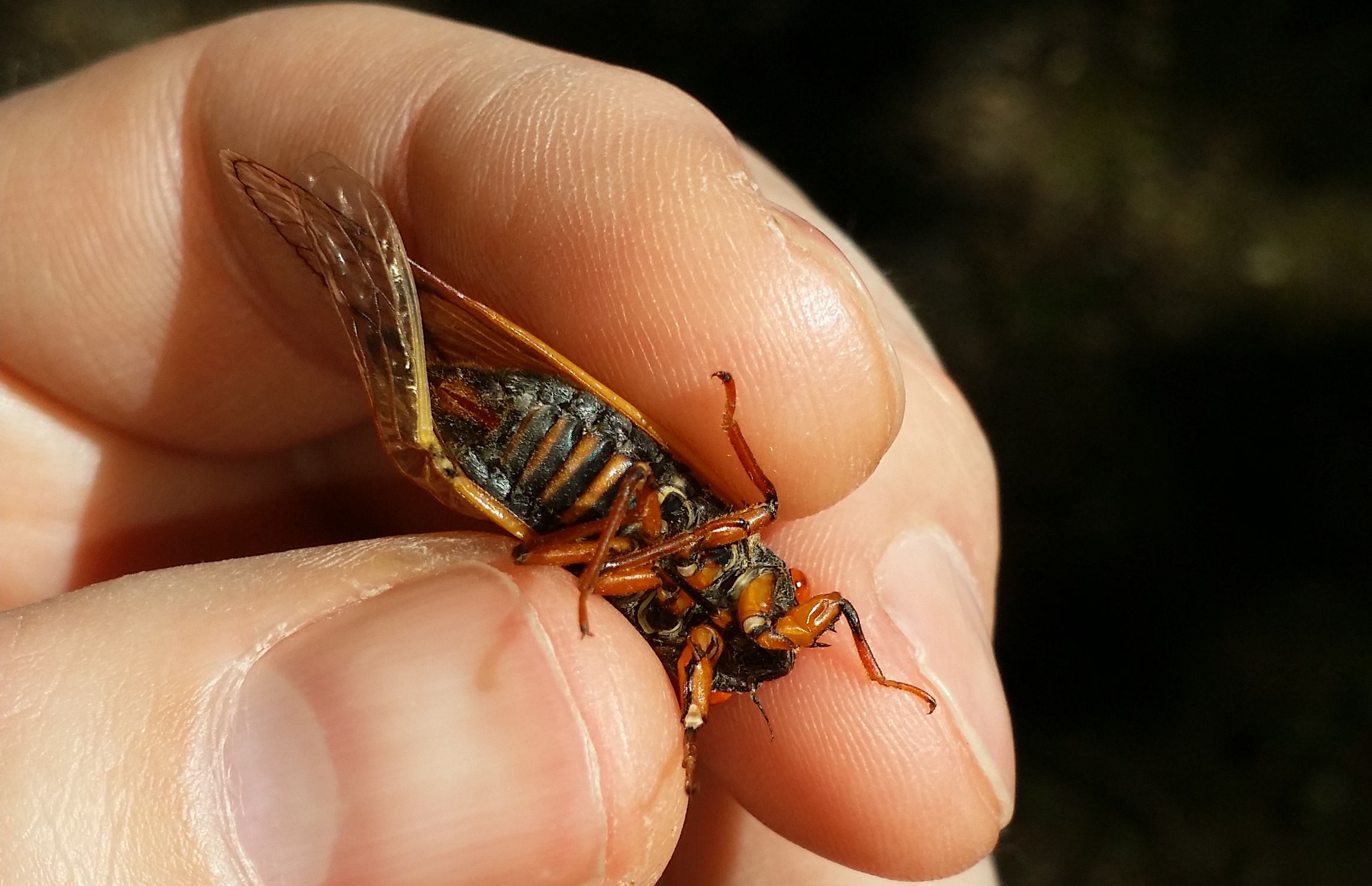
Female Magicicada septendecula:
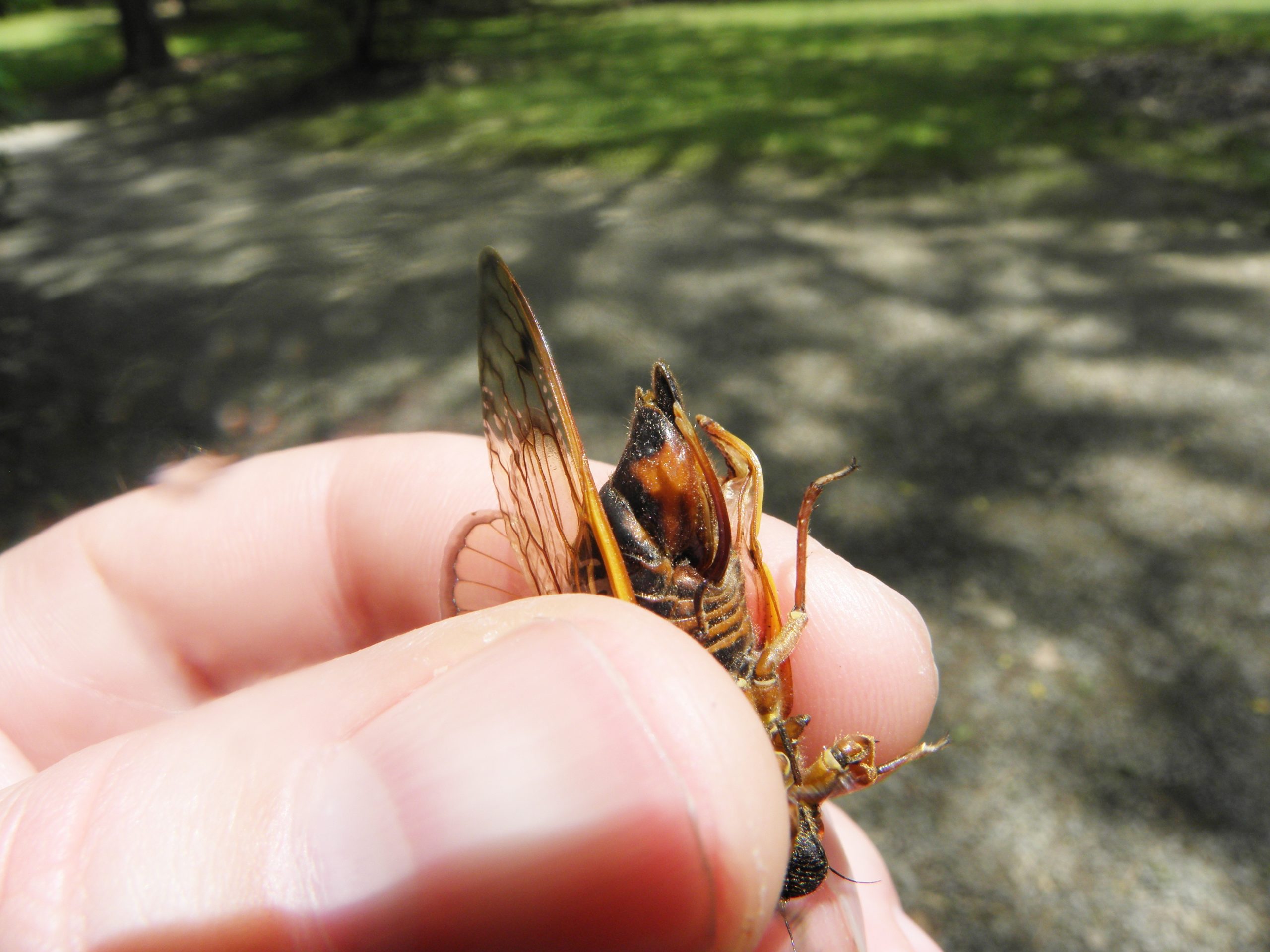
Female Magicicada with exposed ovipositor:
Cicada Exit Holes:
Beige eyed Magicicada:

A palmful of exuvia:
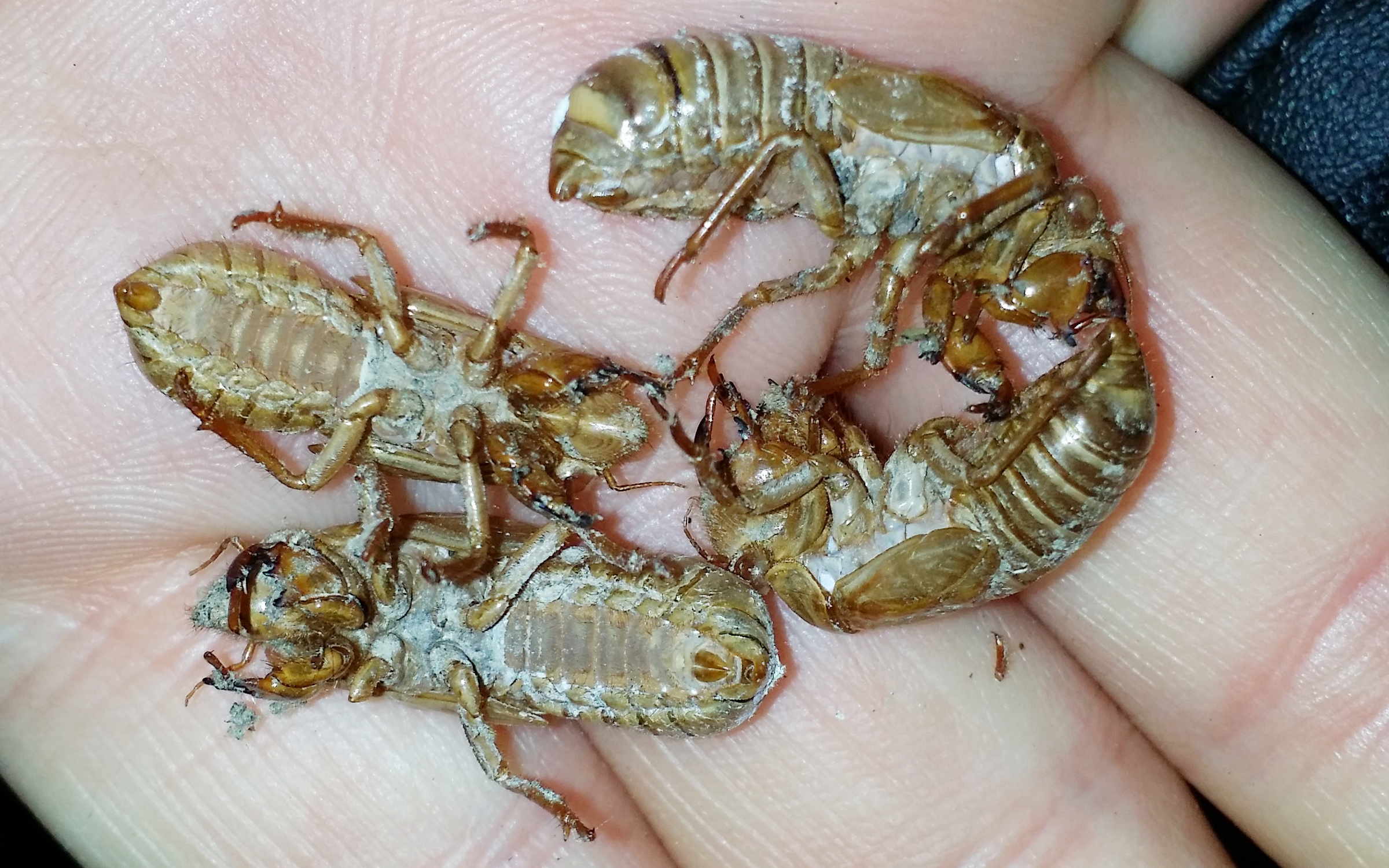
Visit Gallery #2 from more photos From the Core Arboretum, Morgantown, and Brood V.
More from Brood V:
This is a gallery of Magicicadas on leaves & trees from West Virginia University’s Core Arboretum from the 2013 Brood V emergence.
Click/tap the image for a larger version:
Magicicada head:
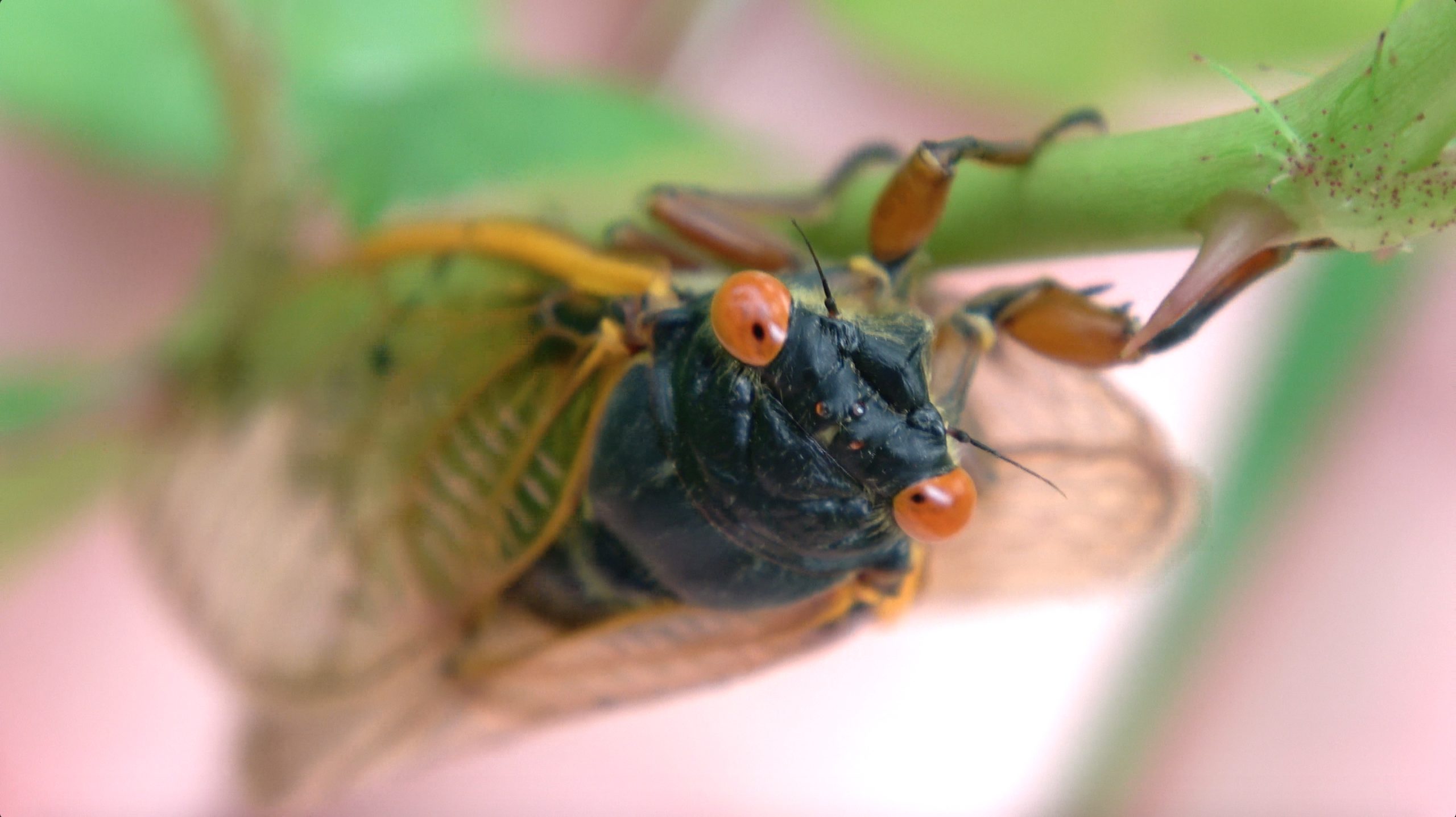
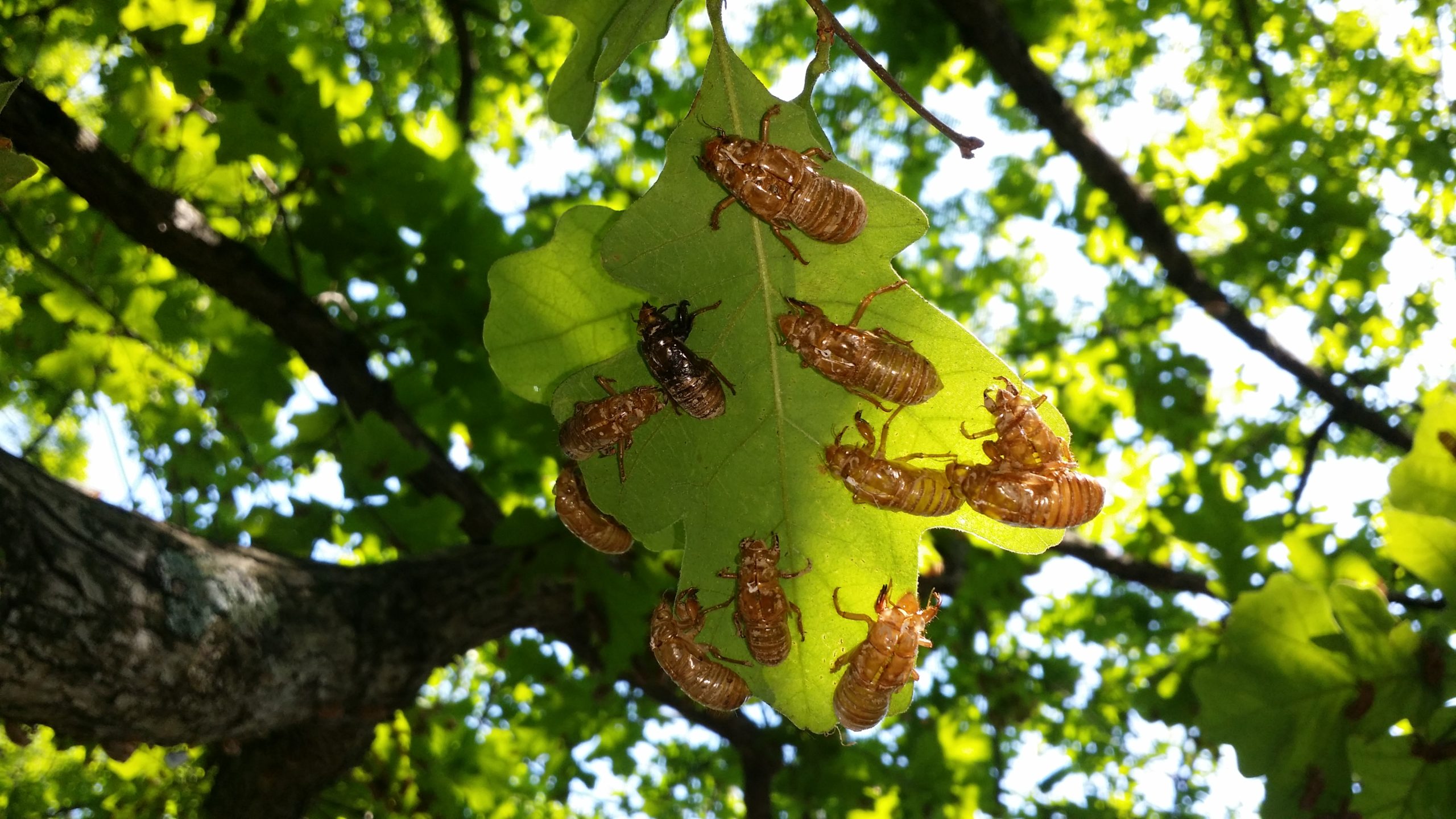
Magicicada exuvia on an oak leaf:
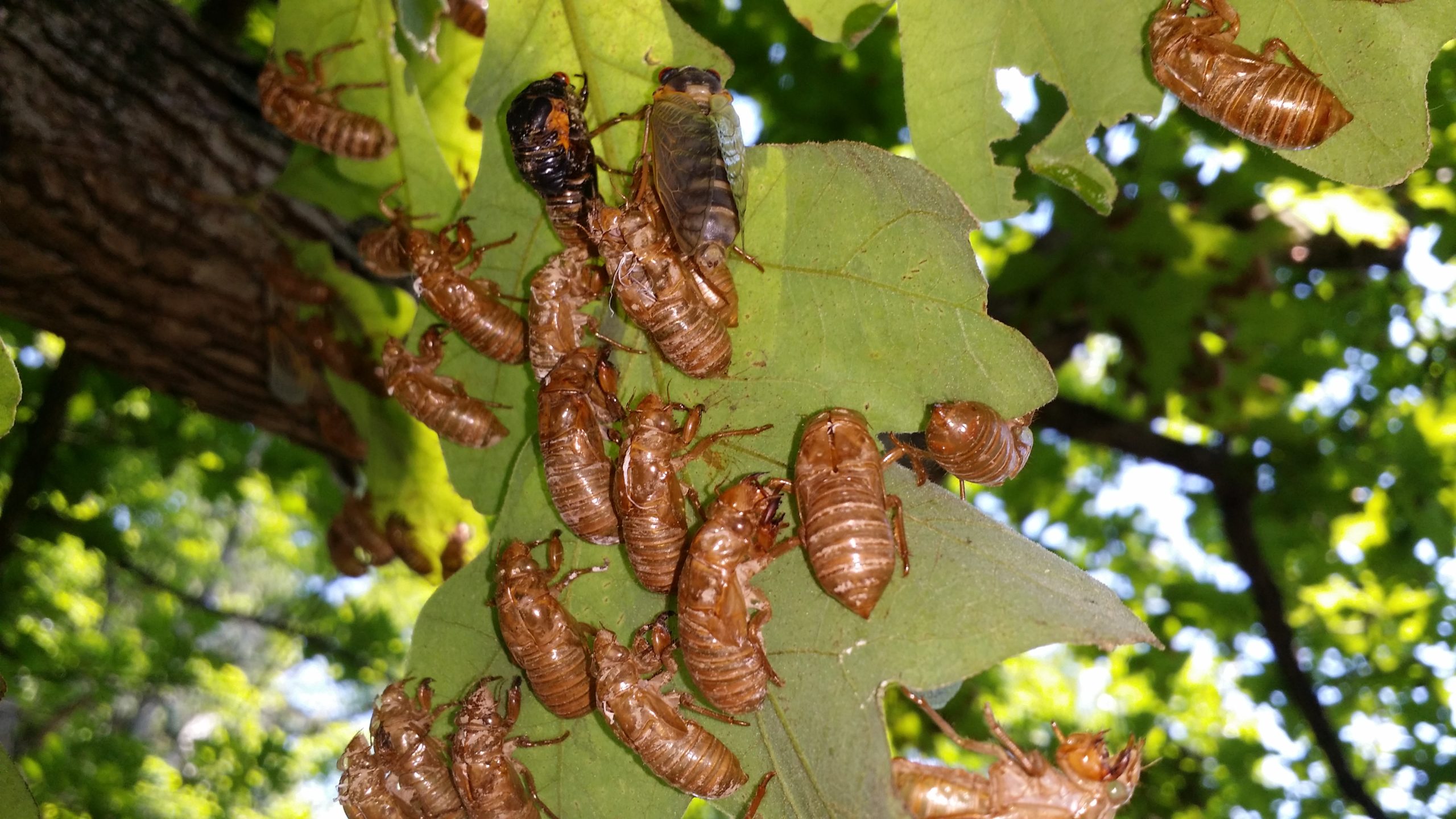
Magicicada exuvia on an oak leaf:
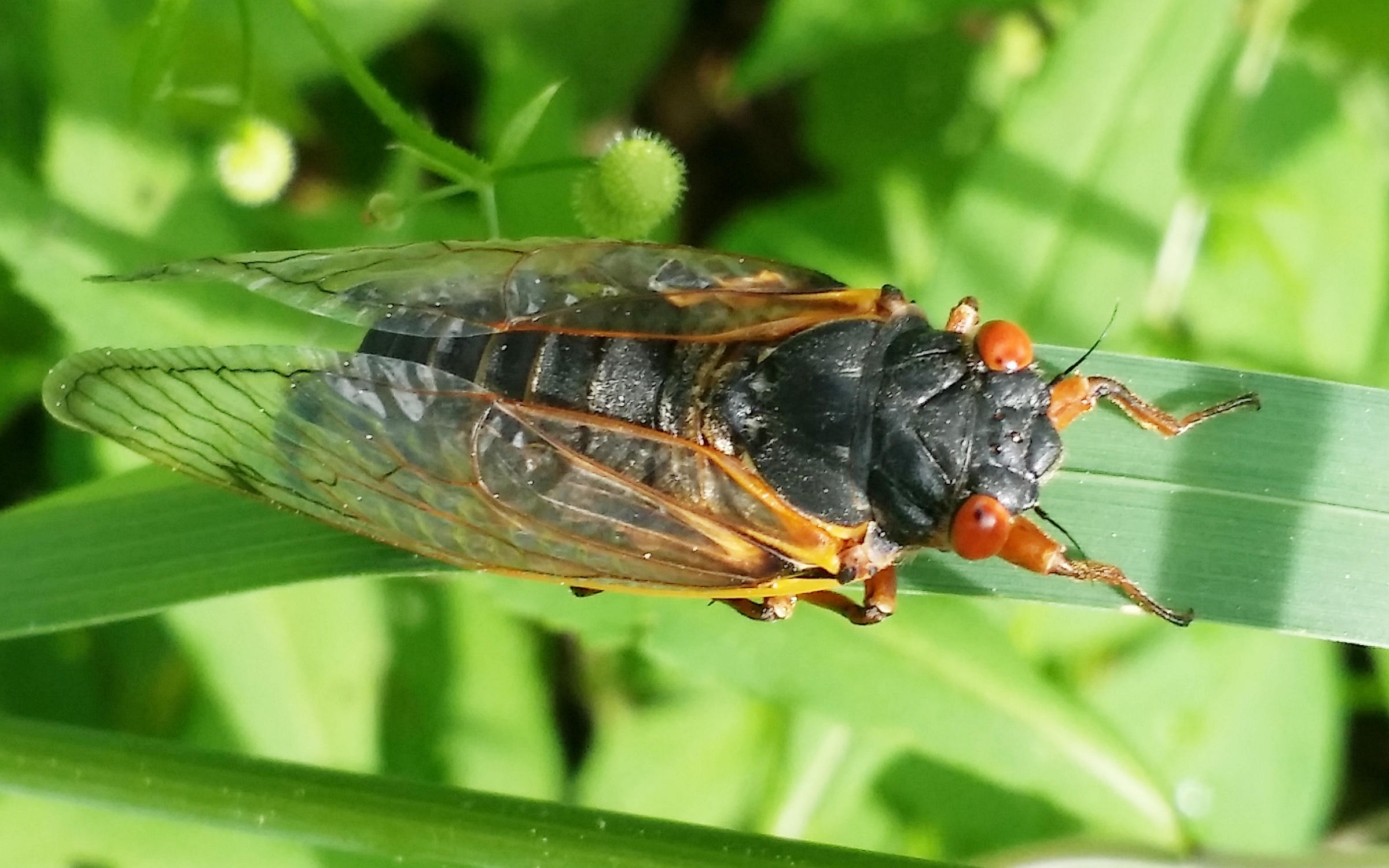
Magicicada dorsal view:
Magicicada cassini in Morgantown VA:
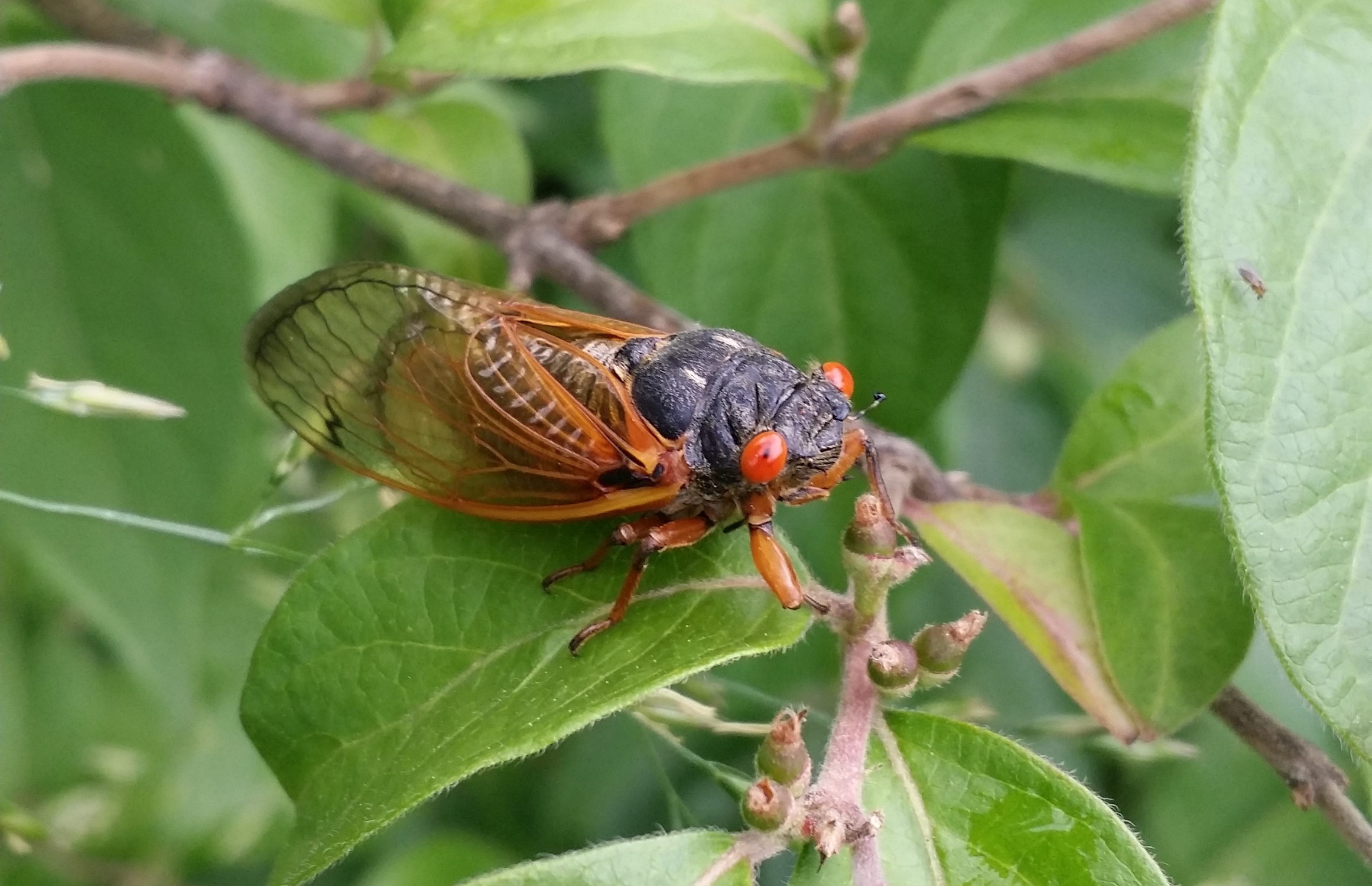
Magicicada adult:
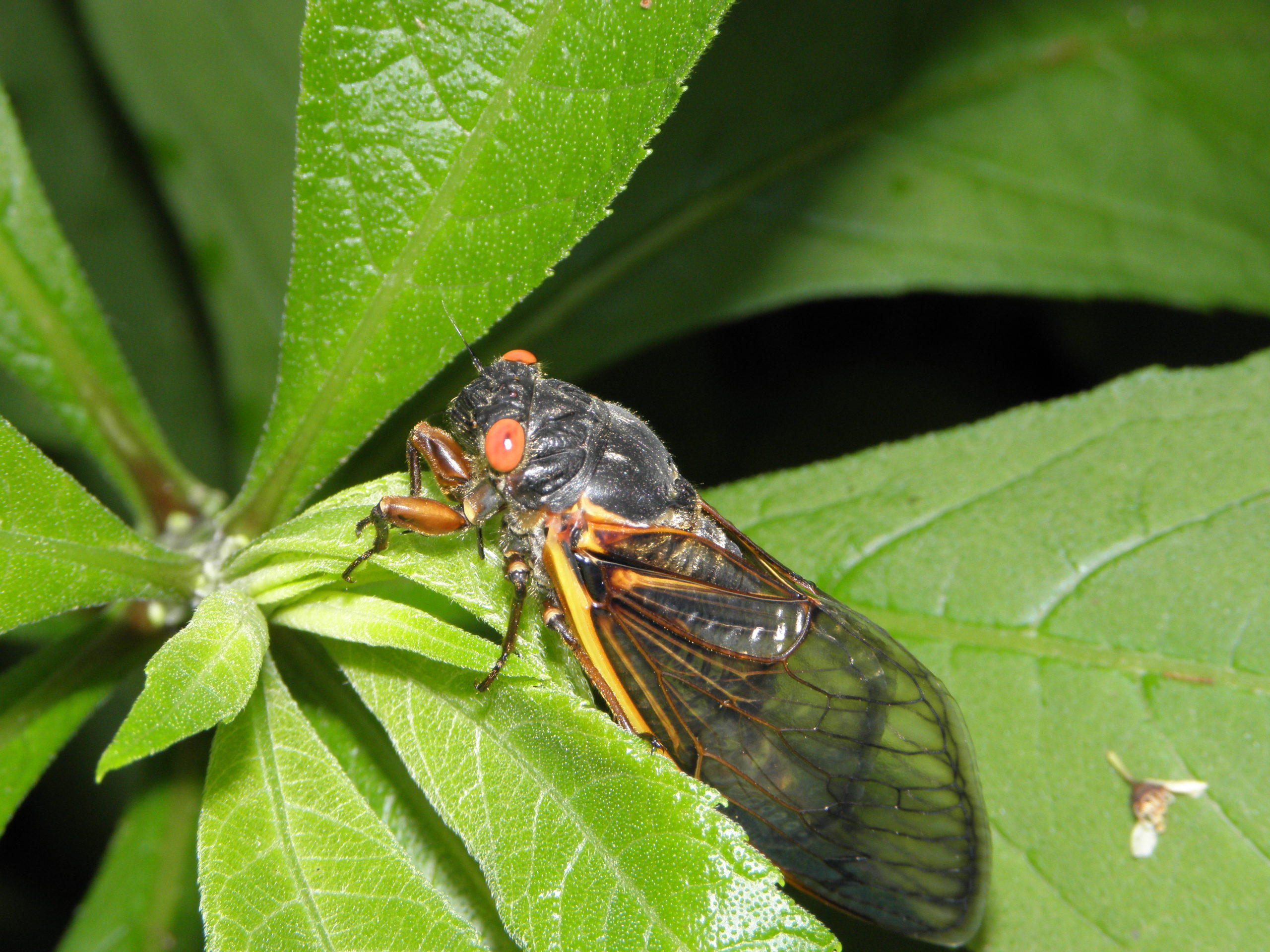
Magicicada adult:
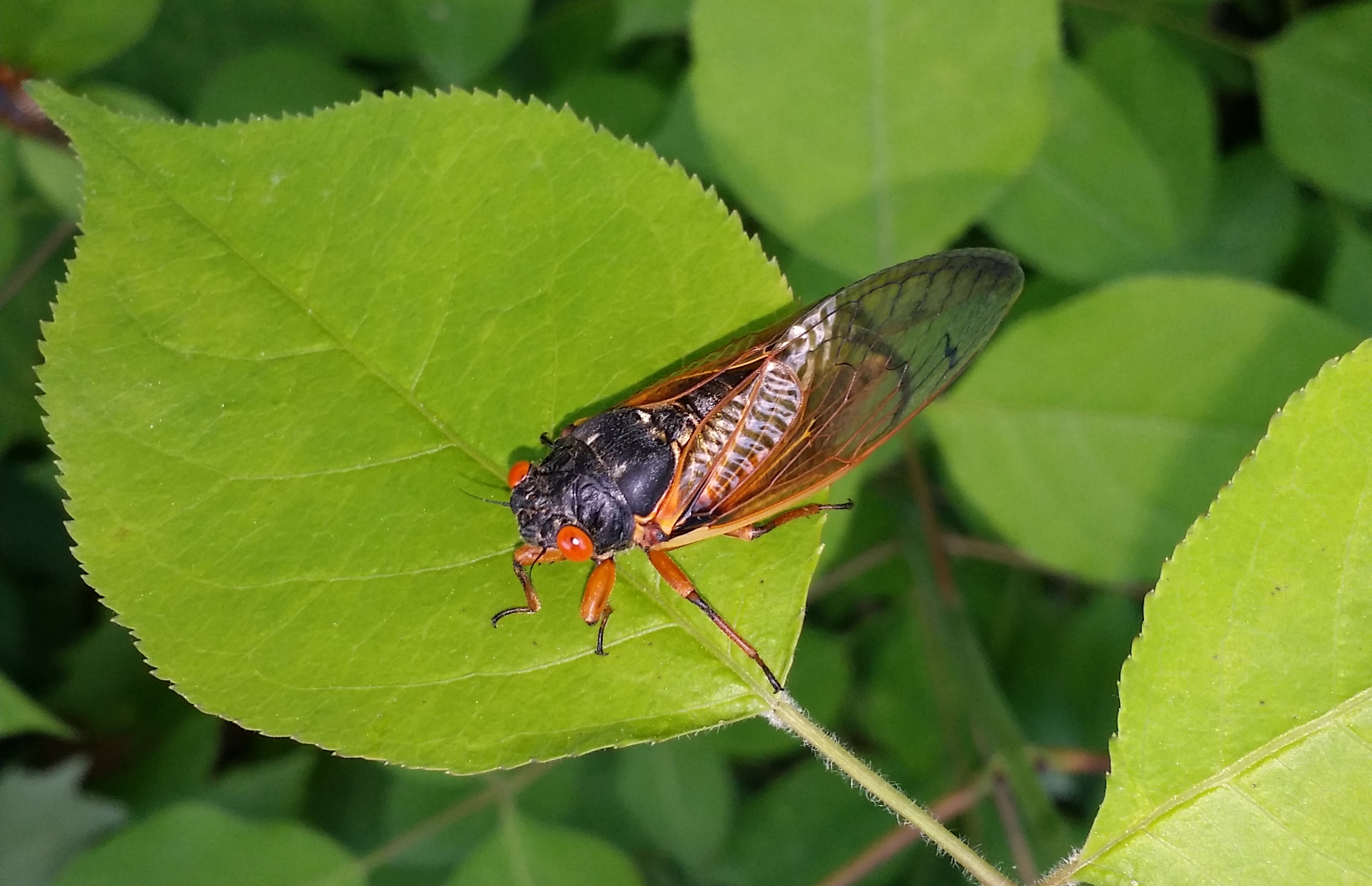
Magicicada adult:
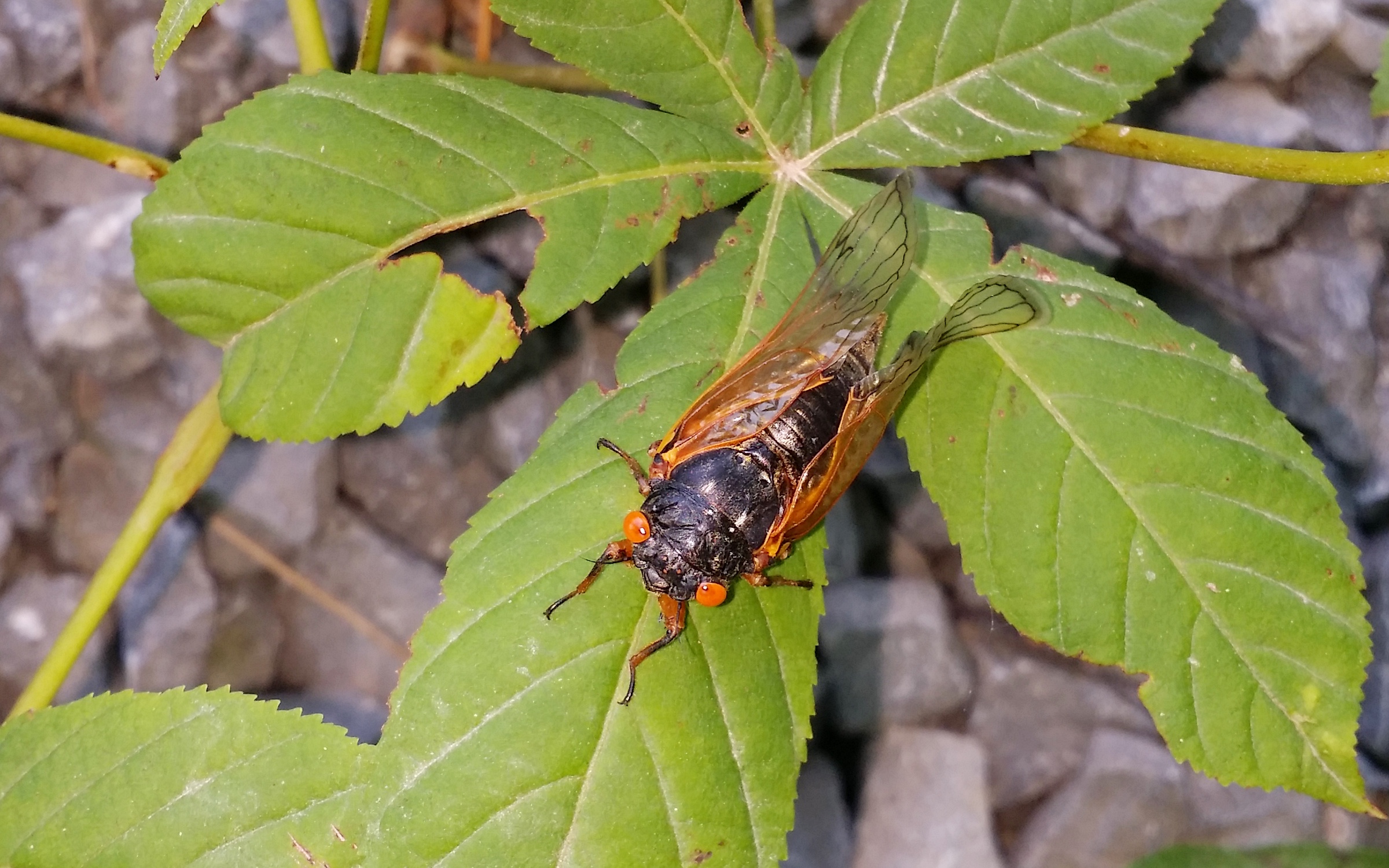
Magicicada adults:

Cicada Peekaboo:
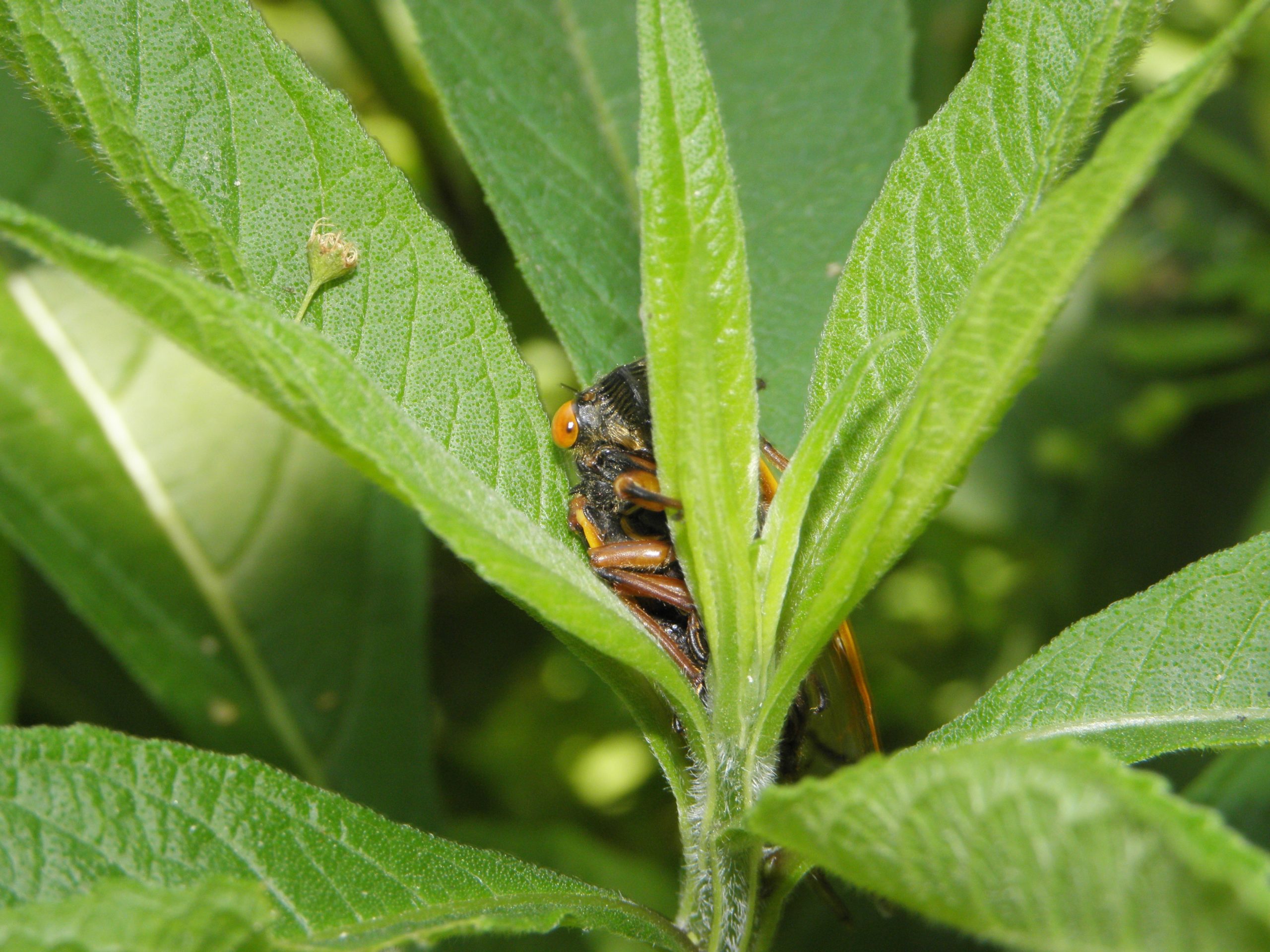
Aggregation of cassini adults on tree trunk:

Aggregation of cassini adults on tree trunk:

More from Brood V:
These are photos of Magicicada from the Brood V emergence in Morgantown, WV in 2016.
Click/tap the image for a larger version:
Magicicada cassini on WVU campus
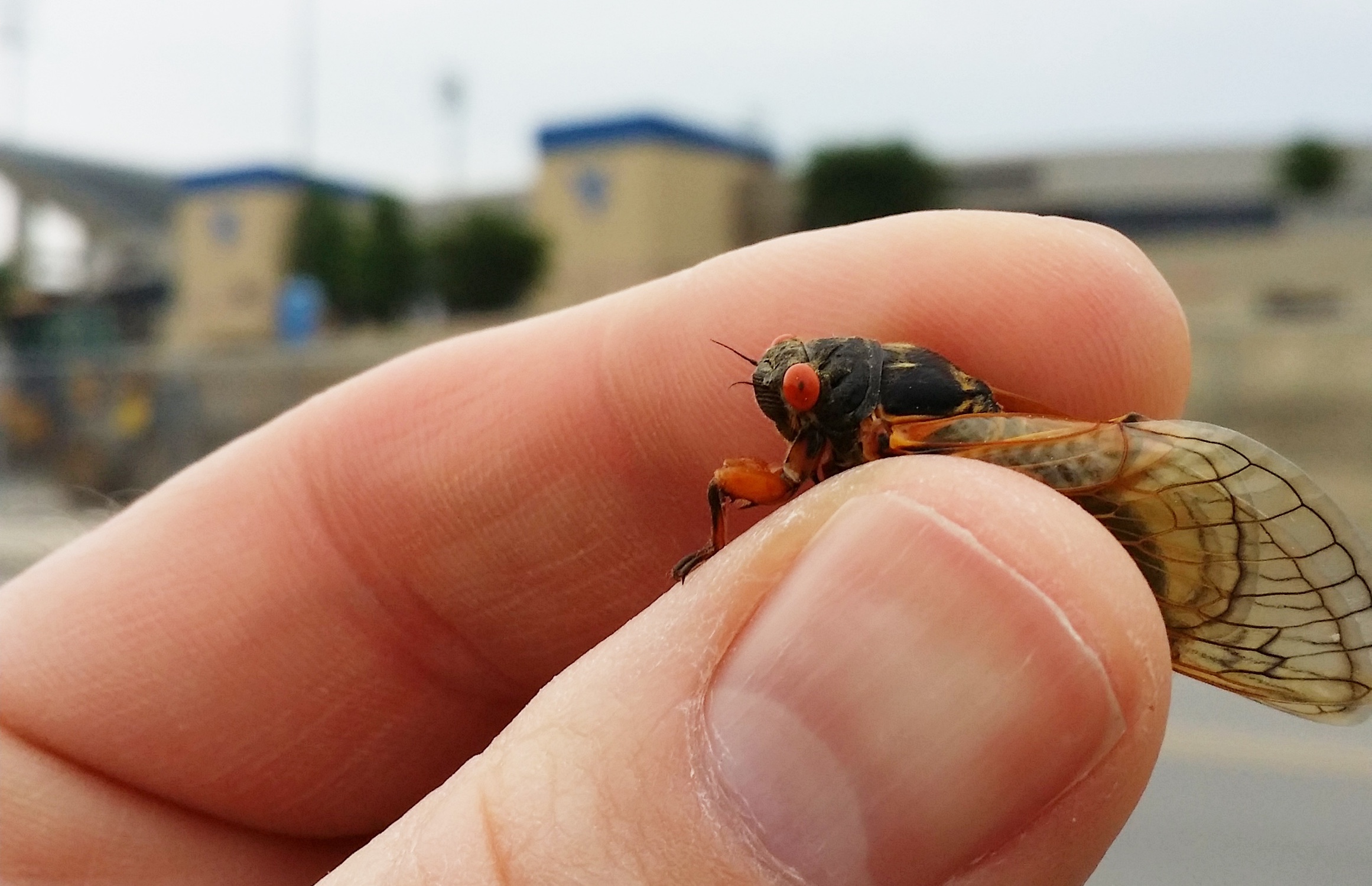
Magicicada exuvia hanging from leaves

Brood V Magicicada nymph
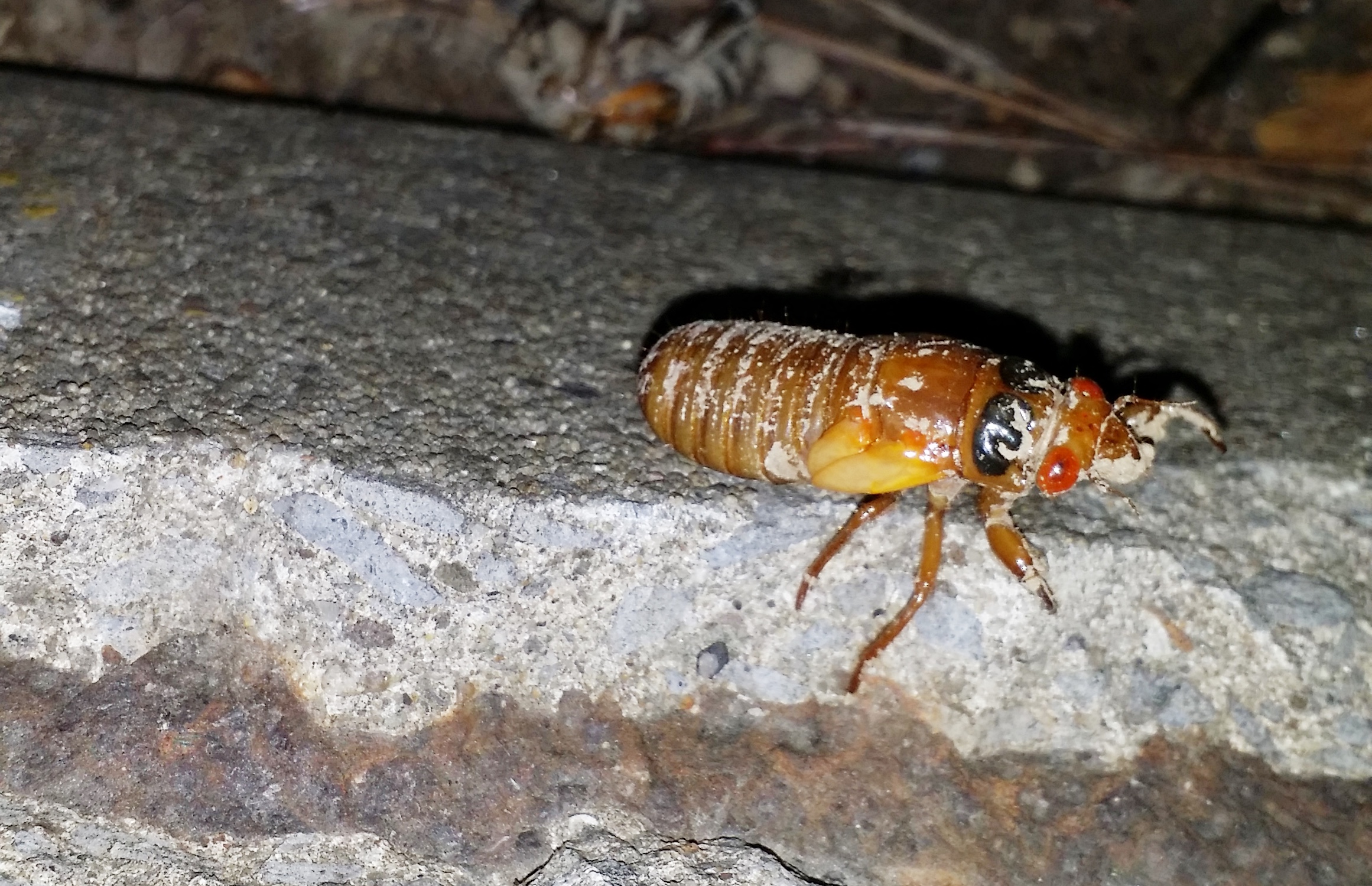
Brood V Magicicada nymph
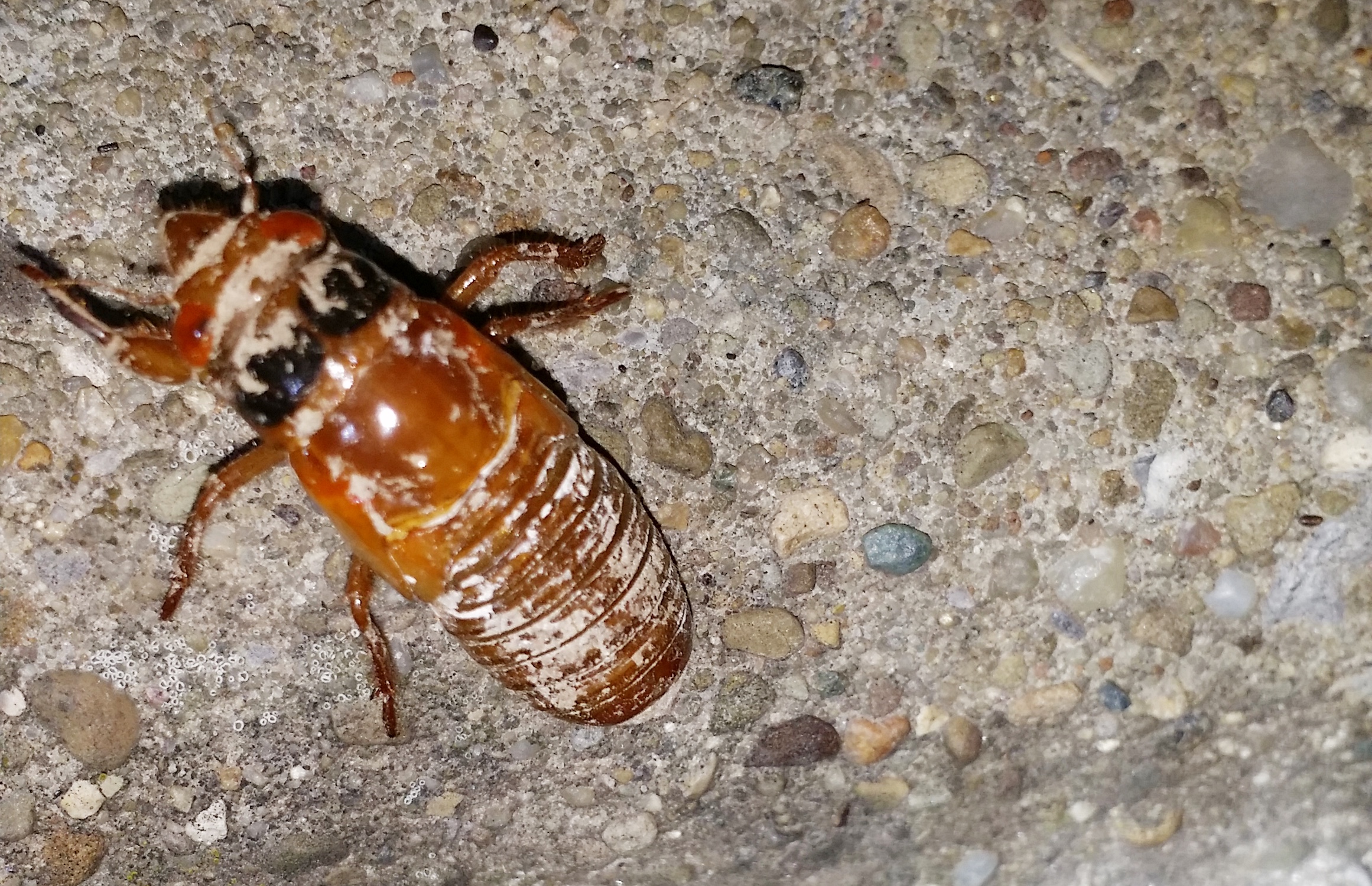
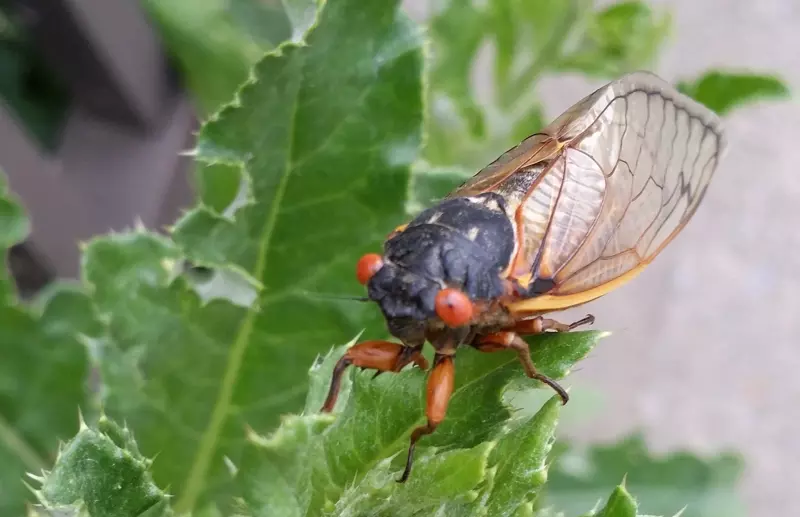
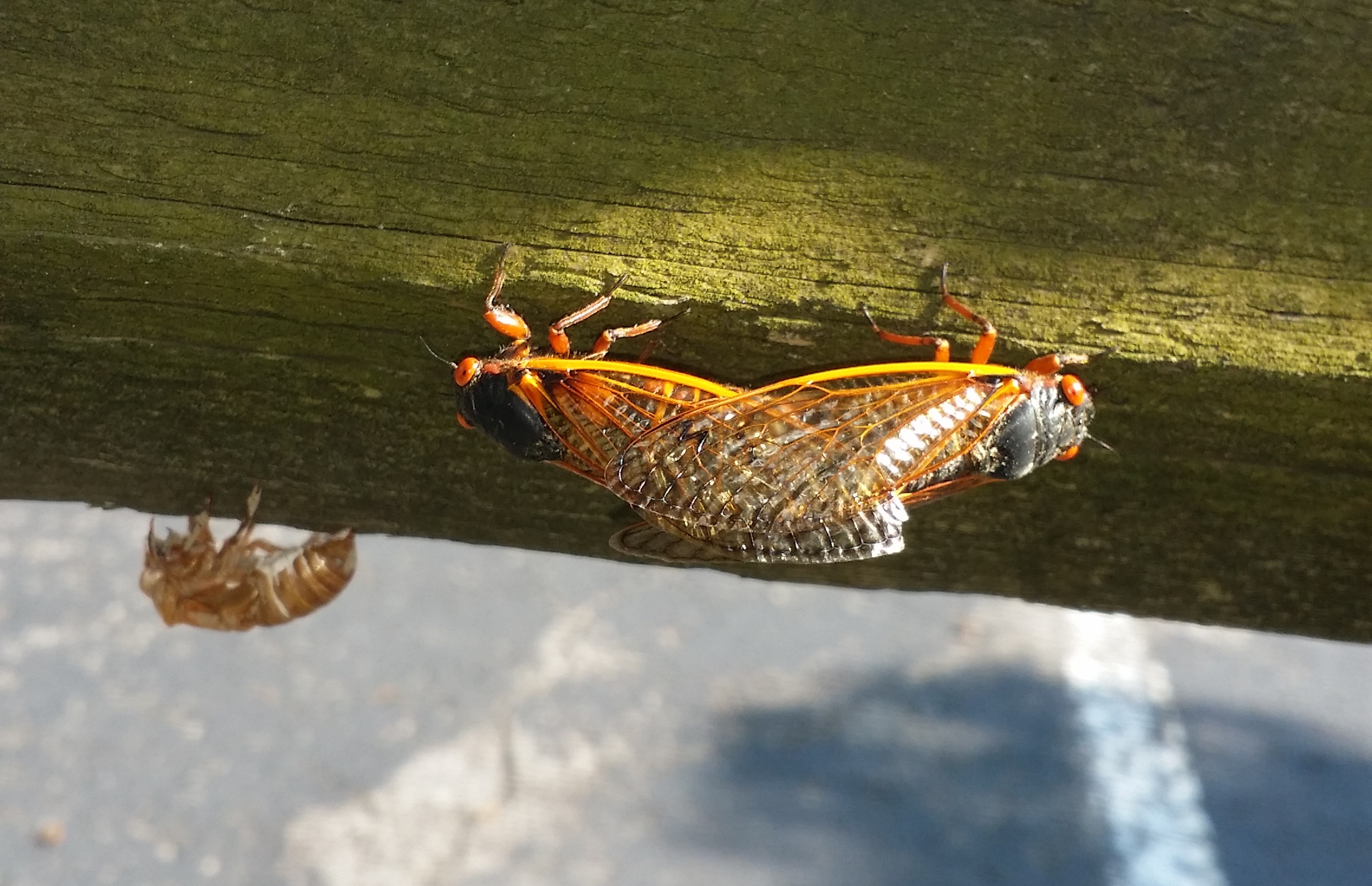
Brood V Magicicada mating
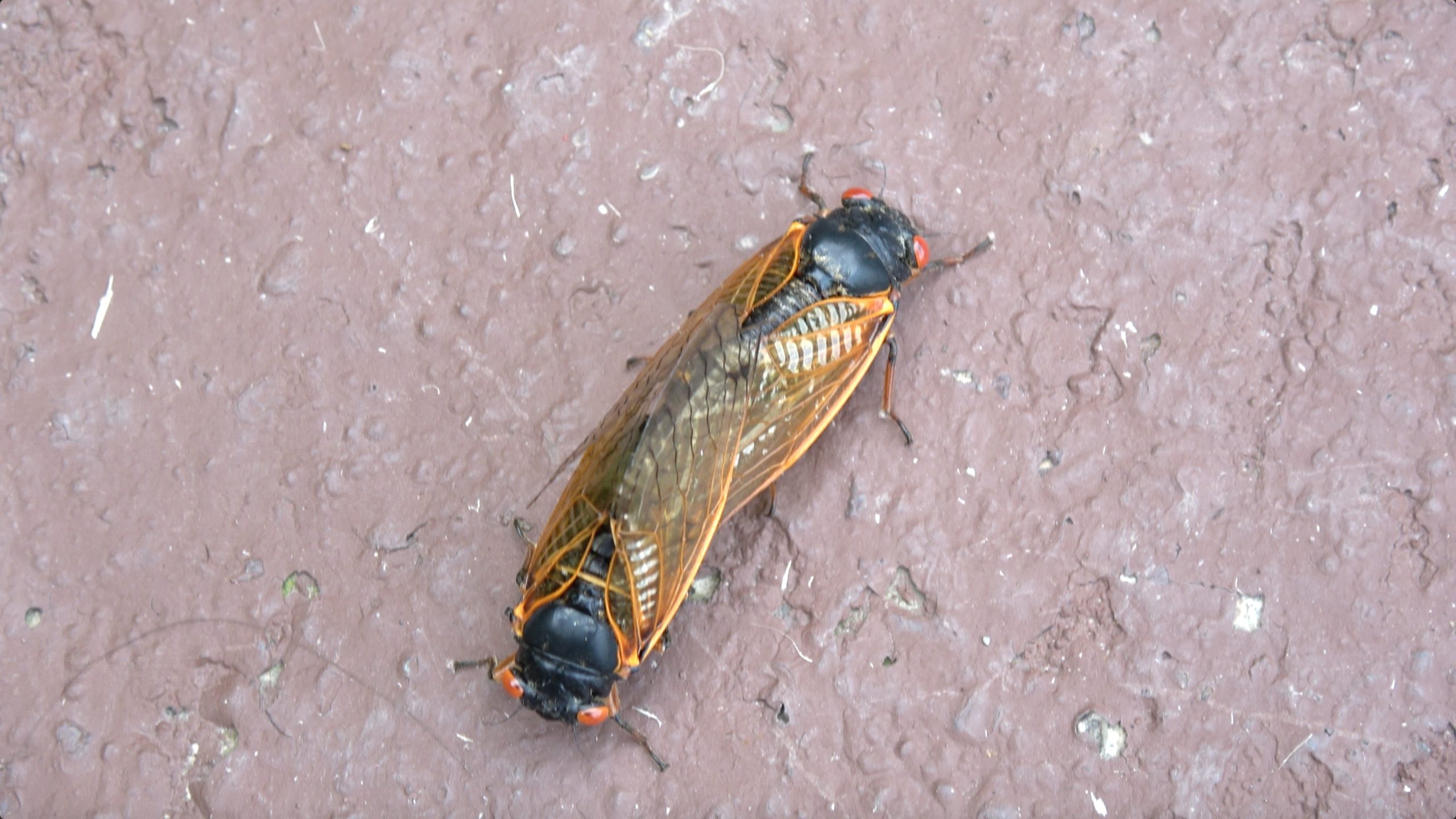
Brood V Magicicada mating
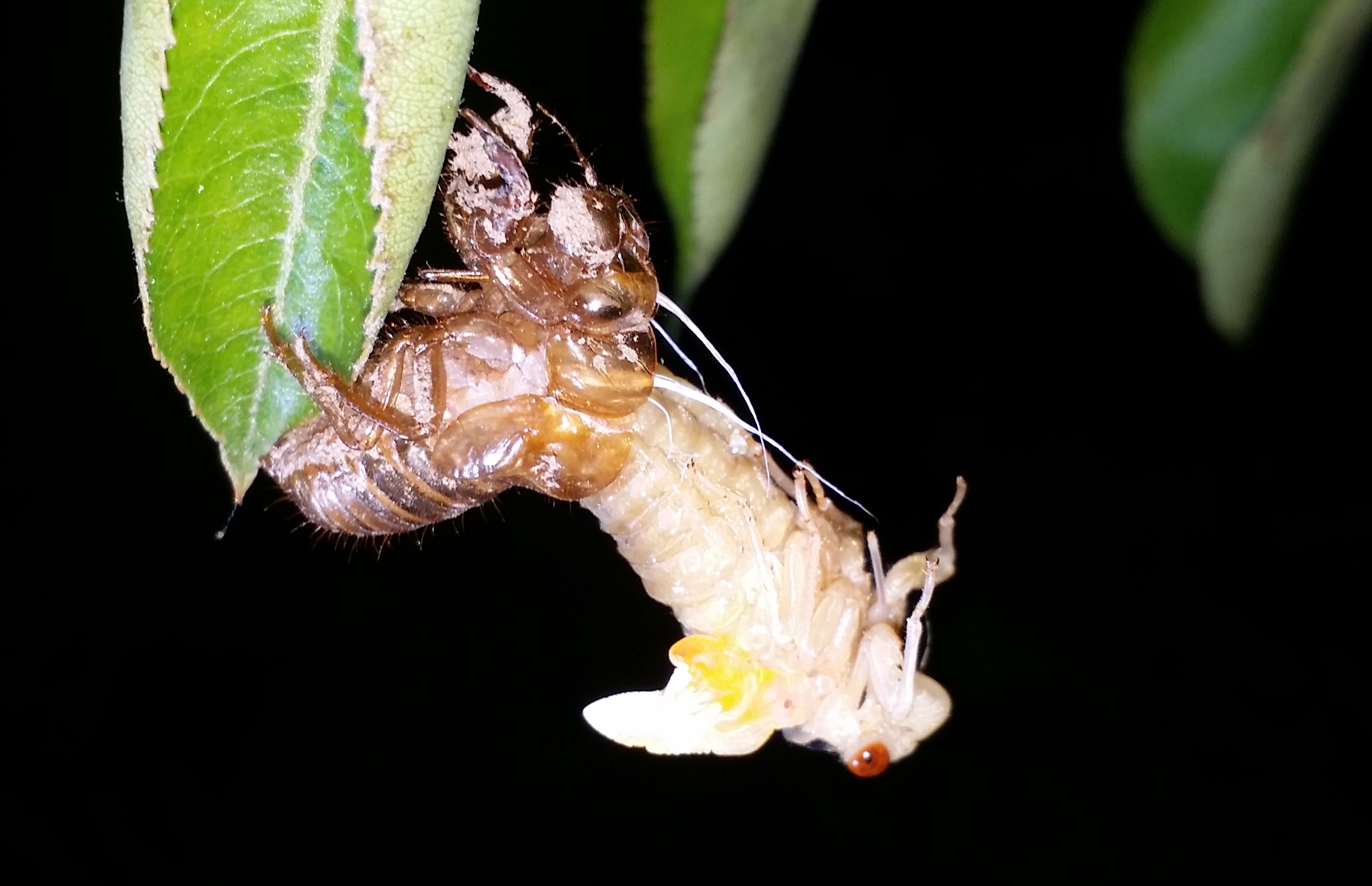
Brood V Magicicada molting
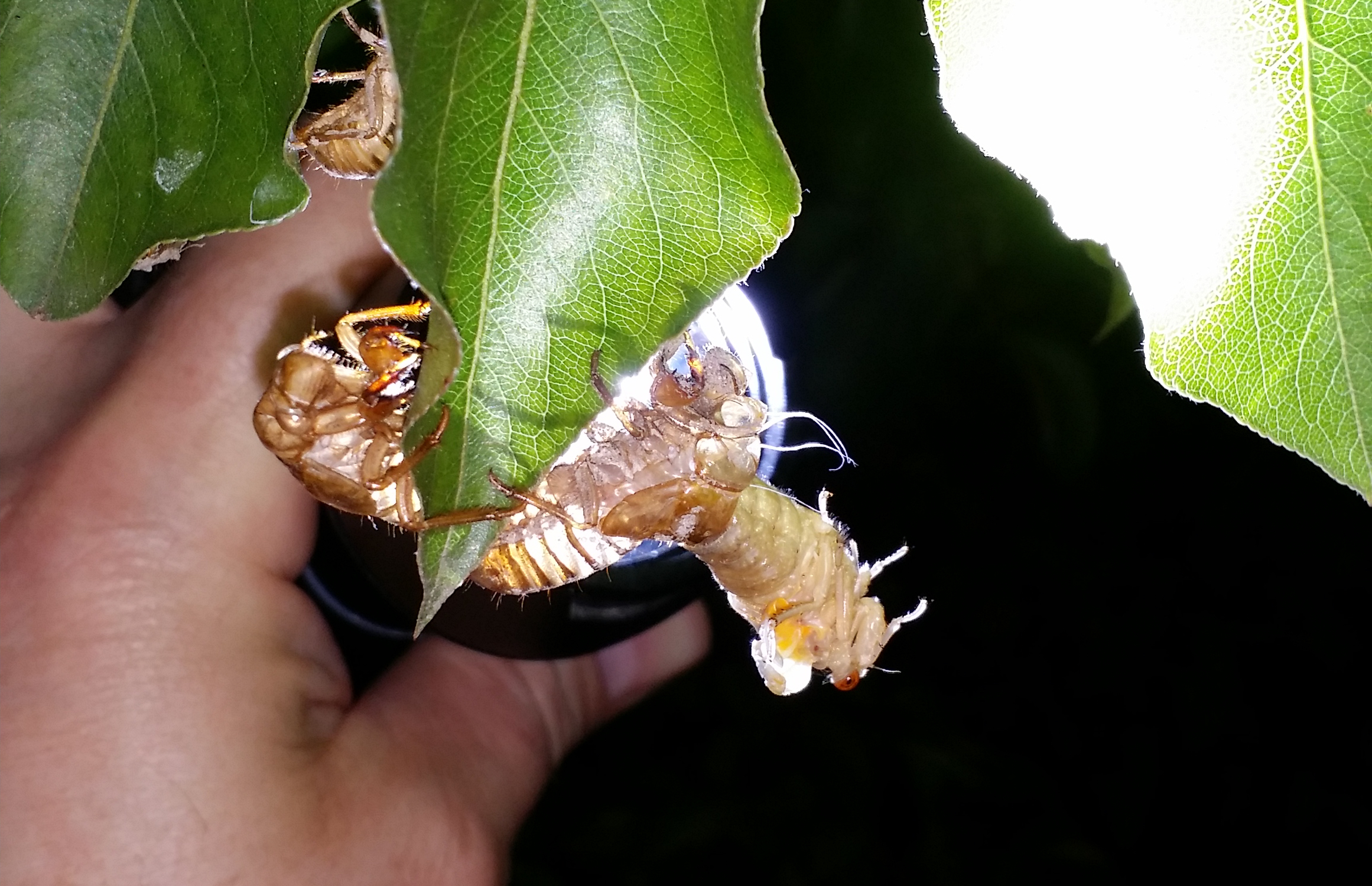
Brood V Magicicada molting
Brood V Magicicada molting
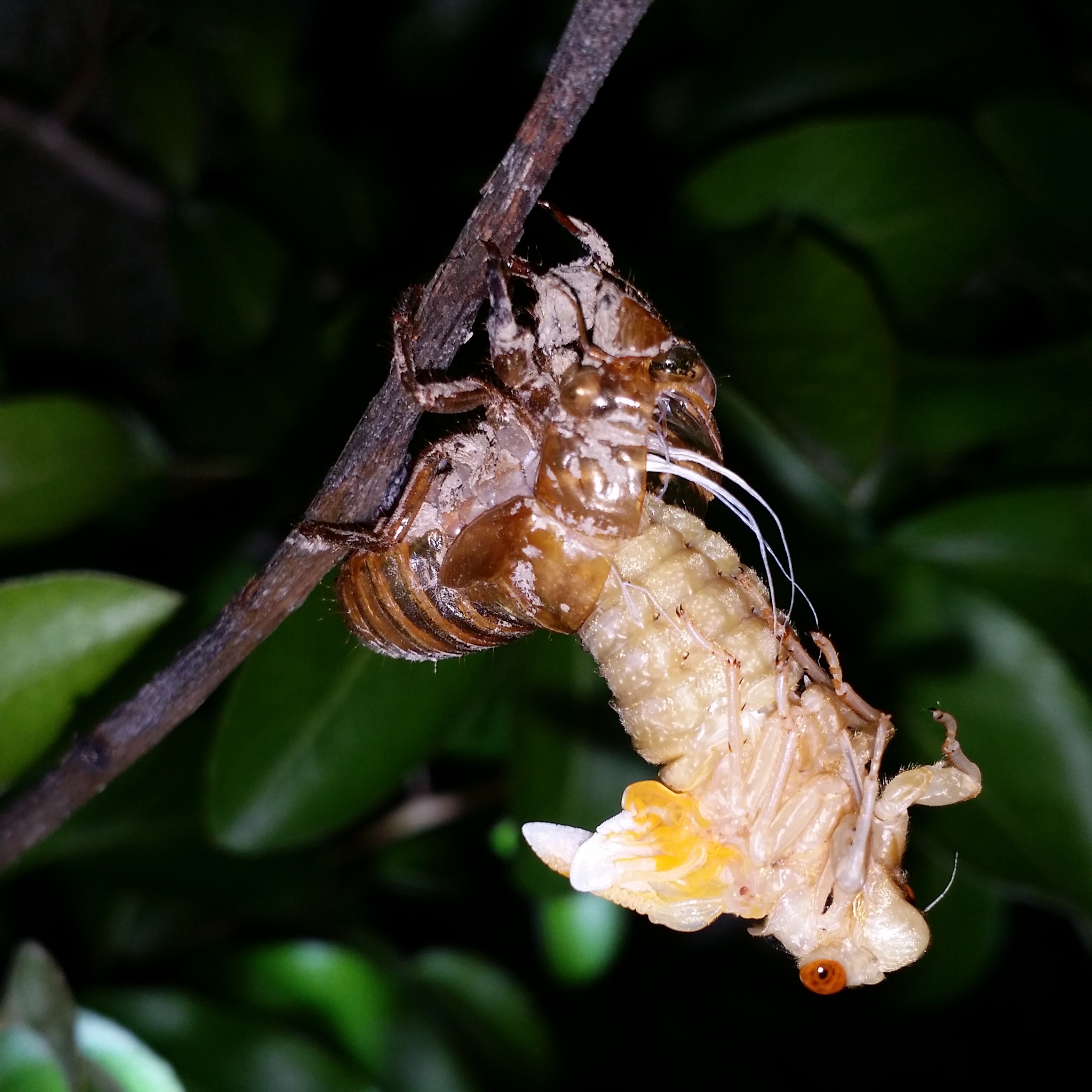
Brood V Magicicada molting
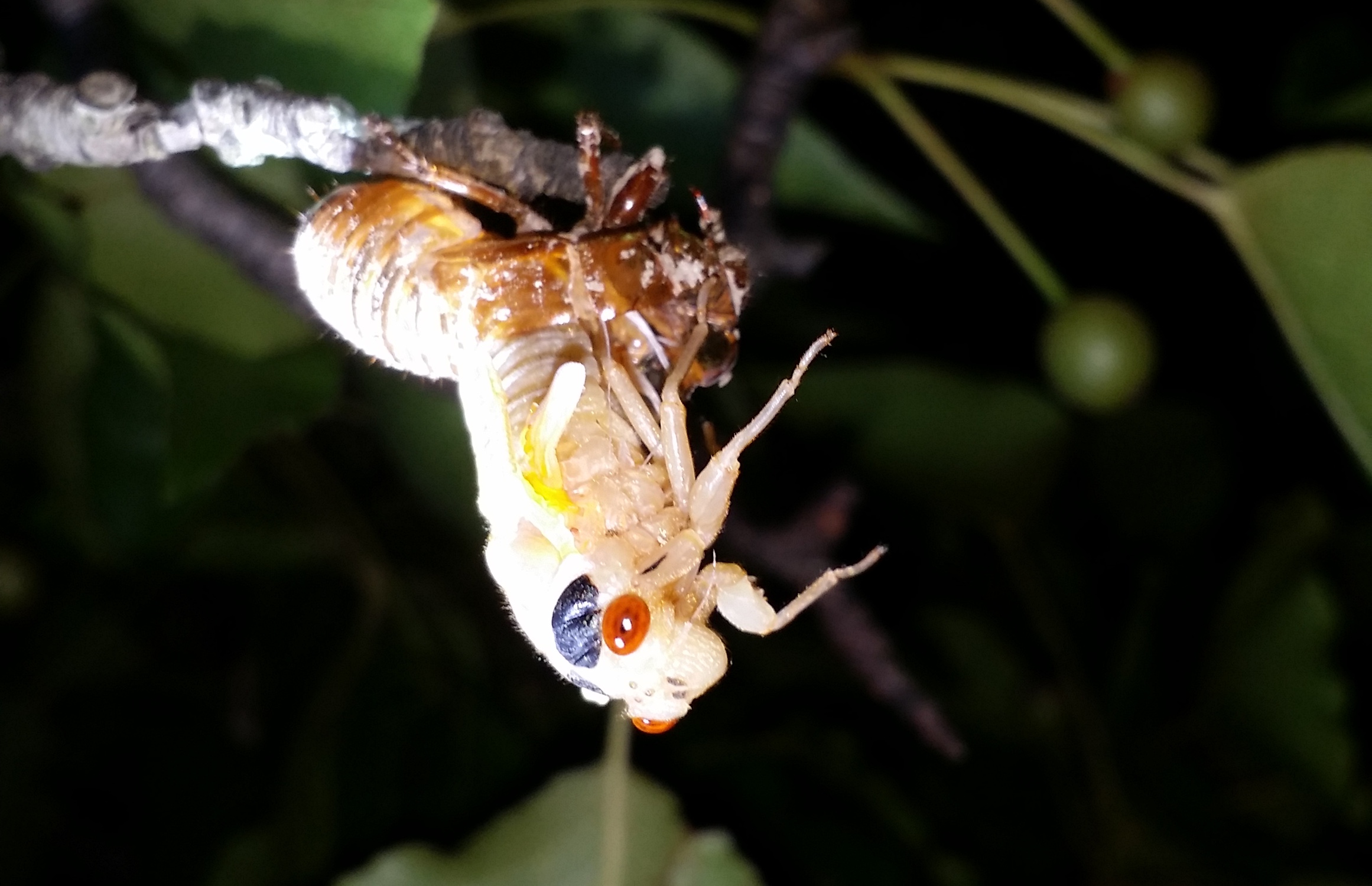
Brood V Magicicada molting
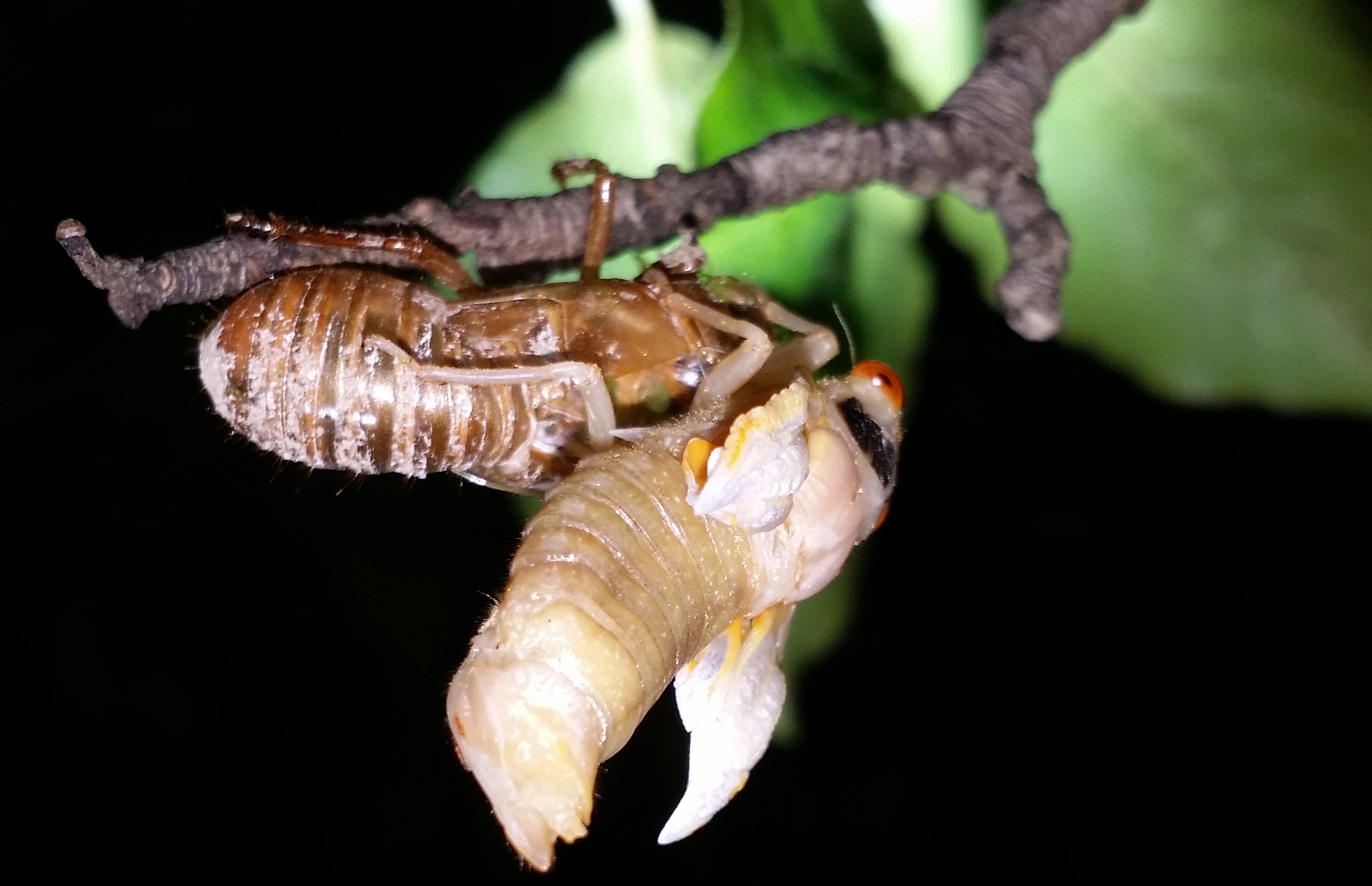
Brood V Magicicada molting
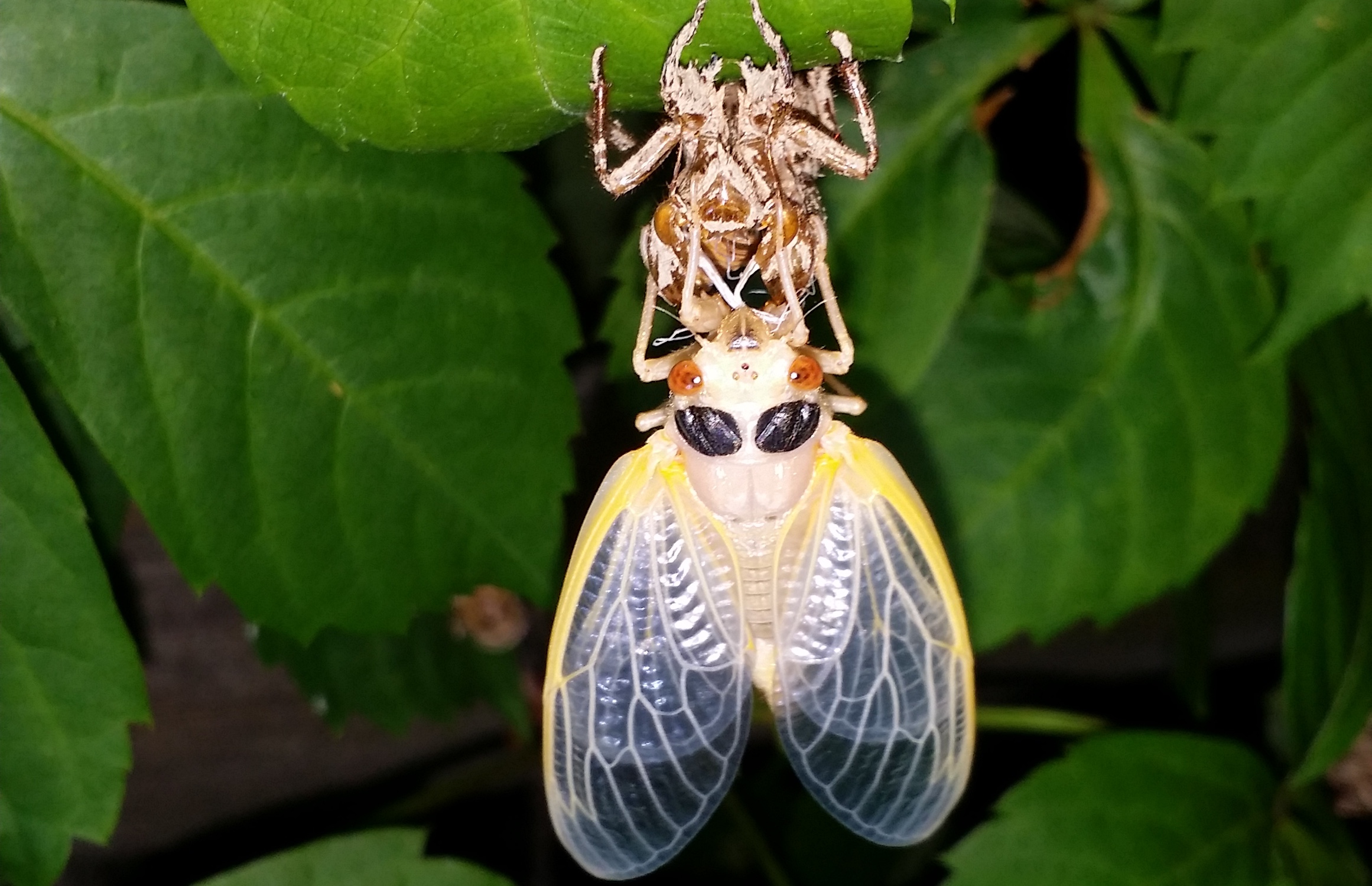
Magicicada with mustard eyes
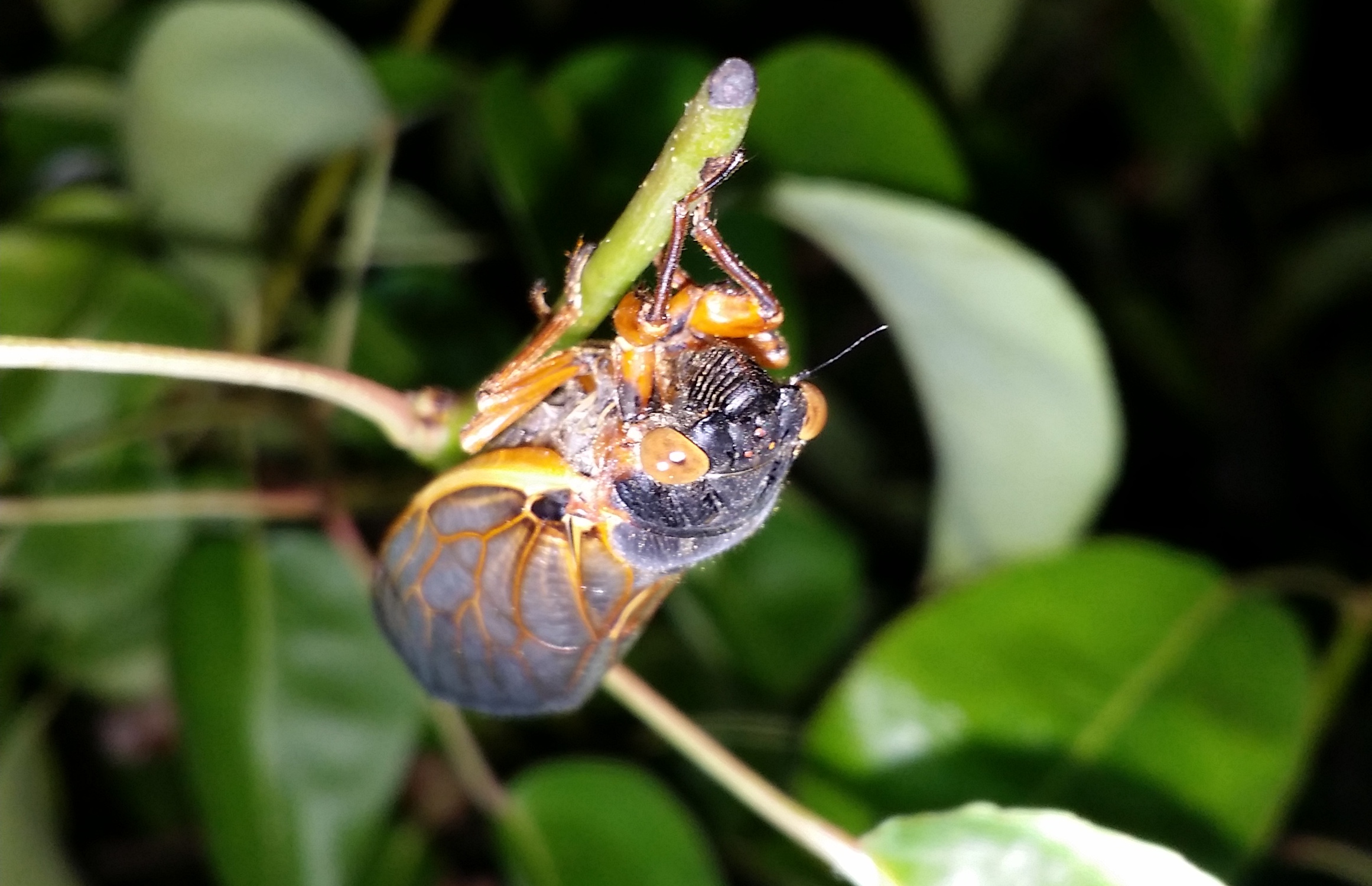
More from Brood V:
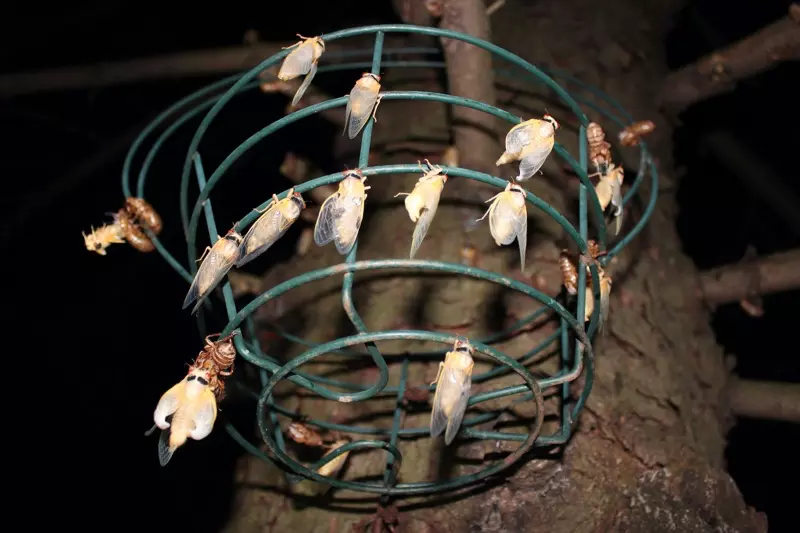
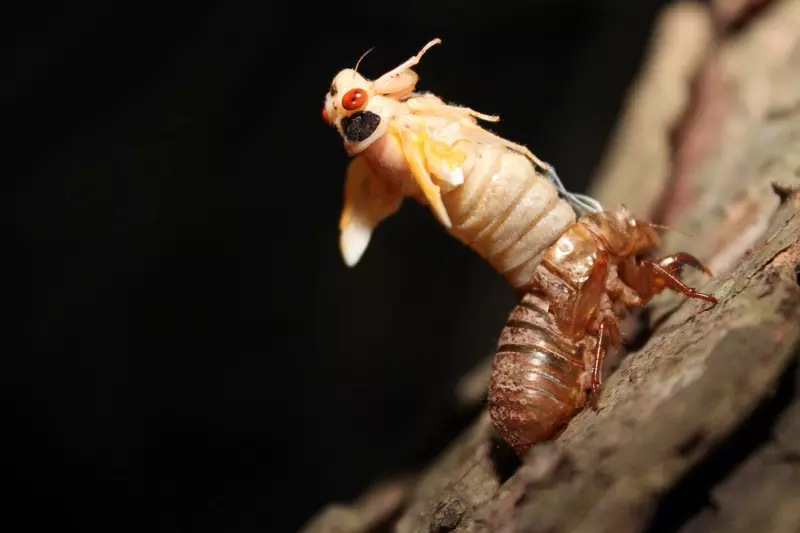
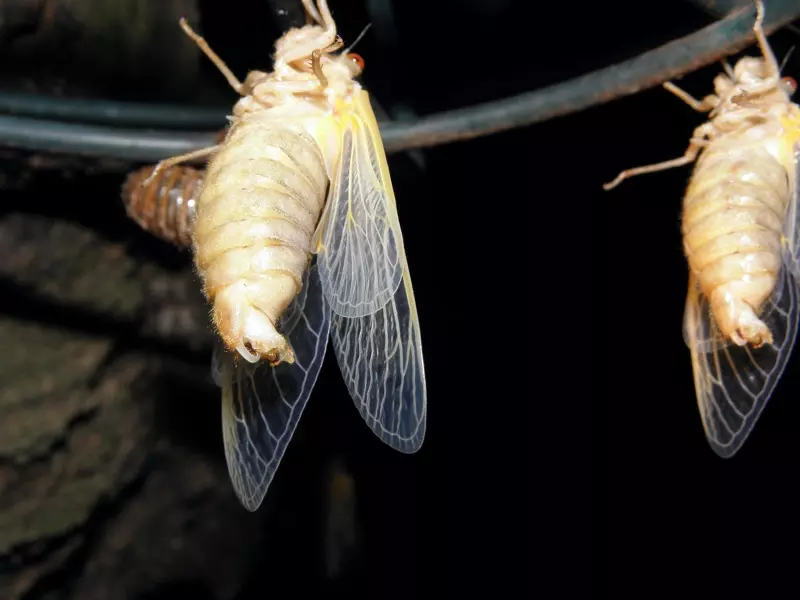
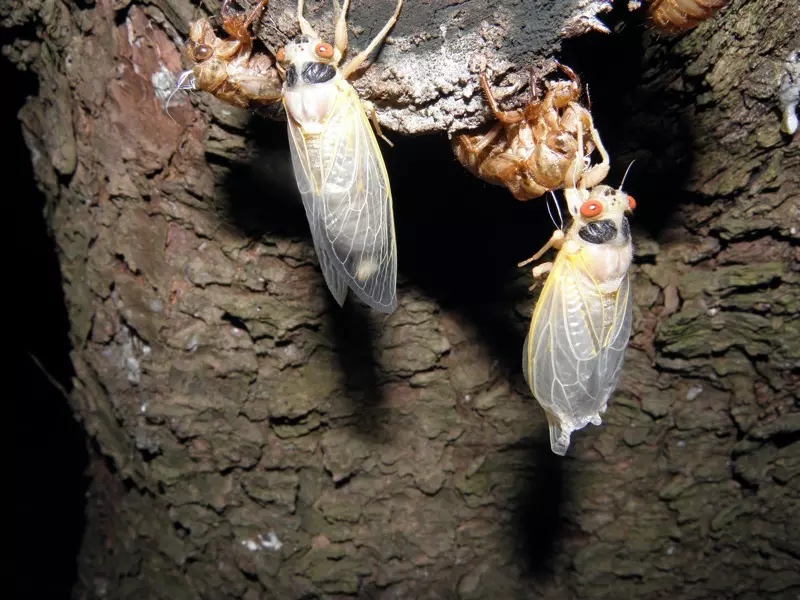
This is a series of molting and recently molted teneral (soft) cicadas from the 2013 Brood II Magicicada emergence in Metuchen, NJ.
Click/tap the image for a larger version.
A teneral Magicicada septendecim in Metuchen, NJ
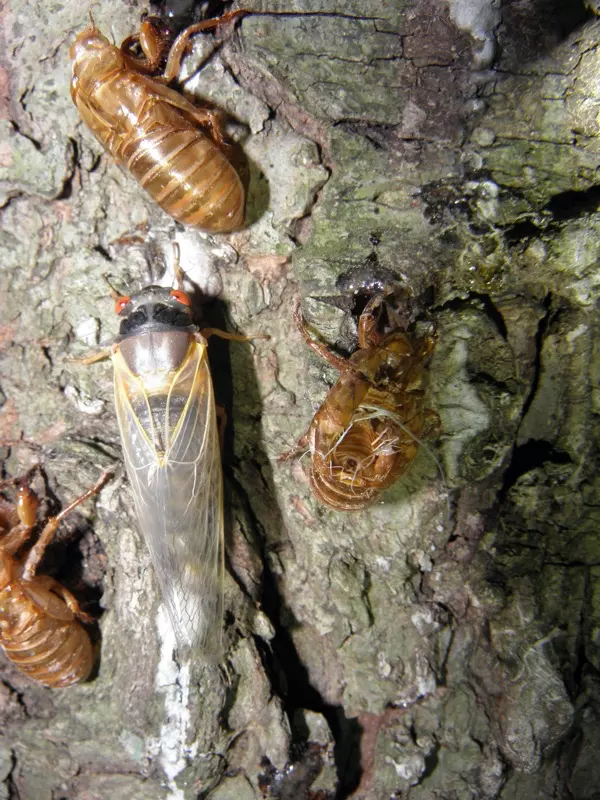
A tisket, a tasket, cicadas on a basket
Molting Magicicada in Metuchen, NJ
Magicicada emergence in Metuchen, NJ
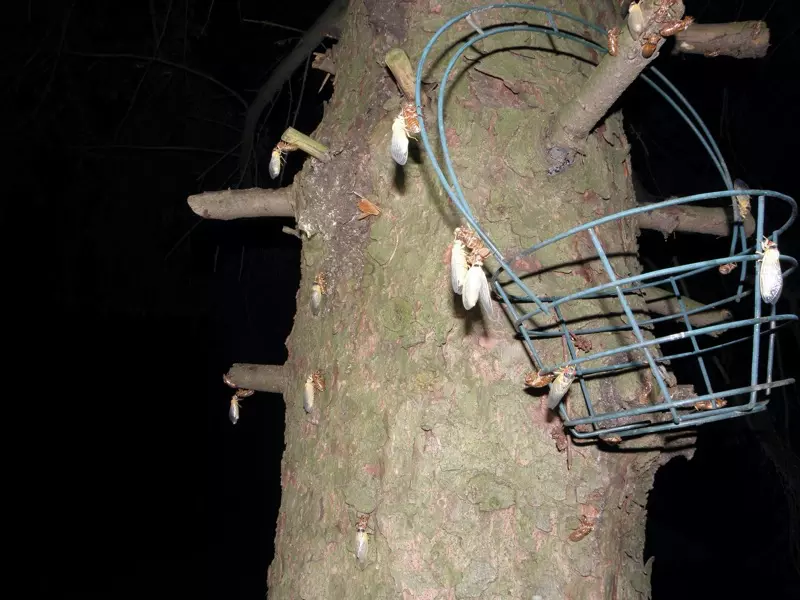
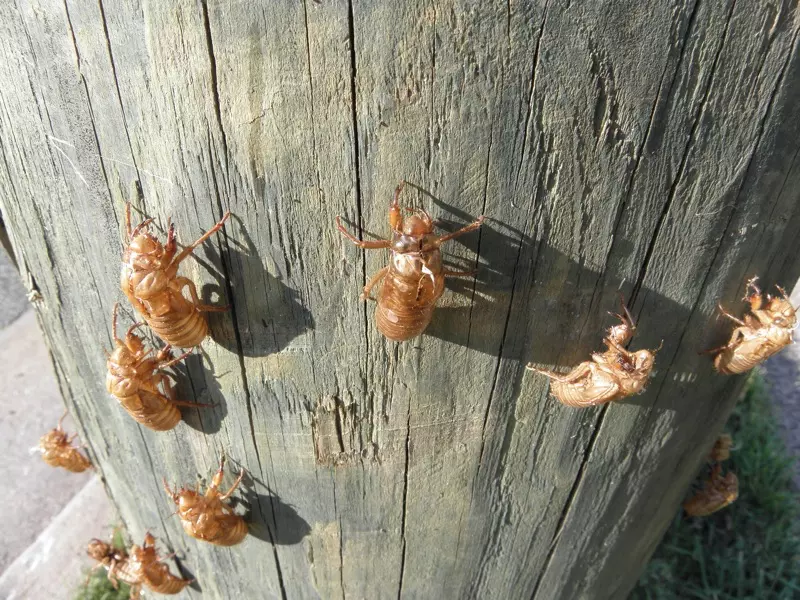
Magicicada exuvia Metuchen, NJ
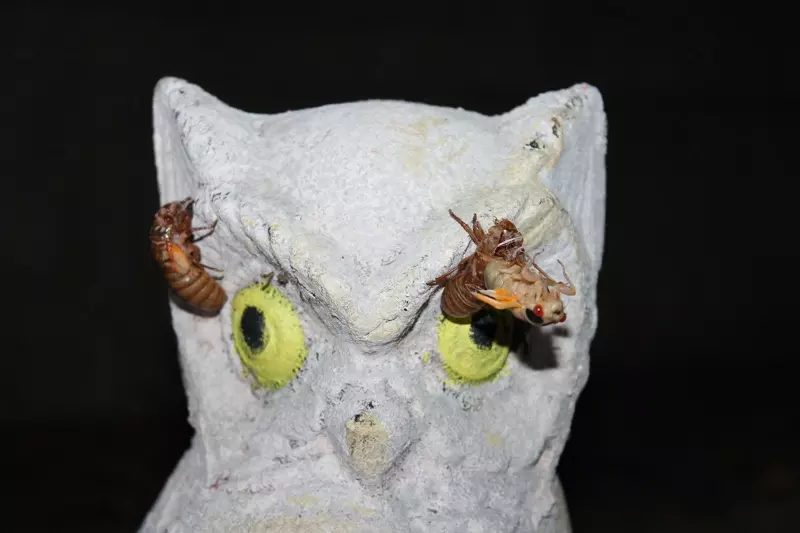
Magicicada nymph and teneral adult on an owl
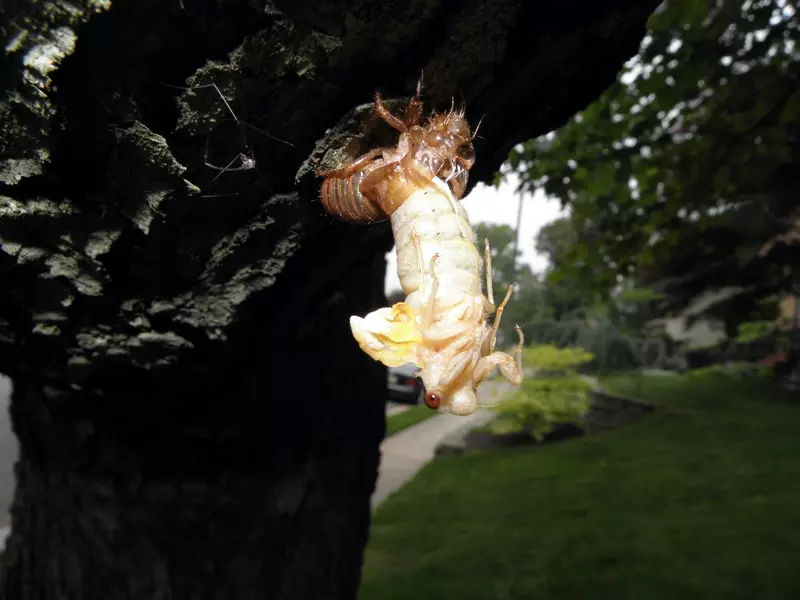
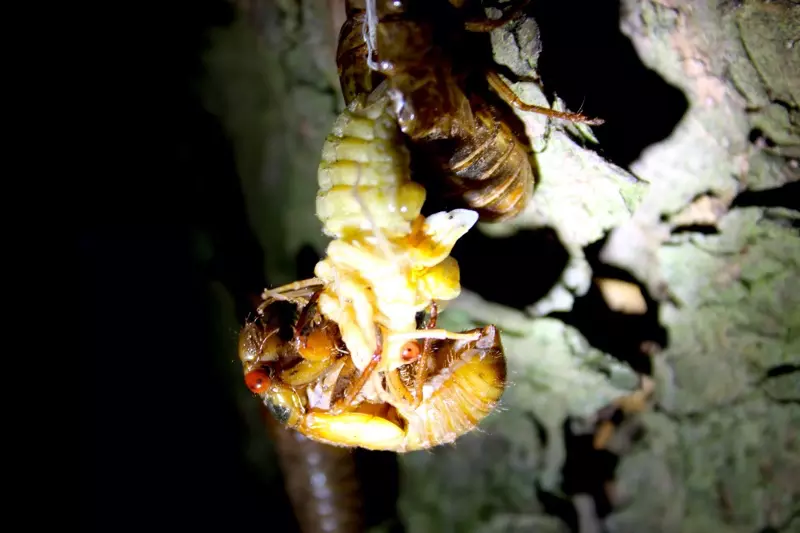
Magicicada molting in Metuchen, NJ
Magicicadas in various stages in Metuchen, NJ
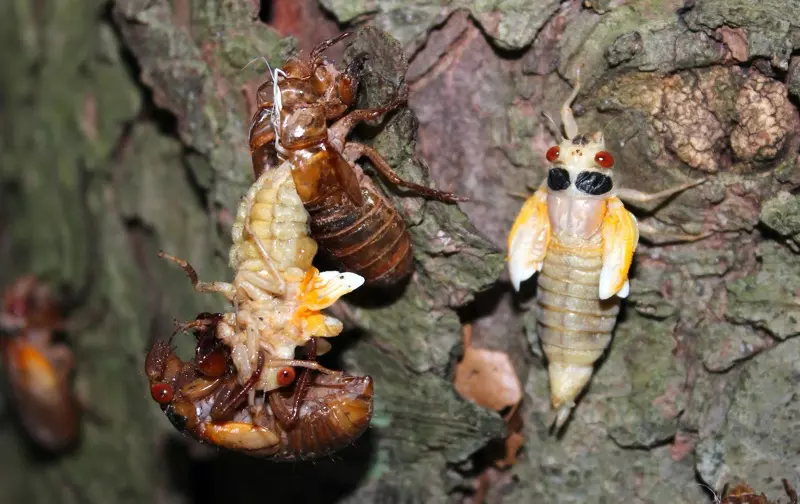
Nymph crawling on Magicicada molting in Metuchen, NJ
Teneral Magicicada cassini in Metuchen, NJ
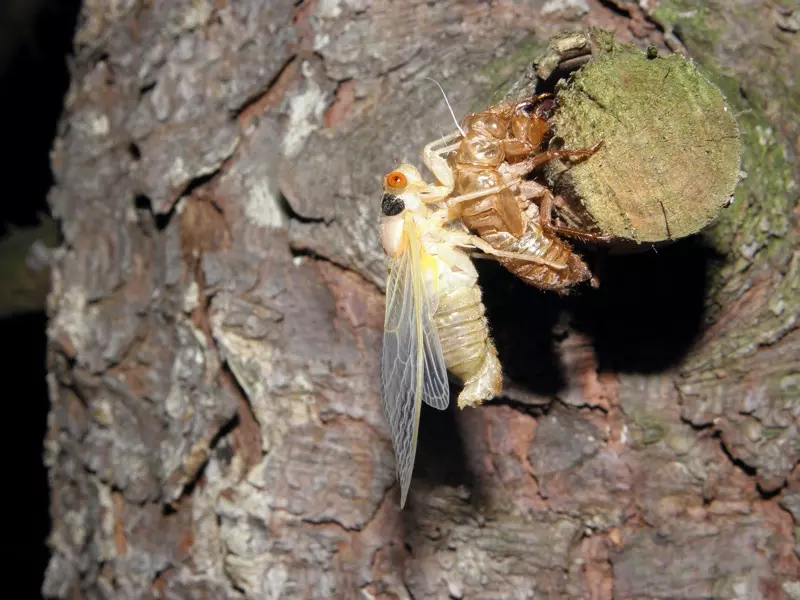
Teneral Magicicada in Metuchen, NJ
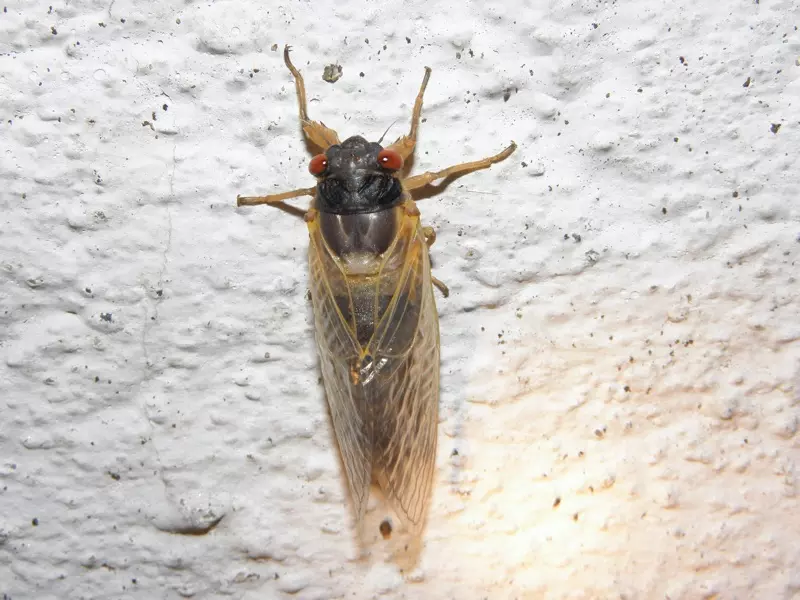
Teneral Magicicada in Metuchen, NJ
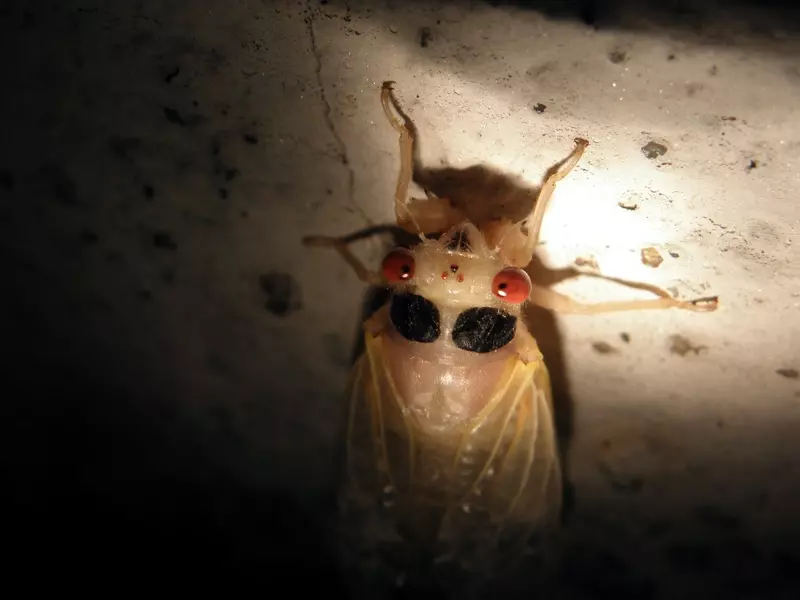
Teneral Magicicada septendecim in Metuchen NJ
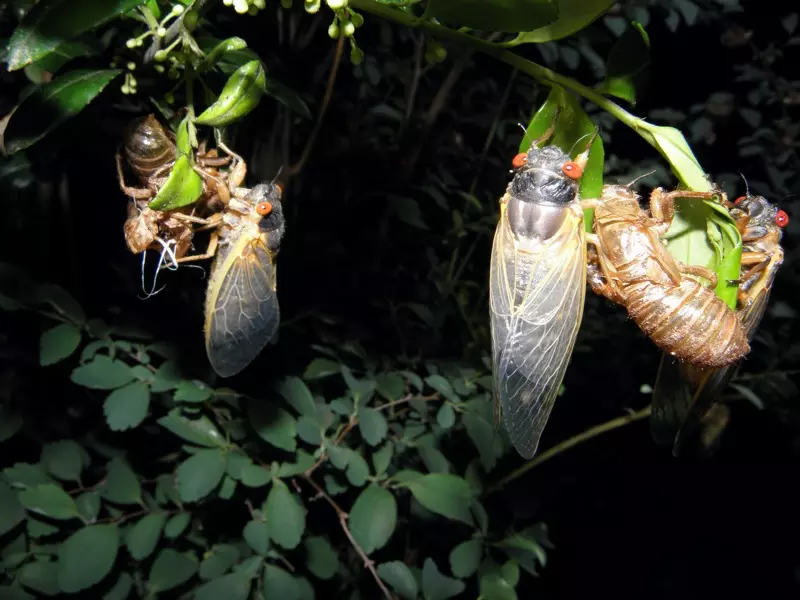
Teneral Magicicadas on a spruce tree
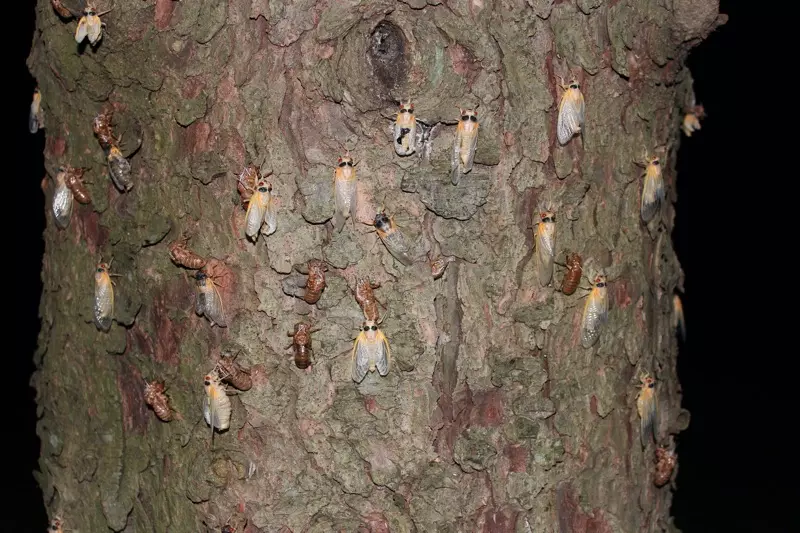
Teneral male Magicicada in Metuchen, NJ
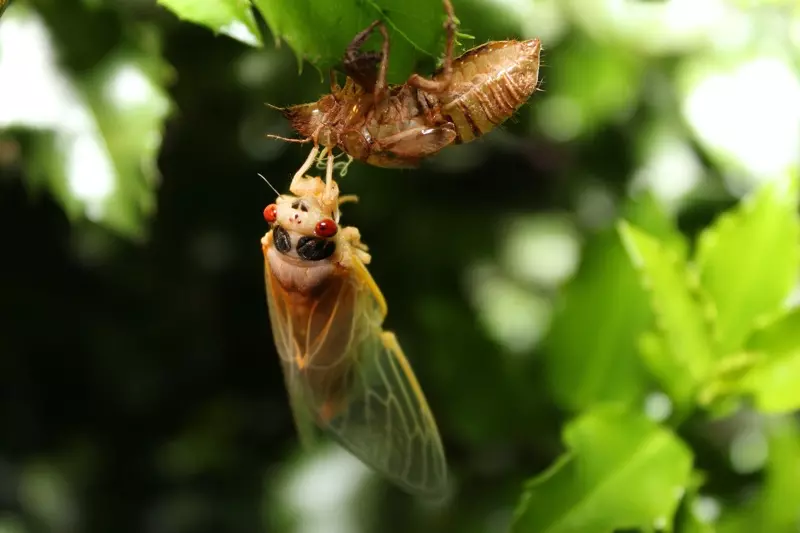
Two male Magicicada cicadas
Two teneral male Magicicadas Metuchen, NJ
White teneral Magicicada in Metuchen yes they are white when they emerge
Other galleries in this series:
Photos of dead specimens from the Brood II Magicicada emergence in Middlesex County, NJ, in 2013.
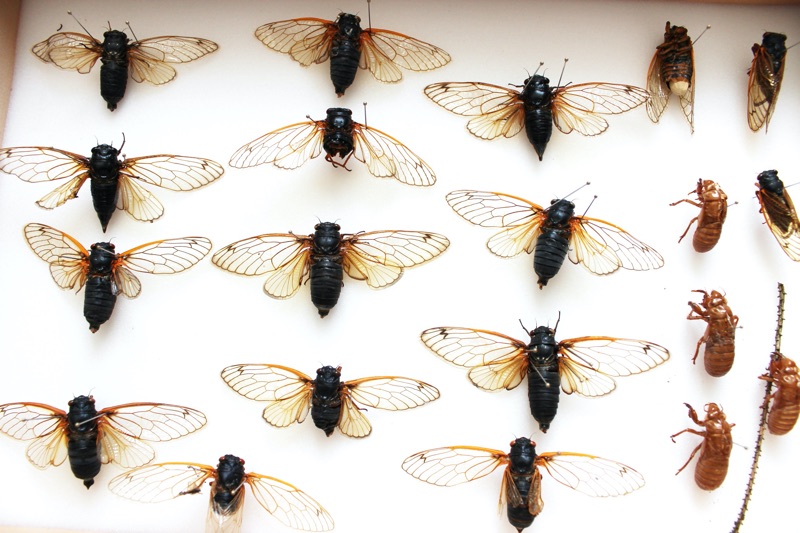
Brood II Magicada collection from 2013:
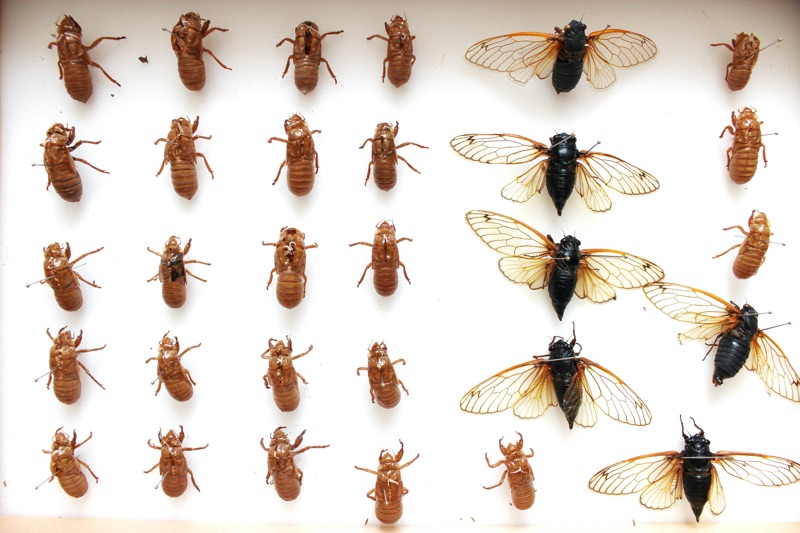
Brood II Magicada collection from 2013:
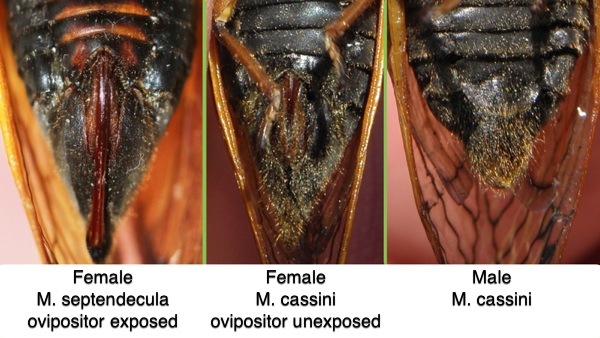
Comparison of Male and Female Magicicada genitalia:
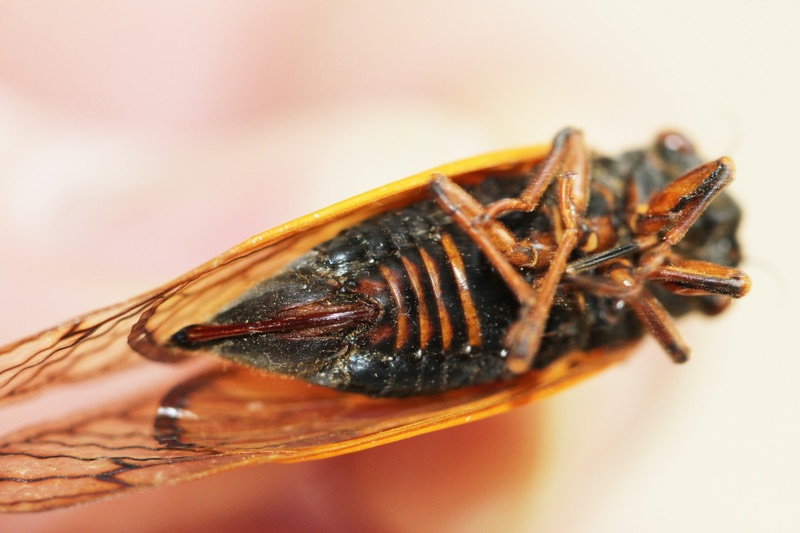
Magicicada septendecula female abdomen:
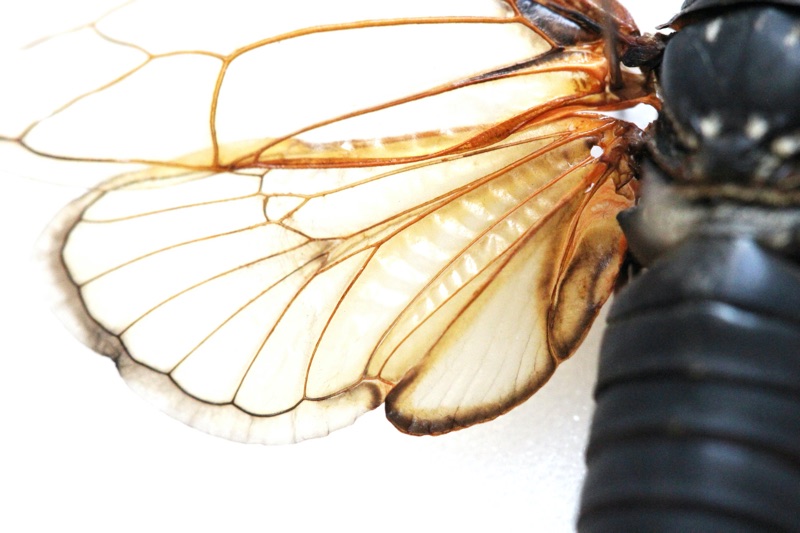
Magicicada septendecim hind wing:
Male Magicicada septendecim infected with Massospora cicadina fungus:
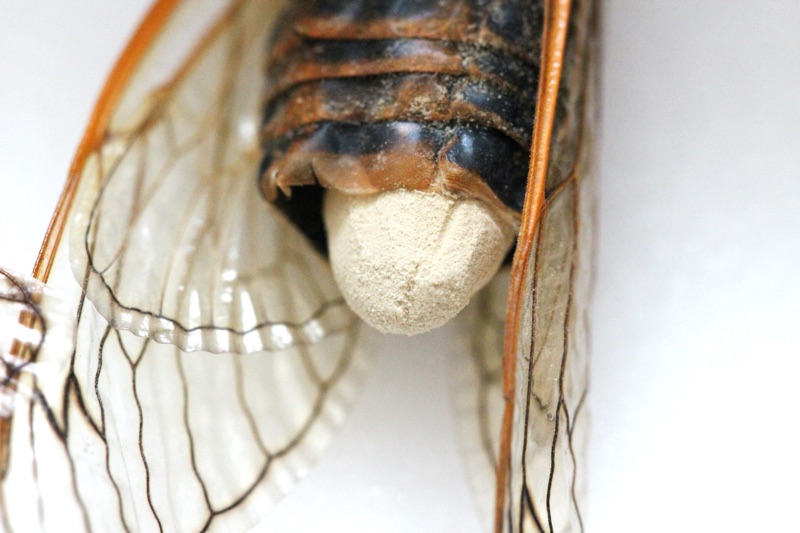
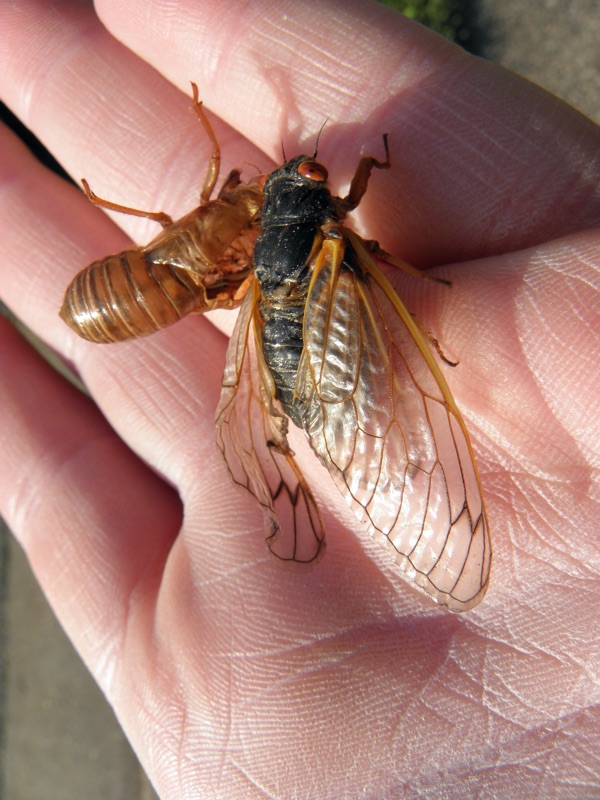
These are photos of live cicada specimens from the 2013 Brood II emergence in Middlesex County, NJ.
Magicicada septendecim Metuchen NJ:
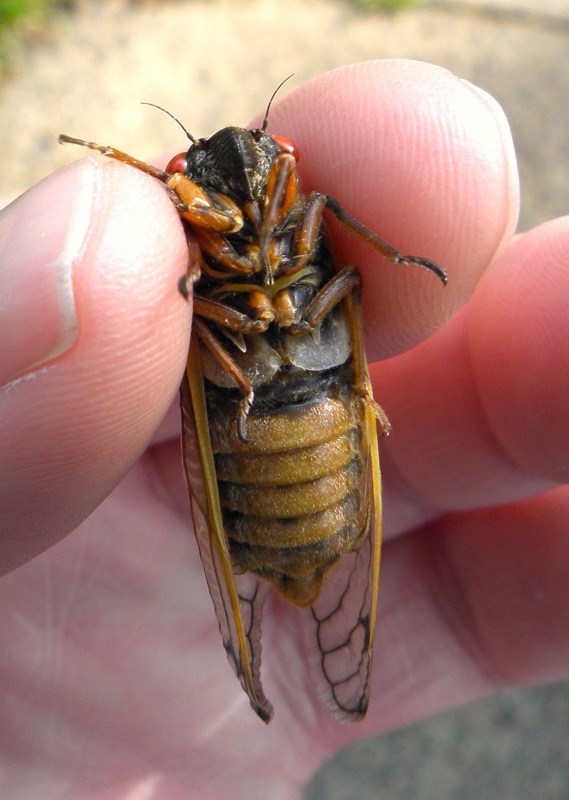
Male Magicicada septendecim Metuchen NJ. Abdomen.
Male Magicicada septendecim Metuchen NJ:
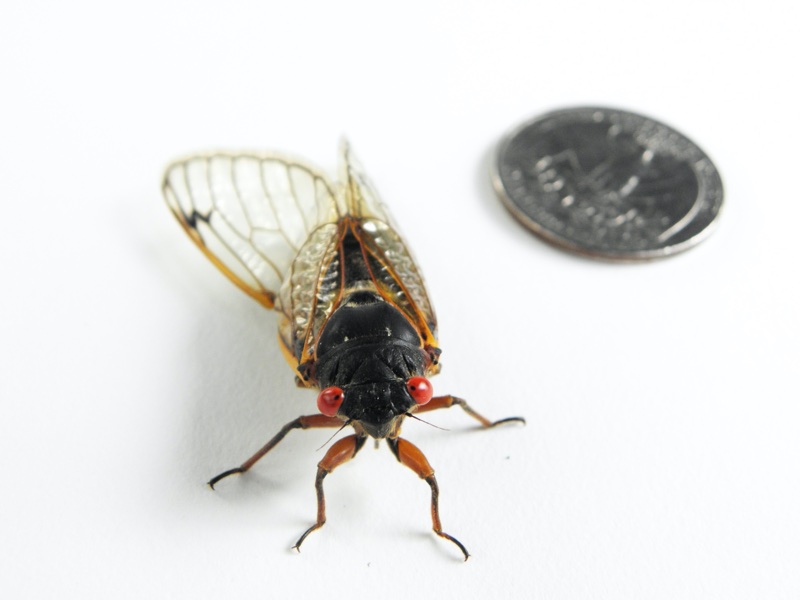
Male Magicicada septendecim Metuchen NJ:
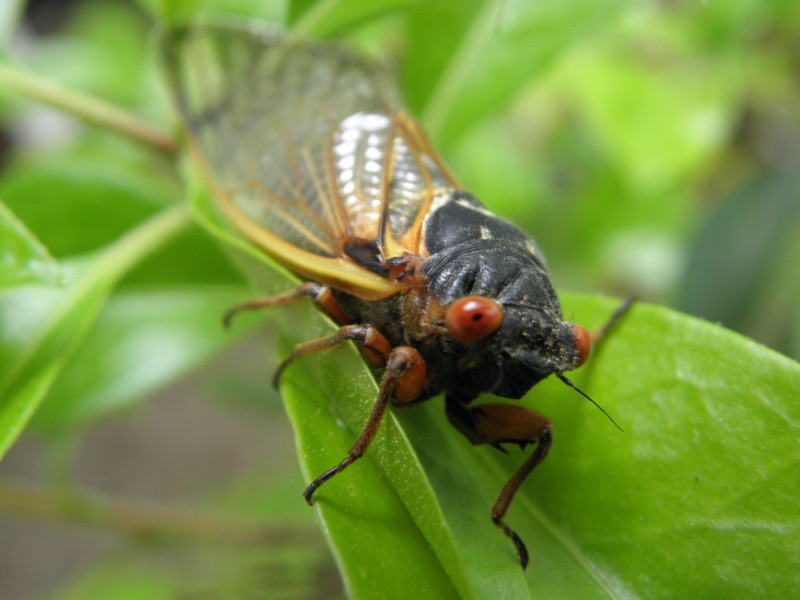
Male Magicicada Metuchen NJ:
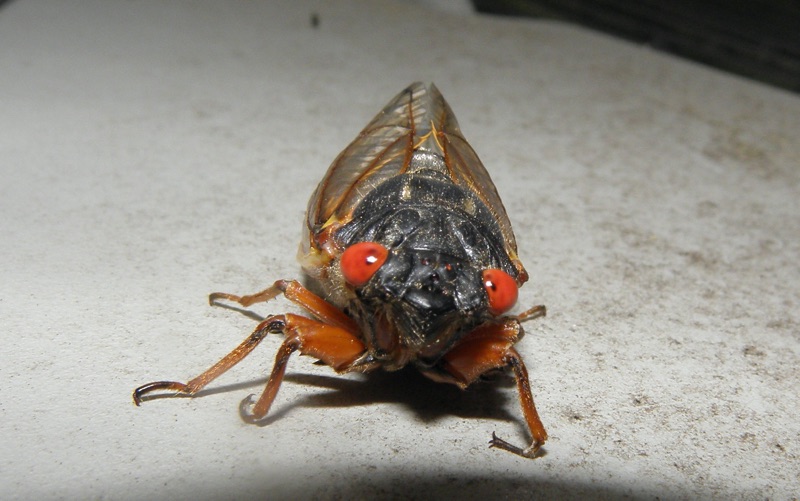
Female Magicicada septendecim Metuchen NJ:
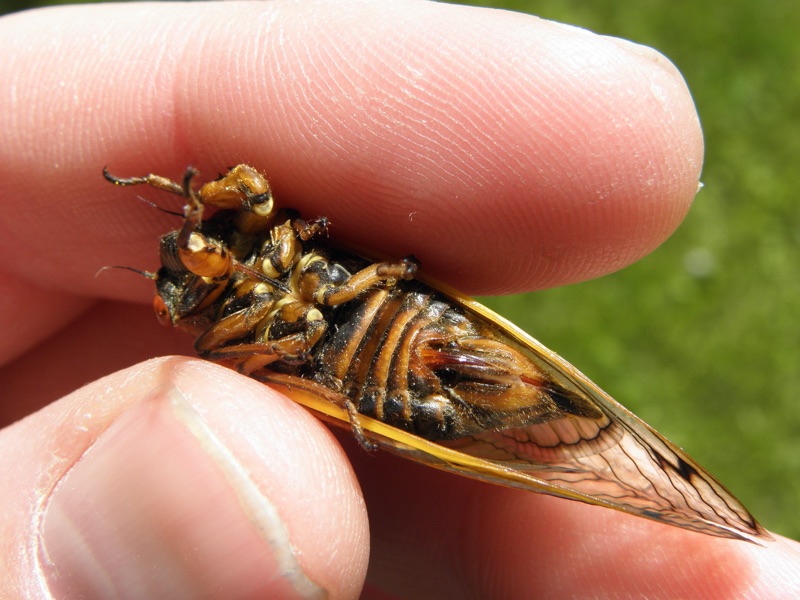
Male M. septendecim Metuchen NJ: