Categories
Elias Bonaros Neotibicen

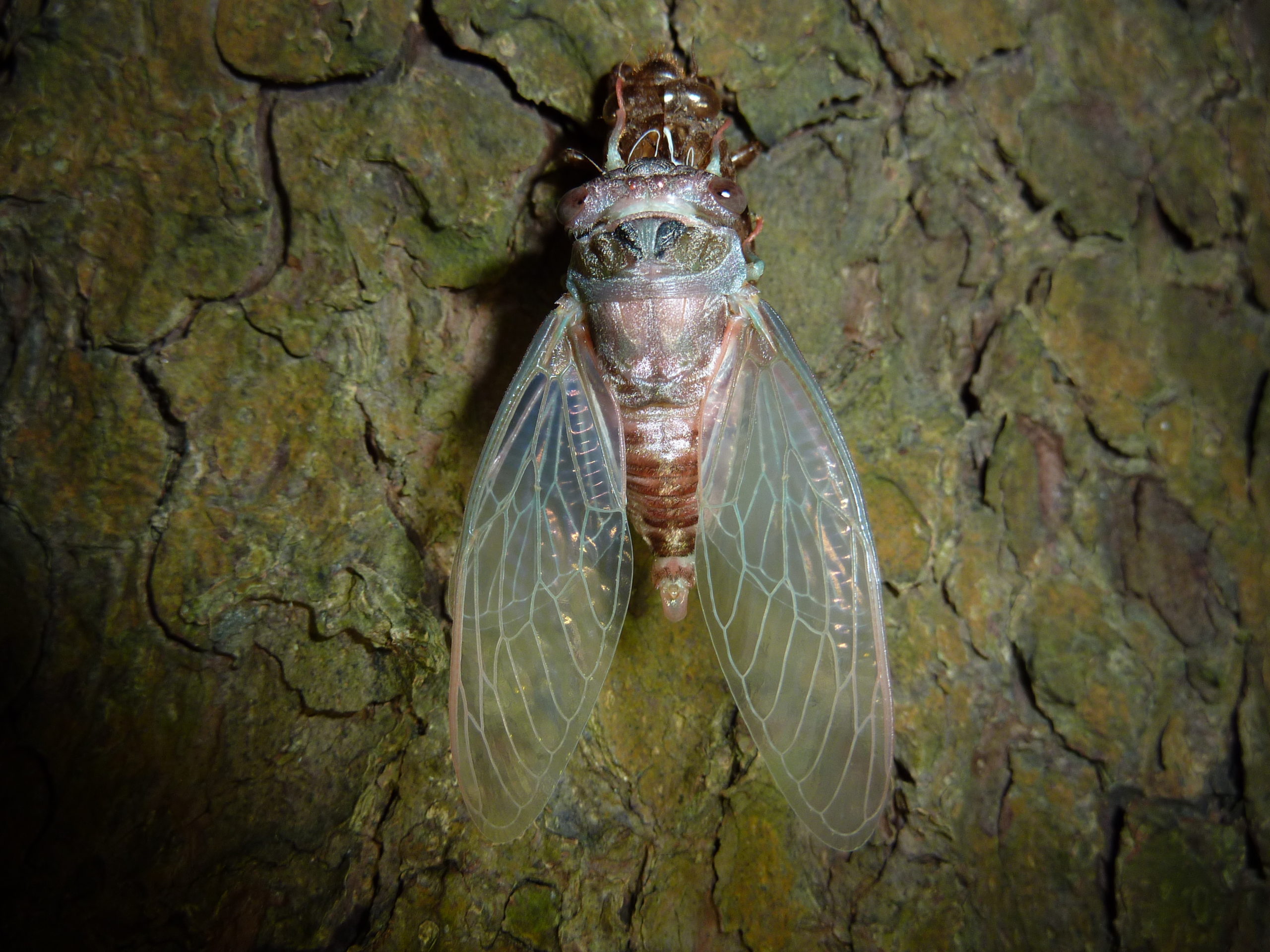
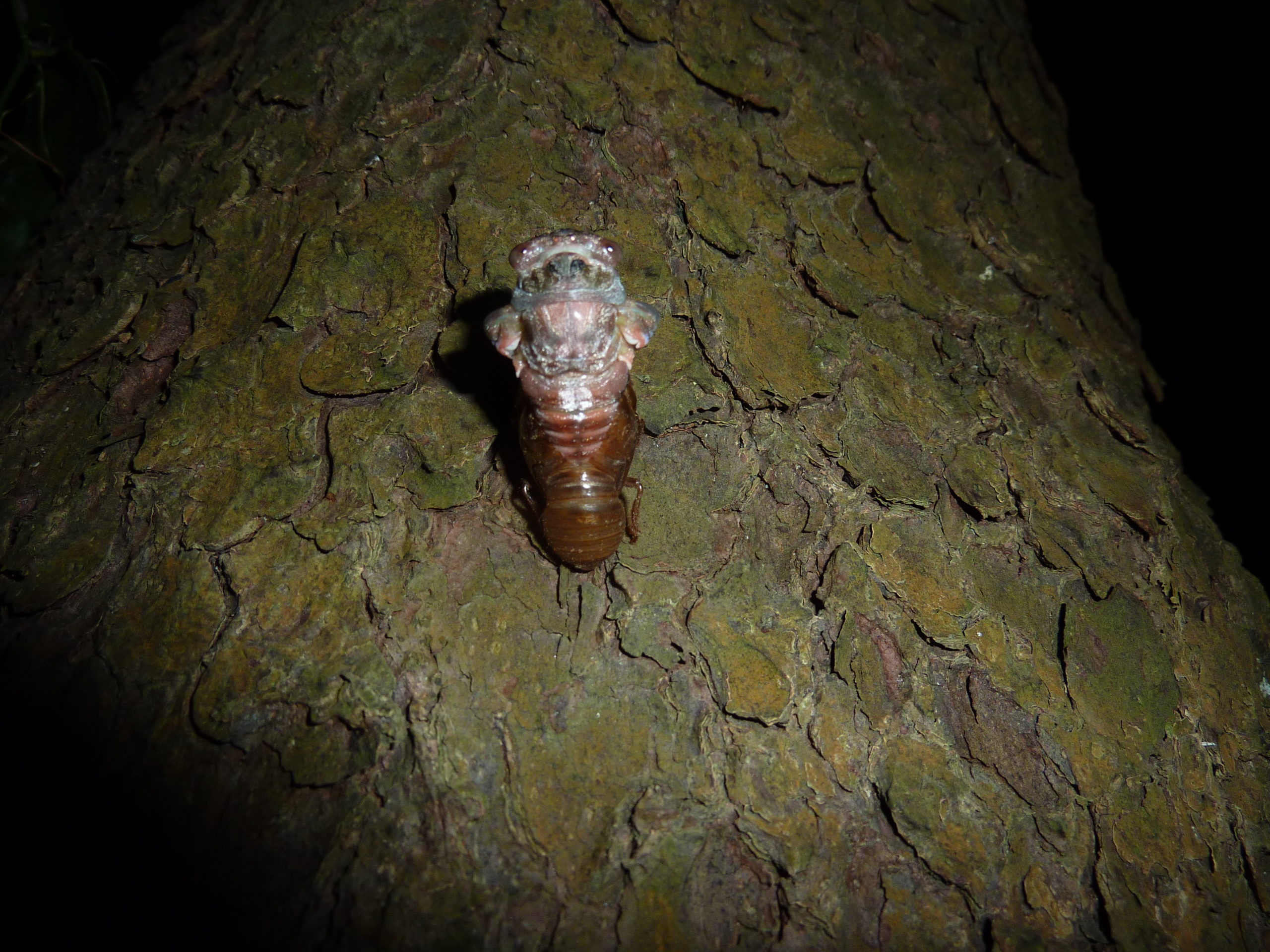
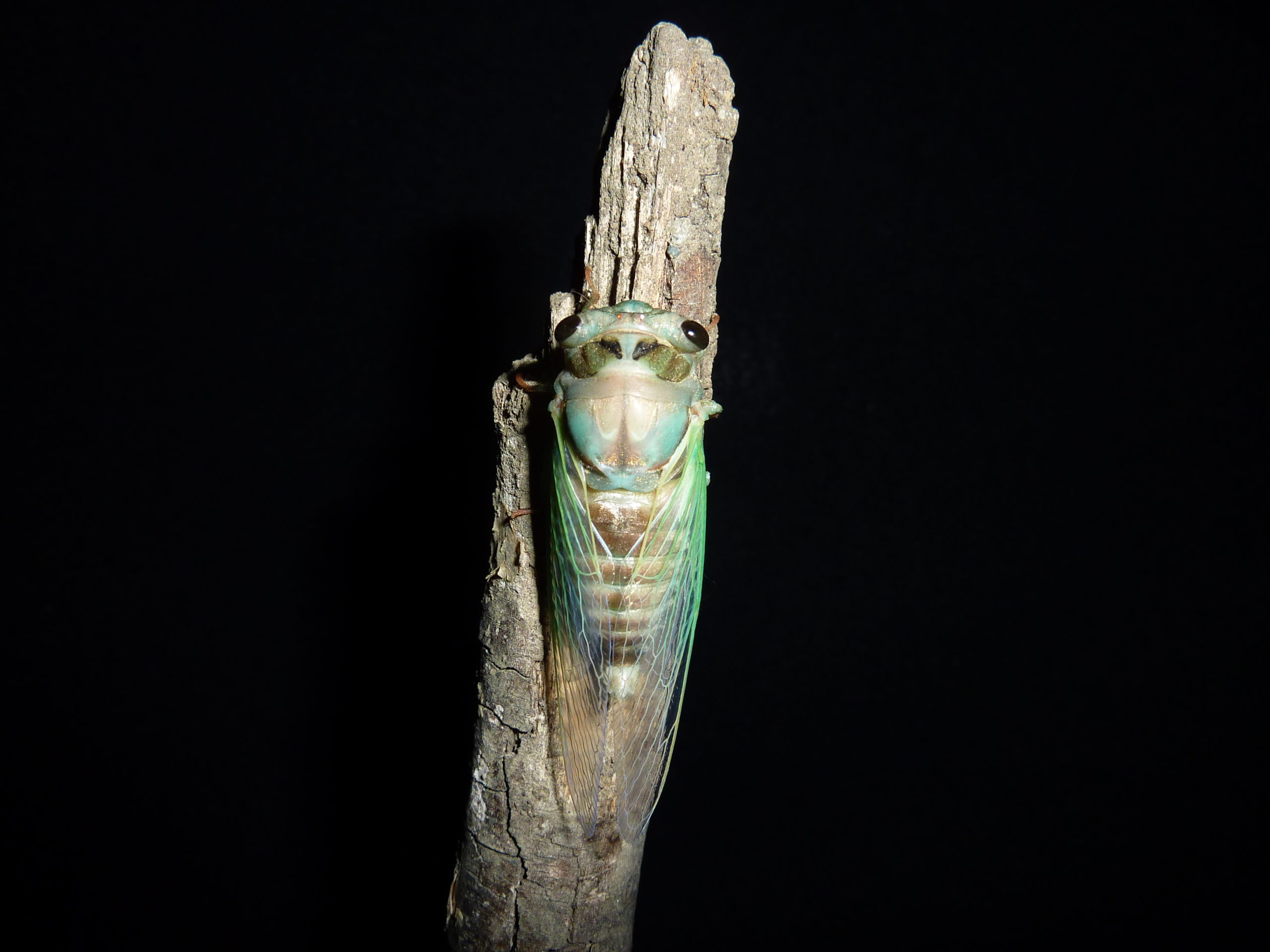
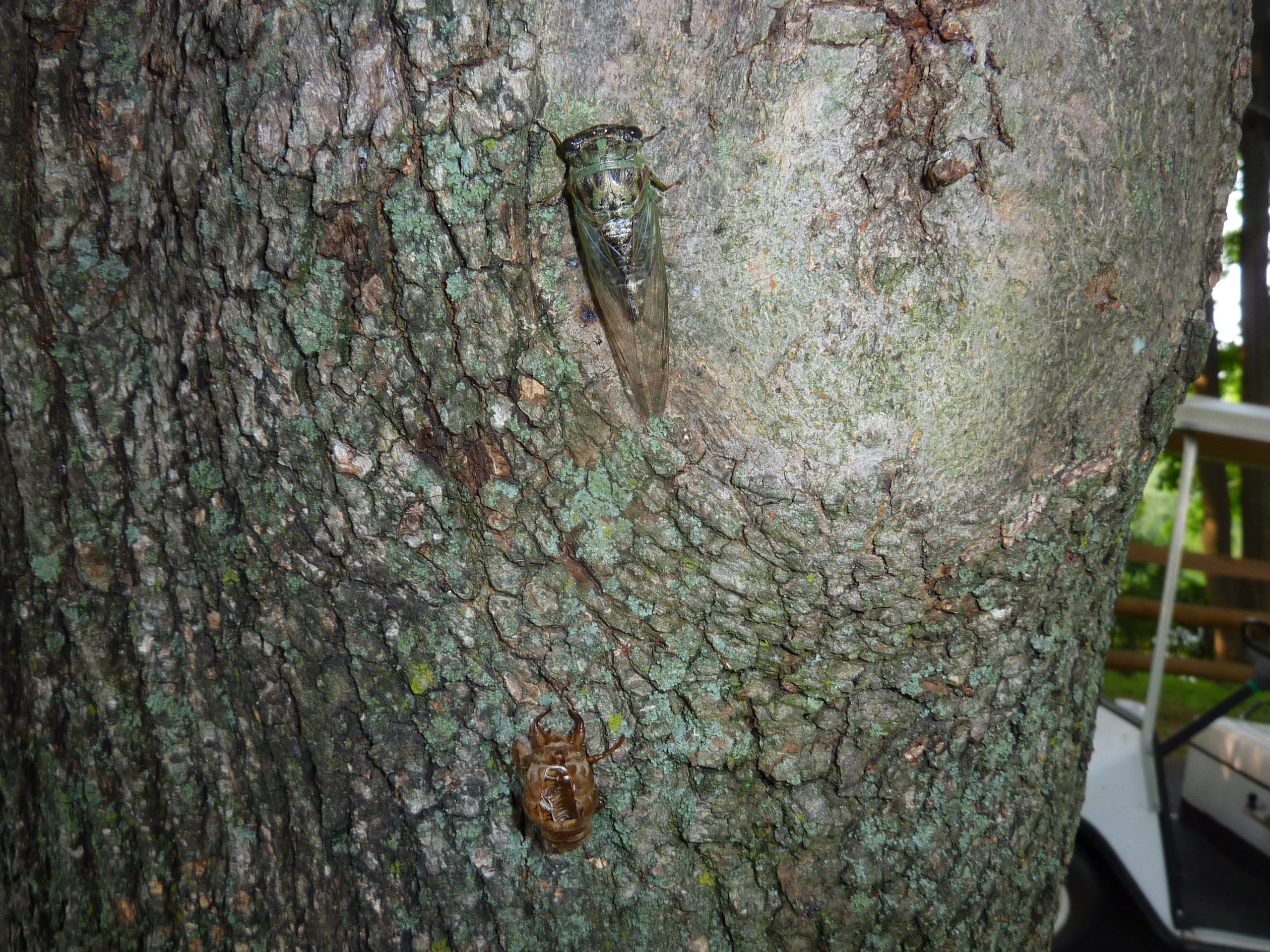
Blue Neotibicen davisi found in Cape May county by Elias Bonaros

No photos yet!

Elias Bonaros has been visiting Cicada Mania since at least 2004 (see old message board archives and all posts about Elias on this site). I met him in person for the first time in 2013 during the Brood II cicada emergence. We have hung out many times since then, in search of cicadas. Elias is a true cicada enthusiast and autodidact. Not only does he discuss cicadas online, but he also befriends cicada experts, and seeks cicadas out in the real world, traveling as far as Fiji to find the 8-year periodical Nanai Cicadas. He is the real deal.

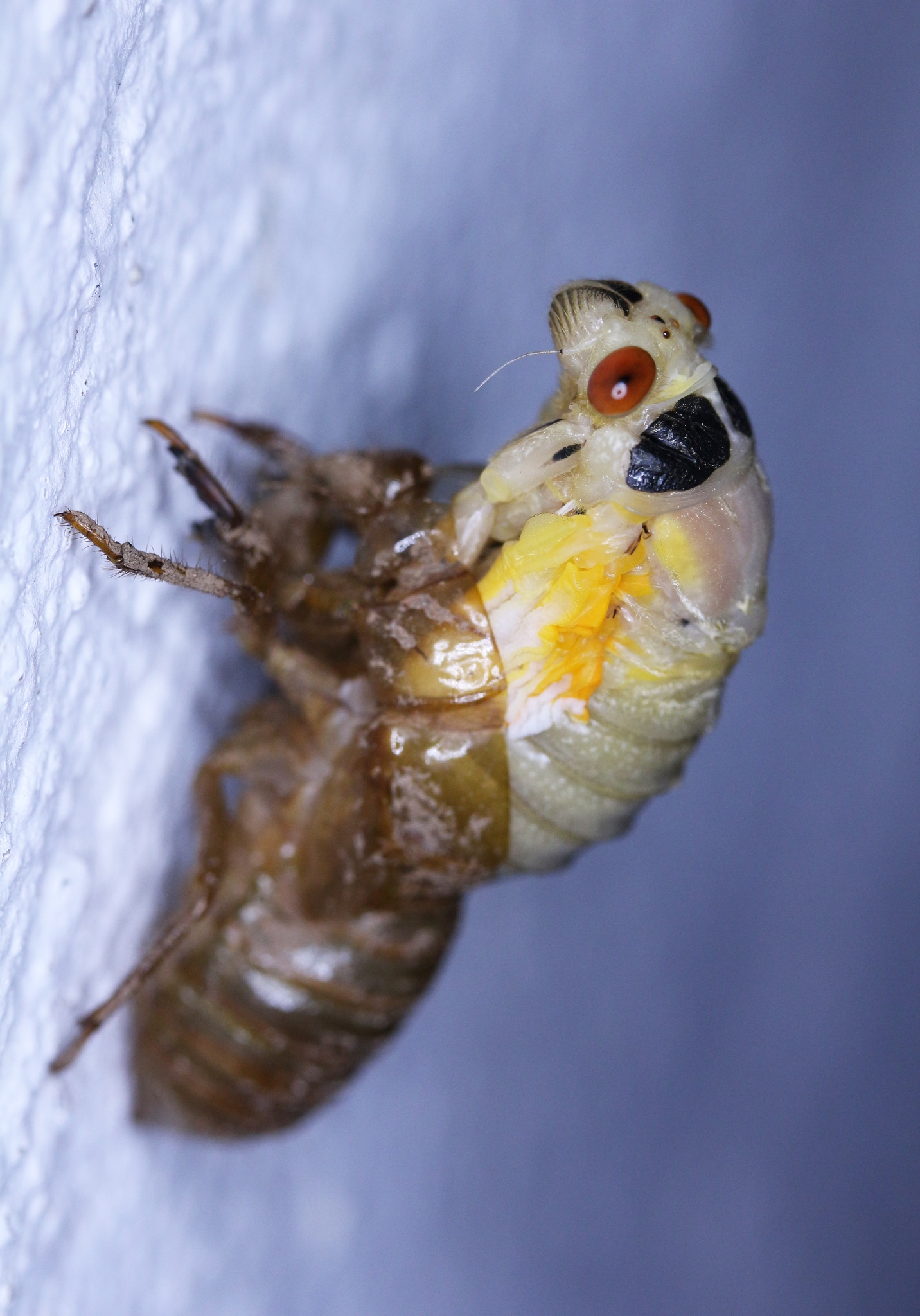
This summer Elias traveled to Cape May county, New Jersey to look for cicadas. Cape May has an abundance of cicada species. Let’s list them out: Neotibicen latifasciatus, Neotibicen linnei, Neotibicen lyricen, Megatibicen grossus, Neocicada hieroglyphica, Neotibicen tibicen, Magicicada septendecim, Magicicada cassini, and Neotibicen davisi. Neotibicen davisi aka Davis’ Southeastern Dog-Day Cicada is small as Neotibicen cicadas go. It sounds like an angle grinder grinding against concrete or metal. Its colors vary, but often include: black, brown, green, yellowish orange on its dorsal side, and tan and white on its abdomen. But never before BLUE. I double checked iNaturalst and BugGuide, but there are no blue N. davisi on either website.

I saw Elias’ photos of the blue N. davisi. They are indeed blue to turquoise-blue in color, importantly, even after molting and hardening. Cicada colors change quite a bit from the time they first molt to the time their skin fully hardens (sclerotizes) — but Elias’s cicadas were blue at the time of molting and after — the blue did not change to green, brown or black. If memory serves, I think he found three total.

While this discovery is incredibly rare, there is a reason why. If the cicada lacks the yellow carotenoid pigment, the blue biliverdin pigment dominates the color of the cicada. Without yellow, there are no browns, tans, greens and of course yellows. We see this phenomena in the Blue Moon morph of the normally green Green Grocer (Cyclochila australasiae) cicada in Australia.

To sum it up: Elias Bonaros, super cicada researcher, went to Cape May county, New Jersey in the summer of 2026 and found three or more ultra-rare blue Neotibicen davisi. To date, no one has published a photo of a blue N. davisi.
Categories
Brood II Edward Johnson Elias Bonaros John Cooley Magicicada Periodical Roy Troutman

Roy Troutman’s 2013 Brood II cicada photos, gallery 3

When Roy Troutman visited New Jersey and New York in 2013 for Brood II he took a lot of great cicada photos.

Here is a sample of the best.
Click the images for a larger version.
Also visit Gallery #1 and Gallery #2.

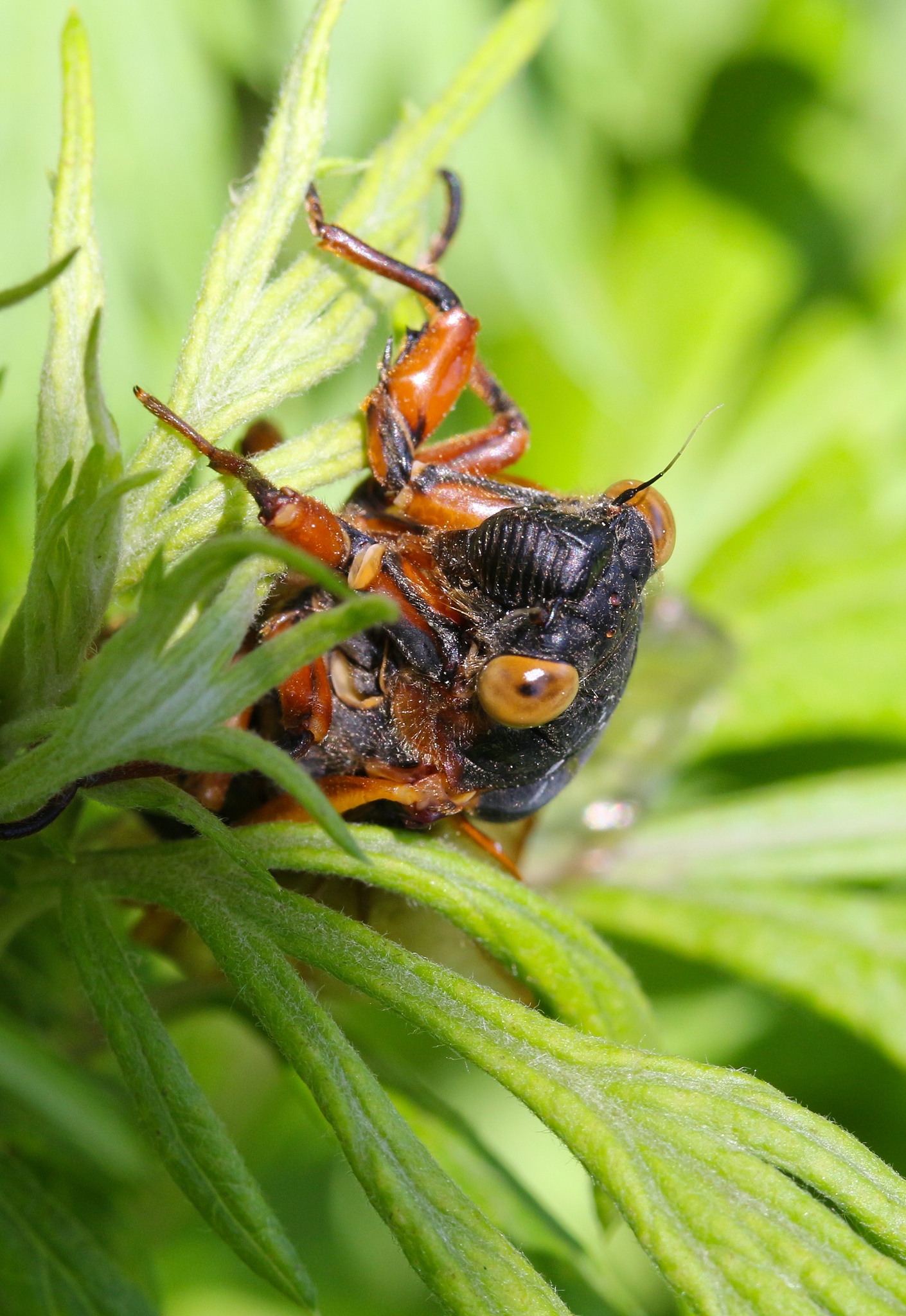
Magicicada molting by Roy Troutman

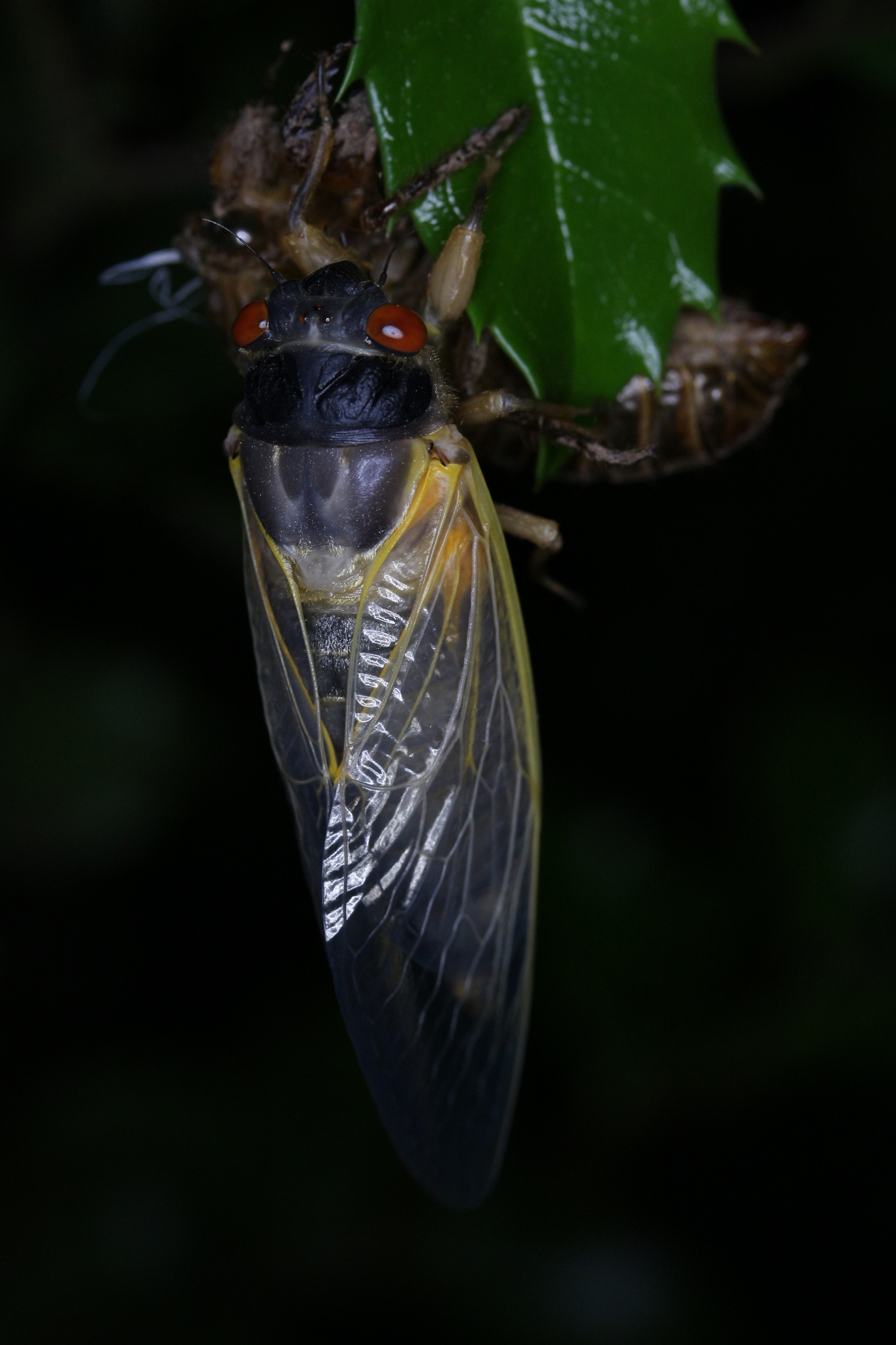
Magicicada with exuvia by Roy Troutman

Mustard eyed Magicicada septendecim by Roy Troutman

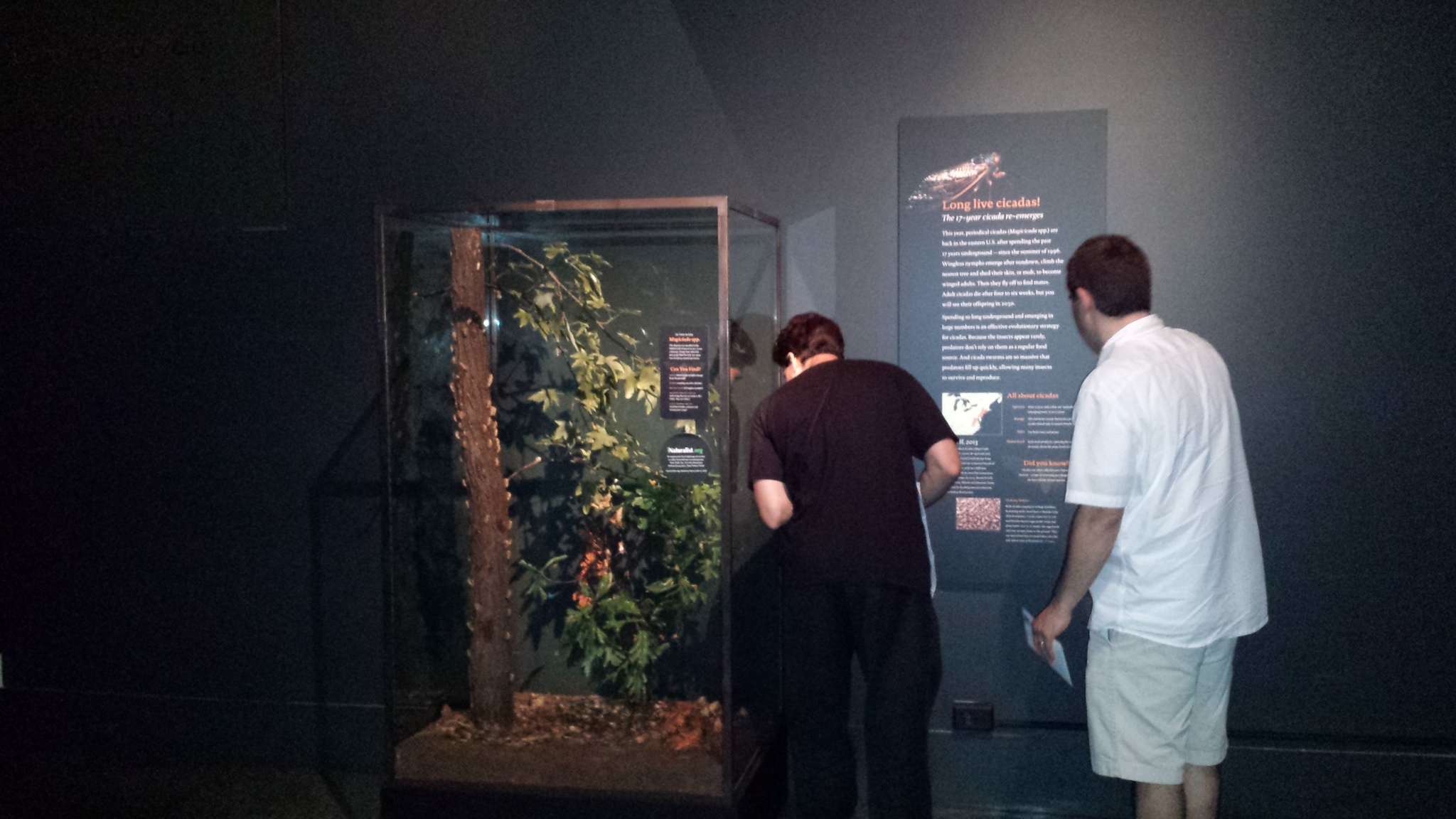
Roy Troutman and Elias Bonaros at the Periodical Cicada display at the American Museum of Natural History, photo by Michelle Troutman
Roy Troutman, John Cooley, Ed Johnson and Dan Mozgai

Roy Troutman, John Cooley, Ed Johnson and Dan Mozgai
Roy Troutman and Elias Bonaros at the Periodical Cicada display at the American Museum of Natural History by Michelle Troutman

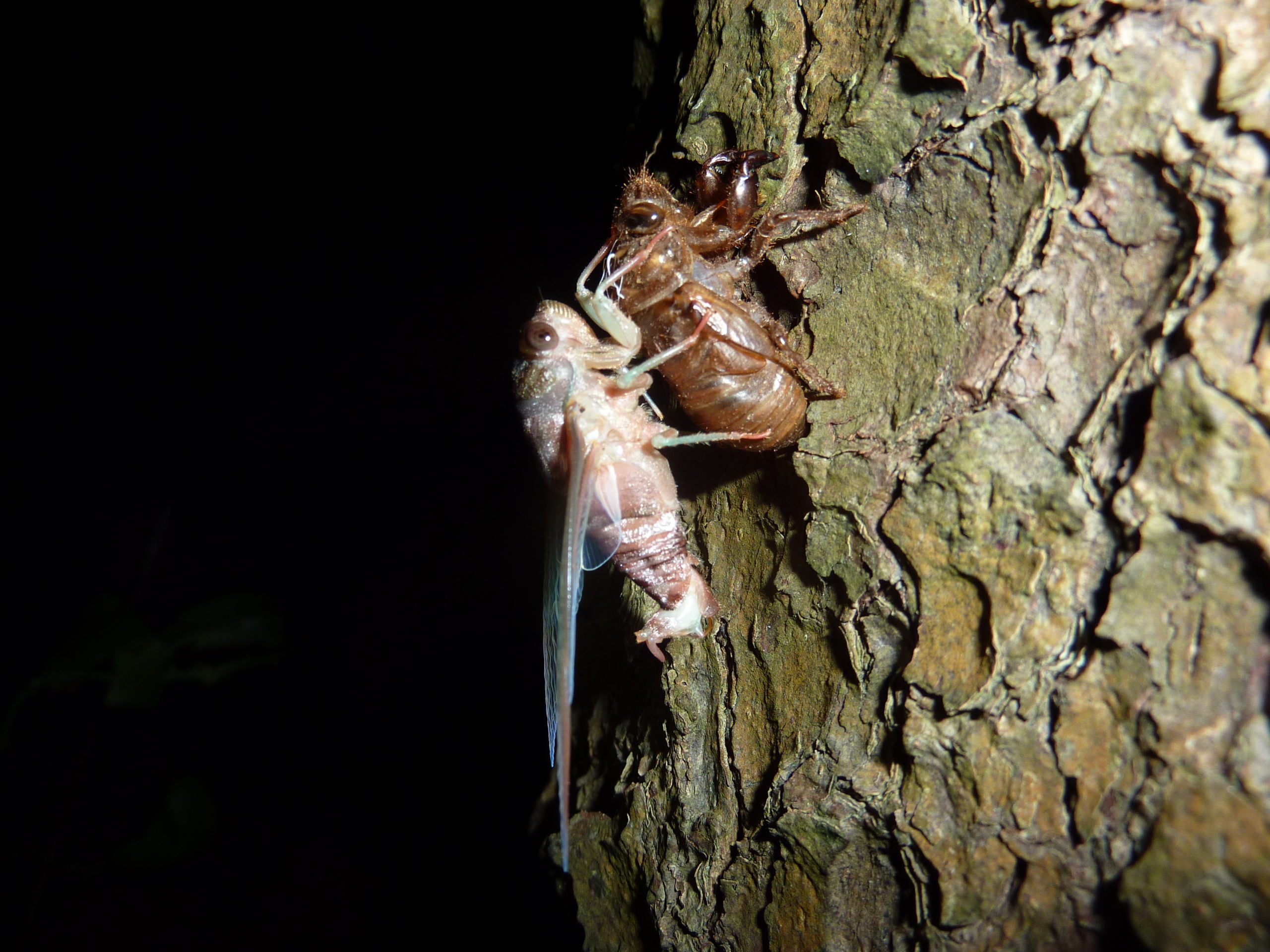
Teneral Magicada by Roy Troutman

Categories
Elias Bonaros Neotibicen

Neotibicen canicularis in Lakewood, NJ

This is a series of Neotibicen canicularis Northern Dog-Day cicada photos from Lakewood, NJ taken by Elias Bonaros.

Click the photos for larger versions:

A recently molted male Neotibicen canicularis cicada:
Neotibicen canicualris eclosing in Lakewood NJ

A recently molted male Neotibicen canicularis cicada:
Neotibicen canicualris eclosing in Lakewood NJ

A molting Neotibicen canicularis cicada:
Neotibicen canicualris eclosing in Lakewood NJ

Categories
Elias Bonaros Neotibicen

Neotibicen lyricen photo by Elias Bonaros

This is a photo of a teneral (soft) Neotibicen lyricen cicada by Elias Bonaros.

Click the photo for a larger version:

Neotibicen lyricen

Categories
Elias Bonaros Neotibicen

Neotibicen linnei photo by Elias Bonaros

This is a photo by Elias Bonaros of a teneral (soft) Neotibicen linnei cicada and its exuvia (molted skin). It was taken in 2009, and knowing Elias, probably in New York or New Jersey.

Click the photo from a larger version:

Neotibicen linnei teneral and its exuvia:
Neotibicen linnei teneral and its exuvia

Categories
Cicada Killer Wasps Elias Bonaros Neotibicen

Cicada Killer Wasp photos by Elias Bonaros

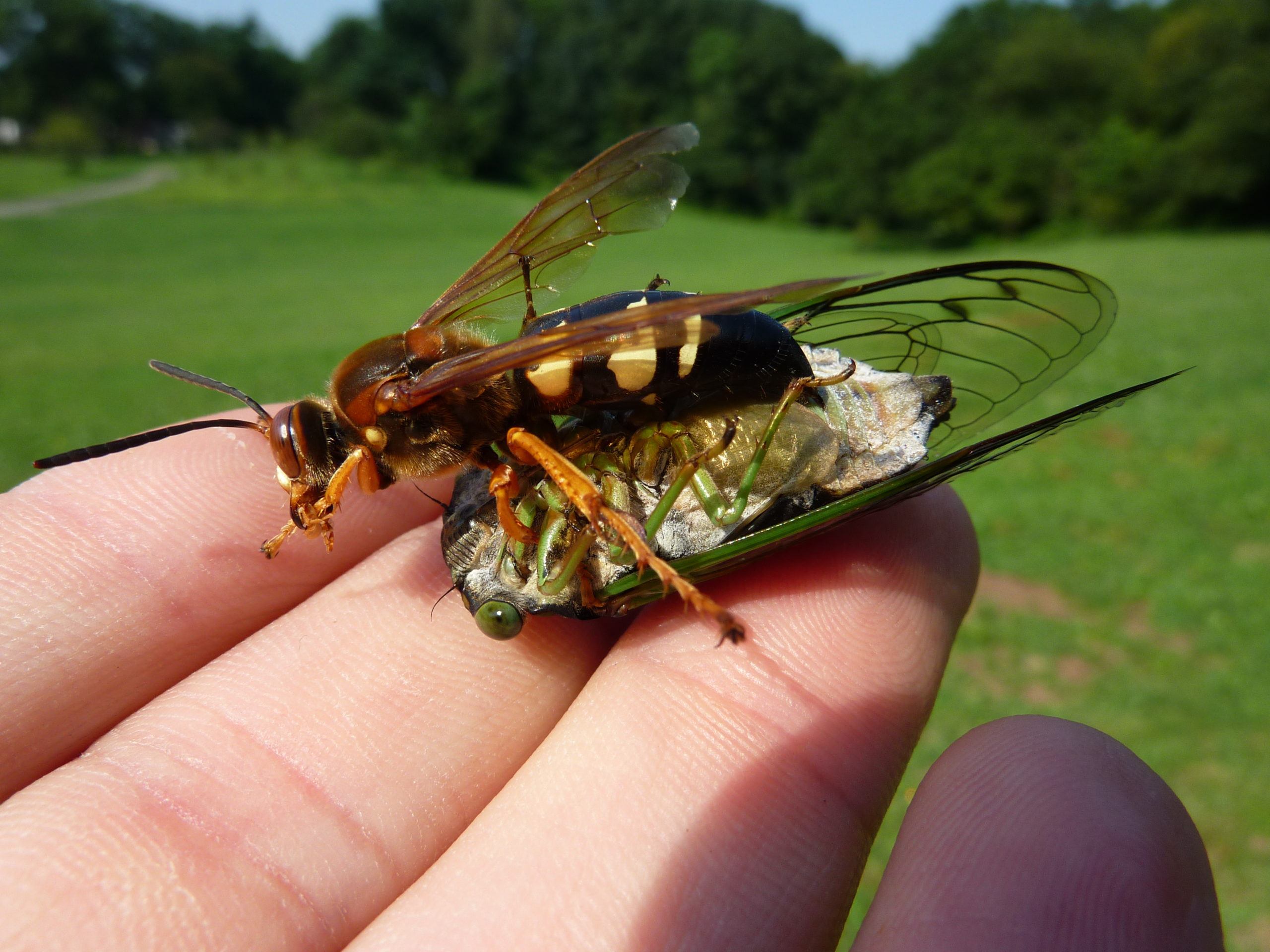
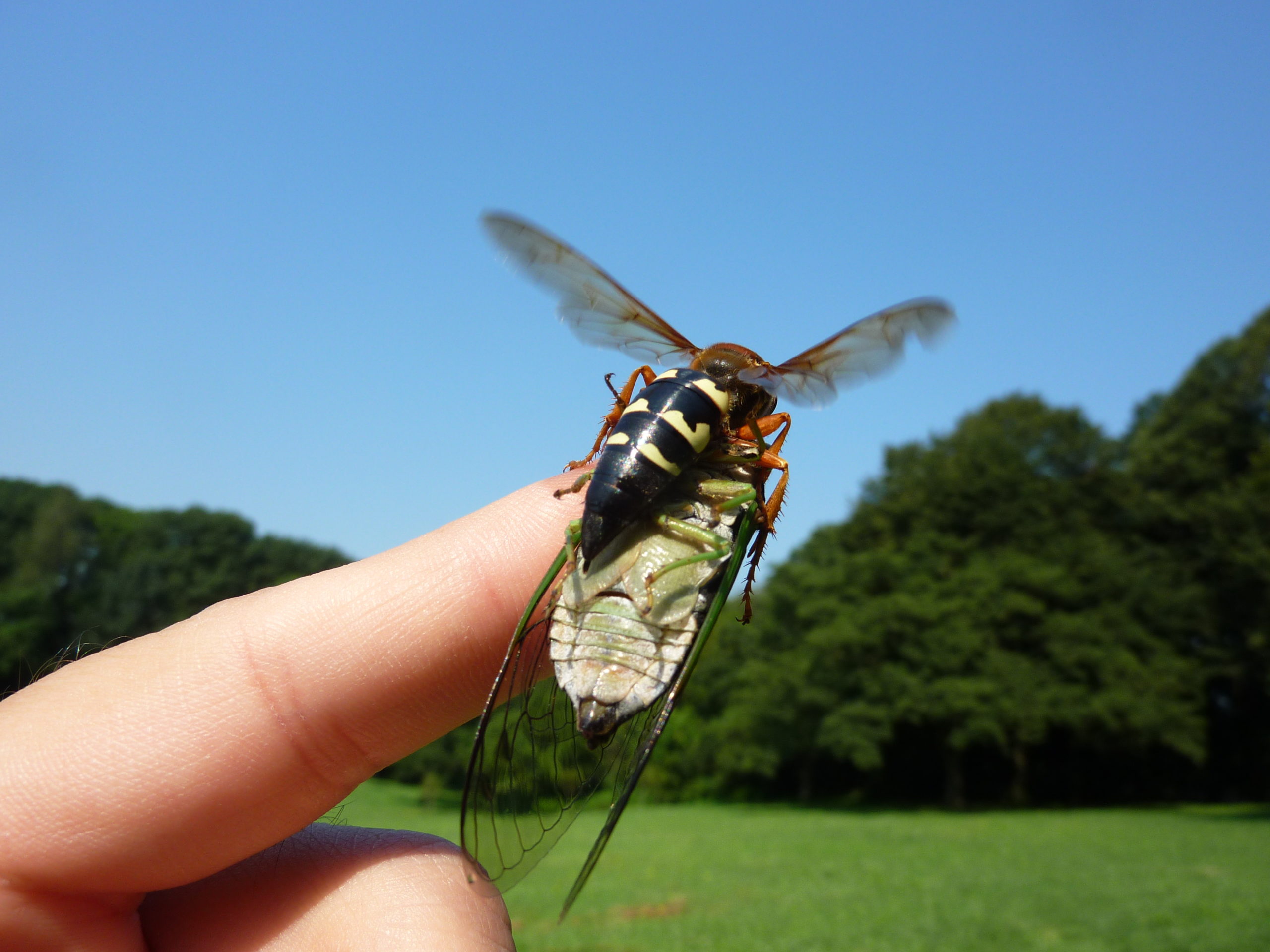
Here are two Cicada Killer Wasp photos by Elias Bonaros. The Cicada Killer Wasp has captured a Neotibicen tibicen tibicen cicada. These photos are from 2009.

Yes, Elias is holding the wasp and cicada on has hand!

Click the image for a larger version:

Cicada Killer Wasp and Neotibicen tibicen:
Cicada Killer Wasp and Neotibicen tibicen

Cicada Killer Wasp and Neotibicen tibicen:
Cicada Killer Wasp and Neotibicen tibicen

Categories
Elias Bonaros Megatibicen

2018 Megatibicen auletes hunt

Each year I go to Manchester, NJ to look for Megatibicen auletes aka Northern Dusk-Singing Cicadas. There are auletes in my zipcode, but they’re easier to find in the southern-half of New Jersey. The location is a favorite of Elias Bonaros’, and more times than not we sync-up and go auletes hunting as a team. Good times.

Two auletes are better than one:

M. auletes nymph:

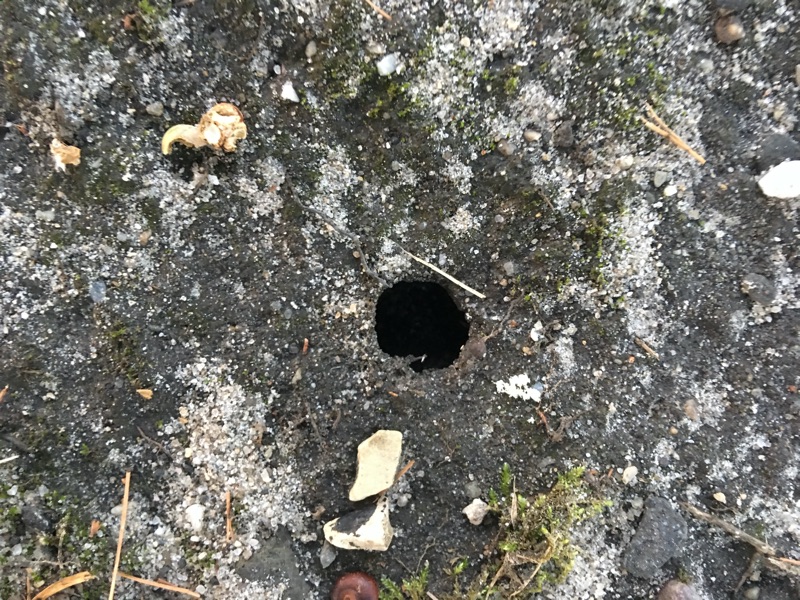
M. auletes exit hole:
Neotibicen auletes exit hole

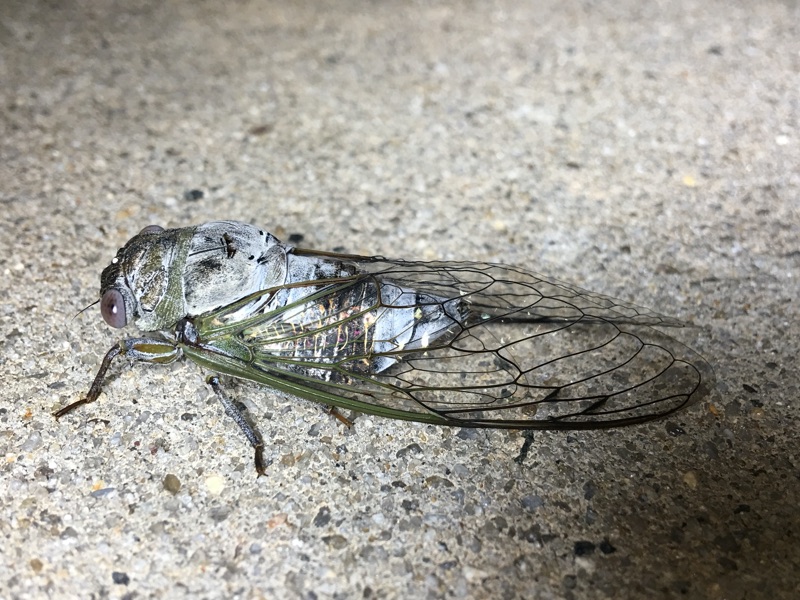
Megatibicen auletes in Manchester NJ:
Megatibicen auletes in Manchester NJ

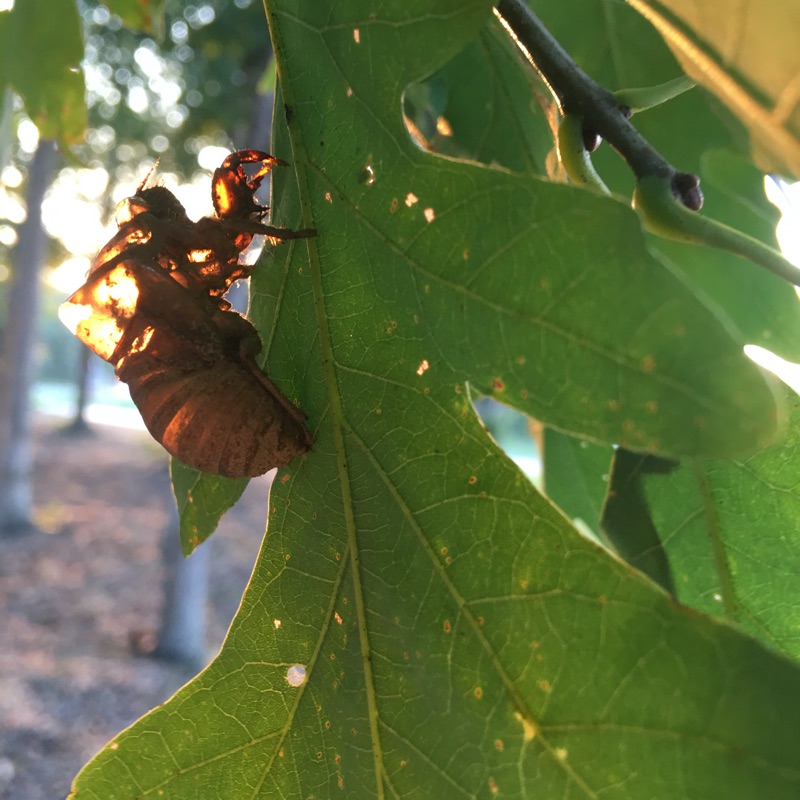
Megatibicen auletes exuvia in Manchester NJ:
Megatibicen auletes exuvia in Manchester NJ

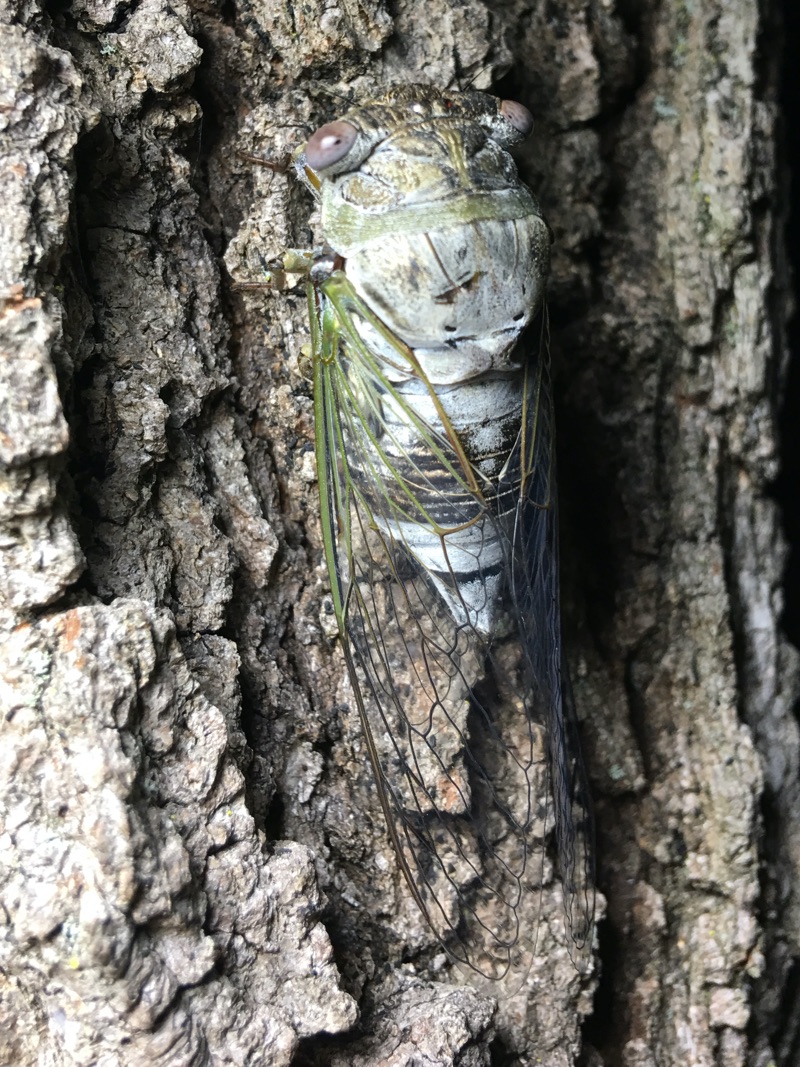
Megatibicen auletes climbing tree:
Megatibicen auletes climbing tree

* Note as of 2023 the name of this cicada has changed to Megatibicen grossus. You can also call it a Northern Dusk-Signing Cicada.

Categories
Elias Bonaros Magicicada Nymphs Periodical

Magicicada nymphs found by Elias, part 2

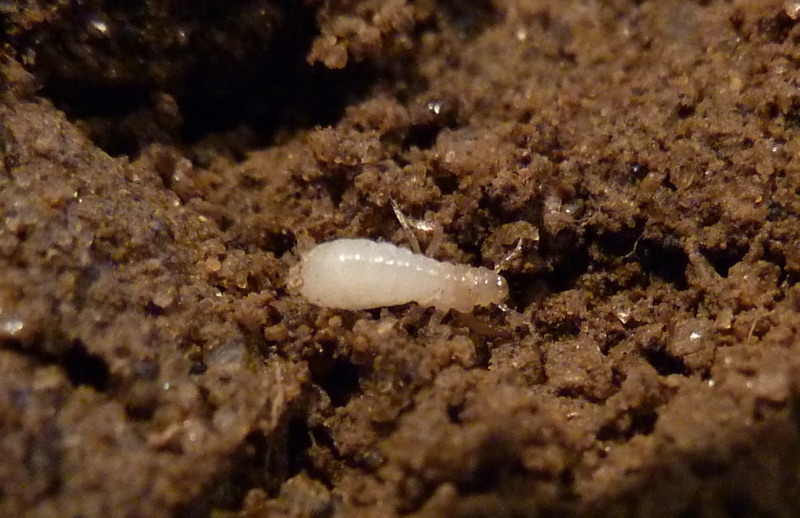
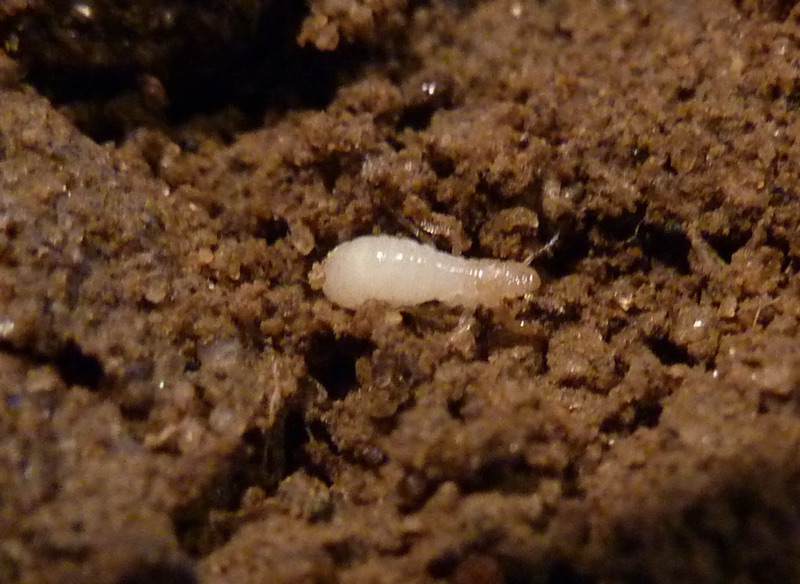
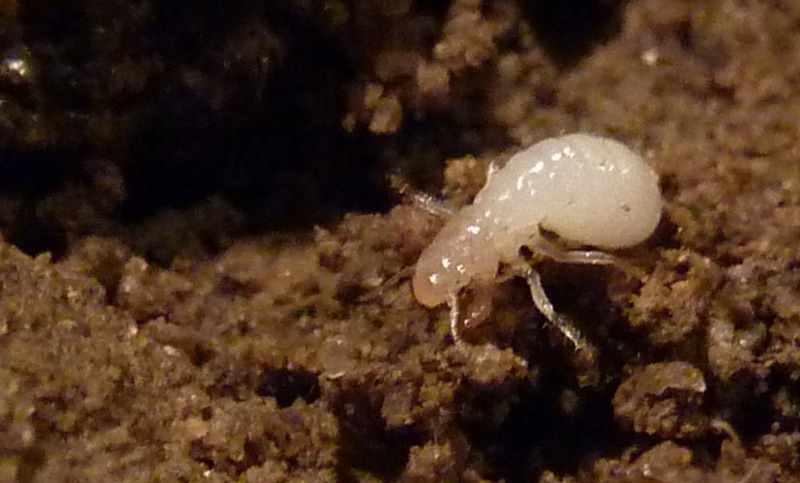
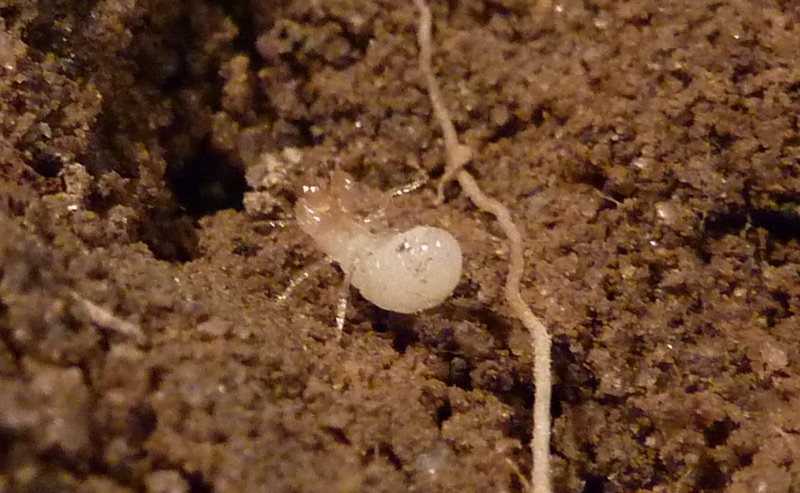
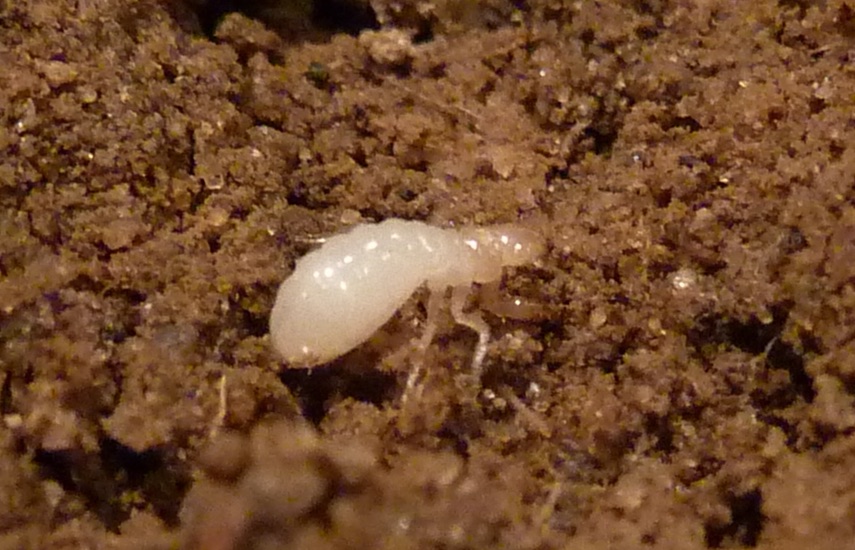
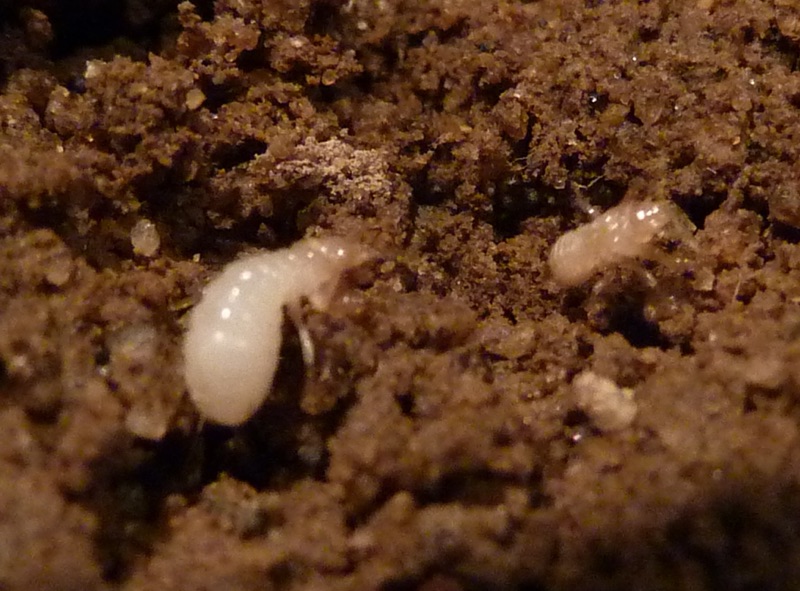
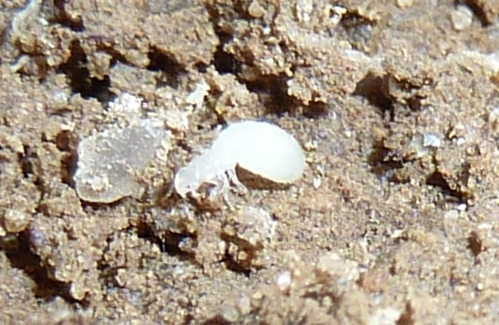
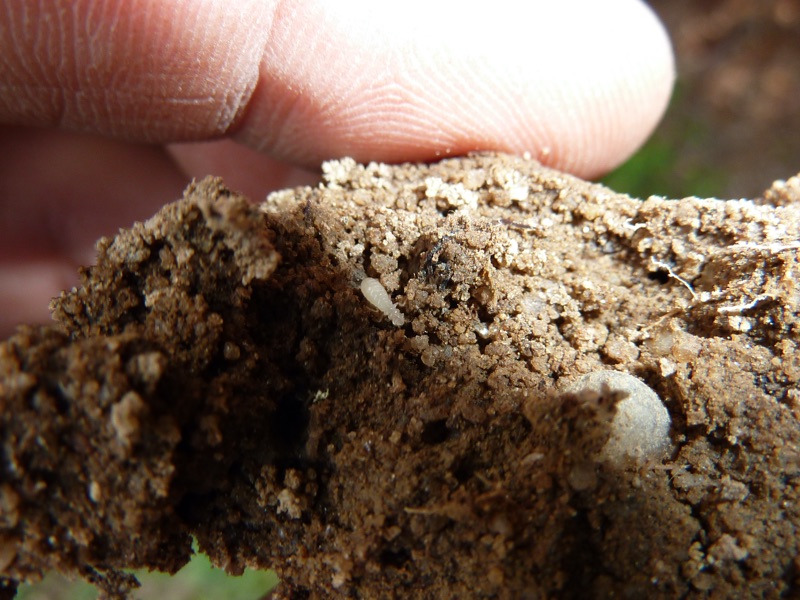
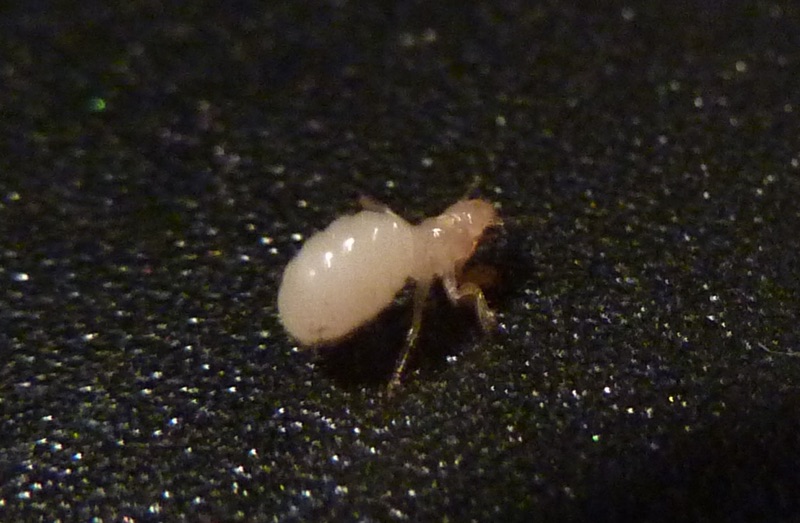
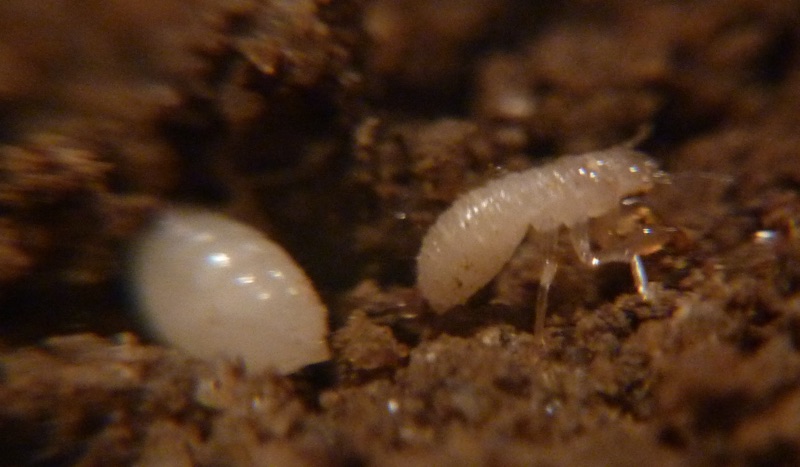
Continuing from part 1, Elias Bonaros did some digging and took these photos of first and second instar Magicicada periodical cicadas on a warm winter day (March 21, 2010).

Now you know what cicadas look like when they’re underground!

Generally speaking the ones with the bulbous abdomens are second instar, and the smaller ones with the less bulbous or not bulbous abdomens are first instar.

Categories
Elias Bonaros Magicicada Nymphs Periodical

Magicicada Nymphs found by Elias, part 1

Have you every wondered what cicadas look like when they’re underground? Elias Bonaros did some digging and took these photos of first and second instar Magicicada periodical cicadas on a warm winter day (March 21, 2010). Magicicadas have 5 instars, or phases of development. Each phase has a slightly different appearance.

This is a probable second instar nymph of Magicicada septendecim (Periodical cicada) from the 2008 Brood XIV emergence. Dug up from beneath an oak tree. It was living approximately 4-6 inches from the ground surface. Temperature 70 degrees.

Elias cicada nymph

These are probable first and second instar nymphs of Magicicada septendecim (Periodical cicada) from the 2008 Brood XIV emergence. Dug up from beneath an oak tree. They were living approximately 4-6 inches from the ground surface. Temperature 70 deg.

Elias Magicicada nymphs

Categories
Elias Bonaros Exuvia Okanagana Tibicinini

Okanagana rimosa exuvia photos by Elias Bonaros

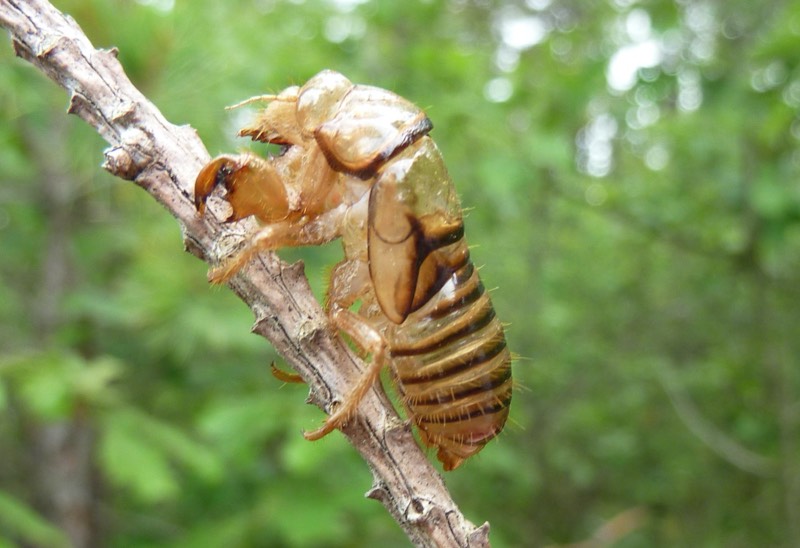
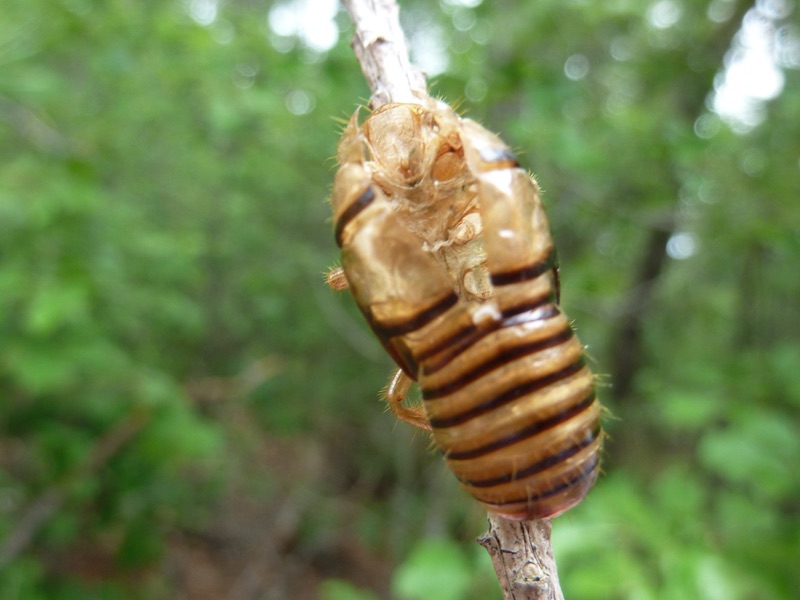
Okanagana rimosa exuvia (skins, shells) photos by Elias Bonaros. From 2010, I believe.

Note the dark lines on the abdomen — that’s an easy way to distinguish Okanagana exuvia from other types of cicadas.

Side view

dorsal view