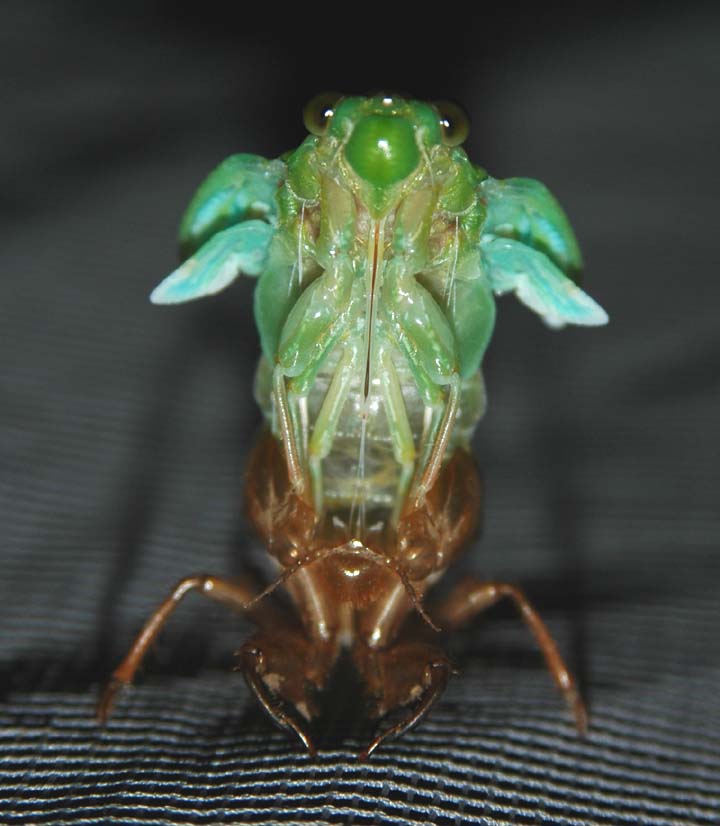
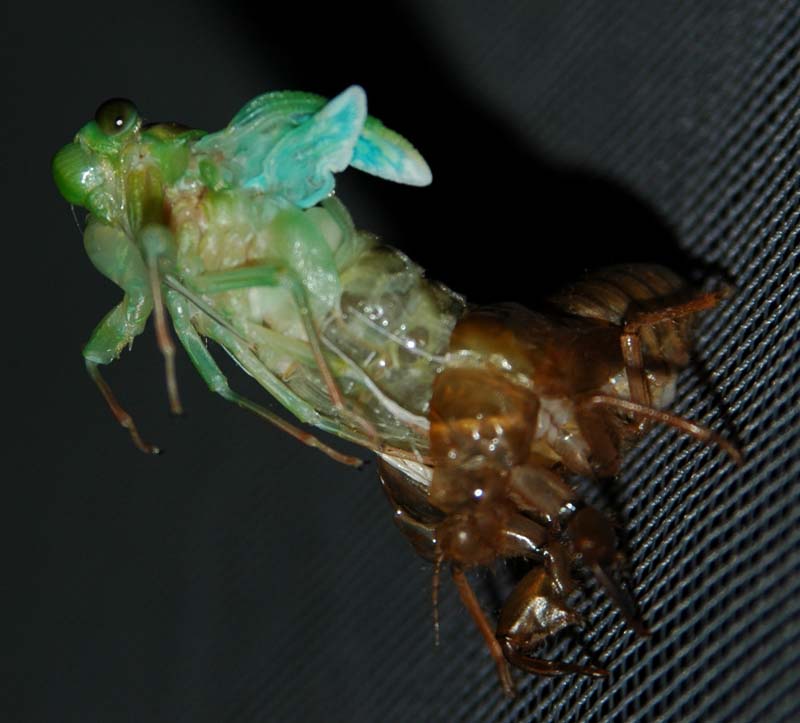
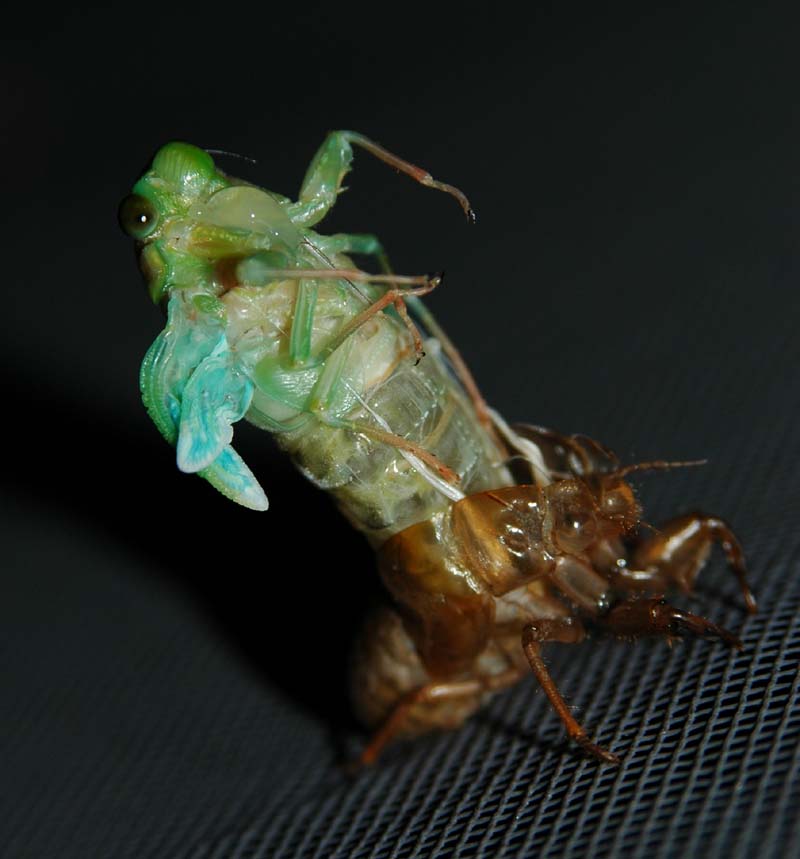
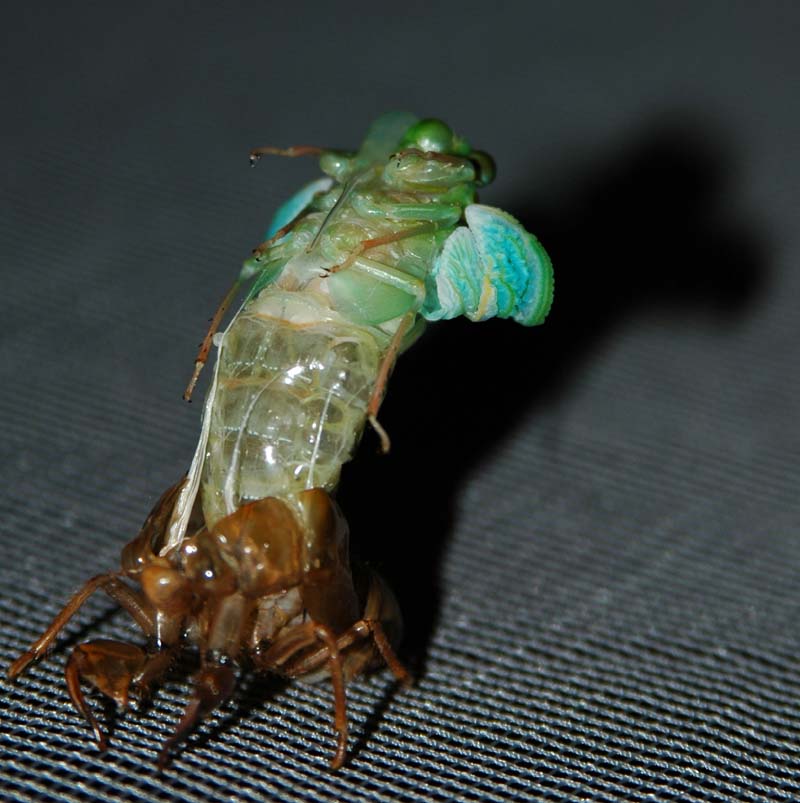
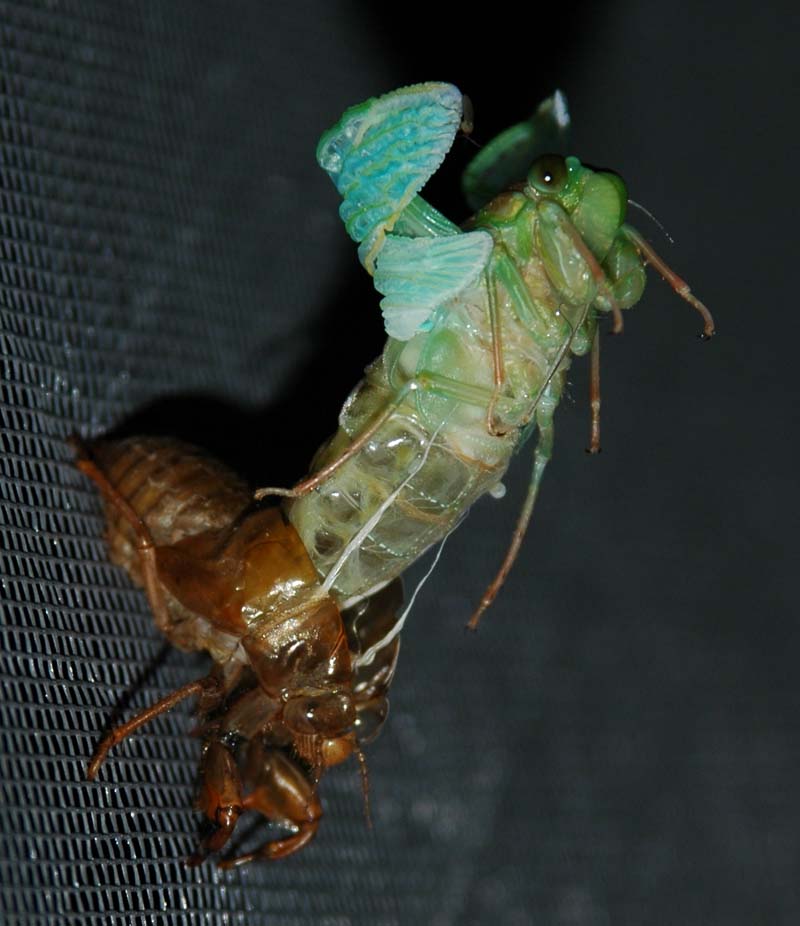
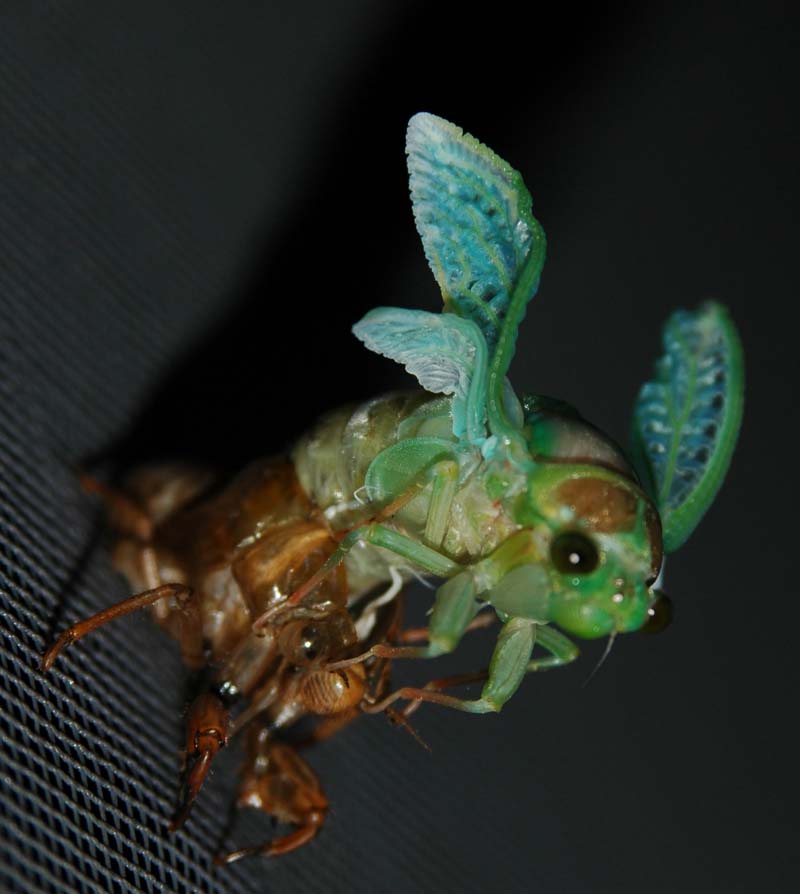
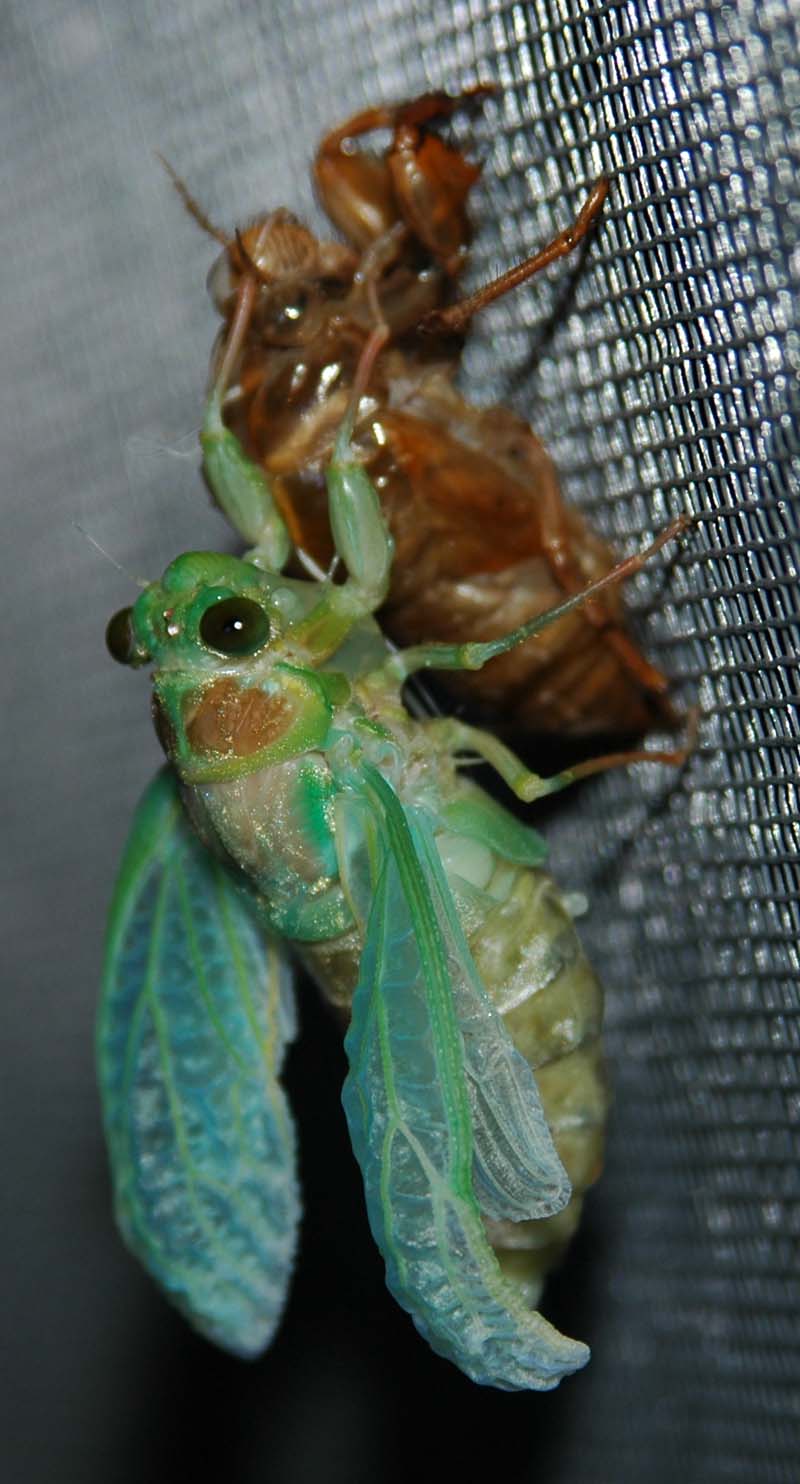
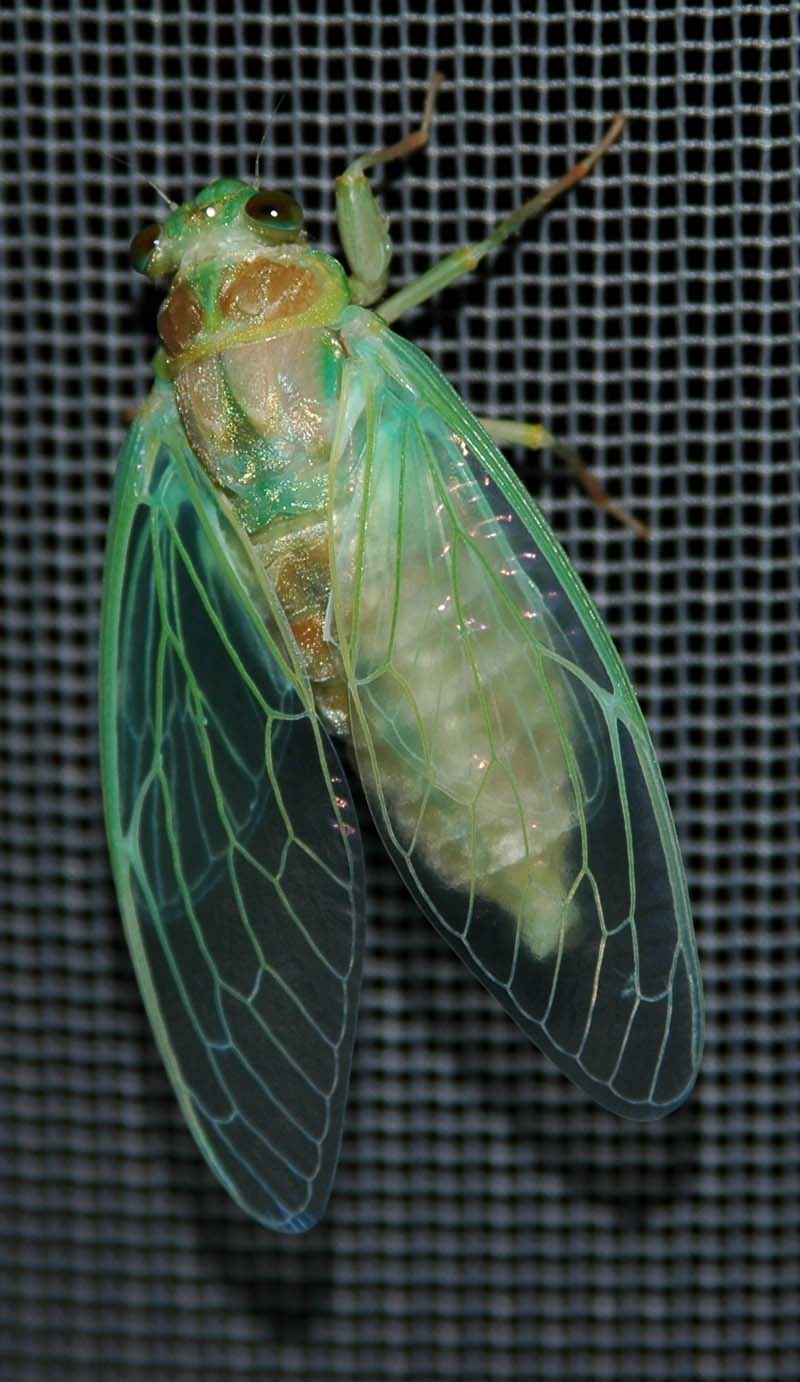
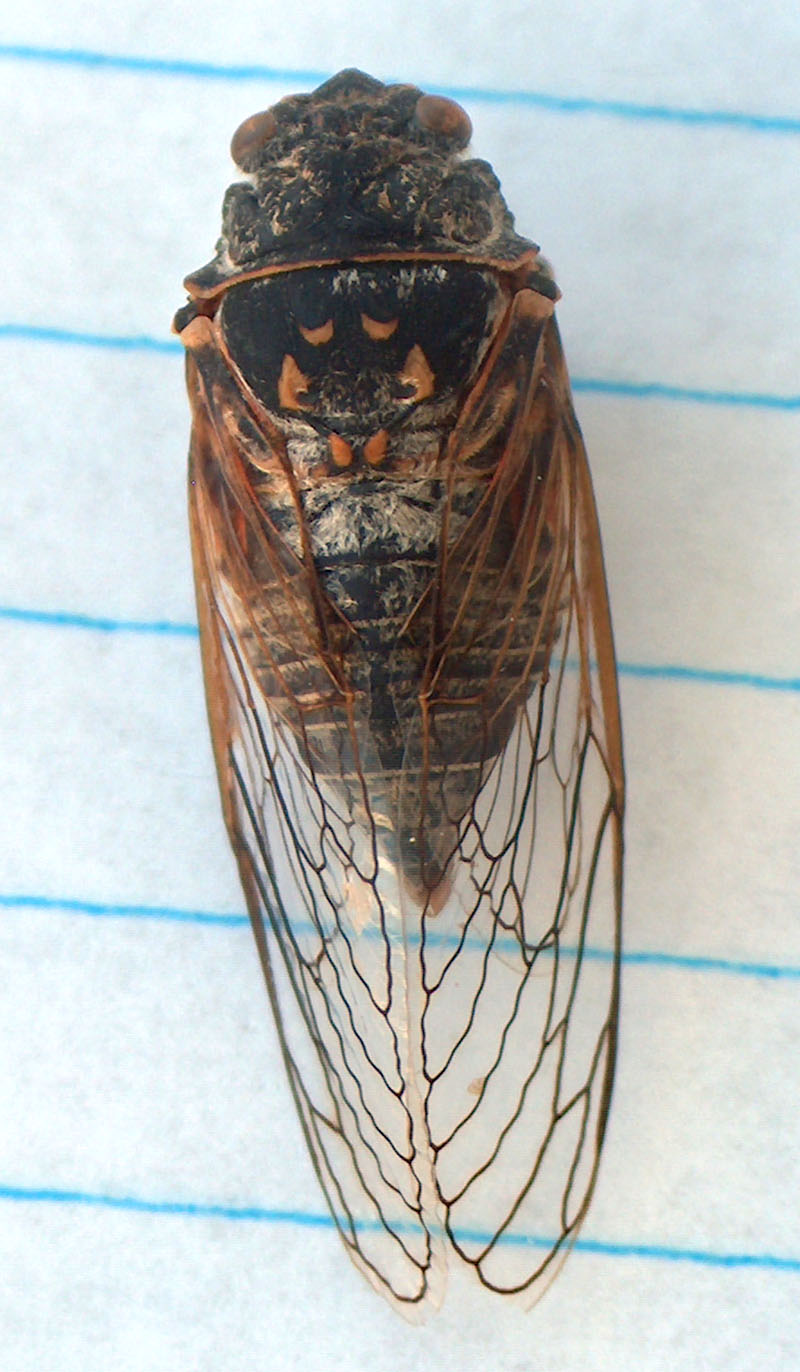
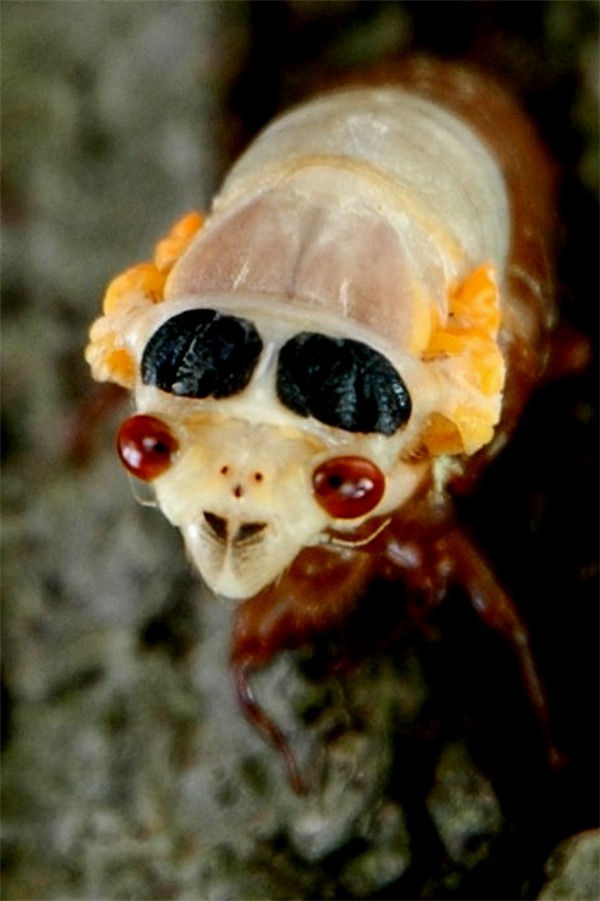
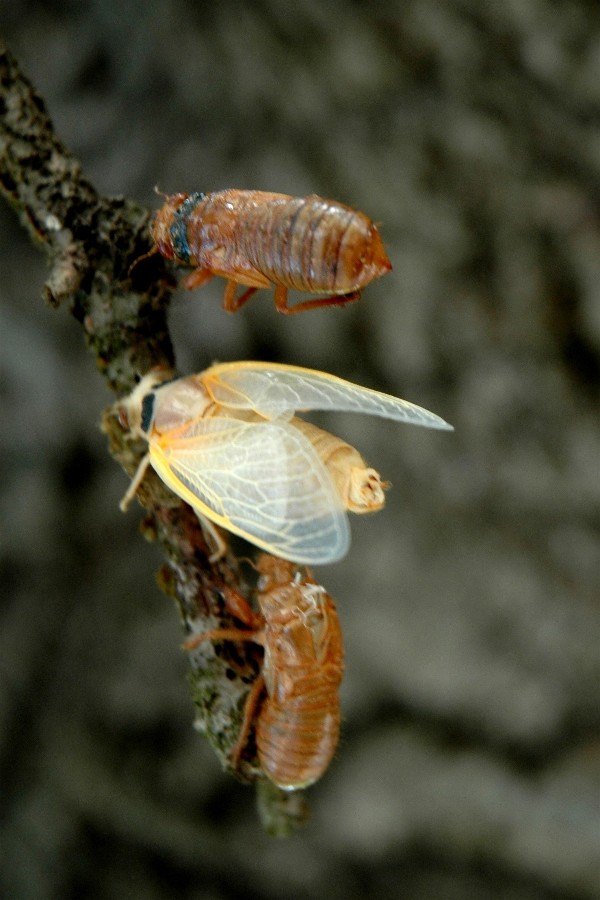
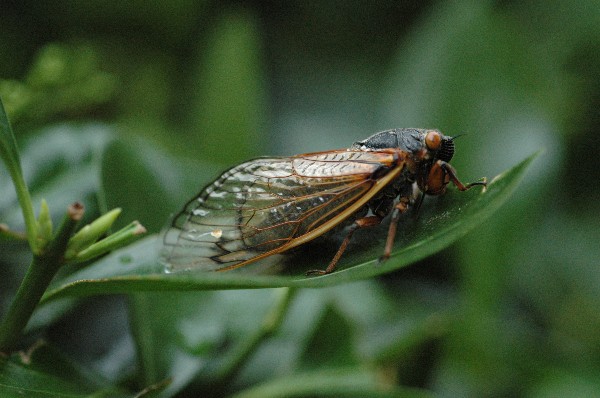
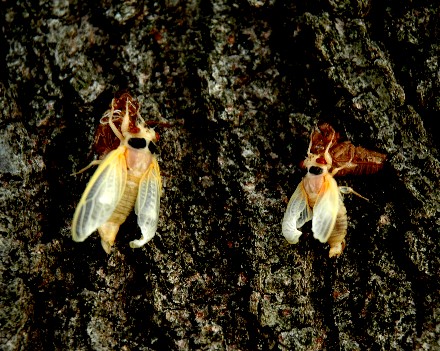
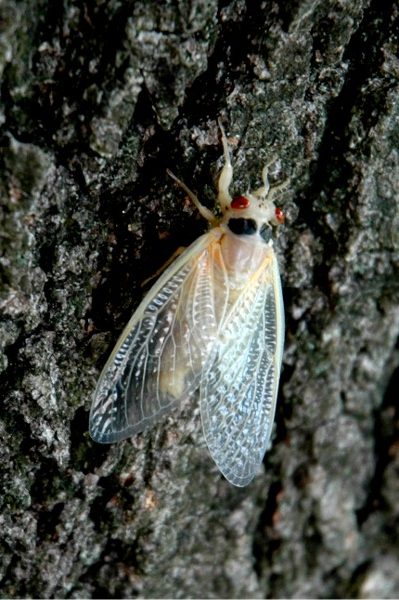
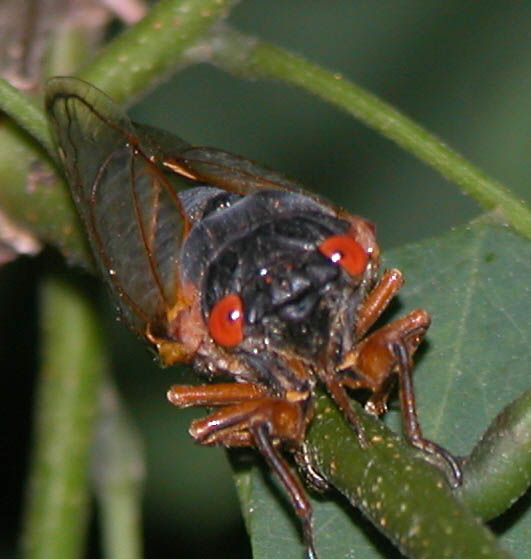
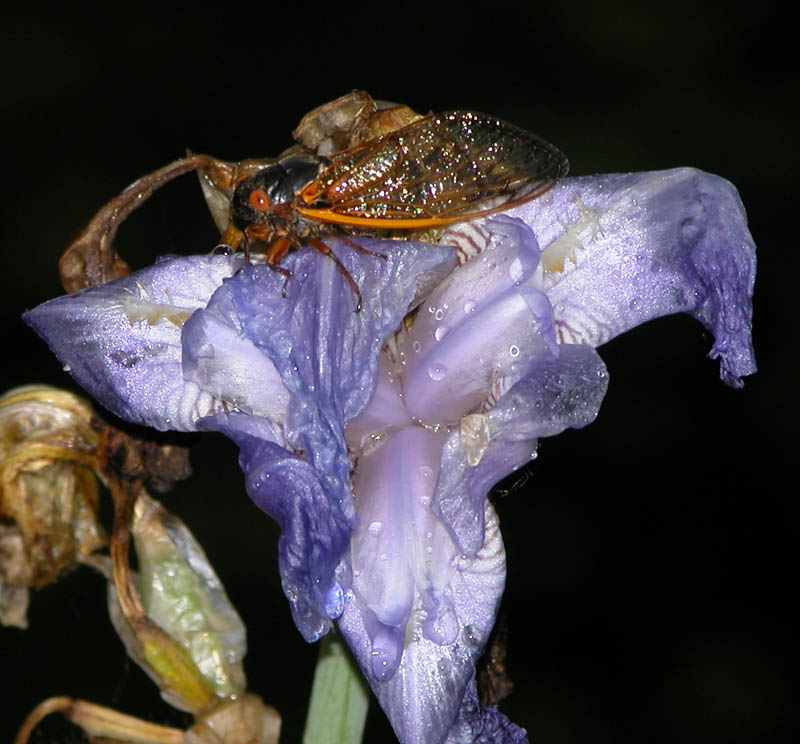
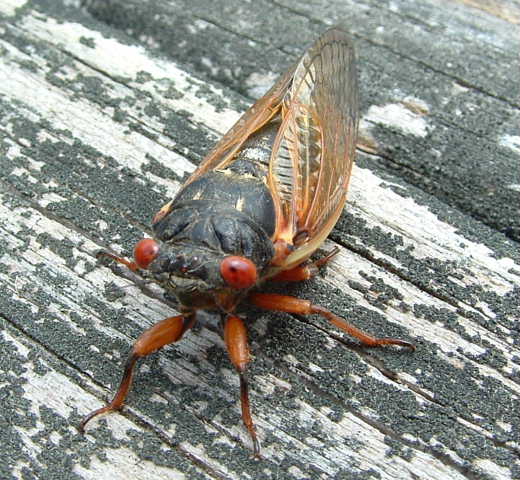
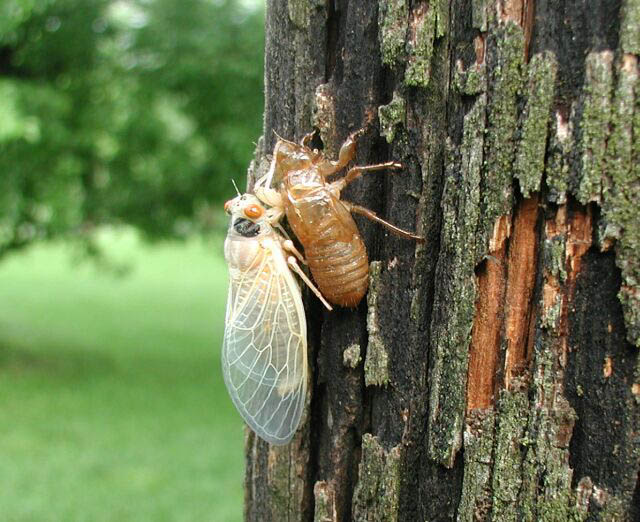
Diceroprocta olympusa photos by Joe Green from 2007. Florida.


Diceroprocta olympusa photos by Joe Green from 2007. Florida.


Photos of Magicicada cicadas with white & blue eyes by Roy Troutman from 2004.

Photo of a Magicicada cicada with blue eyes by Roy Troutman.

Photo of a Magicicada cicada with blue eyes by Roy Troutman.

Photo of a Magicicada cicada with white eyes by Roy Troutman.

Photo of a Magicicada cicada with white eyes by Roy Troutman.
Cicada Skin (exuvia, molts, “shells”) Lamps by Gaye Williams.


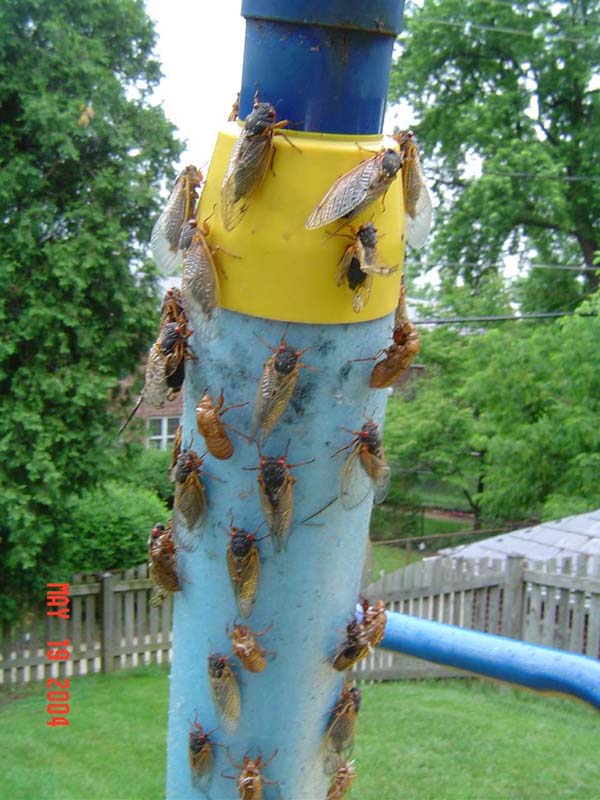
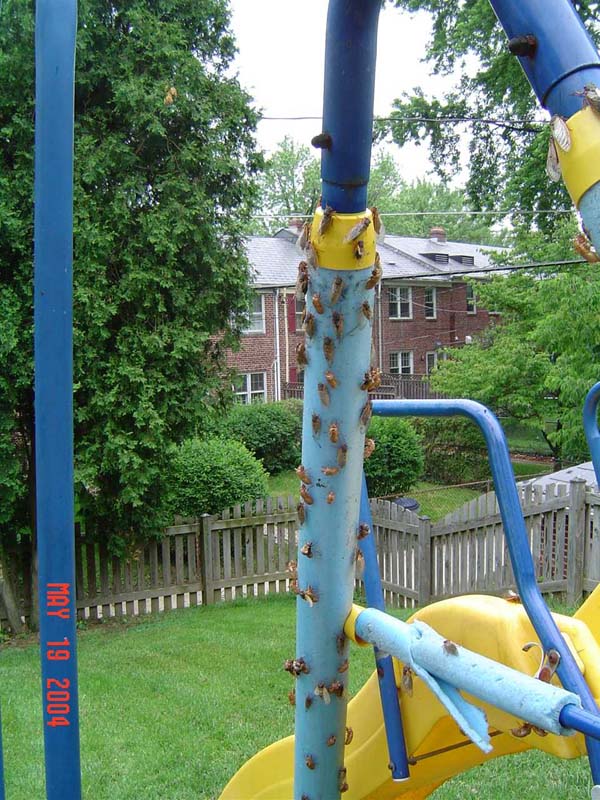
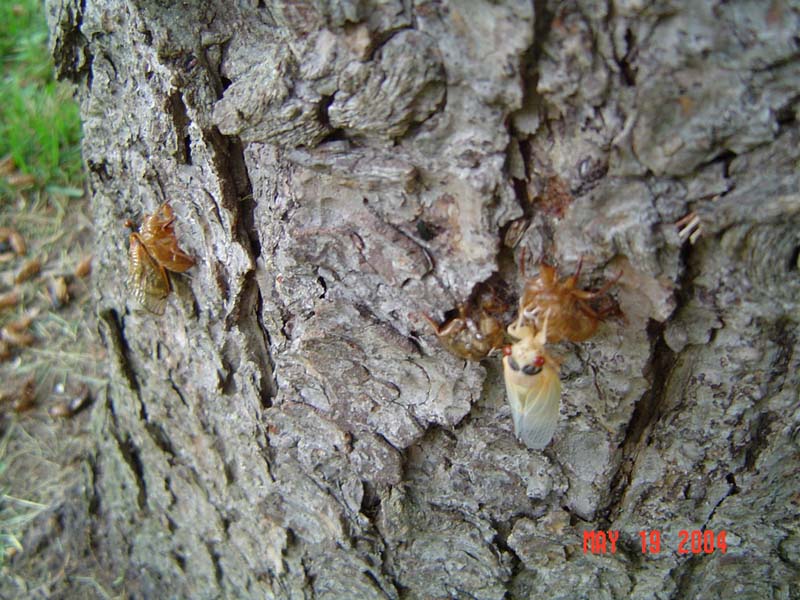
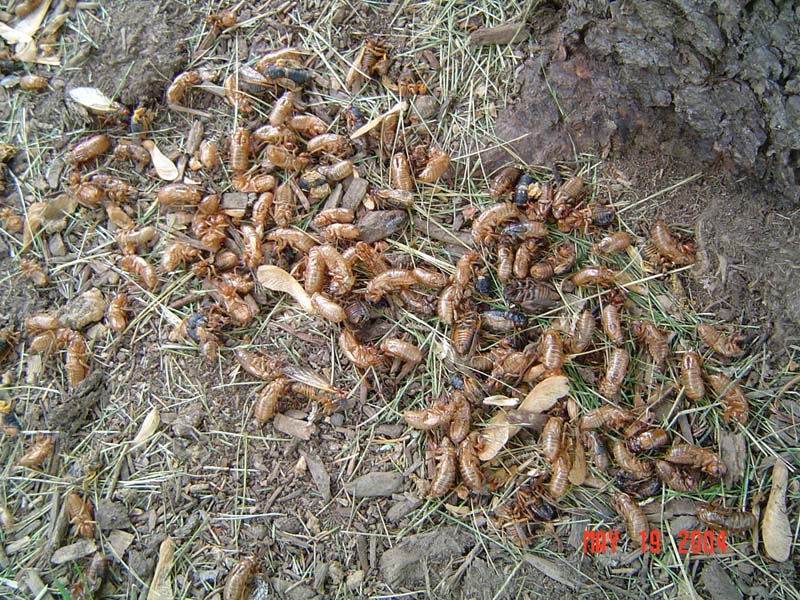
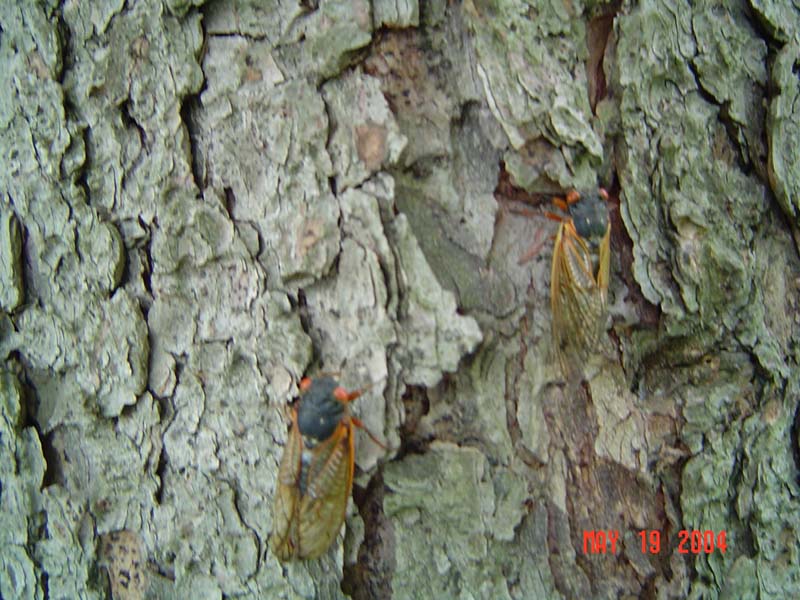
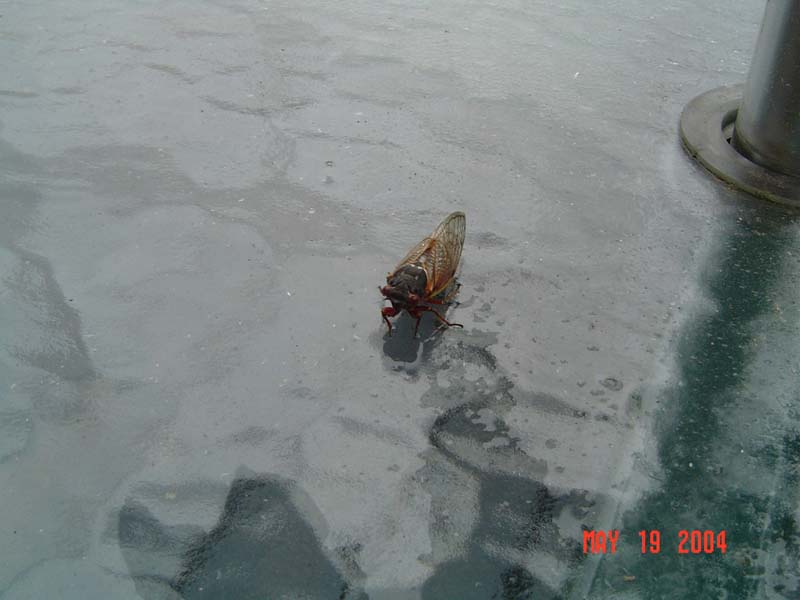
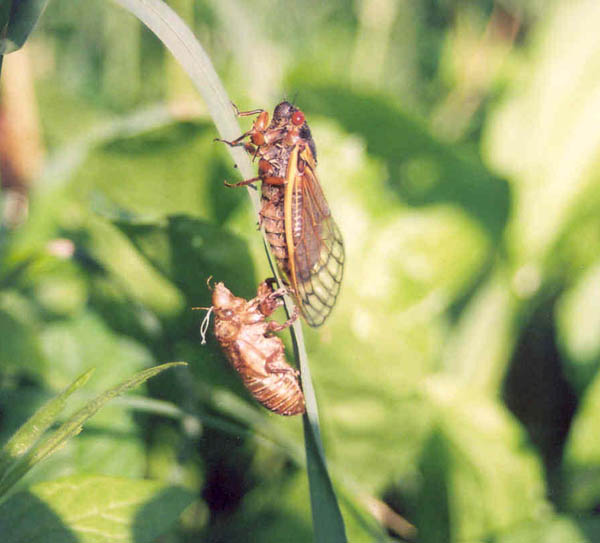
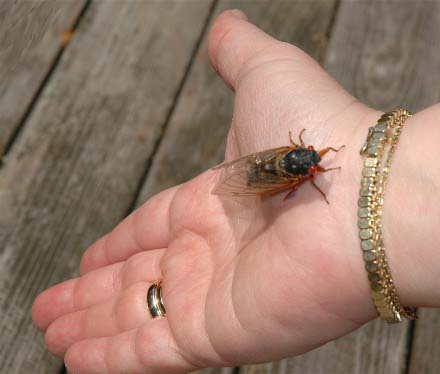
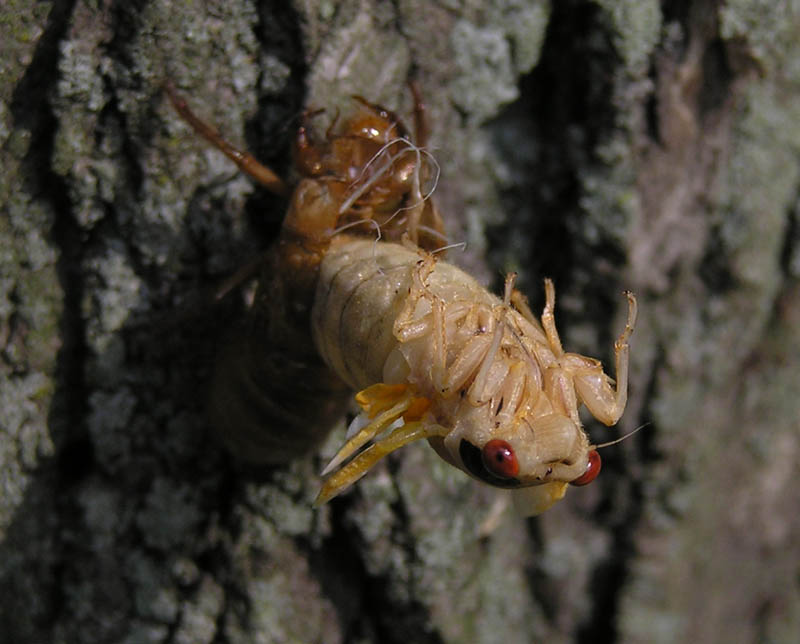
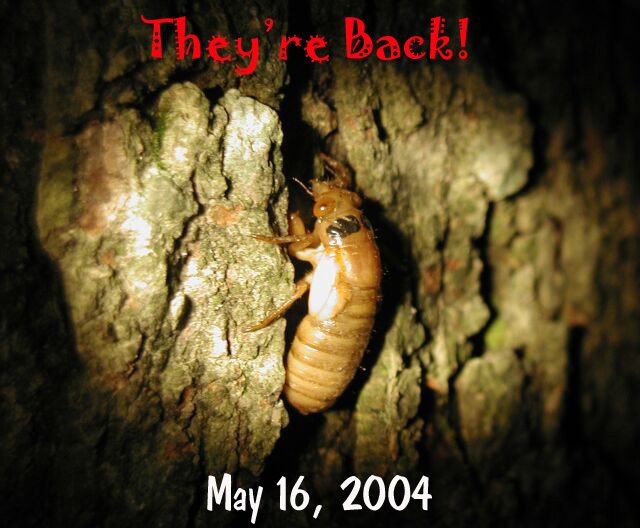
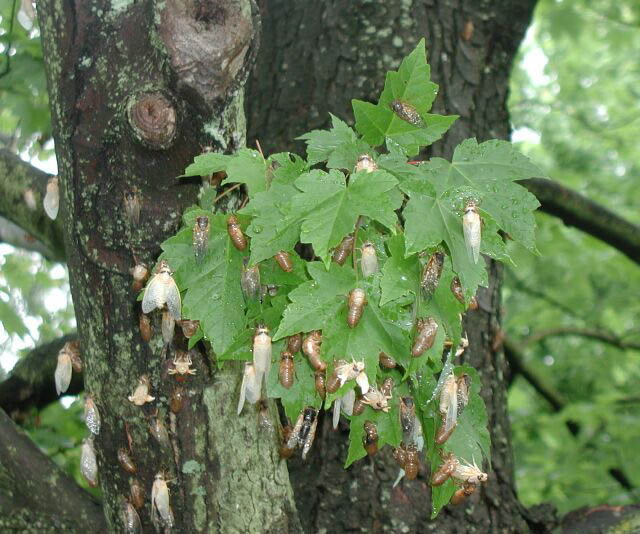
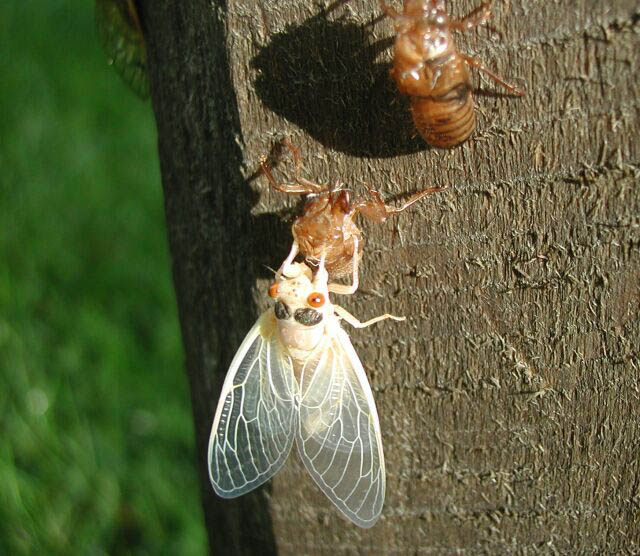
17-year Magicicada Photos by Gwen Elferdink from Brood X 2004.


People love cicada art possibly more than they love cicadas (my social media posts about cicada art get more views than photos of cicadas).
Here’s Vincent van Gogh’s Three Cicadas. It’s an ink & paper sketch and study. He created it in 1889, in Saint-rémy-de-provence, France. If you want to see it IRL, it’s at the Van Gogh Museum, Amsterdam, Netherlands.

I’d like to, but I can’t think of something clever to say about the fact that cicadas sing, and van Gogh removed his left ear.
There’s a new cicada subfamily: Derotettiginae.
The five subfamilies are:
Here’s the paper:
Chris Simon, Eric R L Gordon, M S Moulds, Jeffrey A Cole, Diler Haji, Alan R Lemmon, Emily Moriarty Lemmon, Michelle Kortyna, Katherine Nazario, Elizabeth J Wade, Russell C Meister, Geert Goemans, Stephen M Chiswell, Pablo Pessacq, Claudio Veloso, John P Mccutcheon, Piotr Lukasik, Off-target capture data, endosymbiont genes and morphology reveal a relict lineage that is sister to all other singing cicadas, Biological Journal of the Linnean Society, , blz120, https://doi.org/10.1093/biolinnean/blz120
Here’s the abstract:
Phylogenetic asymmetry is common throughout the tree of life and results from contrasting patterns of speciation and extinction in the paired descendant lineages of ancestral nodes. On the depauperate side of a node, we find extant ‘relict’ taxa that sit atop long, unbranched lineages. Here, we show that a tiny, pale green, inconspicuous and poorly known cicada in the genus Derotettix, endemic to degraded salt-plain habitats in arid regions of central Argentina, is a relict lineage that is sister to all other modern cicadas. Nuclear and mitochondrial phylogenies of cicadas inferred from probe-based genomic hybrid capture data of both target and non-target loci and a morphological cladogram support this hypothesis. We strengthen this conclusion with genomic data from one of the cicada nutritional bacterial endosymbionts, Sulcia, an ancient and obligate endosymbiont of the larger plant-sucking bugs (Auchenorrhyncha) and an important source of maternally inherited phylogenetic data. We establish Derotettiginae subfam. nov. as a new, monogeneric, fifth cicada subfamily, and compile existing and new data on the distribution, ecology and diet of Derotettix. Our consideration of the palaeoenvironmental literature and host-plant phylogenetics allows us to predict what might have led to the relict status of Derotettix over 100 Myr of habitat change in South America.
Tweets from Chris Simon @CicadaScience announcing the new subfamily:
One of our undergrads, Rachel Wolther, created this wonderful GIF for our newly published paper. #uconneeb, #endosymbionts, #cicadashttps://t.co/rjdXSCginJ pic.twitter.com/uRppf8ZT0K
— Chris Simon (@CicadaScience) October 13, 2019
Off-target genomic capture data, Sulcia endosymbiont genes and morphology reveal a relict lineage that is sister to all other singing cicadas: a tiny, pale green, inconspicuous and poorly known genus, Derotettix, endemic to salt-plain habitats in arid regions of central Argentina pic.twitter.com/xUhtMPWmgk
— Chris Simon (@CicadaScience) October 13, 2019
This is a running list of papers or documents published about cicadas in the year 2019. 35 so far (as of November).
If I missed an article, email me at cicadamania@gmail.com.
It’s been about six weeks since the emergence of Brood VIII in Pennsylvania, Ohio, West Virginia and Oklahoma. Now (first week of August) is a good a time as any to check for periodical cicada nymphs that have hatched from eggs laid in branches. Once they hatch they’ll find their way to the ground, where they’ll find and begin feeding on roots for the next 17 years.
Look on branches where cicada laid their eggs.
An illustration of egg nests (Marlatt 1907 Egg Nest Detail):

A nymph on a branch with adult male finger for comparison:
Close up:
Another close up:
Annual cicada species are those that arrive every year (annually). In the U.S.A., each continental state has at least 4 species of cicadas. California as over 80.
Wonder which annual cicadas are in your area? Try our cicada species page. If you’re outside the U.S.A., start your search here.
Some guides for identifying Neotibicen & Megatibicen, a common genus of cicadas in North America:
Three other excellent resources include: iNaturalist (enter a cicada name, and find out when people find them), BugGuide (USA), and Insect Singers (for sounds).
Here are a small portion of the species that can be found in the USA:
Diceroprocta apache![]() Common Name: Citrus Cicada Locations: AZ, CA, CO, NV, UT When: June-September. Peaks in July. |
Diceroprocta olympusa>![]() Common Name: Olympic Scrub Cicada Locations: AL, FL, GA, MS, NC, SC When: June-August. Peaks in August. |
Neocicada hieroglyphica![]() Common Name: Hieroglyphic Cicada Locations: AL, AR, DE, FL, GA, IL, IN, KS, KY, LA, MD, MS, MO, NJ, NY, NC, OH, OK, SC, TN, TX, VA When: May-August. Peaks in June. |
Okanagana bella![]() Common Name: Mountain Cicada Locations: AB, AZ, BC, CA, CO, ID, MT, NV, NM, OR, SD, UT, WA, WY When: June-July. Peaks in June. |
Okanagana rimosa![]() Common Name: Say’s Cicada Locations: AB, BC, CA, CT, ID, IL, IN, IA, ME, MB, MD, MA, MI, MN, MT, NV, NB, NH, NJ, NY, ND, OH, ON, OR, PA, QC, SD, UT, VT, VA, WA, WI, WY When: May-July. Peak in June. |
Neotibicen superbus![]() Common Name: Superb Dog-Day Cicada Locations: AR, KS, LA, MO, NM, OK, TX When: June-August. Peak in July. |
Neotibicen dorsatus![]() Common Name: Bush Cicada or Grand Western or Giant Grassland Cicada Locations: AR, CO, ID, IL, IA, KS, MO, MT, NE, NM, OK, SD, TX, WY When: July-September. Peaks in August. |
Cicadettana calliope![]() Common Name: Southern Grass Cicada Locations: AL, AR, CO, FL, GA, IL, IN, IA, KS, KY, LA, MD, MS, MO, NE, NC, OH, OK, SC, SD, TN, TX, VA When: May-August, peaking in July. |
Neotibicen pruinosus![]() Common Name: Scissor(s) Grinder Locations: AL, AR, CO, IL, IN, IA, KS, KY, LA, MI, MN, MS, MO, NE, NC, OH, OK, PA, SC, SD, TN, TX, WV, WI When: June-October. Peak in August. |
Here’s a list by state:
Alabama, Arizona, Arkansas, California, Colorado, Connecticut, Delaware, Florida, Georgia, Idaho, Illinois, Iowa, Indiana, Kansas, Kentucky, Louisiana, Maine, Maryland, Massachusetts, Michigan, Minnesota, Mississippi, Missouri, Montana, Nebraska, Nevada, New Hampshire, New Jersey, New Mexico, New York, North Carolina, North Dakota, Ohio, Oklahoma, Oregon, Pennsylvania, Rhode Island, South Carolina, South Dakota, Tennessee, Texas, Utah, Vermont, Virginia, Washington, West Virginia, Wisconsin, Wyoming.
This year Brood VIII periodical cicadas emerged in the Pittsburgh area, and I traveled to see and map them. Unfortunately, I only had 3 days, so I only saw the western side of the Brood.

All things considered — including cool, cloudy weather (which cicadas don’t like as much as hot & sunny) and a very rainy spring — Brood VIII was the least impressive brood I’ve witnessed, in terms of the sheer number of cicadas. I hope no one in the Pittsburgh area takes offense to that statement — Brood VIII is your brood, and you should be proud of it. It is just that as we humans build more and more, and continue to alter the environment, the numbers of cicadas will steadily dwindle. and I think we’re seeing that happen to Brood VIII.
Here’s an impromptu map of the places I saw cicadas:

And a list of places:
And some photos:


Video of the amazing cicada that was just a head.
A very cool Brood VIII cicada frisbee: