Categories
Citizen Science Molting Neotibicen

Tips for making a time-lapse video of a cicada molting

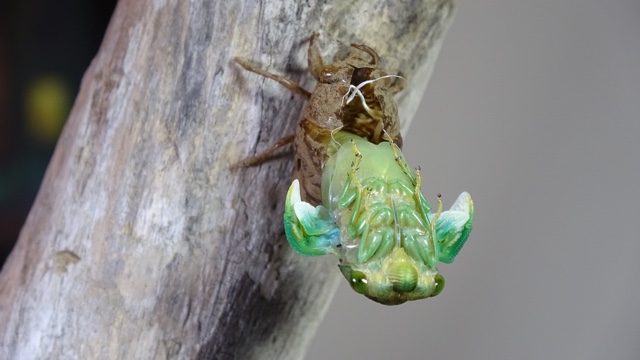
Molting Morning Cicada

Time-lapse videos of insects molting can be as visually fascinating as they are scientifically important. Cicadas are amongst the best insect subjects for time-lapse because they’re relatively large, and depending on where you live, easy to find.

Equipment you’ll need for your time-lapse video:

  1. Lights. I use cheap LED and fluorescent lights. Not enough light and you’ll end up with a grainy video. Too much light and you’ll over-expose the subject and miss some important details. You’ll need a stand or tripod for your lights as well.
  2. A tripod for your camera. You want your camera to be as steady as possible. Hand-holding the camera is not recommended. The molting process takes hours.
  3. A camera. Some cameras have a Time-Lapse mode, but you could also take a photo every 30 seconds or so and use software to assemble the photos into a video. A camera with a large view screen is recommended so you can make adjustments to the lighting and framing of the insect.
  4. A platform for your cicada/insect. If you film outside use the tree the insect decides to molt on. If you film inside, build a structure using tree branches, or other materials the nymph can anchor onto.
  5. Video editing software. Free software works fine, as long as it lets you compile a series of photos into a single video.

I made my own platform out of some driftwood and a 2×4 I had lying around. Cheap but effective. Cicadas need to hang perpendicular to the ground so their wings will properly expand, so your creation needs to allow for that. A lot of people simply use a roll of paper towel.
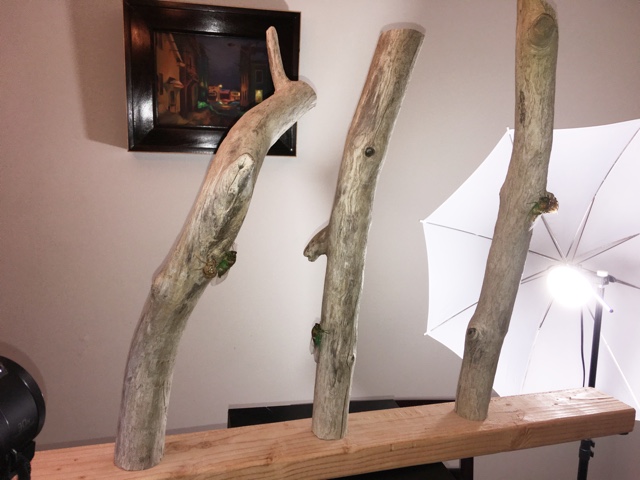
Rig for Filming cicadas

Skills you’ll need to practice

  1. Patience. Unless you’re a pro who films wildlife all the time, you might need a few tries to get it right.
  2. Learn how to use the Time-Lapse feature of your camera.
  3. Learn how to light a small subject like a cicada.
  4. The ability to stay up late. The entire molting process can take up to 5-6 hours, especially if you want to let the cicada’s wings and body harden a bit. Coffee or tea helps (you, not the cicada).

If you’ve never tried filming a cicada molting before, you can practice lighting, focusing and using the time-lapse features of your camera with a paper model of a cicada. Just draw a cicada onto a small piece of paper, and pin it to a tree. If you know origami, even better.

Finding a specimen

I begin looking for cicada nymphs about 15 minutes after sunset. I find them at the base of trees, or ascending tree trunks. If you plan on filming indoors, or on a custom platform, treat the cicada with care. Be very gentle, and place the cicada nymph in a spacious enclosure — preferably one that allows it to grip, and hang off the side. I transport cicadas in a pop-up butterfly pavilion/habitat — these portable enclosures are made for butterflies, but they work well for other insects, like cicadas. Don’t forget to release the cicada the following day as well.

The overall process for shooting indoors

  1. Set up your rig: platform, lights, camera. Make sure your camera has an empty memory card in it and is charged/plugged in. Make sure all the lights are working. Place a towel or something soft at the base of the platform, in case the cicada falls (it happens).
  2. Collect your specimen. Bring a flashlight and a butterfly pavilion (or similar container). Gently grab the cicada nymph with your fingers and place in the container. do not collect a cicada that has already begun molting. Take some (not a lot) of tree branches with you. You can use the branches to augment your platform.
  3. Place the cicada at the base of the platform. Let it explore and become comfortable. Place it back at the base of the platform if it falls or wanders off.
  4. Once the cicada is ready to molt, it will stay still for a while. This is a good time to get your camera in focus and lights in the right position.
  5. The skin of the back of the nymph will split — look and listen for that. Start time-lapse filming. Example.
  6. Re-frame the camera as necessary to capture the cicada’s wings as they inflate.
  7. An hour after the cicada’s wings move into place (see that happen), you can stop filming, and place the cicada into the safety of the butterfly pavilion — or on a tree outside.
  8. Return the cicada to the outdoors within 12 hours.
  9. Use video editing software to compile the time-lapse frames into a video. I set each frame to 0.2 seconds — experiment with the times.
  10. Add the species of the cicada, the location where you found it, and other comments to the video.
  11. Share your video with friends, family and the world.

More tips:

  • The process takes a long time — you might be up until 1 or 2 am in the morning. Be prepared for that.
  • Film some non-time-lapse video as well. There are key moments during the molting process that happen quickly, like when the cicada pulls its abdomen from its old skin. Having a video of that is nice.
  • Be prepared to adjust the framing and focus a few times during the shoot. Don’t adjust too much though — just if the cicada’s wings fall out of frame.
  • The cicada will double its overall size. Its wings will hang downward. Be prepared for that when you frame the shot.

Some results:

My latest time-lapse video:

Notice how I frame the video.

A non-time-lapse detail:

A video where I used a tree branch to make the molting look more natural
Categories
Megatibicen Neotibicen

2017 Cicada Summer

Today is September 21st, 2017 — the last day of Summer, in central New Jersey. Leaves of maple trees have started to turn scarlet and yellow. Oaks are dropping their acorns. The few, remaining Morning (Neotibicen tibicen tibicen) and Linne’s (Neotibicen linnei) cicadas sound decrepit and tired — like tiny breaking machines, low on fuel and oil. I found one dead Morning cicada lying on a sidewalk — its body crushed. Here in New Jersey, at least, the cicada season is all but over.

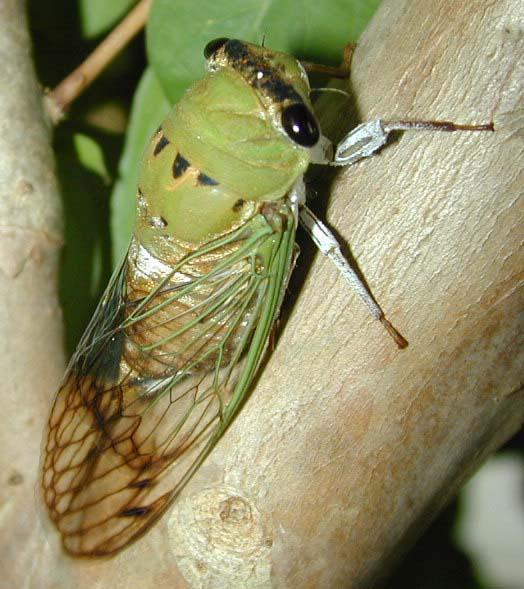
Molting Neotibicen tibicen tibicen in Little Silver, NJ. August 26st.

As cicada years go, this one had ups and downs. It wasn’t as awesome as 2016, but I can’t blame the cicadas.

Downs:

  • No group cicada hunts this year. My cicada hobby is much more fun when I can share it with other people.
  • A skunk took over my favorite spot for finding Morning Cicada nymphs.
  • I had to go on a business trip during what would have been the best weeks for finding nymphs.
  • I forgot to bring my good audio recording equipment to Titusville, NJ & Washington Crossing, PA, and only got so-so iPhone audio of the weird N. winnemanna there.

Ups:

  • I found a new Megatibicen auletes location in Highlands, NJ. The location is about 50 miles north of where I usually find them.
  • I found more Megatibicen auletes exuvia than ever at the Manchester, NJ location where my friends and I normally hunt for auletes. Normally I find one or two — this year I found dozens. I found no adult specimens, other than those singing in the trees at dusk.
  • I did find enough exuvia & Morning cicadas that I should be happy.

Here’s some images from this summer:

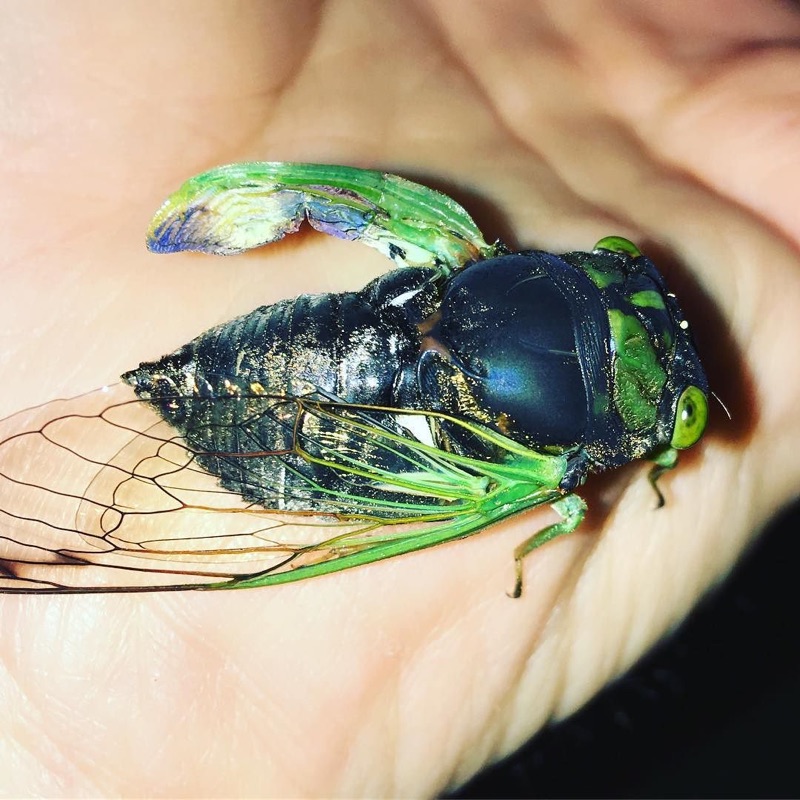
Neotibicen tibicen tibicen with bad wing. The indigo color is fascinating. August 9th.
Neotibicen tibicen tibicen with bad wing

A Neotibicen tibicen tibicen found during a lunchtime stroll. September 1st.
Neotibicen tibicen tibicen 5

A female Neotibicen canicularis or maybe pink N. linnei found in Little Silver, NJ. August 25th.
female Neotibicen canicularis

You’ll find more activity on the Facebook page, Twitter, and Instagram.

And last, the most popular post on the Cicada Mania Facebook page:

Categories
Neotibicen

Scissors Grinders

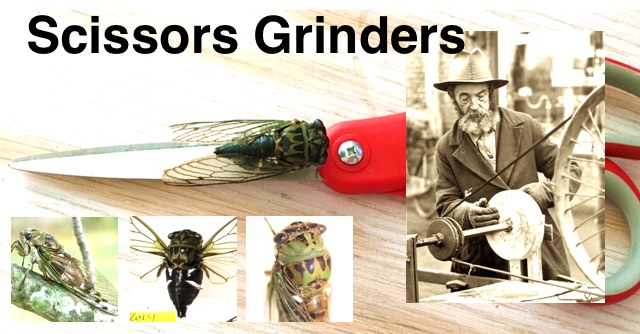
Back in the day — 1970s and earlier — people would sharpen scissors, knives, and tools rather than throw them out and buy new ones. A scissors grinder was a person who would sharpen your scissors for you. They used an abrasive wheel to grind your scissors sharp. The sound of the metal of a scissor gliding across the sharpening stone made a unique sound — a sound used to describe the sound some cicadas make.

These days (2017 when I wrote this article) scissors grinders are not a common sight or sound, but a few cicadas still have a common name referring to the scissor grinding days of yore. A few, but not all, are also Dusk Singers.

Neotibicen latifasciatus aka Coastal Scissor(s) Grinder Cicada. Found in FL, MD, NJ, NC, VA. Season: June – Fall. A day singer found along the coast.

N. latifasciatus Call*:

Neotibicen pruinosus pruinosus aka Scissor(s) Grinder. Found in AL, AR, CO, IL, IN, IA, KS, KY, LA, MI, MN, MS, MO, NE, OH, OK, SC, SD, TN, TX, VA, WV, WI. Season: June – September. Neotibicen pruinosus fulvus aka Pale Scissor(s) Grinder Cicada. Found in: KS, OK. Season: June – September. A Dusk Singer, very much like N. winnemanna but predominately west of the Appalachian mountains.

N. pruinosus Call*:

Neotibicen winnemanna aka Eastern Scissor(s) Grinder. Found in AL, DE, DC, GA, KY, LA, MD, MS, NC, NJ, PA, SC, TN, TX, VA, WV. Season: June – Fall. A Dusk Singer, very much like N. pruinosus but predominately east of the Appalachian mountains.

N. winnemanna Call*:

It’s worth mentioning two similar cicadas, that don’t bear the “Scissors Grinder” name, but either sound similar or hybridize with Scissor Grinders.

Neotibicen robinsonianus aka Robinson’s Annual Cicada or Robinson’s Cicada. This cicada’s call is similar to Scissor Grinders in rhythm, but it has a duller sound/lower pitch (IMHO). Maybe it should be called the “Dull Scissor Grinder” (that is a joke). Found: AL, AR, DC, FL, GA, IN, KS, MD, MS, MO, NC, OH, PA, TN, TX, VA. Season: June-Fall.

N. robinsonianus Call*:

Neotibicen linnei aka Linne’s Cicada sounds nothing like the Scissors Grinders, but it is known to hybridize with Scissor Grinders. Found: AL, AR, CT, DE, DC, FL, GA, IL, IN, IA, KS, KY, LA, ME, MD, MA, MI, MN, MS, MO, NE, NJ, NY, NC, OH, ON, PA, SC, TN, VT, VA, WV, WI. Season: June – fall.

You might hear a hybrid Scissors Grinder with a call that features part of an N. Linnei call!

A pure (non hybrid) N. linnei Call for reference*:

The five cicadas mentioned on this page are part of a group informally known as the Green Neotibicen. They are closely genetically related.

*Audio files are Copyright of InsectSingers.com. Season information gathered from BugGuide.net.

Categories
Annual Megatibicen Neotibicen U.S.A.

The Dusk Singers

The Dusk Singers

Dusk is the time of day between sunset and night. Many species of Megatibicen & Neotibicen (formerly Tibicen) sing at this time. I’m not sure why they sing at this time — perhaps it helps them avoid audio competition with other singing insects, or perhaps it helps them avoid predators by calling at this specific time of the day.

If you find yourself outdoors in the eastern half of the U.S. after sunset and hear a cicada call, it is likely one of the following Megatibicen or Neotibicen species:

Megatibicen

Megatibicen are LARGE and LOUD cicadas.

Megatibicen auletes aka the Northern Dusk Singing Cicada. This cicada can be found in these states: AL, AR, CT, DE, DC, FL, GA, IL, IN, IA, KS, KY, LA, MD, MA, MI, MS, MO, NE, NJ, NY, NC, OH, OK, PA, SC, TN, TX, VA, WV, WI. Season: July to Fall.

M. auletes Call*:

Megatibicen figuratus aka the Fall Southeastern Dusk-singing Cicada. Found in: AL, AR, FL, GA, LA, MS, NC, SC, TN, TX, VA. Season: July to Fall.

M. figuratus Call*:

Megatibicen resh aka Resh Cicada aka Western Dusk Singing Cicada. Found in: AR, KS, LA, MS, NE, OK, SC, TN, TX. Season: July to Fall.

M. resh Call*:

Megatibicen resonans aka Southern Resonant/Great Pine Barrens Cicada aka Southern Dusk Singing Cicada. Found in AL, FL, GA, LA, MS, NC, SC, TN, TX, VA. Season: July to Fall.

M. resonans Call*:

Neotibicen

Medium-sized, green cicadas with calls that sound like the rhythmic grinding of a scissor on a sharpening wheel (not a common tool in the 21st century).

Neotibicen pruinosus pruinosus aka Scissor(s) Grinder. Found in AL, AR, CO, IL, IN, IA, KS, KY, LA, MI, MN, MS, MO, NE, OH, OK, SC, SD, TN, TX, VA, WV, WI. Season: June – September. Neotibicen pruinosus fulvus aka Pale Scissor(s) Grinder Cicada. Found in: KS, OK. Season: June – September.

N. pruinosus Call*:

Neotibicen winnemanna aka Eastern Scissor(s) Grinder. Found in AL, DE, DC, GA, KY, LA, MD, MS, NC, NJ, PA, SC, TN, TX, VA, WV. Season: June – Fall.

N. winnemanna Call*:

*Audio files are Copyright of InsectSingers.com. Season information gathered from BugGuide.net.

Categories
Neotibicen Tibicen

Dog Day Cicadas

Dog Day cicadas
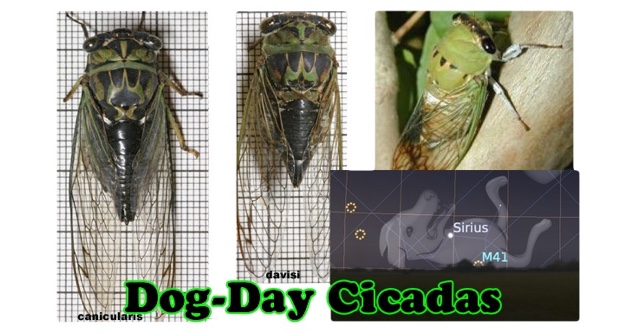
Photo credit: N. canicularis (Dog-Day cicada) and N. davisi (Southern Dog-Day cicada) by Paul Krombholz. N. superbus by Sloan Childers.

Dog-day cicada is the common name given to Tibicen (now Neotibicen) type cicadas in North America. These cicadas are called “Dog Day” because they are typically observed during the “Dog Days of Summer“, which fall somewhere between late July to early September, or once the “Dog Star” Sirius appears in the morning sky. All Neotibicen species are present during the month of August in North America.

Dog-day cicadas are known for their green, brown, black & white coloration that provides them with excellent camouflage in the trees they inhabit.

Dog-day cicada is used generally to describe most Neotibicen, but a few species are explicitly named Dog-day:

  • Neotibicen canicularis aka the Dog-day cicada. Canicularis is Latin for “of the dog star”, and the dog star is Sirius. Found in AR, CT, DC, IL, IN, IA, KS, ME, MB, MD, MA, MI, MN, MO, NE, NB, NH, NJ, NY, NC, ND, NS, OH, ON, PA, PE, QC, RI, SC, SD, TN, VT, VA, WV, WI. Season: August-October.
  • Neotibicen davisi, aka the Southern Dog-day cicada. There are two sub-species. Found in AL, DE, DC, FL, GA, LA, MD, MA, MS, NJ, NY, NC, PA, SC, TN, TX, VA, WV. Season: July-October.
  • Neotibicen superbus aka the Superb Dog-day cicada. Found in AR, KS, LA, MO, NM, OK, TX. Season: June-August.
  • Neotibicen auriferus, aka the Plains Dog-day Cicada. Found in AR, KS, MO, NE, NM, OK, TX. Season: July-September.
  • Neotibicen similaris, aka Similar Dog-Day Cicada. Found in AL, FL, GA, LA, MS, NC, SC. Season: June-September.

Neotibicen superbus photo by Sloan Childers from 2005. Round Rock, Texas.
Photo credit: Neotibicen superbus by Sloan Childers

These cicadas do not actually appear the moment Sirius rises, and when they do appear depends on your location and the weather. Neotibicen canicularis will appear in Arkansas before it appears in Quebec. That said, if you are curious when Sirius will rise in your area, search for “heliacal rising of sirius” — it varies about a day per degree of latitude. Neotibicen, depending on the species, can be found from May to December (December in Florida), but all Neotibicen species are present during the month of August in North America.

Categories
David Marshall Kathy Hill Neotibicen Papers and Documents U.S.A.

Neotibicen similaris apalachicola, a new cicada subspecies

A new subspecies of the Similar Dog-Day Cicada has been described in the paper A new Neotibicen cicada subspecies (Hemiptera: Cicadidae) from the southeastern USA forms hybrid zones with a widespread relative despite a divergent male calling song by David C. Marshall and Kathy B. R. Hill (Zootaxa, Vol 4272, No 4). The cicada is named Neotibicen similaris apalachicola.

This cicada lives in Florida, Georgia & Alabama, and hybridizes with the other Similar Dog-Day Cicada sub-speces, Neotibicen similaris similaris. The document is available on biotaxa.org.

A morphologically cryptic subspecies of Neotibicen similaris (Smith and Grossbeck) is described from forests of the Apalachicola region of the southeastern United States. Although the new form exhibits a highly distinctive male calling song, it hybridizes extensively where it meets populations of the nominate subspecies in parapatry, by which it is nearly surrounded. This is the first reported example of hybridization between North American nonperiodical cicadas. Acoustic and morphological characters are added to the original description of the nominate subspecies, and illustrations of complex hybrid song phenotypes are presented. The biogeography of N. similaris is discussed in light of historical changes in forest composition on the southeastern Coastal Plain.

You will find song samples and maps on the Insect Singers website.

I think this is an image of the new cicada:

Categories
Lyristes Megatibicen Neotibicen Tibicen Young June Lee

Gigatibicen, Ameritibicen, Paratibicen

Gigatibicen
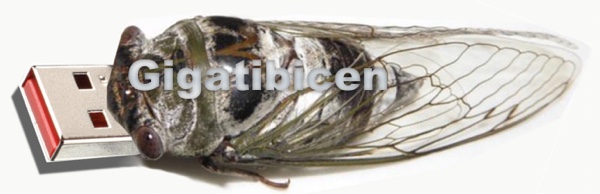
For some reason I associate “Giga” with “Gigabytes” and storage media like Flash drives, which explains this joke image.

Over the past two years there have been quite a few updates to the genera of the cicadas that were organized under the Tibicen genus earlier this decade.

The most recent paper by Young June Lee introduces the genera Gigatibicen, Ameritibicen, and Paratibicen 1. Earlier this year there was a paper by Allen Sanborn and Maxine Heath that introduced the genus Megatibicen 3, and in 2015 there was a paper by Kathy Hill and others that introduced Neotibicen and Hadoa 2.

See the end of the article for links to these papers, and related articles on CicadaMania.com.

The table below shows the names/synonyms (sub species have been removed to keep the table compact):

(Tibicen circa 2014) Hill (2015)2 Sanborn, Heath (2016)3 Lee (2016)1
Tibicen auletes Neotibicen auletes Megatibicen auletes Gigatibicen auletes
Tibicen auriferus Neotibicen auriferus no change no change
Tibicen canicularis Neotibicen canicularis no change no change
Tibicen cultriformis Neotibicen cultriformis Megatibicen cultriformis Ameritibicen cultriformis
Tibicen davisi davisi Neotibicen davisi no change no change
Tibicen dealbatus Neotibicen dealbatus Megatibicen dealbatus Ameritibicen dealbatus
Tibicen dorsatus Neotibicen dorsatus Megatibicen dorsatus Ameritibicen dorsatus
Tibicen figuratus Neotibicen figuratus Megatibicen figuratus Ameritibicen figuratus
Tibicen latifasciatus Neotibicen latifasciatus no change no change
Tibicen linnei Neotibicen linnei no change no change
Tibicen lyricen engelhardti Neotibicen lyricen no change no change
Tibicen pronotalis pronotalis Neotibicen pronotalis Megatibicen pronotalis Ameritibicen pronotalis
Tibicen pruinosus fulvus Neotibicen pruinosus no change no change
Tibicen resh Neotibicen resh Megatibicen resh Gigatibicen resh
Tibicen resonans Neotibicen resonans Megatibicen resonans Gigatibicen resonans
Tibicen robinsonianus Neotibicen robinsonianus no change no change
Tibicen similaris Neotibicen similaris no change Paratibicen similaris
Tibicen superbus Neotibicen superbus no change no change
Tibicen tibicen australis Neotibicen tibicen no change no change
Tibicen tremulus Neotibicen tremulus Megatibicen tremulus Ameritibicen tremulus
Tibicen winnemanna Neotibicen winnemanna no change no change
Tibicen bifidus Hadoa bifida no change no change
Tibicen chiricahua Hadoa chiricahua no change no change
Tibicen duryi Hadoa duryi no change no change
Tibicen inauditus Hadoa inaudita no change no change
Tibicen longioperculus Hadoa longiopercula no change no change
Tibicen neomexicensis Hadoa neomexicensis no change no change
Tibicen parallelus Hadoa parallela no change no change
Tibicen simplex Hadoa simplex no change no change
Tibicen texanus Hadoa texana no change no change
Tibicen townsendii Hadoa townsendii no change no change
  • 1 Lee, Y.J. 2016. Description of three new genera, Paratibicen, Gigatibicen, and Ameritibicen, of Cryptotympanini (Hemiptera: Cicadidae) and a key to their species Journal of Asia-Pacific Biodiversity, Volume 9, Issue 4, 1 December 2016, Pages 448—454. Link to Paper.
  • 2 Hill, et al. 2015. Molecular phylogenetics, diversification, and systematics of Tibicen Latreille 1825 and allied cicadas of the tribe Cryptotympanini, with three new genera and emphasis on species from the USA and Canada (Hemiptera: Auchenorrhyncha: Cicadidae), Zootaxa, Volume 3985, Issue 2, Pages 219—251. Link to Paper
  • 3 Sanborn A.F., Heath, M.S. 2016. Megatibicen n. gen., a new North American cicada genus (Hemiptera: Cicadidae: Cicadinae: Cryptotympanini), Zootaxa, Volume 4168, Issue 3. Link to Paper
Categories
Allen F. Sanborn David Marshall Maxine E. Heath Megatibicen Neotibicen

What is Megatibicen?!

Update (9/20): I guessed the species correctly: all the Large Flute Players.

Update (9/24): I neglected to note that there’s another paper out there by Young June Lee called Description of three new genera, Paratibicen, Megatibicen, and Ameritibicen, of Cryptotympanini (Hemiptera: Cicadidae) and a key to their species. Link to it here. This manuscript goes beyond one new genus, and instead introduces three: Paratibicen, Megatibicen, and Ameritibicen. Lee’s paper differs from Sanborn & Heath in that the large Neotibicen are spit into Megatibicen and Ameritibicen in Young’s document, but they’re all Megatibicen in Sanborn & Heath’s paper.

Megatibicen

Last night I had a rough night’s sleep. I tossed and turned all night long. I remember looking at the clock and seeing 4 am, and thinking “tomorrow is ruined”. Sometime during the night I dreamt of finding thousands of molted Neotibicen exuvia clinging to shrubbery — a rare if not impossible sight in real life.

When I woke I checked my email and found a communication from David Marshall. David is well known and respected in the cicada world for many things including describing the 7th species of Magicicada with John Cooley, as well as being part of the team who defined the Neotibicen and Hadoa genera (link to paper)1.

David wrote to let me know that Allen F. Sanborn and Maxine S. Heath had published a new paper titled: Megatibicen n. gen., a new North American cicada genus (Hemiptera: Cicadidae: Cicadinae: Cryptotympanini), 2016, Zootaxa Vol 4168, No 3.(link).

So, what is MEGATIBICEN? Assumptions after the abstract.

Here is the abstract:

The genus Tibicen has had a confusing history (see summary in Boulard and Puissant 2014; Marshall and Hill 2014; Sanborn 2014). Boulard and his colleague (Boulard 1984; 1988; 1997; 2001; 2003; Boulard and Puissant 2013; 2014; 2015) have argued for the suppression of Tibicen and the taxa derivatived from it in favor of Lyristes Horváth. Boulard’s argument for suppression was first described in Melville and Sims (1984) who presented the case for suppression to the International Commission on Zoological Nomenclature with further comments made by Hamilton (1985), Boulard (1985), and Lauterer (1985). A lack of action resulted in additional comments being published in 2014 again supporting the retention (Sanborn 2014; Marshall and Hill 2014) or the suppression (Boulard and Puissant 2014) of Tibicen.

My guess, without reading the document, is that Megatibicen includes the larger North America Neotibicen species, including the “auletes group” (M. auletes, M. resh, M. figuratus, M. resonans), the “pronotalis group” (M. pronotalis, M. dealbatus, M. cultriformis) and the “dorsatus group” (M. dorsatus, M. tremulus), or a mix of these. M. auletes is the largest cicada in North America. “Mega” is the Greek word for “very large” or “great”. Word is that Kathy Hill and David Marshall also planned on describing a Megatibicen genus at one point, as well.

Whenever cicada names change it causes feelings of bemusement, discontentment, and discomfort amongst some cicada researchers and fans. I know I don’t like it because I have to update the names of cicadas in 100’s of places on this website ;). Some folks simply disagree with the folks writing the paper. Some people prefer former names because they sound nicer (e.g. N. chloromerus vs N. tibicen tibicen). Some people simply do not like change.

Related: Here’s my article on when Neotibicen & Hadoa were established from Tibicen.

1 Hill, et al. Molecular phylogenetics, diversification, and systematics of Tibicen Latreille 1825 and allied cicadas of the tribe Cryptotympanini, with three new genera and emphasis on species from the USA and Canada (Hemiptera: Auchenorrhyncha: Cicadidae) 2015, Zootaxa 3985 (2): 219—251.

Categories
Elias Bonaros Neotibicen

Linne’s Cicada in Cape May County, NJ

Here’s some footage of a Neotibicen linnei in Woodbine, Cape May County, NJ.

Elias almost caught it.

This footage was a byproduct of our cicada hunt for a different cicada, Neotibicen latifasciatus.

Categories
Annette DeGiovine Elias Bonaros Neotibicen

Neotibicen latifasciatus – the South Jersey Shore Screamer

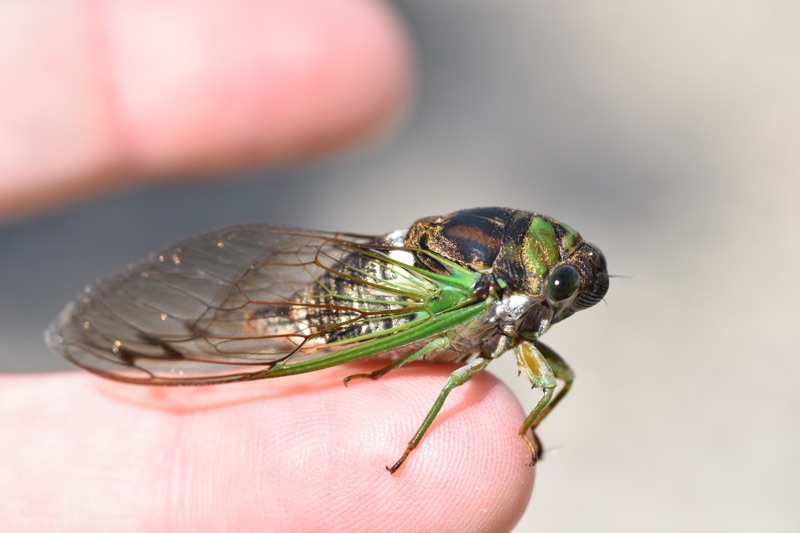
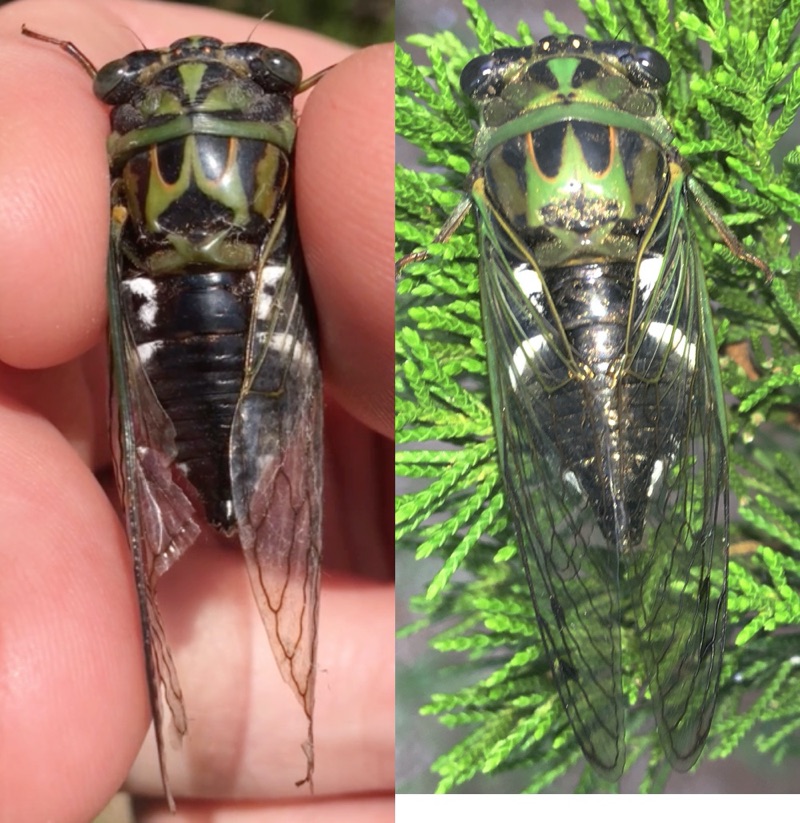
This is a Neotibicen latifasciatus (Davis, 1915) commonly known as the Coastal Scissor Grinder, locally known as a Yodeling Cedar Sucker in Florida and Beach Banshee in North Carolina 3:

Dorsal view of two latifasciatus males

See more photos.

The holotype — a single type specimen on which the description of a new species is based — for the cicada Neotibicen latifasciatus was gathered from Cold Spring, Cape May County1. I feel that N. latifasciatus needs a common name indicative of Cape May, New Jersey. Here are my ideas:

  1. Cape May Crooner
  2. Cape May Crier
  3. Cape May Car Alarm
  4. Shore Shrieker
  5. Woodbine Warbler
  6. South Jersey Shore Screamer

The last one is my favorite (changed it to South ;))

N. latifasciatus is a cicada found along the east coast of the United States, and is known for its preference for cedar trees. It can be found in New Jersey, Maryland, North Carolina, Virginia2, Florida and points in between3. Its affinity for cedar trees (plus its distinct call) makes it relatively easy to locate and capture — if you’re willing to get a little messy climbing through the thick & sticky branches of a cedar tree. A thin mist of sap from the cedar seems to coat the wings of these cicadas, and it’s worth mentioning that their wings are often torn and ragged, probably resulting from the thick cedar foliage.

When William T. Davis first described N. latifasciatus in 19154, he described it as a variety of Cicada pruinosa (now Neotibicen pruinosus pruinosus). This is understandable, since they sound very much alike, and look alike except for the the white bands on the sides of the latifasciatus, some other minor morphological differences, and habitats. pruinosus, latifasciatus, winnemanna, linnei, canicularis, and robinsonianus are collectively known as the Green [Neo]tibicen Species3 or simply “the Green Group”.They’re called Green because much of their heads, collars, pronotums and mesonotums are green in color.

On Saturday, August 20th, 2016, I met Elias Bonaros and Annette DeGiovine-Oliveira in Middle Township, Cape May County to search for latifasciatus. I arrived before they did and located a relatively quiet road lined with cedar trees, filled with screaming latifasciatus. From the outside cedars resemble twisting green fire; on the inside they’re a mess of tightly-packed, dirty branches — perfect for an insect to hide. The road and trees were surrounded by briny marshland, less than a mile from the Atlantic Ocean. Other than cicadas, there were an abundance of annoying greenhead flies (Tabanus nigrovittatus), and not annoying at all katydids. The temperature was in the mid 80s, the air was humid, the sun was brutal, and the flies thought I was delicious. In the 5 hours we spent photographing and gathering specimens, I drank a gallon of water. Elias handled cicada procurement duties, and Annette and I recorded the cicadas’ song and habitat.

Here’s a video summary of our adventure:

After a satisfying lunch, I went looking for other locations and found a very different but prime in-land location with taller cedar (Red and White varieties) in Woodbine Borough. There we found many exuvia, which we did not find at the other location, and heard not only latifasciatus, but also N. linnei, N. tibicen tibicen, N. canicularis, and N. auletes. Around 9pm, and almost 12 hours of cicada field-work, I called it quits. Elias and Annette stuck around and were able to observe molting latifasciatus.

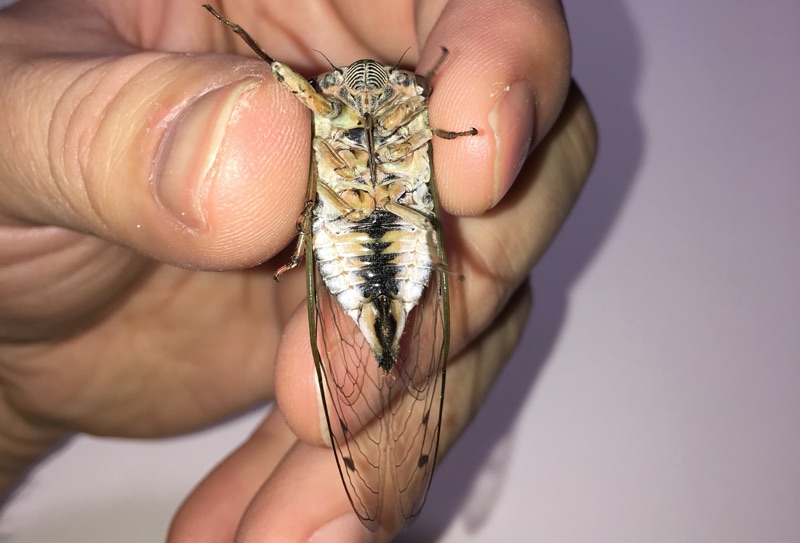
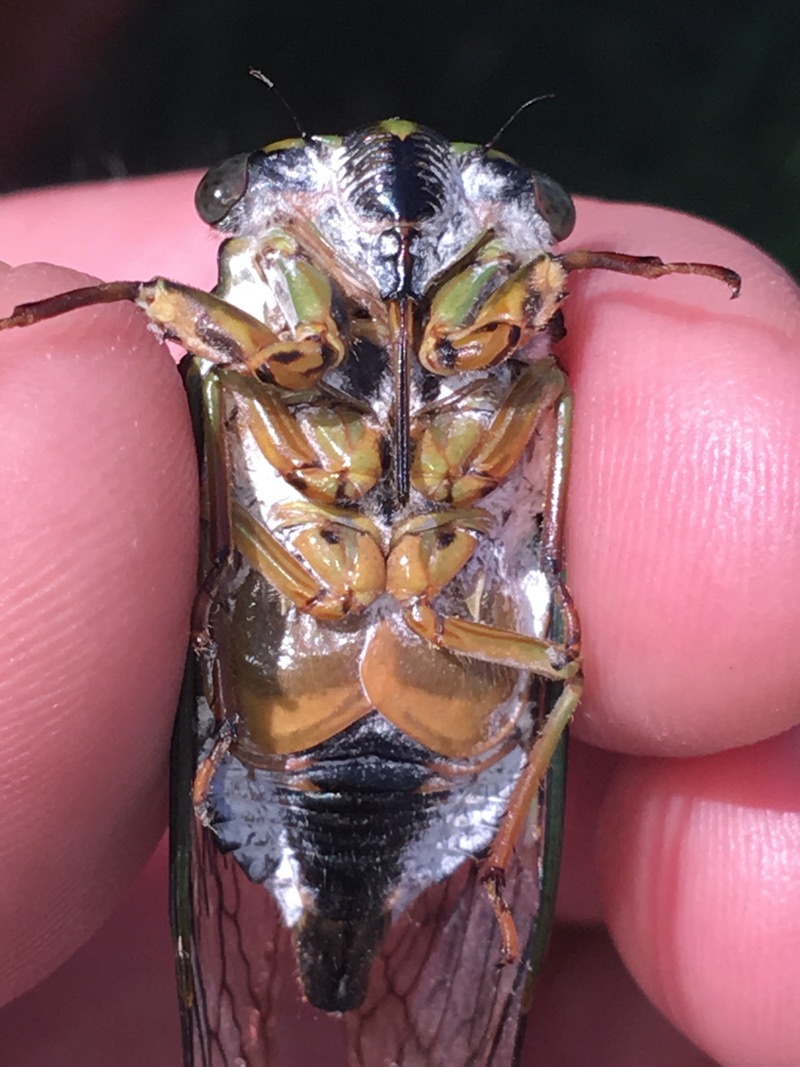
The ventral side a male Neotibicen latifasciatus:
Neotibicen latifasciatus abdomen

This cicada was captured using the “clap” method of netting cicadas. This method involves two people using two nets, surrounding the cicada so it can’t find an escape path.

I would be remiss if I did not mention how delightful the people of Cape May County are. All the folks we encountered were pleasantly curious or encouraging about our cicada research activities. They also have “Custard” shops instead of Ice Cream shops.

Also check out Annette’s YouTube channel for video of the latifasciatus habitat and song.

1 Sanborn AF, Phillips PK. 2013. Biogeography of the Cicadas (Hemiptera: Cicadidae) of North America, North of Mexico. Diversity 2013, 5, 166-239.

2 Sanborn AF, Heath MS. 2012. The Cicadas (Hemipetera: Cicadoidea: Cicadidae) of North America North of Mexico. Entomological Society of America. 45.

3 BugGuide Species Neotibicen latifasciatus page.

4 Davis WT. 1915a. Notes on some cicadas from the eastern and central United States with a description of a new variety of Cicada pruinosa. Journal of the New York Entomological Society 23: 1—10. (see the North American Cicadas page)