Categories
Elias Bonaros Neotibicen

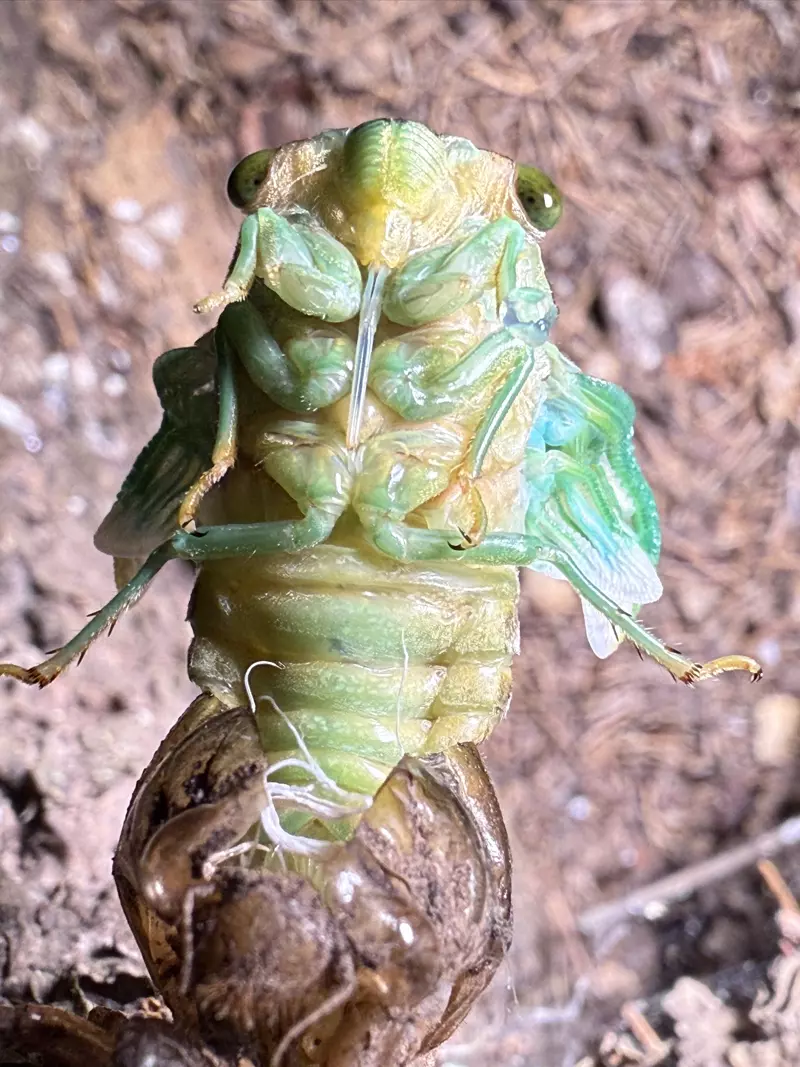
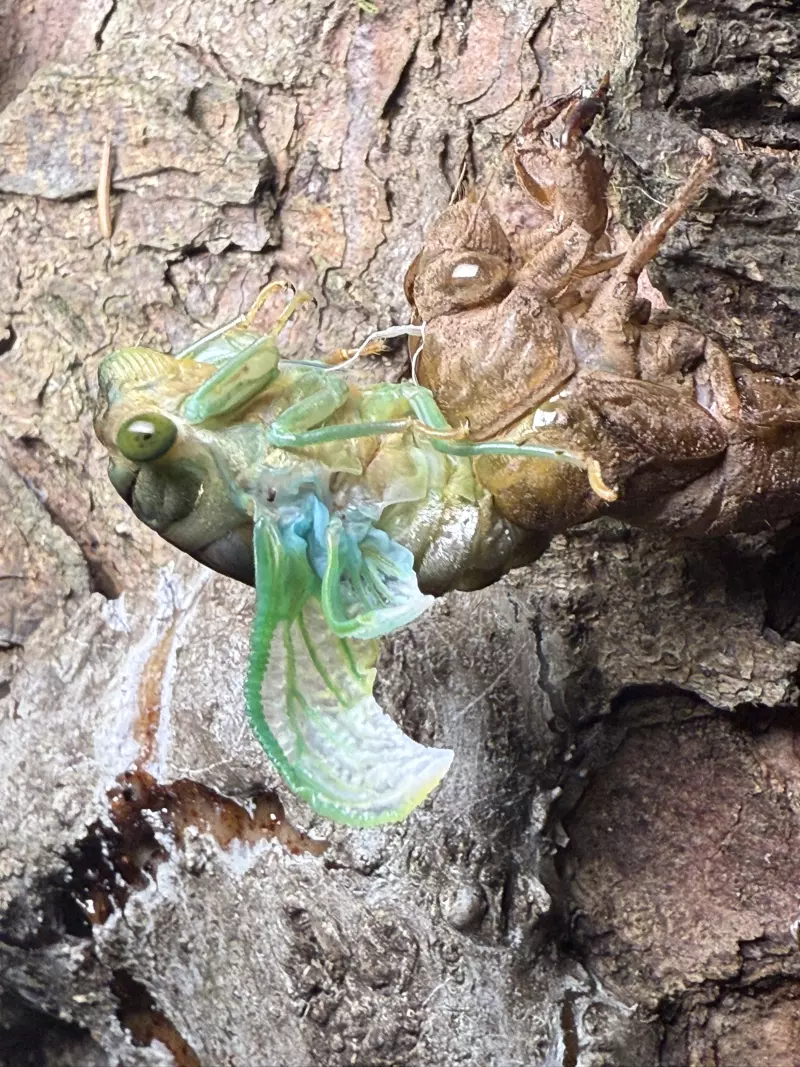
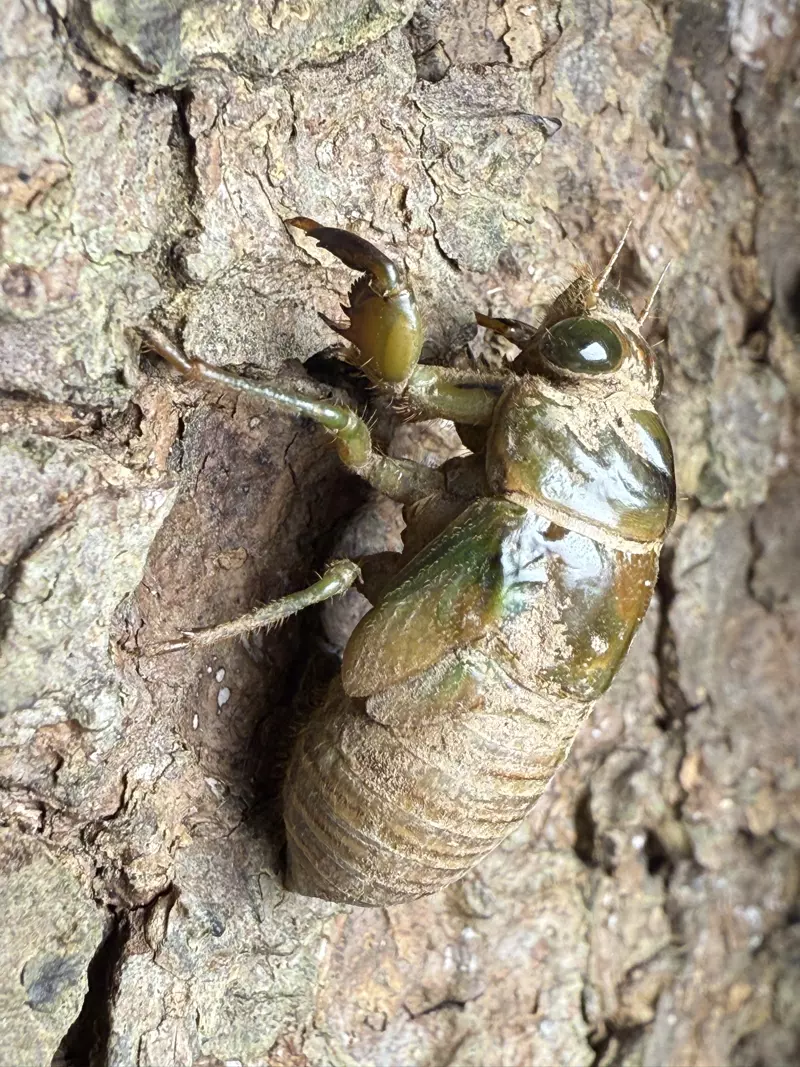
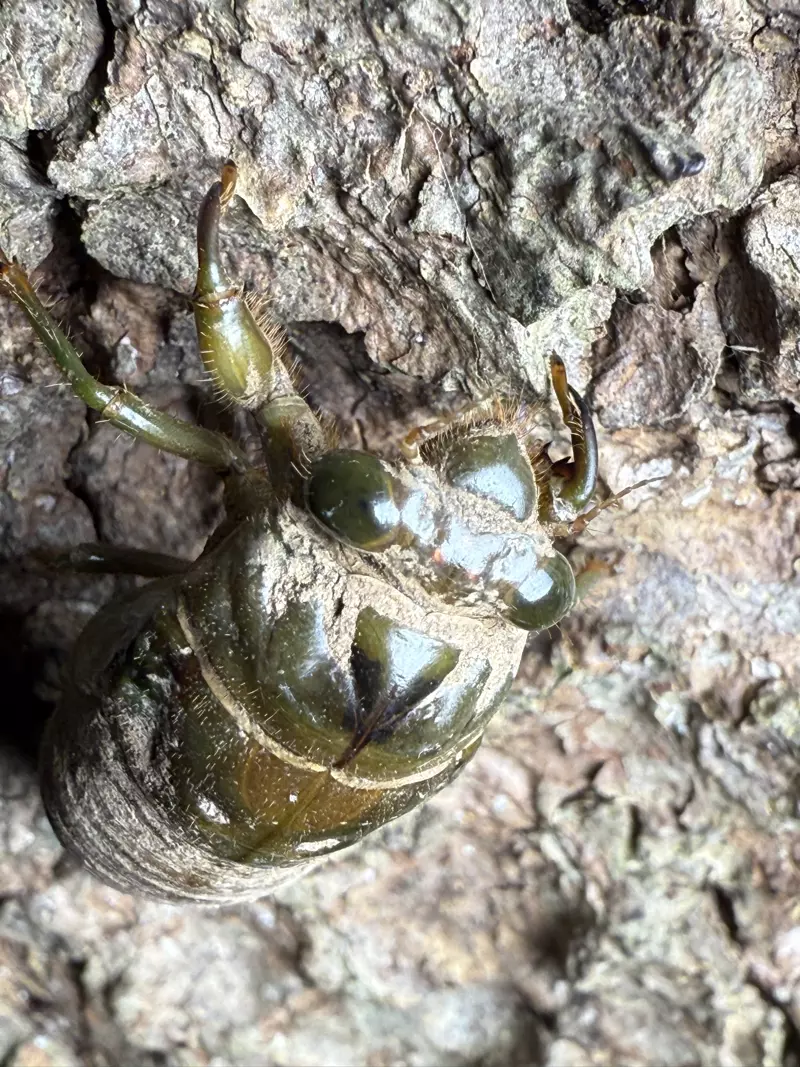
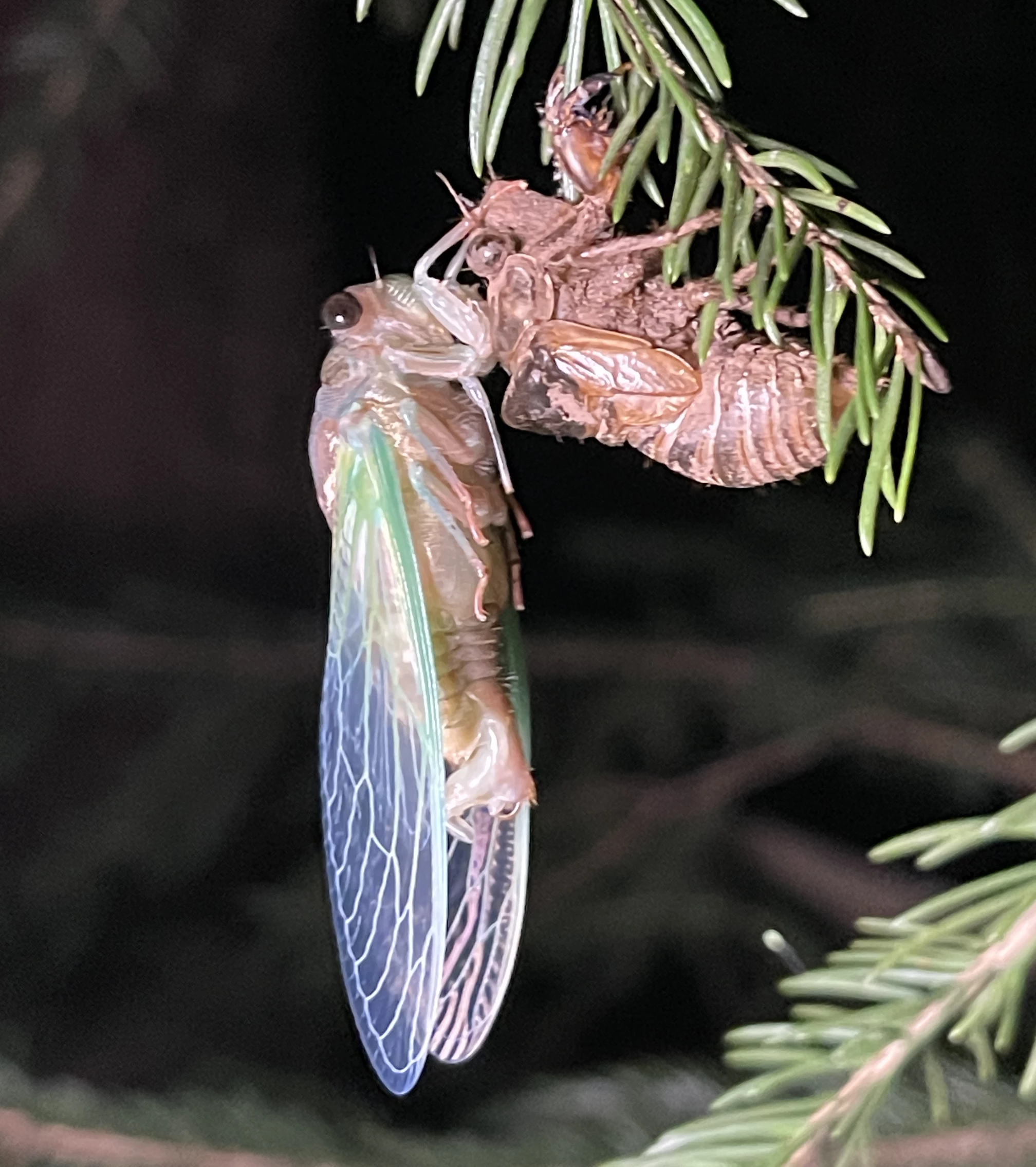
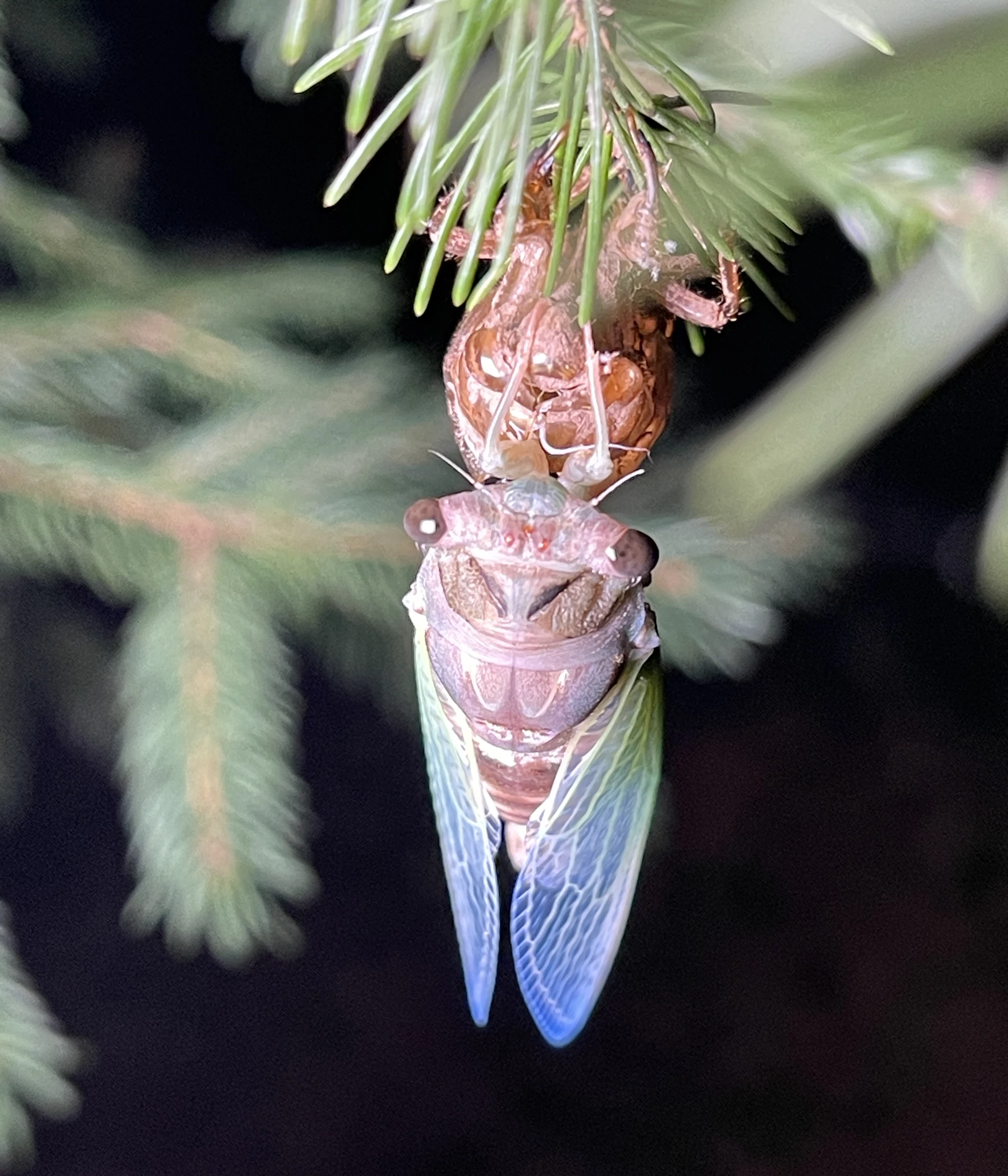
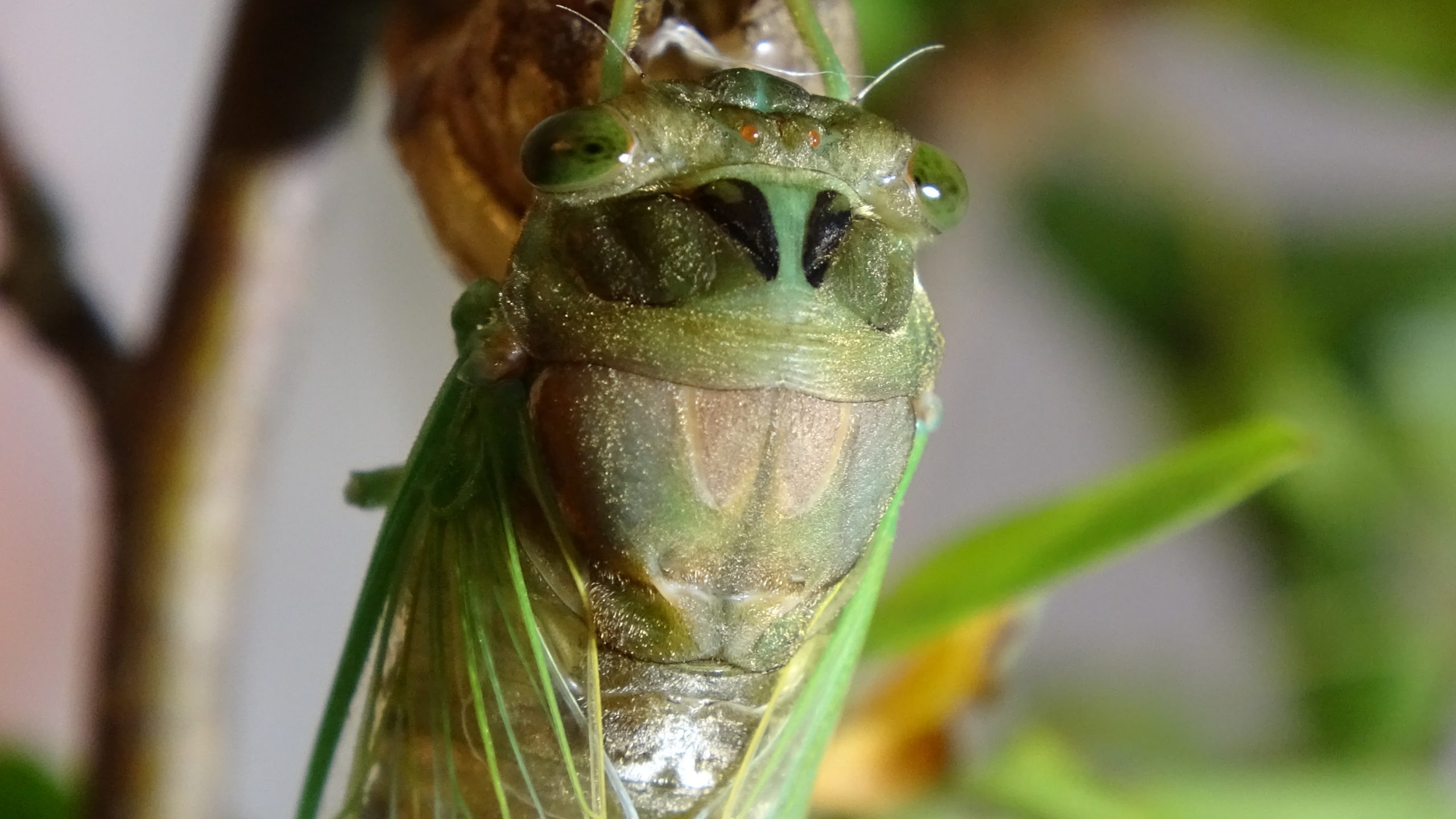
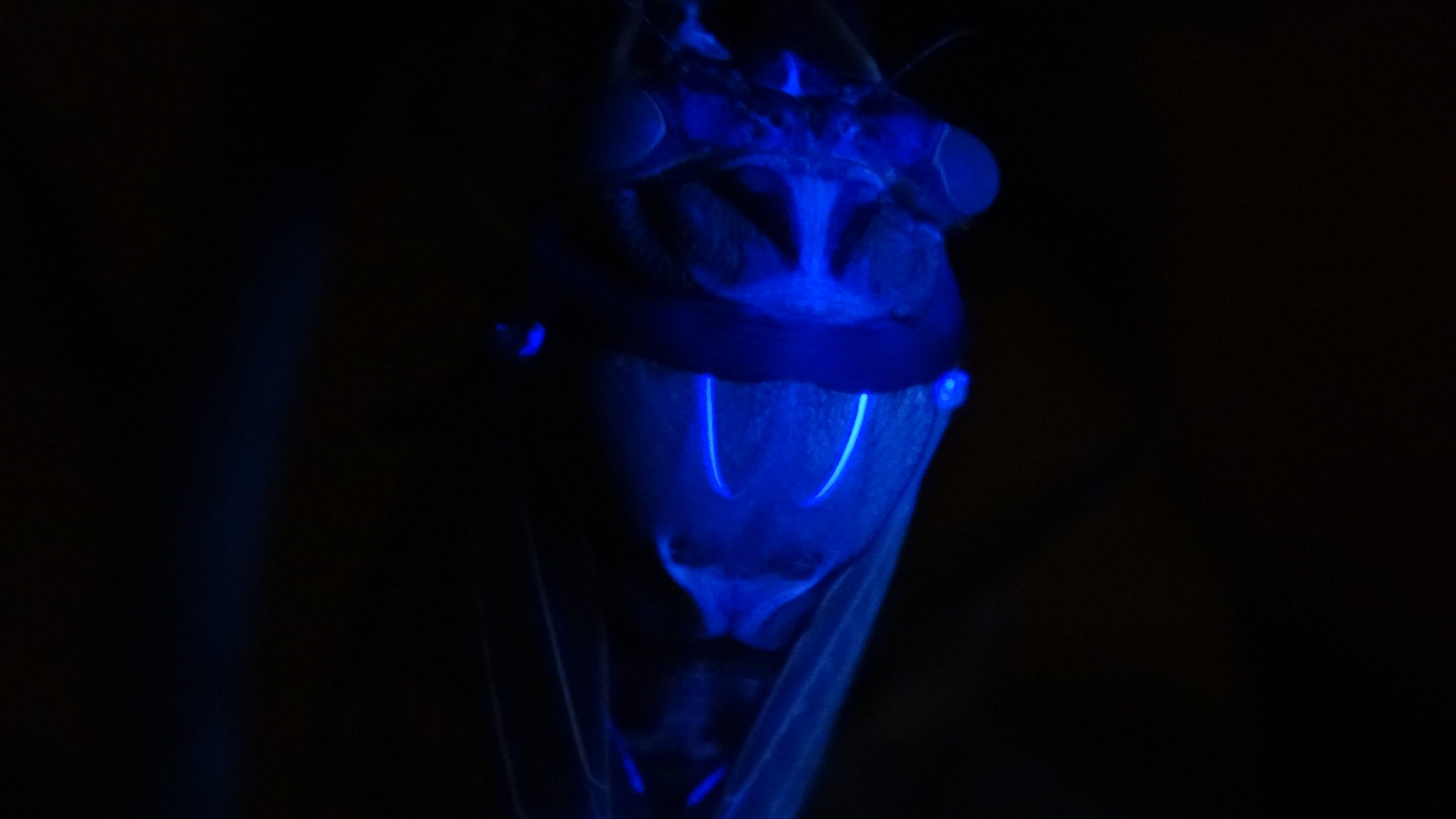
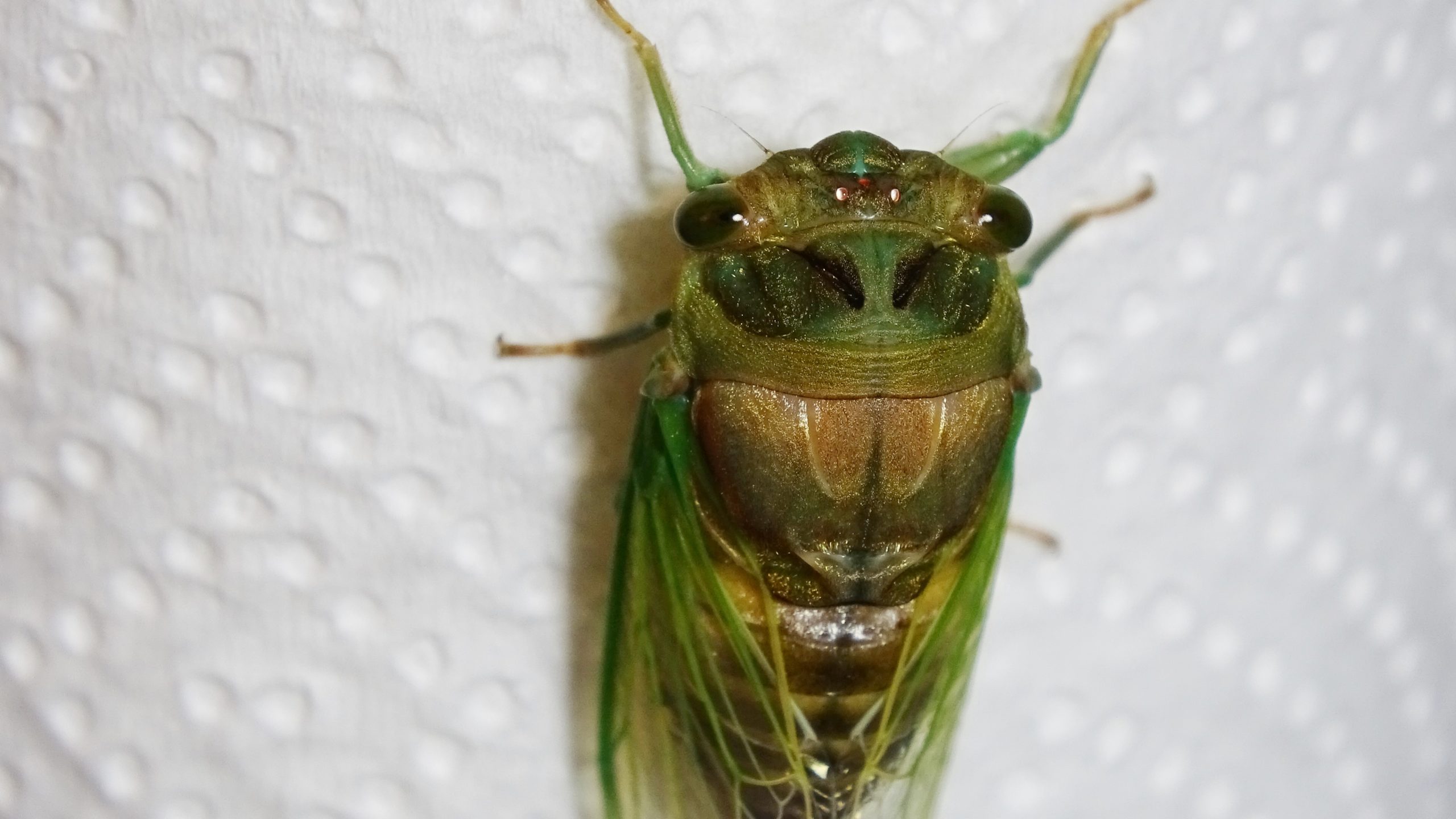
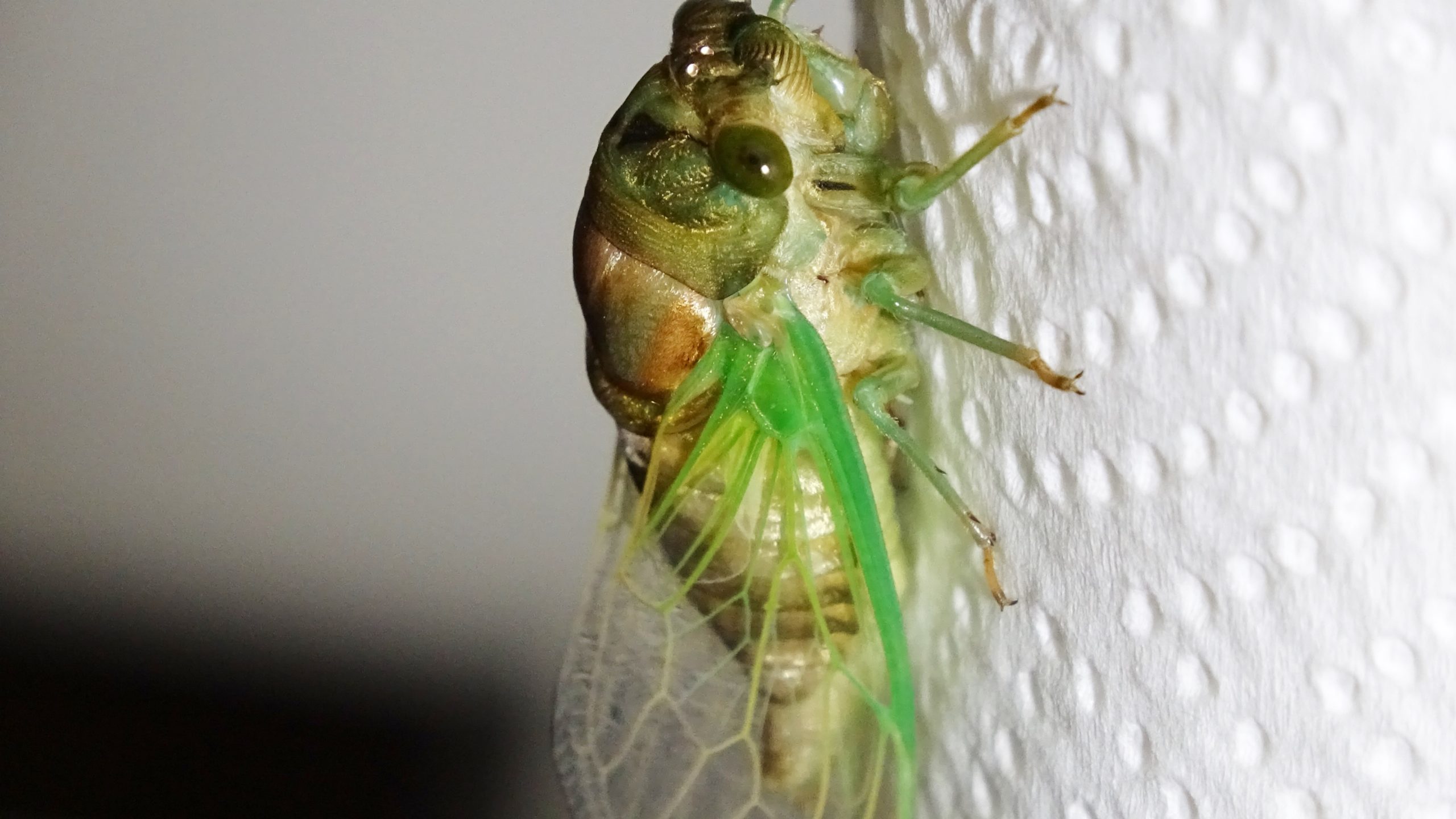
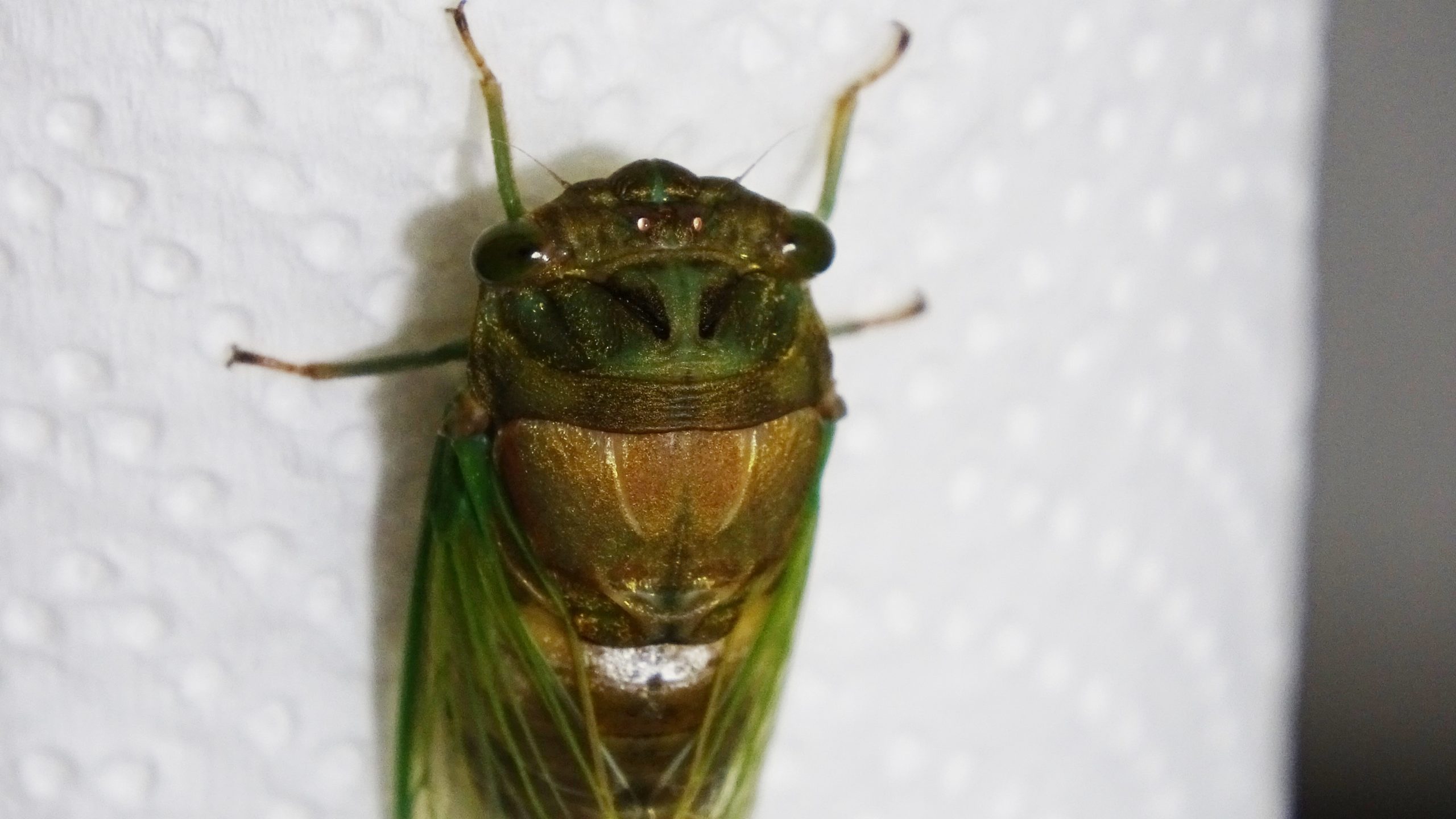
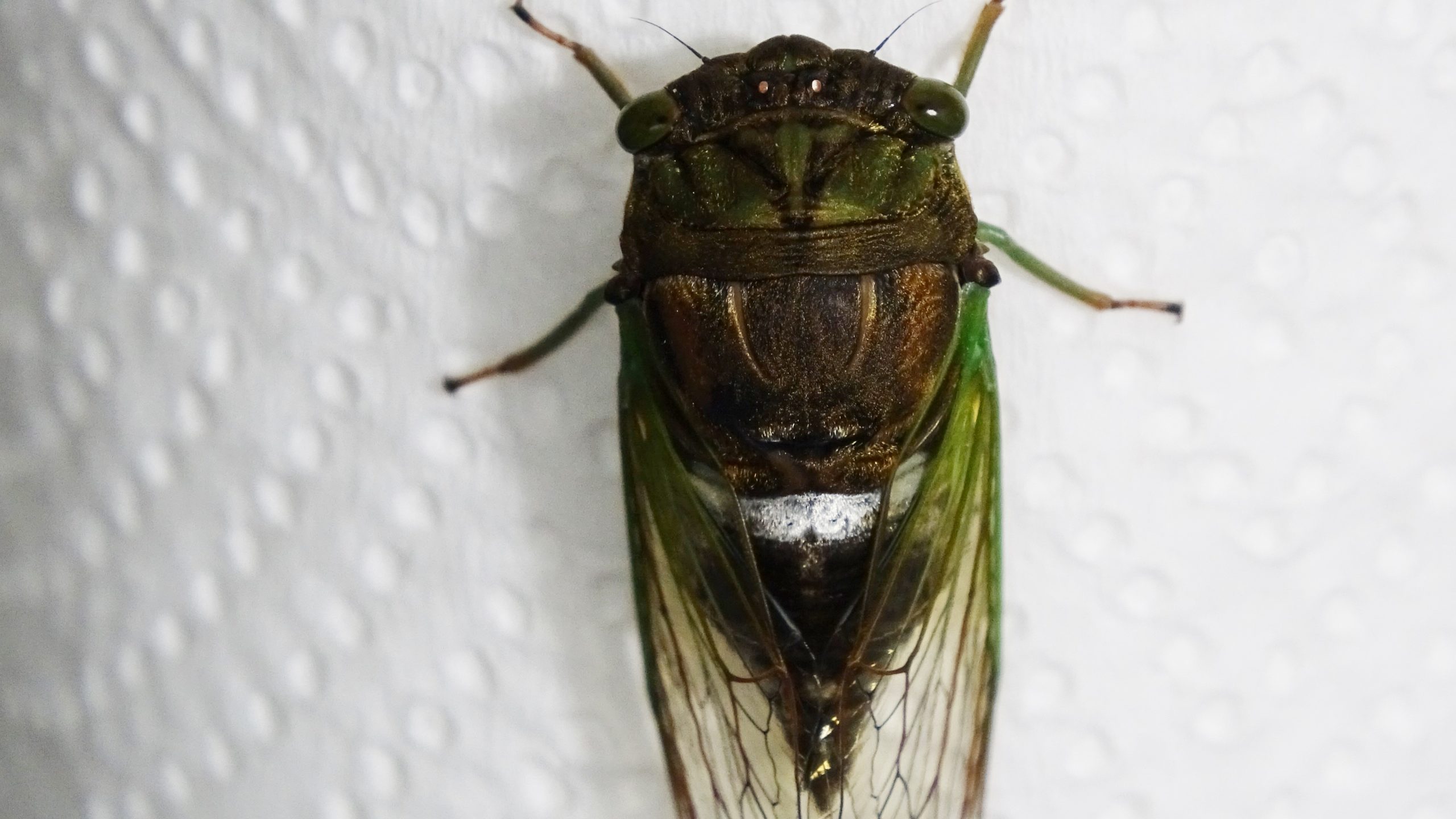
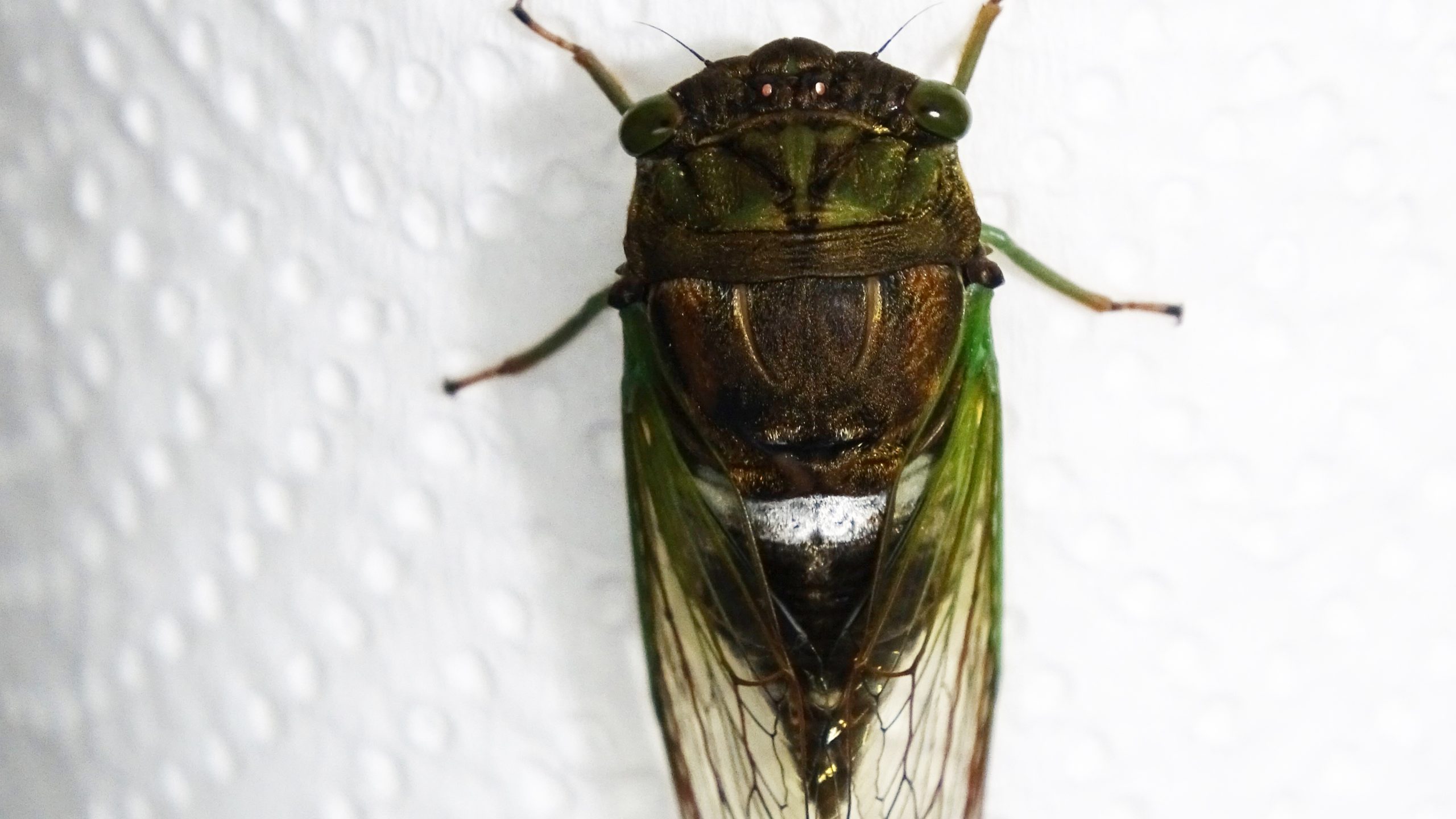
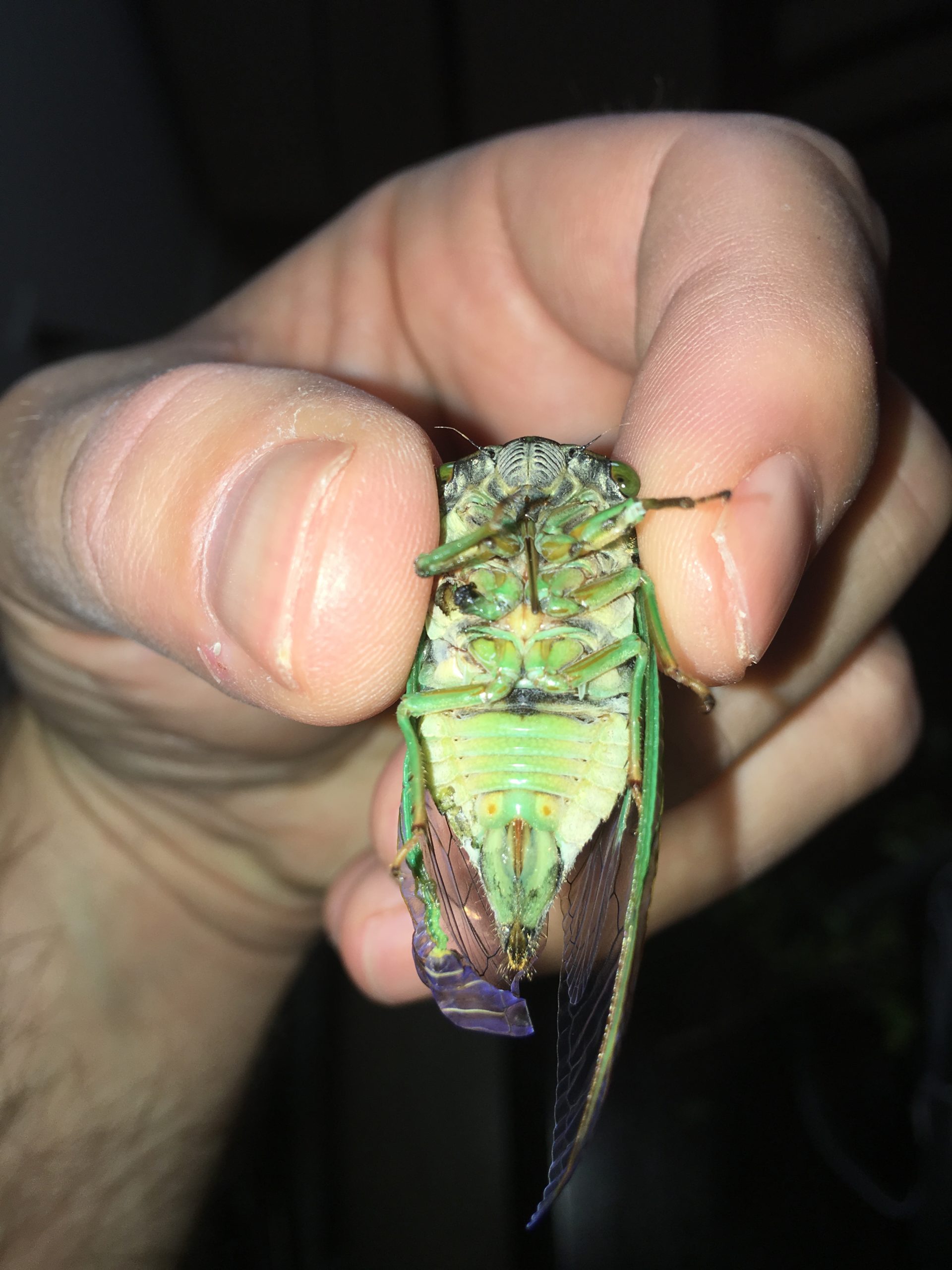
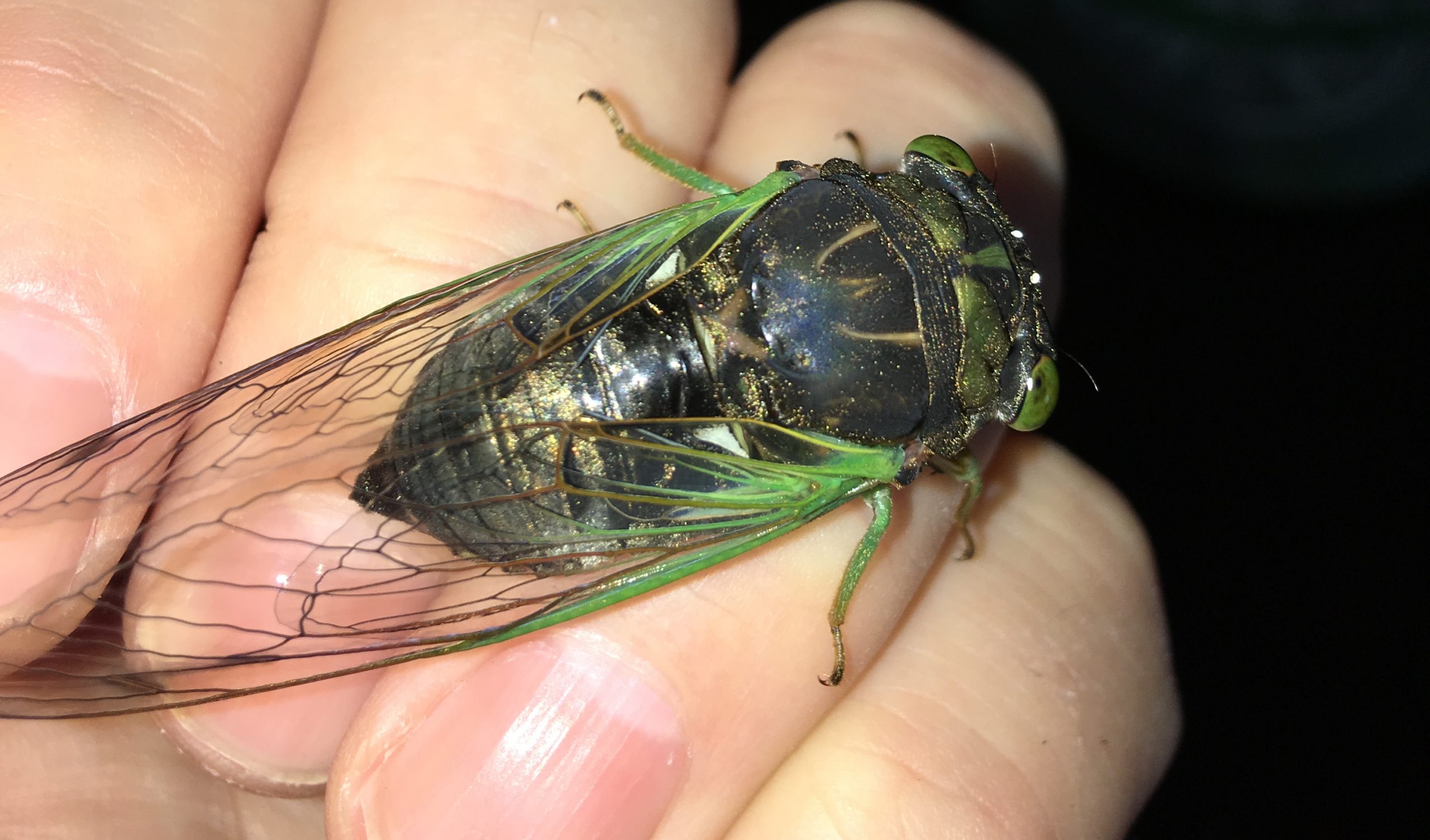
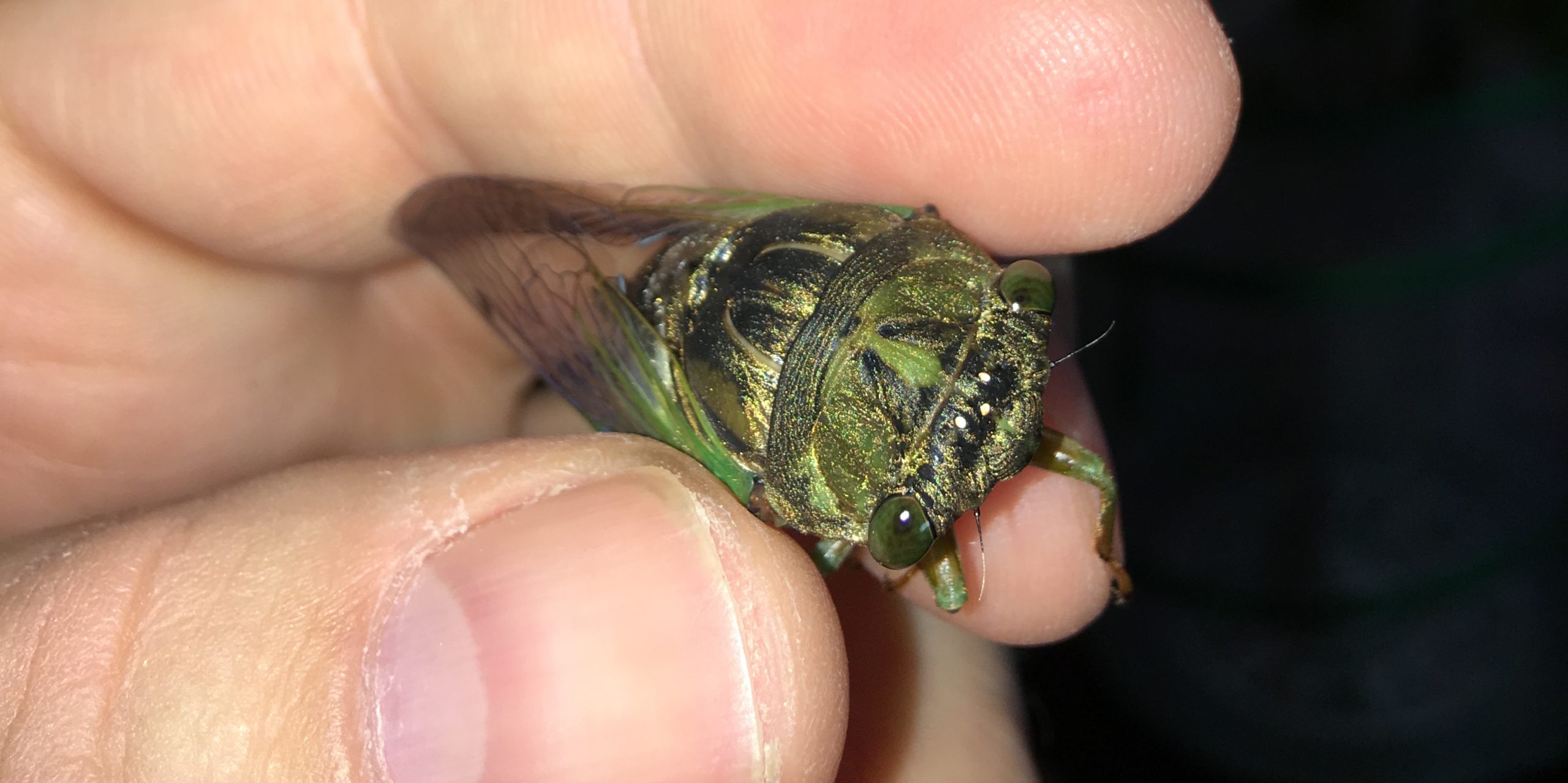
Blue Neotibicen davisi found in Cape May county by Elias Bonaros

No photos yet!

Elias Bonaros has been visiting Cicada Mania since at least 2004 (see old message board archives and all posts about Elias on this site). I met him in person for the first time in 2013 during the Brood II cicada emergence. We have hung out many times since then, in search of cicadas. Elias is a true cicada enthusiast and autodidact. Not only does he discuss cicadas online, but he also befriends cicada experts, and seeks cicadas out in the real world, traveling as far as Fiji to find the 8-year periodical Nanai Cicadas. He is the real deal.

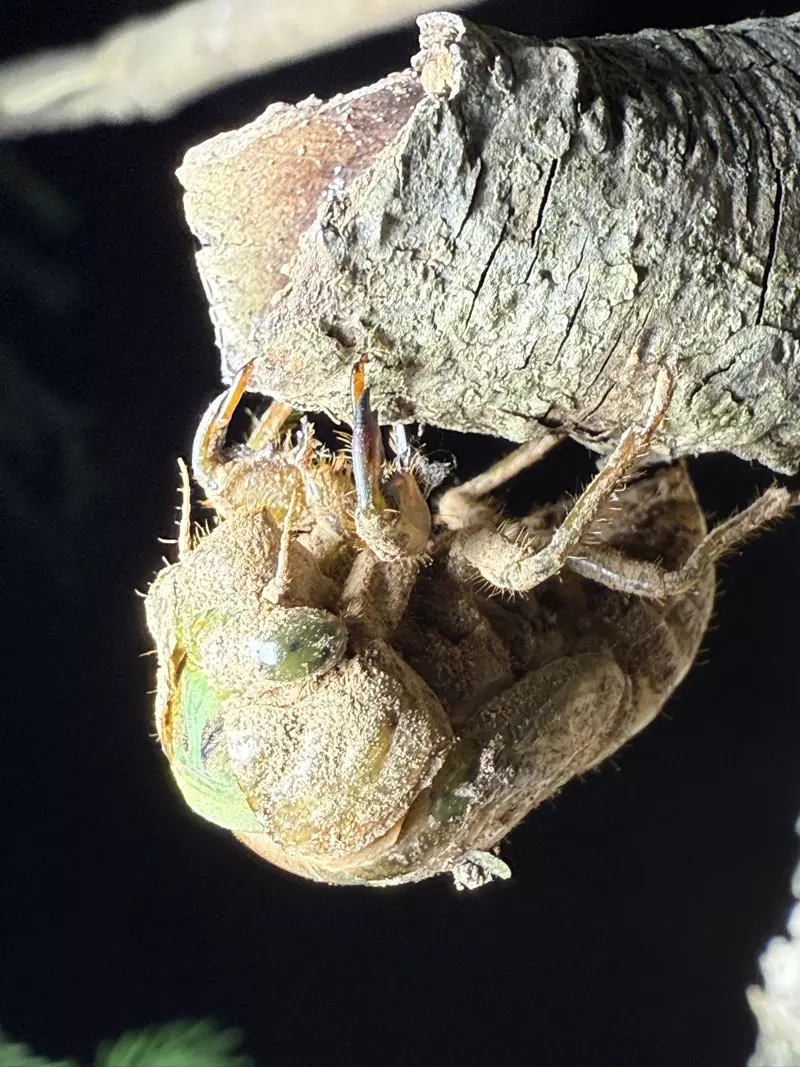
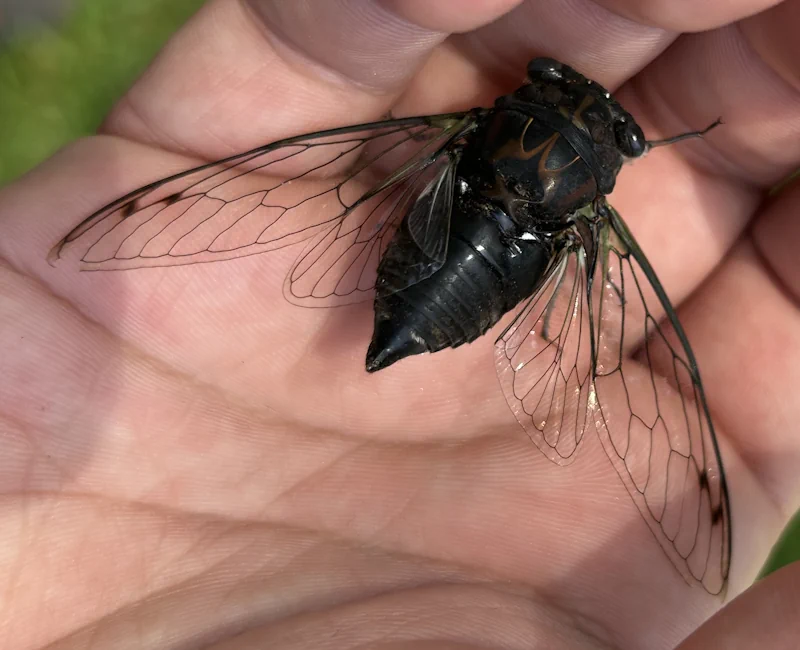
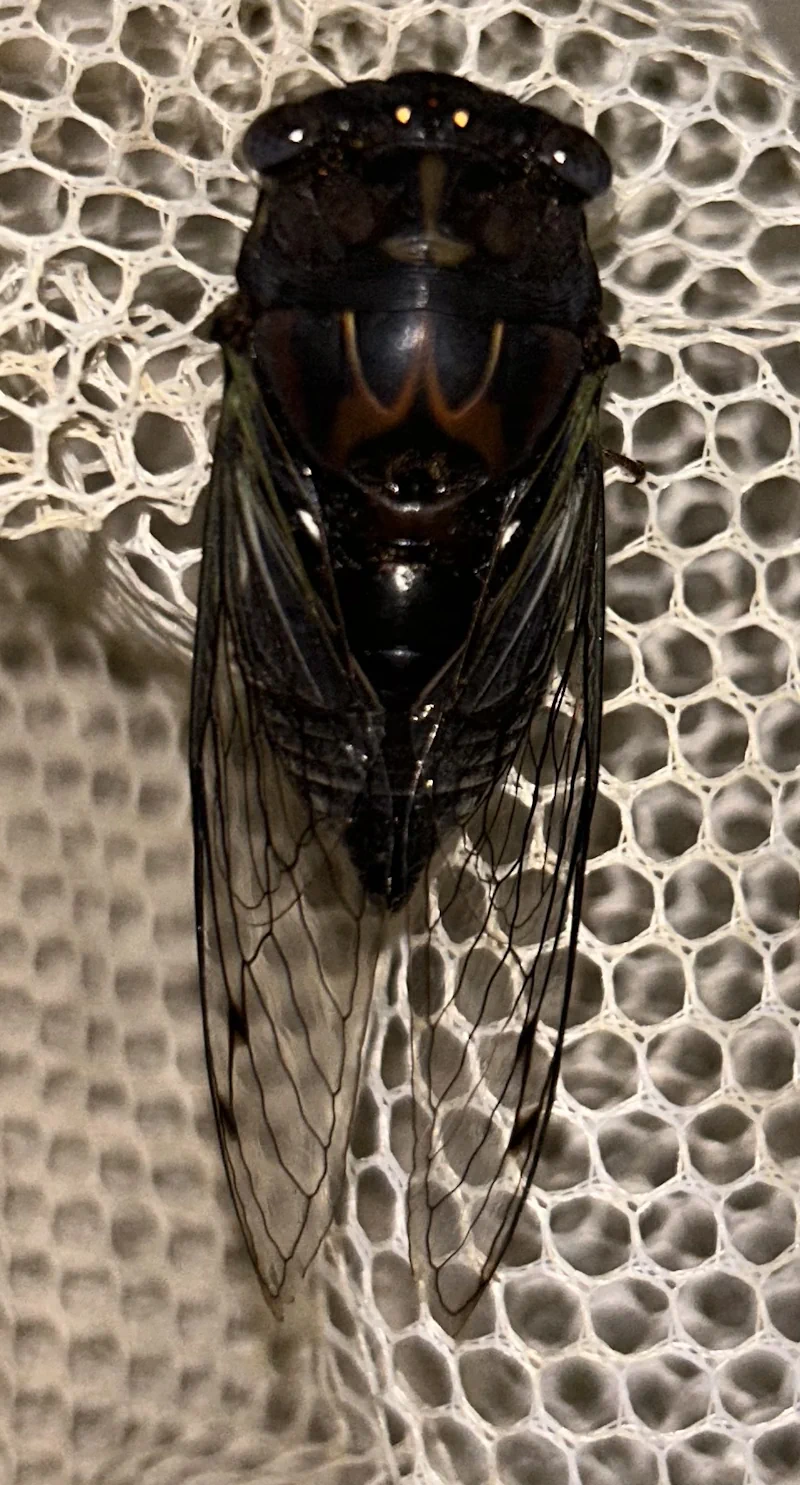
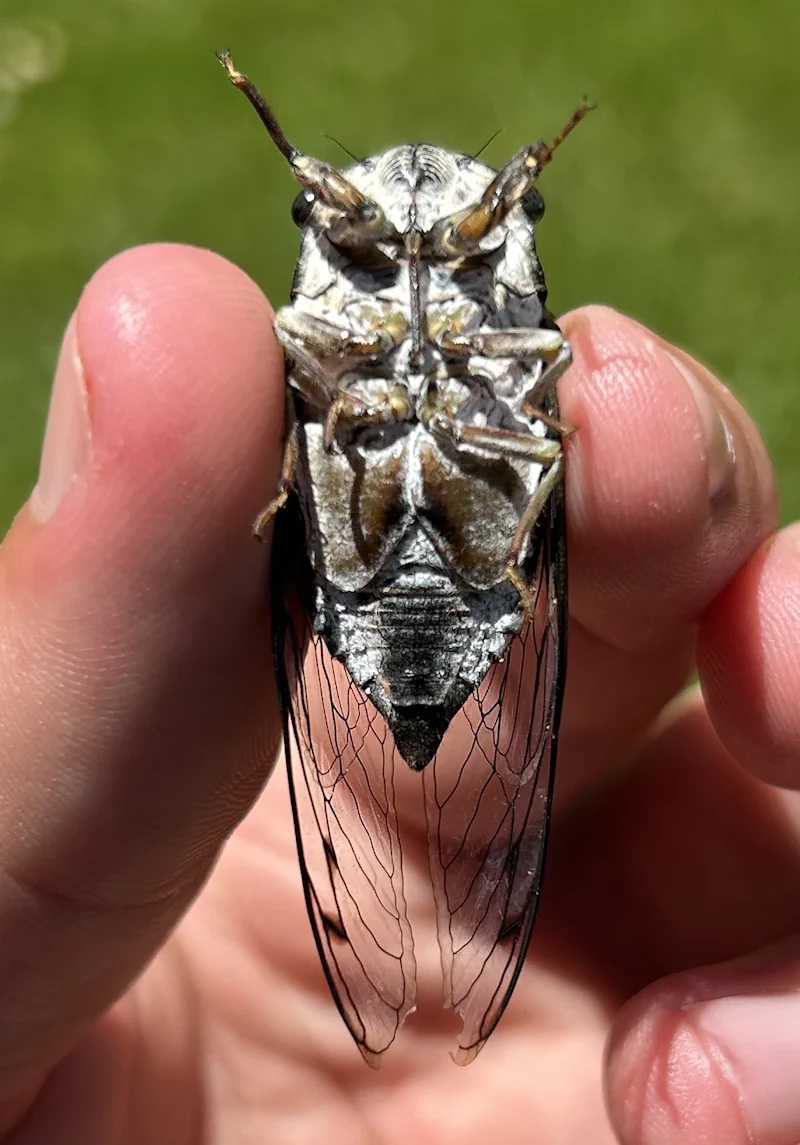
This summer Elias traveled to Cape May county, New Jersey to look for cicadas. Cape May has an abundance of cicada species. Let’s list them out: Neotibicen latifasciatus, Neotibicen linnei, Neotibicen lyricen, Megatibicen grossus, Neocicada hieroglyphica, Neotibicen tibicen, Magicicada septendecim, Magicicada cassini, and Neotibicen davisi. Neotibicen davisi aka Davis’ Southeastern Dog-Day Cicada is small as Neotibicen cicadas go. It sounds like an angle grinder grinding against concrete or metal. Its colors vary, but often include: black, brown, green, yellowish orange on its dorsal side, and tan and white on its abdomen. But never before BLUE. I double checked iNaturalst and BugGuide, but there are no blue N. davisi on either website.

I saw Elias’ photos of the blue N. davisi. They are indeed blue to turquoise-blue in color, importantly, even after molting and hardening. Cicada colors change quite a bit from the time they first molt to the time their skin fully hardens (sclerotizes) — but Elias’s cicadas were blue at the time of molting and after — the blue did not change to green, brown or black. If memory serves, I think he found three total.

While this discovery is incredibly rare, there is a reason why. If the cicada lacks the yellow carotenoid pigment, the blue biliverdin pigment dominates the color of the cicada. Without yellow, there are no browns, tans, greens and of course yellows. We see this phenomena in the Blue Moon morph of the normally green Green Grocer (Cyclochila australasiae) cicada in Australia.

To sum it up: Elias Bonaros, super cicada researcher, went to Cape May county, New Jersey in the summer of 2026 and found three or more ultra-rare blue Neotibicen davisi. To date, no one has published a photo of a blue N. davisi.

Categories
Neotibicen

It would not be summer in New Jersey without Swamp Cicadas (Neotibicen tibicen tibicen)

Cicadas are a key atmospheric element of summertime in New Jersey (and most States for that matter). Whether you realize it or not, the daytime summer soundtrack of your yard, parks and hiking trails includes the song of cicadas. Cicadas rule the day and crickets and katydids rule the night. At dusk and dawn they trade places, keeping the sounds of the 24-hour nature club pumping. There’s a species of cicada in the eastern United States called the Morning Cicada, because it sings in the Morning. It is also known as a Swamp Cicada, but you can find them just about anywhere, not just Swamps. Their scientific taxonomic name is Neotibicen tibicen tibicen. Tibicen means “a flute player” in Latin, which makes sense as cicadas are musical creatures.

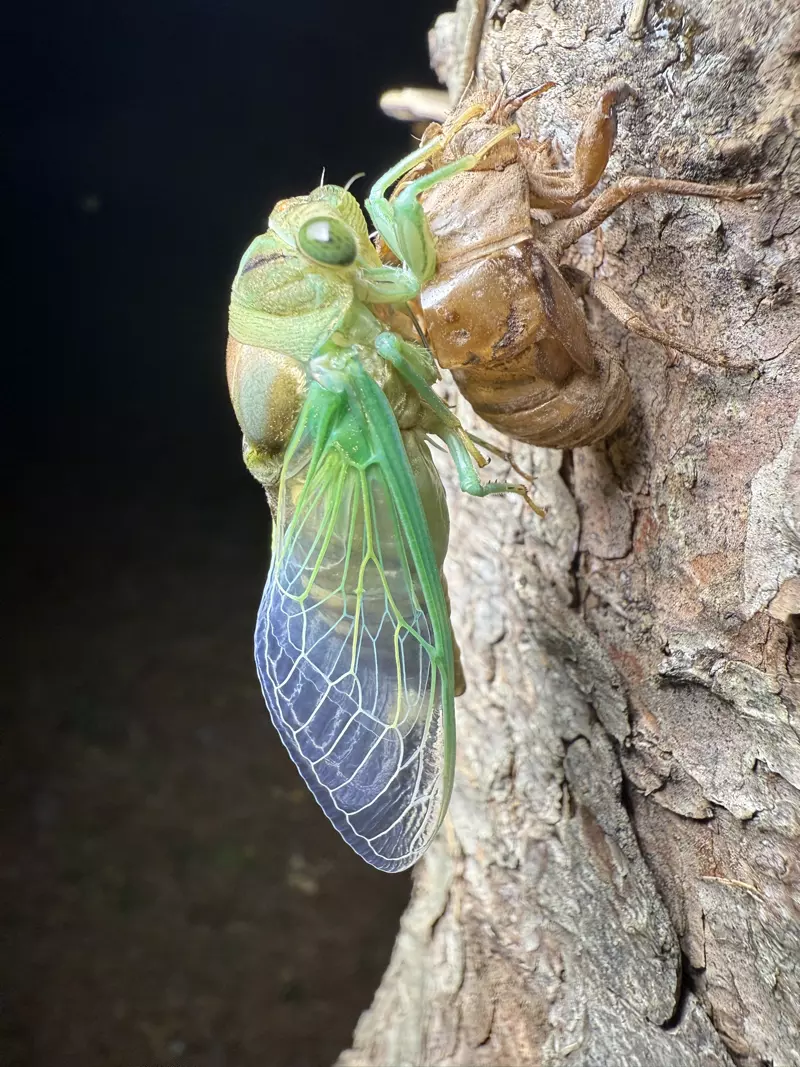
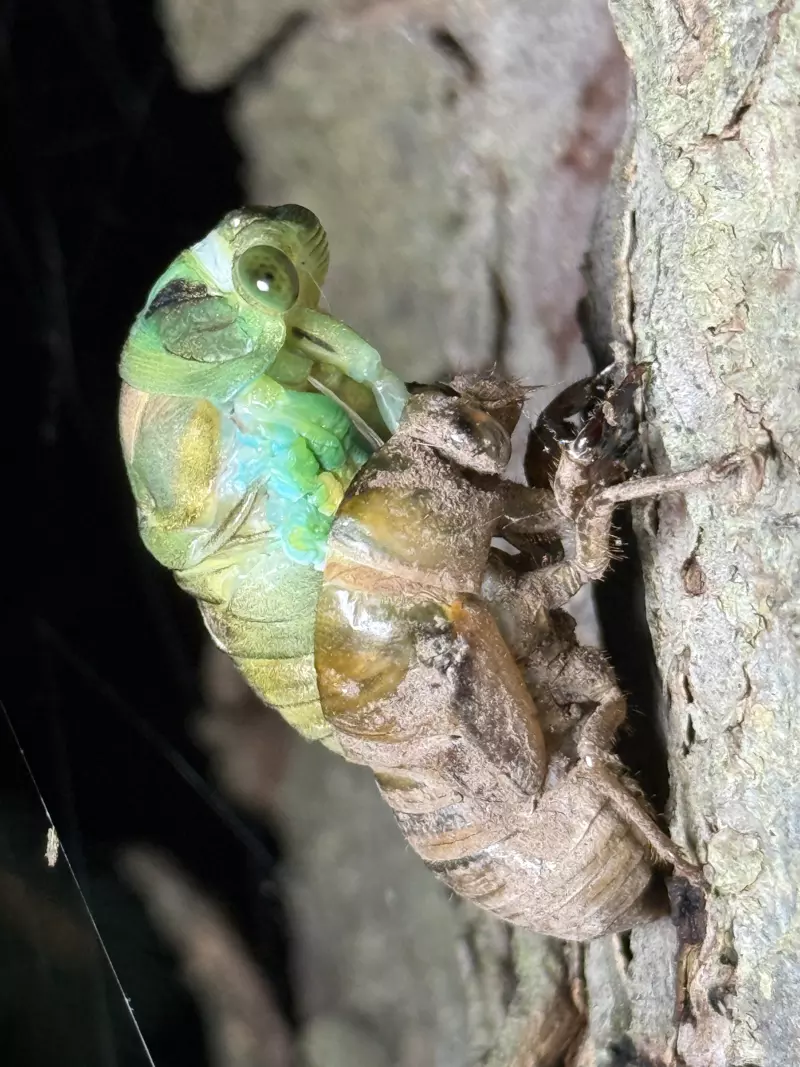
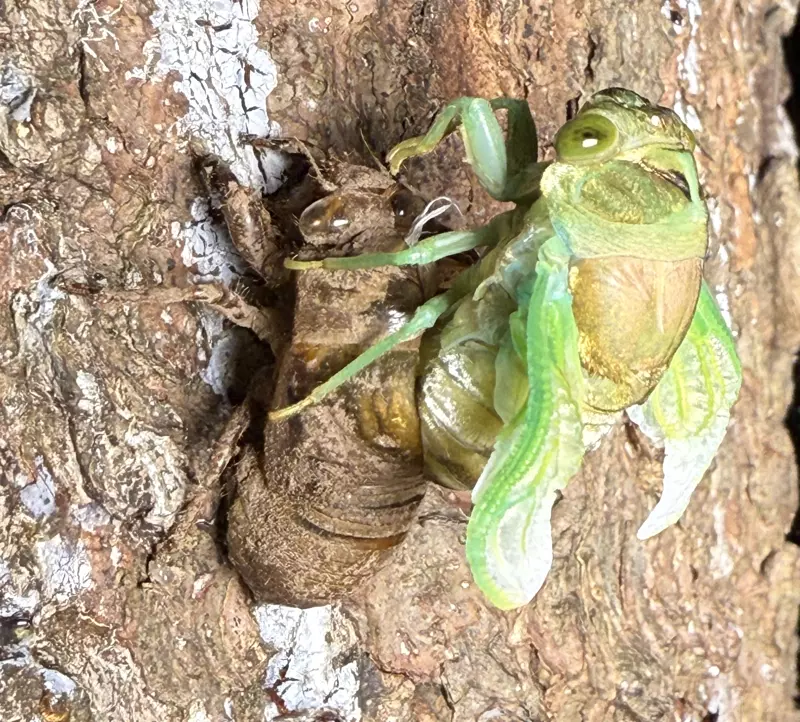
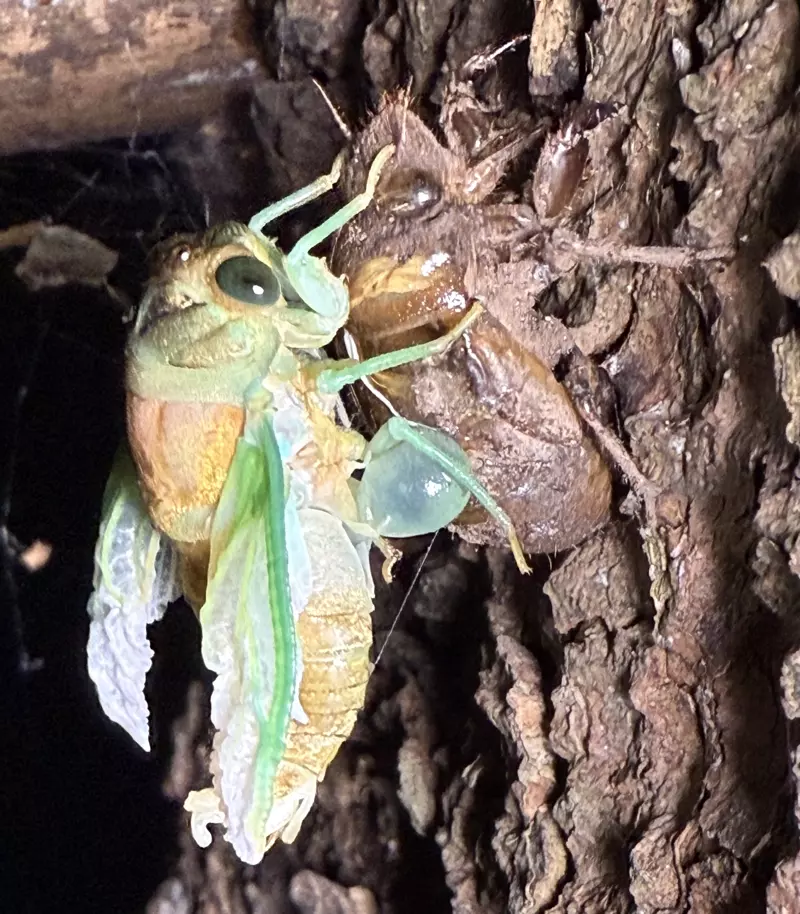
Every summer I witness the nighttime emergence and molting of dozens of these Swamp Cicadas. After dusk I check the ground for the movement of brown acorn-sized nymphs, which emerge from holes in the ground near trees and somehow find their way to a vertical surface — usually a tree trunk. After 10pm, they’ve usually found a branch or bark to lock their claws into. Then they start their molting process — splitting their old skin, pushing their way out, re-arranging their face so their eyes sit wide apart, and inflating and hardening their wings. When they first molt, their bodies are mostly green, with hits of blue, pink and yellowish hues. There eyes are most-often emerald green, but they can include blends of green and blue, all the way to a dark jade green. After some time, their colors darken, but they always retain the green color in their wings and legs (another name for them is Chloromera, which means green thighs in Greek).

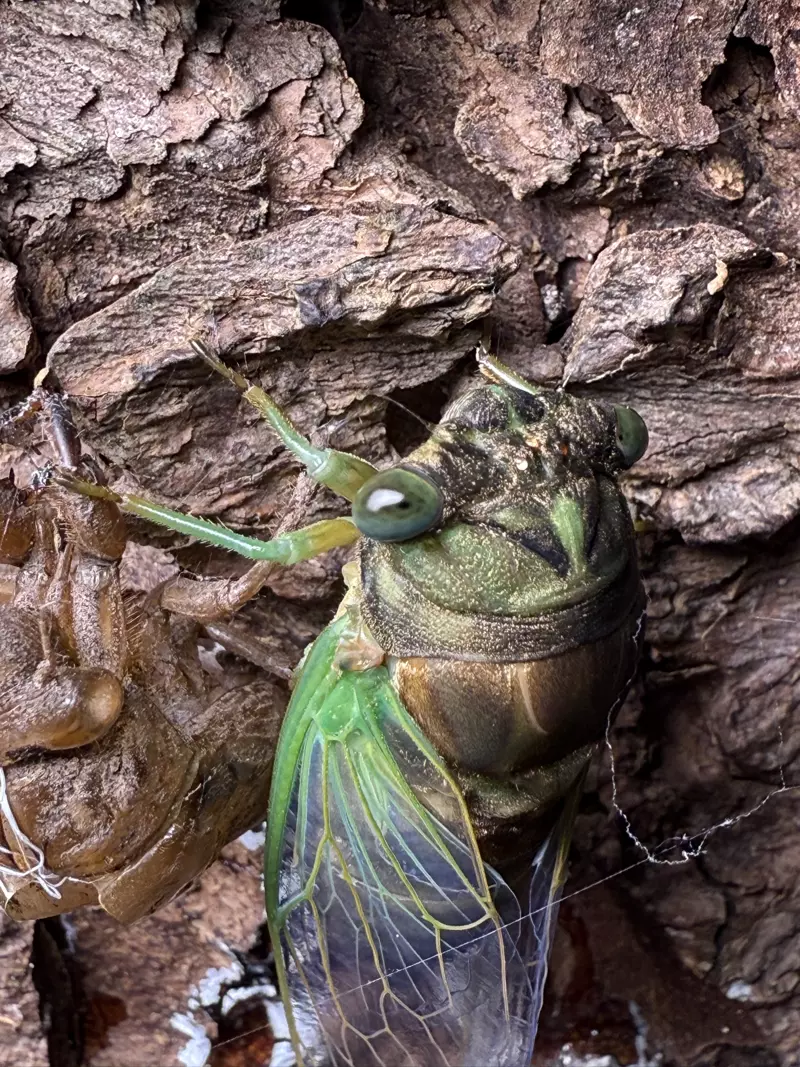
This cicada has successfully molted and has moved its wings into the shape of a tent, partially enclosing its body:
IMG_0461 Neotibicen molted

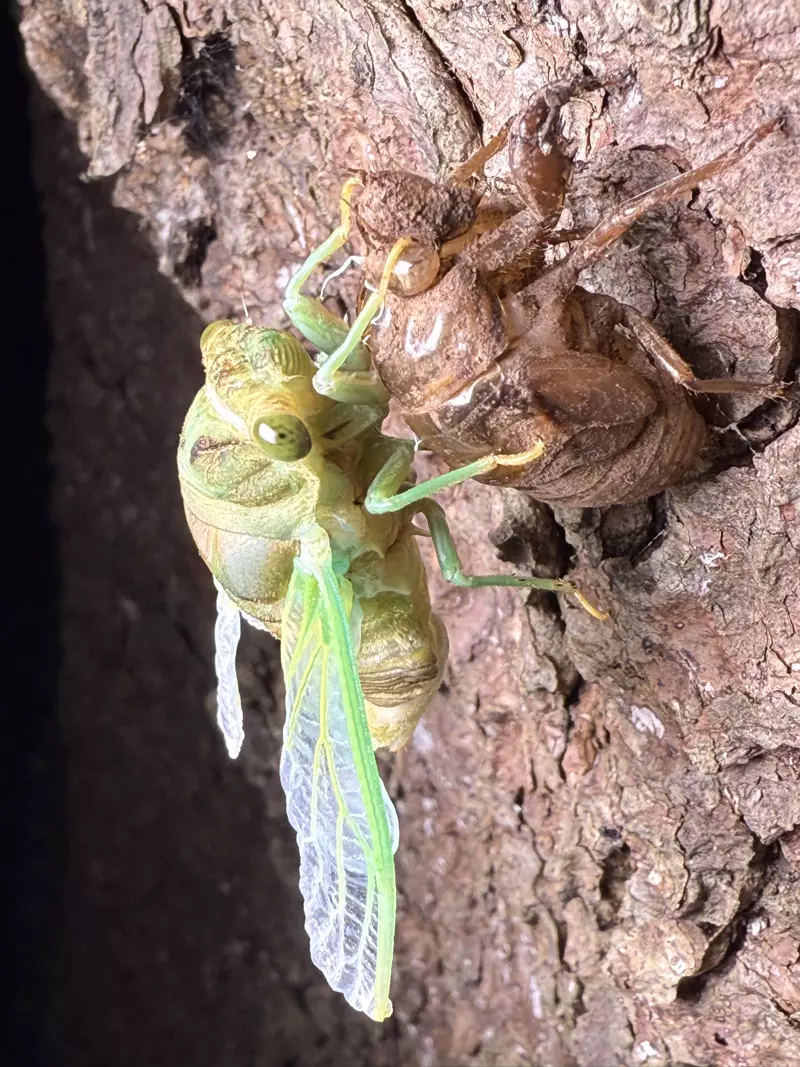
This male cicada, has just molted and is still clinging to its old skin. Its wings are not in the tent position yet:
IMG_0754 Molted Neotibicen tibicen male

This female cicada, has just molted and has just started to inflate its wings.
IMG_0882 Morning Molted

This cicada is still wearing its nymph skin. It decided to stop atop some sticky sap. I checked back later — it molted without getting stuck:
IMG_0947 Nymph Swamp

This cicada is halfway out of its old skin. Lots of green and blue:
IMG_0950 Swamp Molting

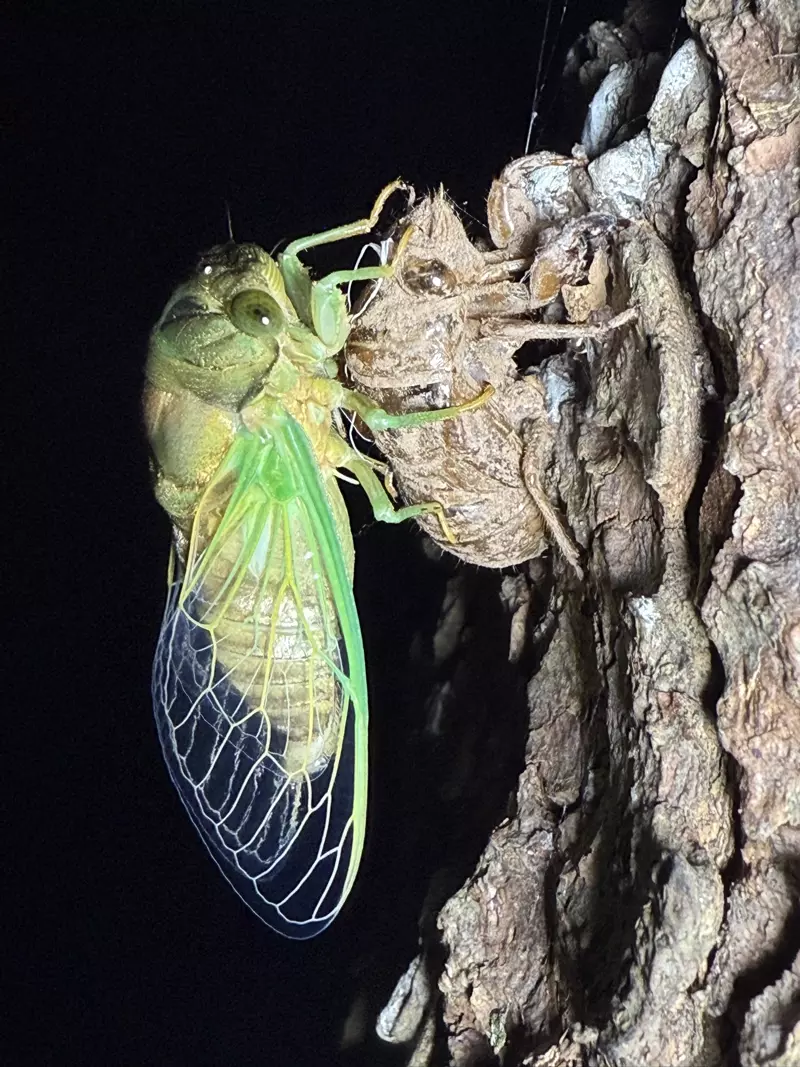
This female cicada is backlit by my camera light. You can see through its old skin:
IMG_1048 Lit Up

Categories
Living Underground Neotibicen

A Cicada and a Herkimer Diamond

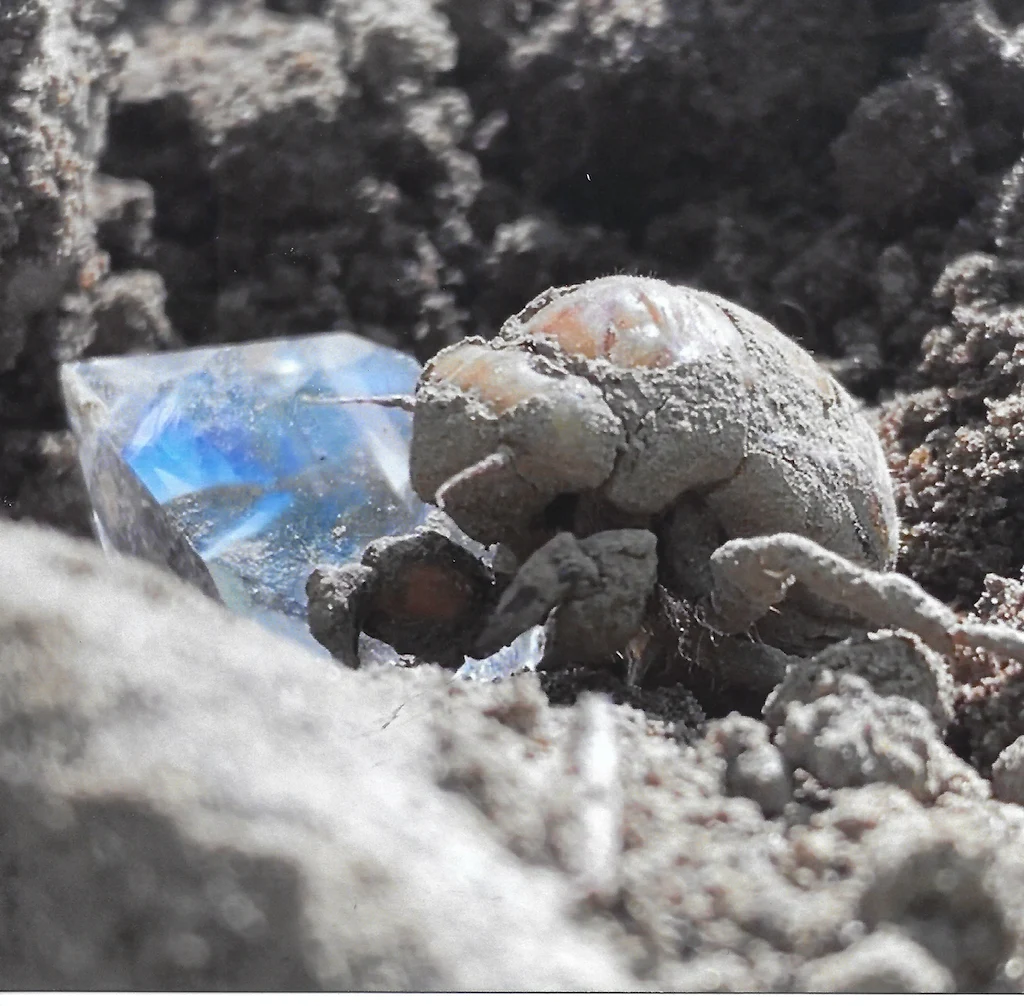
Cicadas spend most of their lives tunneling through soil. Herkimer Diamonds — doubly terminated quartz crystals — are found in the soil of Herkimner, New York. Sometimes they’re found together.

Last weekend I met a Herkimer diamond prospector Just Herks at a local rock and mineral show. She had this photo of a cicada nymph with a Herkimer diamond:

Cicada and a Herkimer DiamondPhoto © Just Herks.
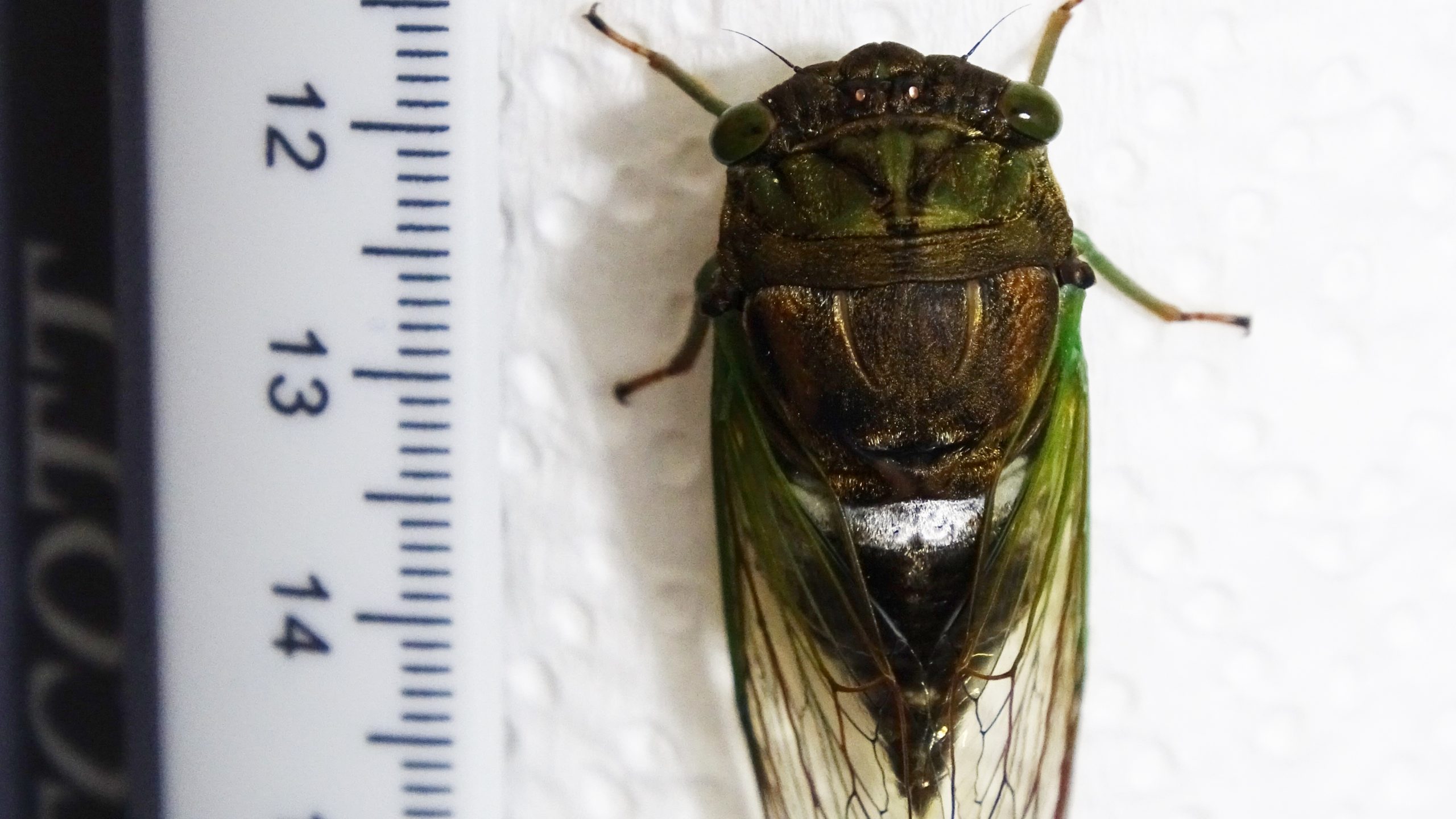
She said she takes special care not to harm the cicadas she encounters while mining. The cicada looks like a cicada belonging to the genus Neotibicen, and based on what I am seeing iNaturalist, it’s probably a Neotibicen canicularis aka Dog Day cicada.

Be sure to look out for cicada nymphs while you are prospecting for rocks and minerals, gardening, digging foundations or other subterranean activities. Treat the cicadas you encounter with care.

Categories
Neotibicen Teneral

2025 Morning Cicada Review – teneral cicadas hardening wings

This is Part 3 of my 2025 Morning Cicada (Swamp Cicada, Neotibicen tibicen tibicen) review.

These photos are of cicadas that have recently molted from their nymphal skins and are expanding and hardening their wings.

Expanding wings, with a few wrinkles

Neotibicen tibicen tibicen hardening their wings.

Wings hardening and folded against the cicadas’s body. Interesting blue-green eye color

Neotibicen tibicen tibicen hardening their wings.

Wings hardening and folded against the cicadas’s body

Neotibicen tibicen tibicen hardening their wings.

Neotibicen tibicen tibicen hardening their wings.

Go to Part 2 or Part 1!

Categories
Molting Neotibicen

2025 Morning Cicada Review – Molting Process

This is part 2 of 2025 Morning Cicada (Swamp Cicada, Neotibicen tibicen tibicen) photos.

A cicada pushing its way out of its skin:

The cicada pushing its way out of its skin.

The cicada out of its skin, beginning to inflate its wings.

The cicada out of its skin , starting to inflate its wings,

A hemolymph bubble on the cicada's wing. An injury that is usually not fatal.

A hemolymph bubble on the cicada's wing. An injury that is usually not fatal.

The cicada with every part but the end of its abdomen out of its skin.

The cicada with every part but the end of its abdomen out of its skin.

A cicada mostly out of its old skin and about to reach forward and grab the skin so it can pull its abdomen out.

The cicada mostly out of its old skin and about to reach forward and grab the skin so it can pull its abdomen out.

Now check out Part 1: the Nymphs or Part 3: teneral cicadas hardening wings.

Categories
Neotibicen Nymphs

2025 Morning Cicada Review – the nymphs

2025 was a good year for Morning (aka Swamp aka Neotibicen tibicen tibicen) cicadas in New Jersey. The nymph season lasted from the second week of July to the third week of August.

Each year I post the images and videos of Morning Cicadas that I take.

Here’s the first post in the 2025 series: nymphs!

A nymph crawling up a spruce tree

Neotibicen tibicen tibicen nymph starting to molt

A nymph crawling up a spruce tree

Neotibicen tibicen tibicen nymph starting to molt

A nymph perched and starting to molt

Neotibicen tibicen tibicen nymph starting to molt

And a playlist of all videos (not just molting)

Go to Part 2: Molting.

Categories
Coleman Cobbs Neotibicen Tacuini (Cryptotympanini)

Neotibicen similaris from Rapides Parish, Louisiana

Thank you, Coleman Cobbs, for these photos of a Neotibicen similaris cicada. The cicada was found in from Rapides Parish, Louisiana. This cicada looks “similar” to many other species of Neotibicen cicadas aka “Dog Day”.

Neotibicen similaris

Neotibicen similaris

Neotibicen similaris

Categories
Neotibicen U.S.A.

A short cicada summer in central New Jersey

Adult Neotibicen tibicen 2024

Most of my cicada experience happens in the state of New Jersey, particularly central New Jersey (which does exist: it is comprised of Middlesex, Sommerset, Hunterdon and Mercer counties). Typically, in central and northern New Jersey, the summer cicada season will kick off in late June with the emergence of Neotibicen lyricen and end with the grinding calls of Neotibicen canicularis in the middle of September. Central New Jersey has these annual cicada species: Neotibicen lyricen (both sub-species), Neotibicen linnei, Neotibicen tibicen, Neotibicen winnemanna, Neotibicen canicularis, and possibly Megatibicen grossus in the south, and Okanagana rimosa in the north-west. Periodical cicadas are also found in the area, but not in the summer, and not in 2024.

Neotibicen tibicen aka Morning Cicadas (most call them Swamp Cicadas — I do not because it is not a helpful description) are abundant in my location and do well with both Spruce and Maple trees.

The summer of 2024 was a strange one:

  • I didn’t find my first Morning (Neotibicen tibicen tibicen) cicada until July 7th (about a week late), found my last one on August 9th (about two weeks early).
  • The last cicada I heard sing was during the last week of August, about two weeks early.
  • June high temperatures were 5 degrees Fahrenheit hotter than average (avg. 1991-2020), and there was 30% less precipitation. A HOT and DRY start.
  • July high temperatures were 2 degrees Fahrenheit hotter than average (avg. 1991-2020), and there was 20% less precipitation. A hot and DRY mid-season.
  • August high temps were flat, but there was +51% more precipitation. Average temperatures, and wet finale.
  • I used Weather Underground for 2024 averages, and Current Results for historical data.
  • It is worth nothing that Cicada Killer Wasps were plentiful and productive.

Neotibicen cicadas are around every where, but there are good years and great years. 2024 was not great. I don’t know if the extra HOT and dry weather had an impact, but it may have. Lots of “maybes”.

Here’s some photos of molting Neotibicen tibicen for you to enjoy:

Molting Neotibicen tibicen 2 2024

Molting Neotibicen tibicen 3 2024

Molting Neotibicen tibicen 2024

Categories
Neotibicen Teneral

Pink teneral Neotibicen lyricen

Neotibicen cicadas come in a variety of pastel colors when they are in their teneral (soft) phase, when they inflate their wings and harden their bodies after molting their nymphal skins. Teneral Neotibicen can feature the colors pink, yellow and blue, in addition to pastel versions of the oranges, browns and greens we commonly see on their fully-hardened adult bodies.

Here’s an example of a male Neotibicen lyricen that was pink when it was teneral:

Pink teneral Neotibicen lyricen

Pink teneral Neotibicen lyricen

Pink teneral Neotibicen lyricen

Here’s photos of the same cicada as a nymph and a hardened adult. See that its mesonotum are black and brown, not green and brown. It’s closer to a Neotibicen lyricen engelhardti than the Neotibicen lyricen lyricen, which has green on its mesonotum (the cicada’s shield-like back).

Hardened adult:
Hardened Lyricen 02(small)

Categories
Neotibicen Tacuini (Cryptotympanini)

A Neotibicen tibicen tibicen from Central New Jersey, gallery #2

Photos of a Neotibicen tibicen tibicen aka Morning or Swamp cicada from August 28th, 2016. The cicada was found in Monmouth county, NJ.

Click/tab the thumbnail images for big versions:

Visit Gallery #1 for the start of the transformation.

Teneral Neotibicen tibicen tibicen

Teneral Neotibicen tibicen tibicen

Under Short Wave Ultraviolet Teneral Neotibicen tibicen tibicen

Teneral Neotibicen tibicen tibicen

Teneral Neotibicen tibicen tibicen

Teneral Neotibicen tibicen tibicen

Teneral Neotibicen tibicen tibicen

Teneral Neotibicen tibicen tibicen

Teneral Neotibicen tibicen tibicen

Teneral Neotibicen tibicen tibicen

This cicada is a female:
Teneral Neotibicen tibicen tibicen

Teneral Neotibicen tibicen tibicen

Teneral Neotibicen tibicen tibicen

Visit Gallery #1 for the start of the transformation.