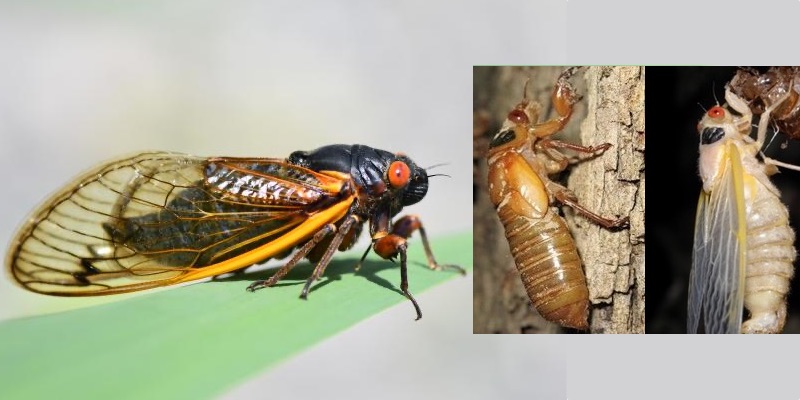
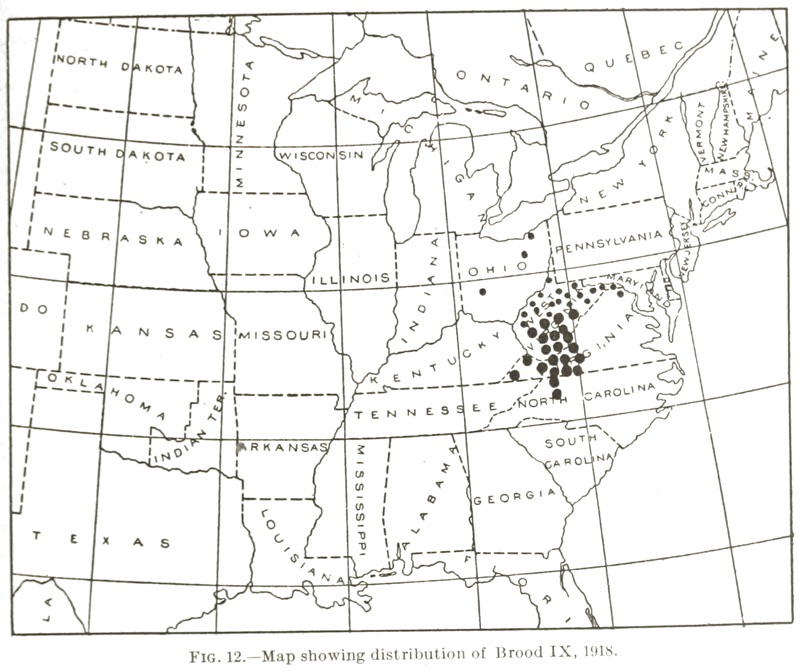
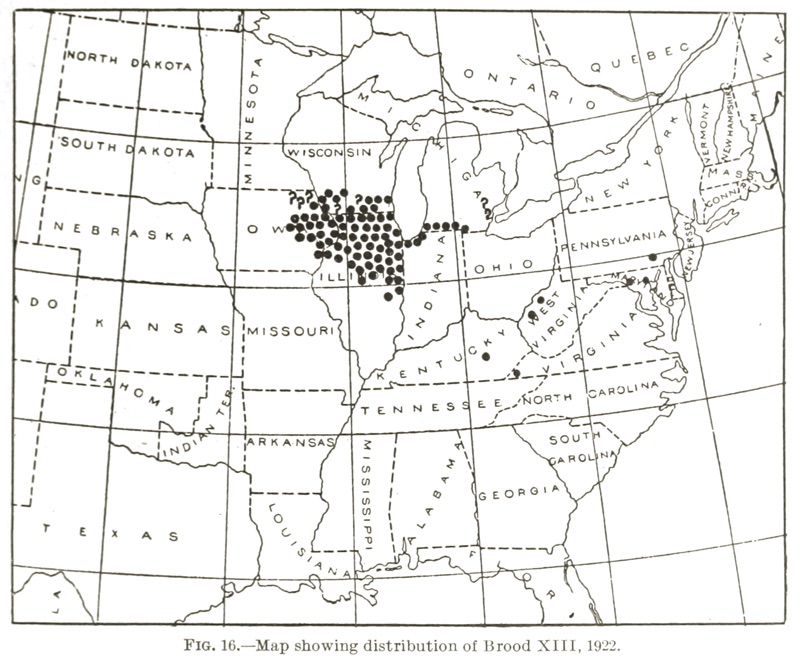
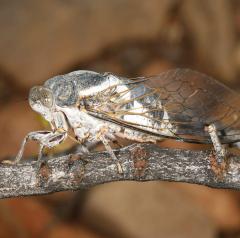
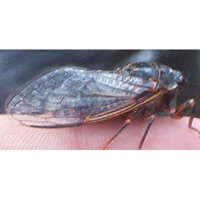
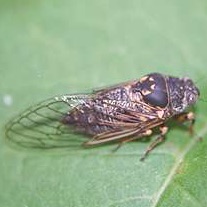
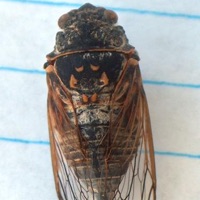
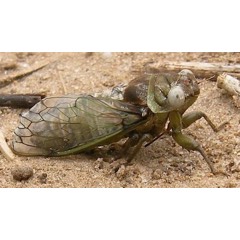
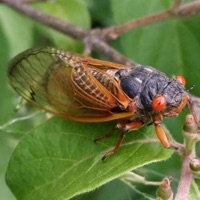
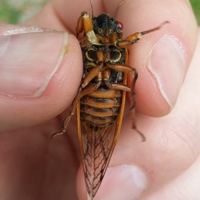
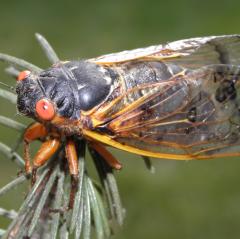
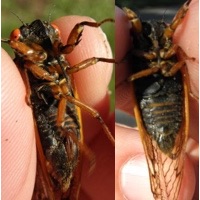
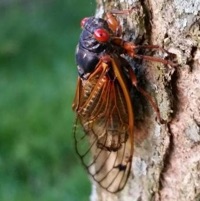
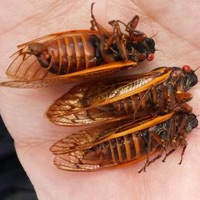
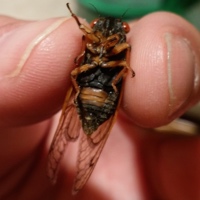
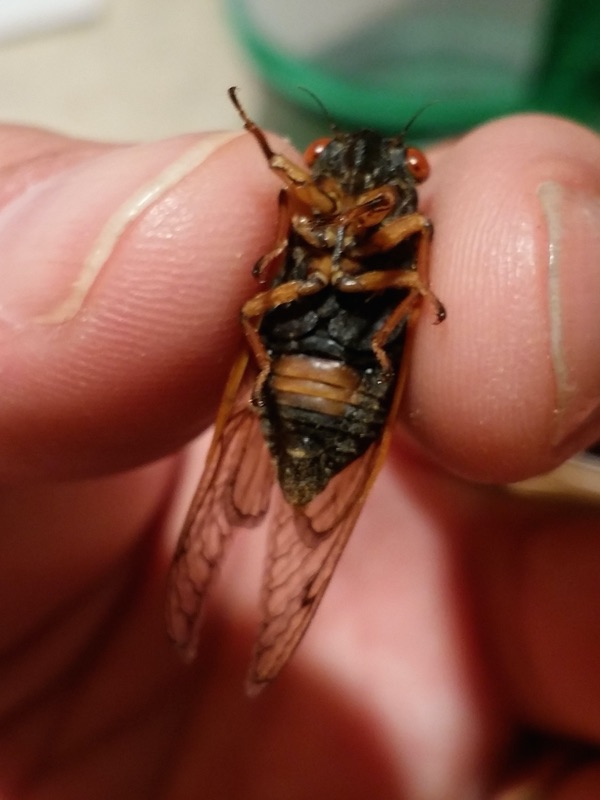
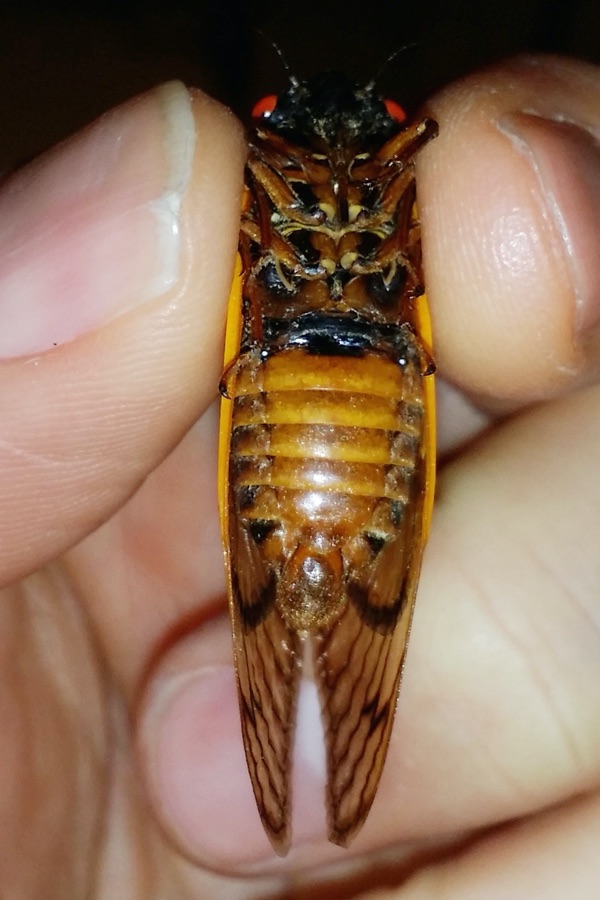
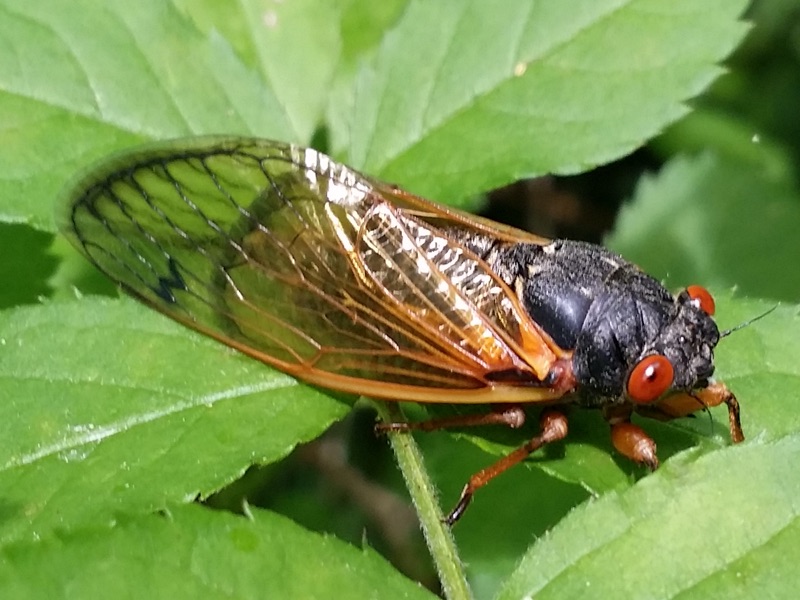
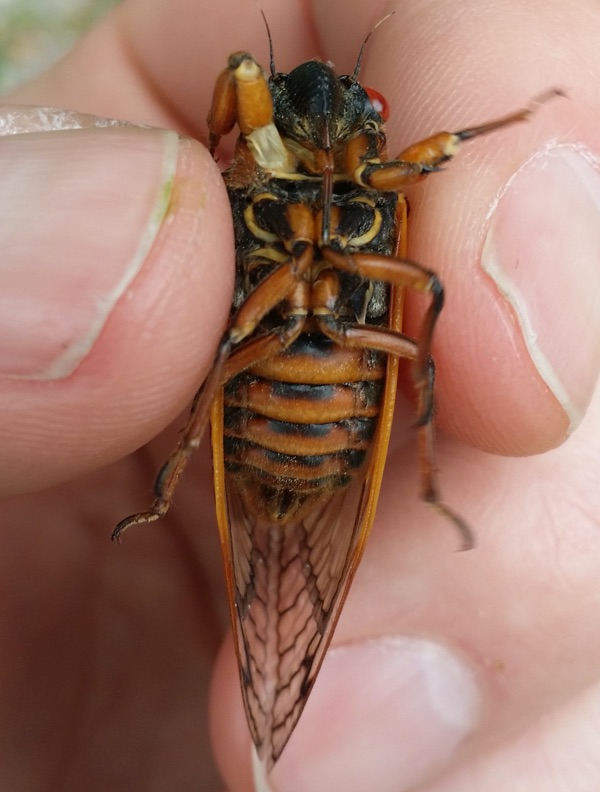
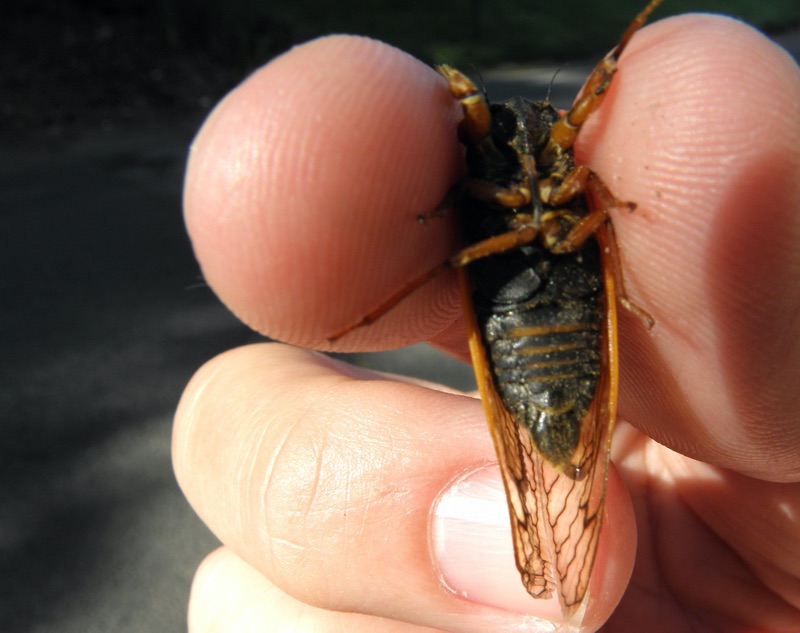
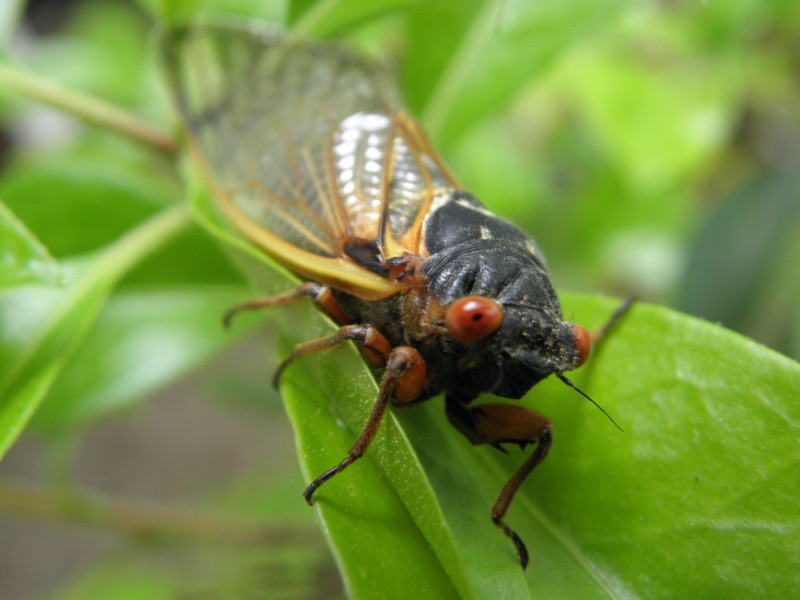
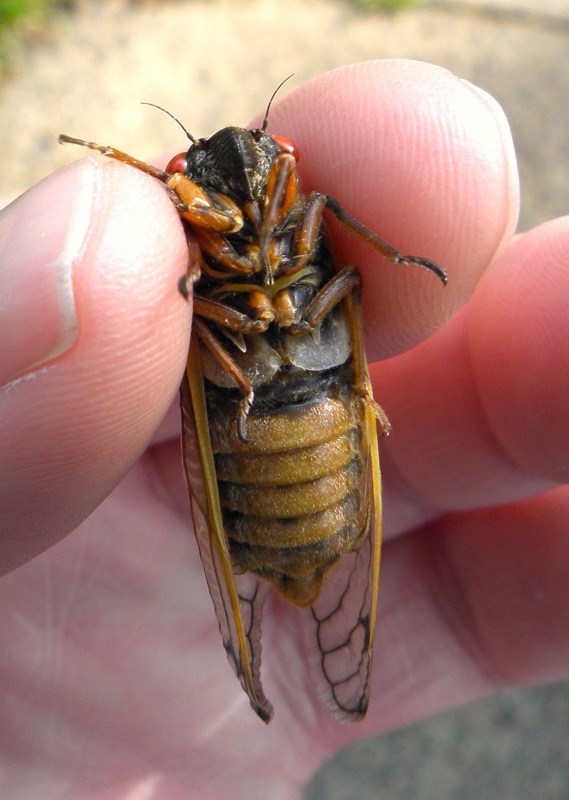
Periodical cicada Brood IX (9) emerged in the spring of 2020 in North Carolina, Virginia and West Virginia. The last time this brood emerged was in 2003. It will emerge again in 2037.
Researchers need your help! If you see a cicada, please report it using the Cicada Safari App , available for Android and Apple phones.
Brood IX is interesting to researchers because it’s located very close to 5 other broods. In a normal year, researchers would be able to drive the roads of the area and map the location of the brood so we can get data as to where the broods intersect, but because of the current situation in the U.S., most if not all researchers will be able to travel — so we need you to let us know where they’re at. Read more on Cicadas @ UCONN (formerly Magicicada.org).
What, when, where, and why:
What:
Cicada insects with a 17-year life cycle.
Some people call them “locusts” but they’re really cicadas.
When: Typically beginning in mid-May and ending in late June. These cicadas will begin to emerge approximately when the soil 8" beneath the ground reaches 64 degrees Fahrenheit (Heath, 1968). A nice, warm rain will often trigger an emergence.
Other tips: these cicadas will emerge after the trees have grown leaves, and, by my own observation, around the same time Iris flowers bloom.
Where:
Virginia municipalities: Blacksburg, Bland, Callands, Christiansburg, Covington, Dry Pond, Ferrum, Martinsville, Roanoke, Salem, Vinton, and more.
Virginia counties: Allegheny, Bland, Franklin, Henry, Montgomery, Patrick, Pittsylvania, Roanoke.
North Carolina municipalities: Chestnut Hill, Ennice, Francisco, Hays, Kernersville, McGrady, Millers Creek, Mt Airy, North Wilkesboro, Purlear, Thurmond, Westfield, and more.
North Carolina counties: Ashe, Alleghany, Forsyth, Stokes, Surry, Wilkes.
West Virginia municipalities: Camp Creek, Elmhurst, Hinton, Jumping Branch, Spanishburg, and more.
West Virginia counties: Fayette, Greenbrier, Mercer, Monroe, Pocahontas, Summers.
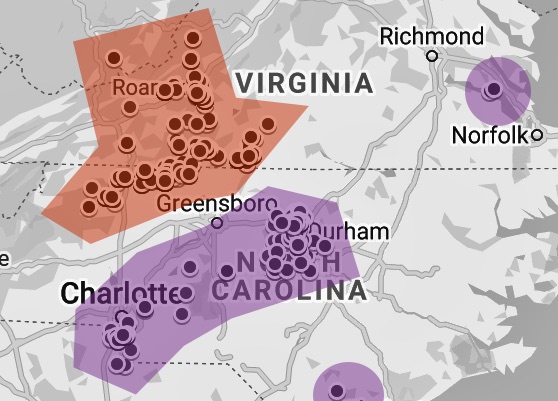
A quick tip using data from the Cicada Safari app team:
Cicadas in the north-west areas are Brood IX (red). Cicadas south & east of that area (purple) are Brood XIX emerging early.
Not sure? Ask someone in your community who lived there 17 years ago.
Why:Why do they stay underground for 17-years? The prevailing research suggests they’ve evolved a long, 17-year lifecycle to avoid predators that can sync up with their lifecycle & emergence. Why are there so many?! Research suggests that their huge numbers allow them to overwhelm predators, so enough of them will live on to breed and perpetuate the brood.
Periodical cicada Brood XIII (13) emerged in the spring of 2024 in Iowa, Wisconsin, Illinois, Indiana, and Michigan (in one or two places). Brood XIII: rotten, but not forgotten. See you in 2041 (Yikes). Relive the memories: Gene Kritsky released a new book. See what people found iNaturalist: Flagging (Brown Leaves), Brood XIII, Massospora, and Blue and White eyes. Buy a shirt. Yes, Brood XIX also emerged in 2024, they did not overlap, but came close in the Springfield, Illinois area.
What, when, where, and why:
What:
Millions of these:
Cicada insects with a 17-year life cycle.
Some people call them “locusts” but they are cicadas.
When: Typically beginning in mid-May and ending in late June. These cicadas will begin to emerge approximately when the soil 8 inches beneath the ground reaches 64 degrees Fahrenheit. A nice, warm rain will often trigger an emergence.
Other tips: these cicadas will emerge after the trees have grown leaves, and, by my own observation, around the same time Iris flowers bloom.
Illinois places: Belvidere, Brookfield, Channahon, Chicago, Des Plaines River Trail, Downers Grove, Egermann Woods County Forest Preserve, Elmhurst, Flossmoor, Geneva, Glen Ellyn, Highland Park, Hinsdale, Homewood, La Grange, Lagrange Woods, Lake Forest, Lansing, Lincolnshire, Lisle, Lombard, MacArthur Woods Forest Preserve, Marseilles, McHenry, McKinley Woods, Morton Arboretum, Naperville, Northbrook, Ogden, Ottawa, Palos Heights, River Forest, River Grove, Romeoville, Ryerson Woods, Schiller Park, Thornton, Vernon Hills, Villa Park, Weaton, Western Springs, Westmont, Wonder Lake, and more.
Lake County Forest Preserve in Illinois: 1) A cicada exhibit opening at the Dunn Museum in Libertyville, IL on April 27th. 2) Cicadas of Lake County on 5/2. 3) Celebrating Cicadas on 5/16. 4) On Sunday, June 9th, they plan to hold CicadaFest at Ryerson Woods. Insects, and of course, cicadas will be featured.
Why:Why do they stay underground for 17 years? The prevailing research suggests they have evolved a long lifecycle allowing them to avoid predators that would sync up with their lifecycle & emergence. Why are there so many?! Research suggests that their huge numbers allow them to overwhelm predators, so enough of them will live on to breed and perpetuate the brood.
Locations: AL, AR, CT, DE, DC, FL, GA, IL, IN, IA, KS, KY, LA, MD, MA, MI, MS, MO, NE, NJ, NY, NC, OH, OK, PA, SC, TN, TX, VA, WV, WI
When: June-September. Peaks in August.
Eyes: gray / beige
Collar: olive or rusty brown
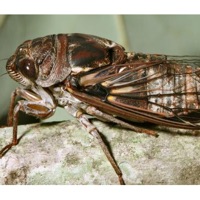
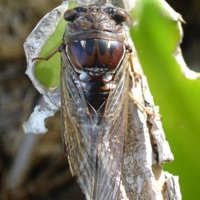
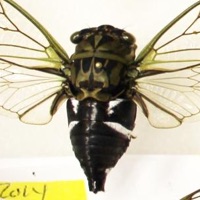
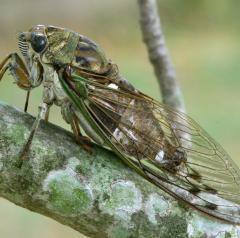
Description: The largest North American cicada. Olive green to rusty brown with black, tan, and white coloring. Heavy white pruinose. M on mesonotum is typically partially occluded by pruinose. Sings at dusk.
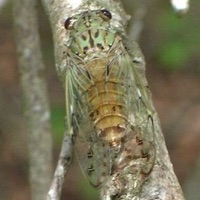
Description: Primarily either orange/rust or pea green, brown, or black with heavy pruninosity which forms distinct markings on the dorsal side of the body. The dorsal side has two black stripes framed by three areas of pruinosity. Sounds like N. pronotalis.
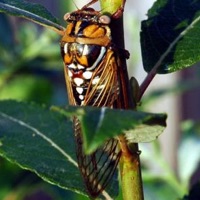
Description: Rust/orange, black & white pruinosity, which forms distinct markings, such as a line of white dots down the dorsal side of the abdomen. Sounds like N. tremulus. Has a call that sounds like a rapid series of clicks.
Locations: AL, AR, FL, GA, IL, IN, IA, KS, KY, LA, MD, MI, MN, MS, MO, NE, NC, ND, OH, OK, SD, TN, TX, VA, WV, WI, WY
When: July-September. Peaks in August.
Eyes: gray
Collar: green or brown
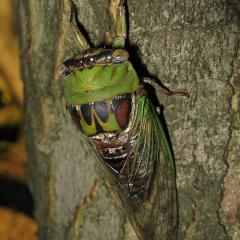
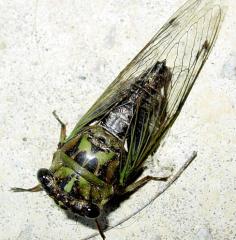
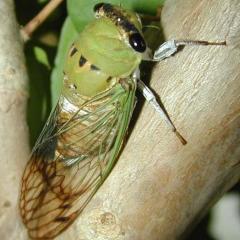
Description: Tan or pea green, brown, black, and sometimes white pruinose. Wing color matches the dominant color of the body. Typically lacks a black marking on its pronotum.
Locations: AR, CT, DC, IL, IN, IA, KS, ME, MB, MD, MA, MI, MN, MO, NE, NB, NH, NJ, NY, NC, ND, NS, OH, ON, PA, PE, QC, RI, SC, SD, TN, VT, VA, WV, WI
When: July-September. Peaks in August.
Eyes: varies
Collar: varies
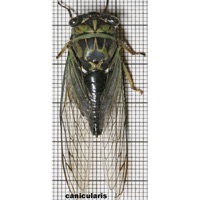
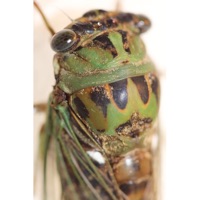
Description: Typical black, brown, beige and green Tibicen camo patterns. The primary color varies from brown to green. The collar is often a mix of green & black. Sounds like an angle grinder tool and like N. auriferus & N. davisi.
Locations: AL, DE, DC, FL, GA, LA, MD, MA, MS, NJ, NY, NC, PA, SC, TN, TX, VA, WV
When: August-December. Peaks in September.
Eyes: varies
Collar: brown or green
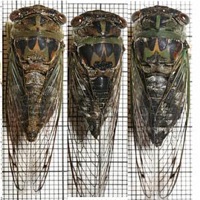
Description: The davisi comes in a wide variety of colors: from rusty browns to greens. A crown-like pattern on the mesonotum. Sounds like an angle grinder tool, & sounds like N. auriferus & N. canicularis.
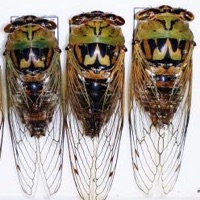
Description: If the cicada has a white X on its back, it is a latifasciatus. Repetitive, rhythmic, call like someone repeatedly running a scissor over a grinding wheel.
Locations: AL, CT, DE, DC, FL, GA, IN, IL, KY, MD, MA, MS, NJ, NY, NC, OH, PA, RI, SC, TN, VA, WV
When: July-September. Peaks in July.
Eyes: black
Collar: black
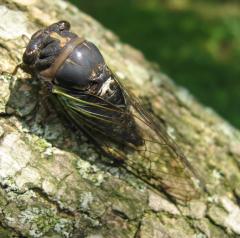
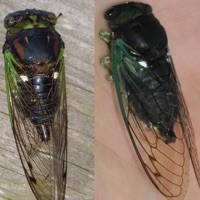
Description: The Dark Lyric Cicadas have the darkest coloration of all the Lyric cicadas. Their mesonotum is almost entirely dark brown/black. They have a “soda-pop pull-tab” or keyhole shape on their pronotum.
Locations: AL, AR, CT, DE, DC, FL, GA, IL, IN, IA, KS, KY, LA, MD, MA, MI, MS, MO, NE, NH, NJ, NY, NC, OH, OK, ON, PA, RI, SC, TN, TX, VA, WV, WI
When: June-August. Peaks in July.
Eyes: brown
Collar: black
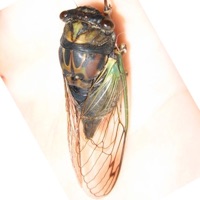
Description: The Lyric cicada, like most small Neotibicen, has a green, black & brown camouflage look, but the key is Lyric cicadas typically have black collars. Its sound is like an angle grinder tool steadily grinding a slightly uneven surface.
Locations: AL, AR, CO, IL, IN, IA, KS, KY, LA, MI, MN, MS, MO, NE, NC, OH, OK, PA, SC, SD, TN, TX, WV, WI
When: June-October. Peaks in August.
Eyes: black
Collar: green
Description: The Scissor Grinder looks a lot like Linne’s Cicada but its wing doesn’t have the bend that Linne’s Cicada has. The Scissor Grinder also seems to have more of an orange coloration to the ‘arches’ on its mesonotum.
Locations: AL, AR, CT, DE, DC, FL, GA, IL, IN, IA, KS, KY, LA, MD, MA, MI, MS, MO, NE, NJ, NY, NC, OH, OK, PA, RI, SC, SD, TN, TX, VT, VA, WV, WI
When: June-September. Peaks in August.
Eyes: black or dark green
Collar: black
Description: Swamp Cicadas are known for their rounded, humped back. Their coloration varies from mostly black & some green to black, brown, and green. Their collar is usually black but can include green.
Description: Like the Scissor Grinder, the Eastern Scissor Grinder seems to have more of an orange hue to the arches on its mesonotum, perhaps even more so than the Scissor Grinder.
Smaller than M. neotredecim & M. tredecim. Orange stripes on its abdomen, through not as much as M. neotredecim & M. tredecim. Its chorus sounds like a ticking clock. Very similar to the 17-year M. septendecula.
Video Playlist
Playlists contain multiple videos found on YouTube.
Descriptions, Colors: personal observations from specimens or photos from many sources. Descriptions are not perfect, but may be helpful.
Tribe information comes from: MARSHALL, DAVID C. et al.A molecular phylogeny of the cicadas (Hemiptera: Cicadidae) with a review of tribe and subfamily classification.Zootaxa, [S.l.], v. 4424, n. 1, p. 1—64, may 2018. ISSN 1175-5334. Available at: https://www.biotaxa.org/Zootaxa/article/view/zootaxa.4424.1.1
Notes:
Some descriptions are based on aged specimens which have lost some or a lot of their color.
Descriptions, Colors: personal observations from specimens or photos from many sources. Descriptions are not perfect, but may be helpful.
Tribe information comes from: MARSHALL, DAVID C. et al.A molecular phylogeny of the cicadas (Hemiptera: Cicadidae) with a review of tribe and subfamily classification.Zootaxa, [S.l.], v. 4424, n. 1, p. 1—64, may 2018. ISSN 1175-5334. Available at: https://www.biotaxa.org/Zootaxa/article/view/zootaxa.4424.1.1
Notes:
Some descriptions are based on aged specimens which have lost some or a lot of their color.
Its abdomen is black. Its chorus sounds like hissing static. It is smaller than M. neotredecim and M. tredecim. It is very similar to the 17-year M. cassinii species.
Descriptions, Colors: personal observations from specimens or photos from many sources. Descriptions are not perfect, but may be helpful.
Tribe information comes from: MARSHALL, DAVID C. et al.A molecular phylogeny of the cicadas (Hemiptera: Cicadidae) with a review of tribe and subfamily classification.Zootaxa, [S.l.], v. 4424, n. 1, p. 1—64, may 2018. ISSN 1175-5334. Available at: https://www.biotaxa.org/Zootaxa/article/view/zootaxa.4424.1.1
Notes:
Some descriptions are based on aged specimens which have lost some or a lot of their color.
Playlists contain multiple videos found on YouTube.
Identification Tips
Thick orange stripes on the abdomen. Orange between the eye and wing insertion. In the few areas it overlaps with M. tredecim, M. neotredecim sings with a higher pitch. Read more on Cicadas @ UCONN (formerly Magicicada.org). It is similar to the 17-year species M. septendecim.
Brood Chart
Magicicada neotredecim has a 13-year life cycle.
Brood XIX (19)
XIX (19)
Years: 1972, 1985, 1998, 2011, 2024
Locations: AR, IL, IN, KS, KY, MO, OK
XXIII (23)
XXIII (23)
Years: 1976, 1989, 2002, 2015, 2028
Locations: AR, IL, IN, KY, MO
Name, Location and Description
Cicada Name: Magicicada neotredecim Marshall and Cooley, 2000
Short Name: M. neotredecim
Common Name: 13 Periodical Cicada or 13-Year Cicada
Descriptions, Colors: personal observations from specimens or photos from many sources. Descriptions are not perfect, but may be helpful.
Tribe information comes from: MARSHALL, DAVID C. et al.A molecular phylogeny of the cicadas (Hemiptera: Cicadidae) with a review of tribe and subfamily classification.Zootaxa, [S.l.], v. 4424, n. 1, p. 1—64, may 2018. ISSN 1175-5334. Available at: https://www.biotaxa.org/Zootaxa/article/view/zootaxa.4424.1.1
Notes:
Some descriptions are based on aged specimens which have lost some or a lot of their color.
Playlists contain multiple videos found on YouTube.
Identification Tips
M. septendecula is smaller than M. septedecim, and about the same size as M. cassisii. It typically has small (small compared to M. septedecim) orange stripes on its abdomen. It lacks the orange color between the eye and wing insertion point that M. septendecim has. Its chorus sounds like a ticking clock.
Descriptions, Colors: personal observations from specimens or photos from many sources. Descriptions are not perfect, but may be helpful.
Tribe information comes from: MARSHALL, DAVID C. et al.A molecular phylogeny of the cicadas (Hemiptera: Cicadidae) with a review of tribe and subfamily classification.Zootaxa, [S.l.], v. 4424, n. 1, p. 1—64, may 2018. ISSN 1175-5334. Available at: https://www.biotaxa.org/Zootaxa/article/view/zootaxa.4424.1.1
Notes:
Some descriptions are based on aged specimens which have lost some or a lot of their color.
Playlists contain multiple videos found on YouTube.
Identification Tips
M. septendecim is the largest of the 17-Year species. Its abdomen has thick orange stripes. It has orange coloring between its eye and wing. Its song sounds like “Wee-Oh”, “Pharaoh” and a group of them are said to sound like a “UFO from a science fiction movie”.
Descriptions, Colors: personal observations from specimens or photos from many sources. Descriptions are not perfect, but may be helpful.
Tribe information comes from: MARSHALL, DAVID C. et al.A molecular phylogeny of the cicadas (Hemiptera: Cicadidae) with a review of tribe and subfamily classification.Zootaxa, [S.l.], v. 4424, n. 1, p. 1—64, may 2018. ISSN 1175-5334. Available at: https://www.biotaxa.org/Zootaxa/article/view/zootaxa.4424.1.1
Notes:
Some descriptions are based on aged specimens which have lost some or a lot of their color.