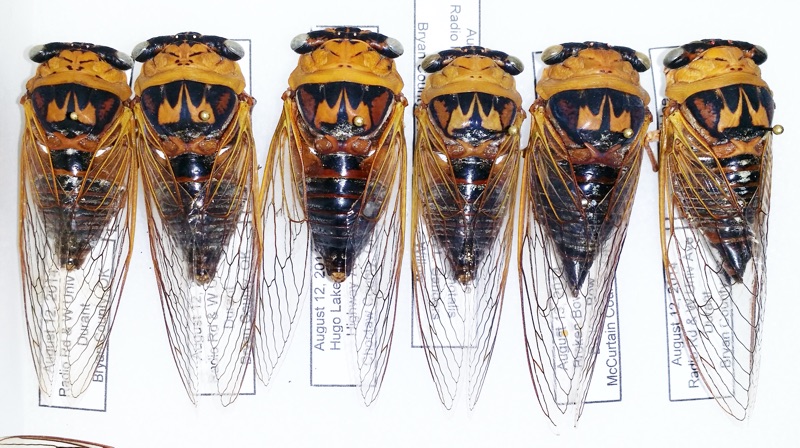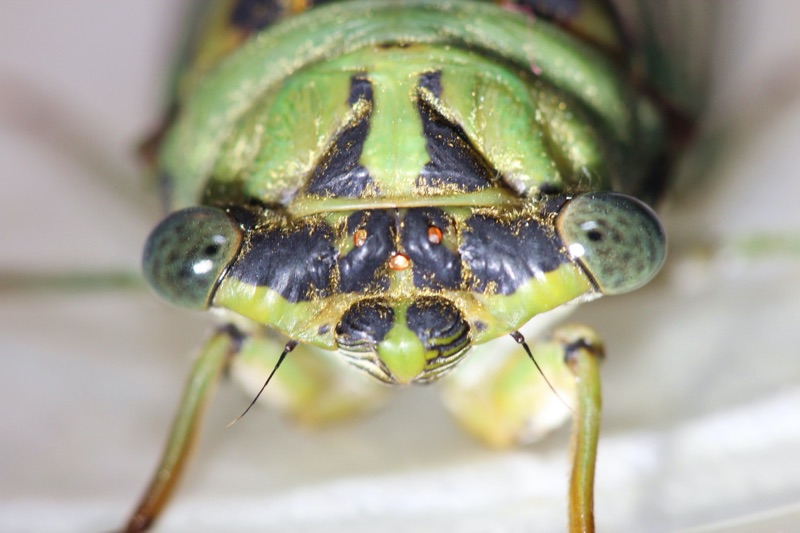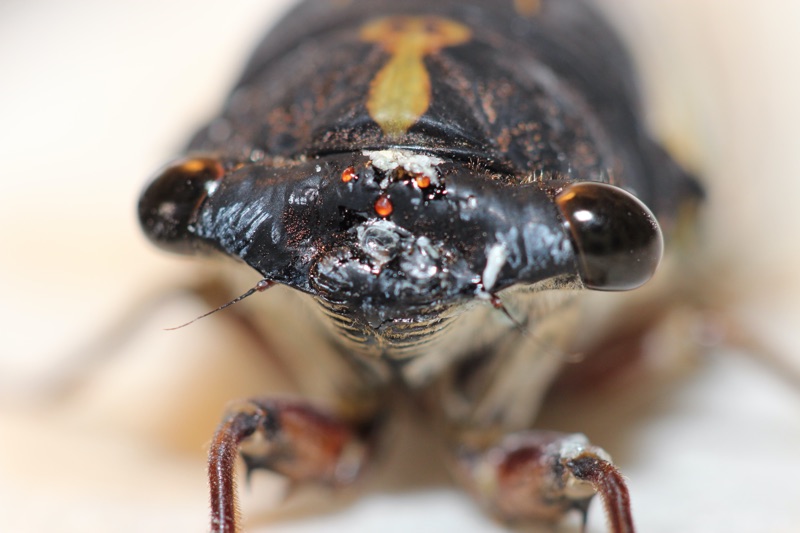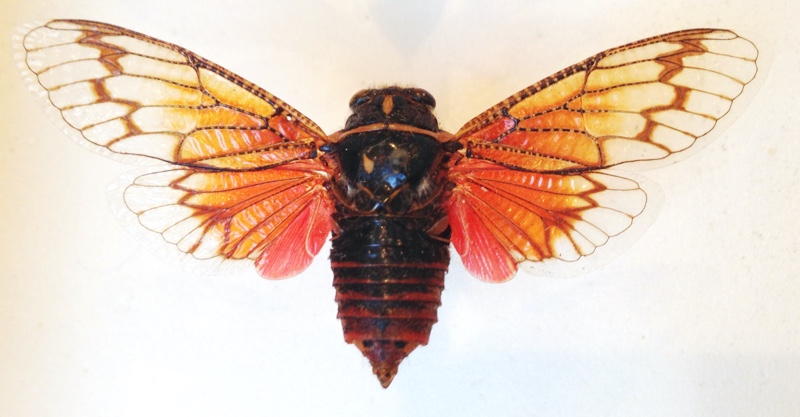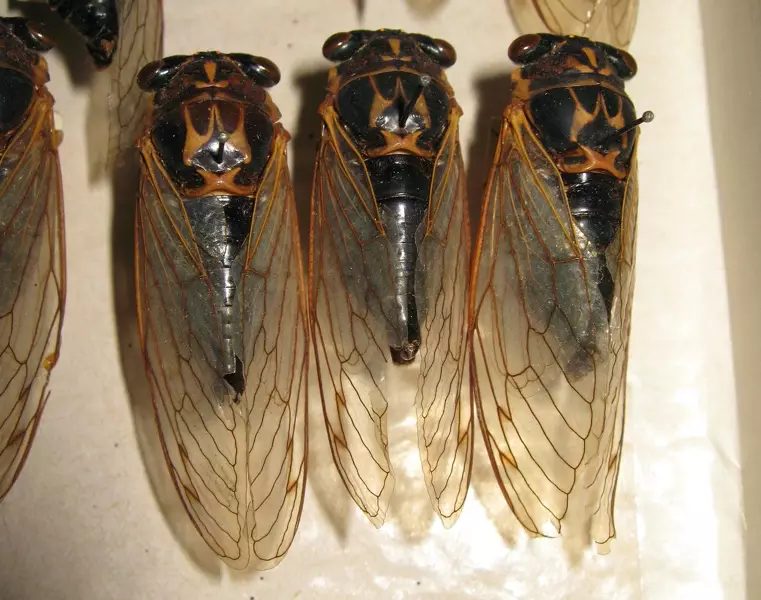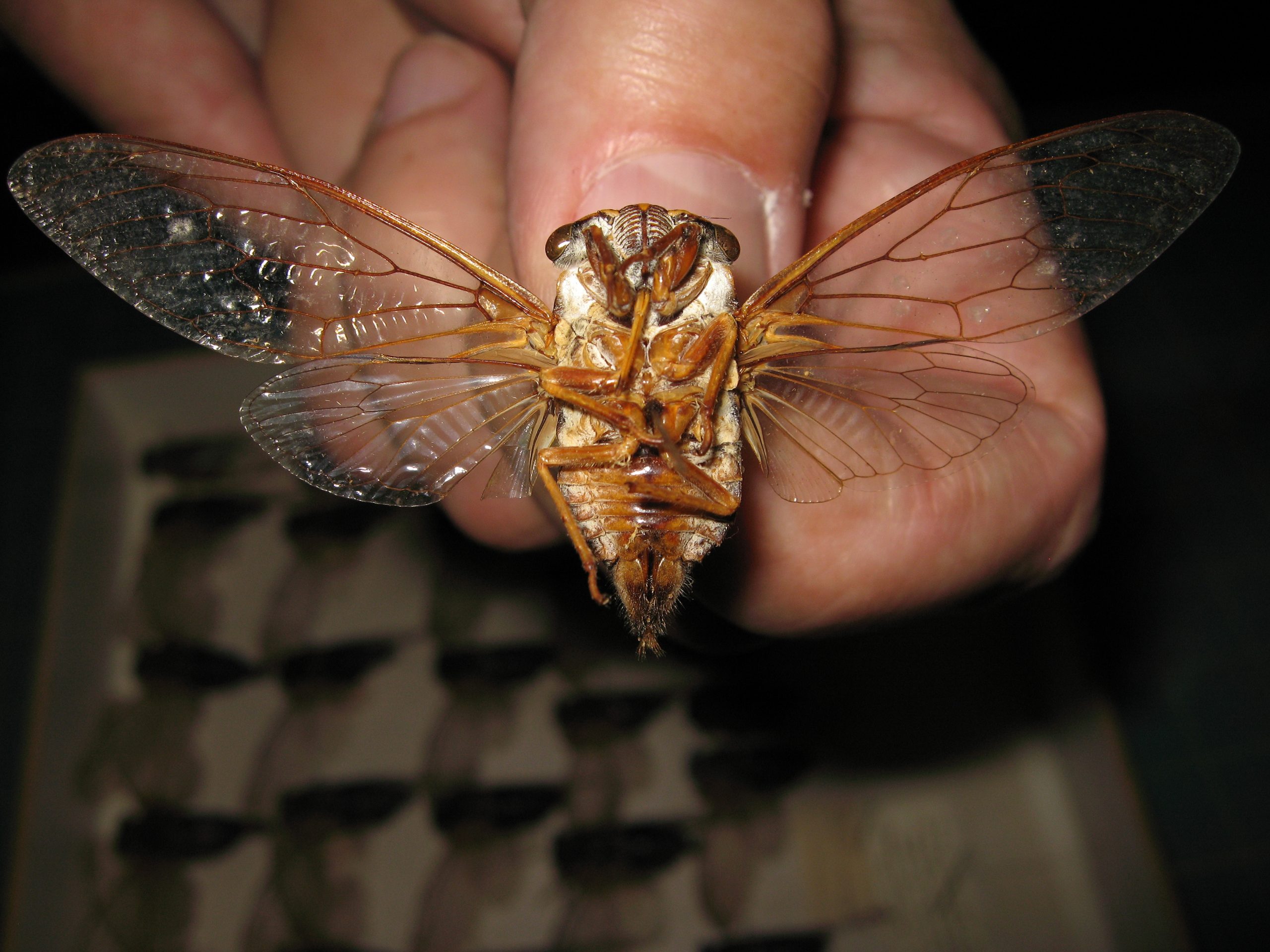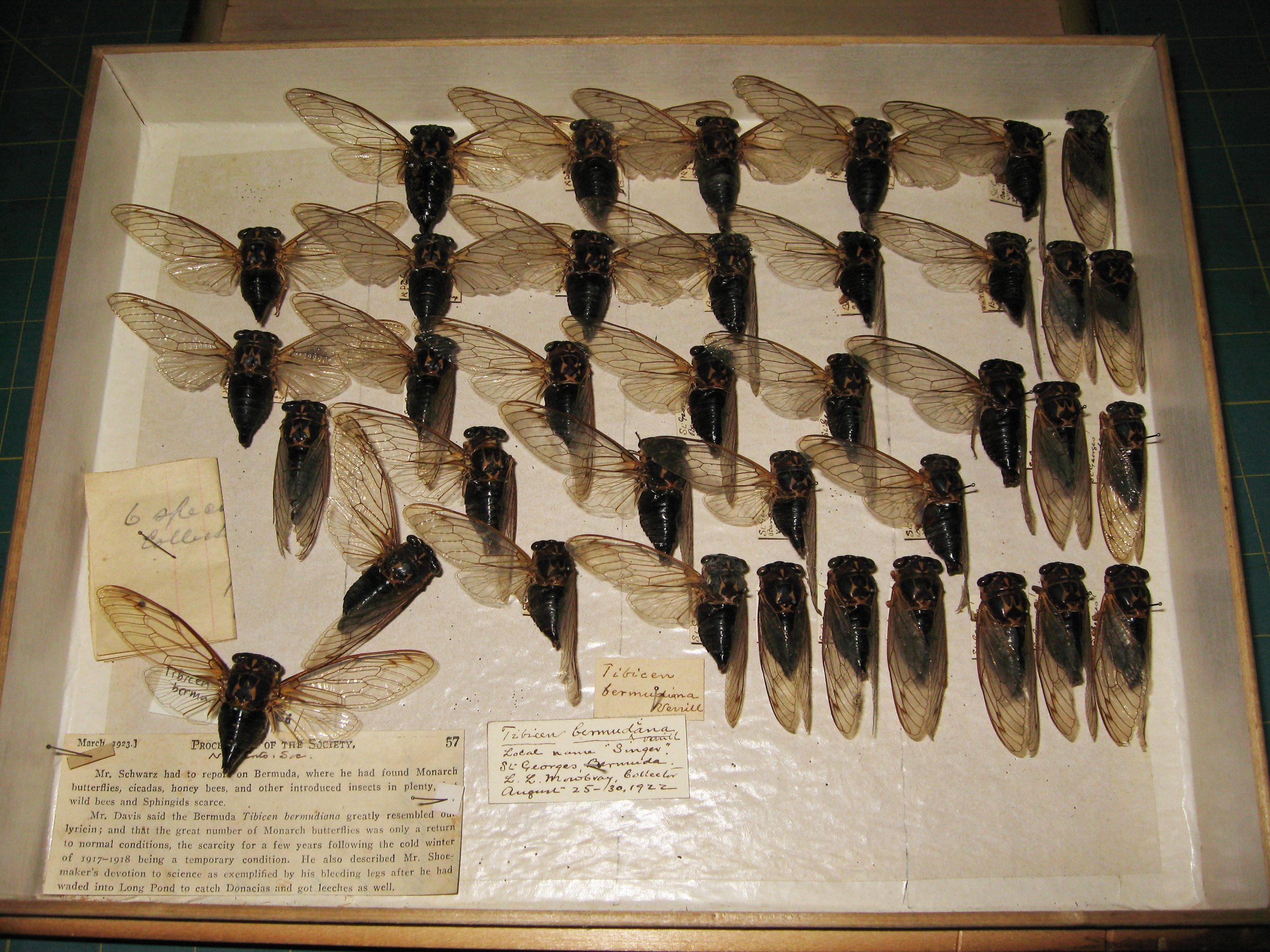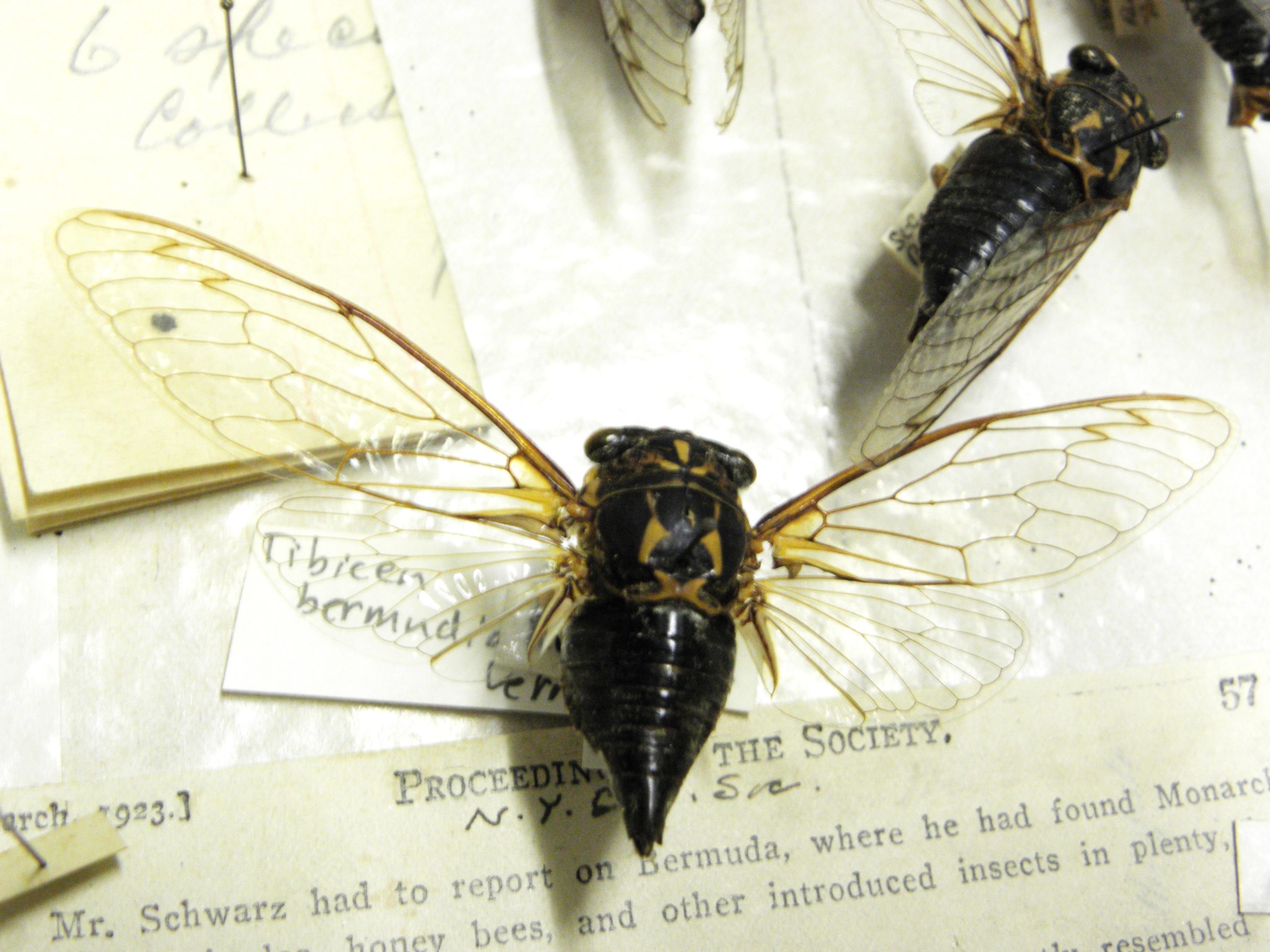
Possibly the best resource for identifying Neotibicen cicadas (and some Megatibicen) is William T. Davis’ Key to Species of the Genus Tibicen found in the Southeastern United States. It applies to a lot of the Northeast and Midwest as well. I updated it to include modern names for the cicadas, photos, and links to more information for each of the cicadas.
Resources
The other best sources for identifying Neotibicen, are:
- Insect Singers for audio recordings of cicada songs.
- The work of Bill Reynolds and others on BugGuide.net, for example, the Info page for N. pruinosus. BugGuide is particularly useful for getting a cicada identified — you upload a photo, and they identify it. You can also try to figure it out yourself by browsing their catalog of images.
- The recent paper Molecular phylogenetics, diversification, and systematics of Tibicen Latreille 1825 and allied cicadas of the tribe Cryptotympanini, with three new genera and emphasis on species from the USA and Canada (Hemiptera: Auchenorrhyncha: Cicadidae) by Kathy B. R. Hill, David C. Marshall, Maxwell S. Moulds & Chris Simon. 2015, Zootaxa 3985 (2): 219—251. (link to the paper). This paper is useful for understanding the morphology of Neotibicen as well as how the various species are genetically related.
- Biogeography of the Cicadas (Hemiptera: Cicadidae) of North America, North of Mexico by Allen F. Sanborn and Polly K. Phillips. (Download PDF). This document is particularly useful for locations.
- The Cicadas (Hemiptera: Cicadoidea: Cicadidae) of N. America North of Mexico by Allen F. Sanborn and Maxine S. Heath. (the book is available here)
- INaturalist provides visual guidence, as well as having where and when cicadas are found.
You can also use this website as a resource: the Cicada Species of North America.
Terminology
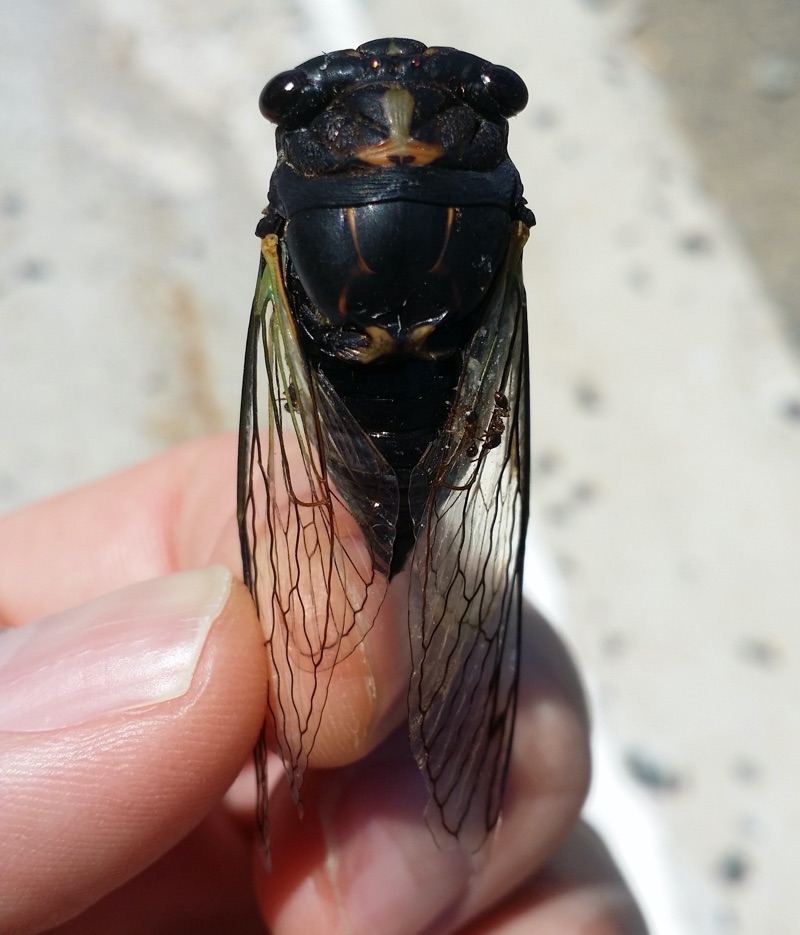
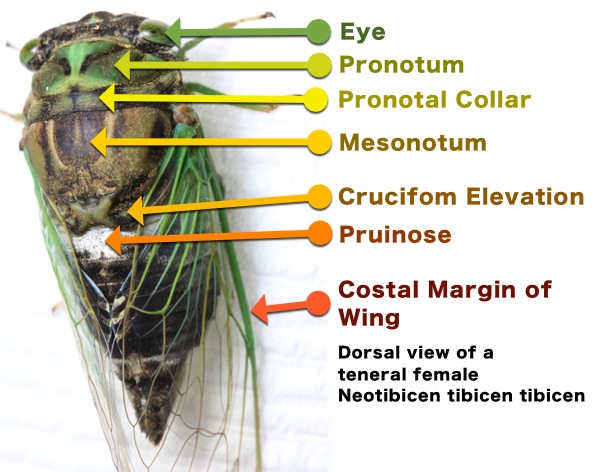
- Eyes: Neotibicen have 5 eyes, but for the purposes of identification, the two big, composite eyes are most important.
- Mask: a mask, in terms of cicadas, is a dark band between their eyes. Not all cicadas have this, but when they do, it can be useful for identification.
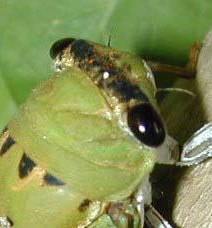
- Pronotum: the dorsal surface of the first segment of the thorax. The word means “before back” in Greek.
- Pronotal Collar or simply Collar: a collar-like band that separates the head and thorax. Colors and a break in the color, can be useful to diagnose species,
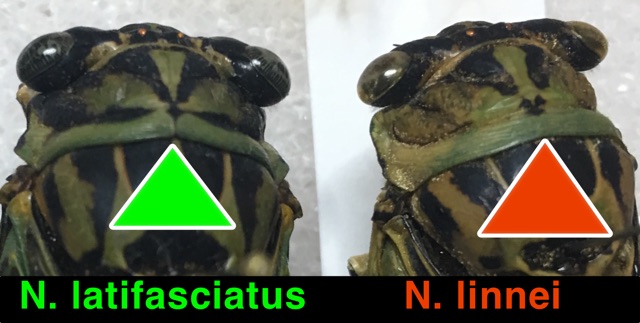
- Mesonotum: a shield-shaped structure that covers the dorsal side of the second segment of the thorax. The name means “middle shield” in Greek. This is where the arches or “M” or “W”, as Davis called it, appears on the cicada.
- Cruciform Elevation or “X”: a cross-shaped structure found on the dorsal side at the end of the thorax
- Pruinose: a white, waxy substance found on the bodies of many cicadas. Pruinosity refers to the degree to which the cicada’s body features pruinose.
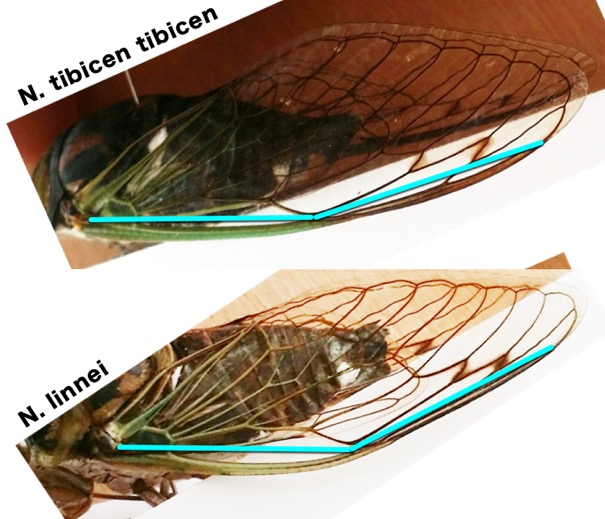
- Costal Margin & Wing Shape in general: The costal margin is the outer edge of the cicada’s forewing. The shape of the wing can help you diagnose the species.
- Abdomen: The third, last and final portion of the cicada’s body (1st: head, 2nd: thorax, 3rd: abdomen).
- Dorsal: The top side of the cicada.
- Ventral: The bottom side of the cicada — where the legs are.
- Teneral: Teneral means soft, and in the case of cicadas, it refers to the adult cicada when it has recently molted and is still soft/unsclerotized/unhardened.
- Song: Neotibicen males sing using their tybmals, which are drum-like organs located in their abdomen.
Those are the resources and terminology — now on to the challenges.
Rules are not absolute
Sometimes a diagnostic characteristic is fool-proof for the majority of identifications, but in some cases, it fails.
Example: N. lyricen typically have black collars, but not 100% of the time. You might find a lyricen with a green collar, and think it is an N. linnei.
Hybridization
Neotibicen like canicularis, linnei, pruinosus, robinsonianus & winnemanna, are closely related, and cicada researchers have found evidence that they hybridize, based on hybrid songs or mixed characteristics.
See Bill Reynolds’ information on hybrids on BugGuide.
Live vs. Dead
Dead specimens lose color over time. Eyes lose color. Vibrant greens become dull. Dull greens become yellow or brown. Keep that in mind.
Teneral vs Adult
When cicadas molt, and their bodies as still soft, they are often lighter in color and the markings on their skin are not clearly defined.
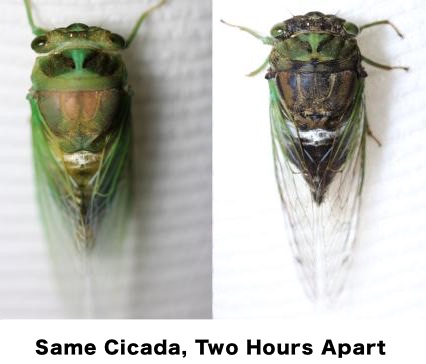
Some previous articles about identifying teneral Neotibicen:
Lighting
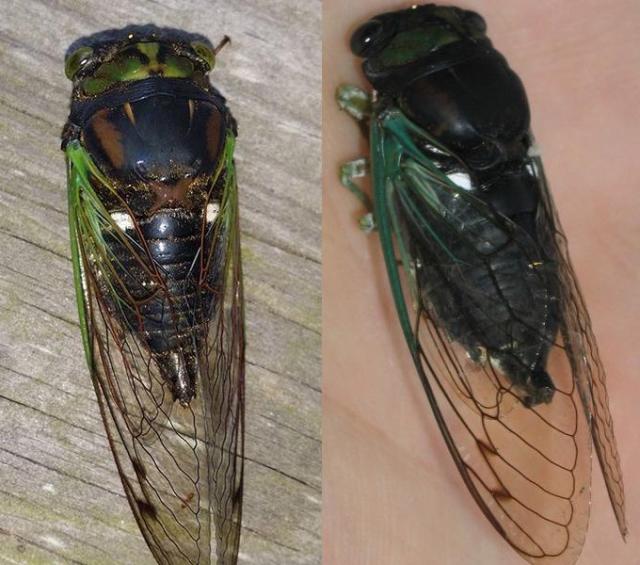
Photograph the same cicada in direct sunlight, indoors with a flash, or without a flash under fluorescent lighting, and it might appear different each time.
The eyes, in particular, look different under different lighting conditions.
Name changes
The names of all plants and animals change over time, for several reasons. An old book or paper about Neotibicen might feature names that have completely changed. Neotibicen tibicen tibicen, for example, was called Tibicen chloromera not long ago.
See major changes to the Tibicen genera for information about the recent change from Tibicen to Neotibicen. I haven’t had to the time to update all the Tibicens to Neotibicens on this website — someday I will.
And in case you wanted to know:
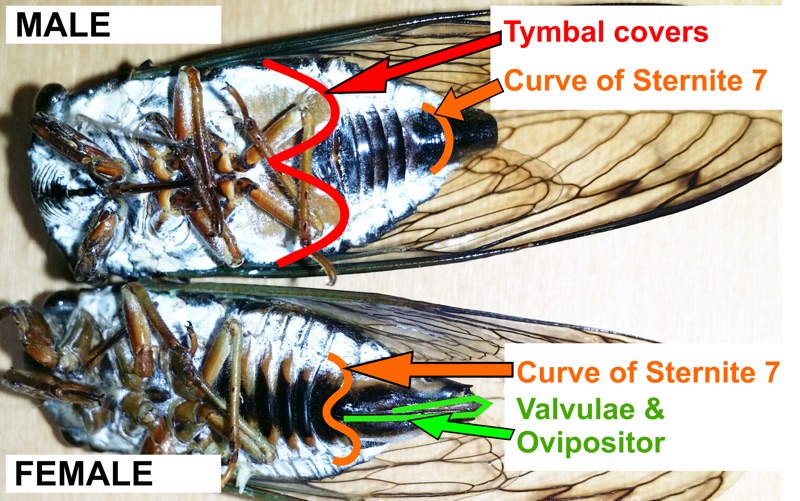
How to tell if a Neotibicen is a male or female:
###
The next article will discuss the Larger Neotibicen species.