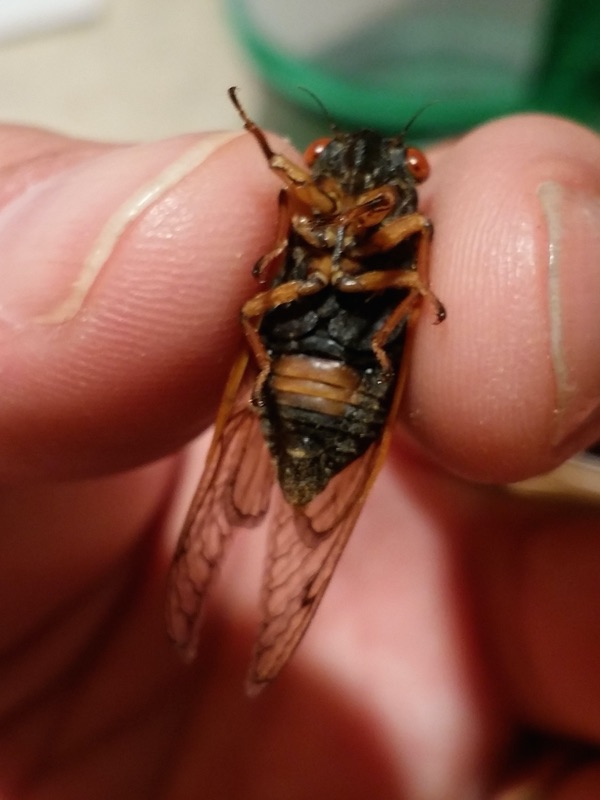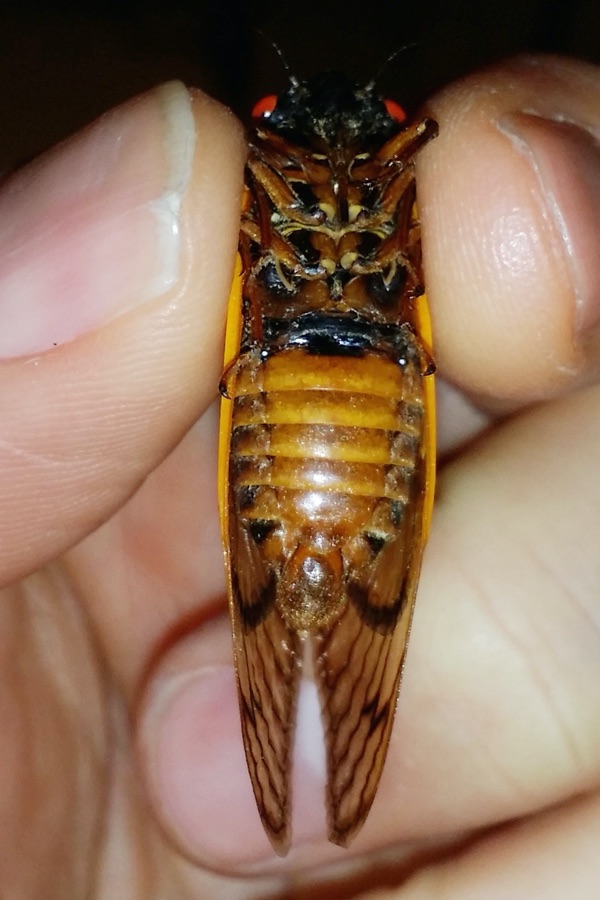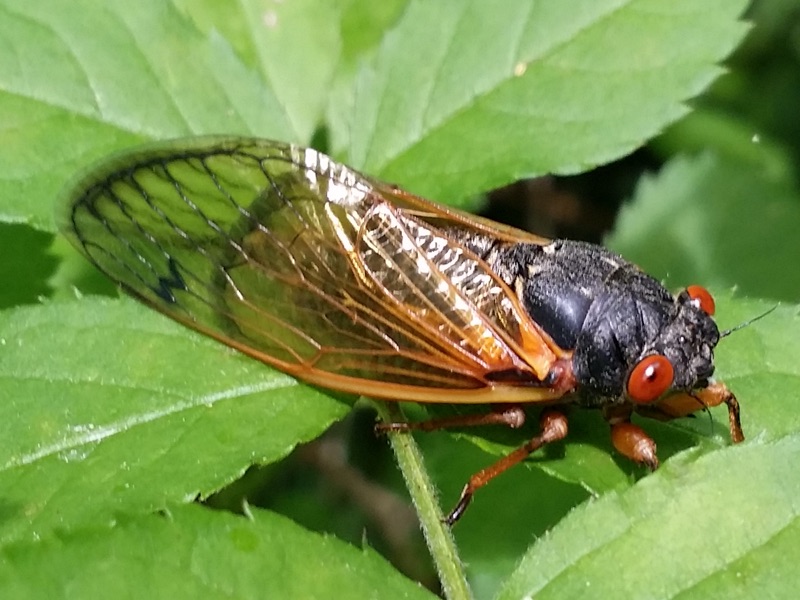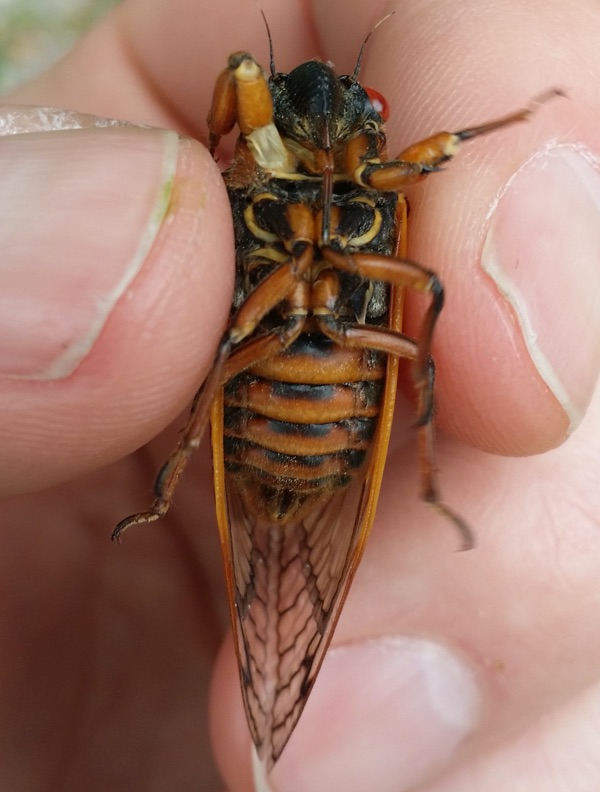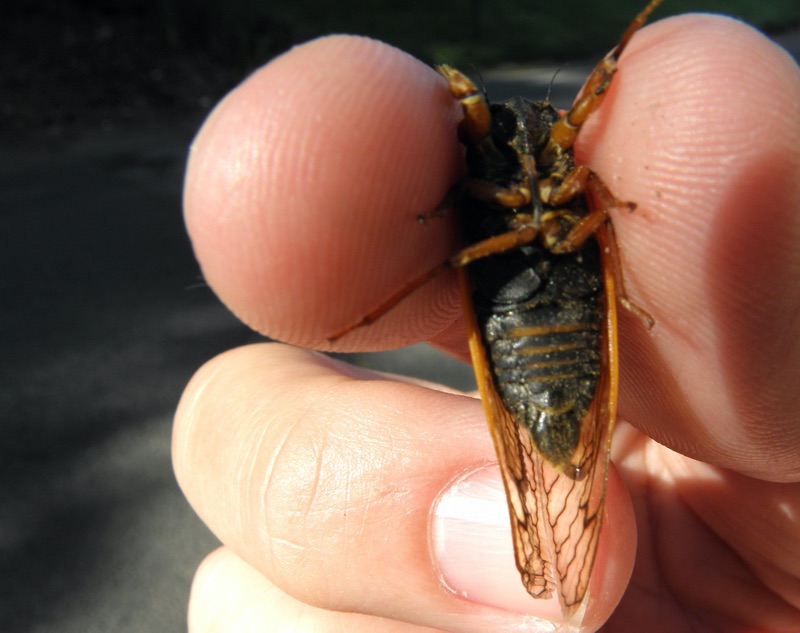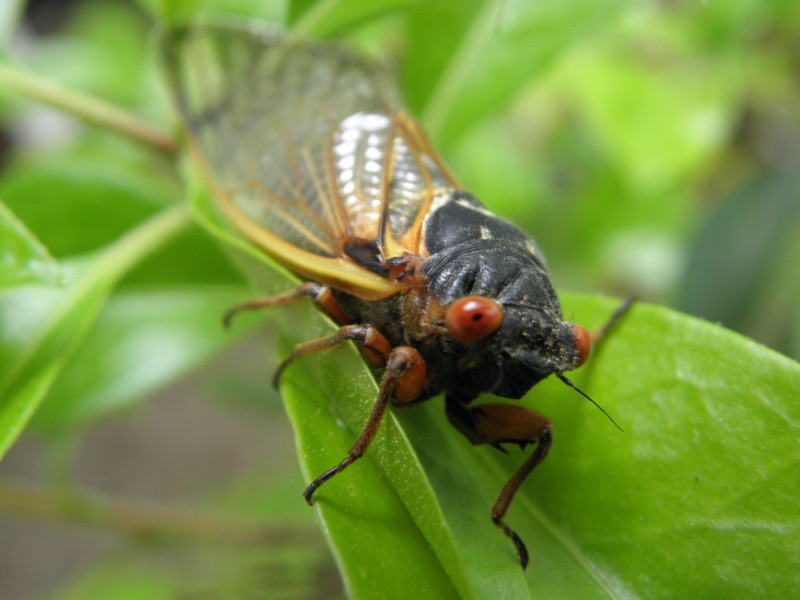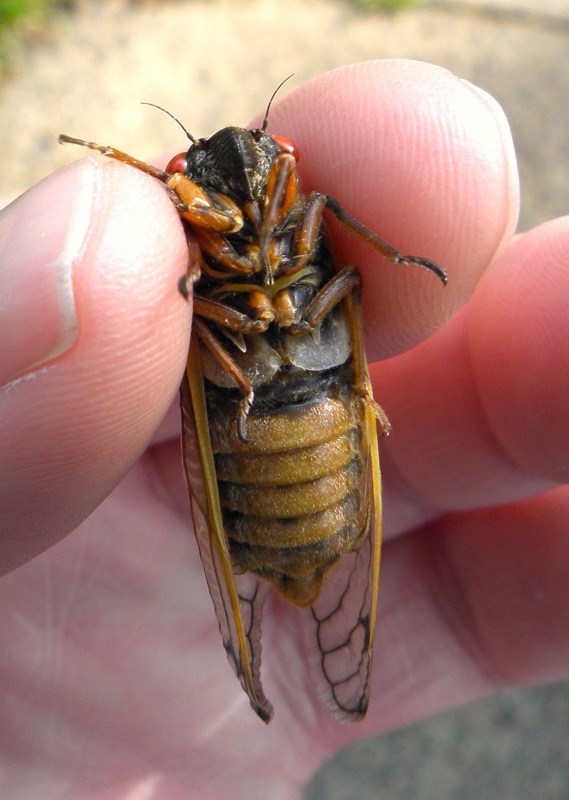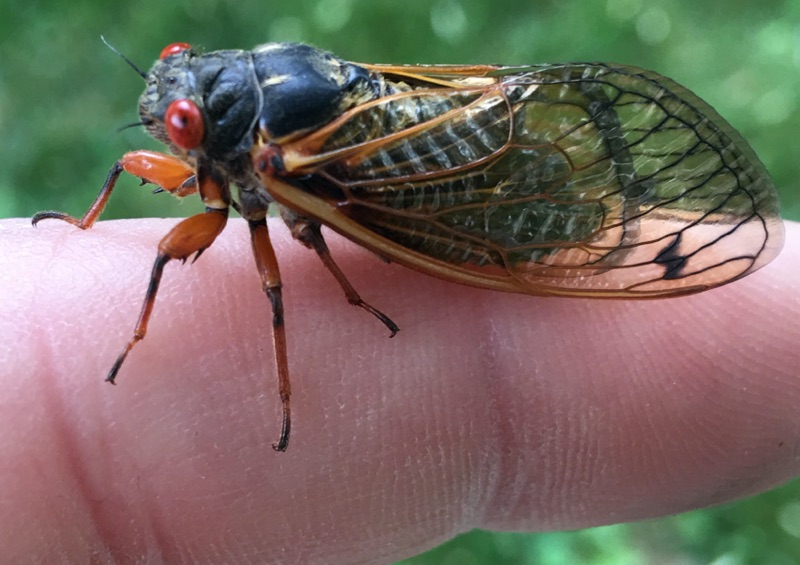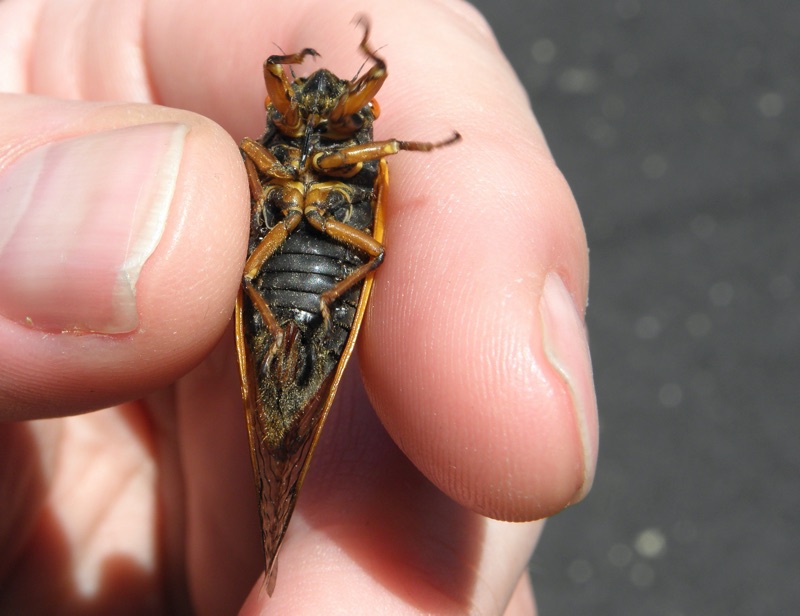
People ask, “Can periodical cicada singing damage hearing”? It all depends on how long you expose yourself to their song, and how close your ears are to the insect. Invest in some quality ear plugs if you are concerned. Consult a medical professional, of course. Get a Sound Level Meter.
Periodical cicada choruses are often in the 80–85db range, which the CDC says “You may feel very annoyed” and “Damage to hearing possible after 2 hours of exposure”:

If you spend a long time outside during a chorus, your ears will probably ring for hours after. That is my personal experience.
Placed directly on a microphone, I have observed periodical cicadas get as loud as 111.4db. According to the CDC, that is close enough to cause hearing damage in less than 2 minutes. Do not place male cicadas on your ear! Do not put your head right next to the tree branches where they’re singing.


Check out this video of Magicicada sound levels measured by an EXTECH 407730 Sound Level Meter:
How to avoid hearing them?
- Stay indoors
- Buy earplugs or headphones that block external sound
- Avoid their peak singing times, between 10 am and 5 pm. Before 10 am and after 5 pm are also the best times to do yard work to avoid them.
I’ve exposed myself to hundreds of hours of cicada songs. I’ve also gone to hundreds of concerts and listened to a lot of rowdy music over the years. My hearing is not great, but it is probably not due to cicadas.
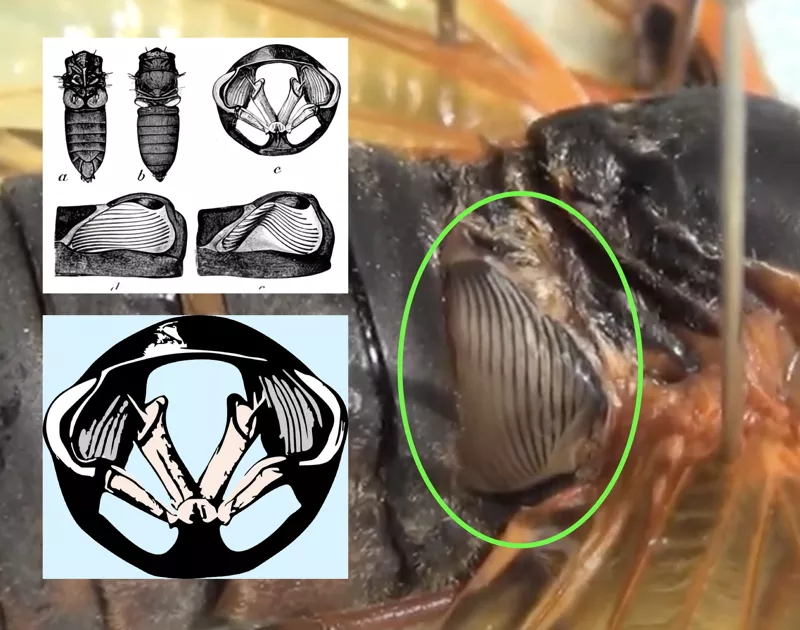
It is worth mentioning that only male cicadas sing. Females make noise by flicking their wings, but they are not as loud as the males. Males have organs called tymbals that vibrate creating their signature sound.
Here are illustrations and a photo of a Magicicada’s tymbals. They have one on each side of their body:
So what is the loudest cicada? According to the University of Florida Insect Book of World Records, “The African cicada, Brevisana brevis (Homoptera: Cicadidae) produces a calling song with a mean sound pressure level of 106.7 decibels at a distance of 50cm.” The loudest cicada in the United States, using the same methodology, is Diceroprocta apache (Davis) at 106.2db at 50cm.
I need to take measurements of Magicicada from 50cm to make a comparison. The measurements I’ve taken are in the midst of a large chorus with cicadas about a meter to 20 meters away, which falls in the 80-85db range; or directly on the mic, which gets into the 109-111db range. Your results may vary.