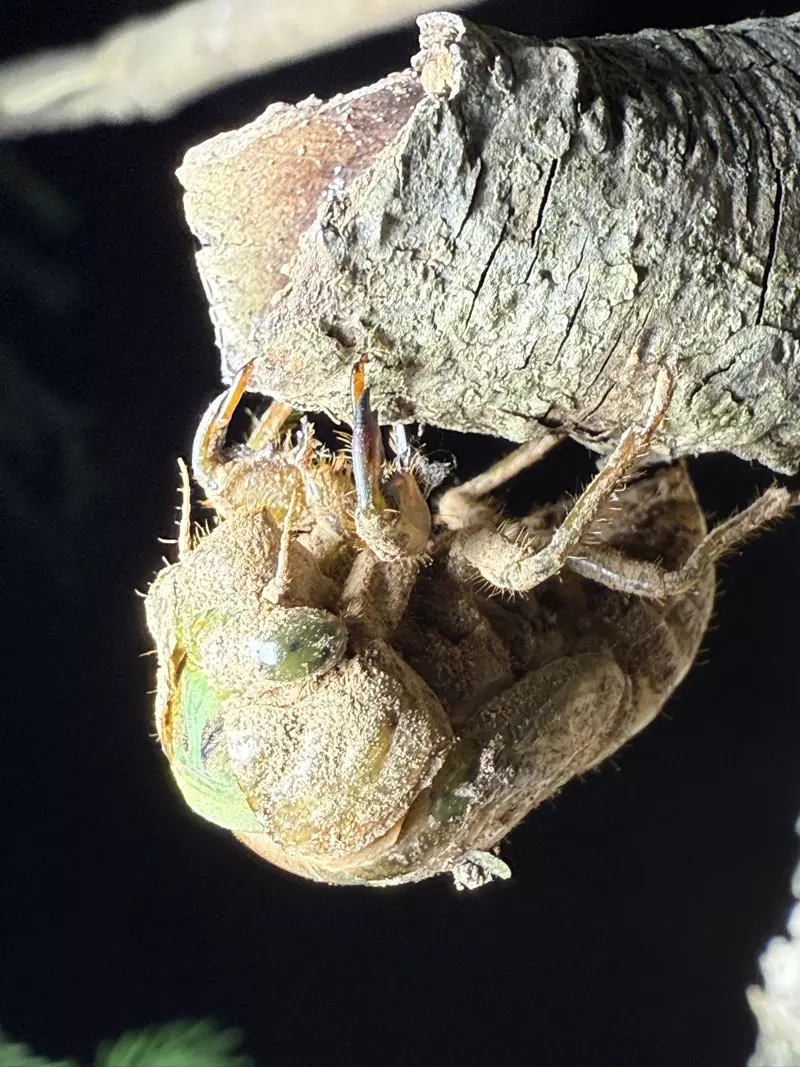
Categories
Brood II Magicicada Periodical Periodical Stragglers

In search of Brood XV (15)

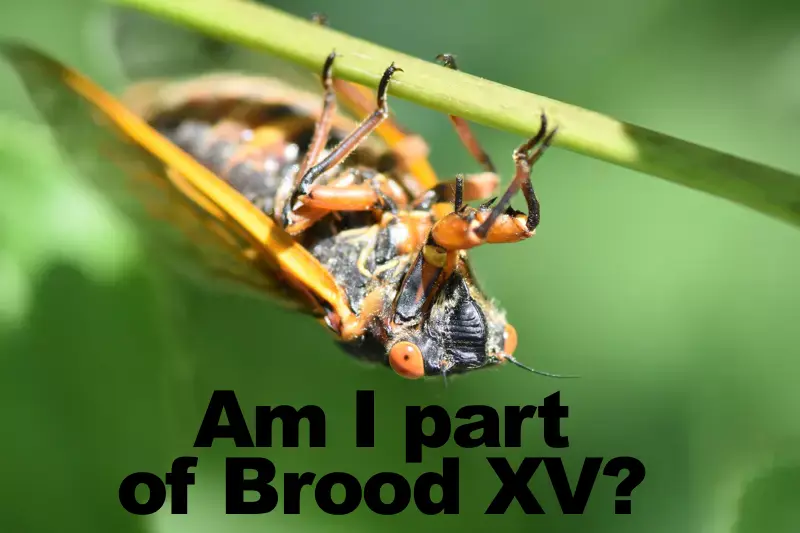
Am I part of Brood XV?

Magicicada periodical cicadas are categorized into broods (see brood chart). Each brood has a unique 17 or 13-year interval of time where cicadas hatch, burrow into soil, tunnel underground feeding off roots for 99% of their life, emerge as nymphs, molt, fly, gather, scream, and reproduce.

Brood II has been emerging every 17 years possibly for millennia. The last times it emerged was in 2013, 1996, 1979, 1962… minus 17 years … back as far as we know. The next time Brood II cicadas will emerge is in 2030.

Sometimes broods “straggle” though. A number of Magicicada will emerge four years earlier than expected, deviating and potentially breaking away from the rest of the brood. In theory, if stragglers are abundant enough, they can form what is called a “shadow brood”, as long as their offspring survive and perpetually reproduce. A shadow brood of Brood II, based on 4-year stragglers, would become Brood XV(15), and would emerge in 2026. There’s more information about stragglers and “spurious broods” on the UCONN Cicada site.

This year, 2026, while we’re looking for 4-year Brood II stragglers we will also look for evidence of an established Brood XV. There are credible reports by cicada researchers Chris Simon and Elias Bonaros that Brood XV may exist in New Jersey in Union County, specifically Fanwood, NJ. Conceivably, an instance of Brood XV could form anywhere Brood II exists — if you’re in Brood II territory, expect the unexpected.

We will definitely be looking for Brood XV this spring.

So, how can we tell that there is a legitimate Brood XV in place rather than ordinary Brood II stragglers? The key will be the abundance of cicadas. A Brood XV population should resemble a typical on-schedule Brood II population: hundreds to thousands of shed skins (exuvia), hundreds to thousands of adults, chorusing and not just individuals singing alone, noticeable mating and egg laying; a Brood XV should last 2-4 weeks. Ordinary Brood II stragglers should arrive in far fewer numbers: dozens per acre not thousands, individual songs but no choruses, little to no mating or egg laying; birds should pick off most of the stragglers so they will not last long. While it is possible to have a pure straggling event that seems full brood emergence event (see Princeton in 2017 for Brood X stragglers), most of the time you’ll find one or two adults per suburban yard.

Here are some related comments from way back in 2009 discussing Brood II stragglers and a possible Brood XV:

Our NJ town (30 miles west of Manhattan) is covered in Magicicadas. Can they be straggers when the entire town is covered in them? Here are some photos I took today: Photo Album

Comment by Charlene — May 22, 2009 [AT] 6:49 pm

Charlene, yes, they’re stragglers even though there are so many. They’re stragglers by virtue of the fact that they’re arriving 4 years early.

Comment by Dan — May 22, 2009 [AT] 7:02 pm

Thanks to Charlene’s post I went to Fanwood. found 7 tenerals and captured one nymph which will eclose here in the comfort of my home. Heard some light M. septendecim choruses. did not see any M. cassini or M. septendecula. Some trees where covered with at least 100 exuvia. Some had none. The question is have we seen the maximum yet or is it just starting? Please keep an eye out for further emergence sites here in the North East.

Comment by Elias — May 25, 2009 [AT] 1:10 pm

Update on my mini colony that is being kept alive in a Butterfly pavilion. One young male started to sing today. The amplitude is very low. Also a female in the cage responded with wing flick signalling. Brought home 8 from New jersey, 6 still alive. Today is Day #4. Next couple of days may need to look in Staten island or back to Fanwood. Anyone have any other reports? I know the weather is terrible. We need some sunshine!!

Comment by Elias — May 28, 2009 [AT] 8:17 pm

Notes:

  • It is theorized that all broods are shadow broods of another brood. Brood II <-- Brood VI <-- Brood X <-- Brood XIV. When Magicicada straggle in enormous numbers they can form new broods offset by 4 or 1 years, which is why we have 13-year broods (mostly in the warmer south) and 17-year broods (mostly in the colder, glacier-prone north) with the difference being 4 years. Read: K S Williams, C Simon. 1995. The Ecology, Behavior, and Evolution of Periodical Cicadas. Annual Review Entomology. 40:269-295. https://doi.org/10.1146/annurev.en.40.010195.001413
  • Broods are named and numbered using Roman Numerals. C.L. Marlatt devised this naming convention. The letter I = 1, II = 2, III = 3, IV = 4, V = 5, VI = 6, VII = 7, VIII = 8, IX = 9, X = 10, XIII = 13, XIV = 14, XIX = 19, XXII = 22, XXIII = 23. 17-year broods are named I-XVII (1-17) and 13-year broods are named XVIII-XXX (18-30), though many do not exist.
  • 17-year broods, twelve exist (I, II, III, IV, V, VI, VII, VIII, IX, X, XIII, XIV), one is extinct (XI) and four missing broods (XII, XV, XVI, XVII) either never existed or went extinct before recorded history.
  • Of the thirteen possible 13-year broods, three exist (XIX, XXII, XXIII), one is extinct (XXI) and nine either never existed or went extinct (XVIII, XX, XXIV, XXV, XXVI, XXVII, XXVIII, XXIX, XXX)
  • Only a pair of 13-year and 17-year broods can emerge in the same year. XIII and XIX co-emerged in 2024.Two or more 17-year broods cannot emerge in the same year. Two or more 13-year broods cannot emerge in the same year.
  • Whenever I write about brood numbering or the fact that 17 and 13 are prime numbers, I feel like Scott Steiner explaining the mathematic possibility of beating him.
Categories
Brood II Magicicada Periodical Stragglers

2026 Brood II Straggler game plan

Brood II, a brood of Magicicada found in Connecticut, Georgia, Maryland, North Carolina, New Jersey, New York, Oklahoma, Pennsylvania and Virginia, is set to emerge in the year 2030, but some Brood II stragglers will emerge in 2026.

GET READY! If you had an abundance of cicadas back in 2013, you are likely to find a handful in your yard in 2026.

If you see or hear one, report it using the iNaturalist app or website or using the Cicada Safari app. Share your observations on Instagram, TikTok, Facebook, X, Bluesky and YouTube. You can use the hashtag #BroodII. Chat about them on the Facebook Cicada Discussion Group.

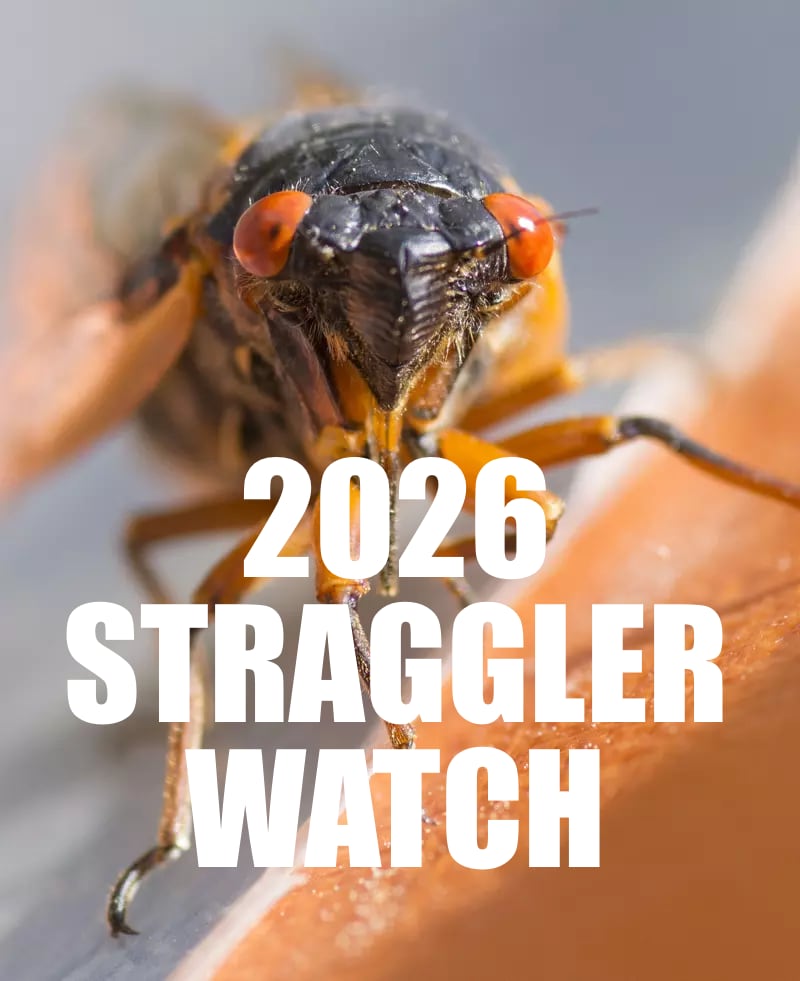
Straggler Watch

What is a straggler? A straggler is a periodical cicada that emerges later or earlier than expected. Magicicada often emerge 4 years earlier than expected. You can also call them “precursors” when they emerge earlier.

When to look for stragglers?

  • Stragglers will emerge in the spring sometime between late April and May.
  • Their emergence will be triggered by the warming of the soil where they live. When the soil gets to be approximately 64°F eight inches deep, they will emerge. Air temperatures in the 70s and 80s warm the soil. Warm rain helps as well. Read more about that.
  • Tip: We usually don’t see them emerge until the trees have leaves and purple iris bloom.

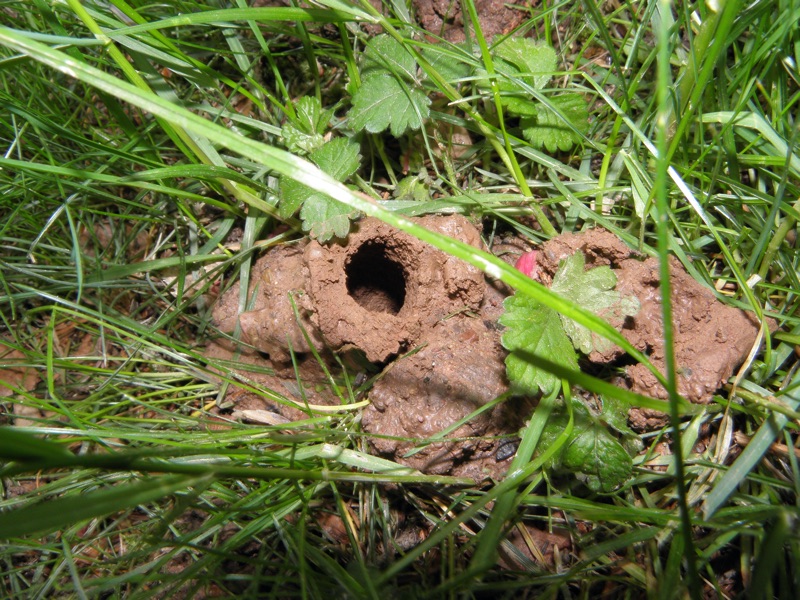
You can also look for cicada chimneys or tunneling cicadas under logs, slates or rocks in April and early May. Look, observe, but do not disturb them.

A cicada chimney is an elevated exit cicadas build above their tunnels:
Cicada Chimney Metuchen Brood II

Where to look for stragglers?

Check this map on the UCONN website. That is where Brood II last emerged.

Hot spots from 2013:

Connecticut (CT)

  • Meriden, CT

New Jersey (NJ)

  • Berkeley Heights, NJ
  • Colonia, NJ
  • Edison, NJ
  • Flat Rock Brood Nature Center, NJ
  • Iselin, NJ
  • Lewis Morris Park, NJ
  • Maplewood in Essex County, NJ
  • Metuchen, NJ
  • Millburn, NJ
  • Montclair, NJ
  • Mountainside, NJ
  • Plainfield, NJ
  • Scotch Plans, NJ
  • Upper Montclair, NJ
  • West Milford, NJ
  • Westfield, NJ

There might be a “shadow brood”, Brood XV, around the Fanwood, NJ area. This would be a brood established from Brood II stragglers, with a large enough of a population to breed and sustain a new brood offset 4 years from Brood II. We will see.

New York (NY)

  • Cornwall-On Hudson, NY
  • Fishkill, NY
  • Germantown, NY
  • Red Hook, NY
  • Rhinebeck, NY
  • Staten Island, NY
  • Stony Point, NY

North Carolina (NC)

  • Madison, NC
  • Yadkin County, NC

Oklahoma (OK)

  • Oklahoma City, OK

Virginia (VA)

  • Brentsville, VA
  • Calvert County, VA
  • Charlottesville, VA
  • Doylesville, VA
  • Fredricksburg, VA
  • Front Royal, VA
  • Glen Allen, VA
  • Kinderhook, VA
  • Lake Ridge, VA
  • Louisa County, VA
  • Manassas Battlefield Park, VA
  • Martinsville, VA
  • North Garden, VA
  • Rhoadesville, VA
  • Springfield, VA
  • Stafford County, VA
  • Stanardsville, VA
  • Woodbridge, VA

What do they look like?

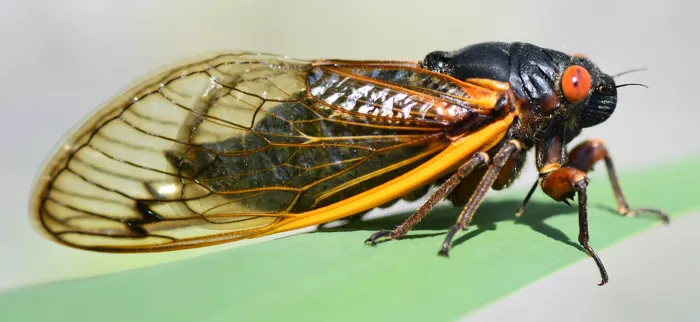
They look like this once they’ve molted:
Magicicada
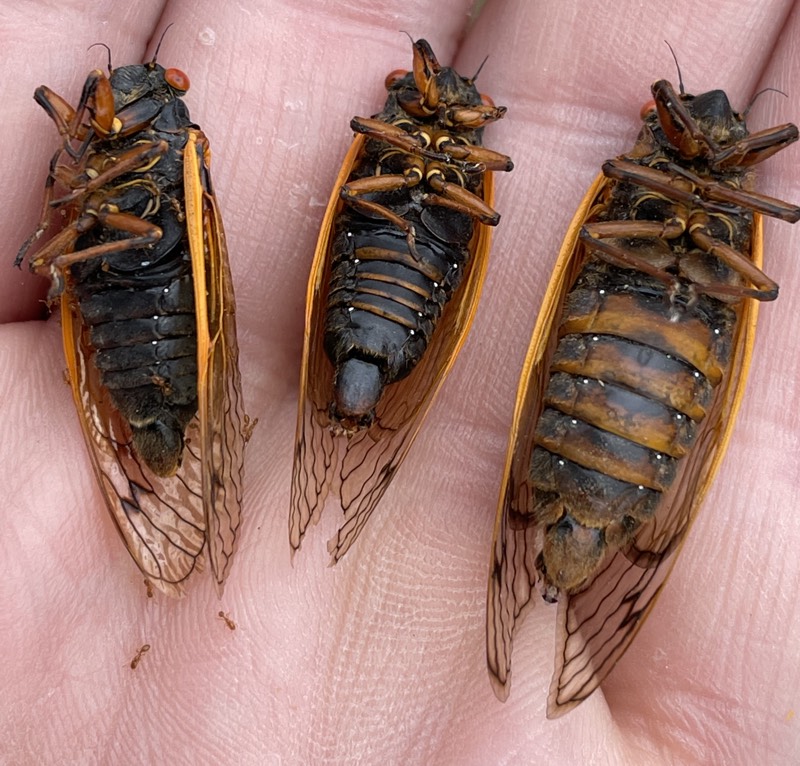
Red eyes (typically), black bodies, orange-black legs and orange-yellow wings.

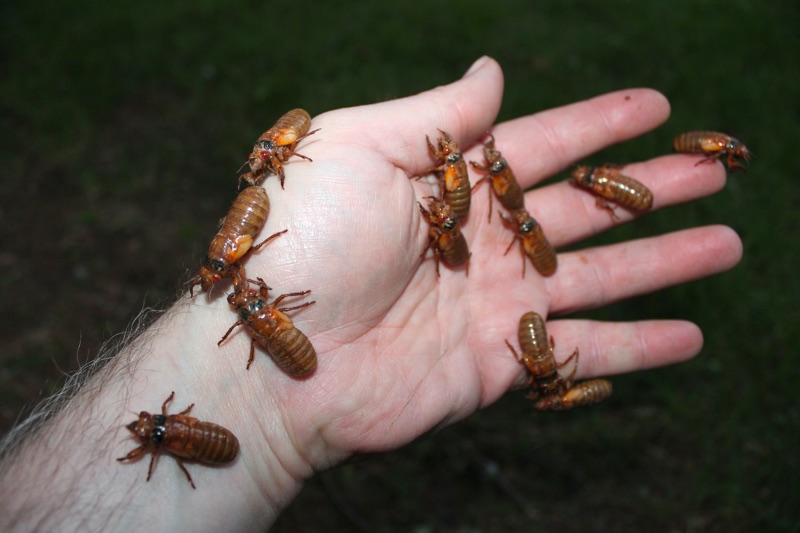
Nymphs that have recently emerged from the ground:
Can I give you a hand _Magicicada nymphs in Metuchen NJ_

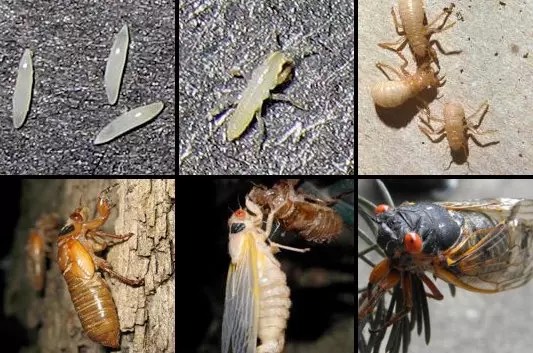
This is each major stage in their life cycle:
Top, Left to Right: cicada egg, freshly hatched nymph, second and third instar nymphs. Bottom, Left to Right: fourth instar nymph, teneral adult, adult. (Photos by Roy Troutman and Elias Bonaros).

There are 3 types/species of Magicicada in Brood II: Magicicada cassini, Magicicada septendecim, and Magicicada septendecula.

Left to right: Magicicada cassini, Magicicada septendecula, Magicicada septendecim::
Left to right: Magicicada cassini, Magicicada septendecula, Magicicada septendecim:

Categories
Papers and Documents

2026 Cicada Publications

February

The cicadas (Hemiptera: Cicadidae) of Los Amigos Biostation, Peru with the description of a new species and three new records for Peru

Highlight: “The cicadas (Hemiptera: Cicadidae) of Los Amigos Biostation, Peru are identified. Twenty-eight species representing 13 genera, three tribes, and two subfamilies were collected between August and December 2024. Guyalna protrudusa Sanborn sp. nov. is described along with the first female of Guyalna fasciata Sanborn, 2019.”
Author: ALLEN F. SANBORN, ERIN M. RIVERA GROVES, Adrian Forsyth
Publication information: Journal of Insect Biodiversity. Vol. 79 No. 1: 4 Feb. 2026. DOI: 10.12976/jib/2026.79.1.1
Link: Journal of Insect Biodiversity.

January

Antennal Sensilla Diversity in Some North American Cicadas (Hemiptera: Cicadidae)

Highlight: Scanning electron microscopy was used to visualize the morphology of antennal sensilla found in a diverse group of North American cicadas.
Author: Allen F. Sanborn
Publication information: Insects. 2026, 17(1), 115; https://doi.org/10.3390/insects17010115
Link: Insects.

Categories
Papers and Documents

2025 Cicada Publications

This is a list of research publications about cicadas in 2025. It is a work in progress.

December

The taxonomic position of the cicada genera Mura Distant, 1905 and Muraoides Sanborn, 2018 (Hemiptera: Cicadidae)

Highlight: Genera Mura and Muraoides are moved to a new tribe.
Author: Allen F. Sanborn
Publication information: Zootaxa. VOL. 5728 NO. 1: 9 DEC. 2025. DOI: 10.11646/ZOOTAXA.5728.1.8
Link: Zootaxa.

November

A new species and the revised species status of cicadas of the genus of Dorachosa Distant, 1892 from Mexico (Hemiptera: Cicadidae: Cicadettinae: Carinetini)

Highlight: “Dorachosa mesomexicana sp. nov. is described.”
Author: Allen F. Sanborn
Publication information: Journal of Insect Biodiversity. VOL. 71 NO. 2: 6 NOV. 2025. 10.12976/JIB/2025.71.2.2
Link: mapress.com

Phylogenomics and Fossilized Birth-Death Dating Reveals Gondawanan Origin and Extensive Post-Cretaceous Diversification of Worldwide Cicadidae

Highlight: “We estimated a Cretaceous origin for Cicadidae with four of the five subfamilies diversifying shortly after the K-Pg extinction event.”
Authors: Mark Stukel, Nicholas J. Matzke, Jordan Douglas, Tatiana Petersen Ruschel, Stéphane Puissant, Ben W. Price, Martin Villet, Alan R. Lemmon, Emily Moriarty Lemmon, Chris Simon
Publication information: bioRxiv 2025.11.08.687401; doi: https://doi.org/10.1101/2025.11.08.687401
Link: www.biorxiv.org

A new cicada species of the genus Psithyristria Stål (Hemiptera: Cicadidae)

Highlight: “A new species of the genus Psithyristria Stål, 1870 (Hemiptera: Cicadidae: Cicadinae: Psithyristriini), Psithyristria parapeculiaris sp. nov., is described from Santa Rosa, Luzon, Philippines.”
Author: Young June Lee.
Publication information: Journal of Insect Biology. VOL. 71 NO. 2: 6 NOV. 2025; DOI: 10.12976/JIB/2025.71.2.3
Link: mapress.com

Initially Coexisting Endosymbionts Migrate Into Different Tissues During Ontogeny of Host Cicadas

Highlight: “This study sheds light on how symbiont-host interactions shape the symbiotic organogenesis, which provides insights into adaptive evolution of specialised symbiotic organs in plant sap-feeding insects.”
Authors: Jinrui Zhou, Wenzhe Zhang, Qiong Guo, Xingyue Liu, Cong Wei
Publication information: Environmental Microbiology. Volume27, Issue11 November 2025 e70185 https://doi.org/10.1111/1462-2920.70185
Link: enviromicro-journals.onlinelibrary.wiley.com

Evaluation of Entomopathogenic Fungi against Psalmocharias alhageos (Kolenati) (Hemiptera: Cicadidae) under Laboratory and Semi-Field Conditions

Highlight: “Entomopathogenic fungi “EPF”, a class of fungi that are naturally occurring in soil and pathogenic to insects, have demonstrated potential utility against a broad spectrum of soil-dwelling pests and some non-soil-dwelling pests.”
Authors: Sajjadi, Kimia & Ghaffari, Sepideh & Rahimpour, Mehrdad & Stelinski, Lukasz & Butt, Tariq & Karimi, Javad
Publication Information: Egyptian Journal of Biological Pest Control. 35.
Link: www.researchgate.net

October

Two new genera of Aolina (Dundubiini), with a key to the genera of the subtribe (Hemiptera: Cicadidae)

Highlight: “Two new cicada genera from the Eastern Palearctic and Oriental Regions, Sinfonia gen. nov. and Streeyola gen. nov., are erected in the subtribe Aolina Boulard, 2012 (tribe Dundubiini Distant, 1905), with the designations of Dundubia opalifera Walker, 1850 and Cosmopsaltria mongolica Distant, 1881 as the respective type species.”
Authors: Young June Lee
Publication Information: Fragmenta Entomologica 57(2):149-158
Link: researchgate.net

September

First record of Eopycna concinna (Cicadidae: Cicadinae) from China

Highlight: “This study reports the first documented occurrence of E. concinna in China, significantly extending its known distribution range northward.”
Authors: Ke-Yi Duan, Zhong-Hong Fu, Fei Lu, Chuan-Hui Yi & Qiu-Ju He
Publication Information: Scientific Reports volume 15, Article number: 12826 (2025)
Link: www.tandfonline.com

August

Cicada as a food for mammals: a global review and implications for mammal behaviour and populations

Highlight: “Here, I summarize the published literature on cicada consumption by mammals worldwide and review the ecological roles of cicadas in the behavior, population, and community of mammals.”
Authors: Kanzi M. Tomita
Publication information: Wildlife Biology e01496. https://doi.org/10.1002/wlb3.01496
Link: nsojournals.onlinelibrary.wiley.com

Early stragglers of periodical cicadas (Hemiptera: Cicadidae) found in Louisiana

Highlight: “However, it is strongly suspected that the observed cicadas were early stragglers of Broods XXII and XXIII (Magicicada spp.).”
Authors: Colin A. R. Bonser, C. Wood Johnson and Christopher E. Carlton
Publication information: Florida Entomologist, vol. 108, no. 1, 2025, pp. 20240066. https://doi.org/10.1515/flaent-2024-0066
Link: www.degruyterbrill.com

See all Straggler, Brood XXII and Brood XXIII posts on this site.

June

First record of the genus Lemuriana Distant, 1905 (Hemiptera, Cicadidae, Lamotialnini) from Kerala, India

Highlights: “The cicada Lemuriana apicalis (Germar, 1830) (Hemiptera, Cicadidae, Lamotialnini) is reported for the first time from Kerala, India”.
Authors: A. Anjana, K. T. Teji.
Publication information: Lamotialnini) from Kerala, India. ENTOMON, 50(2), 219–224. https://doi.org/10.33307/entomon.v50i2.1472
Link: entomon.in

May

New genera and species of cicadas from arid Australia (Hemiptera: Cicadoidea: Cicadidae)

Highlight: “Five new genera and 12 new species are described from arid regions of Western Australia, Northern Territory, South Australia and New South Wales”.
Author: Moulds, M.S., David C. Marshall.
Publication information: Megataxa. VOL. 17 NO. 1: 13 JUN. 2025. DOI: 10.11646/MEGATAXA.17.1.1
Link: mapress.com

April

Phylogeny, biogeography, and diversification of the cicada Pomponia linearis and its allies (Hemiptera: Cicadidae)

Highlights: “This study improves understanding of the diversification, phylogeny, and dispersal history of cicadas in Eastern Asia.”
Author: Jiali Wang, Masami Hayashi, Cong Wei
Publication information: Zoological Journal of the Linnean Society, Volume 203, Issue 4, April 2025, zlaf019, https://doi.org/10.1093/zoolinnean/zlaf019
Link: academic.oup.com

ECOSoundSet: a finely annotated dataset for the automated acoustic identification of Orthoptera and Cicadidae in North, Central and temperate Western Europe

Highlights: “10,653 recordings of 200 orthopteran and 24 cicada species”.
Authors: David Funosas, Elodie Massol, Yves Bas, Svenja Schmidt, Dominik Arend, Alexander Gebhard, Luc Barbaro, Sebastian König, Rafael Carbonell Font, David Sannier, Fernand Deroussen, Jérôme Sueur, Christian Roesti, Tomi Trilar, Wolfgang Forstmeier, Lucas Roger, Eloïsa Matheu, Piotr Guzik, Julien Barataud, Laurent Pelozuelo, Stéphane Puissant, Sandra Mueller, Björn Schuller, Jose M. Montoya, Andreas Triantafyllopoulos, Maxime Cauchoix
Publication information: https://doi.org/10.48550/arXiv.2504.20776
Link: arxiv.org

Sounds from the Eocene: the first singing cicada from the Messel Pit, Germany

Highlights: “In this study, we report the first fossil record of the Platypleurini from the Eocene Messel Pit: a new genus and species, Eoplatypleura messelensis”
Authors: Hui Jiang, Maxwell S. Moulds, Stephan M. Blank, Jes Rust & Sonja Wedmann
Publication information: Scientific Reports volume 15, Article number: 12826 (2025)
Link: www.nature.com

See all Platypleurini posts and photos on this site.

March

Aide à l’identification des exuvies de cigales de France métropolitaine (Hemiptera, Cicadidae)

Highlights: “This article is a contribution to the study of cicadas in mainland France, which aims to enable a specific determination using the exuviae.”
Author: Maxime Bellifa
Publication information: Bulletin de la Société entomologique de France, 130 (1) : 69-82. https://doi.
org/10.32475/bsef_2360
Link: lasef.org

First record of the genus Cochleopsaltria Pham & Constant (Hemiptera, Cicadidae, Cicadinae) from China, with a description of the second species

Highlights: “First record of the genus Cochleopsaltria from China.”
Authors: Cheng-Bin Wang, Zhi-Jian Liu
Publication information: ZooKeys 1230: 335-346. https://doi.org/10.3897/zookeys.1230.144099
Link: zookeys.pensoft.net
`

February

Phylogeny, diversification and biogeography of charming moth-like cicadas in the tribe Gaeanini Distant (Hemiptera, Cicadidae)

Highlights: “This study presents the first comprehensive phylogeny of Gaeanini based on molecular data of cicadas and genomic data from their obligate endosymbiont Candidatus Karelsulcia muelleri (hereafter Karelsulcia).”
Authors: Jiali Wang, Jinrui Zhou, Wenzhe Zhang, Cong Wei
Publication information: Royal Entomological Society. First published: 28 February 2025 https://doi.org/10.1111/syen.12676.
Link: resjournals.onlinelibrary.wiley.com

See all Gaeanini posts and photos on this site.

Categories
Neotibicen Teneral

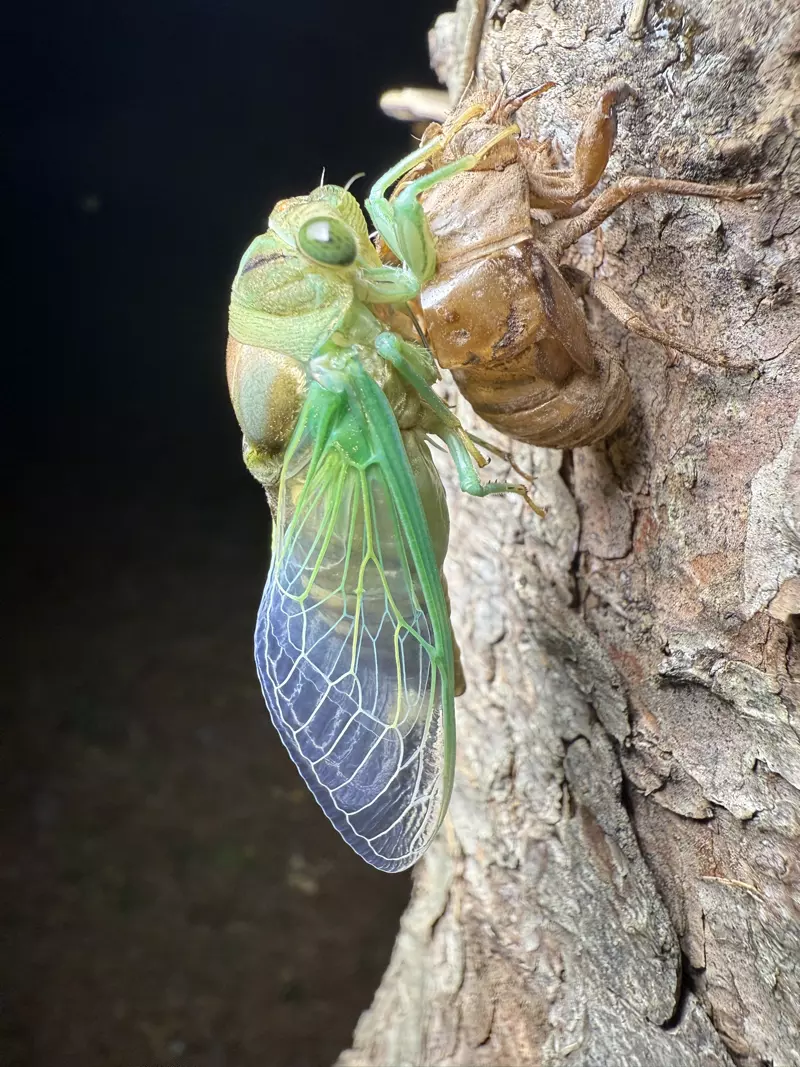
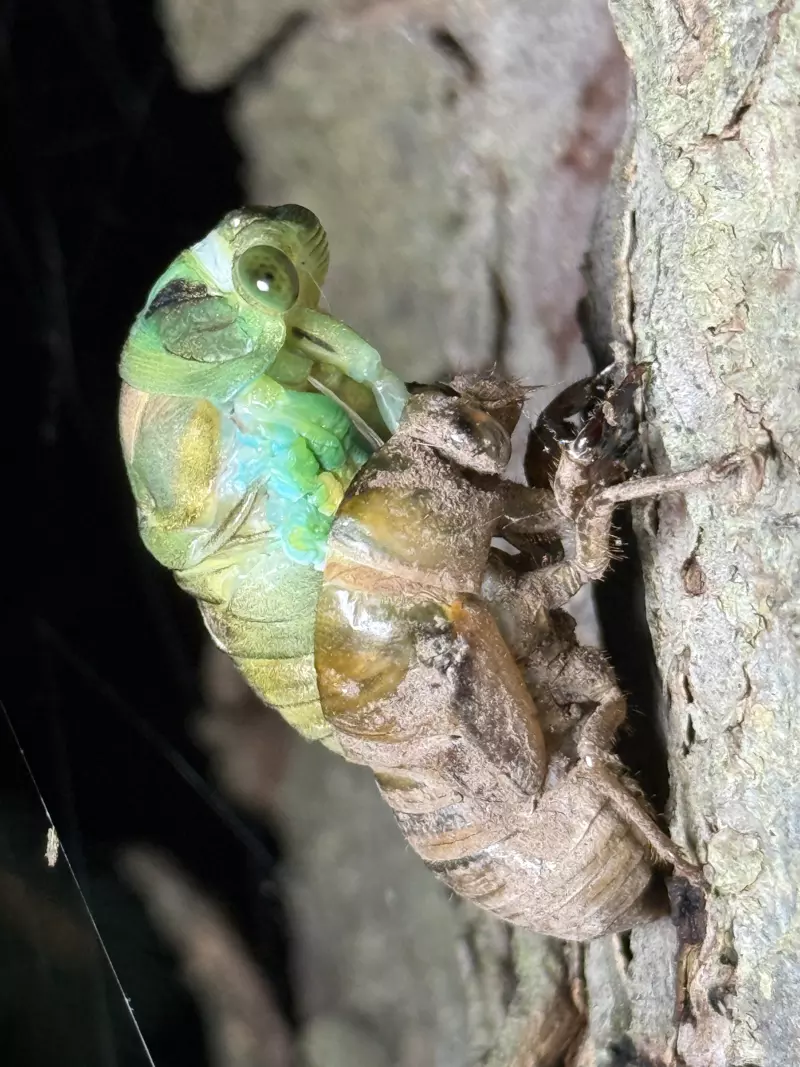
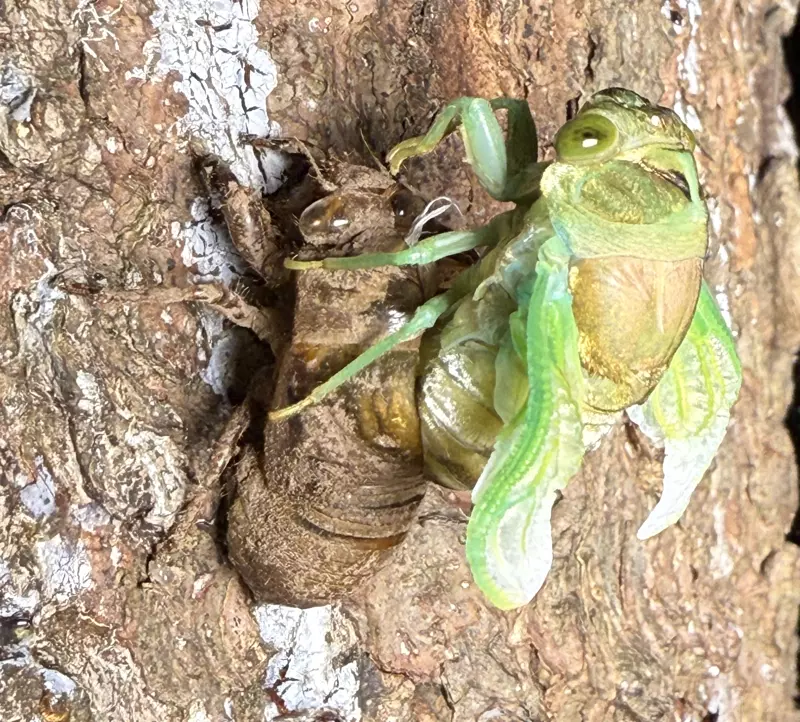
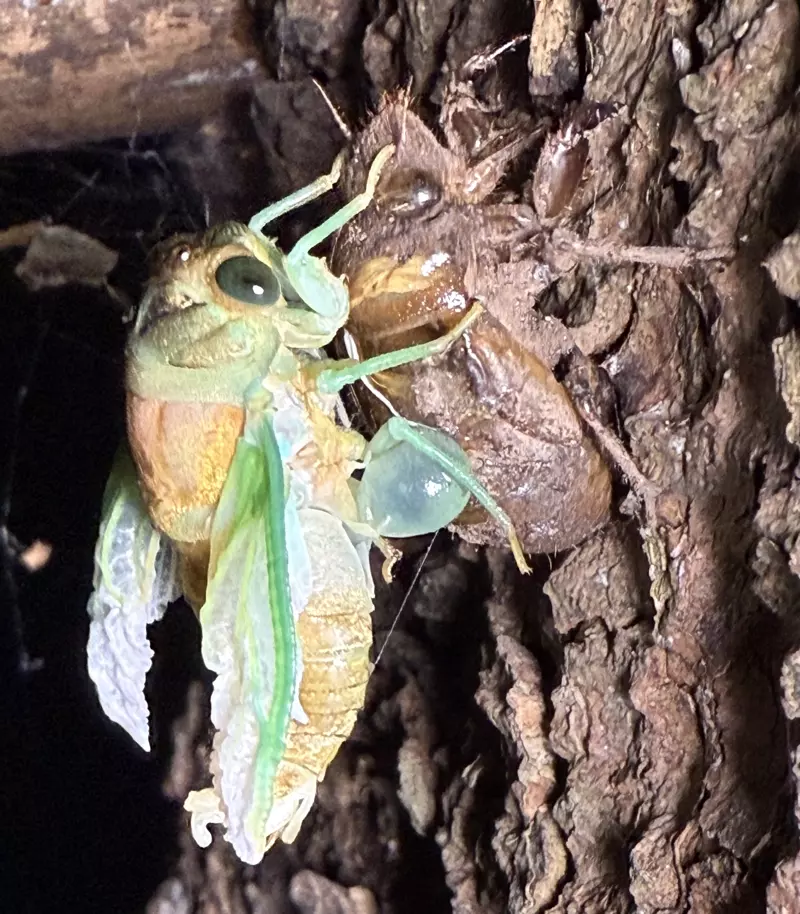
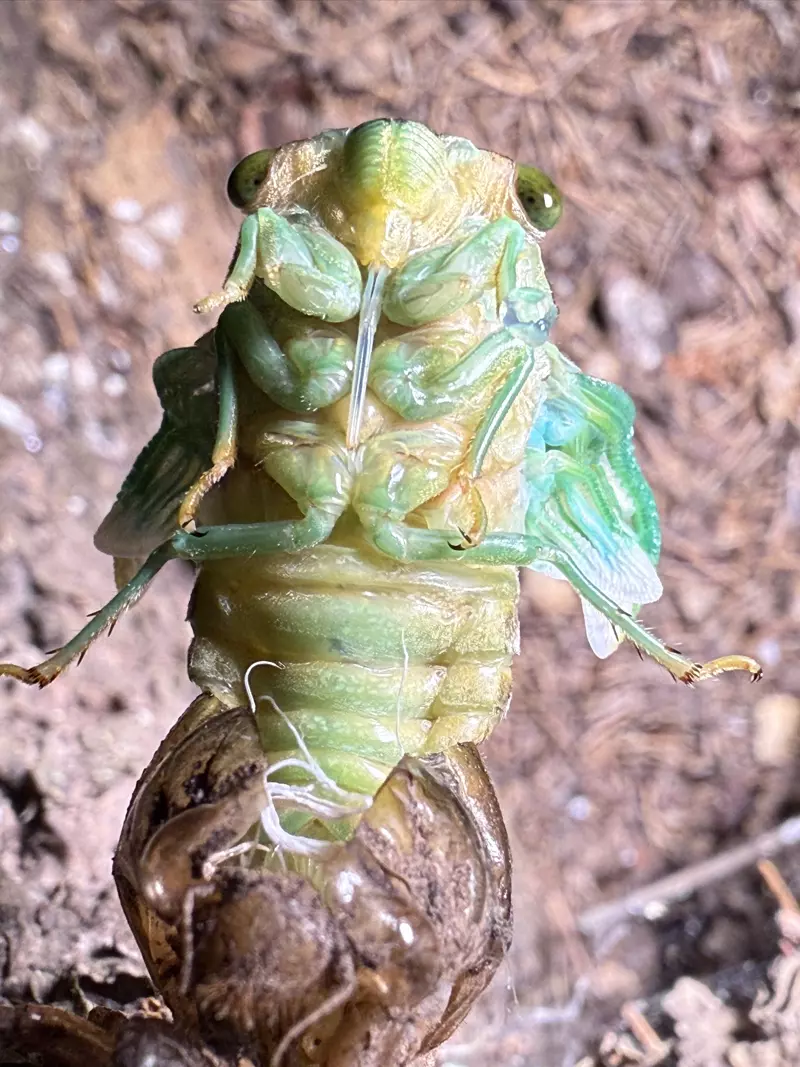
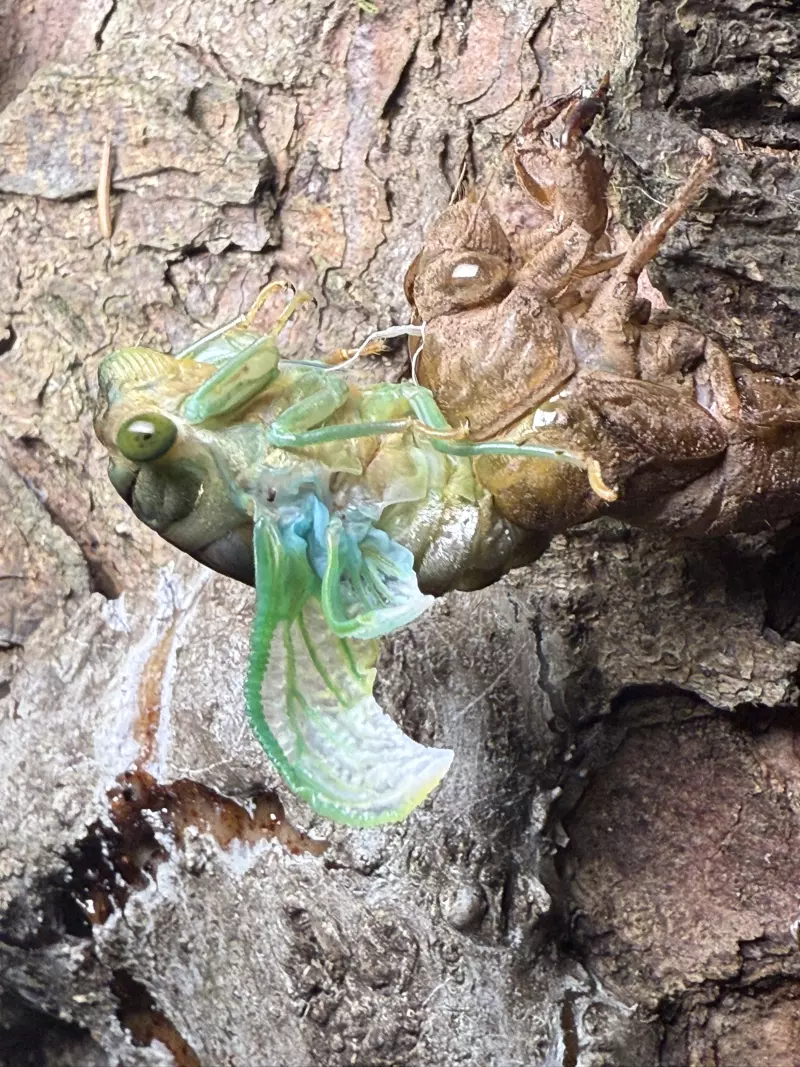
2025 Morning Cicada Review – teneral cicadas hardening wings

This is Part 3 of my 2025 Morning Cicada (Swamp Cicada, Neotibicen tibicen tibicen) review.

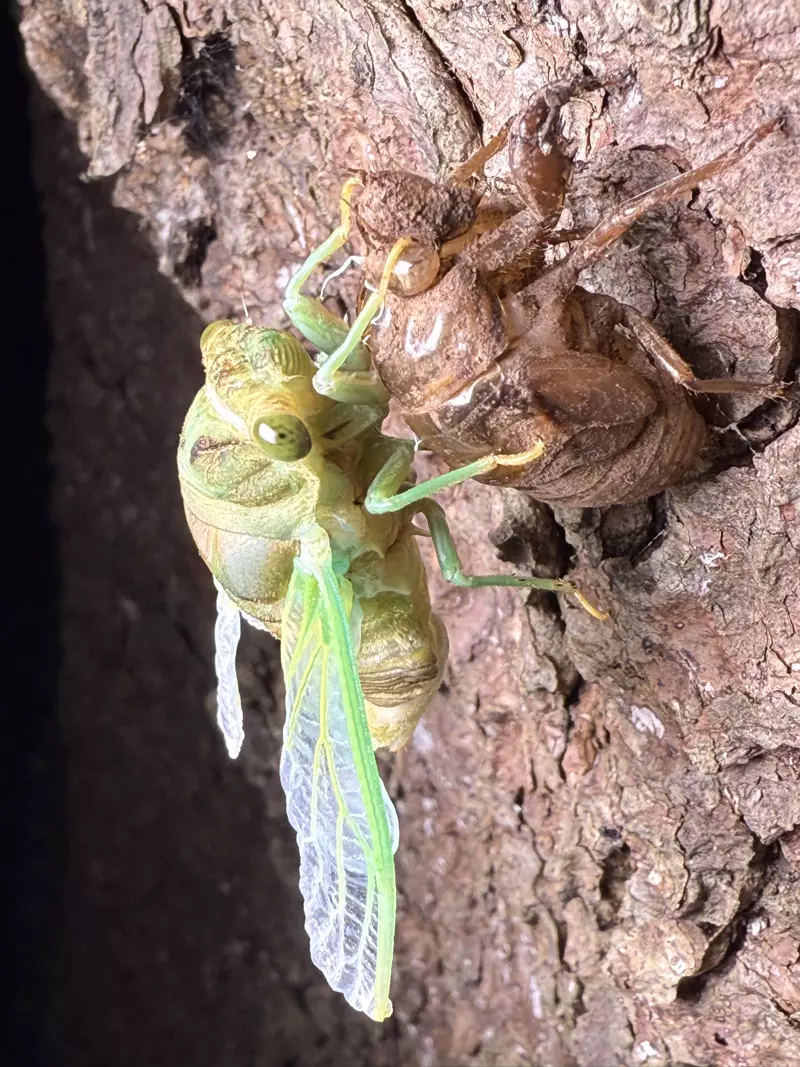
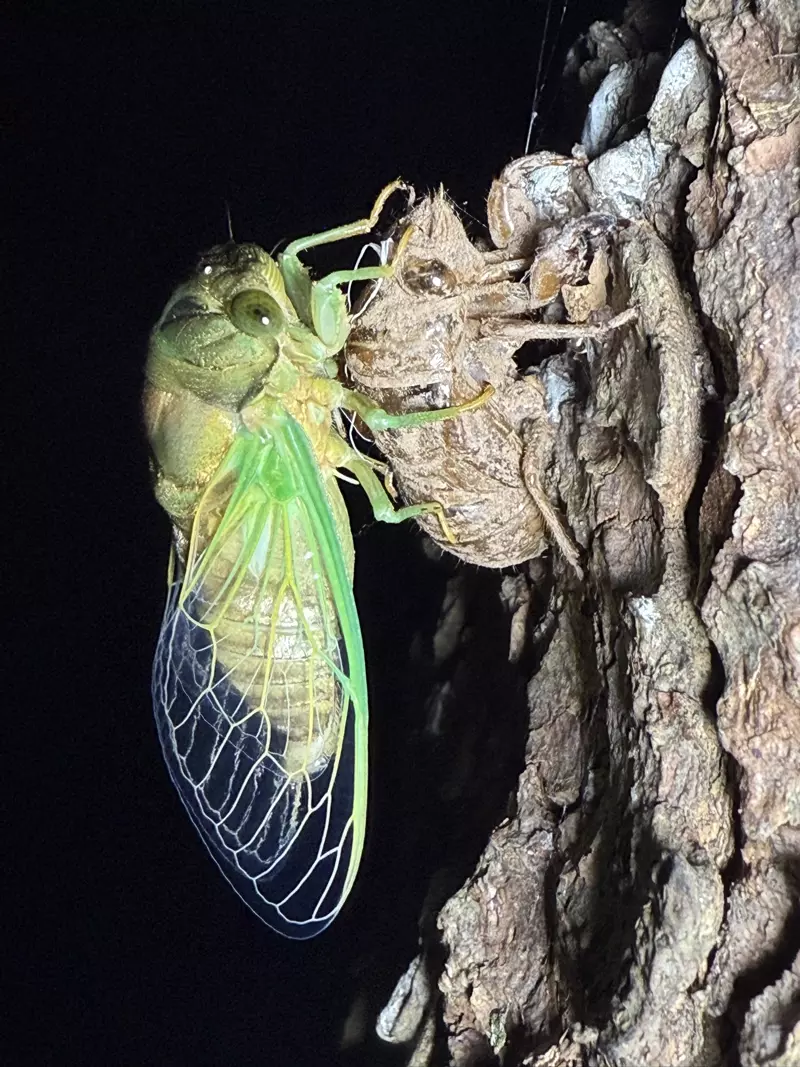
These photos are of cicadas that have recently molted from their nymphal skins and are expanding and hardening their wings.

Expanding wings, with a few wrinkles

Neotibicen tibicen tibicen hardening their wings.

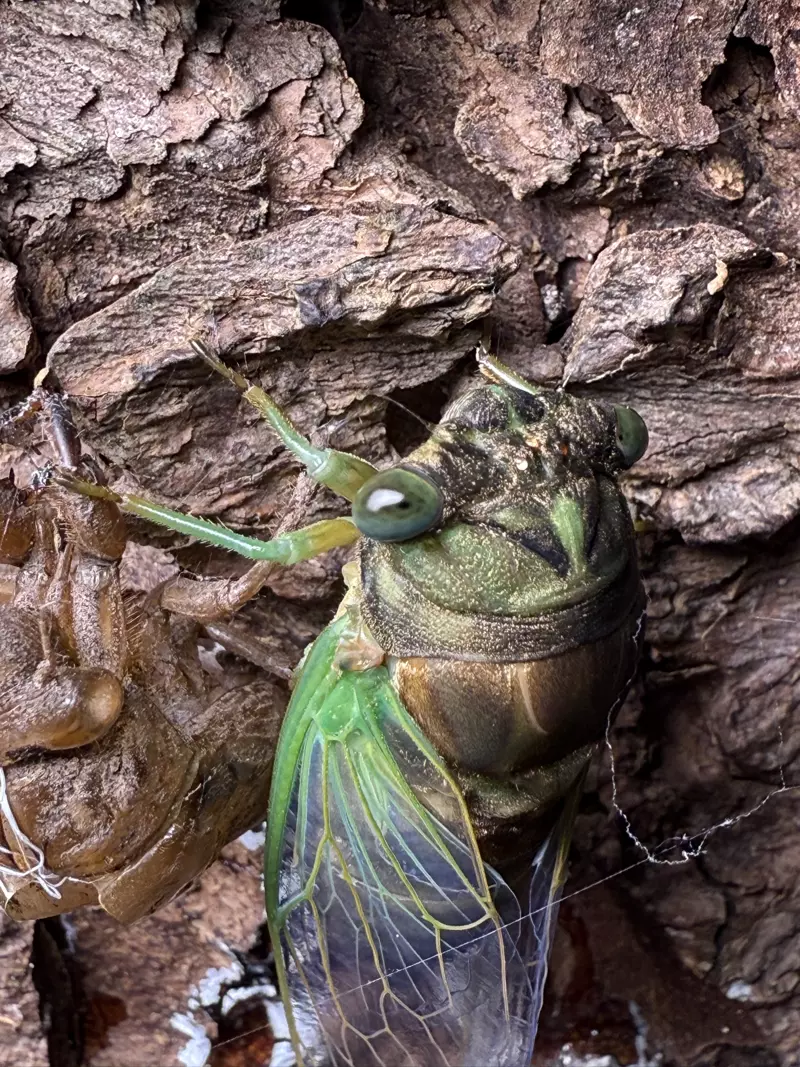
Wings hardening and folded against the cicadas’s body. Interesting blue-green eye color

Neotibicen tibicen tibicen hardening their wings.

Wings hardening and folded against the cicadas’s body

Neotibicen tibicen tibicen hardening their wings.

Neotibicen tibicen tibicen hardening their wings.

Go to Part 2 or Part 1!

Categories
Molting Neotibicen

2025 Morning Cicada Review – Molting Process

This is part 2 of 2025 Morning Cicada (Swamp Cicada, Neotibicen tibicen tibicen) photos.

A cicada pushing its way out of its skin:

The cicada pushing its way out of its skin.

The cicada out of its skin, beginning to inflate its wings.

The cicada out of its skin , starting to inflate its wings,

A hemolymph bubble on the cicada's wing. An injury that is usually not fatal.

A hemolymph bubble on the cicada's wing. An injury that is usually not fatal.

The cicada with every part but the end of its abdomen out of its skin.

The cicada with every part but the end of its abdomen out of its skin.

A cicada mostly out of its old skin and about to reach forward and grab the skin so it can pull its abdomen out.

The cicada mostly out of its old skin and about to reach forward and grab the skin so it can pull its abdomen out.

Now check out Part 1: the Nymphs or Part 3: teneral cicadas hardening wings.

Categories
Neotibicen Nymphs

2025 Morning Cicada Review – the nymphs

2025 was a good year for Morning (aka Swamp aka Neotibicen tibicen tibicen) cicadas in New Jersey. The nymph season lasted from the second week of July to the third week of August.

Each year I post the images and videos of Morning Cicadas that I take.

Here’s the first post in the 2025 series: nymphs!

A nymph crawling up a spruce tree

Neotibicen tibicen tibicen nymph starting to molt

A nymph crawling up a spruce tree

Neotibicen tibicen tibicen nymph starting to molt

A nymph perched and starting to molt

Neotibicen tibicen tibicen nymph starting to molt

And a playlist of all videos (not just molting)

Go to Part 2: Molting.

Categories
Fiji Periodical Raiateana Stamps Tacuini (Cryptotympanini)

The Nanai Cicadas of Fiji are back after 8-years! Fiji is issuing stamps to celebrate

The Nanai cicadas (Raiateana knowlesi (Distant, 1907)) of Fiji are back after 8-years, and Fiji is issuing stamps to celebrate their emergence.

Update! If you want to see what the Nanai look like, visit the Cicada Discussion, Science and Study Group on Facebook and view Elias Bonaro’s 9/22 post.

Nanai cicadas are special because they have an 8-year periodical cycle. They are found in the hills of Viti Levu island of the Fiji archipelago. They are also special because of the Legend of The Nanai and their importance to Fijian culture.

2025 Nanai Stamps

2025 Nanai stamps will be available from Post Fiji Pte Limited. They start shipping on the 25th of September (new date). See this BROCHURE – THE NANAI EMERGENCE for more information.

FDC - The Nanai Emergence

Nanai brochure cover

Nanai Cicadas Stamps from 2009

Here’s an image of Nanai stamps from 2009 (or maybe 2010):

Nanai stamps

More information about the Nanai

How do the Nanai (Raiateana knowlesi) compare to other cicadas around the world

The Nanai are similar to Magicicada cicadas in the United States in that they have precise periodic lifecycles. Nanai have 8-year cycles and Magicicada have 13 or 17-year cycles.

The Nanai are similar to North American Dog-Day cicadas, European Lyristes plebejus, and the Tacua speciosa of Malaysia & Indonesia, in that they belong to the same Tribe (Tacuini) and share similar anatomy like hidden tympani (the noise makers).

Categories
Cicadettini Huechys Philippines

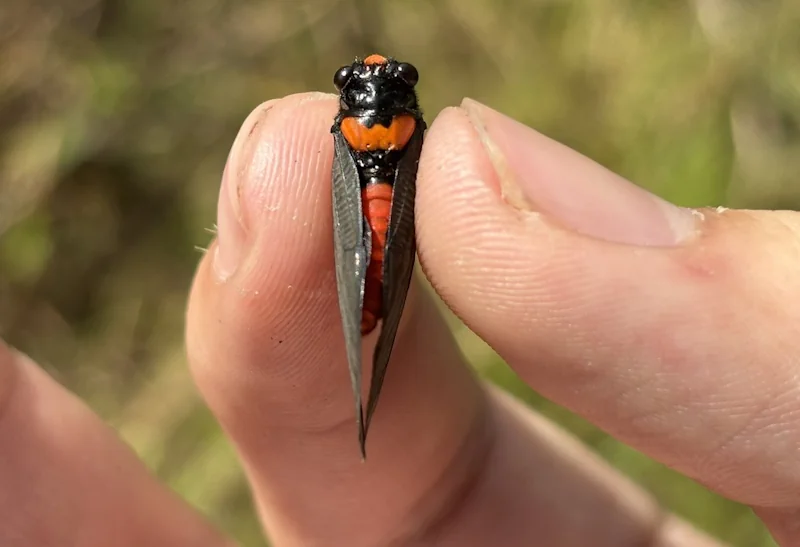
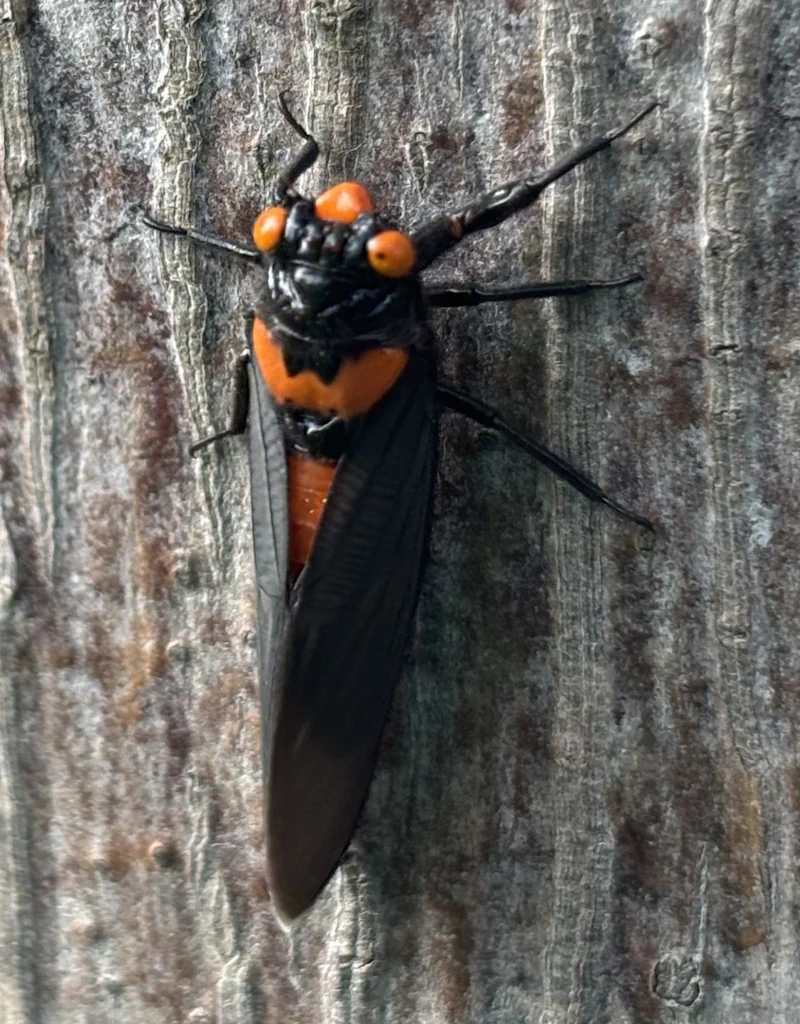
Huechys phaenicura (Germar, 1834) from Antique, Panay Is., Philippines

Neo Scott allowed us to share his images and sound files of the cicada Huechys phaenicura. Neo Scott is a cicada expert who you should follow on iNaturalist and X. He found the Huechys phaenicura cicada species in Antique, Panay Is., Philippines. Huechys phaenicura is related to “the medicinal cicada” Huechys sanguinea, and both cicadas belong to the sub-tribe Huechysina and tribe Cicadettini.

Photos of the cicada (Feb 25, 2025):

Huechys phaenicura Neo Scott 01

Huechys phaenicura Neo Scott 02

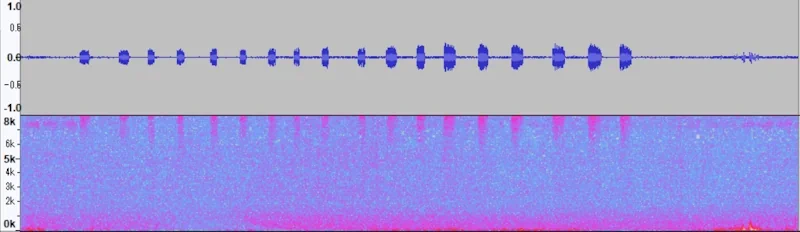
The cicada’s song (Feb 25, 2025):

Turn up the volume to hear it.

Huechys phaenicura Neo Scott 03

iNaturalist observations:

Categories
Coleman Cobbs Neotibicen Tacuini (Cryptotympanini)

Neotibicen similaris from Rapides Parish, Louisiana

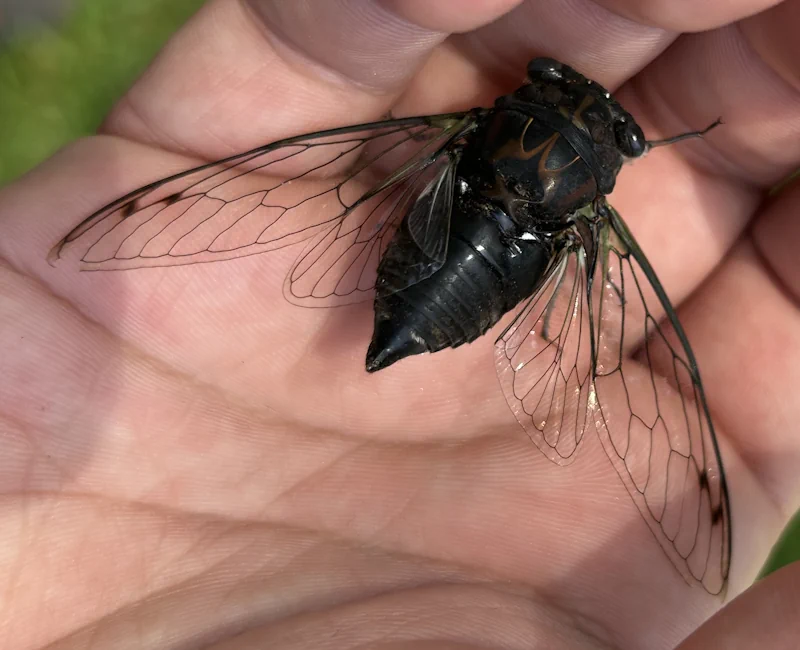
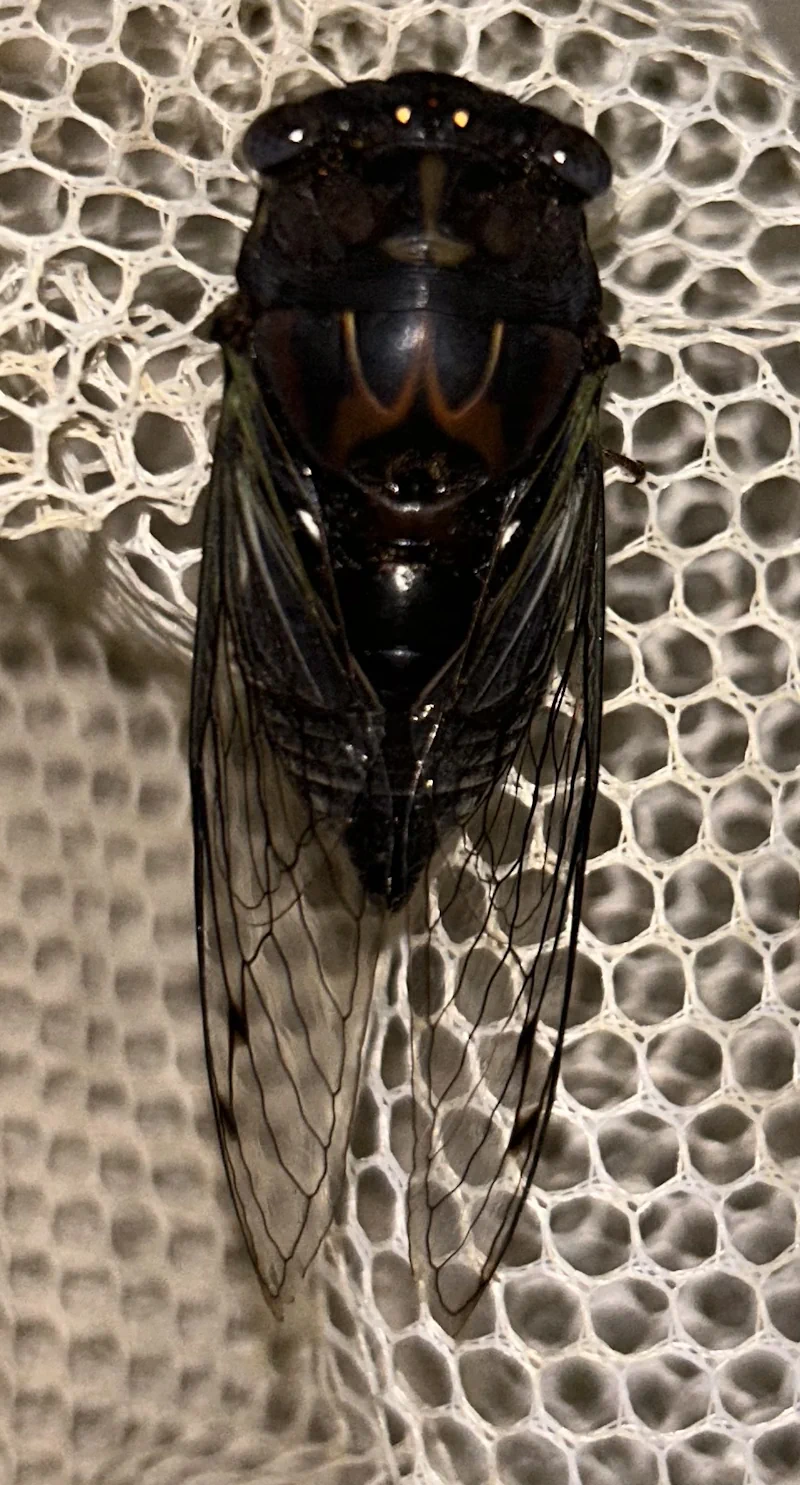
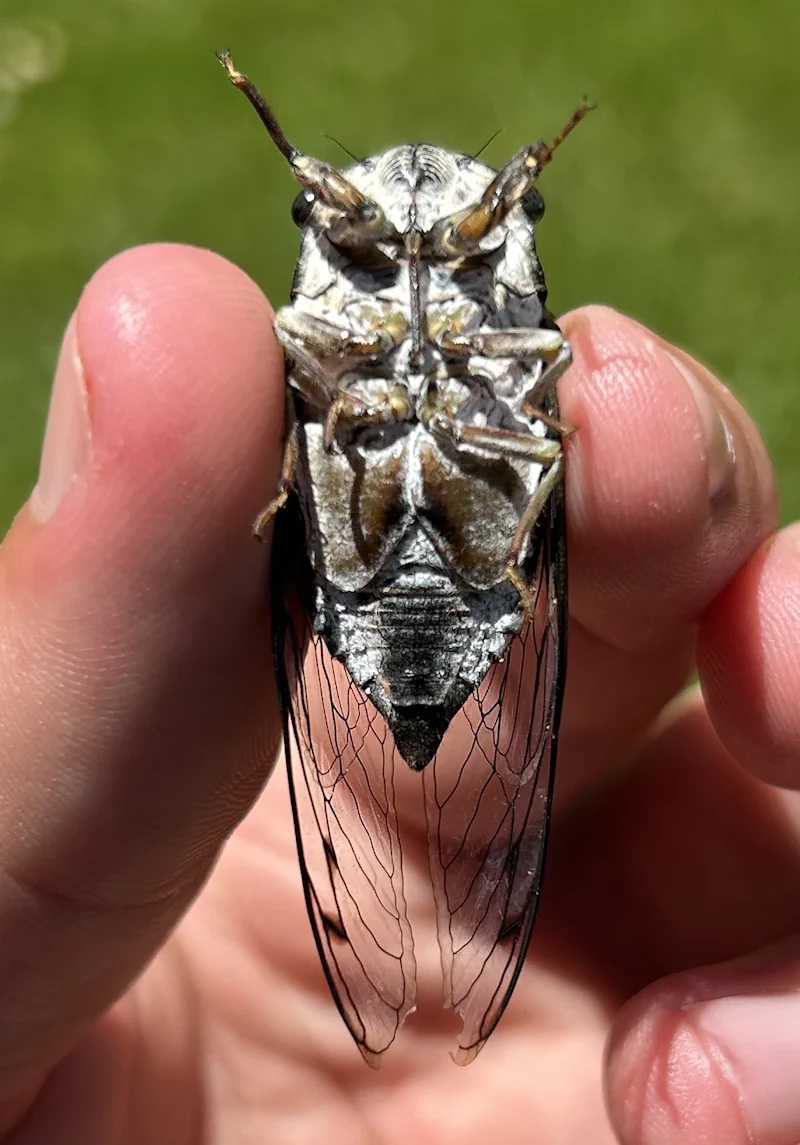
Thank you, Coleman Cobbs, for these photos of a Neotibicen similaris cicada. The cicada was found in from Rapides Parish, Louisiana. This cicada looks “similar” to many other species of Neotibicen cicadas aka “Dog Day”.

Neotibicen similaris

Neotibicen similaris

Neotibicen similaris