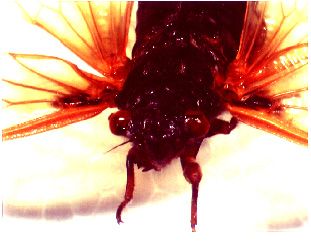
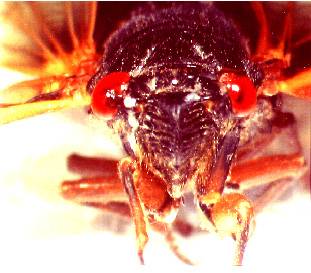
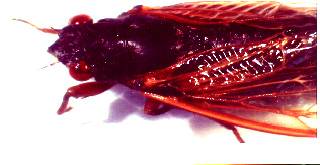
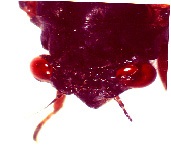
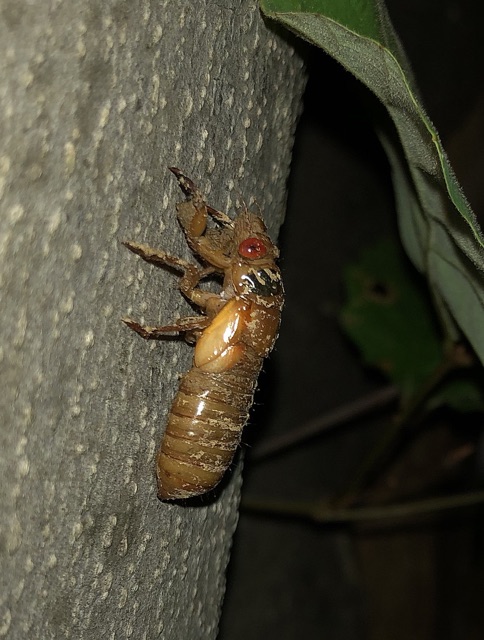
17-year Magicicada Photos by Gwen Elferdink from Brood X 2004.
 Cicada Mania
17-year Magicicada Photos by Gwen Elferdink from Brood X 2004.
It’s been about six weeks since the emergence of Brood VIII in Pennsylvania, Ohio, West Virginia and Oklahoma. Now (first week of August) is a good a time as any to check for periodical cicada nymphs that have hatched from eggs laid in branches. Once they hatch they’ll find their way to the ground, where they’ll find and begin feeding on roots for the next 17 years.
Look on branches where cicada laid their eggs.
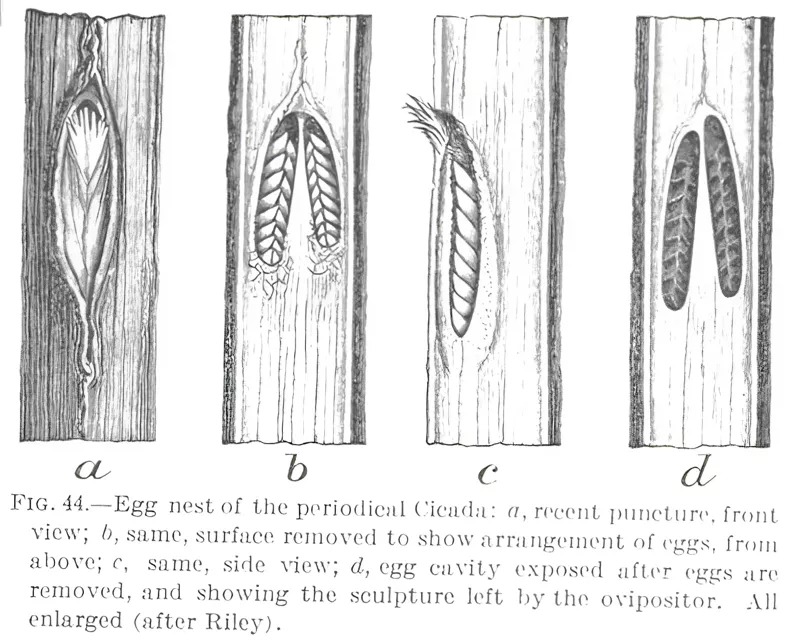
An illustration of egg nests (Marlatt 1907 Egg Nest Detail):
A nymph on a branch with adult male finger for comparison: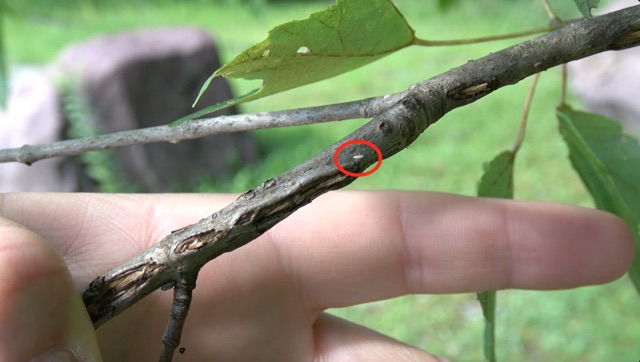
Close up: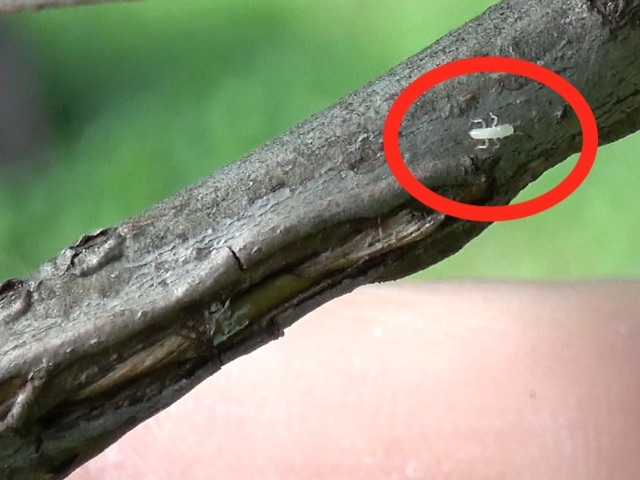
Another close up: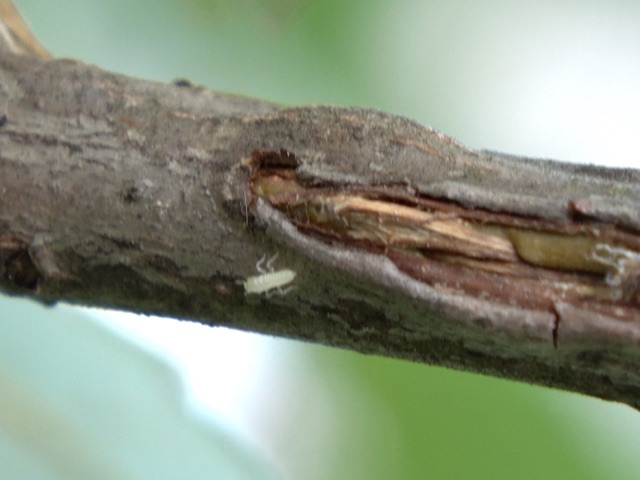
This year Brood VIII periodical cicadas emerged in the Pittsburgh area, and I traveled to see and map them. Unfortunately, I only had 3 days, so I only saw the western side of the Brood.
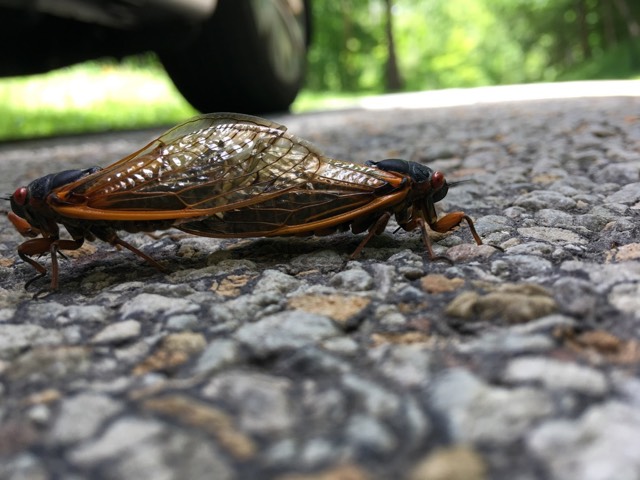
All things considered — including cool, cloudy weather (which cicadas don’t like as much as hot & sunny) and a very rainy spring — Brood VIII was the least impressive brood I’ve witnessed, in terms of the sheer number of cicadas. I hope no one in the Pittsburgh area takes offense to that statement — Brood VIII is your brood, and you should be proud of it. It is just that as we humans build more and more, and continue to alter the environment, the numbers of cicadas will steadily dwindle. and I think we’re seeing that happen to Brood VIII.
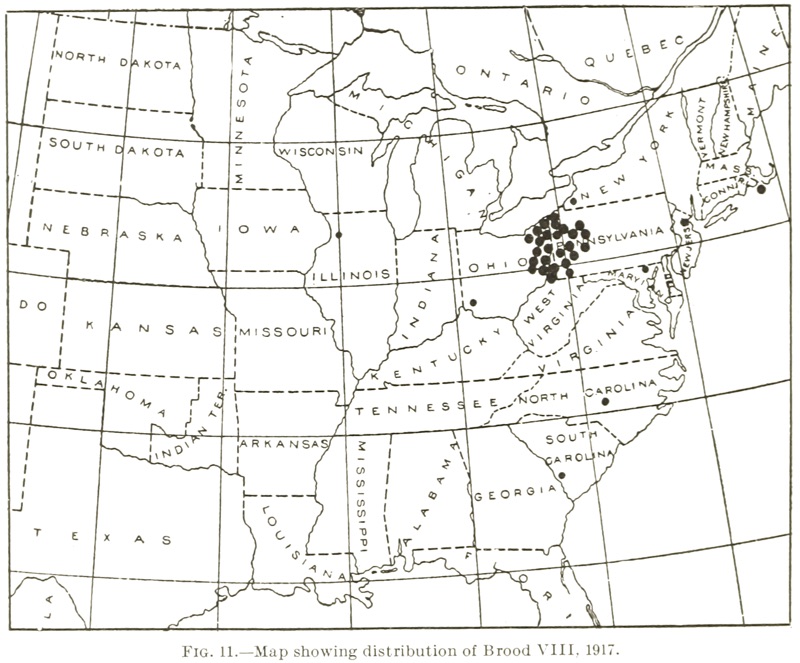
Here’s an impromptu map of the places I saw cicadas:
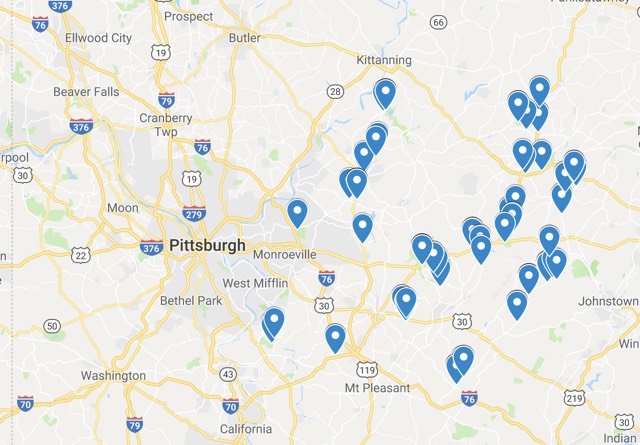
And a list of places:
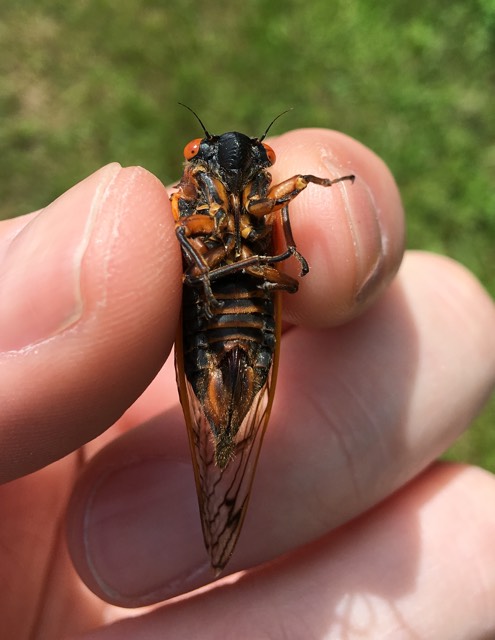
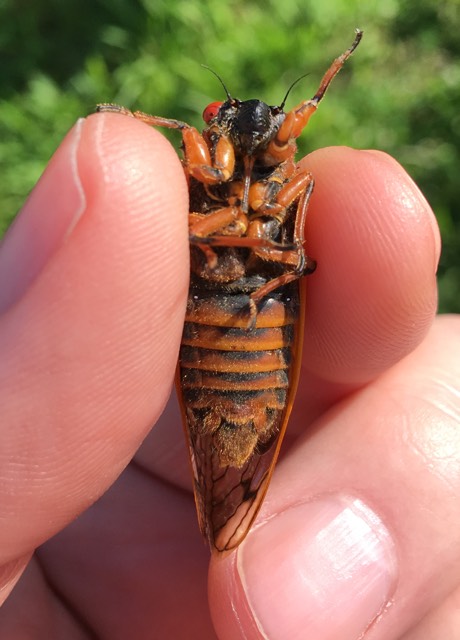
And some photos:
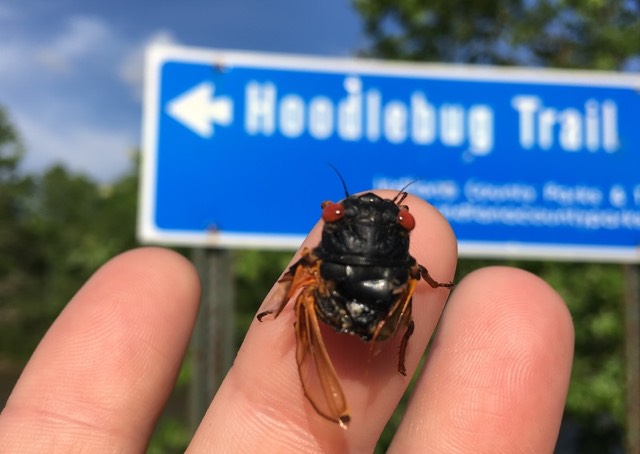
Video of the amazing cicada that was just a head.
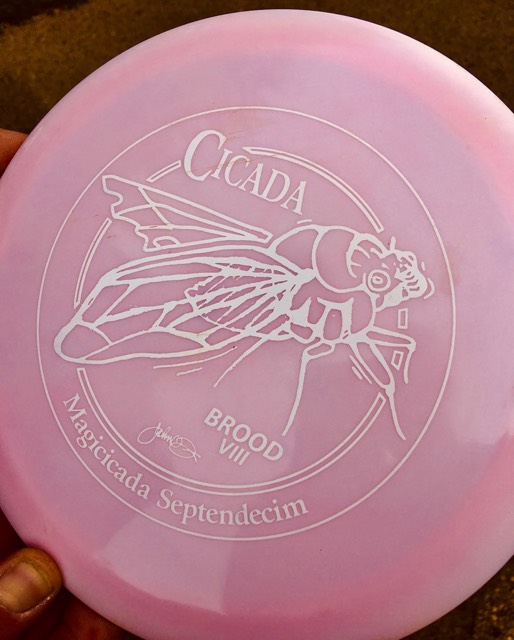
A very cool Brood VIII cicada frisbee:
Cicada Safari App Frequently Asked Questions:

Gene Kritsky working with the Center for IT Engagement at Mount St. Joseph University in Cincinnati.
Probably Gene Kritsky and the Center for IT Engagement is your best route. Be polite. The app has 250,000 users and only a handful of people to approve cicada sightings.
Gene is the Charles Lester Marlatt of the 21st century. Gene is a periodical cicada expert, researcher & professor. Buy his latest book, Periodical Cicadas: The Brood X Edition, now.
Choose wisely: Google Play Store or Apple App Store.
As of June 1st 2021, over 250,000 people have downloaded the app.
Yes, you can! See a map of sightings from the Cicada Safari app.
Of course the app has a website. Here’s the website.
Judging by screenshots of the app, it looks like you can 1) identify cicadas, 2) take a photo and share it, 3) map the location where you found it, 4) compete with other cicada scientists for the most cicadas found. Looks that way at least. The app lets you submit cicadas photos of any species.
Try the iNaturalist apps.
Not that I know of, but you can always ask Gene Kritsky. Feel free to leave a comment on this website or the Facebook Cicada Discussion Group.
Cicada Mania is not affiliated with the Cicada Safari app. Cicada Mania is not paid to endorse or promote it. We promote it because we like it.
Brood VIII will next emerge in 2036.
Periodical cicada Brood VIII (Eight) has emerged in 2019 in western Pennsylvania, eastern Ohio, and the tip of the northern panhandle of West Virginia, as well as Oklahoma (which was unexpected). The last time this brood emerged was in 2002.
What, when, where, and why:
What:
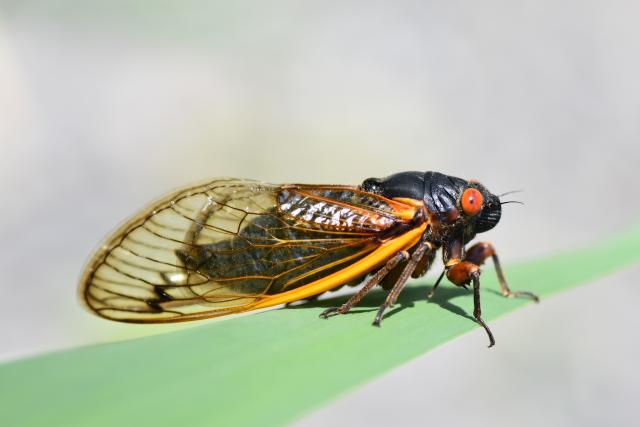
When: Typically beginning in mid-May and ending in late June. These cicadas will begin to emerge approximately when the soil 8" beneath the ground reaches 64 degrees Fahrenheit. A nice, warm rain will often trigger an emergence.
Other tips: these cicadas will emerge after the trees have grown leaves, and, by my own observation, around the same time Iris flowers bloom.
Where:
Cicadas @ UCONN has the most up to date maps, including this modernized Google map.
You can report cicada sightings using the Cicada Safari App, available for iPhones/iOS and Android phones. The app helps you identify periodical cicada species, take photos and add your findings to a map.
More Location Tips:
Visually, the cities mentioned above look like this: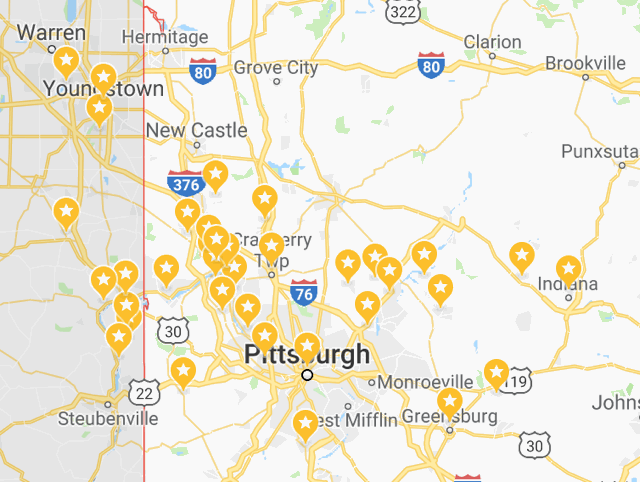
Why: Why do they emerge in massive numbers every 17-years? In a nutshell, the long life cycle has helped them avoid gaining a specific above-ground predator, and the massive numbers allow them to satiate predators in general, allowing enough to survive and reproduce.
Bonus content:
Video of newly emerged periodical cicada nymphs:
Magicicada cicada nymph mania from Cicada Mania on Vimeo.
More facts and fun:
A new paper about periodical cicadas! View it: https://peerj.com/articles/5282/
“The periodical cicada four-year acceleration hypothesis revisited and the polyphyletic nature of Brood V, including an updated crowd-source enhanced map (Hemiptera: Cicadidae: Magicicada)”
Authors: John R. Cooley, Nidia Arguedas, Elias Bonaros, Gerry Bunker, Stephen M. Chiswell, Annette DeGiovine, Marten Edwards, Diane Hassanieh, Diler Haji, John Knox, Gene Kritsky, Carolyn Mills, Dan Mozgai, Roy Troutman, John Zyla, Hiroki Hasegawa, Teiji Sota, Jin Yoshimura, and Chris Simon.
Abstract:
The periodical cicadas of North America (Magicicada spp.) are well-known for their long life cycles of 13 and 17 years and their mass synchronized emergences. Although periodical cicada life cycles are relatively strict, the biogeographic patterns of periodical cicada broods, or year-classes, indicate that they must undergo some degree of life cycle switching. We present a new map of periodical cicada Brood V, which emerged in 2016, and demonstrate that it consists of at least four distinct parts that span an area in the United States stretching from Ohio to Long Island. We discuss mtDNA haplotype variation in this brood in relation to other periodical cicada broods, noting that different parts of this brood appear to have different origins. We use this information to refine a hypothesis for the formation of periodical cicada broods by 1- and 4-year life cycle jumps.
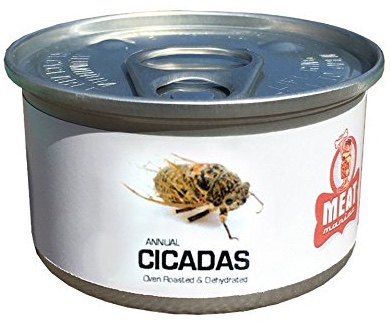
Update (July 2018): A company called Meat Maniac sells cicadas in a can. Don’t know which species, but they have a “nutty flavor”.
Also, send me a box of these cicadas from China… um, I mean Chinese City Tells Citizens to Fight Bug Infestation By Eating Them.
Also, read this amazing story about how Brood VII cicadas helped kept the Onondaga Nation alive during a time of famine.
The original article from 2006:
[WARNING:] Cicadas, 17-year cicadas at least, are well-known bioaccumulators of mercury. If consuming mercury is a concern, you should not eat cicadas.
Dogs, cats, squirrels, fish, and people can’t stop eating cicadas. Are they crazy, or “crazy like a fox”? (Foxes will eat them too.)

People want to know: “is it safe for my pets to eat cicadas”. The truth is in most cases your pets will be fine if they eat a few cicadas, however, you still need to be cautious and keep a close eye on your pets. Watch them for odd behavior, and don’t let them gorge themselves. Be cautious: the Humane Society has warned: “Cicadas Dangerous to Pets” [the original link is gone].
Pet-related concerns:
Bottom line: play it safe, and don’t let your pets eat cicadas if you can help it.
Whether they’re curious, hungry, or doing it for the shock value, people are eating cicadas. Asian peoples have eaten cicadas for centuries, and there are records of Native Americans eating cicadas. People joke that they’re Atkins friendly [also no gluten]. I’ve heard they taste like asparagus, popcorn, minty shrimp, and piney shrimp — YUMMY PINE.
A man in Bloomington Indiana had an allergic reaction to cicadas after eating 30. He was also allergic to seafood — both cicadas and shrimps are arthropods so this makes sense.
[Note to self, “Do it, Dan, don’t be a wimp!”]
People related concerns:
People related links:
Bottom line: You’re not a contestant on Fear Factor [a reality TV show in the 00s]. Why eat cicadas when you can choose from many of the fine menu choices at Applebees [a chain restaurant]?
If a creature has a mouth or some other mechanism to digest cicadas, it likely will try to eat them. Cicadas make great fish bait. Squirrels (yes, they’re nuts for cicadas too), birds, possums, raccoons, foxes, other insects, fungi… they all love cicadas.
Bottom line: let nature do the dirty work and clean your yard one bite at a time.
Tom, Cicada Gormandize:

Brood VII will return in 2035.
Update (June 17th): I just got back from Onondaga county and I can report that the emergence is in full swing. Lots of chorusing and mating. The best locations are around the Onondaga Nation reservation. If you visit, please do not trespass into the reservation — there are plenty of cicadas outside of it. John Cooley of Cicadas @ UCONN said there are also reports of cicadas in the Green Lakes State Park.
Here’s a video montage:
And a gallery:
Brood VII Magicicada septendecim 2018 Syracuse.
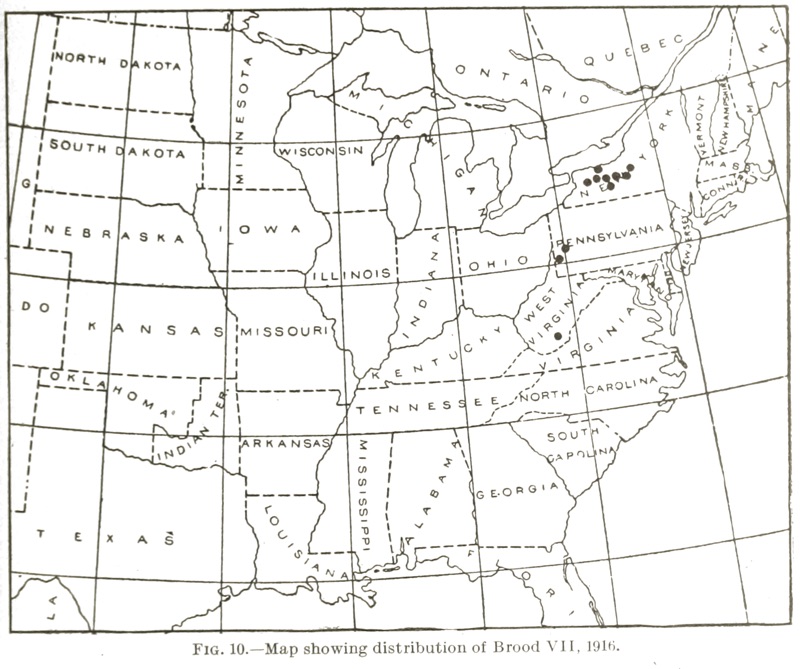
Periodical cicadas (Magicicada septendecim, people call them “locusts”) will emerge in the Finger Lakes area of New York state in 2018.
This group of cicadas is called Brood VII (7) and is known as the Onondaga Brood. This brood is shrinking, and will likely be the next periodical cicada brood to go extinct
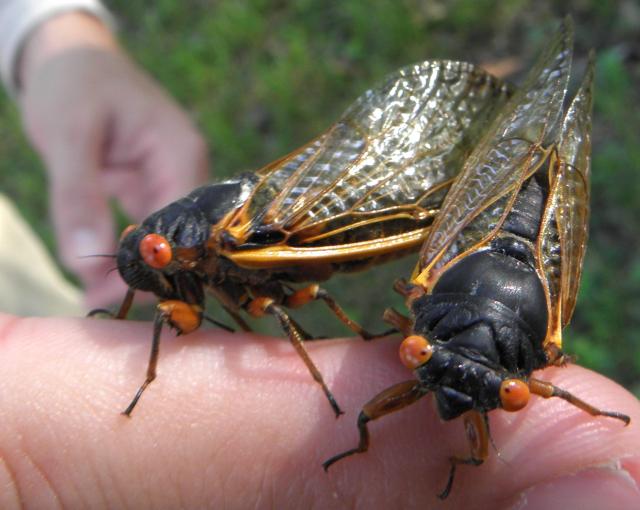
A pair of Magicicada septendecim:
More details:
Further reading / viewing / listening:
Papers about Brood VII
Gene Kritsky, author of Periodical Cicadas. The Plague and the Puzzle, let us know that many of what are likely Brood X cicada stragglers have emerged around the Mount St. Joseph University campus, in Cincinnati, Ohio. It’s likely that cicadas are emerging elsewhere in the Cincinnati area.
This is significant because Brood X cicadas should not emerge until 2021.
This is a photo of a Magicicada periodical cicada emerging on the MSJ campus, courtesy of Gene:
Quick facts:
Update: in addition, two Brood X stragglers were reported on 5/21 in Bloomington, Indiana (thanks Rhonda and Leah).
Original post:
Cicada researcher John Cooley has received the first cicada sighting of the year — a Brood XXIII straggler in western Tennessee!! 3 years later than expected.
So, what’s a straggler? A straggler is a periodical cicada that emerges sooner or later than it is expected to emerge. In this case, a cicada with a 13-year lifecycle emerged in 16 years — 3 years off.