Google
 
www.cicadamania.com Web

Dedicated to cicadas, the most amazing insects in the world.

November 30, 2007

Australian Cicada Information

Filed under: Australia, Cicadas Misc., David Emery — Dan @ 4:02 pm

The many colors of the Cyclochila australasiae

I asked Dr. David Emery to explain the different colors of the Cyclochila australasiae, a.k.a. the Green Grocer, Yellow Monday, Blue Moon, Masked Devil, etc. David has allowed me to use his explanation on the site, and here it is:

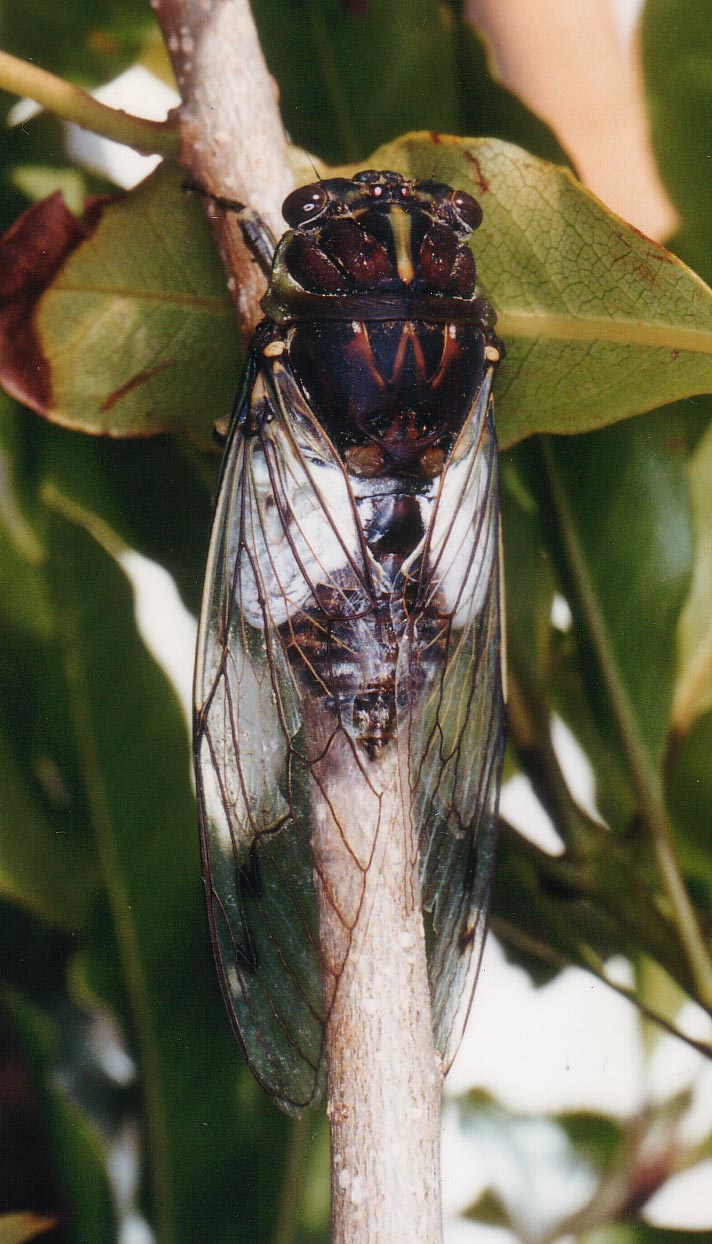
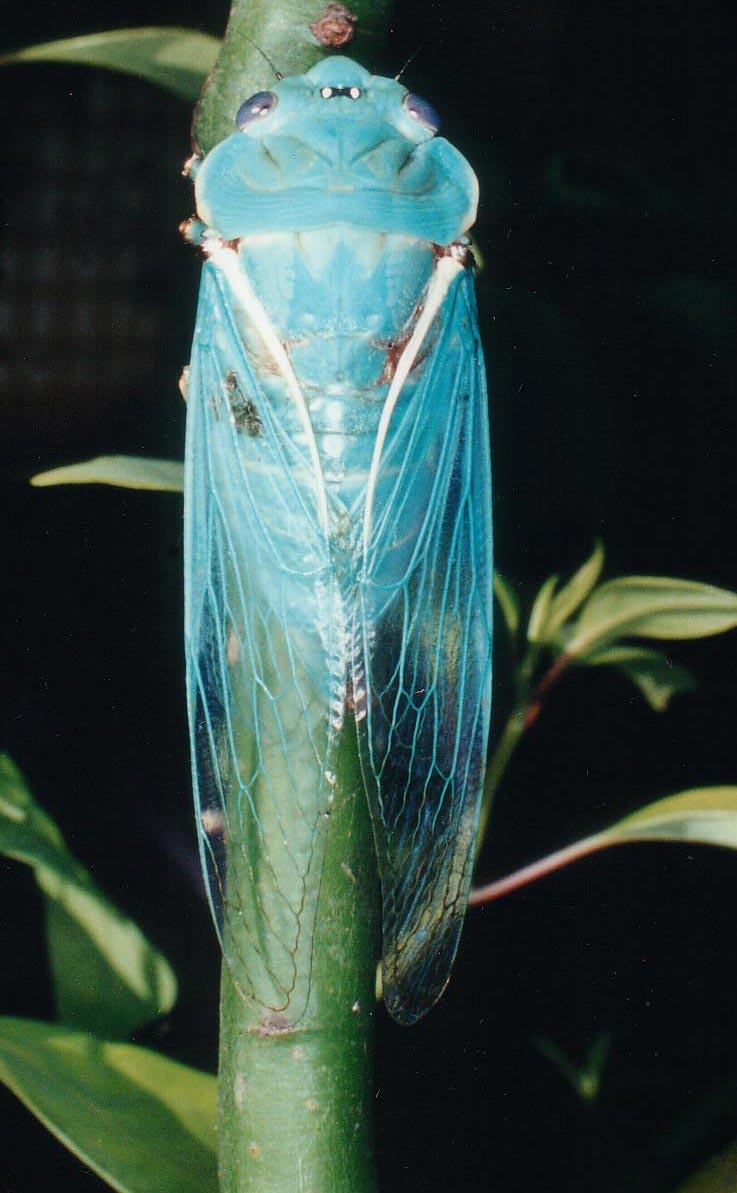
Most “green” cicadas like our GG (Green grocer - Cyclochila australasiae) are coloured from the mixture of yellow and blue pigments. It is quite common for the blue to be missing to various degrees in GGs, and they exhibit shades of lighter green to yellow (even close to orange) and are then called “Yellow Mondays!”. It is also common for the blue pigment to fade in collections and so many “green” species turn a dull beige or brown. This can be fixed with a 24h soaking in 2.5-10% neutral-buffered formalin immediately after killing (or inject formalin after they die). MUCH more rarely, the yellow pigment can be missing and then we get the “Blue Moon”- love those purple eyes! In fact, having collected or spotted more than 10,000 GGs in my time, I have not caught a Blue Moon. My daughter Samantha, found the one in the photo when she was 4 years old, and another when she was 7!!

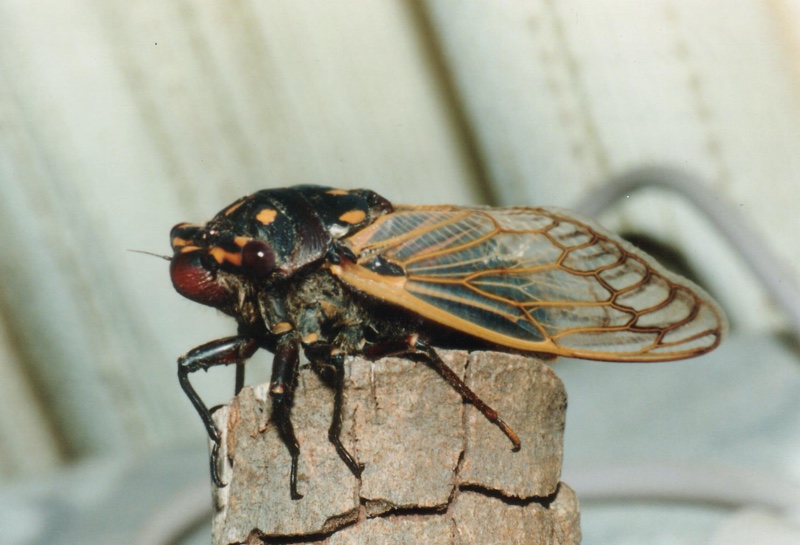
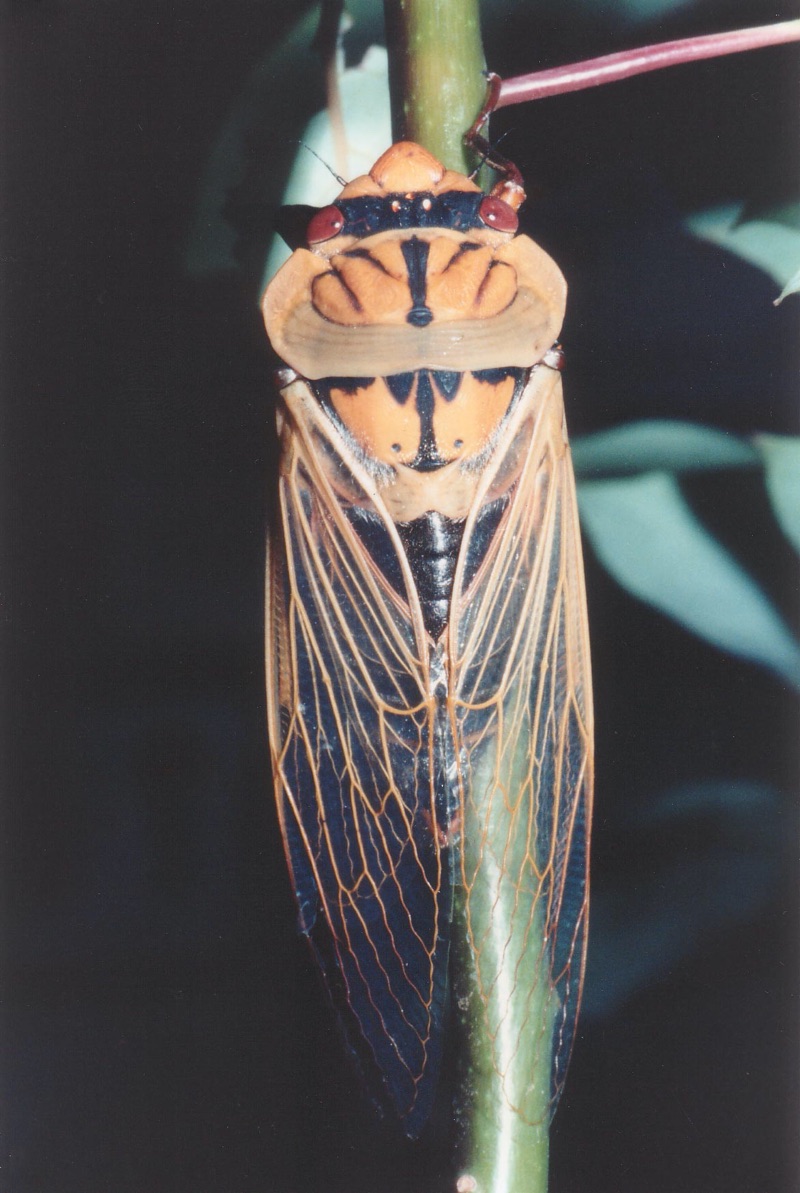
The orange-black, “masked devil” morph of the GG seems associated with altitude and these progressively appear with increasing frequency amongst GG populations above 500m in the mountains west of Sydney. For example, at Glenbrook, (elevation 150m) they are <5% of the population whereas at Hazelbrook and Blackheath (670m and 1200m, respectively), they increase to around 95% of the population. It was thought that cold underground temperatures during larval and nymphal development might also contribute, but the huge numbers of green GGs west of our ranges argue against a direct effect of temperature alone. Here the winter temps are very cold too, just as cold as the mountains. So just how these “melanisation” effects are mediated remain unresolved- one of life’s tantalizing mysteries!

Here are photos of cicadas by David Emery. Take a look.

Australian Cicada Websites

  1. The Chambers Wildlife Rainforest Lodges has a page of cicada facts and photos of Northern Greengrocers and a Green Baron from Tropical North Queensland.
  2. The AusEmade: Cicada page features cicada facts, as well as a very nice matrix of Common cicada names, their Scientific names and where they can be found. The site was just updated with Orange Drummer photos.
  3. The Brisbane Insects site has a selection of pages devoted to cicadas found in the Brisbane area. There are information and photos of Double Drummers, Clangers, White Drummers, Brown Bunyips, Razor Grinders, Bladder Cicadas, Floury Bakers, Thin-striped Wattles, Small Bottle, Either Bark Squeakers, and Small Bark Squeakers.
  4. The CSIRO site has a great list of cicadas by Scientific name; there are photos for each species, general information including where they are found.
  5. The Insect Reference Collection Database has a fantastic selection of 40 cicada images organized by Scientific and Common name. You’re going to have to scroll until you get to the Cicadidae section, but it’s worth it.
  6. The Summer of Singing Cicadas page on the Scribbly Gum site is filled with excellent information including cicada names, keeping cicadas as pets, their sound, their life cycle, The Black Prince, cicada myths and where they can be found.
  7. The cicadas of central eastern Australia is large site with many pages filled with Australian cicada information.
  8. Some information about cicadas is a web widget you can put on your site or blog that features information about Australian cicadas.

Ozzie Cicadas: Masked Devil

Filed under: Australia, David Emery — Dan @ 12:58 pm

Here is a Masked Devil cicada (Cyclochila australasiae) photo taken by David Emery. A Masked Devil is the same species as the Green Grocer and Blue Moon.

Masked Devil

November 29, 2007

Ozzie Cicadas: White Drummer cicada

Filed under: Australia, David Emery — Dan @ 12:49 pm

Here is a White Drummer cicada (Arunta perulata) photo taken by David Emery.

White Drummer

November 28, 2007

Ozzie Cicadas: Redeye cicada

Filed under: Australia, David Emery — Dan @ 12:39 pm

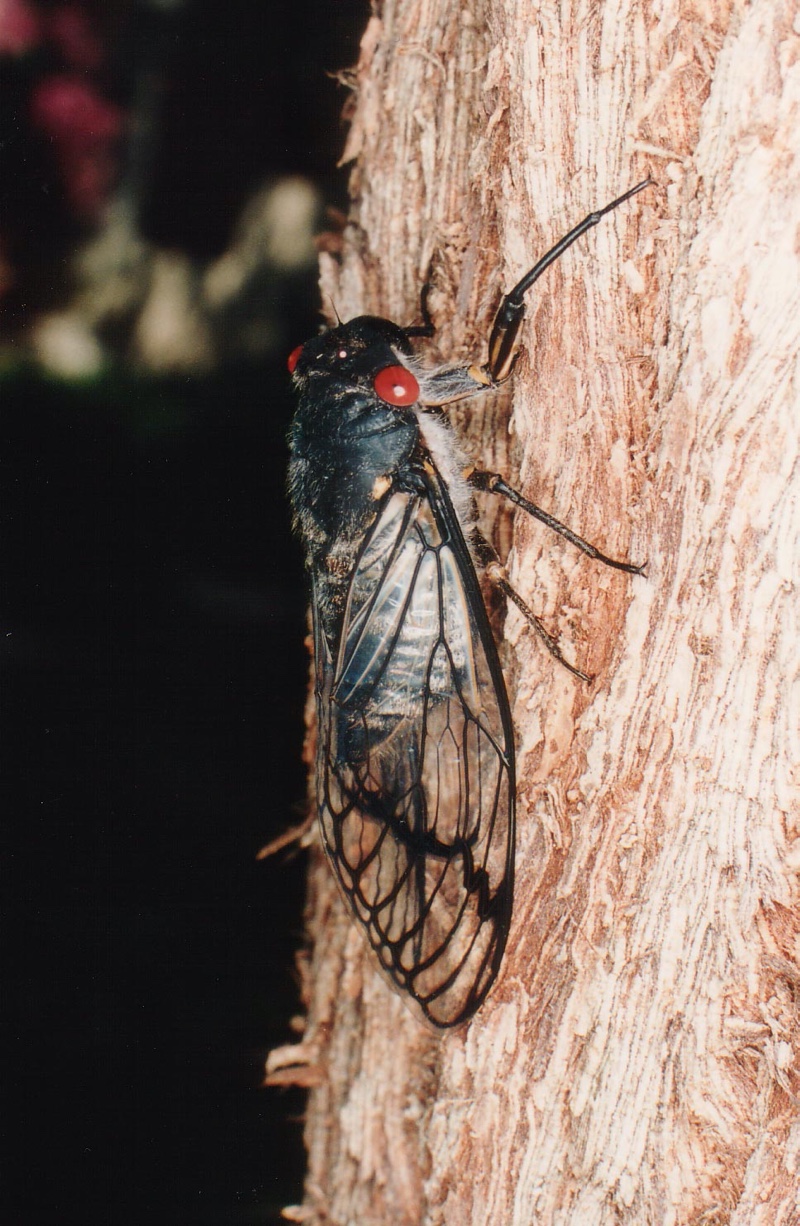
Here is an Redeye cicada (Aleeta curvicosta) photo taken by David Emery. The Redeye is also know as the Cherryeye.

Redeye cicada

November 27, 2007

Ozzie Cicadas: Cherry Nose cicada

Filed under: Australia, David Emery — Dan @ 7:35 pm

Here is an Cherry Nose cicada (Macrotristria angularis) photo taken by David Emery. The Cherry Nose is also know as the Whiskey Drinker.

Cherry Nose cicada

Ozzie Cicadas: Blue Moon

Filed under: Australia, David Emery — Dan @ 6:26 am

More Ozzie Cicada photos have come in. Here is an incredible Blue Moon taken by David Emery (found by his daughter). The Blue Moon is the same species as the Green Grocer (Cyclochila australasiae).

Blue Moon

I’m going to post one or two new photos every day, so stay tuned….

November 25, 2007

Late cicada season in the U.S.

Filed under: Cicadas Misc., Paul Krombholz — Dan @ 6:23 pm

Cicada Mania contributor Paul Krombholz heard a cicada just a few days ago.

On Nov. 21st the temperature got up to 80 and I heard a T. figurata singing. This is by far the latest cicada song I have heard in the Jackson, MS and surrounding area. We have already had several frosts. Usually I hear the last song the first week of November.

Cicadas in late November in the U.S.A. — that’s remarkable.

More cicada photos from Australia

Filed under: Australia, Kevin Lee — Dan @ 6:13 pm

More Australian cicada photos from Kevin Lee. Quotes by Kevin.

Click the images for a larger (3072 x 2304) version:

This is a double drummer who got stuck whilst emerging so he never got to fly and sing.. but he still saw the light of day and was in the room with the other cicadas and had a bit of company. But if I had left it on the tree he would have been eaten alive by ants.

This is a double drummer who got stuck whilst emerging so he never got to fly and sing.. but he still saw the light of day and was in the room with the other cicadas and had a bit of company. But if I had left it on the tree he would have been eaten alive by ants.

Green Grocer:

Green Grocers:

Amongst young Aussie kids the legendary White Knight is believed to exist but it is really just a black prince. When cicadas such as double drummers and black princes first emerge they appear white and gradually they develop their distinctive pigmentation. This is the before and after shots of the same cicada.

Amongst young Aussie kids the legendary White Knight is believed to exist but it is really just a black prince. When cicadas such as double drummers and black princes first emerge they appear white and gradually they develop their distinctive pigmentation. This is the before and after shots of the same cicada.

November 20, 2007

Cicada photos from Australia

Filed under: Australia, Kevin Lee — Dan @ 8:33 pm

I’m happy to announce that we received our first Australian cicada photos of this season!!! The photos were taken by Kevin Lee, Australia’s biggest cicada maniac.

According to Kevin:

This is the season for cicadas and this year they are more proliferating that usual. Some would call it a plague but I love it.

The birds (kookaburras and magpies) are having a feast!

Click the images for a larger (3072 x 2304) version:

Double Drummer (Thopha saccata):

Double Drummer (Thopha saccata)

rare green yellow Green Grocer (Cyclochila australasiae) and others:

rare green yellow Green Grocer (Cyclochila australasiae)

rare green yellow Green Grocer:

rare green yellow Green Grocer

More: Previous posts about Australia’s cicadas.

November 4, 2007

Cicada Horror Films, Solar Power and Fish Lures

Filed under: Cicadas Misc., Pop Culture, Roy Troutman — Dan @ 8:56 am

Odds and Ends:

The Rock is Back: Filmmaker David “The Rock Nelson” is currently working on editing his latest series, “The Killer Cicadas,” and its sequel “Attack of the Giant Cicadas,” for which he caught 500 cicadas and ate some of them.

Nanotech News: Cicadas wings are being used as the inspiration for building better solar technology. (thanks Roy)

Peng Jiang, an assistant professor of chemical engineering, is drawing inspiration from the eyes of moths and the wings of cicadas to create unusual new anti-reflective and water-repellant coatings — coatings that appear to have potential to make solar cells both more efficient and self-cleaning. Windows in cars and homes, computer screens and other consumer products also could improve thanks to the super-transparent coatings.

Russian fishing lure company www.apico-fish.ru used one of Roy Troutman’s cicada photos for a recent ad for cicada themed lures.

Russian Cicada Lure

Back to the Homepage for more totally awesome cicada news