Categories
Cacama Tacuini (Cryptotympanini)

Cacama aka Cactus Dodgers

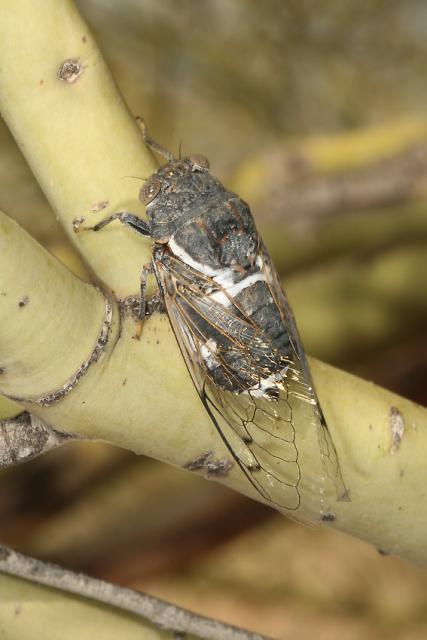
Cacama valvata

A Cacama moorei (female) photo taken by Adam Fleishman.

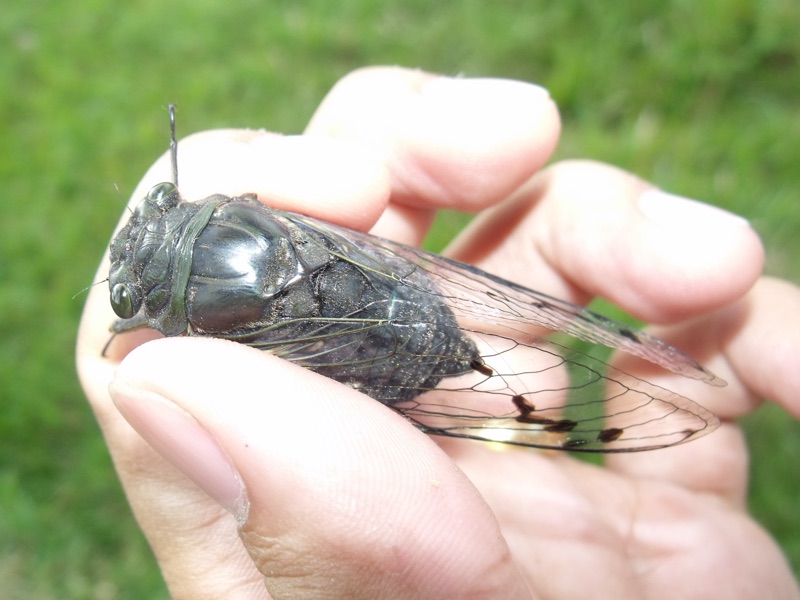
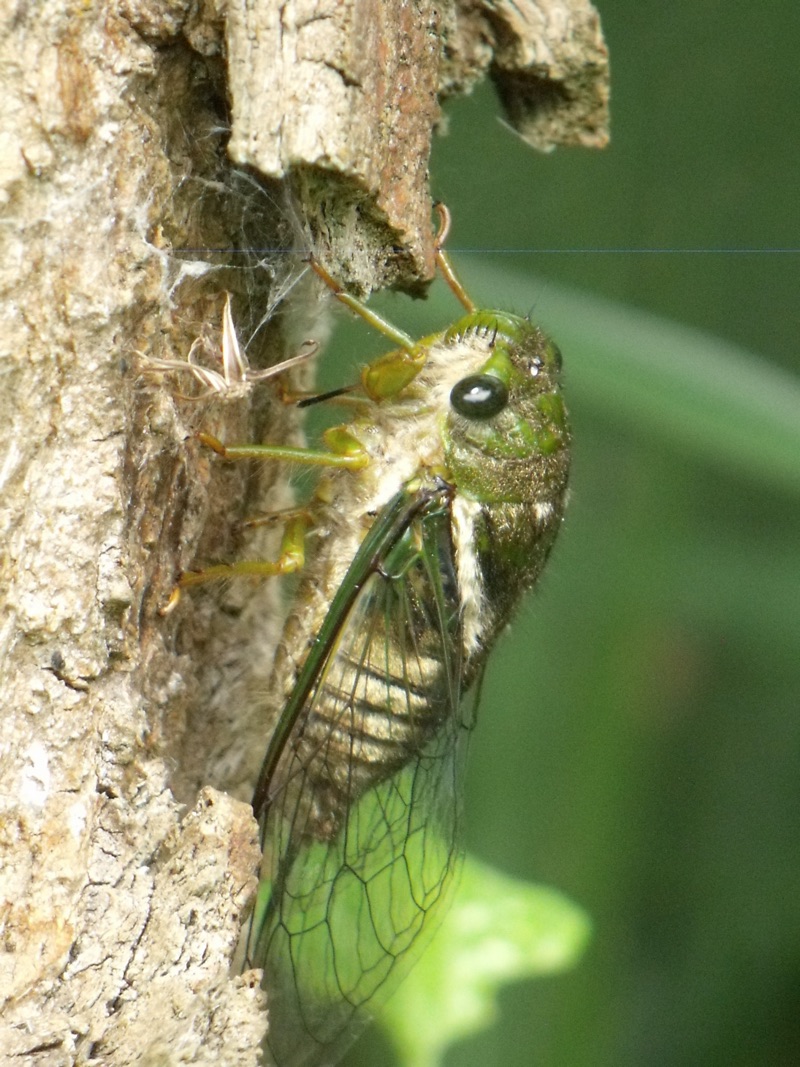
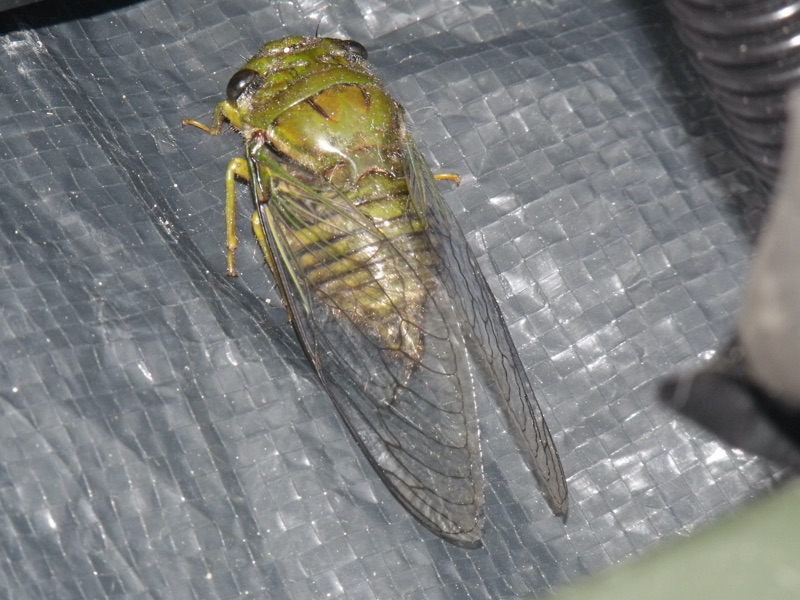
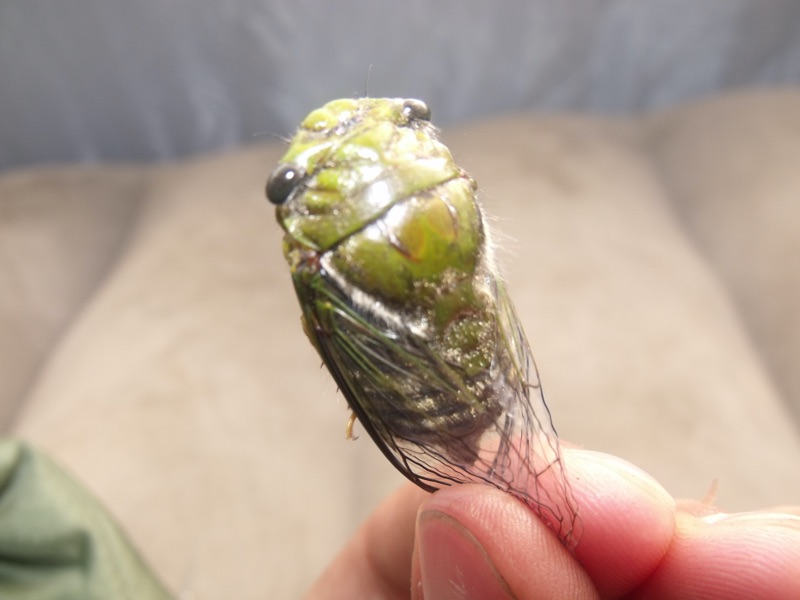
Cacama is a genus of cicadas, known as Cactus Dodgers, found in Mexico and Southwestern United States. They are known for their affinity for cacti like prickly pear & cholla, and are most likely named Cactus Dodgers for their ability dodge the needles of their favorite plants. They are primarily black, gray, white, and beige colored; well camouflaged for the desert.

The two most common species seem to be Cacama moorei and Cacama valvata. The best way to tell them apart is C. moorei have a lot of orange on their ventral side.

Eyes Gray to golden beige
Ventral side Mostly white, heavy pruinose
Legs Black to golden beige
Dorsal side Gray to Black, with rust, golden or beige highlights. Prominent white pruinose along the sides of the mesonotum, and the 1st tergite (dorsal abdominal segment) of the abdomen.
Wings hyaline, with black to golden beige viens

According to BugGuide there are 12 species of Cacama: C. californica , C. carbonaria, C. crepitans, C. collinaplaga, C. dissimilis, C. furcata, C. longirostris, C. maura, C. moorei, C. pygmaea, C. valvata and C. variegata.

Cacama was the lord of the Aztec kingdom of Tezcuco (see The History of the Conquest of Mexico, by W.H. Prescott), who met his end at the hands of Spanish conquistadors. Cacama lives on in these winged desert treasures.

Some Cacama links:

The Insect Singers website has the song of a Cacama valvata.

A nice photo of a Cacama furcata taken in New Mexico.

Categories
Australia

Great website: The cicadas of central eastern Australia

If you are located in Australia and like cicadas, you should visit The cicadas of central eastern Australia, a website created by Lindsay Popple.

Popple’s website includes: photos, maps, range & season, habits, and recordings of the song of dozens of Australian cicadas. Very complete and well done.

The cicadas of central eastern Australia

The site was recommended to me by David Emery.

Categories
Chimneys

Cicada Turrets or Chimneys

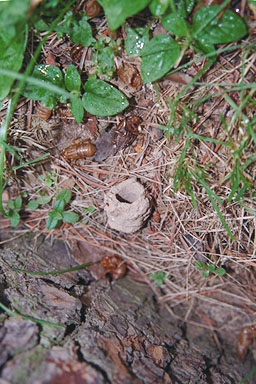
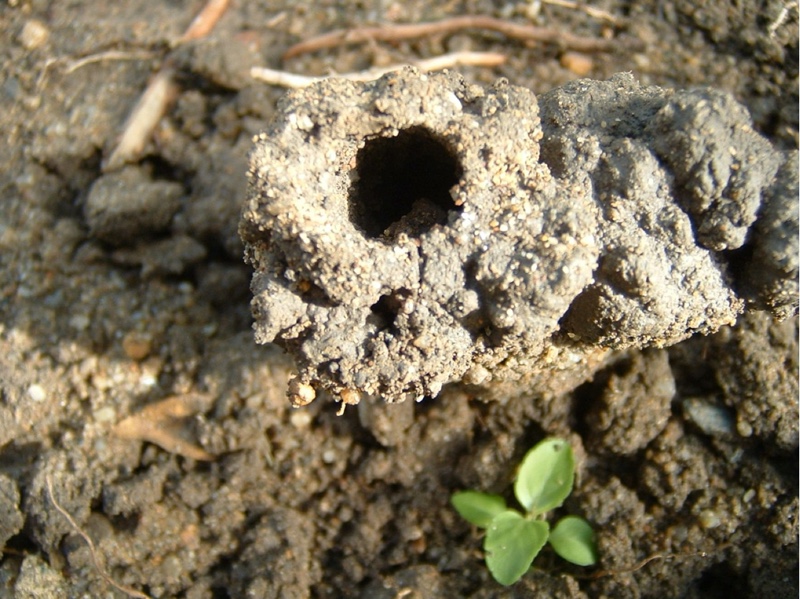
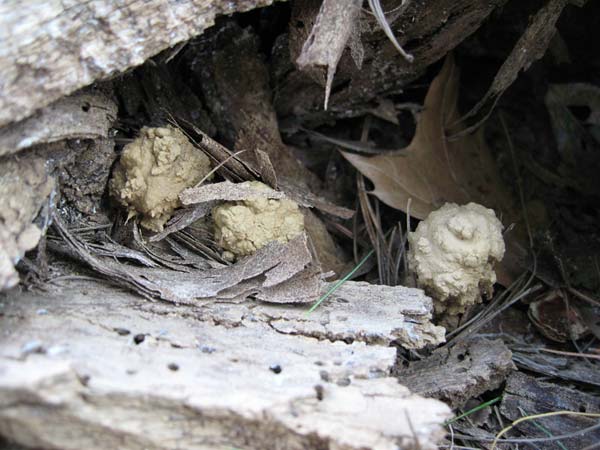
Cicada nymphs create what we call turrets or chimneys above the tunnel hole where they will eventually emerge. These chimneys are made from soil. They are a positive indication of where cicada nymphs are underground and that they will emerge soon. Cicadas seem to build chimneys in wetter, muddier areas; in dry areas they will simply make holes at the surface. The chimneys will help keep water and mud from back-filling their holes, so they can continue to breathe, take a peek out and prepare to emerge.

Magicicada Tunnel (by Les Daniels):

Magicicada chimney
Magicicada chimney

A cicada tunnel in Bangkok Thailand (by Santisuk Vibul):
cicada tunnel view from top Thailand photo by Santisuk Vibul

Three Magicicada chimneys (by Roy Troutman):

Magicicada nymph turret by Roy:

This is video taken of a magicicada nymph turret. These turrets are often found in wet areas.

Magicicada nymph turret from Roy Troutman on Vimeo.

Categories
Brood II Magicicada Periodical

Getting Ready for the 2013 Brood II Emergence

Brood II will next emerge in 2030. There will be some early-emerging “stragglers” in 2026.

Cicada Mania was started back in 1996, the last time Brood II emerged! The Spring of 2013 will be our first chance to see the children of the cicadas that emerged 17 years ago. Here is the basic information you need to know about the 2013 Brood II emergence.

Magicicada septendecimThere will be plenty of cicadas on hand.

When will the Brood II cicadas emerge?

Brood II cicadas will emerge sometime in the Spring of 2013 (next 2030). They typically emerge once the soil 8 inches (20cm) below the surface gets to 64 degrees Fahrenheit (18º C). If we have a hot Spring, as we did in 2012, the cicadas could emerge in mid-to-late April. If we have a moderate Spring, the cicadas will wait until May.

Where will they emerge?

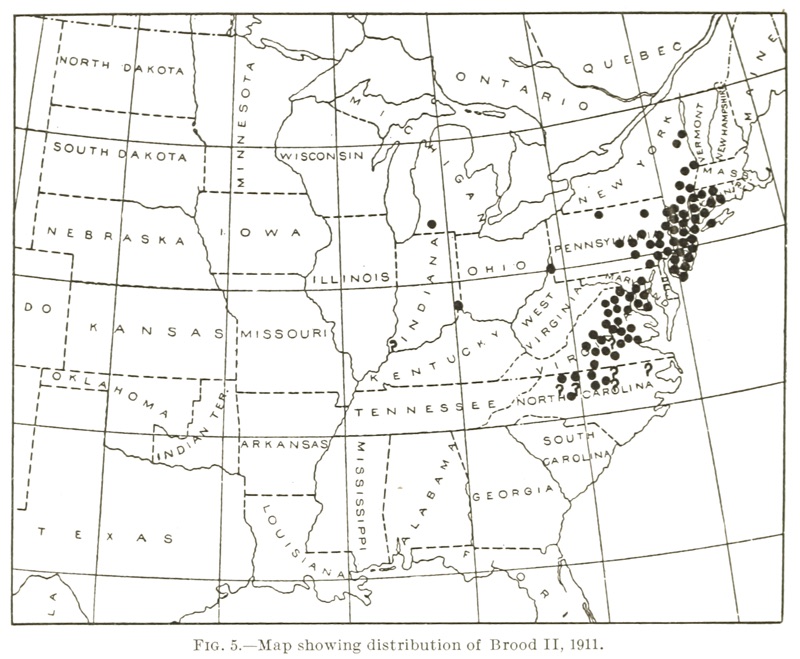
Brood II will emerge in parts of Connecticut, Maryland, North Carolina, New Jersey, New York, Pennsylvania, and Virginia.

Magicicadas won’t emerge everywhere in the states mentioned above. They might not exist in your town or neighborhood (particularly if trees were removed from your neighborhood).

More information about where the cicadas will emerge.

What is a Magicicada cicada?

Magicicada is a genus of periodical cicadas known for emerging in massive numbers in 17 or 13 year cycles/periods. The cicadas emerging in 2013 have 17 year life-cycles. Magicicada are also organized into broods. There are 12 broods of 17 year cicadas, and the brood emerging in 2013 is Brood II (Brood Two).

There are 3 species of 17-year Magicicada: M. septendecim (aka “decims”), M. cassini, and M. septendecula. The adults of all three species have black bodies with orange markings, and almost all have red-orange eyes (some have white or multi-colored eyes.

Here is some video and audio of 17-year Magicicada. This will give you an idea of what to expect:

Cicada Mania, best of 2007, part 1 by Dan from Cicada Mania on Vimeo.

More information:


1907 Map Marlatt, C.L.. 1907. The periodical cicada. Washington, D.C. : U.S. Dept. of Agriculture, Bureau of Entomology.

Marlatt 1907 02 Brood II

Categories
Ariasa Brazil Fidicina Fidicinini Fidicinoides

Brazil Cicada Identification Challenge, Part 2

Here is part 2. Jairo of Cigarras do Brasil — Brazilian Cicadas asked for our help to identify some unknown cicada species from Brazil. The following photographs feature cicadas from Brazil we want to identify. We are hoping folks in the cicada research community can help.

Note: All of these cicadas were photographed at Paraibuna, São Paulo. This town is close to the Paraíba Valley (Vale do Paraíba), and to São José dos Campos and Caçapava.

1) Possibly an Ariasa sp. (about 1/2 inch (1,3cm))

Possibly an Ariasa sp. (about 1/2 inch (1,3cm))

2) Possibly a Quesada sodalis (about 1 1/2 inch (4cm))

Possibly a Quesada sodalis (about 1 1/2 inch (4cm))

Possibly a Quesada sodalis (about 1 1/2 inch (4cm))

Cicadas 3, 4 and 5 were identified by David Emery as Fidicinoides picea (Walker, 1850). Learn more about Fidicnoides picea.

3) Identified: Fidicinoides picea.

Fidicinoides picea

4) Identified: Fidicinoides picea.

Fidicinoides picea

5) Identified: Fidicinoides picea.

Fidicinoides picea

Categories
Allen F. Sanborn FAQs Zammara

How to learn more about cicadas, by searching for cicada researchers

Just about anything and everything ends up on the web these days, including research papers written by cicada researchers. Many of these papers are easily downloaded from the web, and once downloaded you can read them and expand your knowledge about cicadas.

This weekend I was looking for information about cicadas from Central and South America (the Neotropic ecozone). Allen F. Sanborn, Ph.D is well known for his research of cicadas of that region, so I searched for some of his research papers. Google will retrieve all PDF (Adobe Acrobat) files that contain the word cicada and the name Allen F. Sanborn, when you search for “Allen F. Sanborn cicada ext:pdf” (remove the quotes when you search).

Some interesting papers I found include:

Checklist of the cicadas (Insecta: Hemiptera: Cicadidae) of Paraguay including new records for six species (Sanborn, Allen F., 2011). This paper includes a long list of cicada species, which I used to look for images of cicadas on Flickr.com.

The new records increase the known cicada diversity 37.5% bringing the total number of cicada species reported in Paraguay to 22 species in 12 genera representing five tribes and three subfamilies of the family Cicadidae. There are currently no known endemic species.

Two New Zammara Species from South America (Hemiptera: Cicadomorpha: Cicadidae) (Sanborn, Allen F., Florida Entomologist 87(3),2004). This paper includes many photographs, which make cicada identification easy.

ABSTRACT
Two new members of the widespread Neotropical genus Zammara Amyot & Serville, Zammara
olivacea n.sp. from Colombia and Zammara medialinea n.sp. from Venezuela are described.

Key Words: new species, taxonomy, cicada, Zammara, Colombia, Venezuela.

New Records for the Cicada Fauna from Four Central American Countries (HEMIPTERA: CICADOIDEA: CICADIDAE (Sanborn, Allen F.; Florida Entomologist 89(1), 2006). This article features a map with cicada species names.

ABSTRACT
Analysis of museum specimens has added to the cicada fauna of Belize, El Salvador, Guate- mala, and Honduras. Information on the cicada fauna reported in the literature as well as the first records of cicada species to the fauna are reported here to provide a more accurate un- derstanding of cicada diversity in each country and the region. The new records represent an increase of 75, 14, 110, and 320%, respectively, to the cicada faunal diversity of each country.
Key Words: cicadas, biodiversity, Central America

If you use my Google formula, you can find these papers too.

The The Current Status of Cicada Taxonomy on a Region-by-Region Basis page on Cicada Central is a good resource for learning about other cicada researchers.