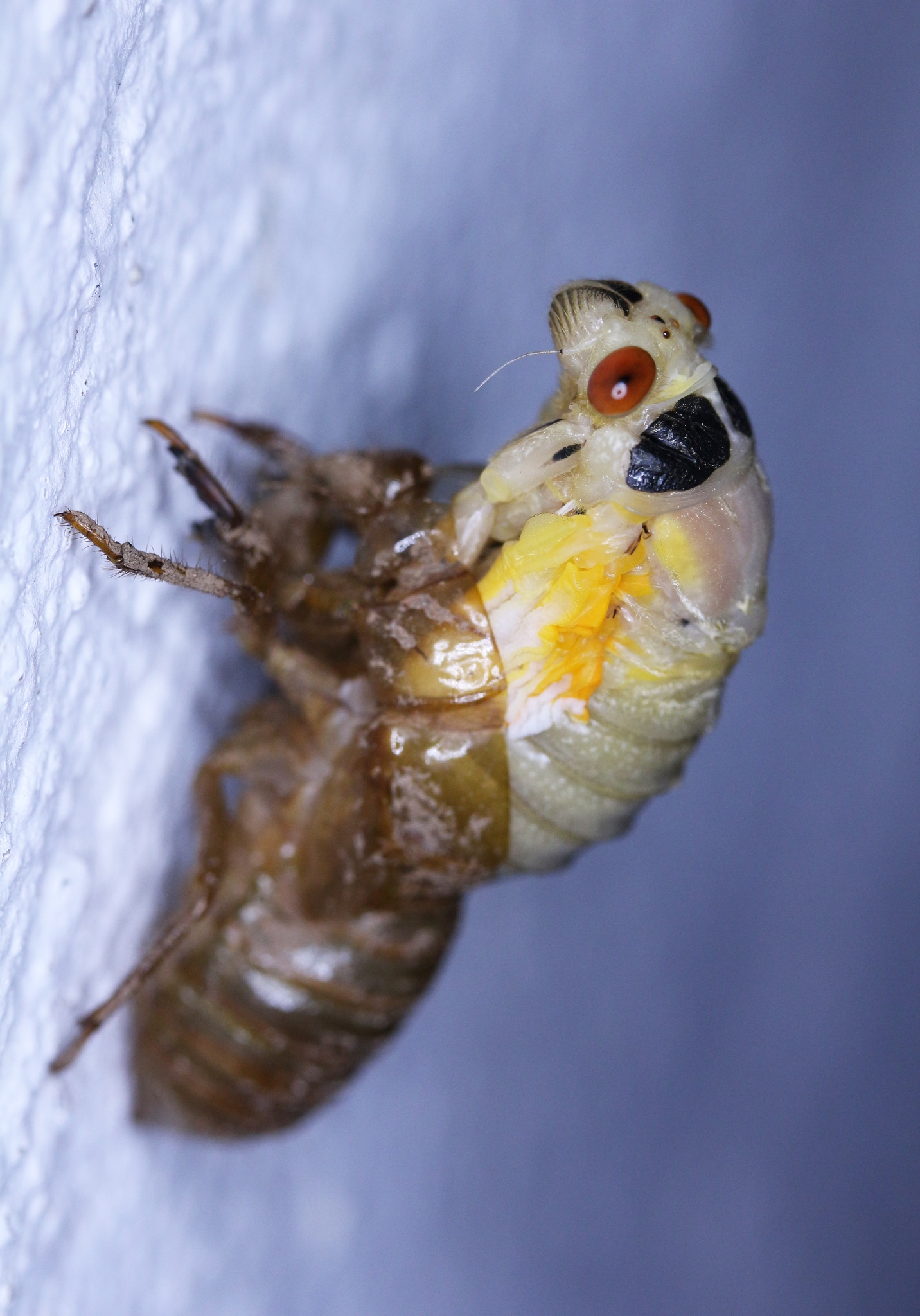
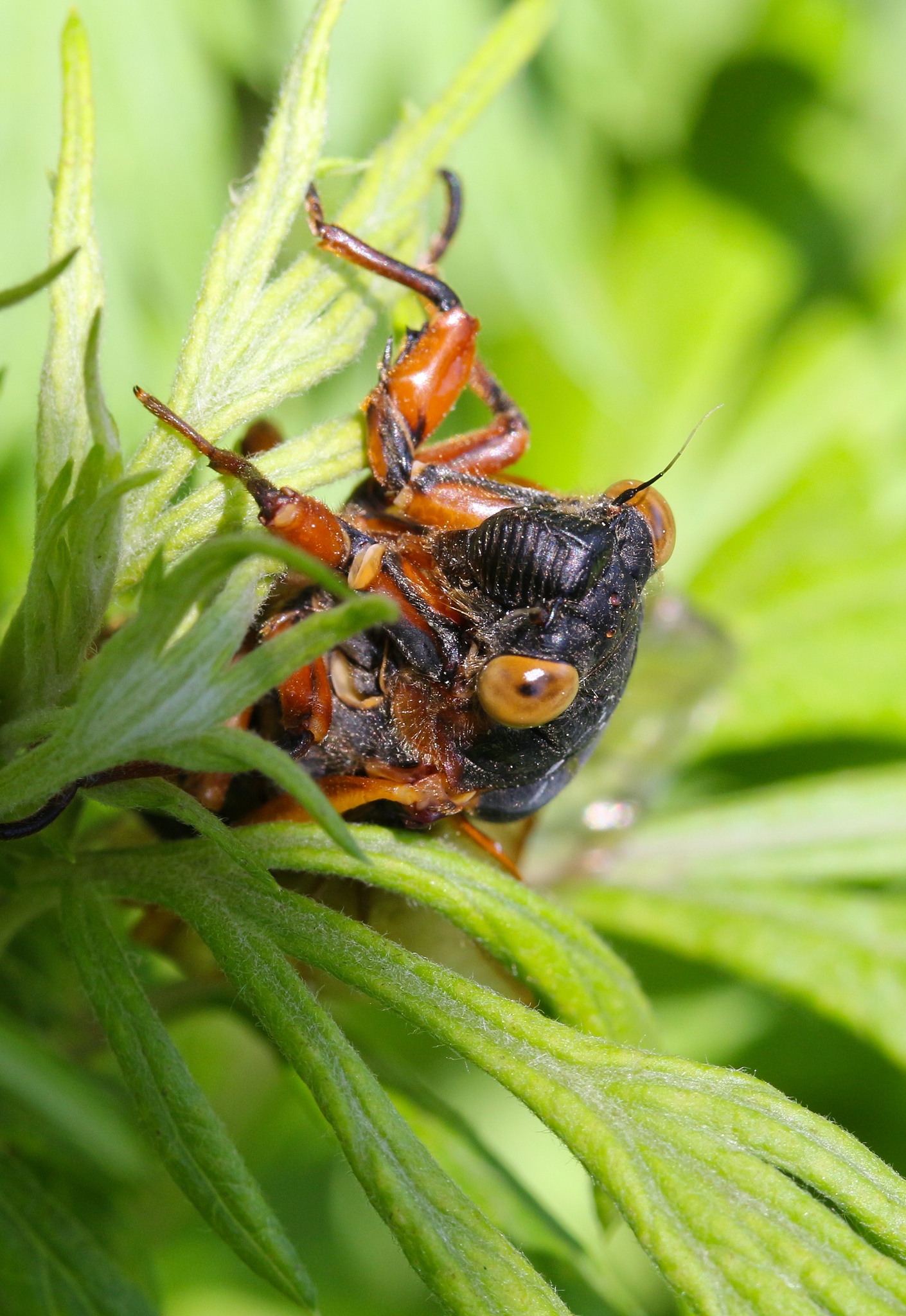
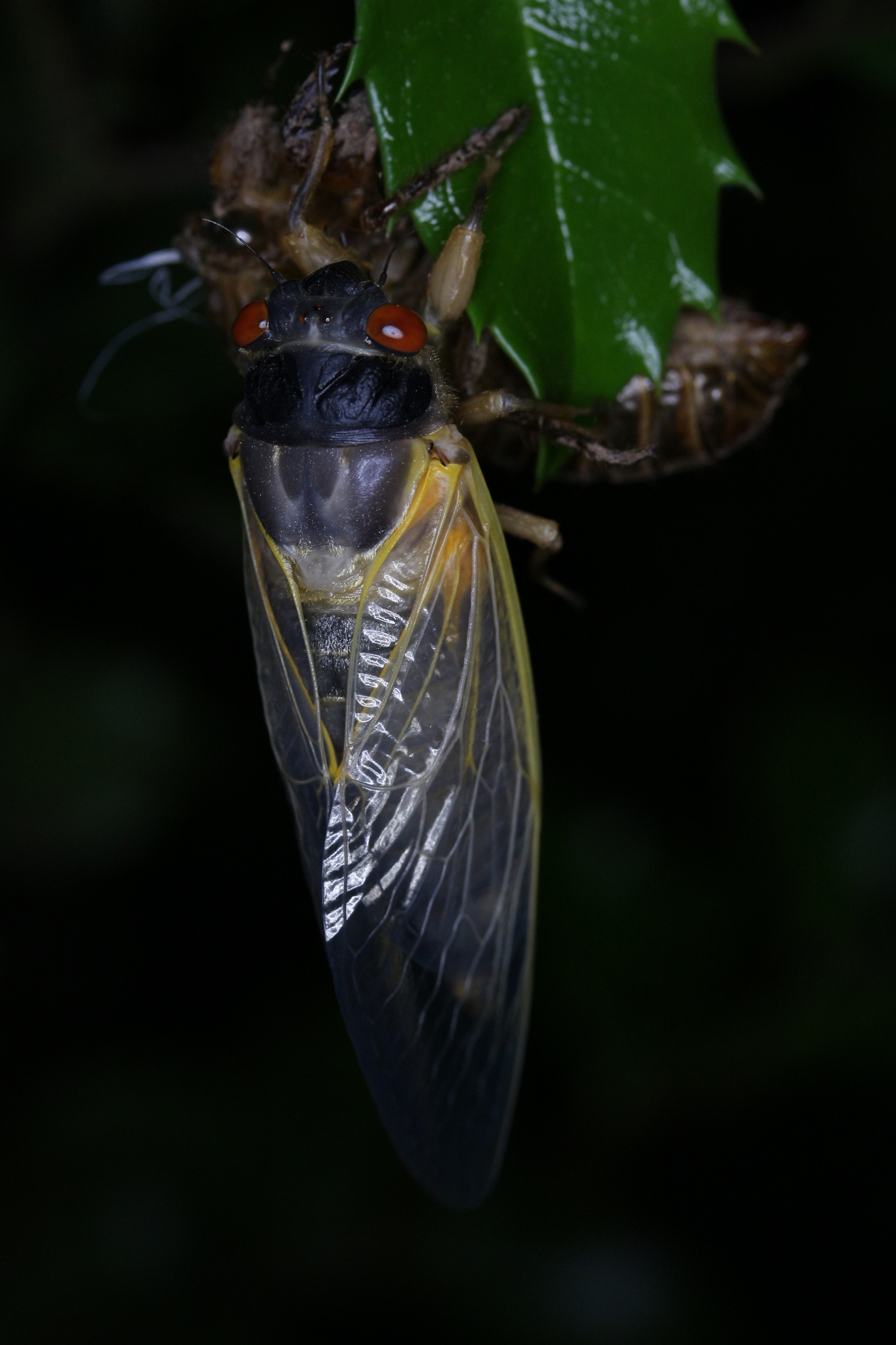
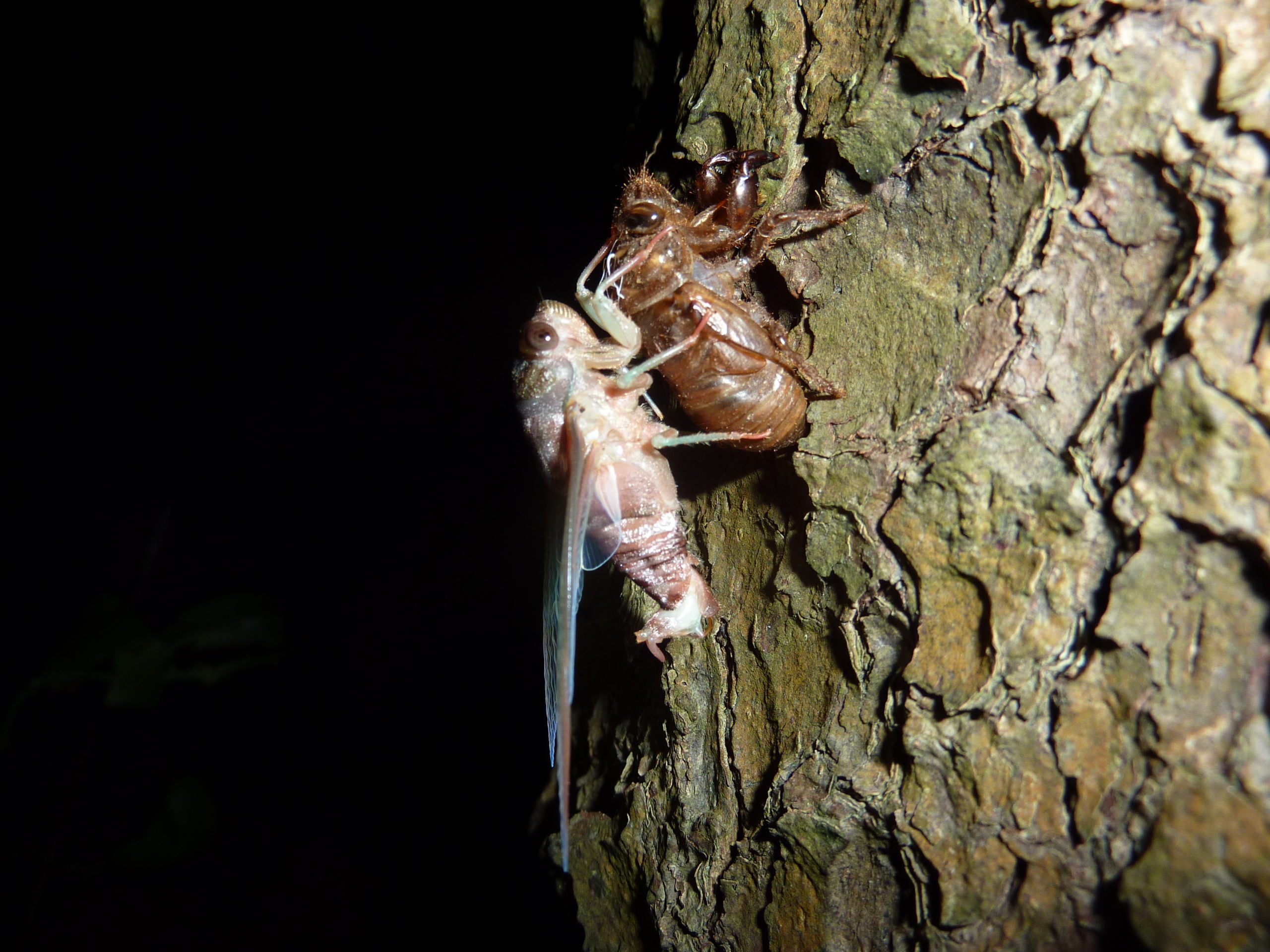
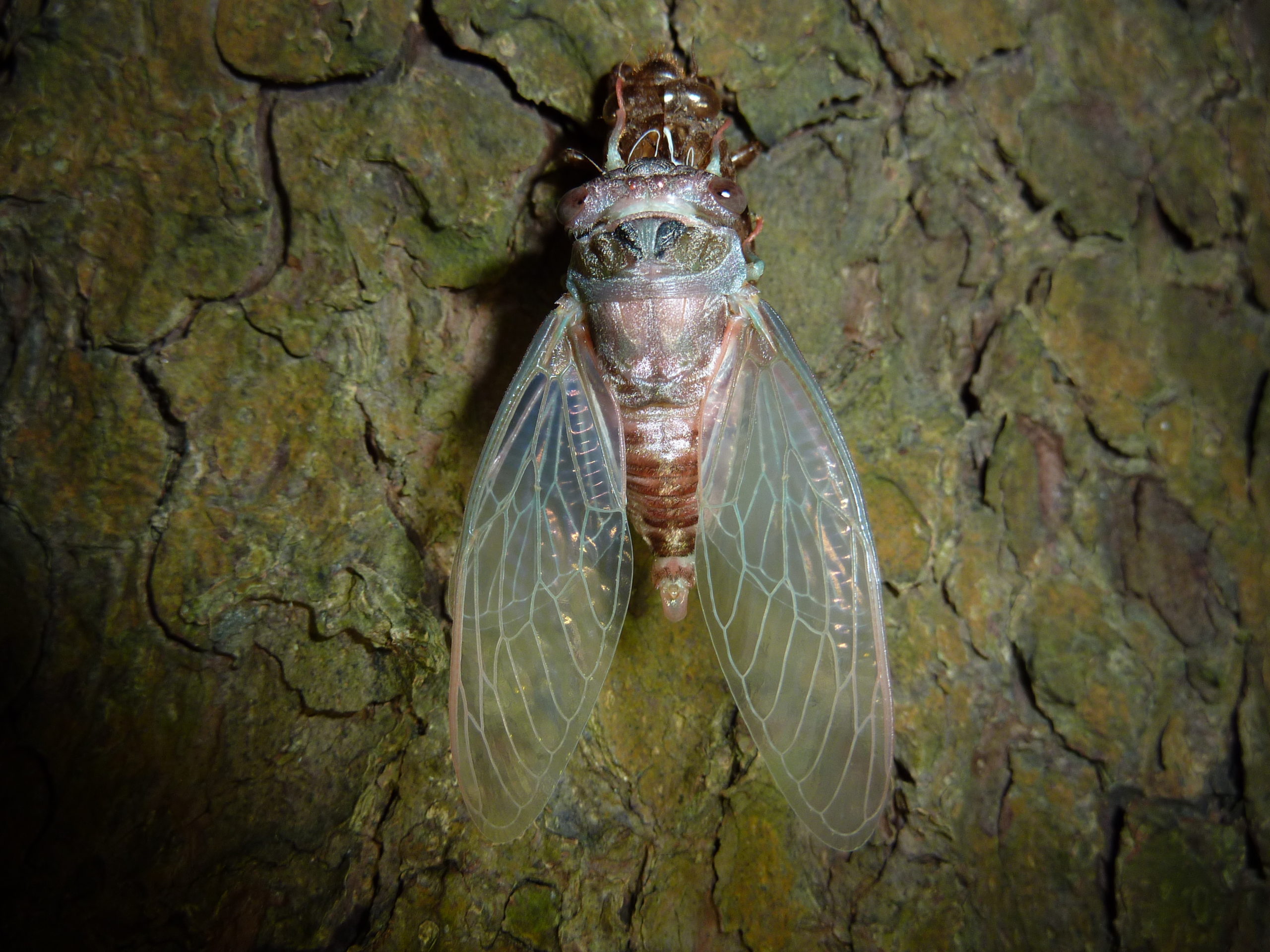
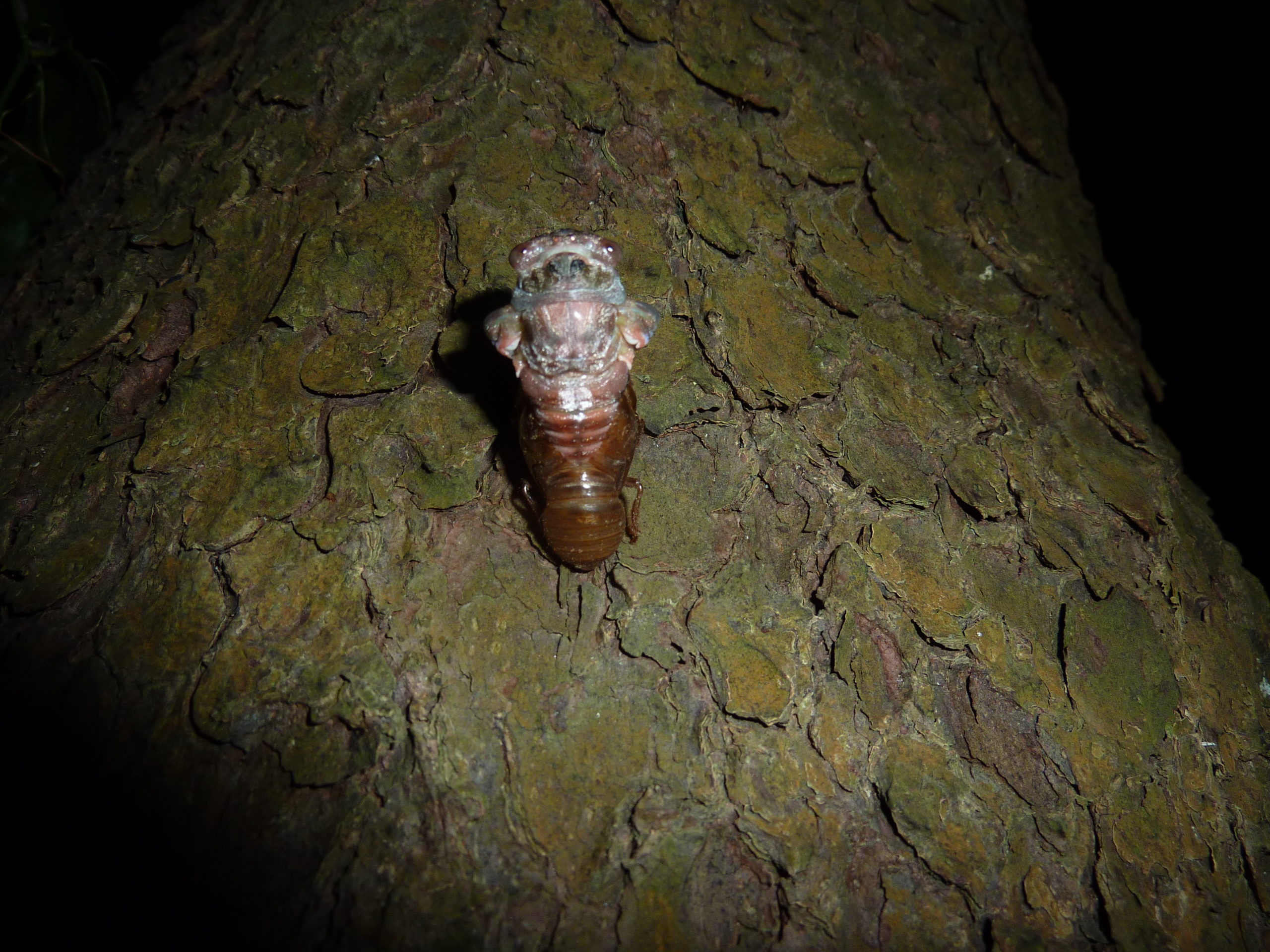
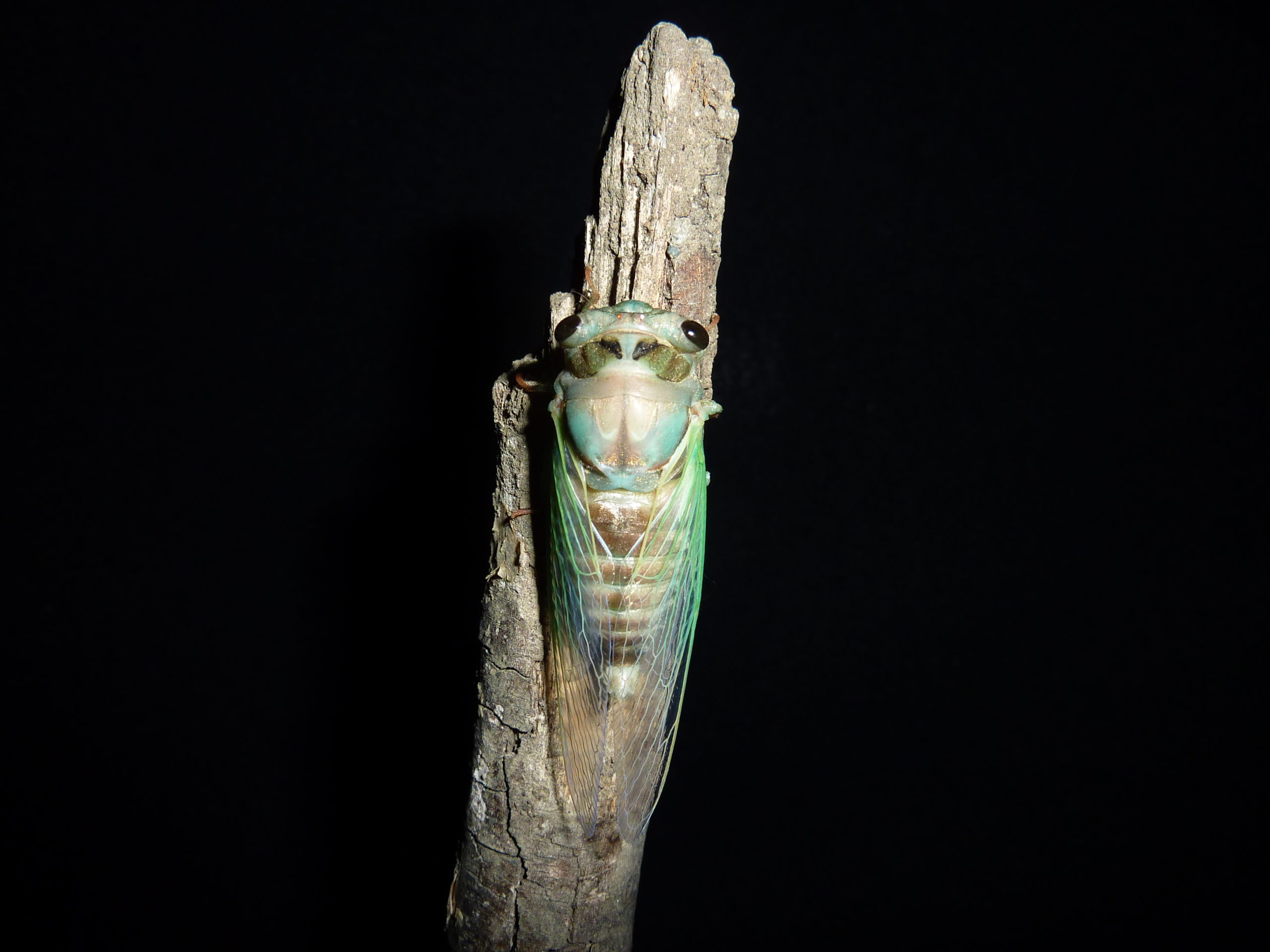
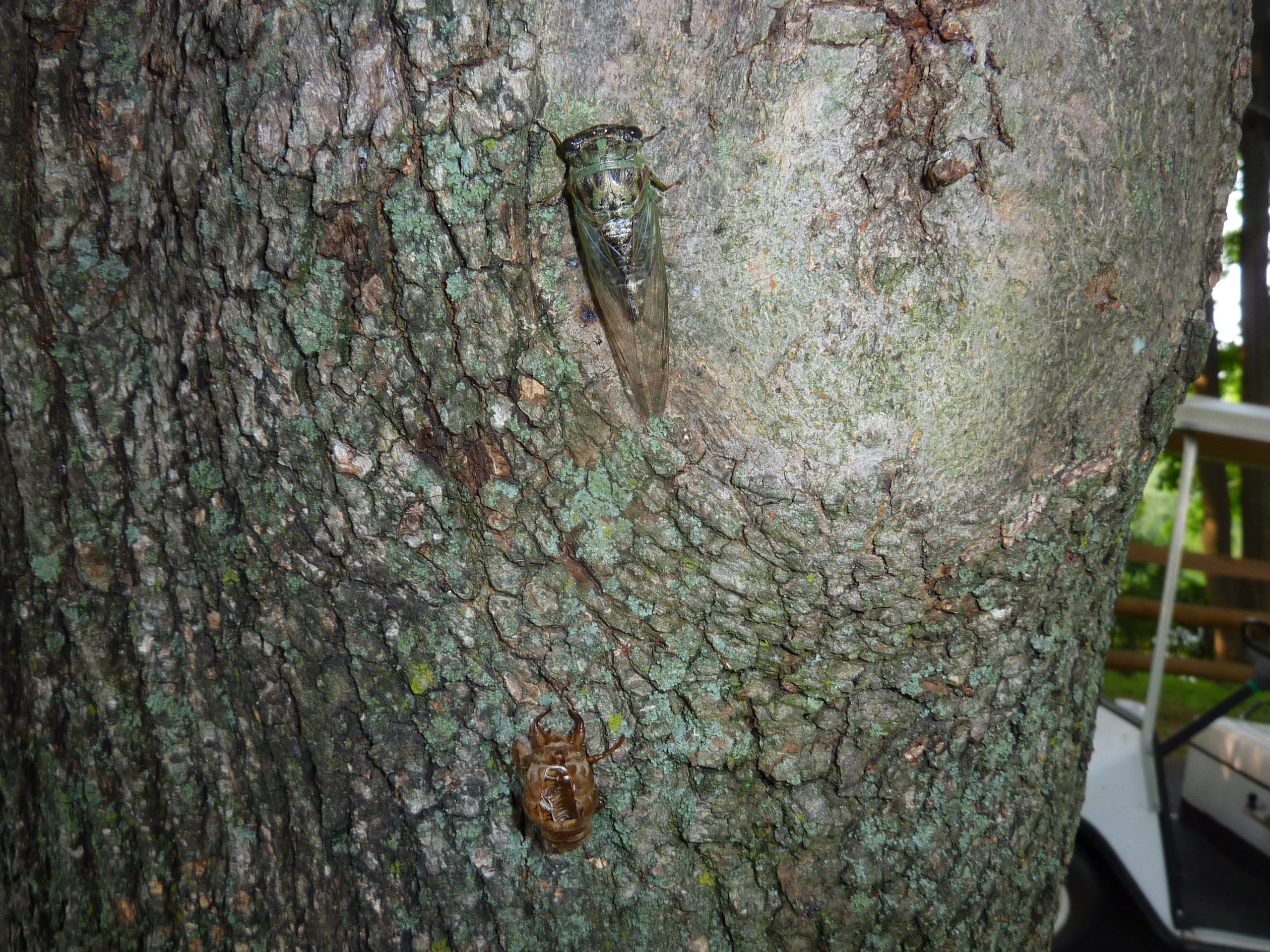
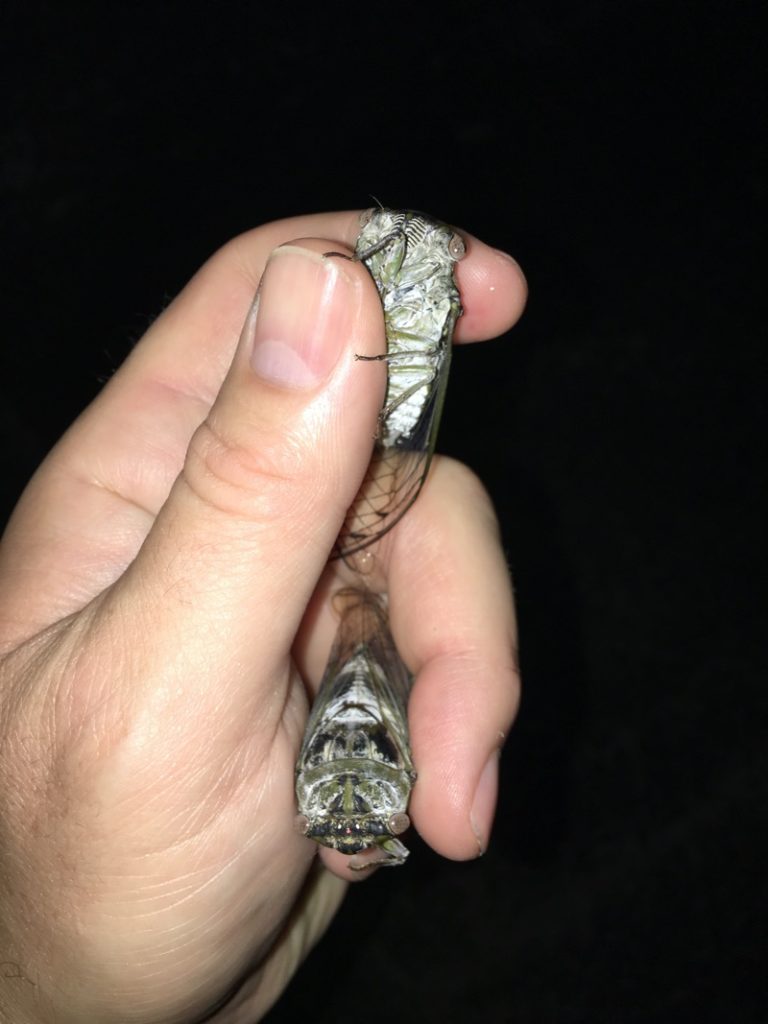
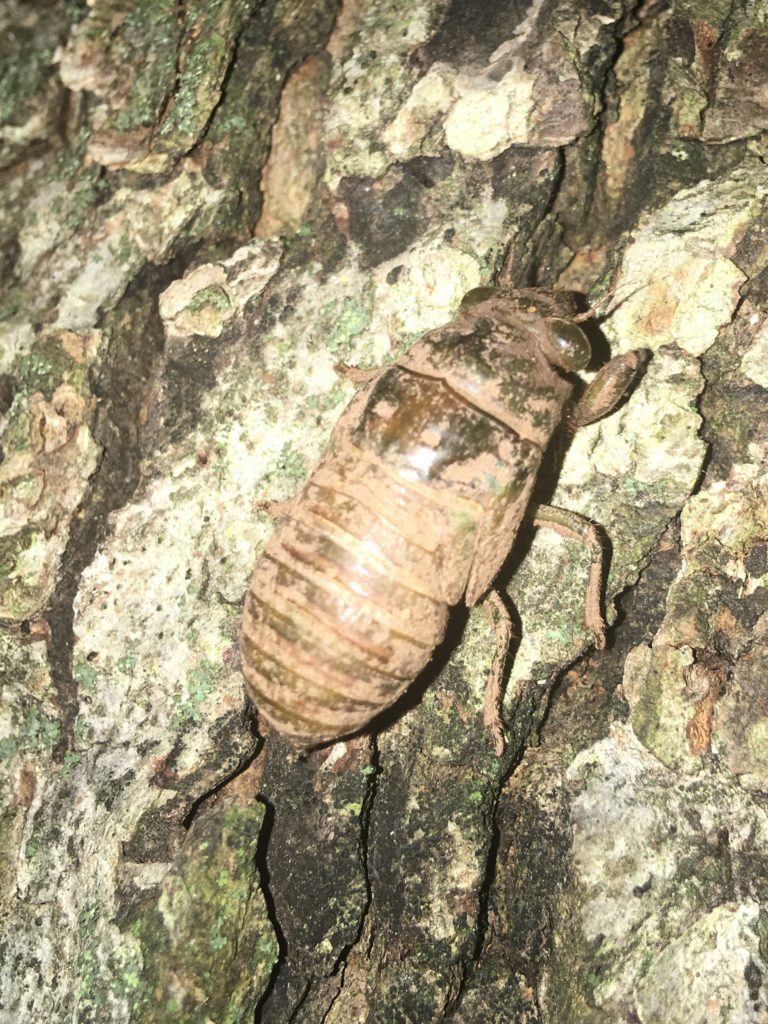
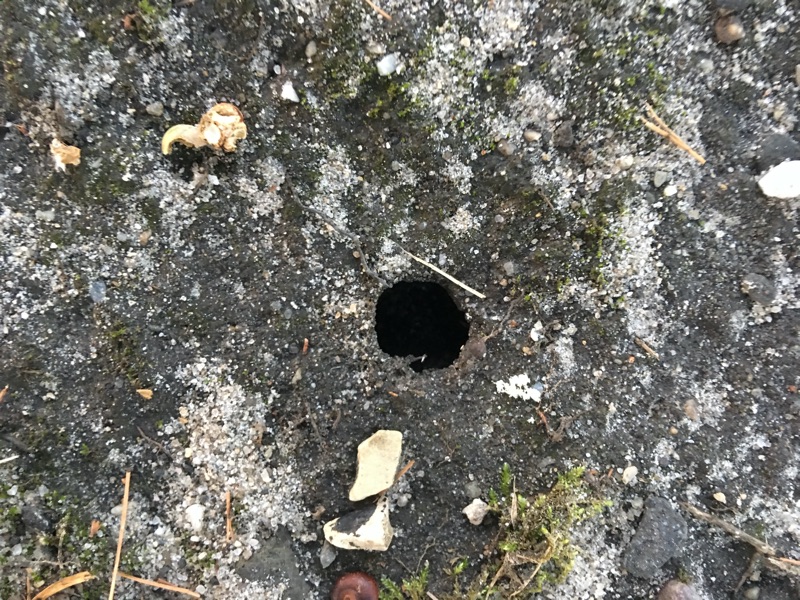
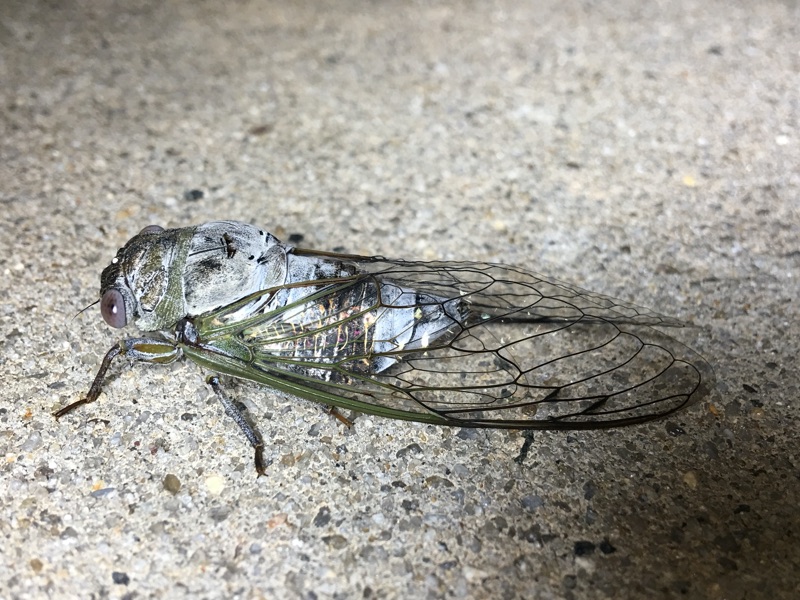
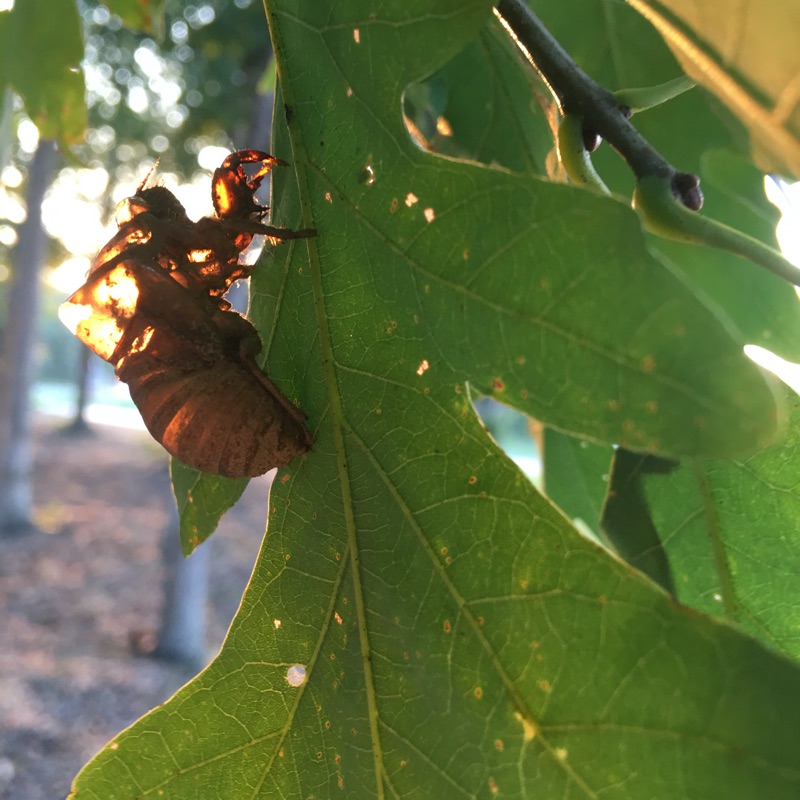
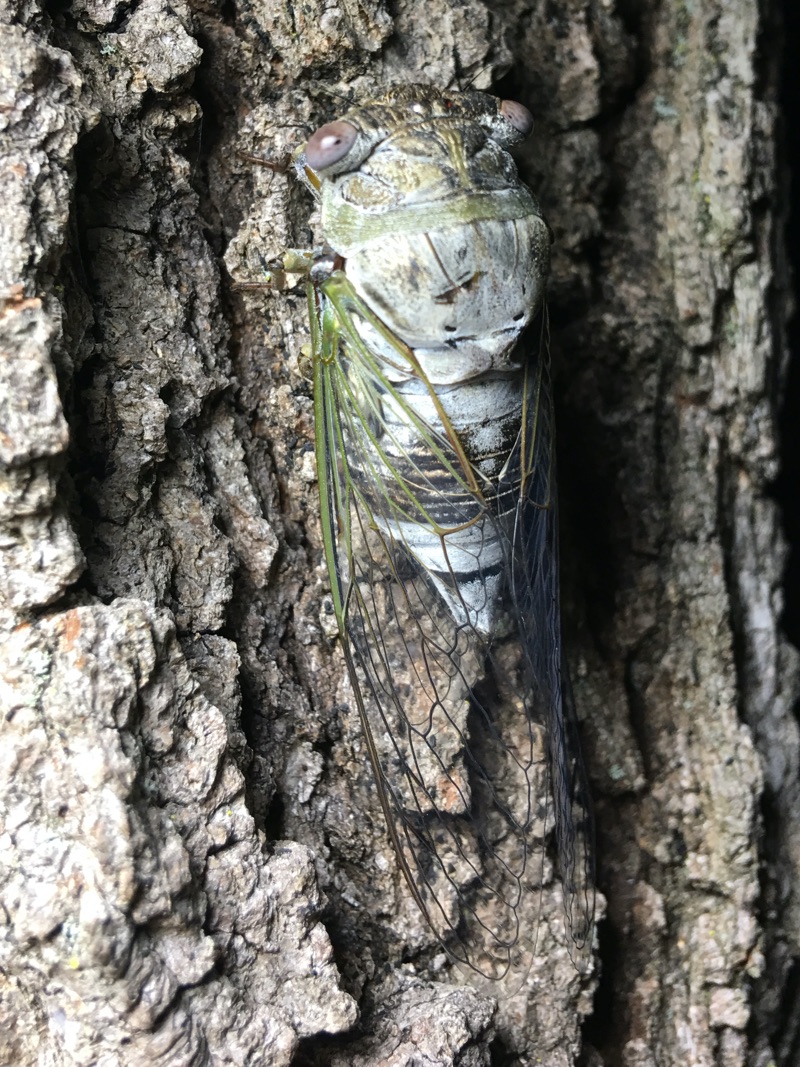
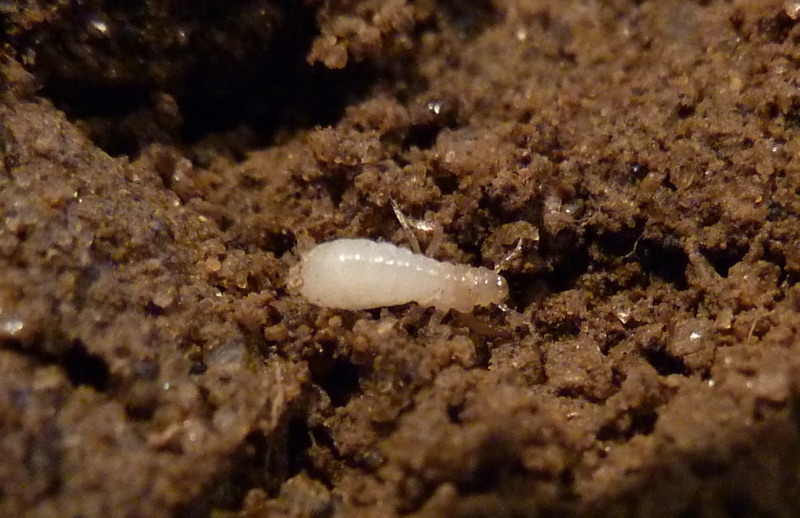
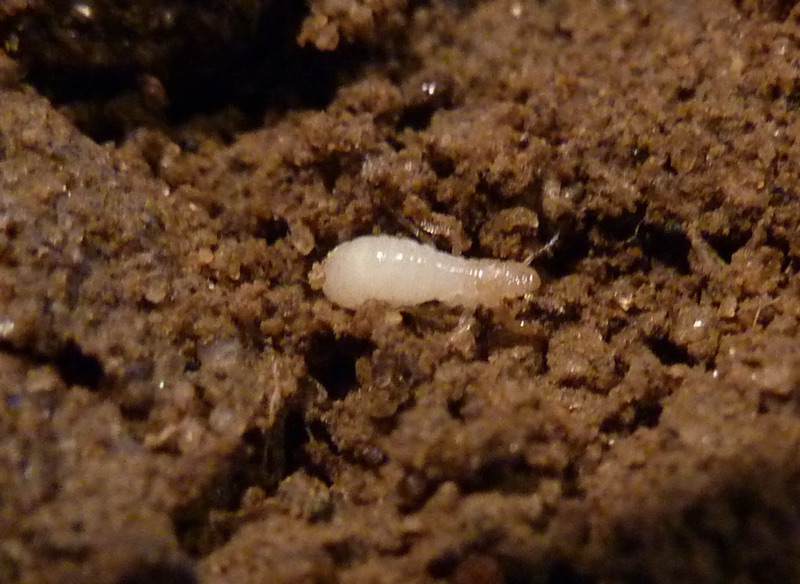
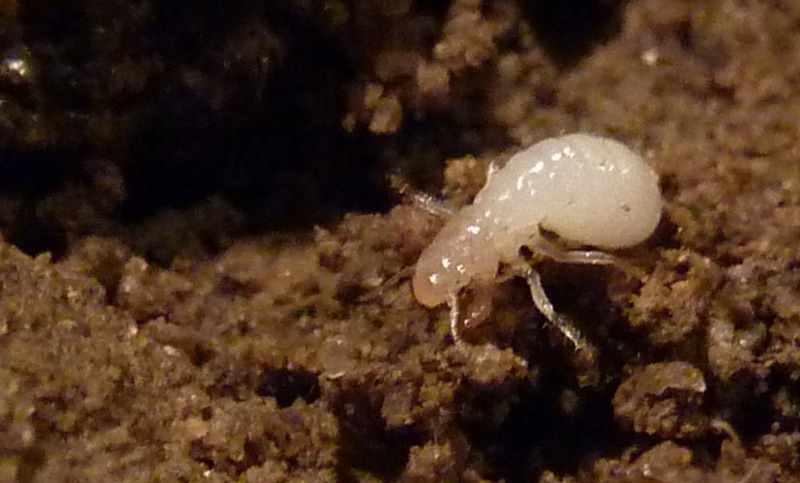
New Tibicen auletes photos from Elias Bonaros.
The Tibicen auletes aka Northern Dusk-singing Cicada is the largest of the Tibicen cicadas in the U.S.A.
The Cicada Mania Blog: News, Findings, and Discoveries About Cicadas.
New Tibicen auletes photos from Elias Bonaros.
The Tibicen auletes aka Northern Dusk-singing Cicada is the largest of the Tibicen cicadas in the U.S.A.
The Okanagana rimosa, also known as Say’s Cicada, is a cicada that can be found in the USA in northern states east of the Rockies, like New York, Pennsylvania, Michigan, Wisconsin, Minnesota, North Dakota and all New England states. Say’s cicada can also be found in the Quebec, Ontario, and Manitoba provinces of Canada.
Say’s Cicada is black and orange; orange legs, orange markings on its mesonotum, and orange bands around most segments of its body. Here’s a photo of an adult:
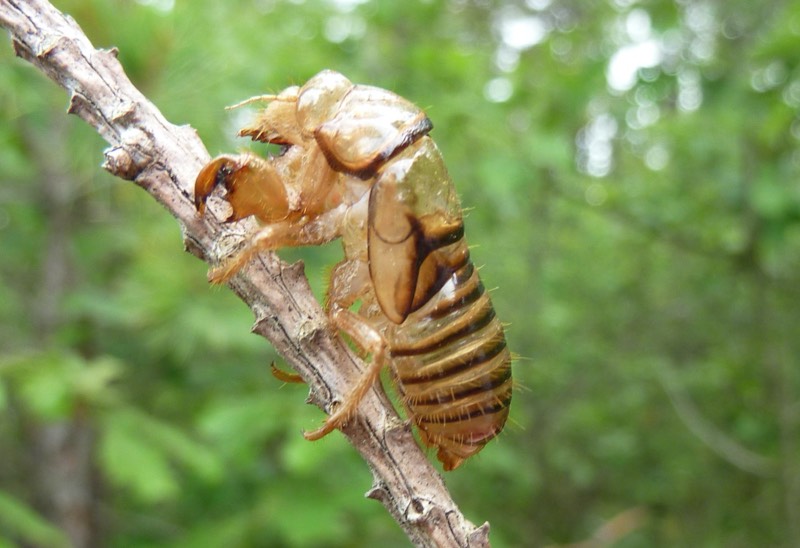
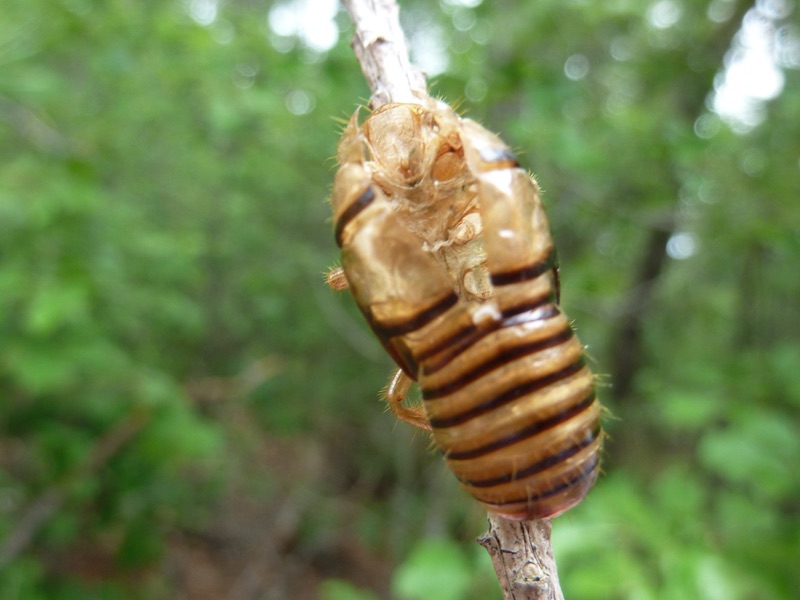
A few weeks ago Elias Bonaros sent us some photos of the exuvia (shed skins) of Okanagana rimosa nymphs that he found while searching for cicadas in Western Massachusetts with Gerry from Massachusetts Cicadas. It’s interesting that the black bands that appear around the segments of the nymph’s body are where we see orange bands in the adult form.
Say’s cicada has a fantastic call that needs to be heard to be appreciated. Visit the Songs of Insects website to hear the call of a Okanagana rimosa.
An interesting note about the Okanagana rimosa, it has been showed to have a 9 year life cycle, and appears to be protoperiodical:
“Soper et al (112) showed experimentally that Okanagana rimosa had a life
cycle of 9 years, and that in the field during a 9-year period (1962 to
1970) it was extremely abundant in 4 years and scarce or absent in the
other 5. Heath (32) also studied cicadas of the genus Okanagana and
found several species that appear to be protoperiodical.”
Don’t try this:
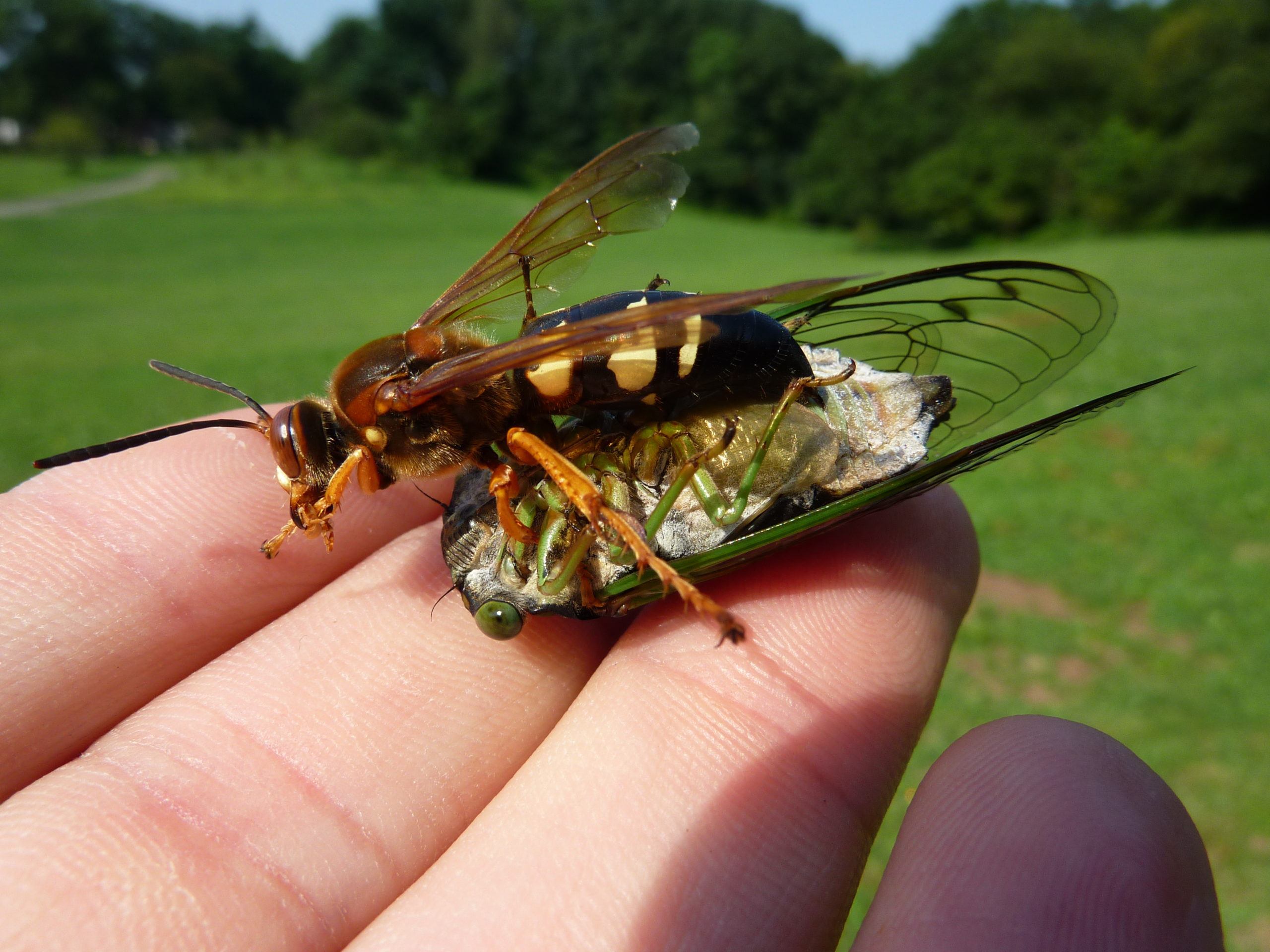
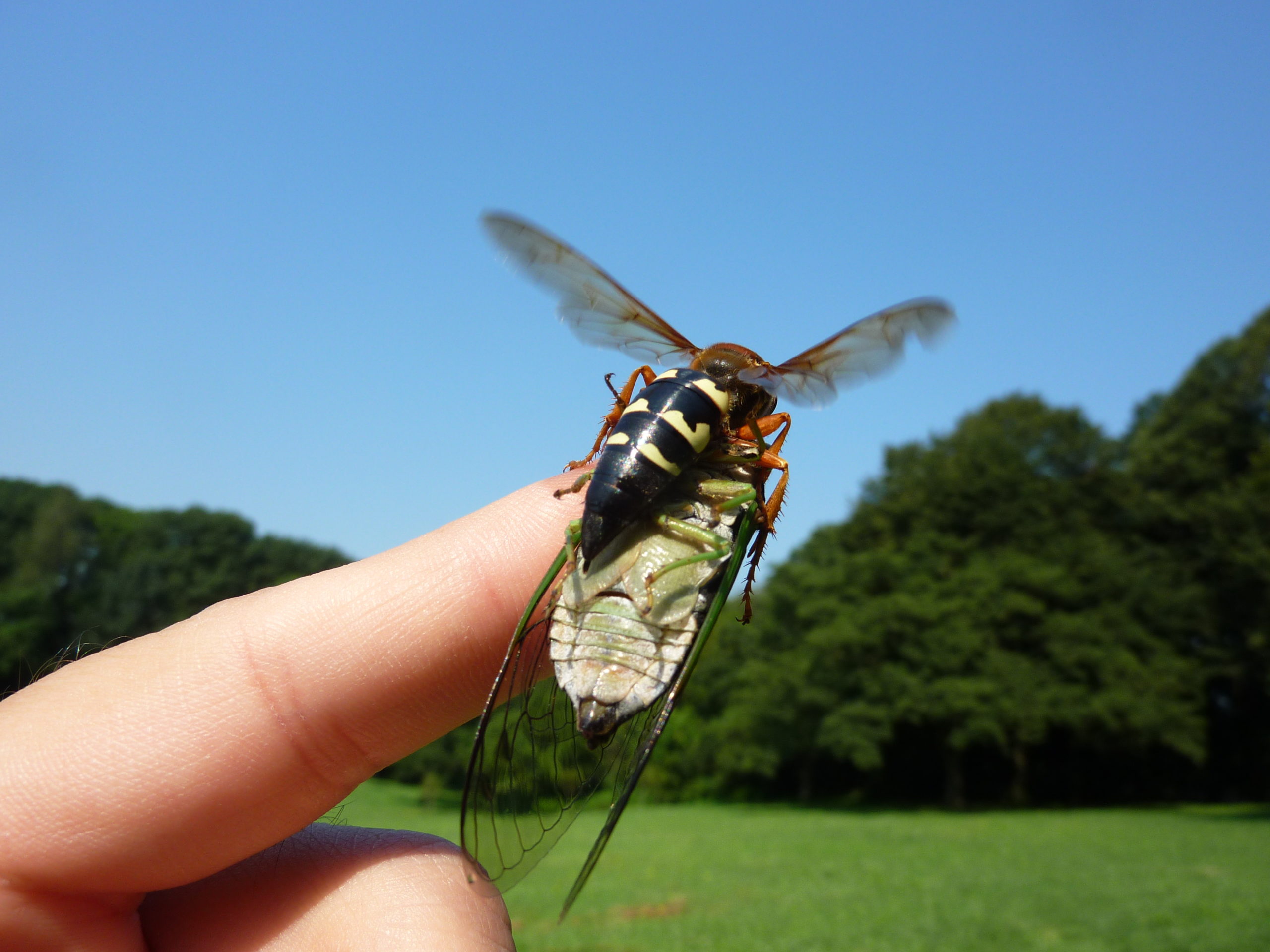
Elias was kind enough to send us 10 Tibicen photos he took in 2009. Photos include Tibicen tibicen (chloromera), Tibicen lyricen, Tibicen tibicen & Cicada Killer Wasp on Elias’ fingers, Tibicen canicularis and Tibicen linnei.
You can view the gallery page for all, or visit the individual photos:
Female Tibicen tibicen eclosing.
T. lyricen male in the teneral phase.
Tibicen tibicen female with emerald green eyes.
Cicada Killer Wasp and Tibicen tibicen on Elias’ finger.
Cicada Killer Wasp and Tibicen tibicen on Elias’ fingers.
You might know Elias from his posts on the Message Board. Monday, after a lot of searching, he found a female Tibicen auletes in Lakewood New Jersey.
I was down in Lakewood NJ yesterday and after finding 5 more additional huge exuvia, the unthinkable happened. a female T. auletes flew to a light, hit the pole after circling many times and slid down to the ground. I easily captured her on the ground. Wanted to share this picture. look how beautiful she is with all that pruinosity!
Tibicen auletes are the largest of the North American Tibicen species. Their bodies a a little under 2″ long. Auletes are also know as the Sissor-Grinder, Northern Dusk-singing Cicada, or Great Dusk-calling Cicada. Read more at Bug Guide. The Songs of Insects site has sound files so you can listen and hear if you have auletes in your yard too.
Here’s one of Elias’ photos. Awesome, no? I’ll post another soon.

This entry was submitted by Elias Bonaros and Barbara Rzeszutek, taken in Deerfield, IL: Click the image for a larger version — do it!

This entry was submitted by Chris Owen, taken at Lemon Lake County Park in Cedar lake, IN:

Here’s a gallery of white and blue eyed cicadas.