D. olympusa alarm call by Joe Green
D. olympusa alarm call by Joe Green from Cicada Mania on Vimeo.
D. olympusa cicada alarm call by Joe Green
D. olympusa cicada alarm call by Joe Green from Cicada Mania on Vimeo.
 Cicada Mania
Genera of cicadas.
D. olympusa alarm call by Joe Green from Cicada Mania on Vimeo.
D. olympusa cicada alarm call by Joe Green from Cicada Mania on Vimeo.
Joe Green sent me a couple of CDs worth of North American cicadas calling and has graciously allowed us to use them for the site. The highlight of these videos is that they feature cicada calls.
I have to add descriptions, and about 50 more videos, but for now check out what’s uploaded so far.
Here’s a sample:
Neocicada hieroglyphica singing by Joe Green from Cicada Mania on Vimeo.
Diceroprocta olympusa aka the Scrub Cicada can be found in Alabama, Florida, Georgia, Mississippi, North Carolina, and South Carolina.
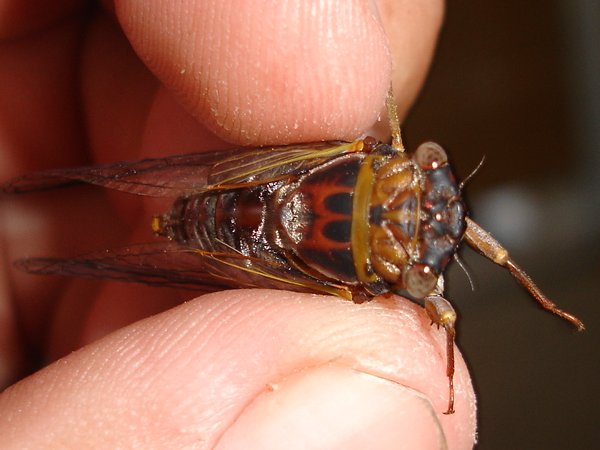
Diceroprocta viridifascia aka the Salt Marsh Cicada can be found in AL, Florida, Georgia, Louisiana, Mississippi, North Carolina, South Carolina, and Virginia.
Source: ©Insect Singers | Species: D. viridifascia
Source: ©Joe Green | Species: D. viridifascia
These videos feature the call of the D. viridifascia.
Family: Cicadidae
Subfamily: Cicadinae
Tribe: Cryptotympanini
Subtribe: Cryptotympanina
Genus: Diceroprocta
Species: Diceroprocta viridifascia (Walker, 1850)
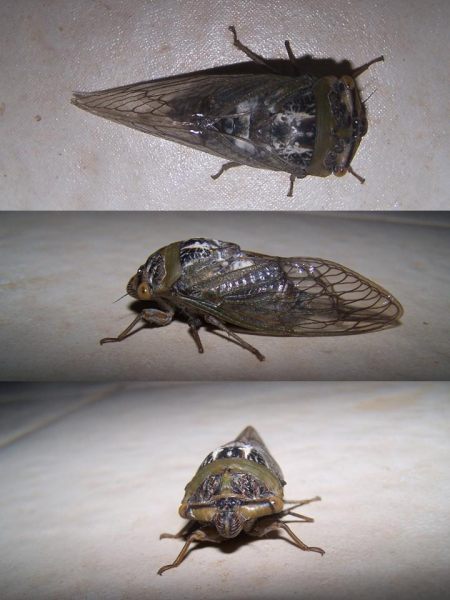
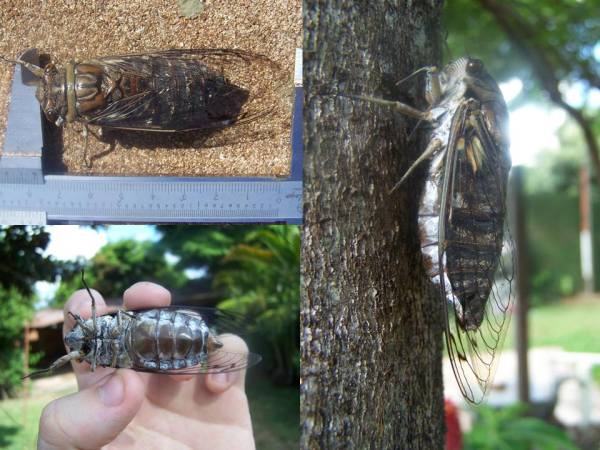
Have you ever wondered what cicadas look like or sound like in Paraguay? The Fauna Paraguayan website has many photos and sound files of Paraguayan cicadas.
Here is a small sample from their website:
Chonosia crassipennis:
Quesada gigas:
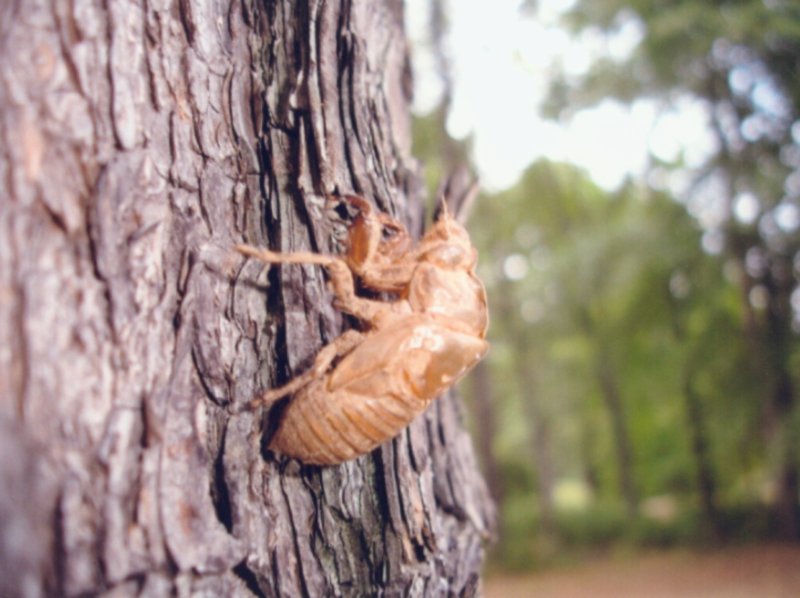
Joe Green mailed us some new cicada photos.
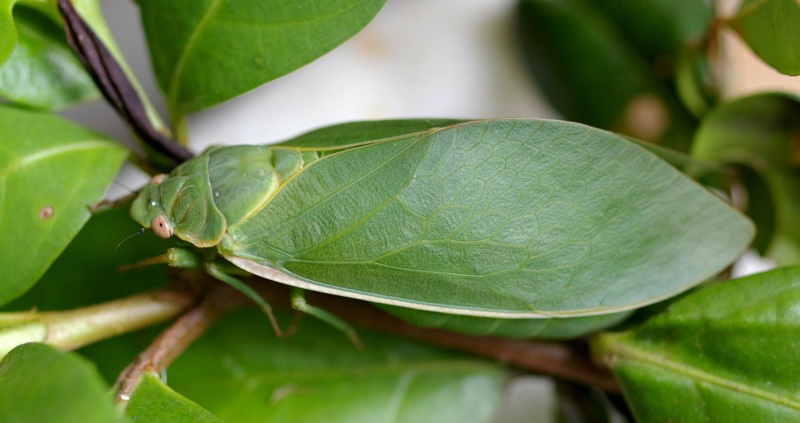
David Emery send us a photo of a Cystosoma saundersii (bladder cicada) from Australia and we added it to the gallery.
Just to complement the Aussie cicadas, a small colony of these Cystosoma saundersii have been droning and rattling at dusk around Burwoood in Sydney for the past 2 months. This is their southern-most extension down the east coast of Australia.
cheers,
David.
Click the link above or the image below to access large versions of the image.
There is more information about Cystosoma saundersii on Dr. Popple’s website and iNaturalist.
The Bladder Cicada can be sound in eastern Queensland & NSW, and are most common Nov-Jan. (Moulds, M.S.. Australian Cicadas Kennsignton: New South Wales Press, 1990, p. 193.)
Here’s a photo of a diseased specimen:
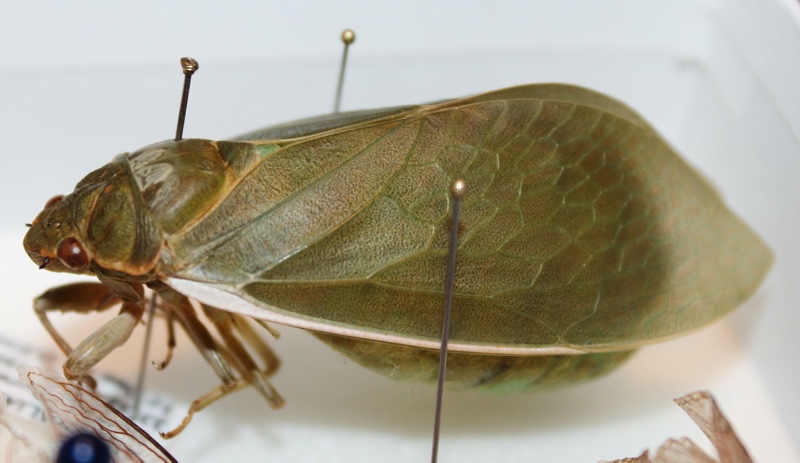
Wenilton LuÃs Daltro posted some interesting cicada items on our old the message board, and I wanted to post them on the homepage as well.
And,
The first time I saw the Genus and species name for this cicada, it was called a Tibicen chloromera:
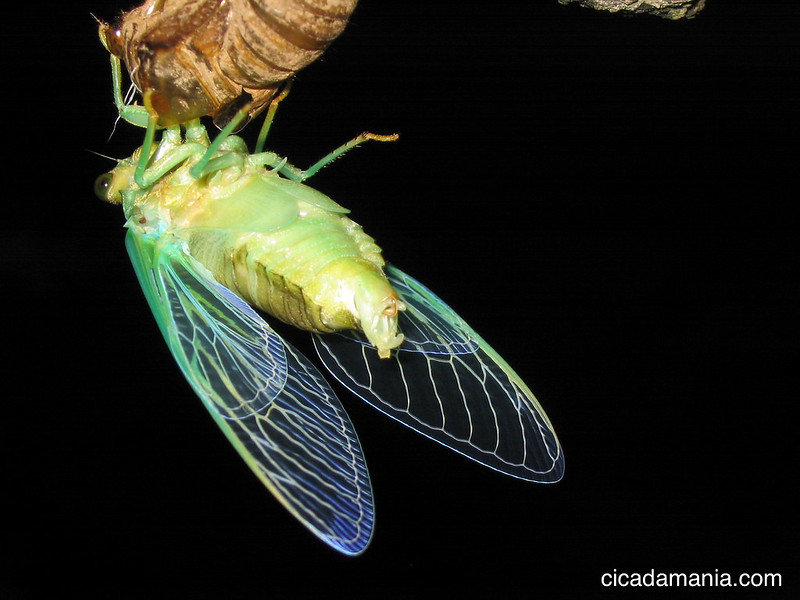
Then its name changed to Tibicen chloromerus, so the gender of the Genus and species name would be in agreement (or so I believe).
Now, this cicada is simply Tibicen tibicen. To read more about why, you’ll need to read Entomological News, Volume 119 Issue 3, “The Identity Of Cicada tibicen Linné [=Tibicen chloromerus (Walker, 1850)] (Hemiptera: Cicadoidea: Cicadidae) no access”.
Here is the abstract:
A lectotype is designated for Cicada tibicen Linné, 1758. The Linnaean specimen located in the Zoological Museum of Uppsala University can be traced to Linné and the original species description. The species is determined to be the same as what is currently recognized as Tibicen chloromerus (Walker, 1850), making T. chloromerus and Cicada sayi Smith and Grossbeck, 1907, junior synonyms of Tibicen tibicen (L.).
Of course you can call it Swamp Cicada, Morning Cicada, or Green Annual Cicada (from Bug Guide). It doesn’t care.
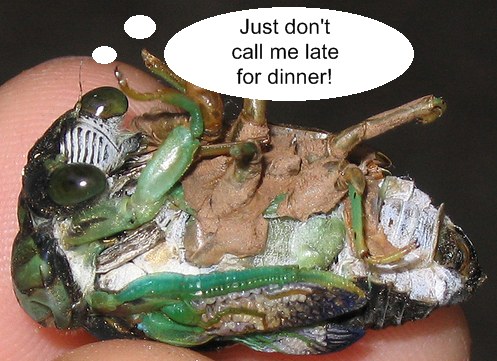
Now do I update all instances of “Tibicen chloromera” on this site, or not. Hmmm….
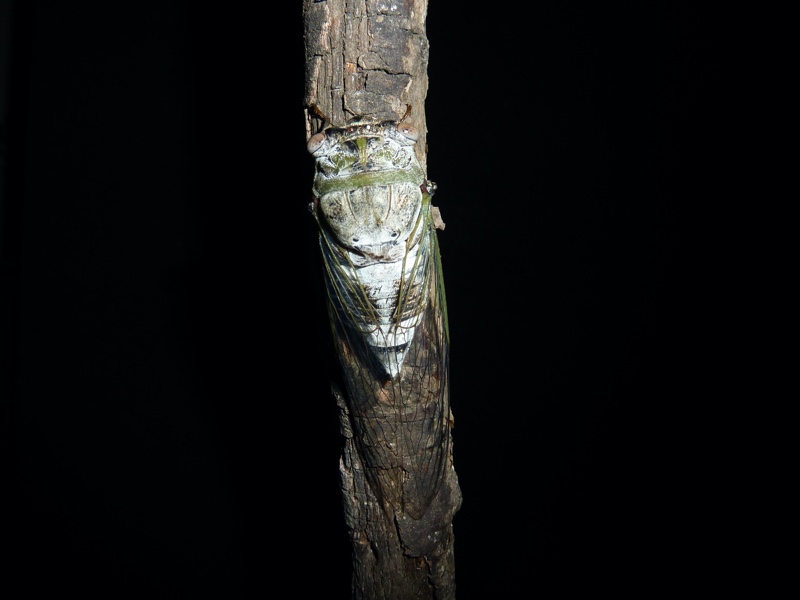
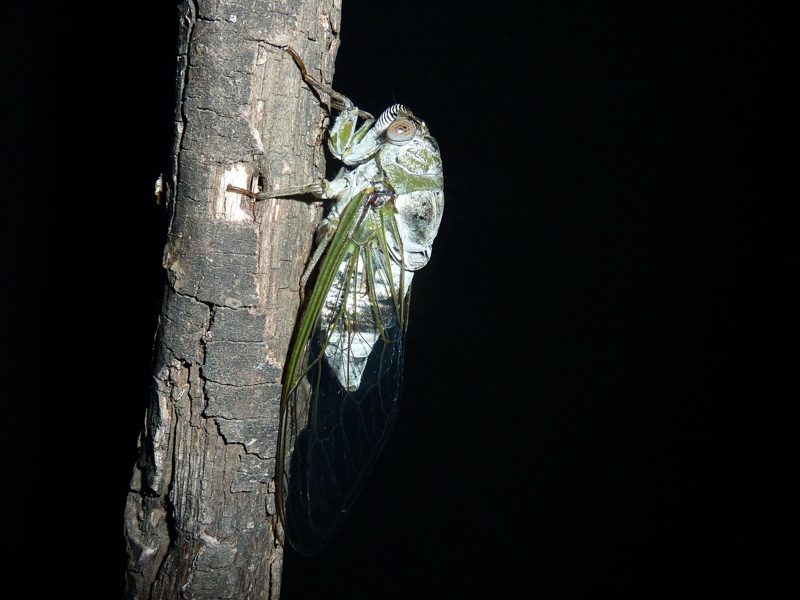
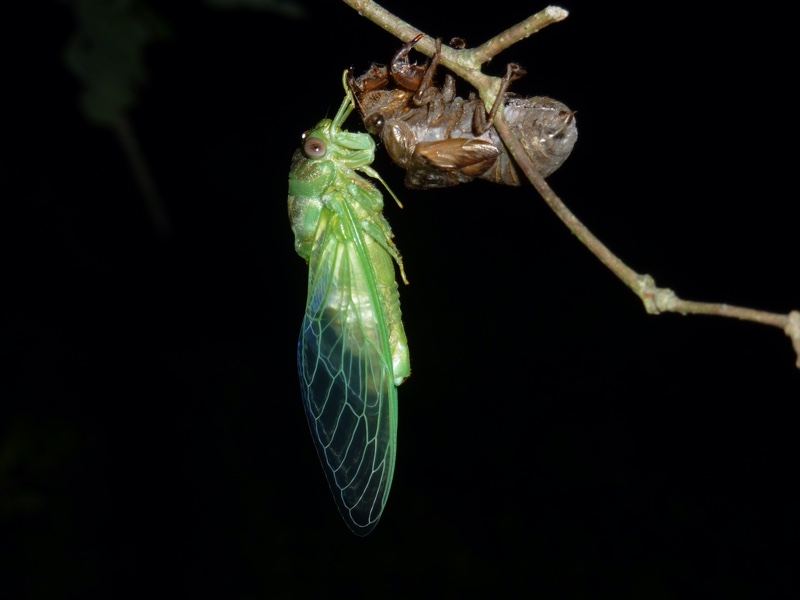
You might know Elias from his posts on the Message Board. Monday, after a lot of searching, he found a female Tibicen auletes in Lakewood New Jersey.
I was down in Lakewood NJ yesterday and after finding 5 more additional huge exuvia, the unthinkable happened. a female T. auletes flew to a light, hit the pole after circling many times and slid down to the ground. I easily captured her on the ground. Wanted to share this picture. look how beautiful she is with all that pruinosity!
Tibicen auletes are the largest of the North American Tibicen species. Their bodies a a little under 2″ long. Auletes are also know as the Sissor-Grinder, Northern Dusk-singing Cicada, or Great Dusk-calling Cicada. Read more at Bug Guide. The Songs of Insects site has sound files so you can listen and hear if you have auletes in your yard too.
Here’s Elias’ photos:
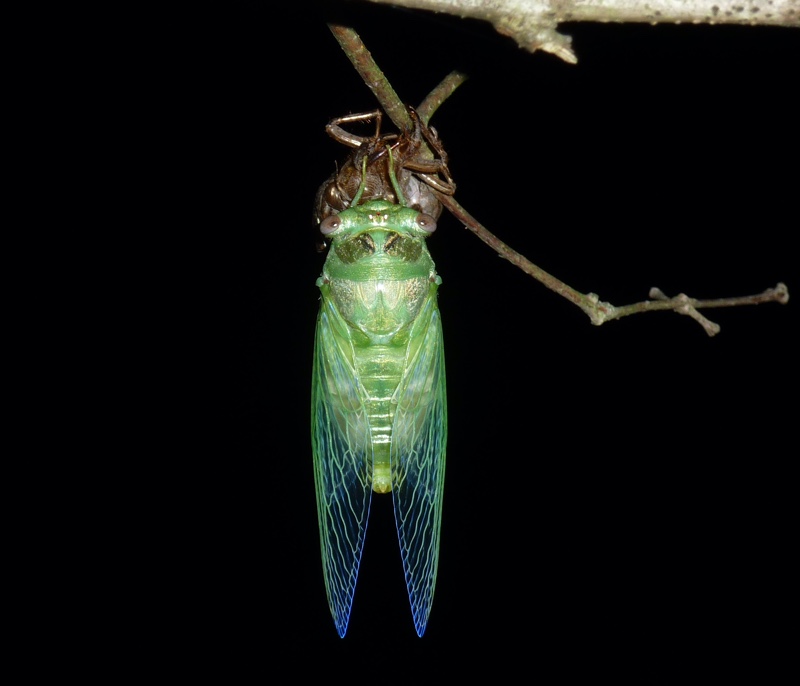
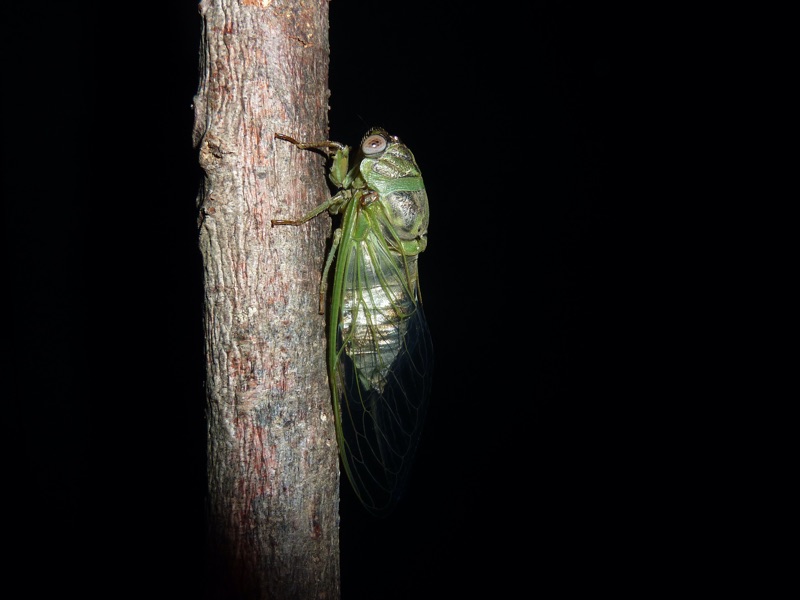
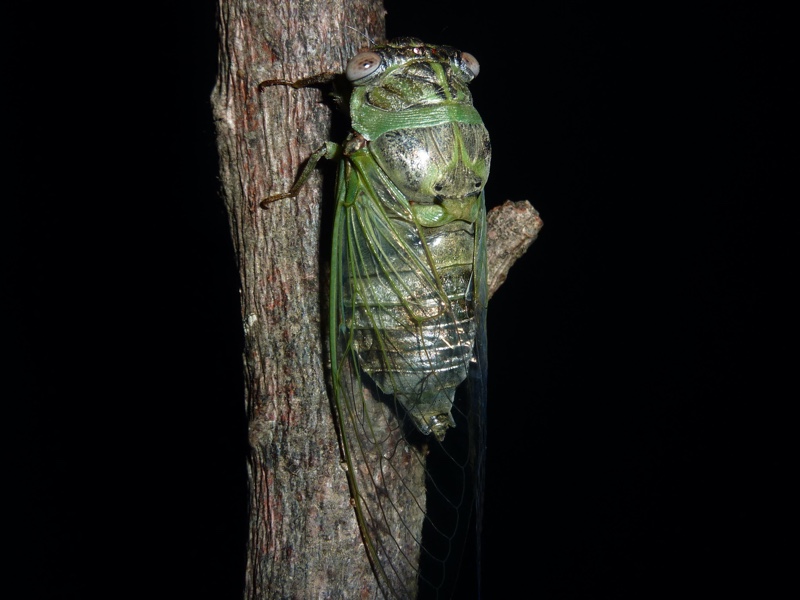
* Note as of 2023 the name of this cicada has changed to Megatibicen grossus. You can also call it a Northern Dusk-Signing Cicada.