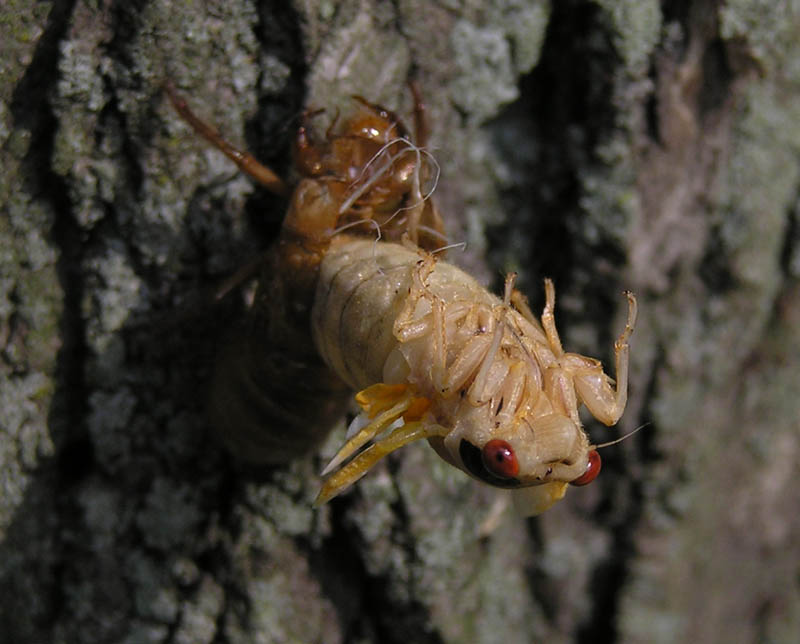
Magicicada Brood X photo by Walter Hanig from 2004. Washington, D.C.
 Cicada Mania
Genera of cicadas.
Magicicada Brood X photo by Walter Hanig from 2004. Washington, D.C.
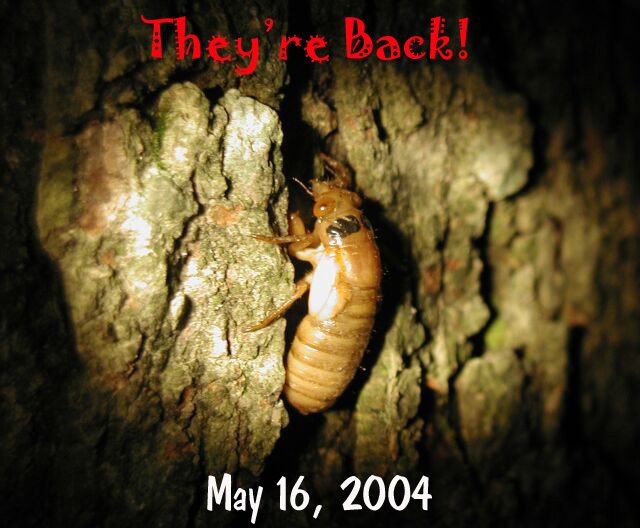
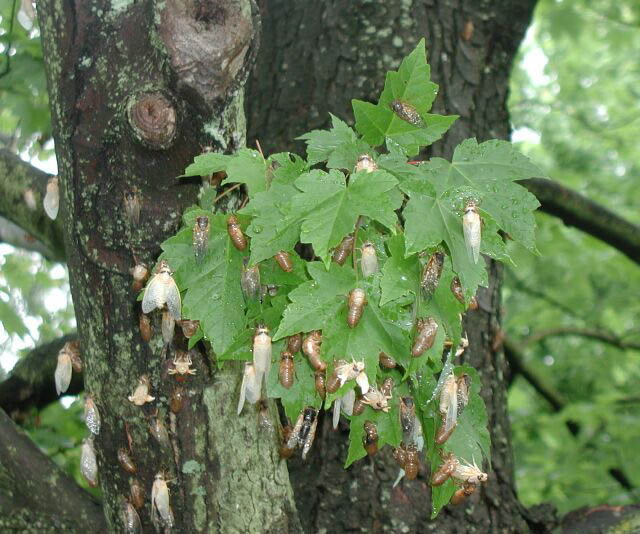
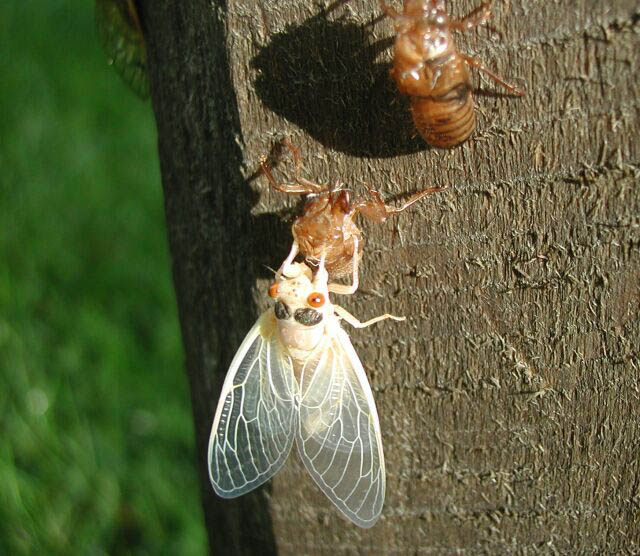
Magicicada Brood X photos by Steve Groh from 2004. Cincinnati, Ohio.
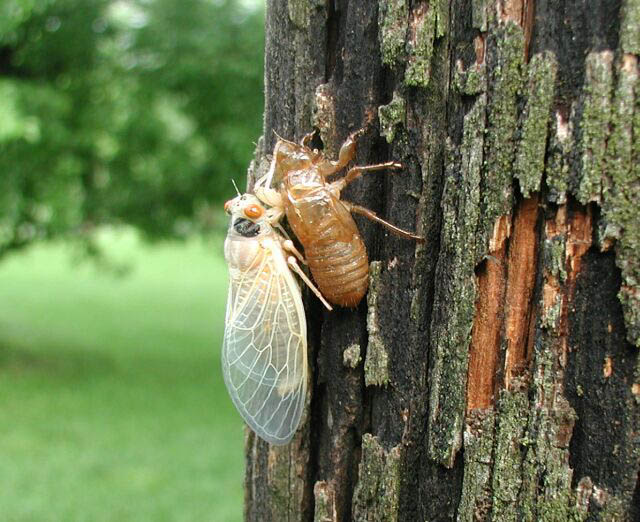
Diceroprocta olympusa photos by Joe Green from 2007. Florida.
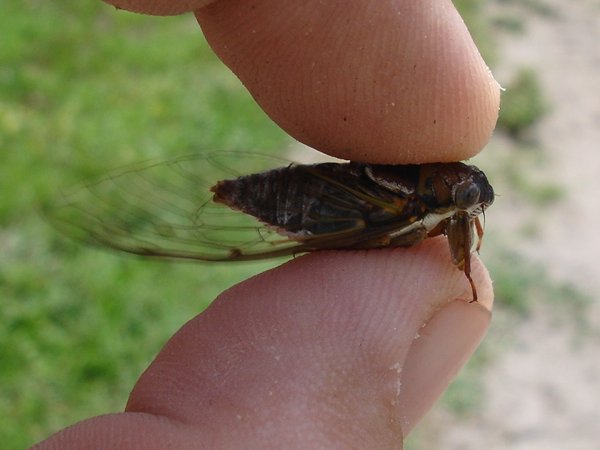
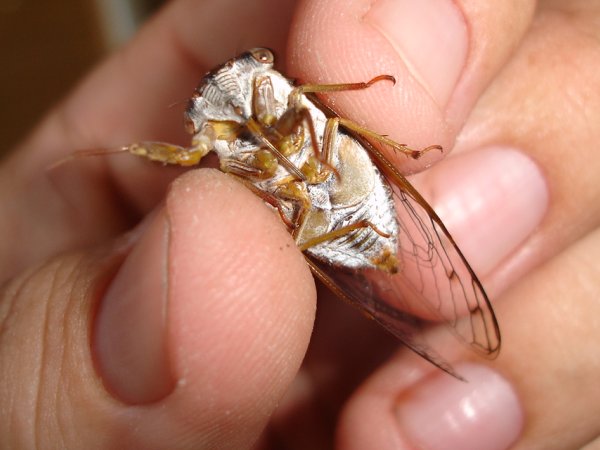
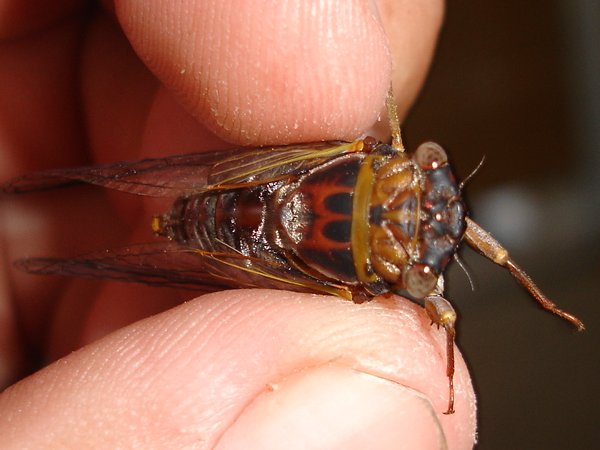
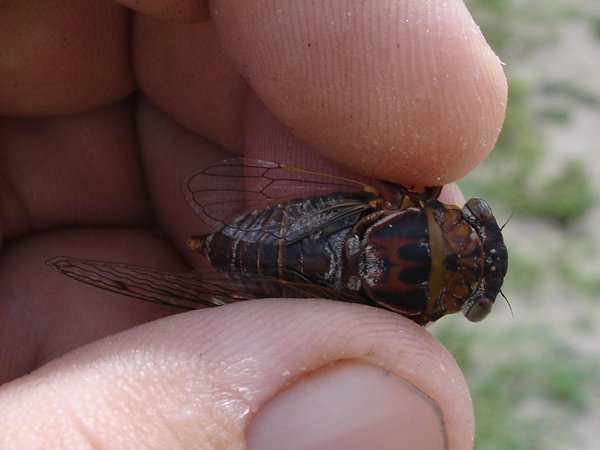
Photos of Magicicada cicadas with white & blue eyes by Roy Troutman from 2004.
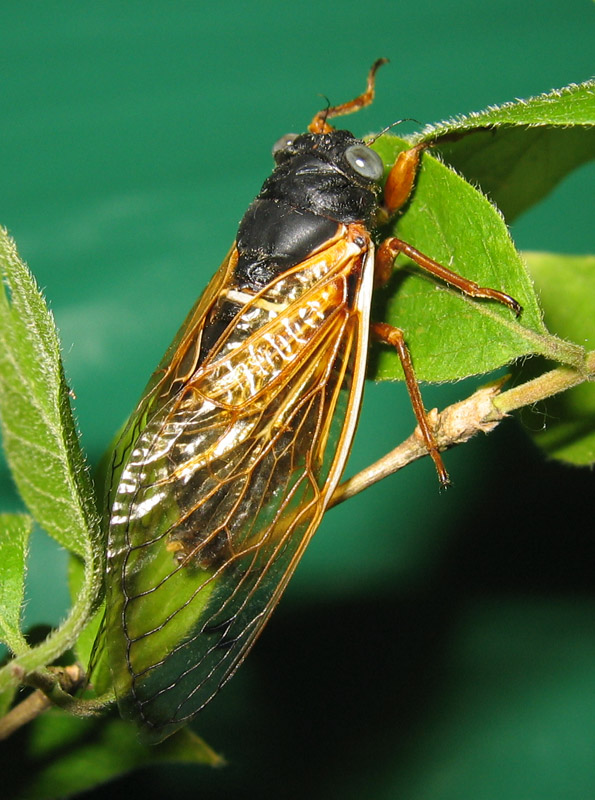
Photo of a Magicicada cicada with blue eyes by Roy Troutman.
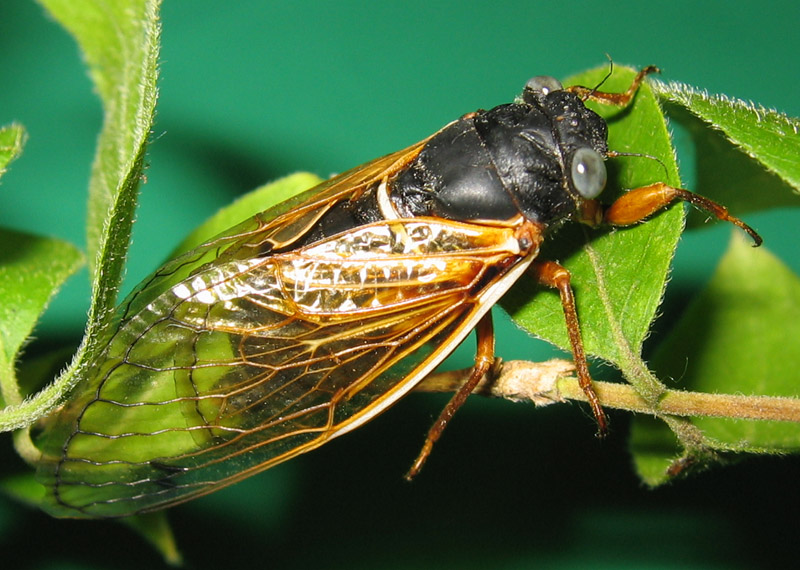
Photo of a Magicicada cicada with blue eyes by Roy Troutman.
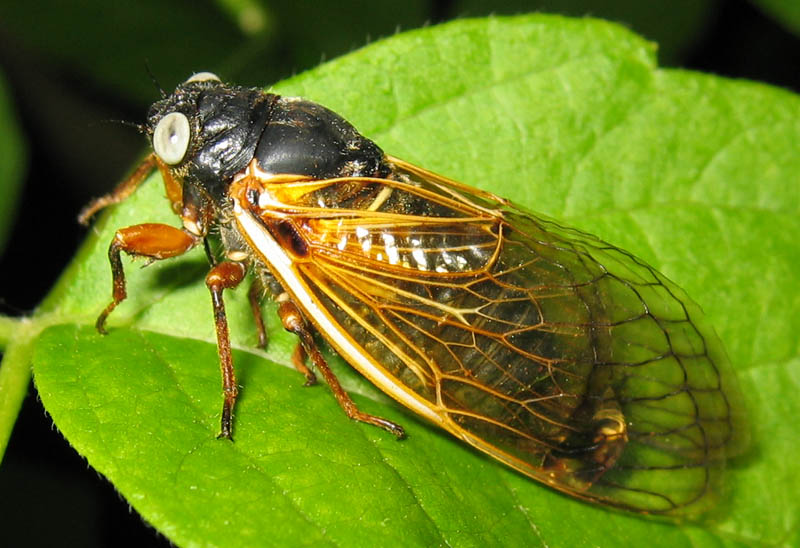
Photo of a Magicicada cicada with white eyes by Roy Troutman.
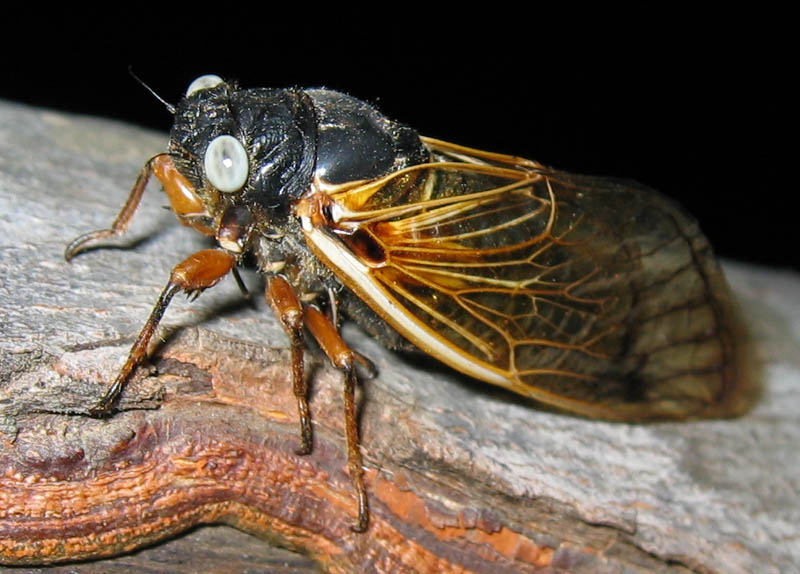
Photo of a Magicicada cicada with white eyes by Roy Troutman.
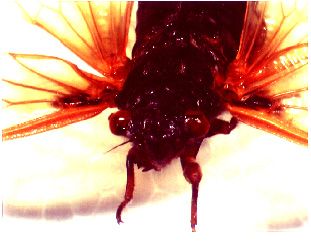
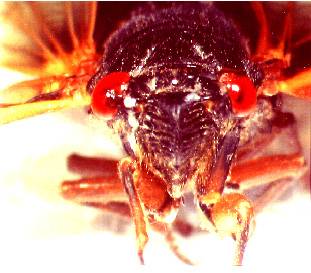
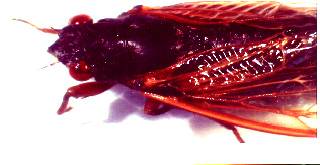
17-year Magicicada Photos by Gwen Elferdink from Brood X 2004.
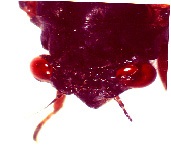
There’s a new cicada subfamily: Derotettiginae.
The five subfamilies are:
Here’s the paper:
Chris Simon, Eric R L Gordon, M S Moulds, Jeffrey A Cole, Diler Haji, Alan R Lemmon, Emily Moriarty Lemmon, Michelle Kortyna, Katherine Nazario, Elizabeth J Wade, Russell C Meister, Geert Goemans, Stephen M Chiswell, Pablo Pessacq, Claudio Veloso, John P Mccutcheon, Piotr Lukasik, Off-target capture data, endosymbiont genes and morphology reveal a relict lineage that is sister to all other singing cicadas, Biological Journal of the Linnean Society, , blz120, https://doi.org/10.1093/biolinnean/blz120
Here’s the abstract:
Phylogenetic asymmetry is common throughout the tree of life and results from contrasting patterns of speciation and extinction in the paired descendant lineages of ancestral nodes. On the depauperate side of a node, we find extant ‘relict’ taxa that sit atop long, unbranched lineages. Here, we show that a tiny, pale green, inconspicuous and poorly known cicada in the genus Derotettix, endemic to degraded salt-plain habitats in arid regions of central Argentina, is a relict lineage that is sister to all other modern cicadas. Nuclear and mitochondrial phylogenies of cicadas inferred from probe-based genomic hybrid capture data of both target and non-target loci and a morphological cladogram support this hypothesis. We strengthen this conclusion with genomic data from one of the cicada nutritional bacterial endosymbionts, Sulcia, an ancient and obligate endosymbiont of the larger plant-sucking bugs (Auchenorrhyncha) and an important source of maternally inherited phylogenetic data. We establish Derotettiginae subfam. nov. as a new, monogeneric, fifth cicada subfamily, and compile existing and new data on the distribution, ecology and diet of Derotettix. Our consideration of the palaeoenvironmental literature and host-plant phylogenetics allows us to predict what might have led to the relict status of Derotettix over 100 Myr of habitat change in South America.
Tweets from Chris Simon @CicadaScience announcing the new subfamily:
One of our undergrads, Rachel Wolther, created this wonderful GIF for our newly published paper. #uconneeb, #endosymbionts, #cicadashttps://t.co/rjdXSCginJ pic.twitter.com/uRppf8ZT0K
— Chris Simon (@CicadaScience) October 13, 2019
Off-target genomic capture data, Sulcia endosymbiont genes and morphology reveal a relict lineage that is sister to all other singing cicadas: a tiny, pale green, inconspicuous and poorly known genus, Derotettix, endemic to salt-plain habitats in arid regions of central Argentina pic.twitter.com/xUhtMPWmgk
— Chris Simon (@CicadaScience) October 13, 2019
It’s been about six weeks since the emergence of Brood VIII in Pennsylvania, Ohio, West Virginia and Oklahoma. Now (first week of August) is a good a time as any to check for periodical cicada nymphs that have hatched from eggs laid in branches. Once they hatch they’ll find their way to the ground, where they’ll find and begin feeding on roots for the next 17 years.
Look on branches where cicada laid their eggs.
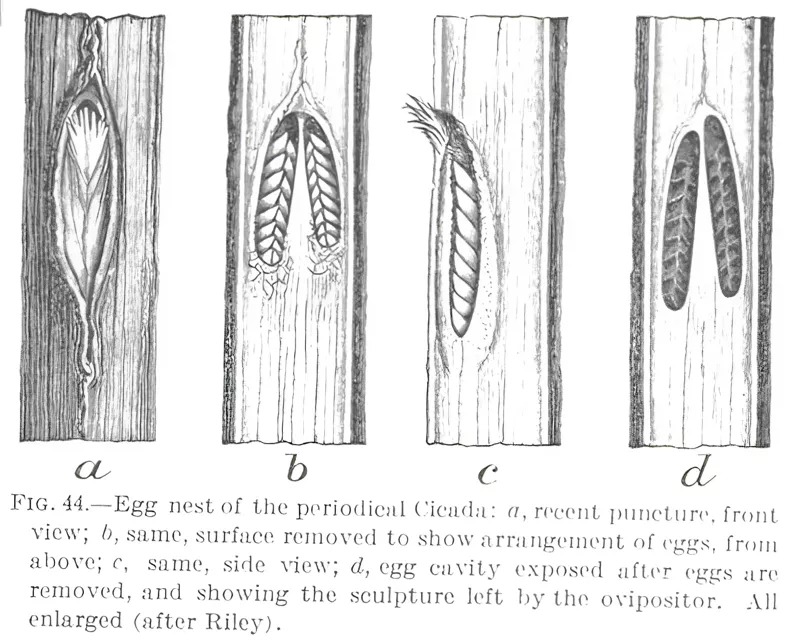
An illustration of egg nests (Marlatt 1907 Egg Nest Detail):
A nymph on a branch with adult male finger for comparison: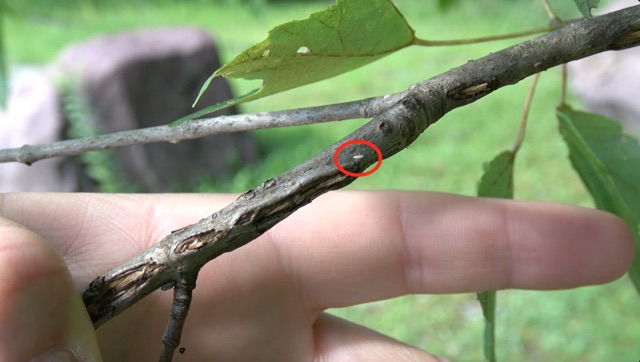
Close up: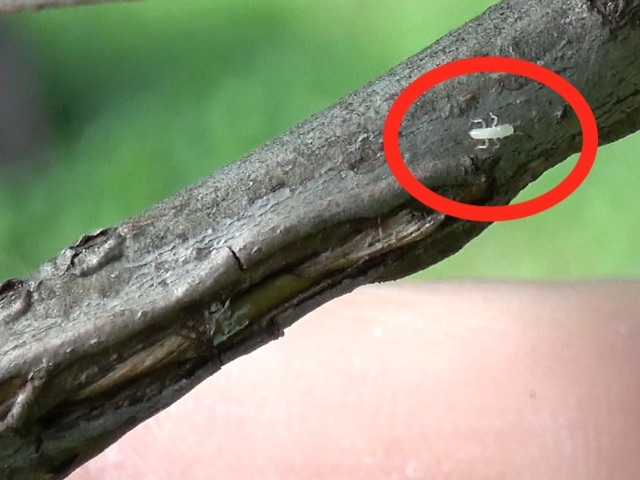
Another close up: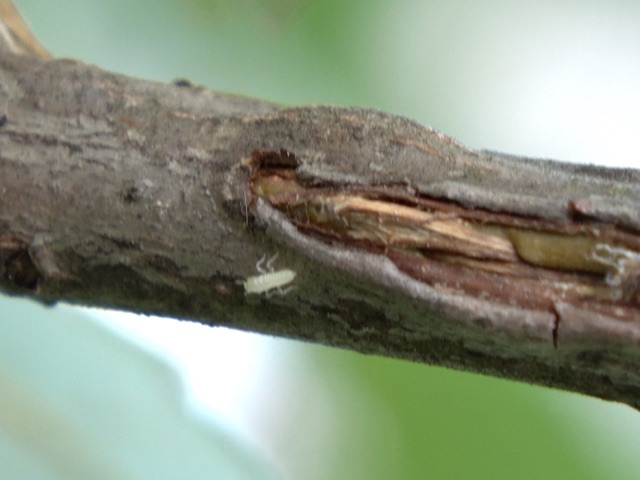
This year Brood VIII periodical cicadas emerged in the Pittsburgh area, and I traveled to see and map them. Unfortunately, I only had 3 days, so I only saw the western side of the Brood.
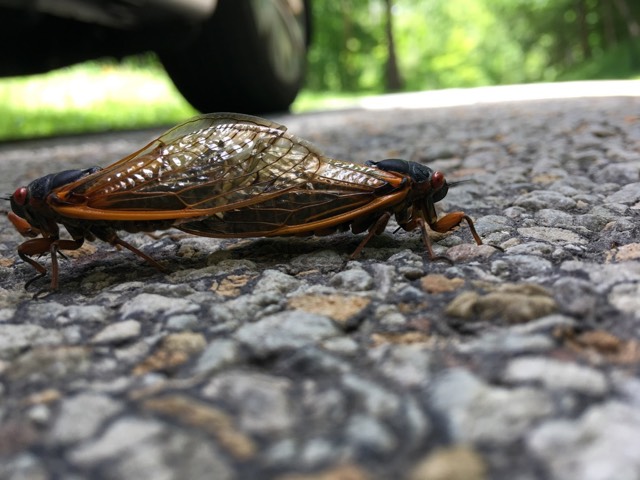
All things considered — including cool, cloudy weather (which cicadas don’t like as much as hot & sunny) and a very rainy spring — Brood VIII was the least impressive brood I’ve witnessed, in terms of the sheer number of cicadas. I hope no one in the Pittsburgh area takes offense to that statement — Brood VIII is your brood, and you should be proud of it. It is just that as we humans build more and more, and continue to alter the environment, the numbers of cicadas will steadily dwindle. and I think we’re seeing that happen to Brood VIII.
Here’s an impromptu map of the places I saw cicadas:
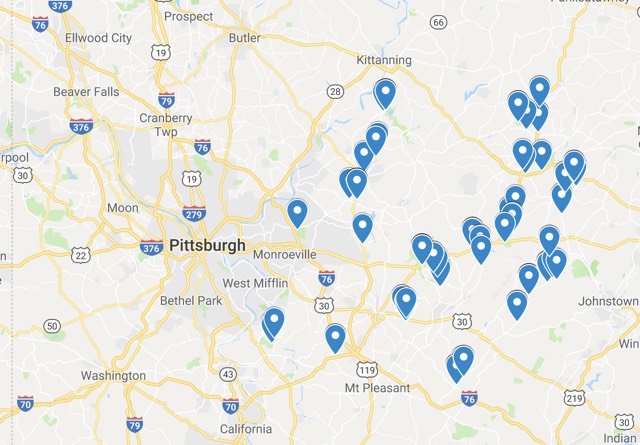
And a list of places:
And some photos:
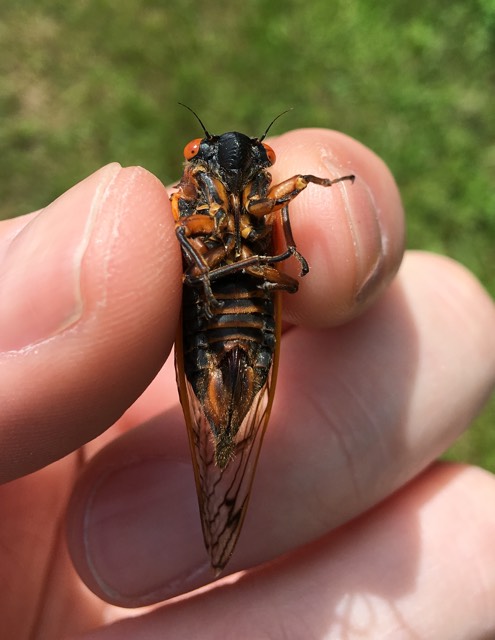
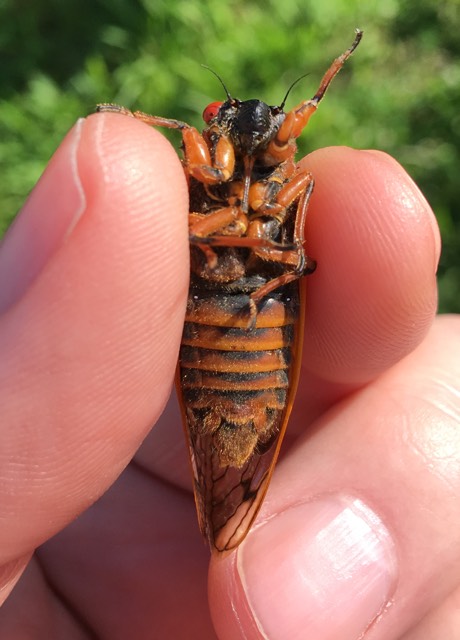
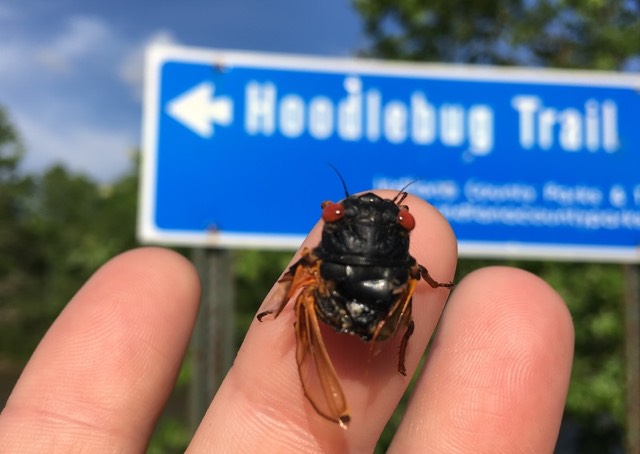
Video of the amazing cicada that was just a head.
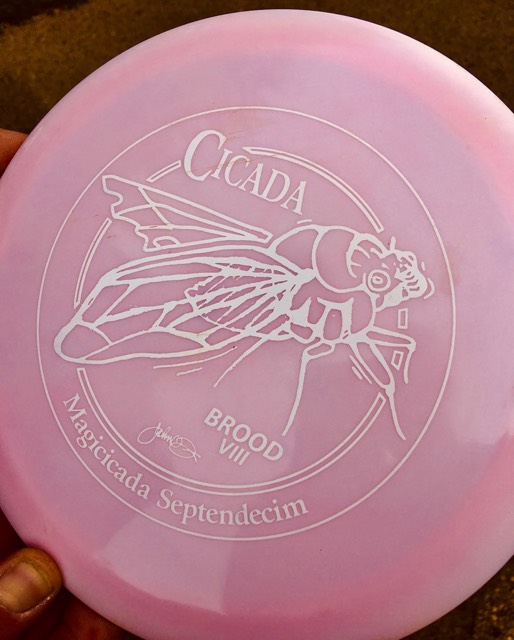
A very cool Brood VIII cicada frisbee:
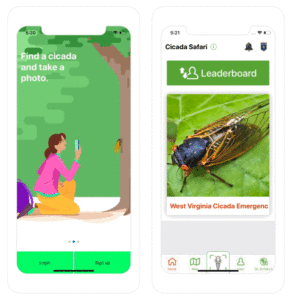
Cicada Safari App Frequently Asked Questions:
Gene Kritsky working with the Center for IT Engagement at Mount St. Joseph University in Cincinnati.
Probably Gene Kritsky and the Center for IT Engagement is your best route. Be polite. The app has 250,000 users and only a handful of people to approve cicada sightings.
Gene is the Charles Lester Marlatt of the 21st century. Gene is a periodical cicada expert, researcher & professor. Buy his latest book, Periodical Cicadas: The Brood X Edition, now.
Choose wisely: Google Play Store or Apple App Store.
As of June 1st 2021, over 250,000 people have downloaded the app.
Yes, you can! See a map of sightings from the Cicada Safari app.
Of course the app has a website. Here’s the website.
Judging by screenshots of the app, it looks like you can 1) identify cicadas, 2) take a photo and share it, 3) map the location where you found it, 4) compete with other cicada scientists for the most cicadas found. Looks that way at least. The app lets you submit cicadas photos of any species.
Try the iNaturalist apps.
Not that I know of, but you can always ask Gene Kritsky. Feel free to leave a comment on this website or the Facebook Cicada Discussion Group.
Cicada Mania is not affiliated with the Cicada Safari app. Cicada Mania is not paid to endorse or promote it. We promote it because we like it.
Platypleura hampsoni is a cicada found in India.
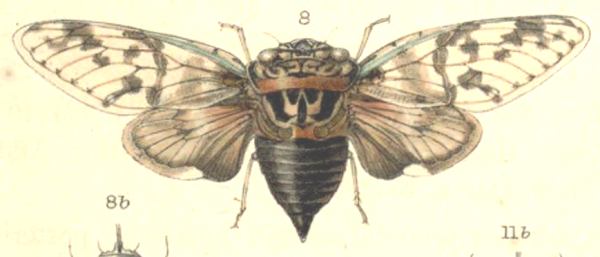
Image and Description from A Monograph of Oriental Cicadas by W. L. Distant. 1889-1892. Read it on the Biodiversity Heritage Library website:
Male. Head luteous; front with a number of black linear markings; vertex with a transverse, narrow, black fascia between the eyes, and with a central black spot containing the ocelli. Pronotum greenish-ochraceous, the disk with the following black markings: — a central I-shaped spot, on each side of which are some oblique linear markings; the lateral dilated margins are black, and the anterior margin is narrow — and the posterior margin broadly— dull reddish ochraceous. Mesonotum greenish-ochraceous, with the following black spots: — four obconical from anterior margin, of which the central two are smallest; and a large, oblong, discal spot, with a small partly rounded spot on each side of it; the basal cruciform elevation dull reddish ochraceous. Abdomen above black. Head beneath, with the face black, marked with luteous transverse lines; sternum somewhat ochraceously pilose; abdomen beneath black, the segmental margins ochraceous, the anal appendage of the same color; legs castaneous, streaked or spotted with piceous and luteous. Rostrum black, the basal portion luteous.
Tegmina pale hyaline, with the venation brown, the costal membrane greenish, the basal third somewhat opaque, with darker transverse markings and small basal black markings; a double irregular series of dark brown spots cross the tegmina at about center, a dark brown fascia at bases of upper apical areas, a few small subapical spots and some small marginal spots of the same color. Wings brownish-ochraceous, paler at apex than at base and very pale across the center, with a white marginal spot near anal angle; the venation brown.
The rostrum reaches the basal abdominal segment; the lateral margins of the pronotum are distinctly angulated; the face is robustly gibbous, with a profound central longitudinal sulcation; the posterior tibijE have three distinct spines on each side of apical half.
Long. excl. tegm. 2 . 23 millim. Exp. tegm. 70 millim. ; exp. pronot. angl. 13 millim.
Hab. — Continental India : Neelgiri Hills, northern slopes, 3500 & 5000 feet (Hampson — coll. Dist.).
Scientific classification:
Family: Cicadidae
Subfamily: Cicadinae
Tribe: Platypleurini
Genus: Platypleura
Species: Platypleura hampsoni (Distant, 1887)
For more information about this cicada, visit Cicadas of India.