This is an interesting story from LinkedIn. The folks at Nel PreTech Corporation created a CT scan of a female Magicicada!

 Cicada Mania
Genera of cicadas.
This is an interesting story from LinkedIn. The folks at Nel PreTech Corporation created a CT scan of a female Magicicada!
People ask, “Can periodical cicada singing damage hearing”? It all depends on how long you expose yourself to their song, and how close your ears are to the insect. Invest in some quality ear plugs if you are concerned. Consult a medical professional, of course.
Periodical cicada choruses are often in the 80–85db range, which the CDC says “You may feel very annoyed” and “Damage to hearing possible after 2 hours of exposure”:

If you spend a long time outside during a chorus, your ears will probably ring for hours after. That is my personal experience.
Placed directly on a microphone, I have observed periodical cicadas get as loud as 111.4db. According to the CDC, that is close enough to cause hearing damage in less than 2 minutes. Do not place male cicadas on your ear! Do not put your head right next to the tree branches where they’re singing.


Check out this video of Magicicada sound levels measured by an EXTECH 407730 Sound Level Meter:
How to avoid hearing them?
I’ve exposed myself to hundreds of hours of cicada songs. I’ve also gone to hundreds of concerts and listened to a lot of rowdy music over the years. My hearing is not great, but it is probably not due to cicadas.
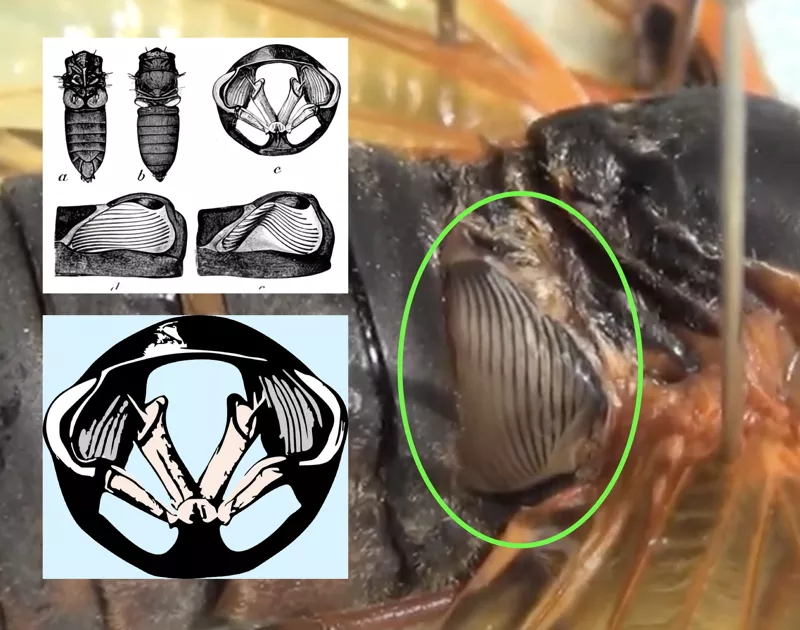
It is worth mentioning that only male cicadas sing. Females make noise by flicking their wings, but they are not as loud as the males. Males have organs called tymbals that vibrate creating their signature sound.
Here are illustrations and a photo of a Magicicada’s tymbals. They have one on each side of their body:
So what is the loudest cicada? According to the University of Florida Insect Book of World Records, “The African cicada, Brevisana brevis (Homoptera: Cicadidae) produces a calling song with a mean sound pressure level of 106.7 decibels at a distance of 50cm.” The loudest cicada in the United States, using the same methodology, is Diceroprocta apache (Davis) at 106.2db at 50cm.
I need to take measurements of Magicicada from 50cm to make a comparison. The measurements I’ve taken are in the midst of a large chorus with cicadas about a meter to 20 meters away, which falls in the 80-85db range; or directly on the mic, which gets into the 109-111db range. Your results may vary.

One phenomenal behavior of Magicicada periodical cicadas is they “straggle”, meaning they emerge earlier or later than the year they are expected. Typically they emerge 1 or 4 years before they’re supposed to emerge.
Brood XXIII is expected to emerge in four years in 2028, but enough are emerging in 2024 for cicada researchers like Chris Simon to take notice! She let us know about the stragglers on May 8th.
Brood XXIII is found in Arkansas, Illinois, Indiana, Kentucky, Louisiana, Mississippi, and Tennessee. This is not a perfect map (it overlaps with Brood XIX), but XXIII cicadas will show up in that area.
Arkansas: Bayou Deview Wildlife Management Area, Poinsett County, Devalls Bluff, Harrisburg, Holland Bottoms, Jacksonville, Jonesboro, Knox Co., Lake Hogue, Lake Poinsett State Park, Little Rock, and Wynne.
Illinois: Anna, Carbondale, Carterville, Chester, Clinton Lake, Marissa and Robinson.
Indiana: Harmonie State Park, Hymera, Leanne, Richland, Sullivan And Posey Counties.
Kentucky: Benton, Calvert City, Gilbertsville, Henry County, Murray, and Paducah.
Louisiana: Bastrop, Choudrant, Grayson and West Monroe.
Mississippi: Alva, Arlington, Booneville, Brandon, Clinton, Corinth, Desoto County, Florence, French Camp, Hernando, Holcomb, Houlka, Jackson, New Albany, Oxford, Potts Camp, Silver Creek, Tishomingo, and Water Valley.
Tennessee: Atoka, Benton, Cordova, Henry County, Huntingdon, Jackson, Lavinia, Leach, Lexington, McNeary County, Memphis, Paris, Savannah, and Speedwell.
Here’s a blue overlay of there Brood XXIII emerges from the UCONN map on the iNaturalist data (as of May 5th):
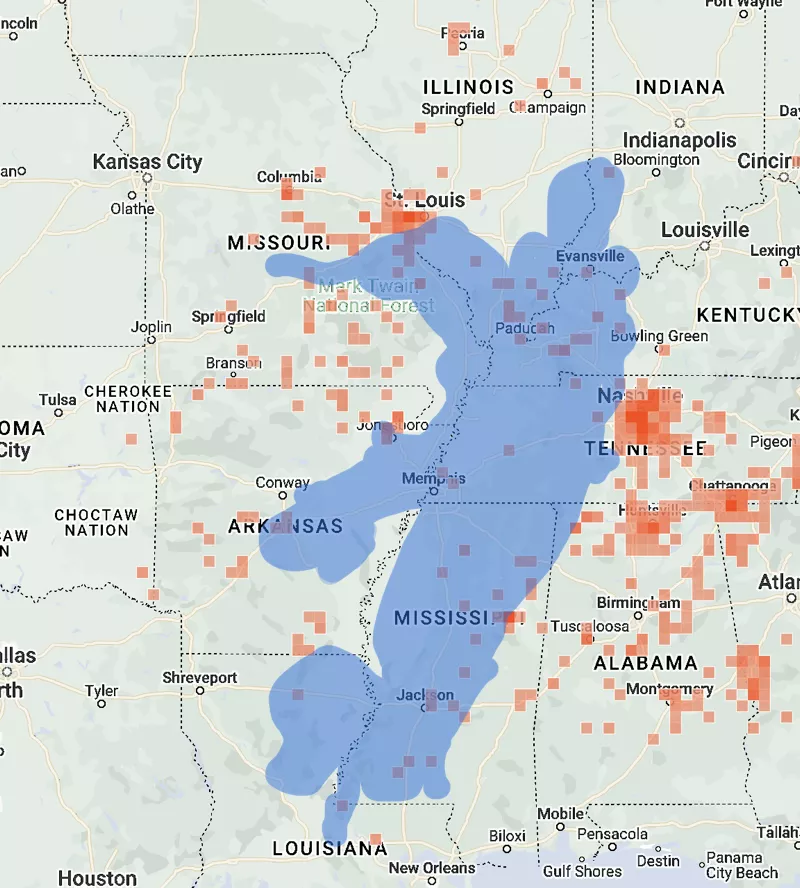
Surrounding the blue area on the west and east is Brood XIX and north will be Brood XIII.
More info:
I created a new iNaturalist project called the Magicicada Flagging Project to track tree flagging damage by Magicicada cicadas.
Upload a tree or branch with flagging to iNaturalist, add it to the Magicicada Flagging Project, and when it asks you if the observation has “Magicicada Flagging” select “yes”.

When Magicicada cicadas lay eggs in the branches of trees (ovipositing) branches may become damaged or die which causes the leaves to turn brown. This is called flagging. Magicicadas, depending on their location, oviposit between late April through to the end of June. Flagging will appear in the weeks following ovipositing. Leaves will remain brown throughout the year.
The project leverages the observation field Magicicada Flagging set to yes.

The project works regardless of whether the organism is identified as a type of tree (oak, chestnut, etc.) or a Magicicada cicada. Most people identify trees with flagging as a “Magicicada” but I would not want to take away the option to allow people to identify a tree (oak, chestnut, etc.) over the type of cicada that did the damage.
There is a similar observation field for cicada presence set to flagging/oviposition scars, but it’s not specific to Magicicada and oviposition scars do not always accompany flagging. I do encourage you to use this observation field as well!


How can you tell if a Magicicada periodical cicada nymph is ready to molt?
Answer: look for two black spots on its back (technically the cephalothorax). They look like they are wearing aviator sunglasses pushed up on their forehead!
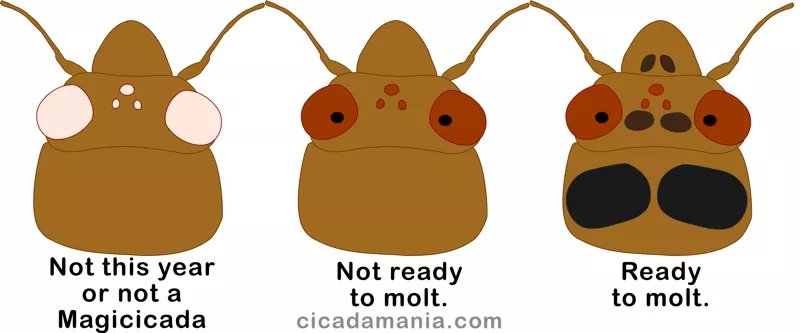
I do not know the official name for these spots, but they seem to be related to the pigment that turns the cicadas black after they molt. They may scare away predators that think the spots are big eyes!
Here are a few ideas for a name for them:
obscuras maculas
mutatione macularum
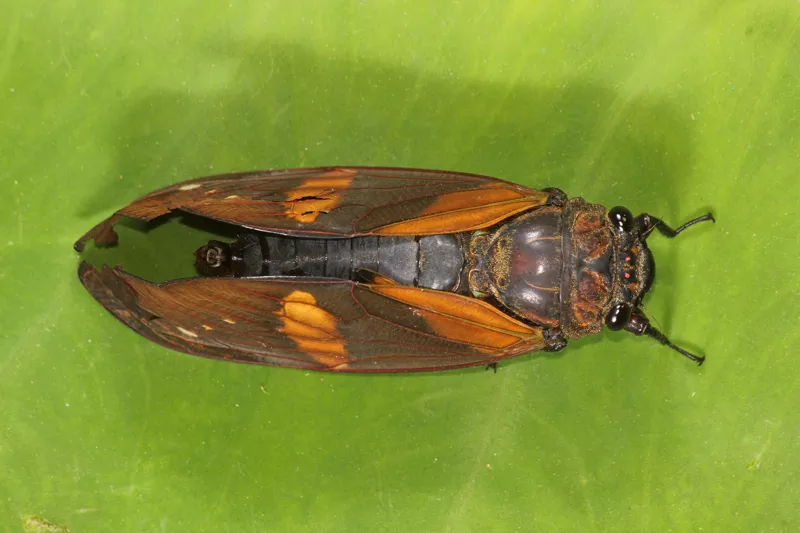
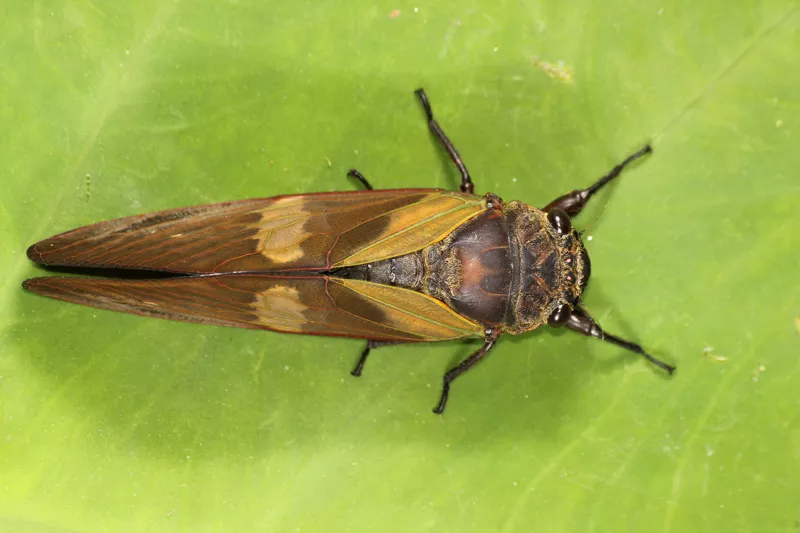
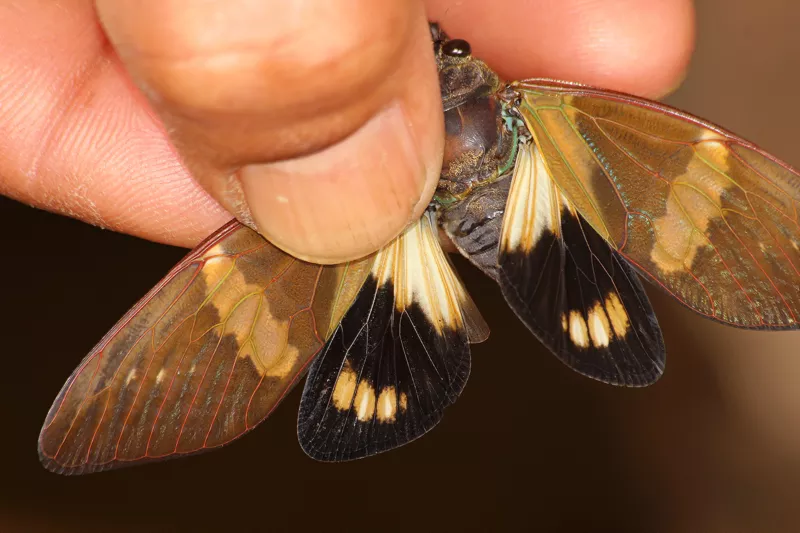
News from Vivek Sarkar! A new cicada species, Becquartina bicolor, has been discovered in India.
This also marks the first time a cicada of the genus Becquartina was discovered in India.
Photos courtesy and copyright of Vivek Sarkar. Note the variation in colors.
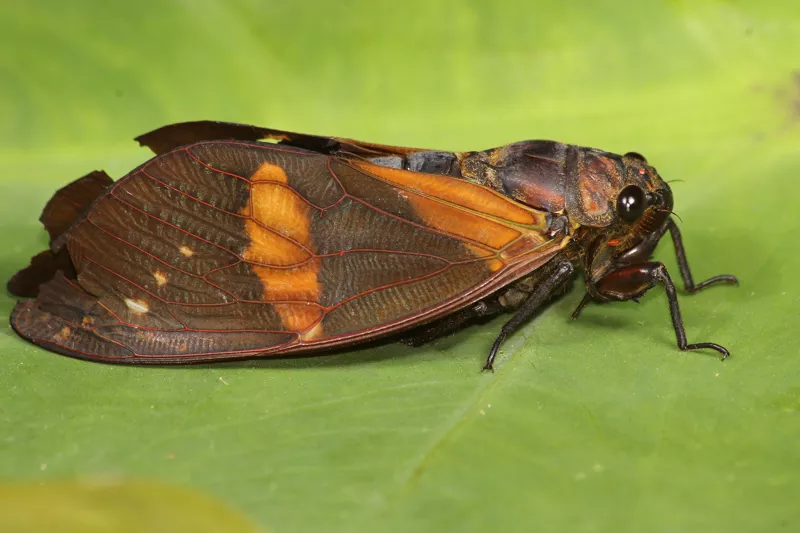
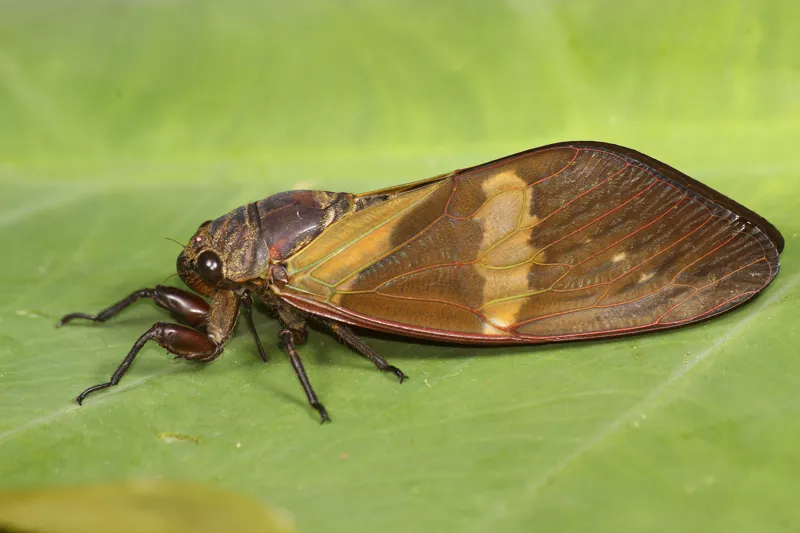
From Vivek:
I am thrilled to share with you the latest development in our research endeavors here in India. We have recently uncovered an astonishing new cicada species from the genus, marking its inaugural appearance in India. This significant discovery was made independently within the mysterious forests of Garo Hills and Ri Bhoi district, igniting a sense of wonder in the realm of biodiversity exploration and shedding light on the untapped potential of Meghalaya’s diverse ecosystems.
As you are aware, cicadas in India have been a long-standing subject of neglect, with studies stagnating since the early 20th century. Despite boasting the world’s highest generic diversity of cicadas, their biology remains largely unexplored within India. With the unveiling of four new species in Meghalaya (including this one), alongside four additional additions to India’s cicada diversity since 2020, these forests continue to unveil new marvels.
Here is a link to the paper by Vivek Sarkar, Rodeson Thangkhiew, Cuckoo Mahapatra, Pratyush P. Mohapatra, Manoj V. Nair, and Sudhanya R. Hajong: Discovery of the cicada genus Becquartina Kato, 1940 (Hemiptera: Cicadidae: Cicadinae) in India with the description of a new species from Meghalaya.
Photos courtesy and copyright of Vivek Sarkar.
Here is a quick way to tell the difference between the 7 periodical cicada species:
Download this chart. Click/tap for a larger version:
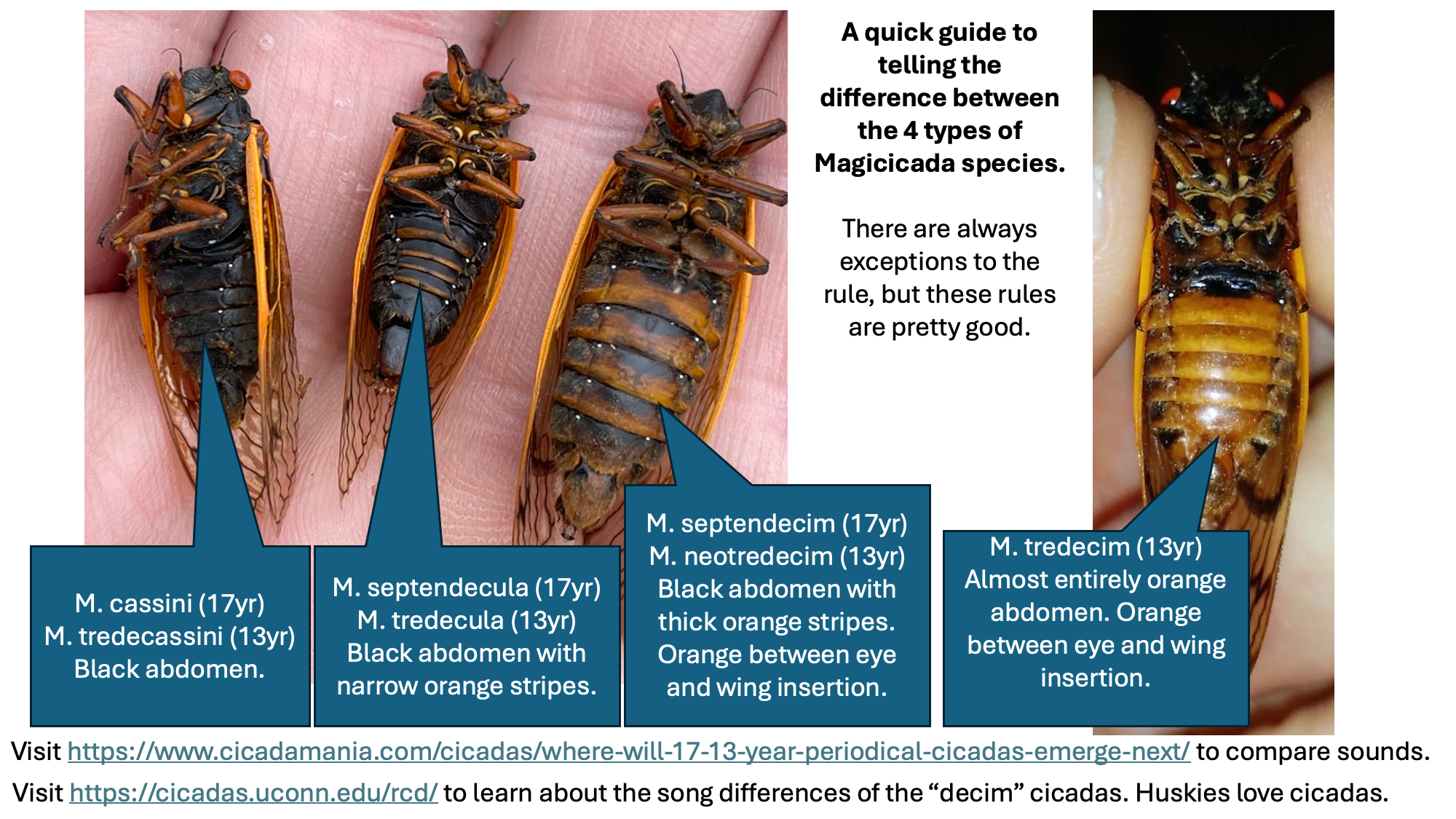
The songs of Magicicada cassini (17-year) and Magicicada tredecassini (13-year) are essentially identical:
M. cassini:
M. tredecassini:
The songs of Magicicada septendecula (17-year) and Magicicada tredecula (13-year) are essentially identical:
M. septendecula (©Joe Green):
M. tredecula:
The songs of Magicicada septendecim (17-year), M. neotredecim (13-year), and Magicicada tredecim (13-year) are essentially identical. M. neotredecim varies the sound of its call in the presence of M. tredecim.
M. septendecim:
M. neotredecim (© Insect Singers)
M. tredecim (© Insect Singers)
And/or watch this video:
Then read this and listen to the sound files on the page: Where will 17 & 13 Year Periodical Cicada Broods emerge next?
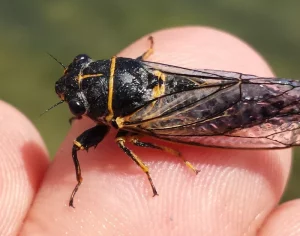
Platypedia cicada by CGWiber of the Dutch John Resort of Flaming Gorge Reservoir, Utah.
Platypedia and Okanagana species are favorites of fly fishers in the western United States.
The trick is guessing when they’ll emerge. Platypedia and Okanagana have a periodicity to their abundance, but they are not as predictable as Magicicada cicadas in the eastern US, which emerge exactly every 17 or 13 years. Take a look at the data from Tim McNary’s Platypedia putnami survey at Horsetooth Mountain Open Space by Tim McNary and you’ll see Platypedia can have peaks every 4 or 8 years. Some years there are zero.
I recommend checking out Dave Zielinski’s new book Cicada Madness, Timing, Fishing Techniques, and Patterns for Cracking the Code of Epic Cicada Emergences. It tackles this topic, has a directory of guides and fly shops, and includes fly patterns. It’s a very nice book.
How can you do your research?
If I were you I would call lodges and fishing equipment shops in the area where you want to fish. You can find this information from Dave’s book, or on Google/Bing. Local people are familiar with the emergence patterns in their area. They’ll also try to get your business, of course. That said, fishermen keep their favorite places a secret. I did not know about my father’s secret fishing place until months before he passed away.
You can use iNaturalist to guess when cicadas will emerge in local areas. iNaturalist is a website and app where you can post photos of plants, fungi, and animals and get an identification. Using thousands of people’s posts, we get good data for when and where cicadas emerge.
Example of how to see when Platypedia emerges in northern Utah
We were asked when cicadas would emerge in Northern Utah. I’m going to guess that northern Utah means Provo, UT, and north, so I grabbed the latitude of Provo from Google Maps which is 40.249 (save this data for later).
1) On iNaturalist filter sightings to Show Verifiable and Needs ID; under Description/Tags put in Platypedia; under Place put Utah, US; and for the Date fields choose Any.
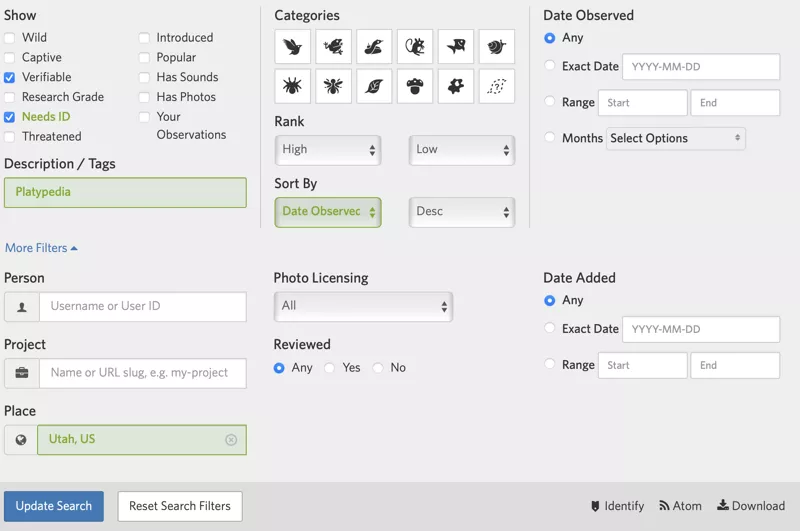
Clicking the Update Search will take you to a page that shows the sightings with photos, locations, dates, and a map.
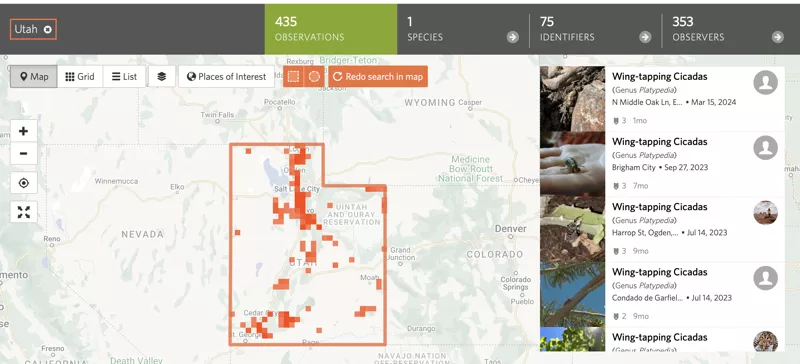
But don’t do that yet, go to step 3.
2) Click the Download button, to download the data.

3) That takes you to an Export page. Scroll until you see the blue Create Export button and click that. Then once it does its computation, click the Download button. This will download a Comma Separated Value file (.csv) that you can open with Microsoft Excel or a similar program.

4) Open the CSV in Excel, save it as an XLSX file, and filter the top/heading row.
5) Filter the “latitude” column by 40.2490. This will give you locations in Northern Utah.

6) Open a new sheet in Excel, and cut and paste the data from the “observed_on” column into that sheet.
7) Use the Text to Columns wizard under Data to separate the data into months, days, and years.
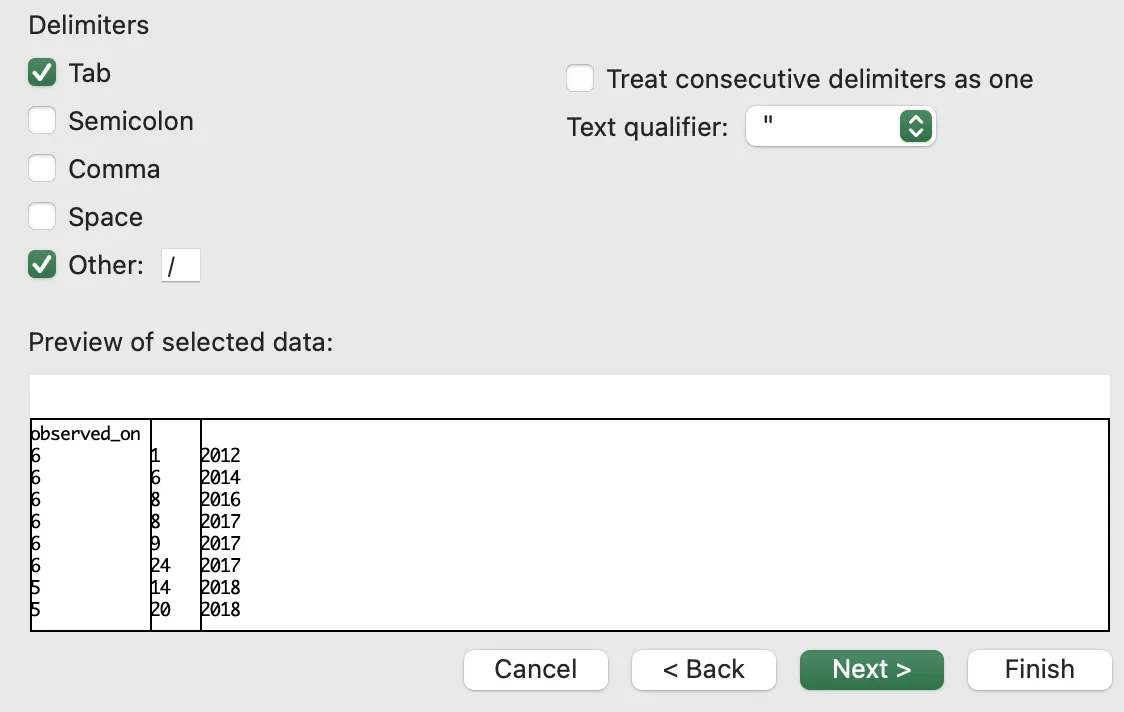
8) Give the columns the headings Month, Day, and Year and filter them.
With some fiddling, you should get something like:
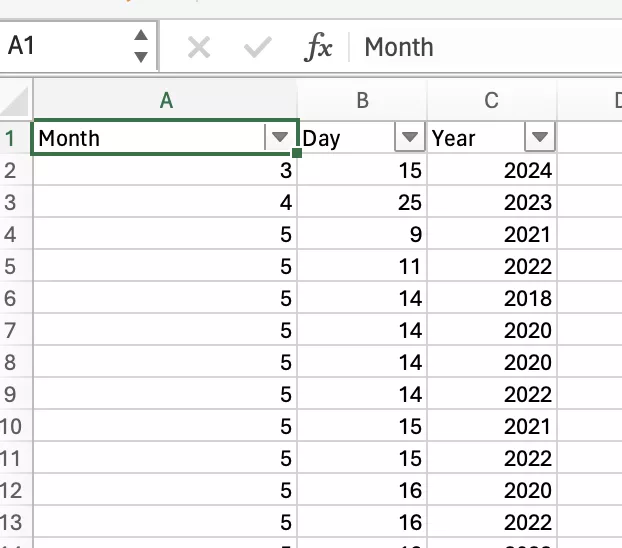
9) Determining what day they typically emerge.
We know most cicada hatches happen in May(5) and June(6).
First, filter the Month column by 5.
Then look at the Day data for the average (Mean) and most frequent (Mode) dates when cicadas emerge.
You can do this in Excel or paste the numbers into an online tool like the Mean, Median, Mode Calculator.
Excel formula.
Mean: =AVERAGE(A1:A10)
Median: =MEDIAN(A1:A10)
Mode: =MODE.MULT(A1:A10)
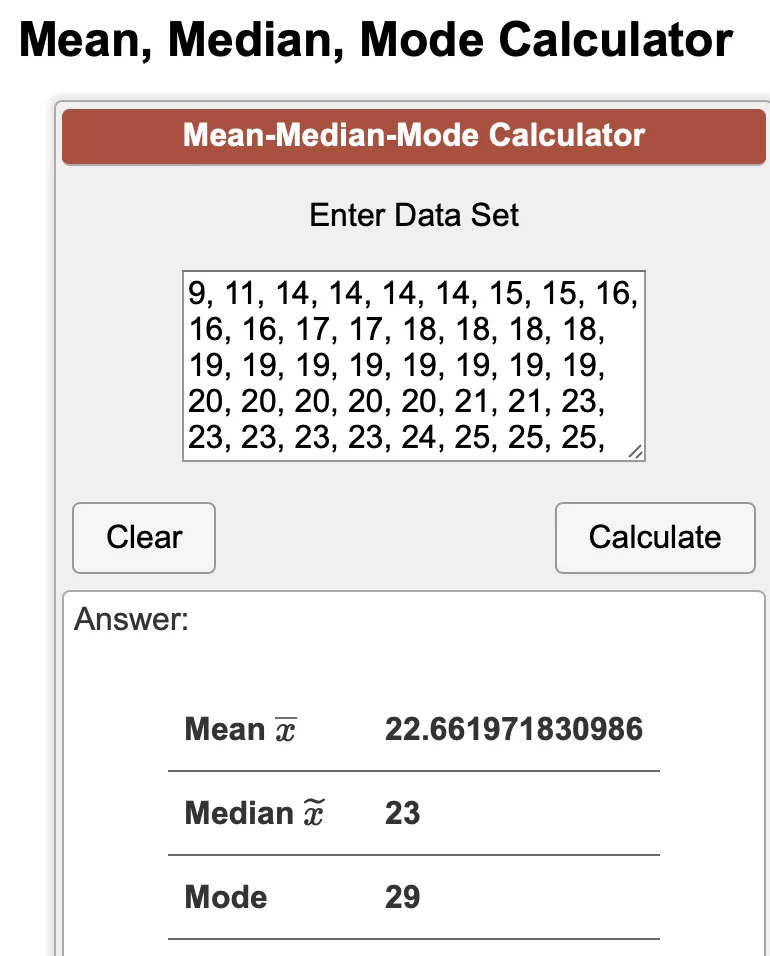
We can see that in May(5) the average day people spot Platypedia is the 23rd (Mean) and the most frequent date is the 29th (Mode). Typically they start to emerge the last week of May, so that’s when you want to start calling the lodges, guides, and fly fishing gear shops for specific information.
Let’s do the same for June(6).
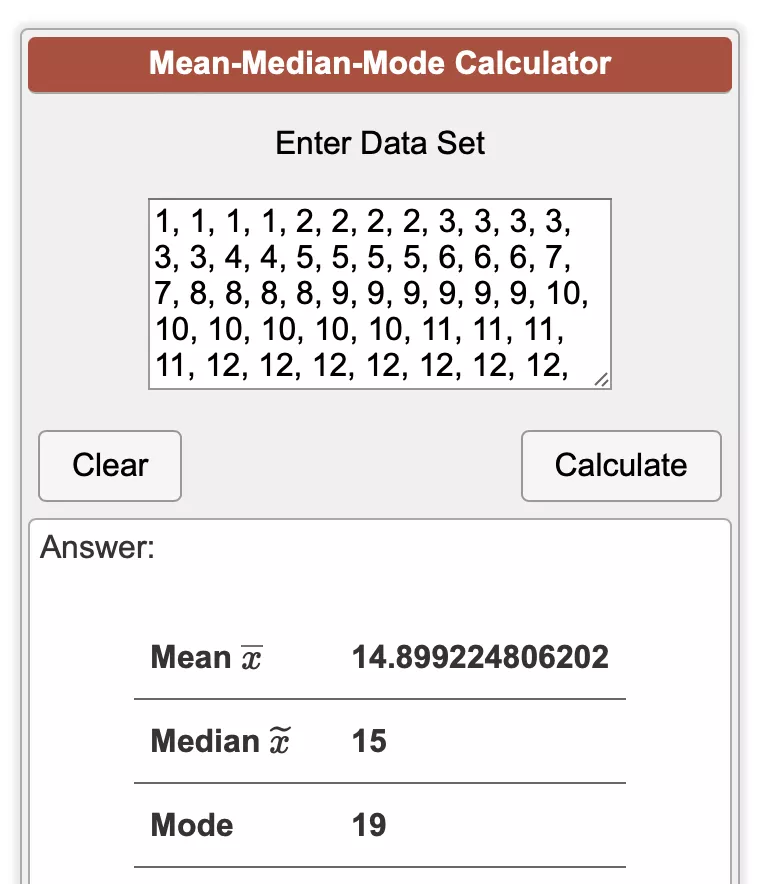
We can see for June that the average (Mean) date they are sighted is the 15th and most frequently (Mode) sighted on the 19th. This tells me that the first three weeks of June are a good time for finding Platypedia cicadas.
So, if I was planning a northern Utah fly fishing trip, it better happen between the last week of May to the third week of June, leaning towards the second week of June.
There’s probably an easier way to process the data. Maybe AI tools like ChatGPT.
That said, just call or email the Locals. They know what’s up. Data can only help so much because Platypedia can be so random.
Cicada researcher and communicator Dr. Gene Kritsky has a new book about Brood XIX and XIII which are both emerging in the spring of 2024: A Tale of Two Broods: The 2024 Emergence of Periodical Cicada Broods XIII and XIX. It is available in paperback and Kindle formats.

Other posts about Dr. Gene Kritsky on this site:
CGWiber of the Dutch John Resort of Flaming Gorge Reservoir, Utah, sent us these cicada photos. CGWiber enjoys fly fishing and “matching the hatch”, which means using fly fishing lures that match the characteristics of cicadas. Cicadas are a favorite food of game fish like trout. They can have years of great abundance. You’ll find them near water because there is more vegetation near water, which is why fish get ahold of them.
Okanagana cicada. It looks like Okanagana magnifica, but I’m not sure.
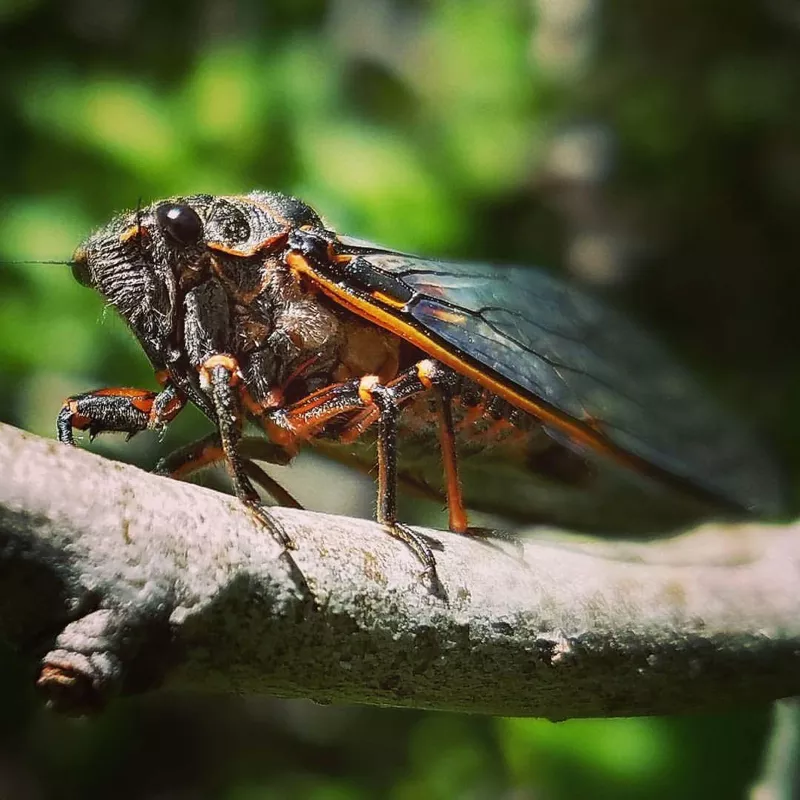
Okanagana cicada. Looks like Okanagana magnifica. It is about the length of two human phalanges:
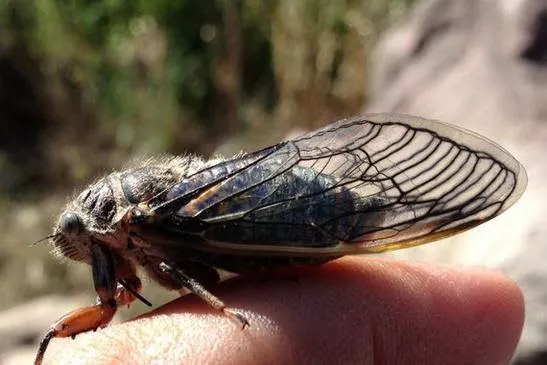
Platypedia cicada.
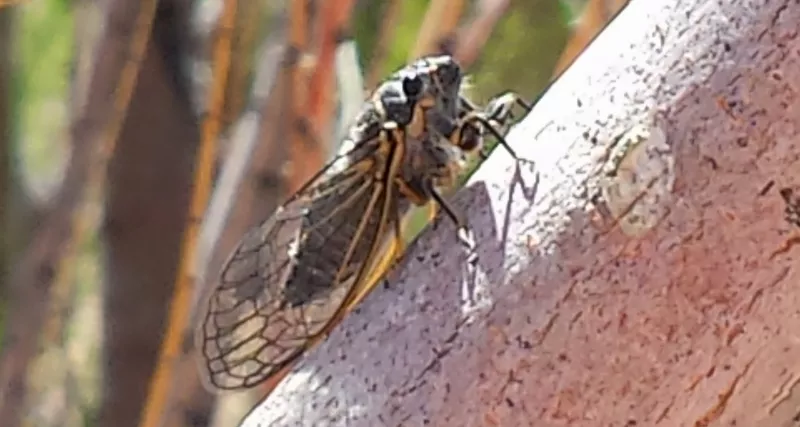
Platypedia cicada. See how tiny they can be? Smaller than one human phalanx.
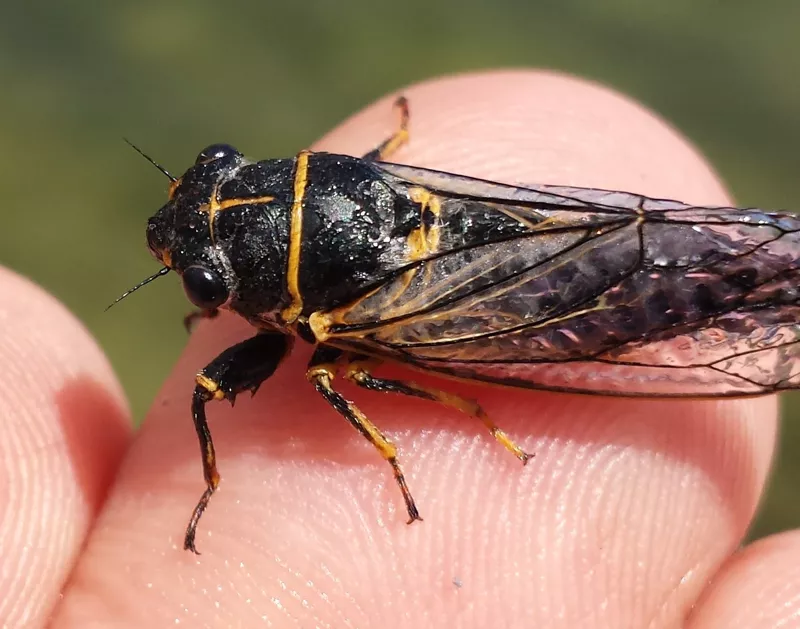
Okanagana and Platypedia are visually similar.
With few exceptions, both cicadas are primarily black with orange or beige highlights, both can be “hairy”, and both are common west of the Mississippi.
Platypedia tend to be smaller than Okanagana, many have a line down their pronotum, and they make sound by clapping their wings against their bodies. Okanagana make sound by vibrating their tymbals.
Thanks to cicada researcher Jeff Cole, Ph.D., for this tip: “From the side with the wings folded Platypedia have the node on the forewing way out towards the apex, while Okanagana and Tibicinoides will have the node located more or less in the middle of the wing.”