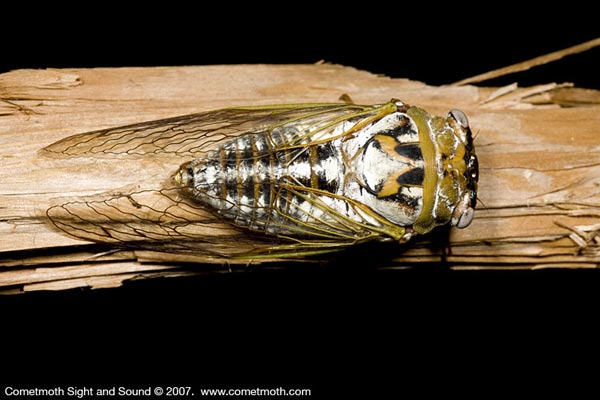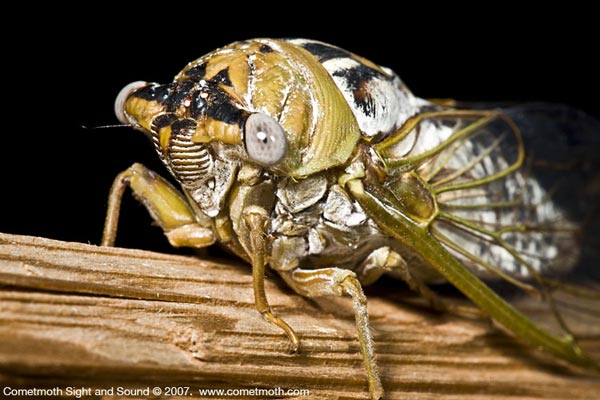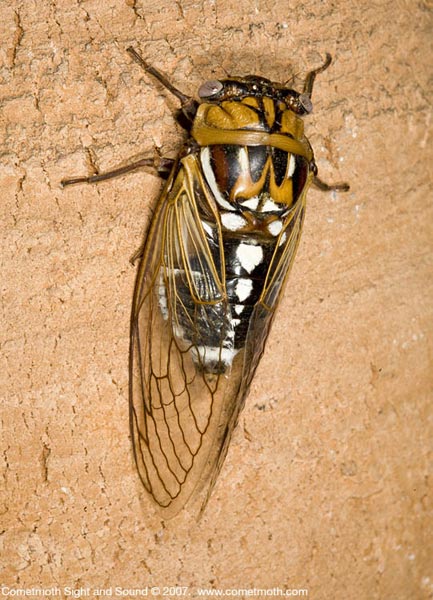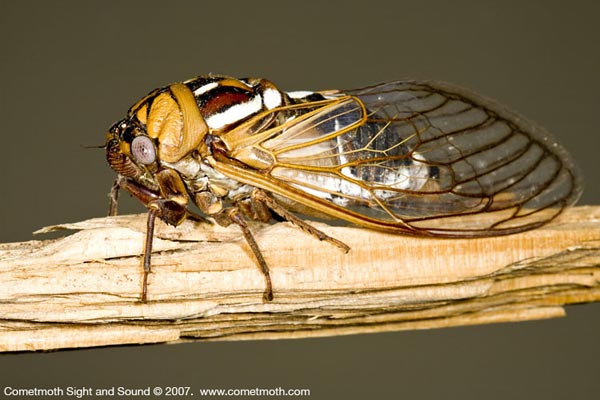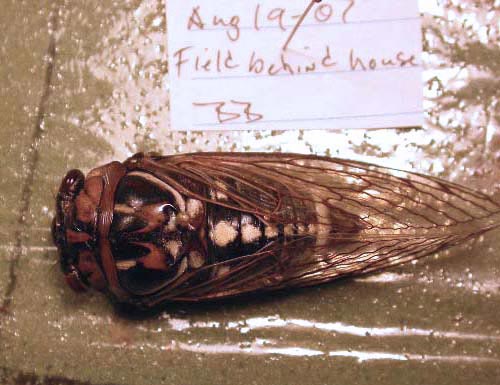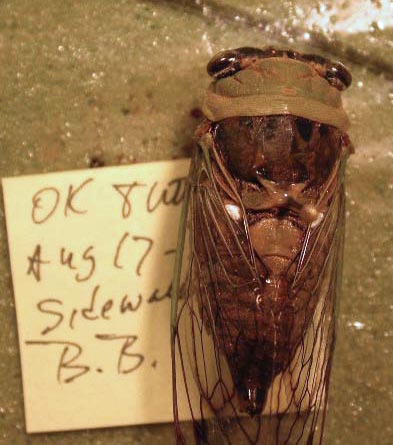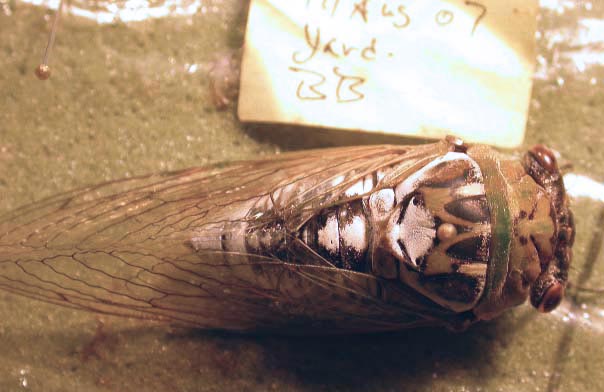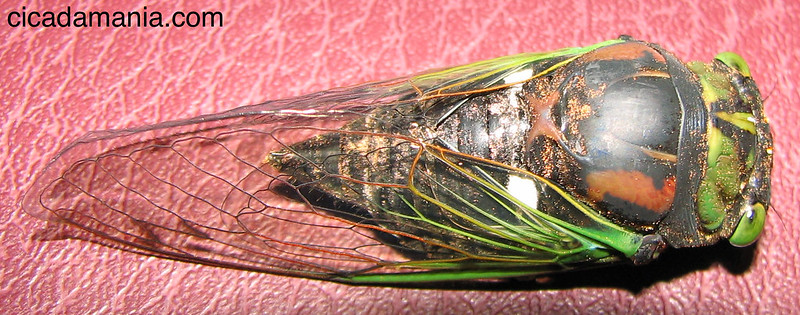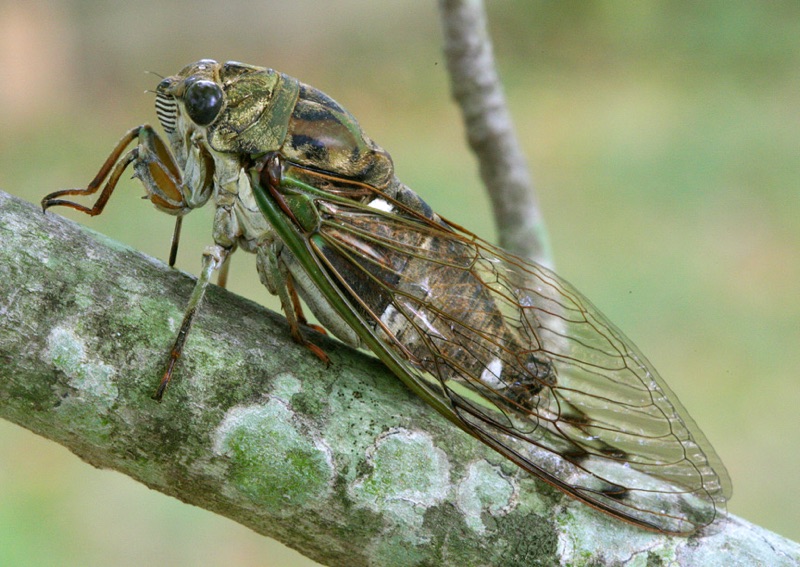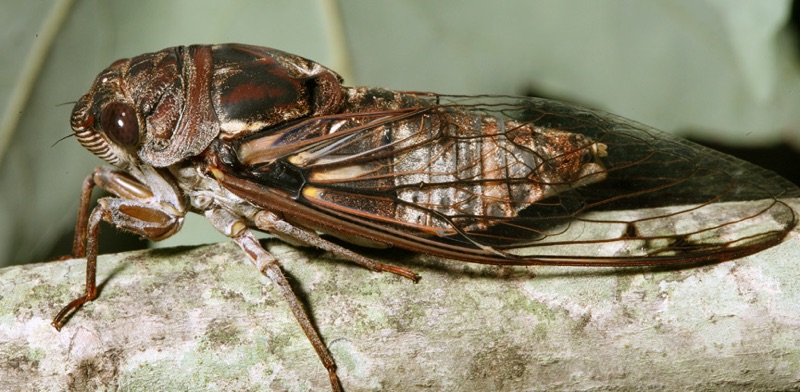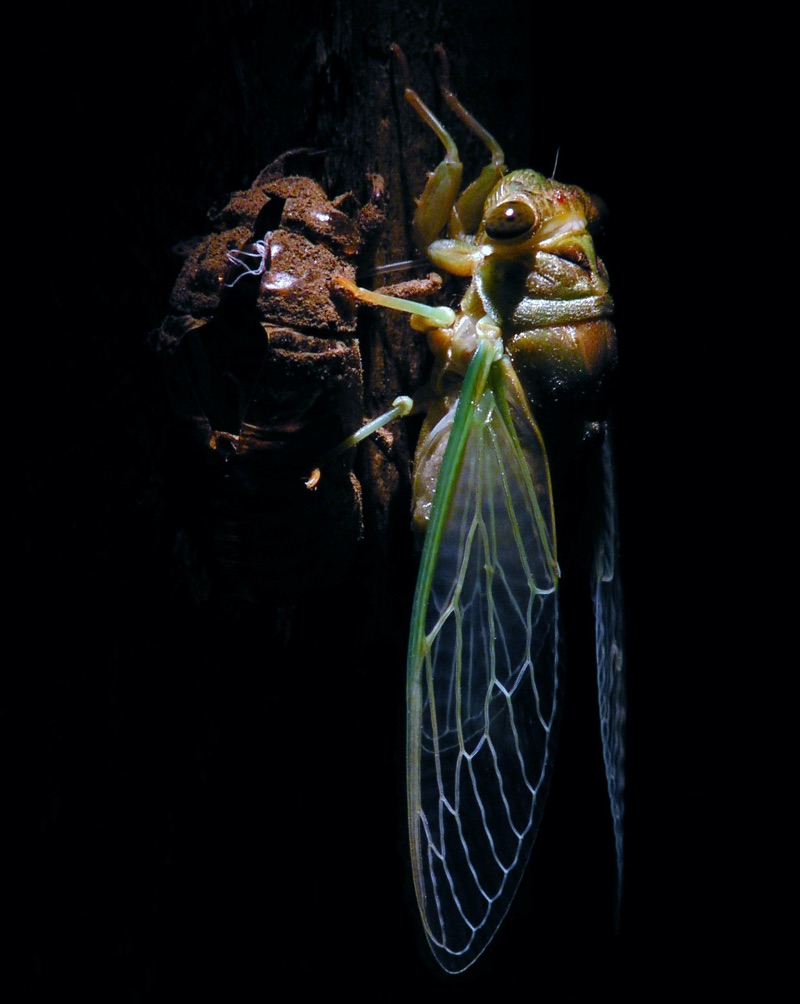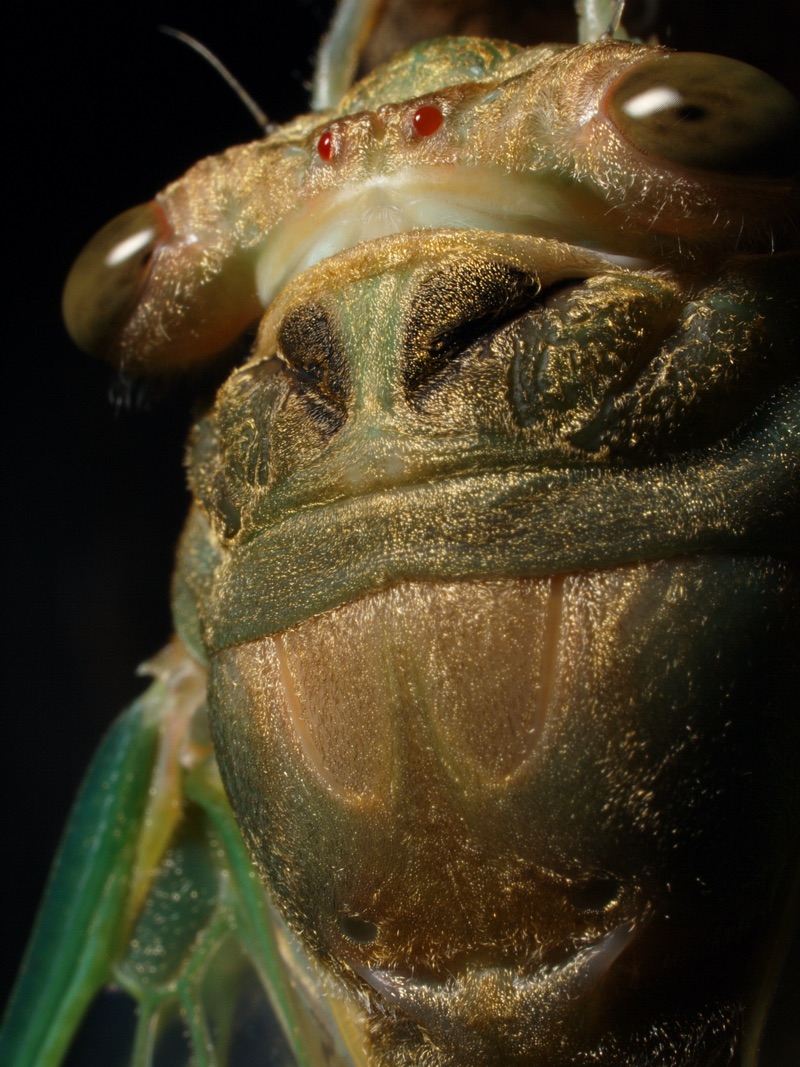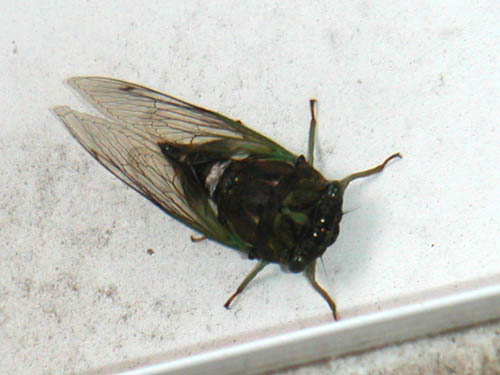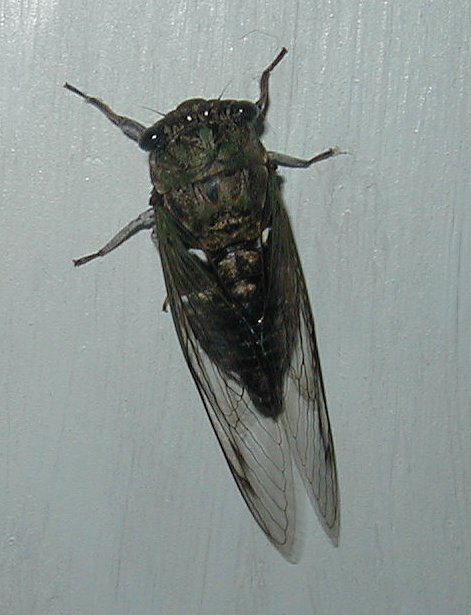
Tibicen season is officially over in central Mississippi. Here’s some great side view photos from Paul Krombholz.
Neotibicen pruinosus pruinosus (Say, 1825):

Megatibicen figuratus (Walker, 1858):

Tibicen season is officially over in central Mississippi. Here’s some great side view photos from Paul Krombholz.
Neotibicen pruinosus pruinosus (Say, 1825):

Megatibicen figuratus (Walker, 1858):

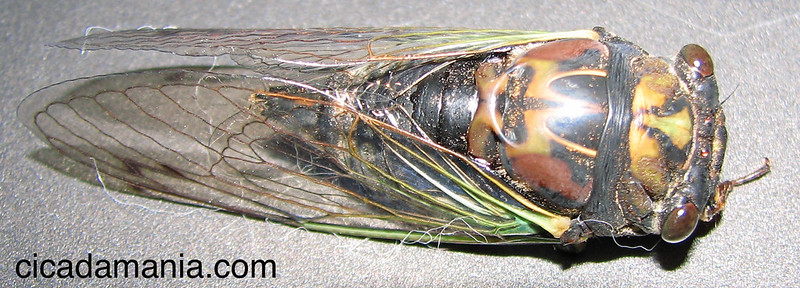
Here’s a cicada photo from Jim Kost. I like the black stipe on the beak.

Todd Quinn send us some superb Neoibicen photos. Click the photos below to see huge versions.

This photo is incredible. Check out the detail on the eyes!

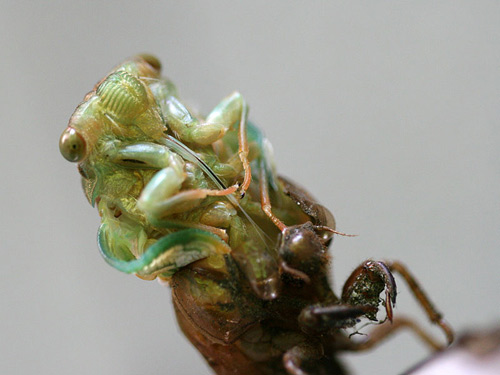
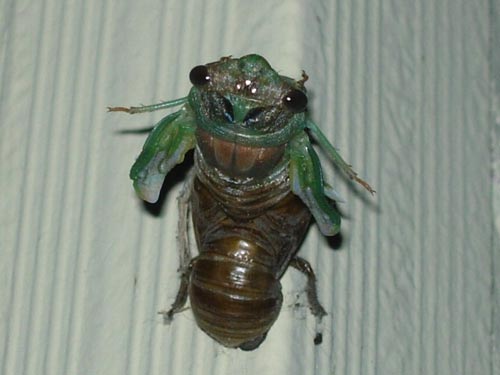
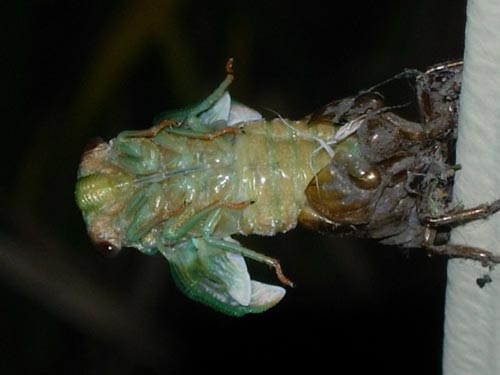
Catherine M from sent us these photos of a Neotibicen entering the adulthood.


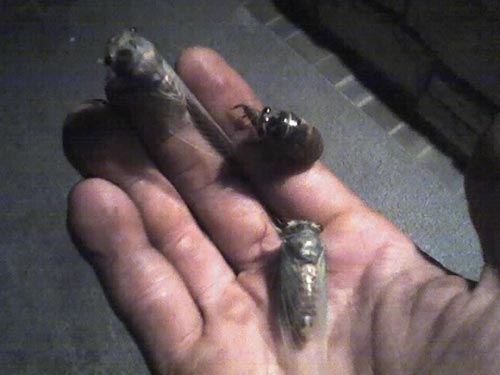
Patrick Farr sent us this cool picture of two adult cicadas climbing on his hand. They’re Tibicens, but I’m not sure of the species.
Gerry Bunker said in the comments that this is likely a T. canicularis.

Marsha M. sent us this photo of a Neotibicen tibicen (T. chloromerus, T. chloromera) from New Jersey! Read more about it on her blog.

Edward Austin sent us this photo of a Tibicen from Fulton County Ohio. If someone knows the species, please post it in the comments.

Paul Krombholz has an interesting question about Neotibicen identification.
In Kathy Hill’s picture of 18 species, T. canicularis looks quite different from T. davisi, but I have at least one T. davisi, captured in my back yard, that looks very similar to three canicularis individuals I caught in Northern Illinois a couple of weeks ago. The canicularis individuals all have the white “hip” spots and none of my davisi have them have them. T. davisi has a slightly larger head. The big question is, What features reliably distinguish the two species considering all the variety seen within species?

I panicked the other day when Richard Fox’s excellent Tibicen anatomy page was down. I’m glad to say that it is back in service and that it is an incredible resource. Check it out if you want to learn more about a cicada’s parts.
This excellent photo of a Neotibicen dorsatus (formerly T. dorsata) was taken in Oklahoma by Vic Fazio.