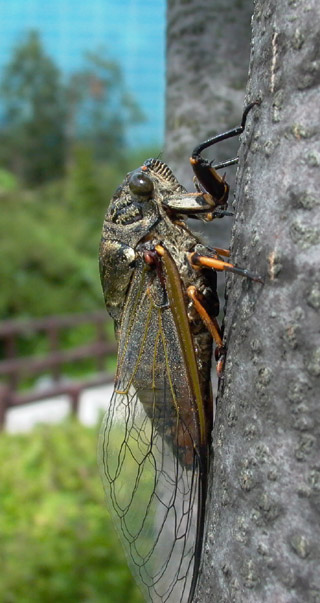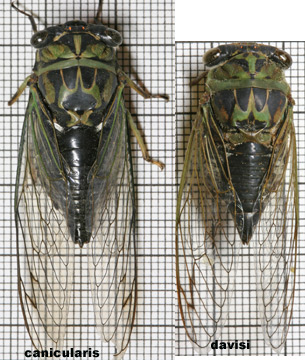
Laural Zindel makes cool insect-print dishes, vases and cups, including a cicada glass.
Roy Troutman sent us this story in the Globe Gazette about increased annual cicada activity in Iowa this year.
As a side note: in New Jersey I only observed 6 Tibicen nymphs this year — last year I observed at least a 100. 2005 was a great year, from my perspective. 2006 was lame — in central New Jersey at least.
I bet you thought I was going to post another Tibicen photo! Here’s a Magicicada photo Ryan Anderson took during the 2002 brood XXIII emergence in Kentucky.
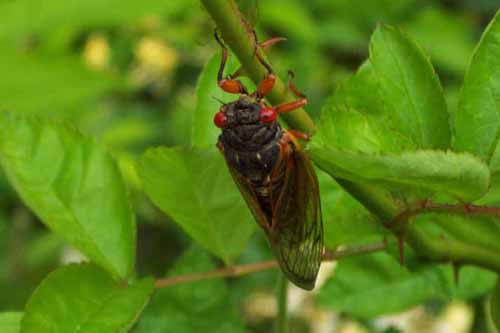
Now is a good a time as any to point out the difference between Magicicadas and Tibicens:
Magicicadas:
- Emerge in en masse in groups called broods
- There are 15 different broods. Broods emerge every 13 or 17 years depending on the brood. No broods emerged in 2006.
- Magicicadas have red eyes, black bodies and orange legs and wings
- Other names for Magicicadas: periodical cicadas, “locusts”, 17-year cicadas, 13-year cicadas
Tibicens:
- Emerge in limited numbers, and not in broods
- Emerge every year
- Tibicens are typically larger than Magicicadas. Tibicens are usually a combination of green, black, or brown.
- Other names for Tibicens: Harvest Flies, annual cicadas, Dog-Day cicadas
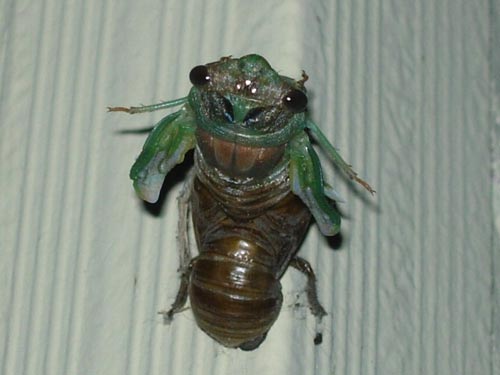
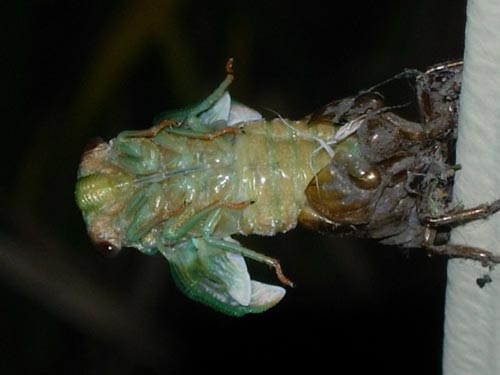
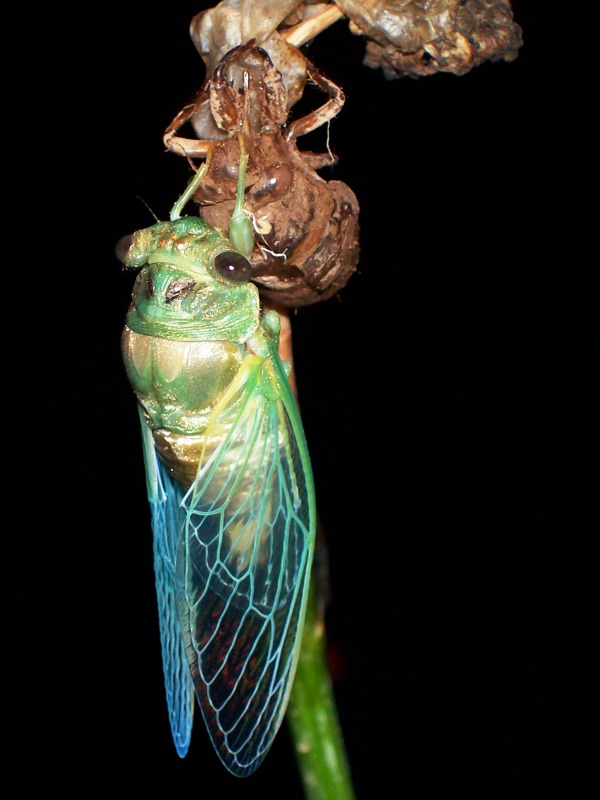
Catherine M from sent us these photos of a Tibicen entering the adulthood.


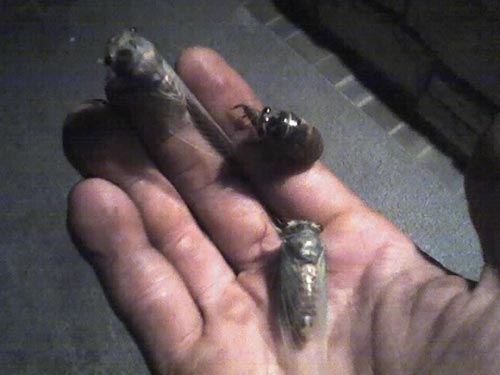
Patrick Farr sent us this cool picture of two adult cicadas climbing on his hand. They’re Tibicens, but I’m not sure of the species (maybe pruinosus).

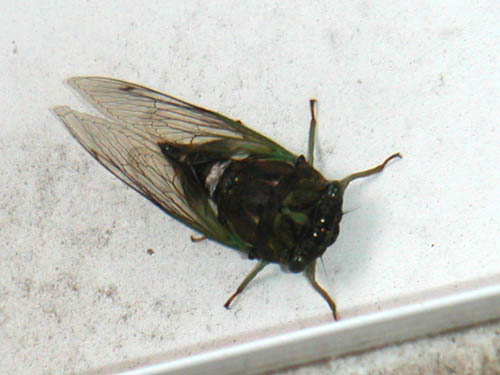
Marsha M. sent us this photo of a Tibicen tibicen (T. chloromerus, T. chloromera) from New Jersey! Read more about it on her blog.

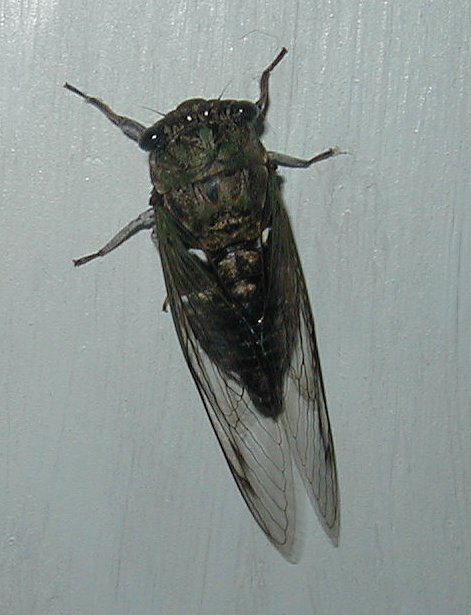
Edward Austin sent us this photo of a Tibicen from Fulton County Ohio. If someone knows the species, please post it in the comments.

Carol W. took this wonderful photo of a Tibicen (it is a Tibicen linnei) in Lexington KY on the 4th of July (took me 81 days to post it).
Visit the Gallery for this image to see the big version.

Did I post this already?
Here’s a wonderful series of cicada photos from Pierre Guilhaumon titled La cigale déploie ses ailes.