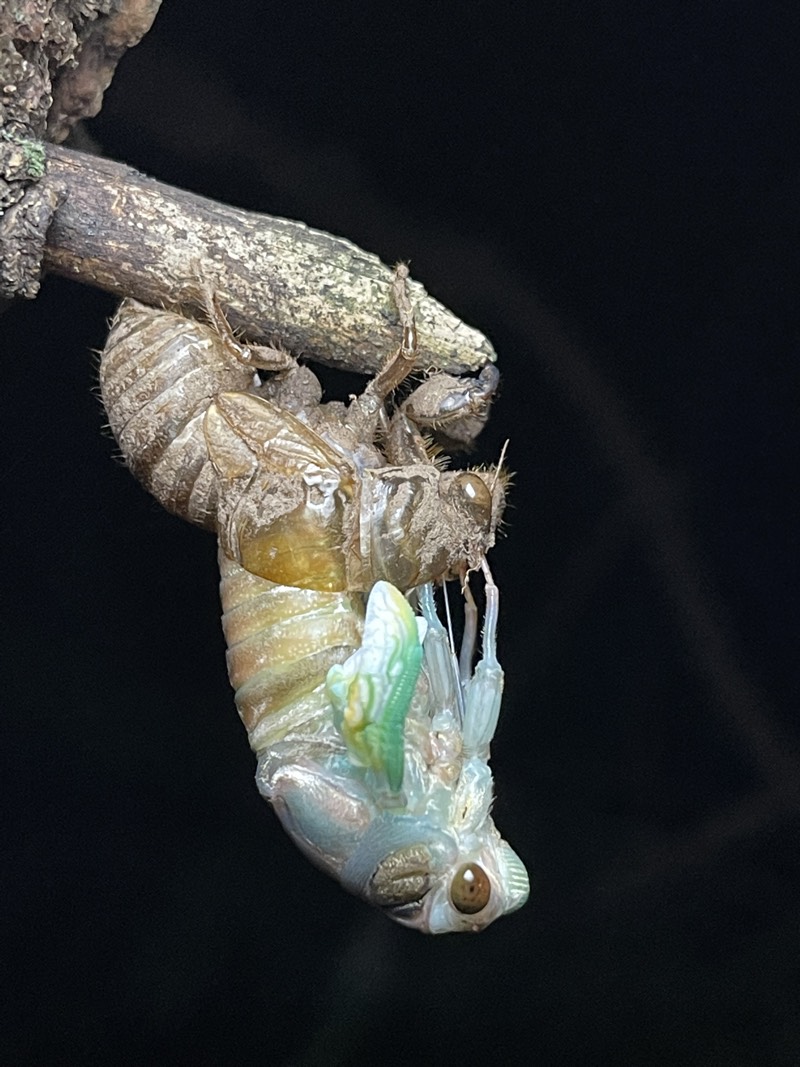
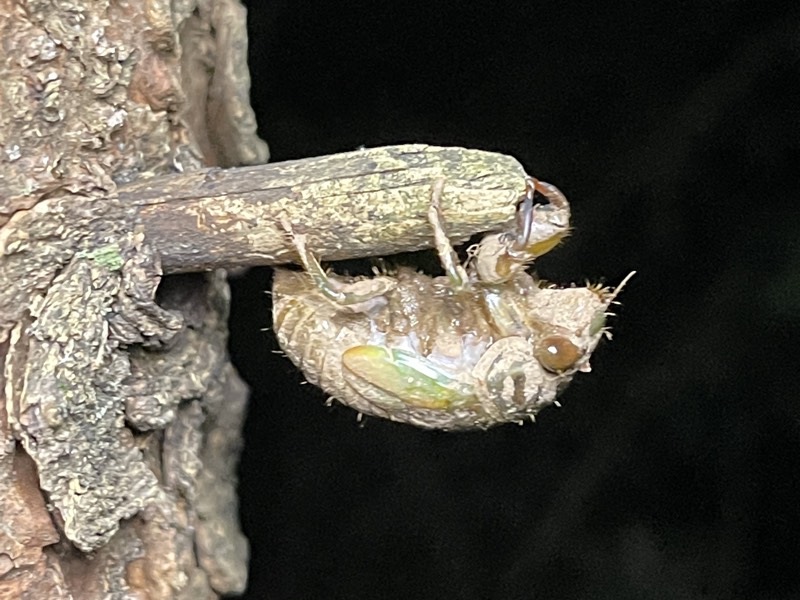
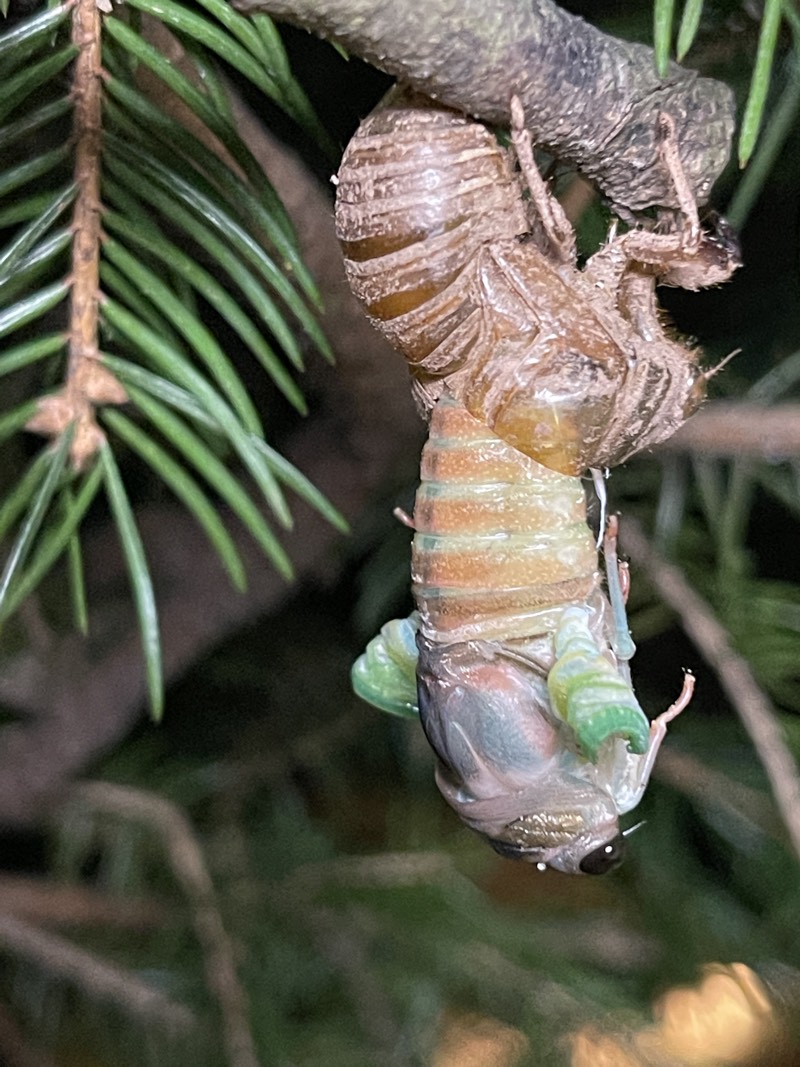
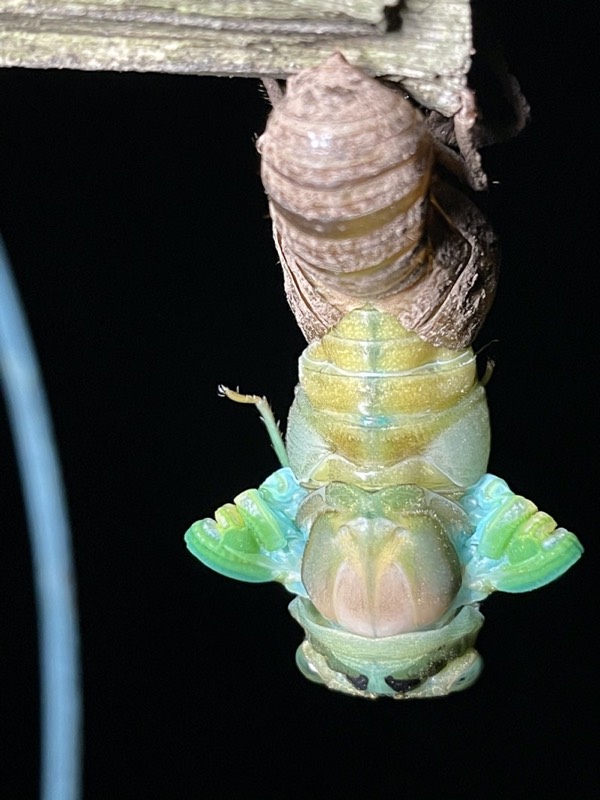
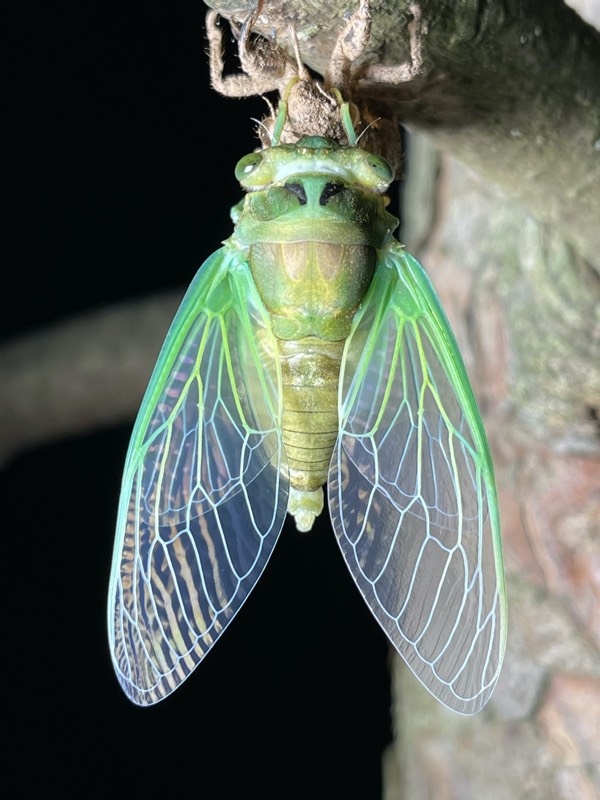
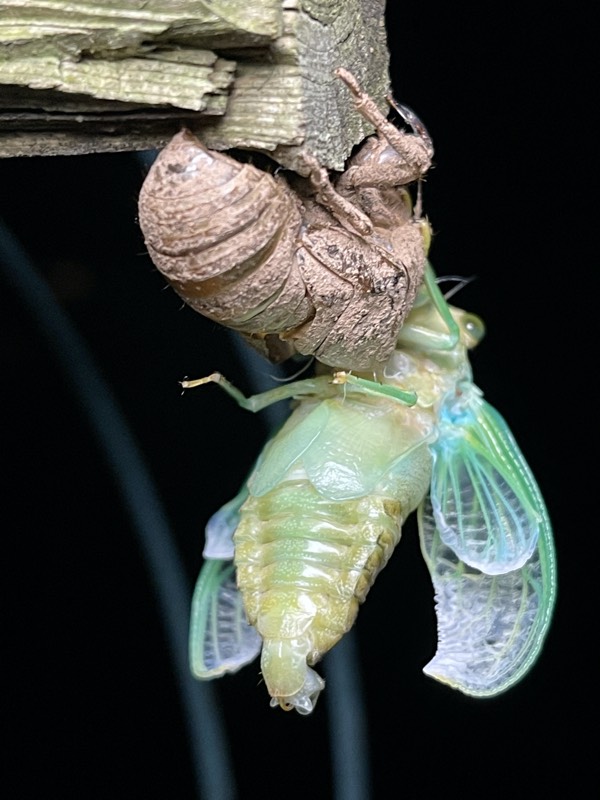
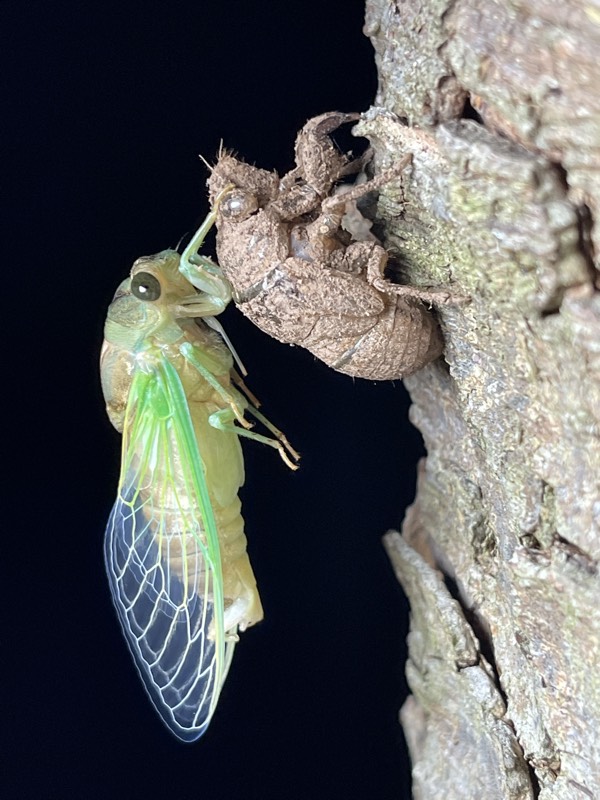
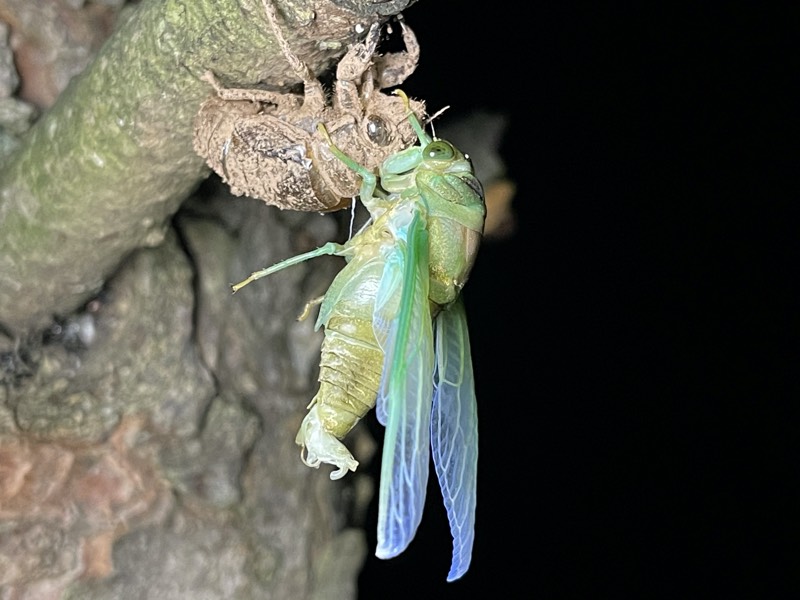
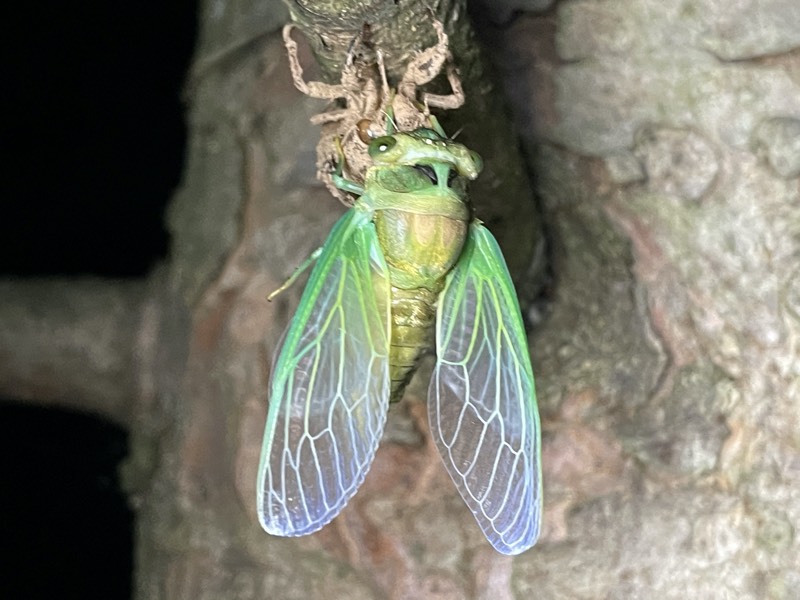
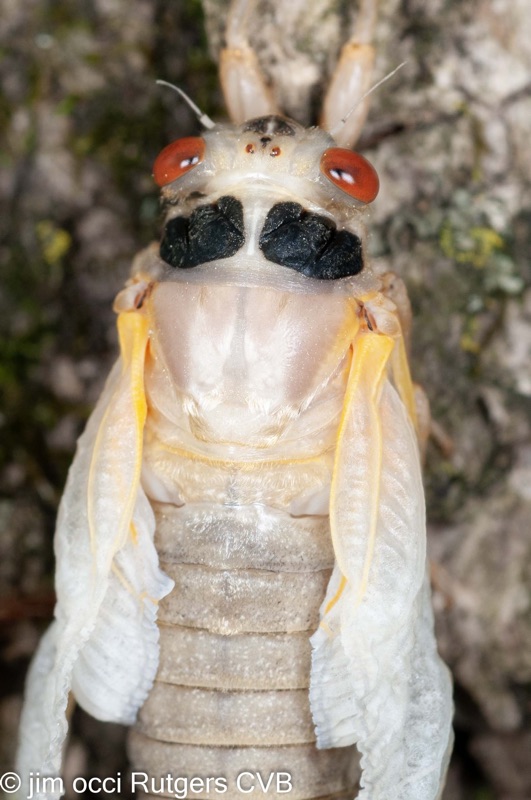
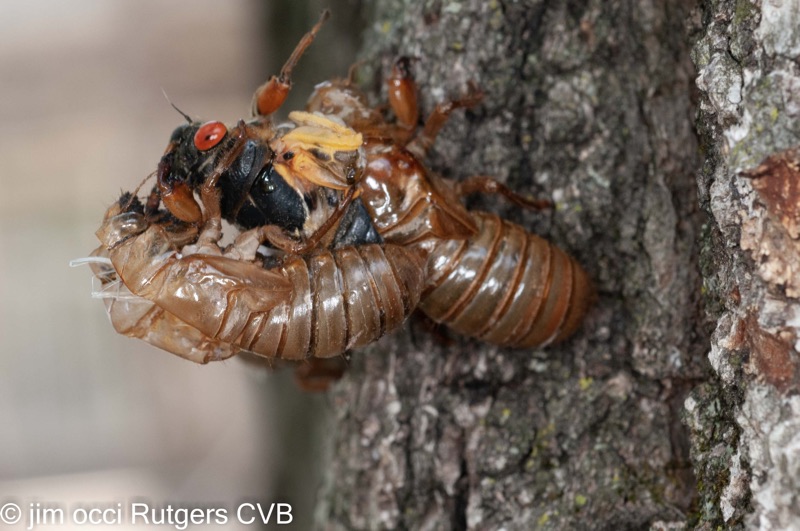
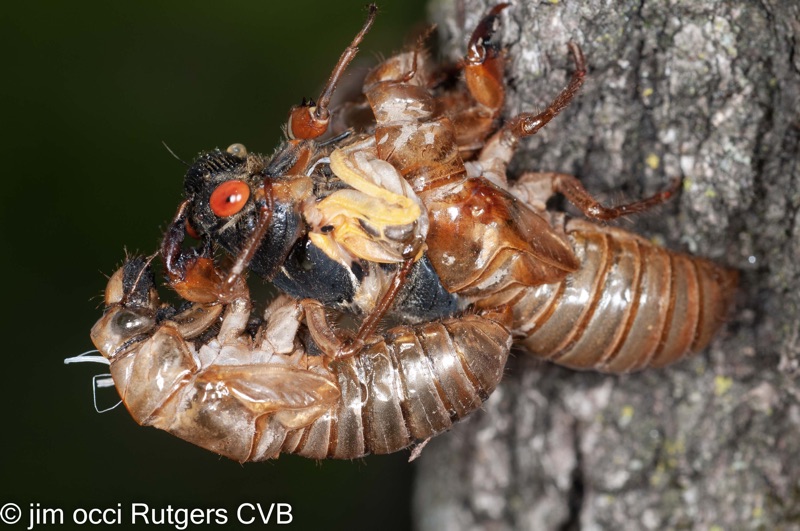
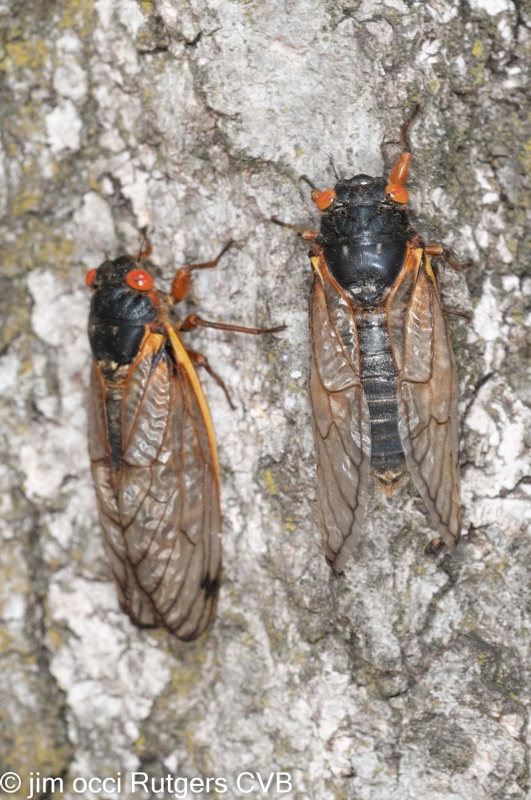
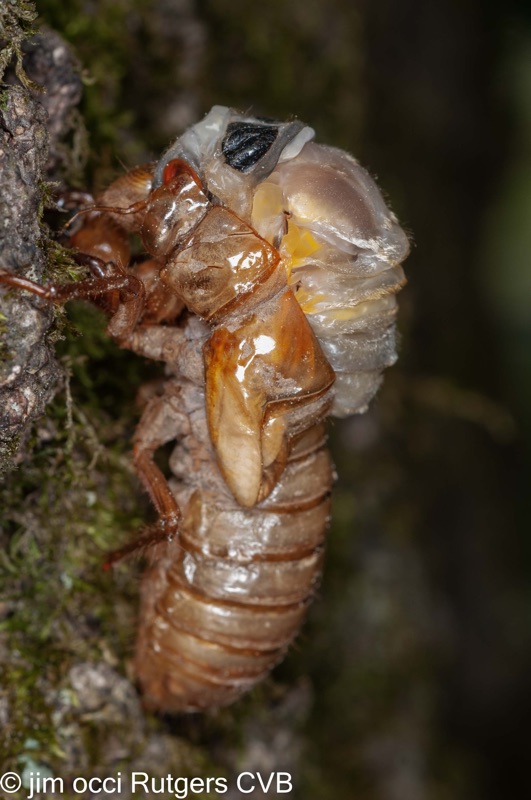
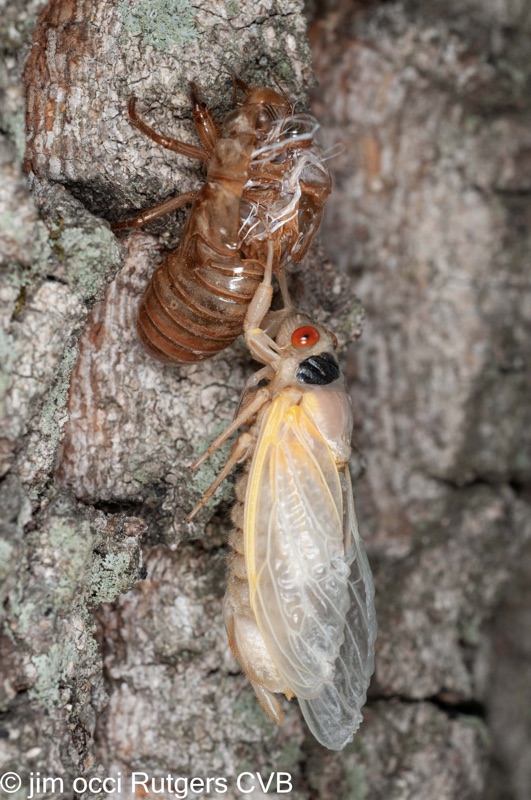
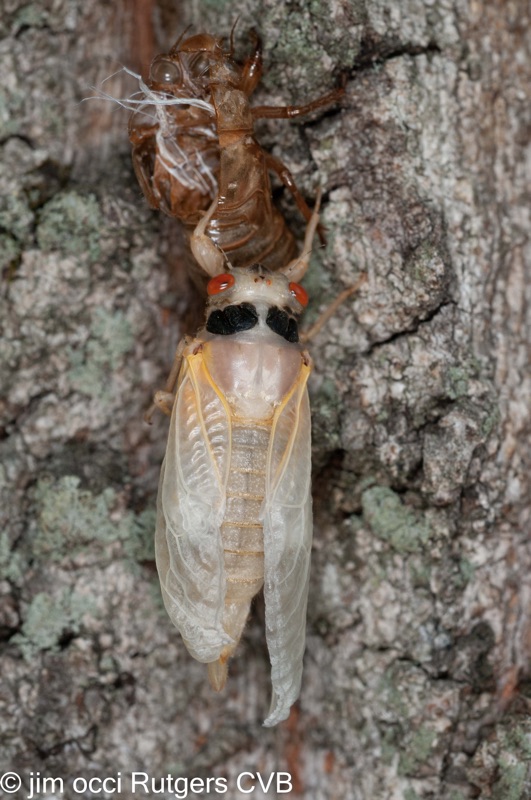
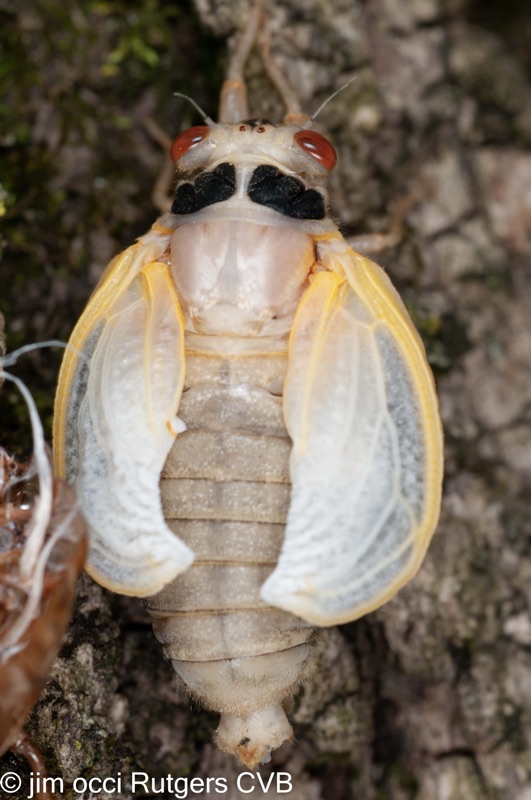
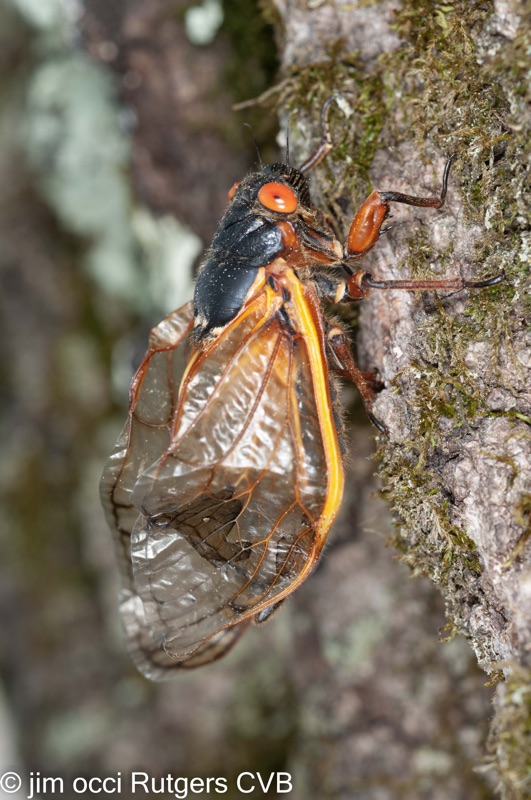
Here are some Neotibicen lyricen molting in New Jersey July 2021.
Rich caramel eyes; blues & pinks in pronotal collar, legs, and mesonotum; green wings (that will stay green) and orange abdomen.


Genera of cicadas.
Here are some Neotibicen lyricen molting in New Jersey July 2021.
Rich caramel eyes; blues & pinks in pronotal collar, legs, and mesonotum; green wings (that will stay green) and orange abdomen.


Here’s some photos of Molting Neotibicen tibicen tibicen cicadas taken in New Jersey in July of 2021.


There are over 190 varieties (including species & subspecies) of cicadas in North America, and over 3,390 varieties of cicadas around the world. This number grows each year as researchers discover and document new species. Cicadas exist on every continent but Antarctica.
The 3,390 comes from counting the species of cicadas mentioned in Allen Sanborn’s Catalogue of the Cicadoidea.
Cicadas were discovered and described in 2014, take a look at research since then published: 2021, 2020, 2019, 2018, etc.
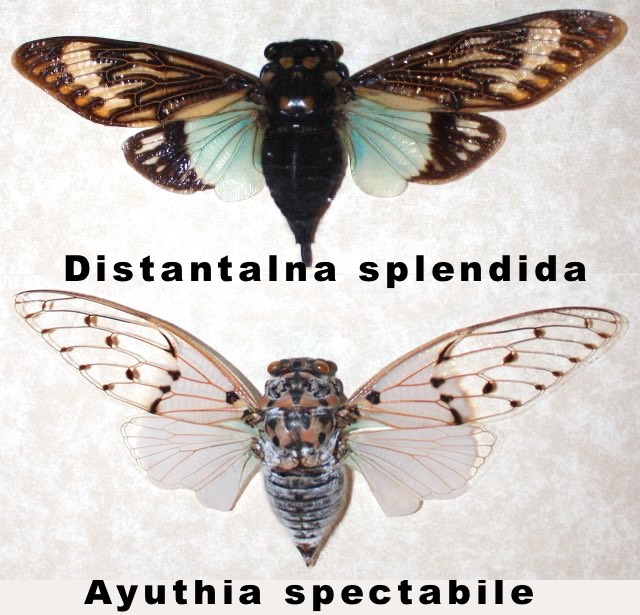
The paper The molecular systematics and diversification of a taxonomically unstable group of Asian cicada tribes related to Cicadini Latreille, 1802 (Hemiptera:Cicadidae)1 has introduced a new tribe Ayuthiini, replacing Tosenini for two genera of cicadas: Distantalna and Ayuthia.

1 Hill Kathy B. R., Marshall David C., Marathe Kiran, Moulds Maxwell S., Lee Young June, Pham Thai-Hong, Mohagan Alma B., Sarkar Vivek, Price Benjamin W., Duffels J. P., Schouten Marieke A., de Boer Arnold J., Kunte Krushnamegh, Simon Chris (2021) The molecular systematics and diversification of a taxonomically unstable group of Asian cicada tribes related to Cicadini Latreille, 1802 (Hemiptera:Cicadidae). Invertebrate Systematics 35, 570-601. https://doi.org/10.1071/IS20079
A few years back a project was launched to discover if the New Forest cicada (Cicadetta montana) still exists in England. It once existed in southern England for sure, but seems to have gone extinct. To date, none have been found.
Recently a cicada was reported found in England on iNaturalist, appearing to belong to the genus Tibicina. The best resource for European cicadas is SONGS OF EUROPEAN SINGING CICADAS. Looking at the navigation of the website it looks like there are nine Tibicina in Europe (maybe more). The cicada on iNaturalist is brown with orange highlights: u-shaped marks on its mesonotum, an orange outline of its pronotal collar, and an orange line down the middle of its head. Wing veins appear brown & black and appear to be warped during the molting process. It might be teneral — still soft from the molting process — and so its adult colors have not fully developed.
So — is it a native to England or a stowaway in some cargo from mainland Europe?
The Twitter account @MorphoCicada posted this on Twitter, which alerted me to the matter.
Hieroglyphic cicadas (Neocicada hieroglyphica aka Hieroglyphic Cicada) are present in most of southern New Jersey, particularly the Pine Barrens area which has sandy soil (pure sand in a lot of places) and many pine and oak trees. This area is historically prone to fires because of the dry sandy soil and sappy pines. The fact that at least some Hieroglyphic cicadas appear every year and spend many years underground probably helps them circumvent minor fires.
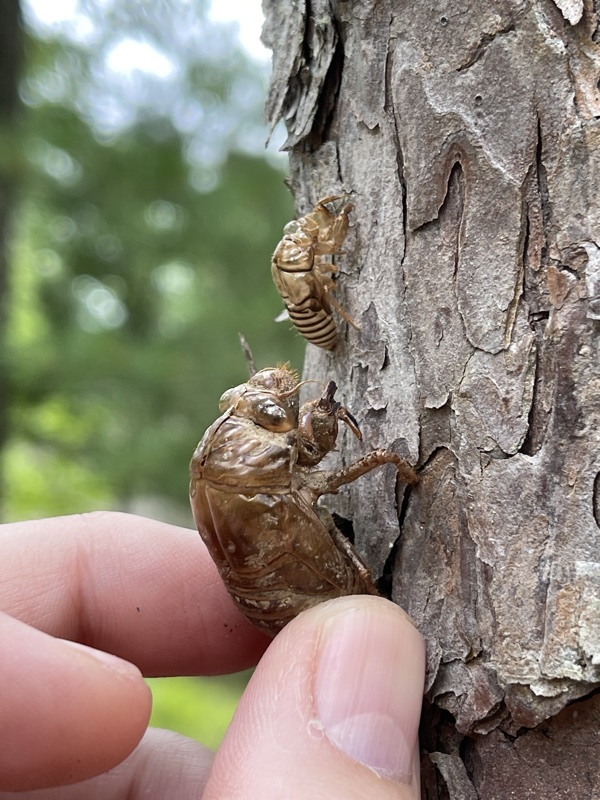
Here’s a photo of a Hieroglyphic and Northern Dusk-Singing Cicada exuvia (shed skin). Quite a difference! Brendan T. Byrne State Forest.

Some Locations:
All these areas are heavily infested with ticks, deer flies, and in some cases, mosquitos. Take precaution.
Recently a new paper was published with the authors Kathy B. R. Hill, David C. Marshall, Kiran Marathe, Maxwell S. Moulds, Young June Lee, Thai-Hong Pham, Alma B. Mohagan, Vivek Sarkar, Benjamin W. Price, J. P. Duffels, Marieke A. Schouten, Arnold J. de Boer, Krushnamegh Kunte and Chris Simon titled The molecular systematics and diversification of a taxonomically unstable group of Asian cicada tribes related to Cicadini Latreille, 1802 (Hemiptera: Cicadidae) in Invertebrate Systematics, 2021, 35, 570—601. Link to the paper.
Here’s the abstract:
Abstract. The cicadas (Hemiptera: Cicadidae) related to tribe Cicadini exhibit some of the most remarkable phenotypes in the family, with many genera possessing striking colour patterns and unusual morphological features. This largely Asian group of 13 tribes has proven challenging for cicada taxonomists, in part because of likely convergent evolution or losses of these phenotypes. We present the first focused molecular phylogeny of this clade, including ~60 described genera. The genetic dataset contains 839 ingroup-informative sites (out of 2575) from mitochondrial cytochrome c oxidase subunit I, nuclear elongation factor-1 a, and nuclear acetyltransferase. We use Bayesian and maximum likelihood trees to test recent changes in tribe- and subtribe-level classification, and we reconstruct ancestral character states for potentially convergent traits influencing tribe descriptions. We use fossil and molecular clock calibrations to estimate the temporal and geographic context of the radiation. The tribes Gaeanini, Leptopsaltriini, Platypleurini, Psithyristriini, and Tosenini appear polyphyletic and in need of revision, in part because of convergent evolution of opaque wings and multiple convergent gains or losses of abdominal tubercles. Kalabita Moulton, 1923 is transferred from Platypleurini to Leptopsaltriini. Vittagaeana gen. nov. is established for Vittagaeana paviei comb. nov. and Vittagaeana dives comb. nov., formerly in Tosena. Sinosenini syn. nov. is synonymised with
As part of the paper, we get a new genus, Vittagaeana, made up of two cicadas formerly belonging to the genus Tosena. They were likely placed under Tosena because of the white line on their forewings, but after a review of genetics and other features, they have been given their own genus. They are closely related to the genera Ambragaeana, Callogaeana, Gaeana, Sulphogaeana and Trengganua. Also similar to Balinta, Paratalainga, and Talainga.
Vittagaeana dives (Westwood, 1842), formerly Tosena dives:
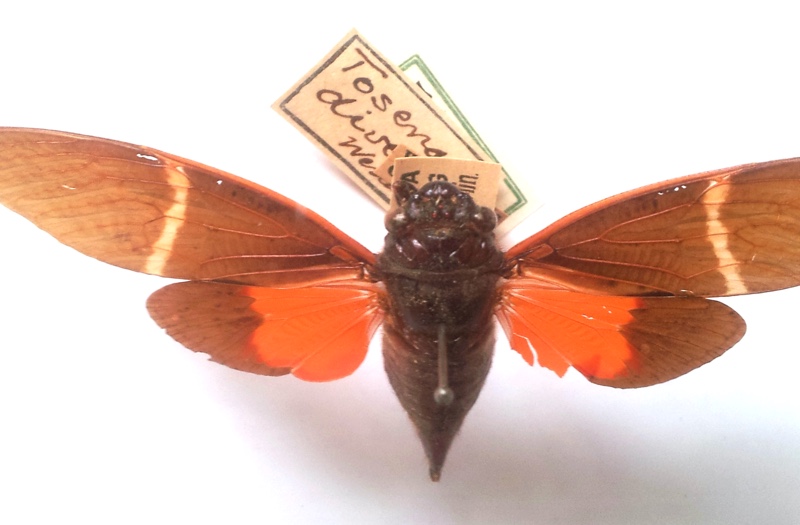
More info: Vittagaeana dives (Westwood, 1842)
Vittagaeana paviei (Noualhier, 1896), formerly Tosena paviei:
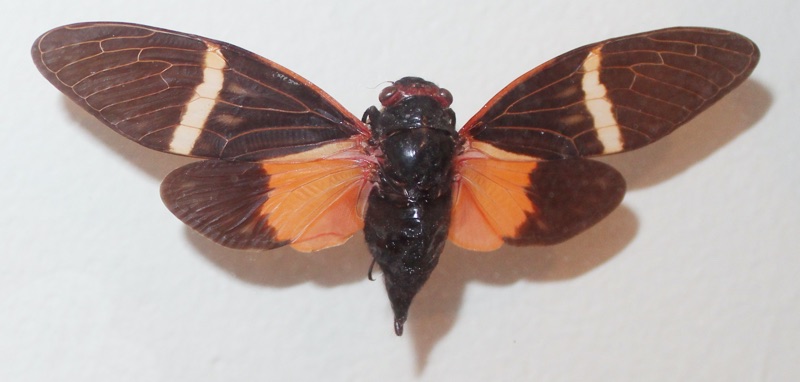
More info: Vittagaeana paviei (Noualhier, 1896)

Brood X Magicicada photos by Jim Occi taken in Princeton, set 6. 2021.
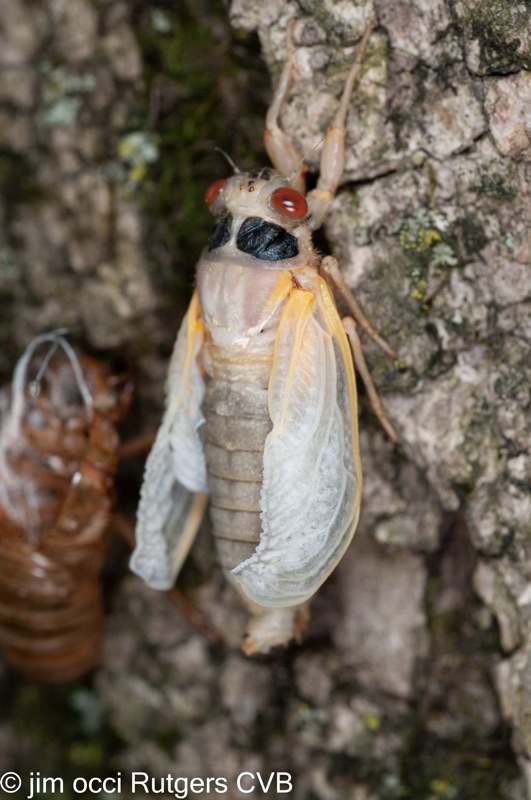
Teneral Magicicada:

Teneral Magicicada:

Magicicada septendecim that failed to completely exit its exuvia before its body hardened:

Magicicada septendecim that failed to completely exit its exuvia before its body hardened:

A pair of Magicicada septendecim:

More from Jim Occi:
Brood X Magicicada photos by Jim Occi taken in Princeton, set 5. 2021.
Molting Magicicada:

Teneral Magicicada:

Teneral Magicicada:

Teneral Magicicada expanding wings:

Adult Magicicada with crumpled wings:

More from Jim Occi:
Brood X Magicicada photos by Jim Occi taken in Princeton, set 4. 2021.
A Rutgers cap in Princeton (one day Rutgers needs to get that cannon back).

Magicicada septendecim with exposed tymbal:

A Magicicada with its abdomen wrecked by Massospora fungus.

Magicicada exit holes:

A pair of Magicicada septendecim:

More from Jim Occi: