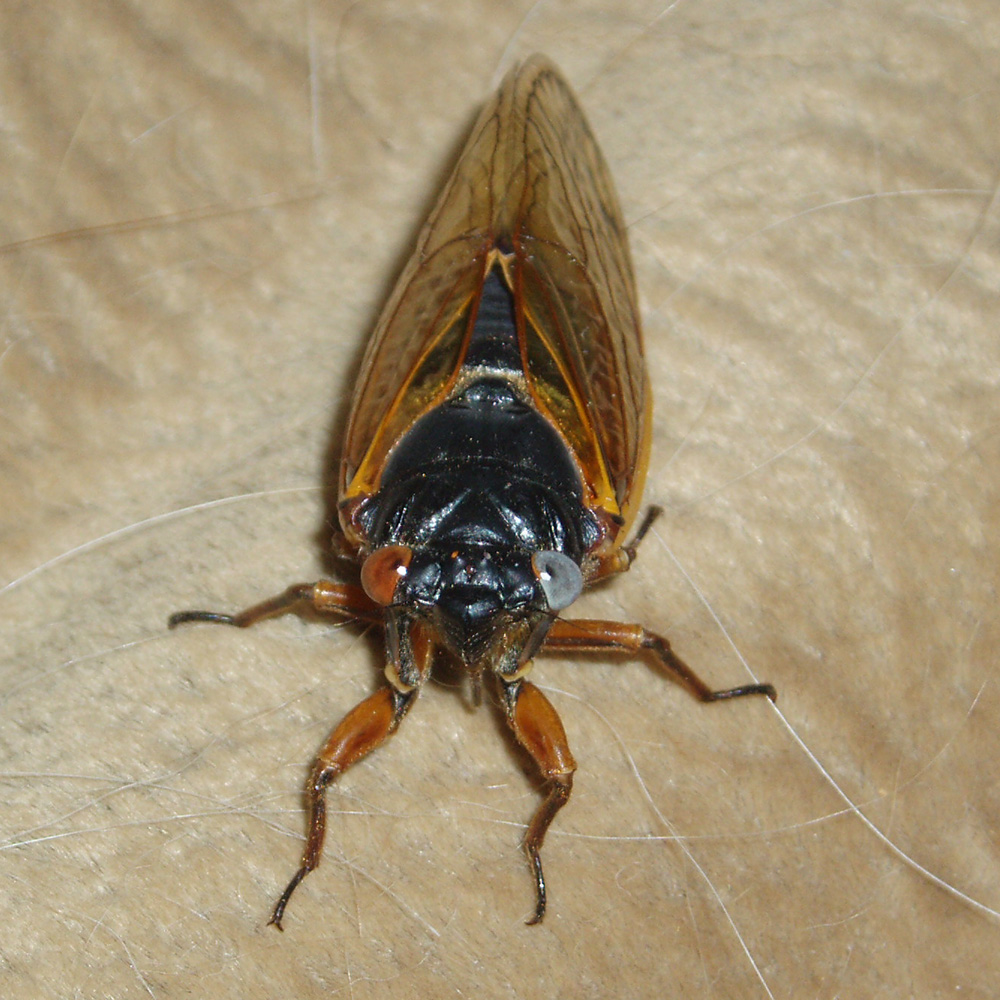
Talk about one in a million: Steve Turner found this Magicicada with one red eye and one blue (sort of like a Husky dog or David Bowie). This is one of the highlights of the emergence so far.
 Cicada Mania
Talk about one in a million: Steve Turner found this Magicicada with one red eye and one blue (sort of like a Husky dog or David Bowie). This is one of the highlights of the emergence so far.
They’re very rare, but some Magicicadas can have blue or white eyes. Take a picture if you find one! Besides red, orange, white and blue, you might also find a magicicada with cream, yellow or tan eyes.
Can you guess why the Cicada Killer Wasp is called a cicada killer? They’re big wasps, but they’d rather sting a cicada than you. Read more about the Cicada Killer Wasp.
Whether they’re in the ground on a root, or on a tree limb, cicadas drink tree fluids called xylem sap to stay nourished. They drink they fluid using their beak, also called a rostrum — it looks like a straw!
Even though the maps at the top of the page might suggest there are Magicicadas in your area, you might not find them on your property.
Here’s some reasons why:
If none turn up in your yard, don’t give up hope:
They’re out there, you just might have to travel a bit to see them.
I panicked the other day when Richard Fox’s excellent Tibicen anatomy page was down. I’m glad to say that it is back in service and that it is an incredible resource. Check it out if you want to learn more about a cicada’s parts.
I came across this article thanks to Google’s news alerts: UC Engineering Researchers Find Mercury In Cicadas. I’ve never eaten a cicada and I don’t plan on doing so in the future, but a lot of “cicada maniacs” do, so here’s your PSA.
Think twice before you eat one of Cincinnati’s Brood-X cicadas. That’s the warning from researchers at the University of Cincinnati College of Engineering, who have found surprising levels of mercury in these insects.
So, what do cicada larvae look like? Technically they’re called nymphs, not larvae. When cicadas progress from one stage of development to another, they molt, rather than pupate. Each stage of development is called an instar. Most, if not all, cicadas go through five instars. The adult phase is the fifth instar.
First, here’s what their eggs look like:
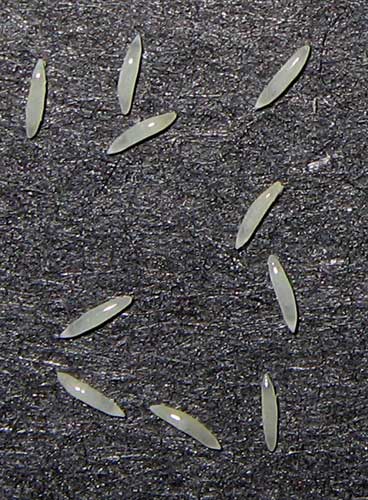
Photo by Roy Troutman.
When the eggs hatch, the cicadas don’t look like a grub or maggot as you might expect; instead they look like tiny termites or ants, with 6 legs and antennae. At this point, they’re called first instar nymphs.
Here are some first instar cicadas:
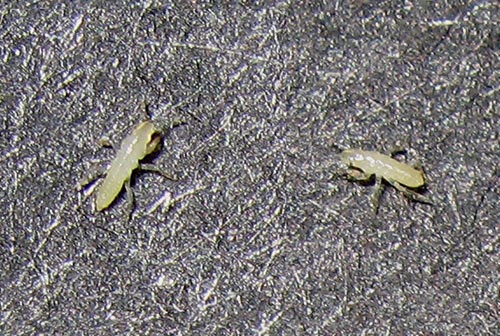
Photo by Roy Troutman.
Here is a first and second instar cicada in the soil:
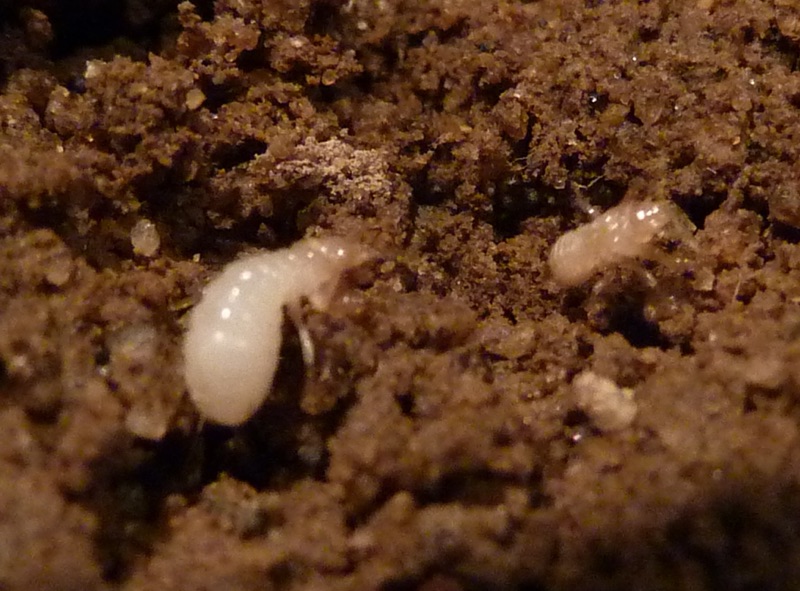
Photo by Elias Bonaros.
Here is a first, second, third, and fourth instar:
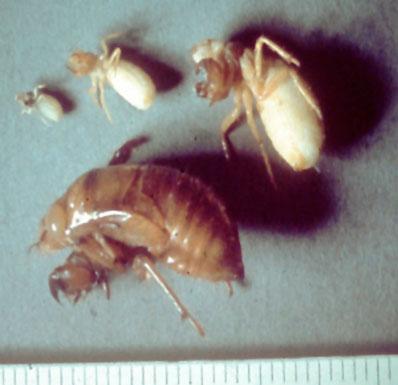
Photo courtesy of Chris Simon.
If you are interested in participating in cicada nymph research, visit The Simon Lab Nymph Tracking Project page for more information. You must have had periodical cicadas on your property in the past 13 or 17 years to find the nymphs — not including the Brood II area since those nymphs came out of the ground this year.
A few people have asked me if cicadas sing at night. The truth is, in most cases, they do not. Most of the time when you hear an insect at night it is a cricket or katydid. However, there are a few cases when cicadas will sing at night:
Thanks to John Cooley for most of this information.
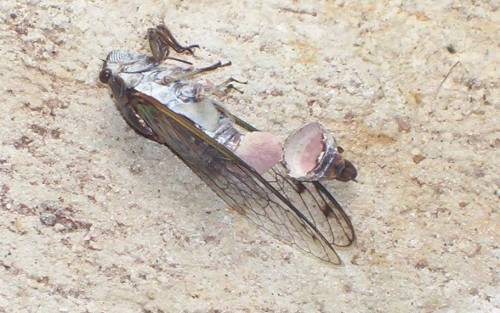
Here’s a nice photo of a Neotibicen cicada infected with Massospora fungi. Yuck! Thanks to Matt for the photo.
From article in The Journal News:
“We found cicada fossils,” says Norell, who also discovered evidence of ginko trees on his expeditions to China.