Cicadas are cool, and tattoos can be pretty cool too. Take a took at Sandy Herder’s new cicada tattoo. Awesome.

 Cicada Mania
Cicadas are cool, and tattoos can be pretty cool too. Take a took at Sandy Herder’s new cicada tattoo. Awesome.
I just finished watching the BBC mini-series Life in the Undergrowth staring several million invertebrates and David Attenborough. (I watched it in between the picnics, fireworks, and swimming that mostly occupies my time.) Fans of cicadas and land-dwelling invertebrates will love this show. Attenborough is the best when it comes to explaining the natural world to TV viewers.
BBC thoughtfully put the segment of the show about 17 year cicadas on YouTube.
I like the bit when he lures the male around by imitating the wing flicks of females.
You can buy it in the usual places, or rent it of course.
The Tibicen is the genus of annual cicada most people are familiar with.
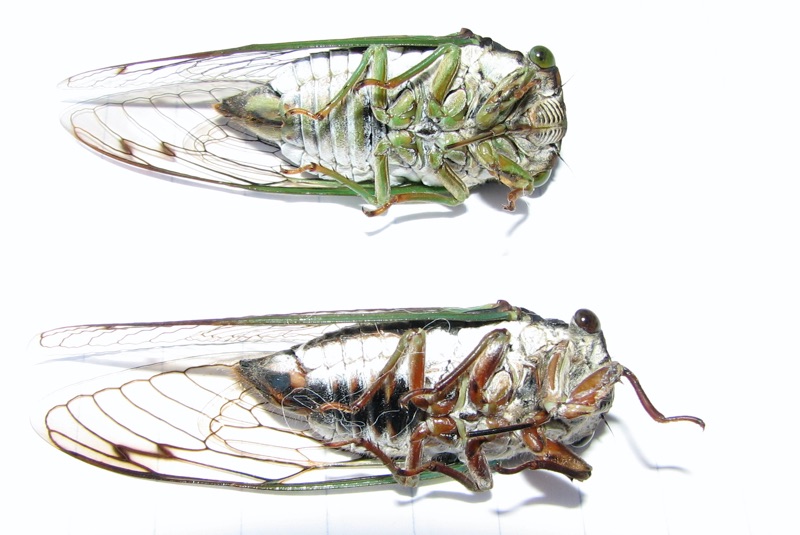
Here are some general details about Tibicen:
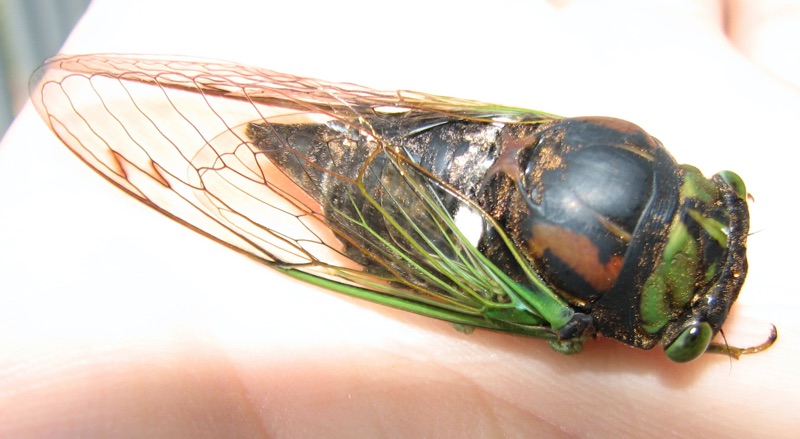
Some cool Tibicen posts and pages you should check out:
An image from Roy Troutman:

Tibicen tibicen (T. chloromerus, T. chloromera)
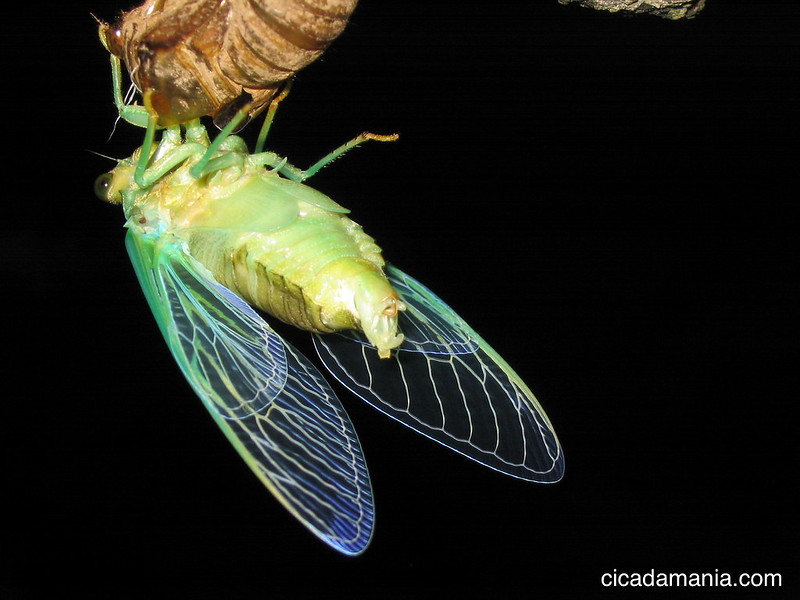
Roy Troutman took some excellent Tibicen superbus (formerly T. superba) photos while visiting Texas.
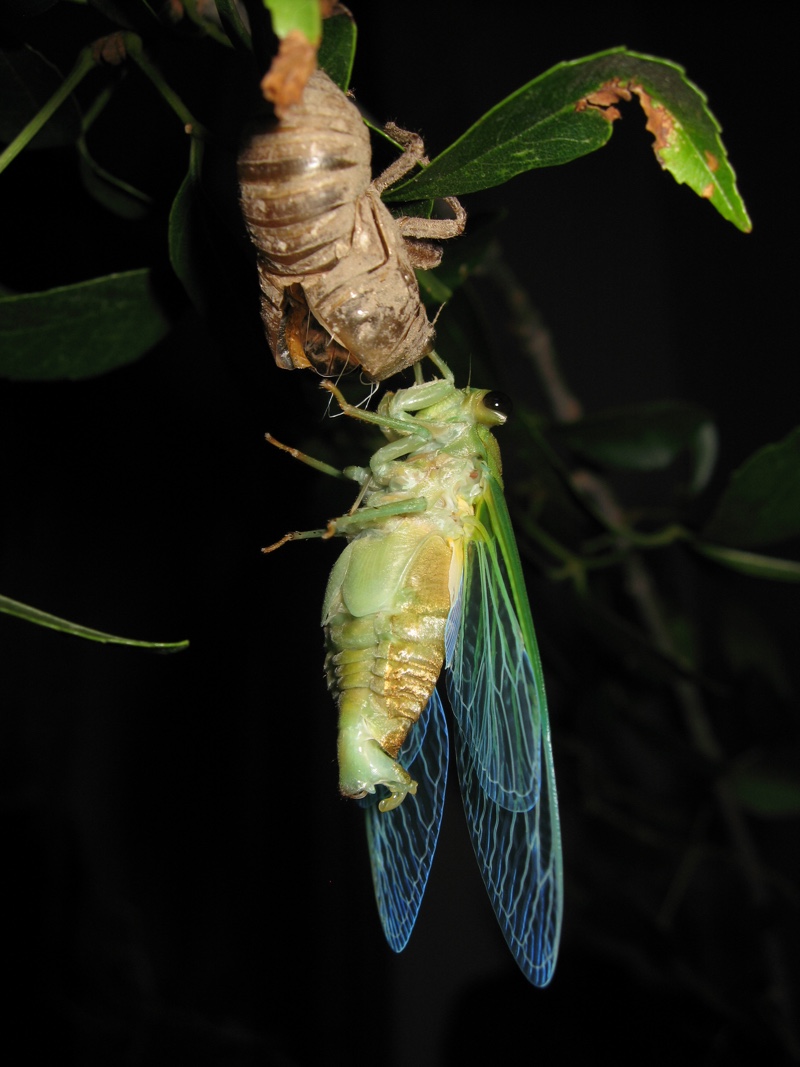
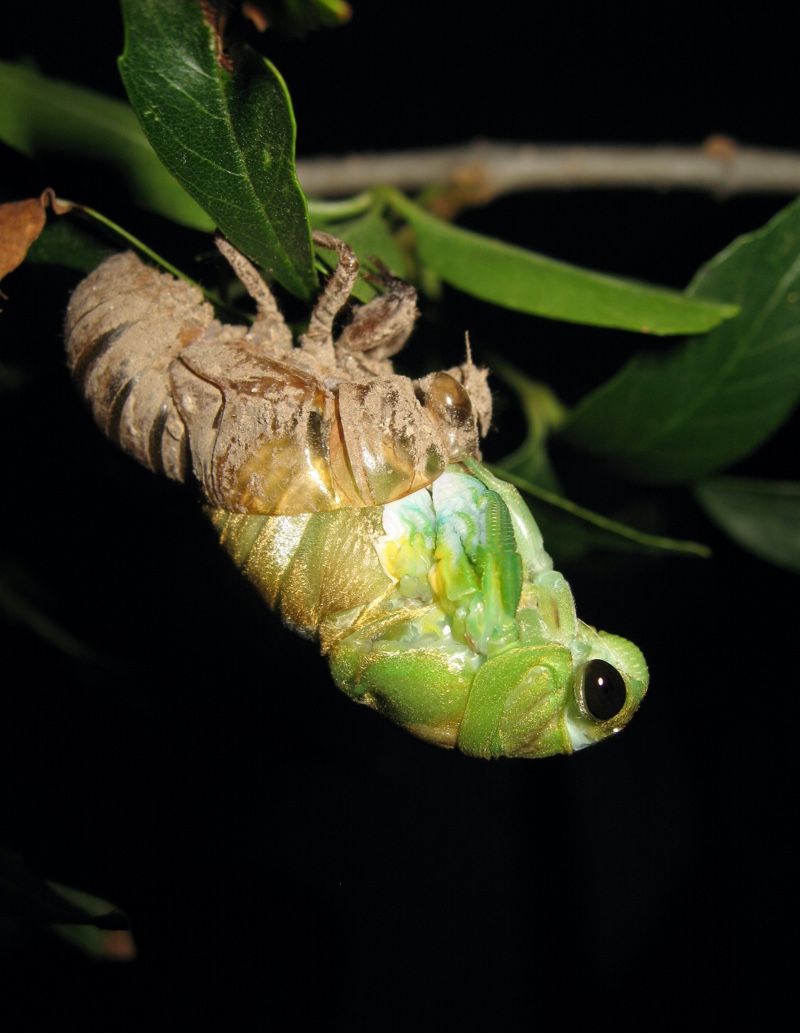
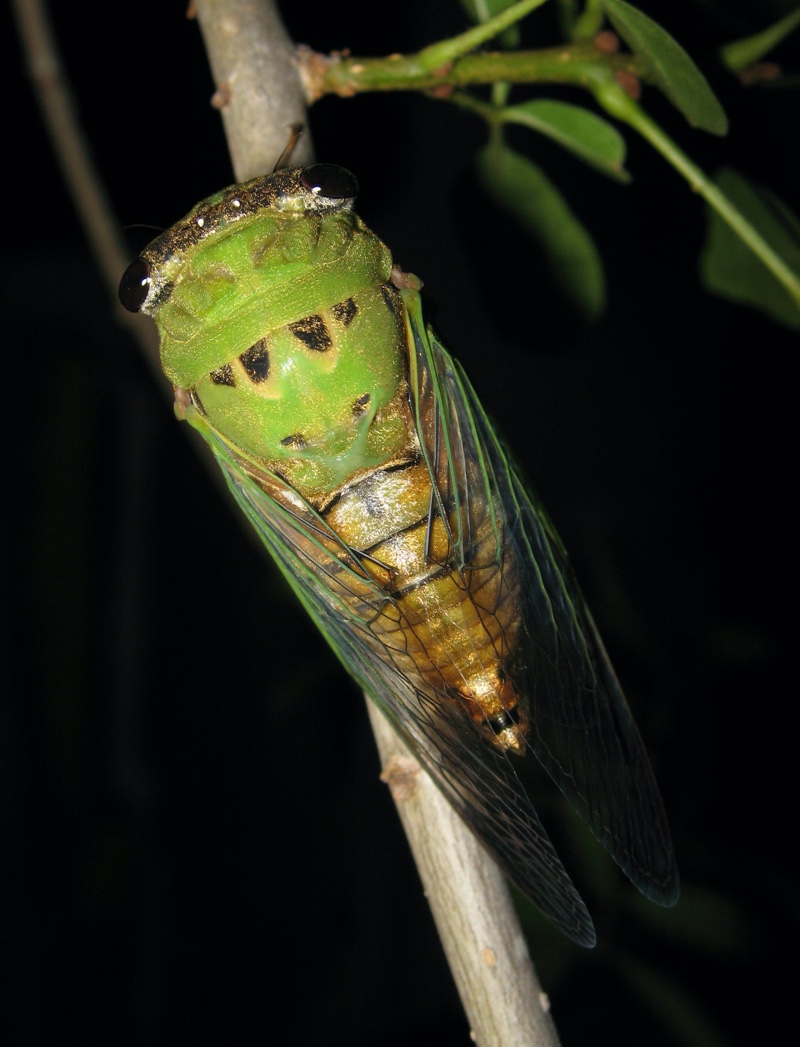
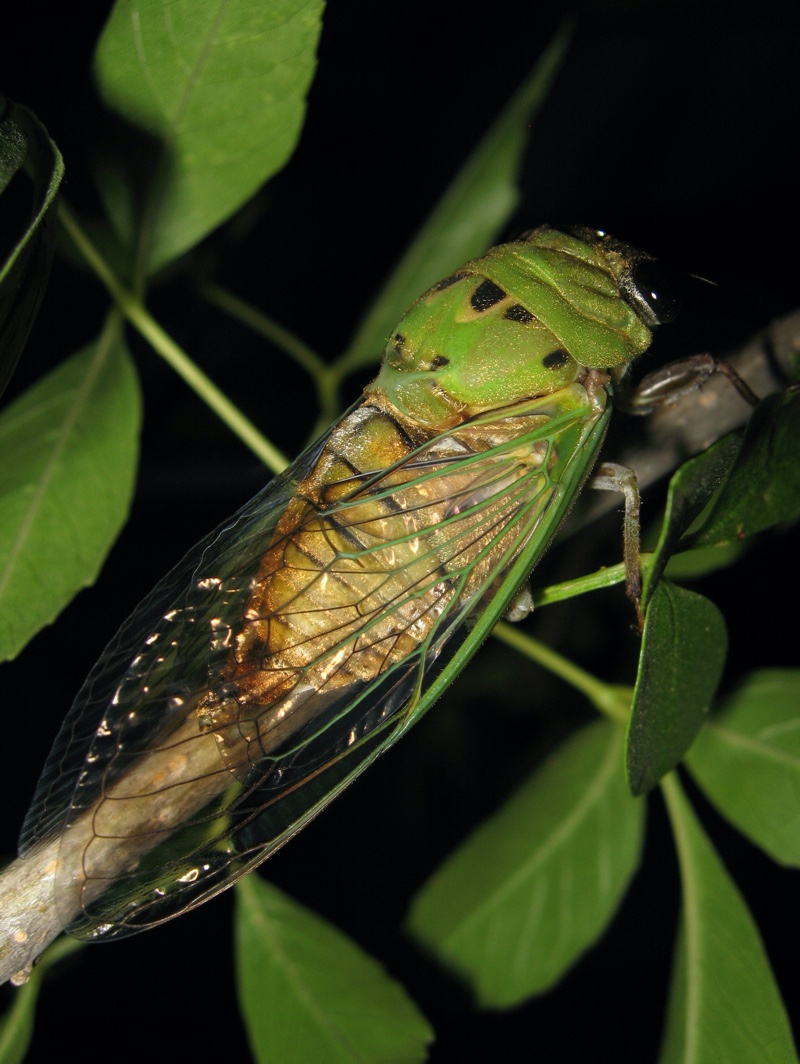
An amazing red-orange cicada. Most of the body and wings turn black when it’s done drying out, but it is just as amazing.
Cicada Mania is 13 years old.
In 1996, I started the site to document some Brood II Magicicada photos I took in my back yard and at a friend’s wedding, and the site took off from there.
The site has had 7 different URLs over the years.
In 2004, during the Brood X emergence, the site received 50,000 visitors in a single day and I was interviewed on CNN (Ted Nugent haircut in a ponytail):
2007 and 2008 were great as well. In 2007 I got to meet fellow cicada enthusiasts Roy Troutman, Gene Kritsky, Gerry Bunker and Joe Green, and I was interviewed for a Japanese TV show:
And in 2008 I drove out to Ohio and stayed with Roy Troutman, met Gene Kritsky again, and met John Cooley for the first time.
Here’s the original logo:
It’s been a fun 13 years.
On Monday (Memorial Day) I was lucky enough to find a lone Magicicada septendecim brood II straggler in Metuchen, NJ. This is a male, and he was about 1.5 inches or 3.8 centimeters long.
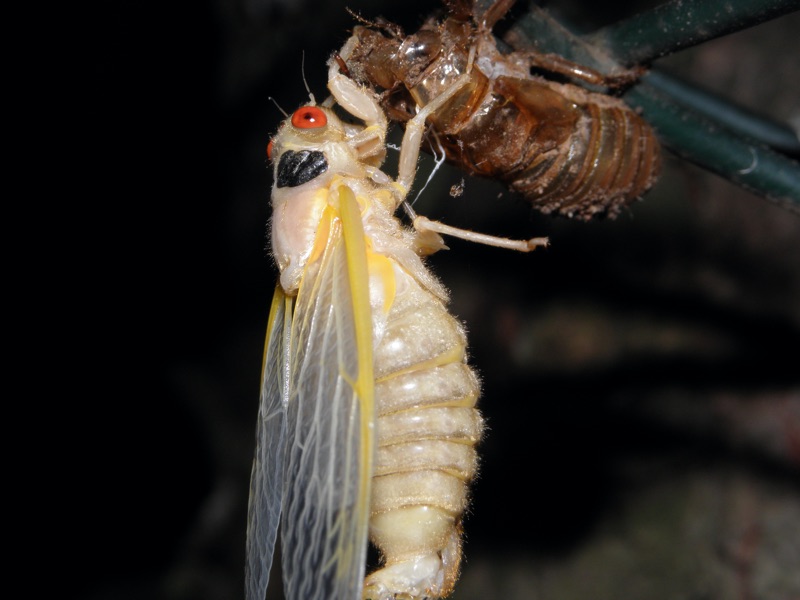
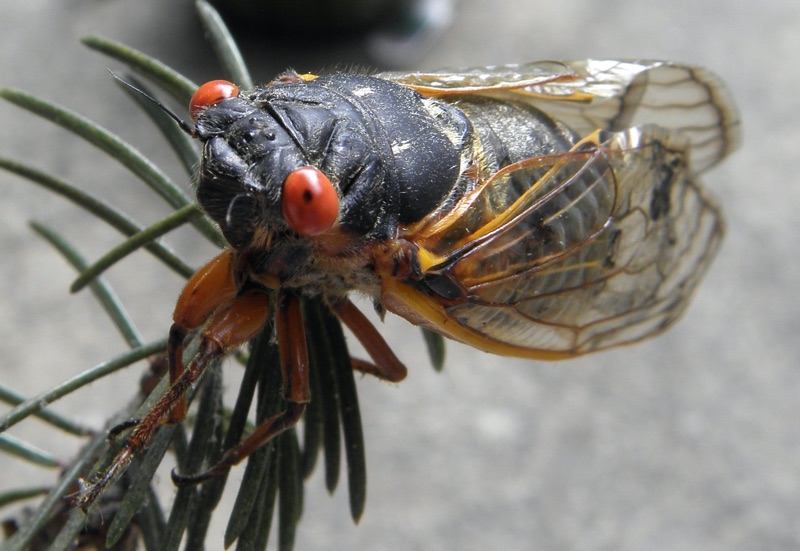
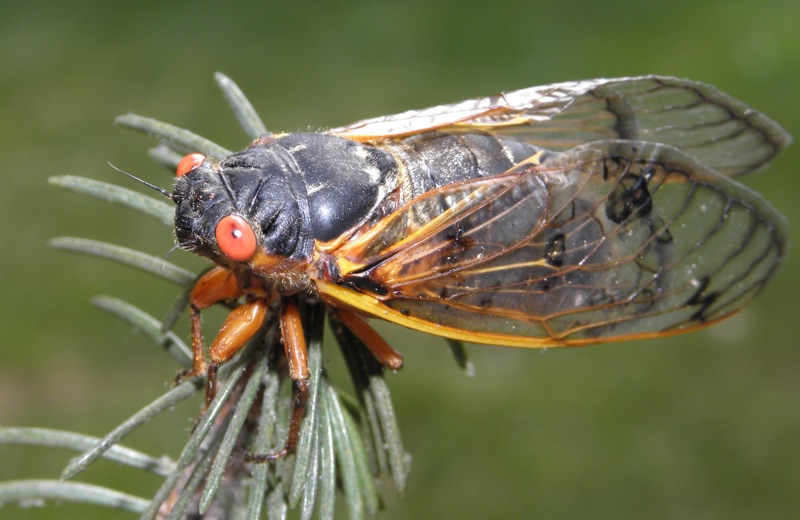
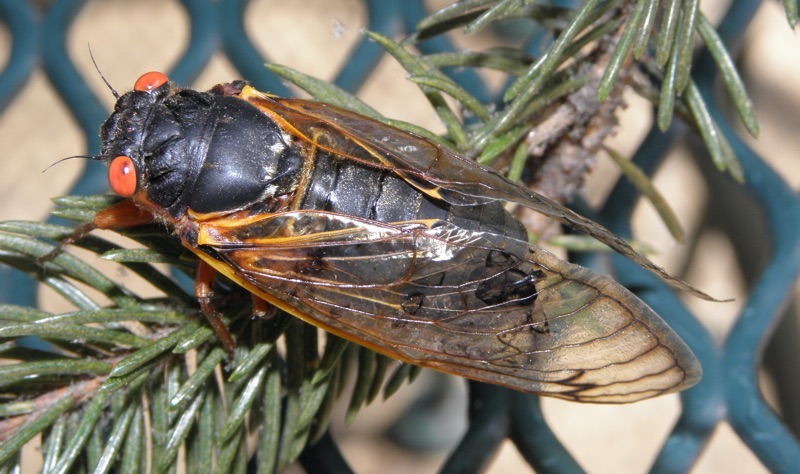
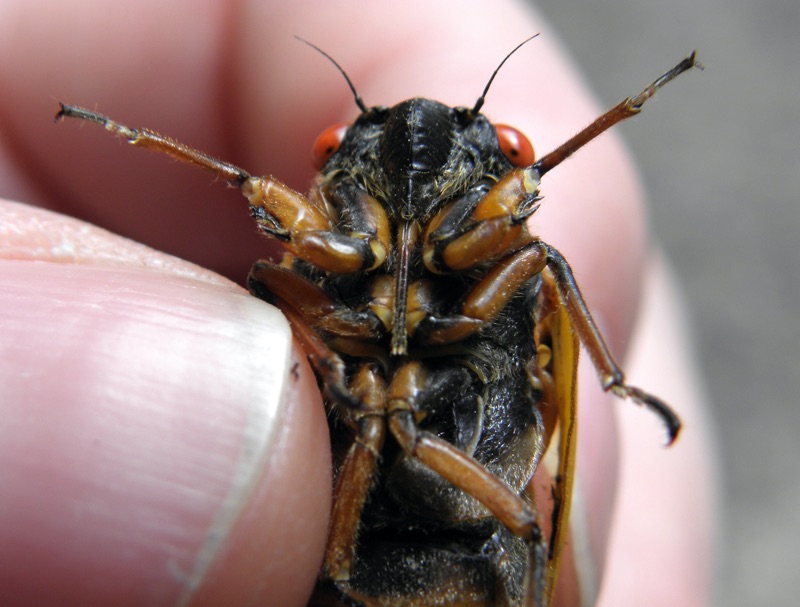
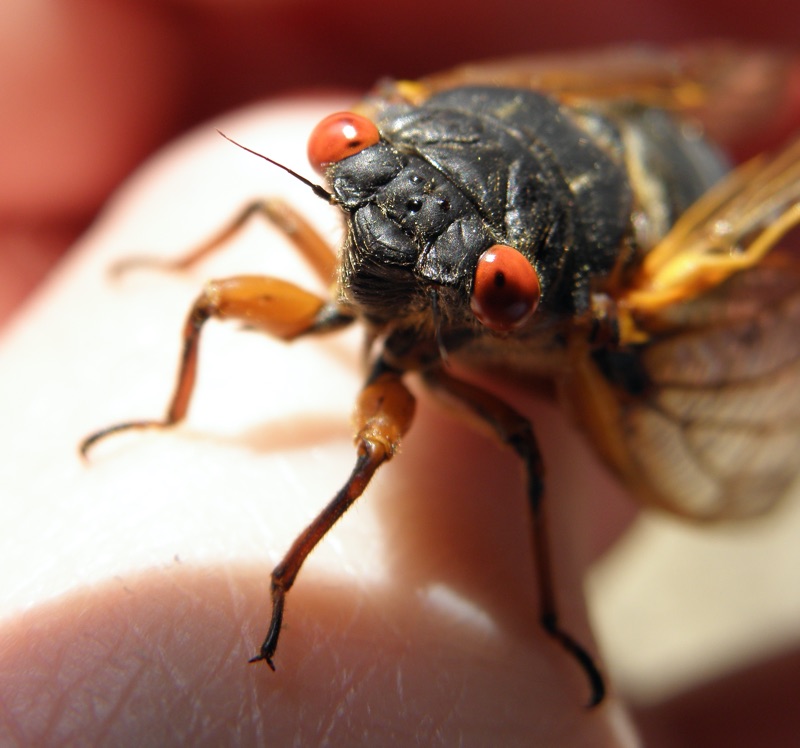
Look for orange coloring between the wing and eye to identify Magicicada septendecim:
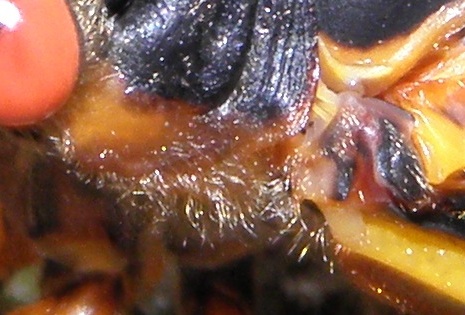
Cicadas have 3 tiny eyes called ocelli:
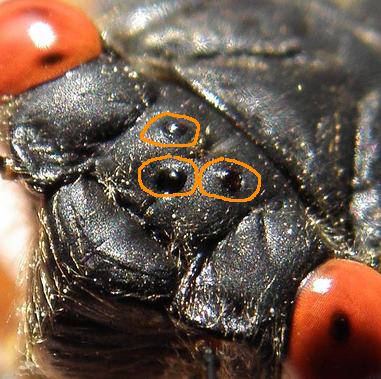
Thanks to Elias for noticing the coloration behind the eye that IDs this as a decim.
According to messages left on this site, as well as the magicicada.org map, Brood II cicadas have emerged in New Jersey and New York. I’m in New Jersey, and I plan on looking for cicadas this weekend.
So far:
Brood II stragglers are emerging (4 years ahead of schedule) in North Carolina, Virginia, Maryland, New Jersey and New York.
Brood XIV stragglers are emerging (1 year after they’re supposed to) in Ohio.
Update:
I found some skins in Metuchen, NJ tonight. Apologies for the quality of the photo — I only had my cell phone with me (cell phones were not good in 2008).
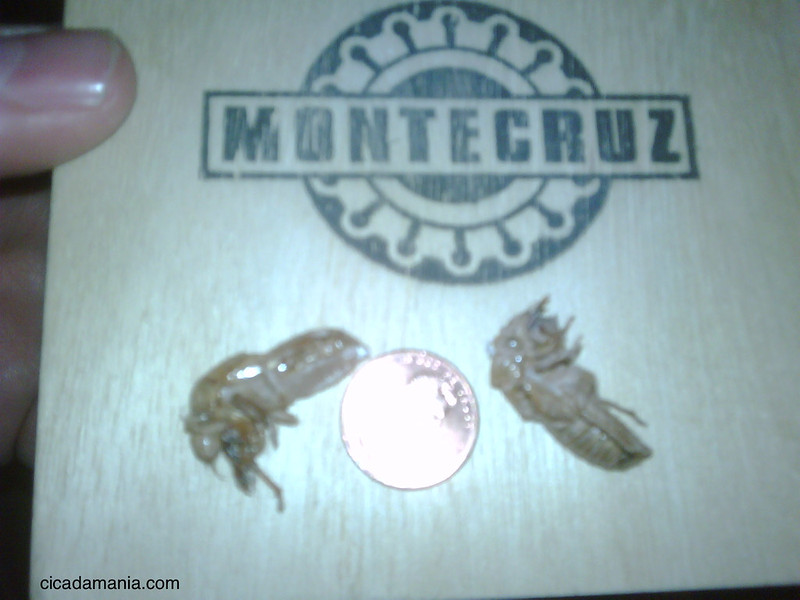
So, we already know that Brood II stragglers are emerging in places like North Carolina and Virginia. Brood II cicadas weren’t due until 2013, which means the Brood II cicadas emerging now are emerging 4 years ahead of schedule.
At the same time, Brood XIV stragglers are emerging in Ohio (Batavia, Ohio to be exact). Brood XIV emerged in full-force last year, which means some Brood XIV cicadas emerging now are emerging 1 year behind schedule.
If you compare the Brood II map and Brood XIV map you’ll see they don’t overlap. Hint: open each map in a different browser or browser tab and toggle between the two.
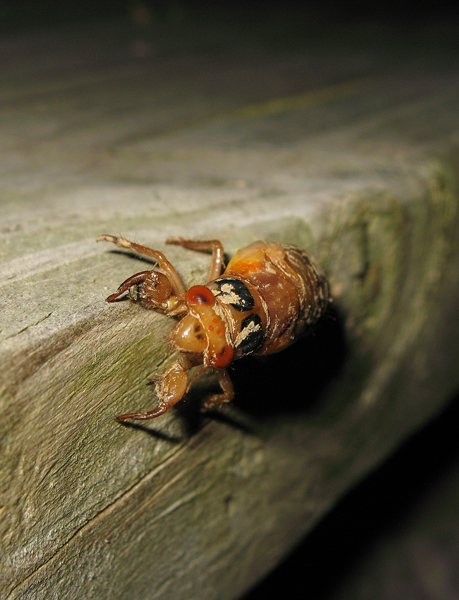
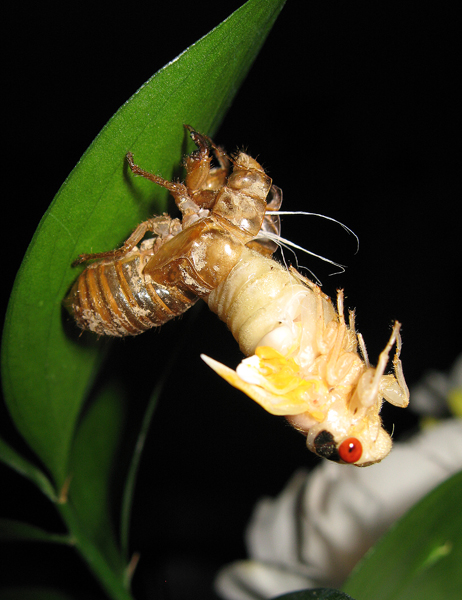
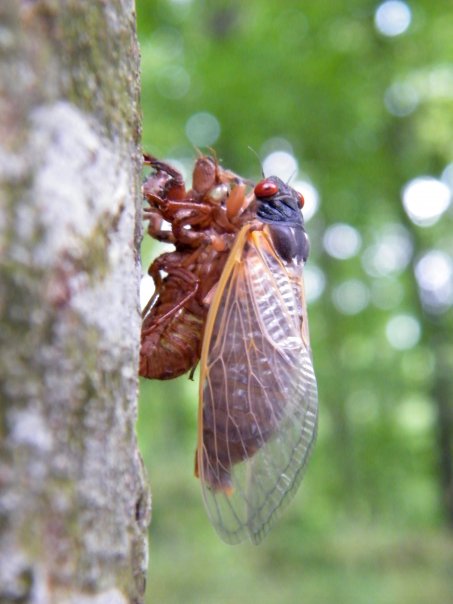
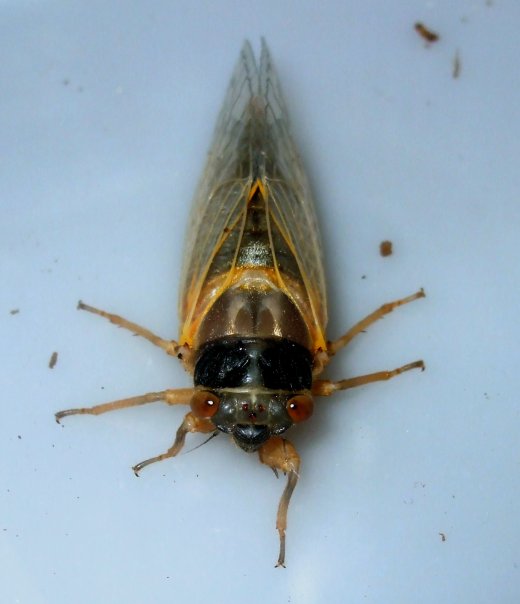
Here’s some pictures of the Brood XIV stragglers Roy Troutman found just tonight in Batavia, Ohio.