Somebody kick me if I’m wrong, but, I’m pretty sure it’s now the start of cicada season in Australia.
Categories
 Cicada Mania
Somebody kick me if I’m wrong, but, I’m pretty sure it’s now the start of cicada season in Australia.
I came across this article thanks to Google’s news alerts: UC Engineering Researchers Find Mercury In Cicadas. I’ve never eaten a cicada and I don’t plan on doing so in the future, but a lot of “cicada maniacs” do, so here’s your PSA.
Think twice before you eat one of Cincinnati’s Brood-X cicadas. That’s the warning from researchers at the University of Cincinnati College of Engineering, who have found surprising levels of mercury in these insects.
We have three new galleries:
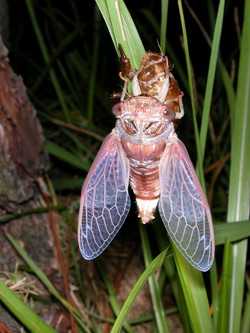
NEW! Gina Scarborough’s Florida Cicada. 18 great pictures of a pink cicada. We need help identifying this cicada, so let us know if you have a clue what it is.
NEW! Giant pictures of Bill Lesar’s Tibicen dorsatus. You’ve seen this cicada in an earlier post — now you can see huge versions of Bill’s photographs.
NEW! Andrea’s 2005 Cicada Nymph Exoskeleton Gallery. Three big pictures of discarded exoskeletons.
 Way back in July a man by the name of Samuel Orr mailed me a DVD trailer of a film he had a part in making called Return of the 17-Year Cicadas. At the time my reaction was “I am simply blown away by its excellence. That might be the best cicada video I’ve seen so far”. Somehow I let it slip through the cracks and I forgot to write about it. In the mean time the movie has won first prize in the Non-Interactive Media category of the 2005 Science & Engineering Visualization Challenge. I’m sure once the film reaches a wider audience — perhaps PBS or the Animal Planet channel (hint! hint!) — it will win more awards.
Read all about the new, award winning cicada documentary Return of the 17-Year Cicadas on the excellent EurekAlert! Science Reporting Alert website. Make sure you download and watch the video too. It is incredible.
Thanks to Roy and Dona for reminding me to post something about this film.
So, what do cicada larvae look like? Technically they’re called nymphs, not larvae. When cicadas progress from one stage of development to another, they molt, rather than pupate. Each stage of development is called an instar. Most, if not all, cicadas go through five instars. The adult phase is the fifth instar.
First, here’s what their eggs look like:
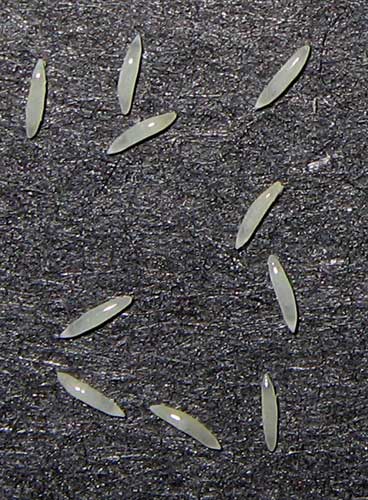
Photo by Roy Troutman.
When the eggs hatch, the cicadas don’t look like a grub or maggot as you might expect; instead they look like tiny termites or ants, with 6 legs and antennae. At this point, they’re called first instar nymphs.
Here are some first instar cicadas:
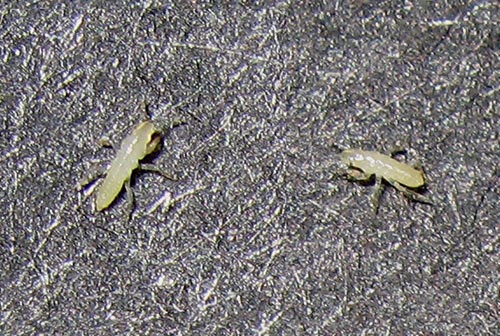
Photo by Roy Troutman.
Here is a first and second instar cicada in the soil:
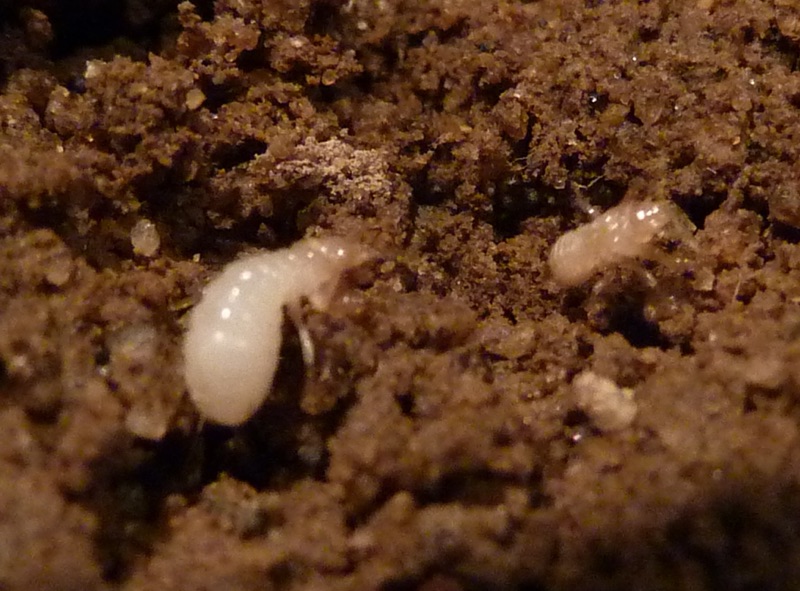
Photo by Elias Bonaros.
Here is a first, second, third, and fourth instar:
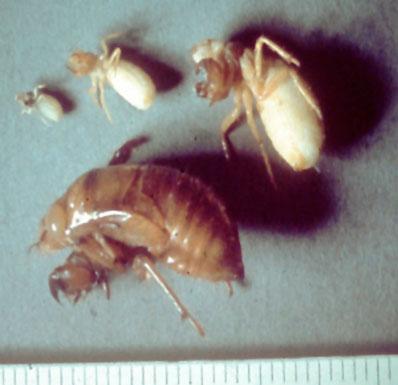
Photo courtesy of Chris Simon.
If you are interested in participating in cicada nymph research, visit The Simon Lab Nymph Tracking Project page for more information. You must have had periodical cicadas on your property in the past 13 or 17 years to find the nymphs — not including the Brood II area since those nymphs came out of the ground this year.