Categories
Platypleura Platypleurini Richard Newfrock

A Platypleura kaempferi

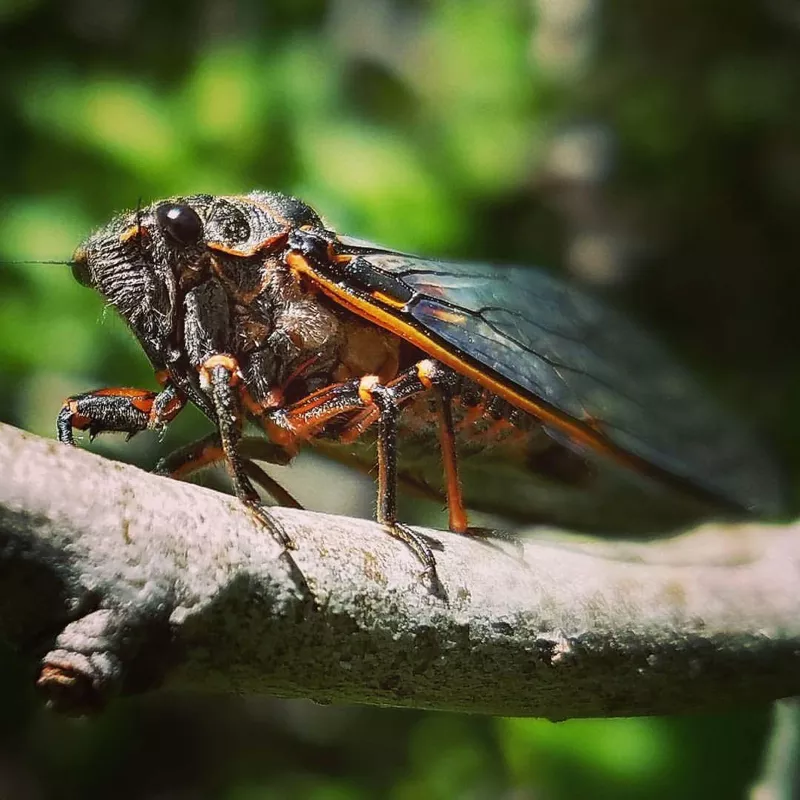
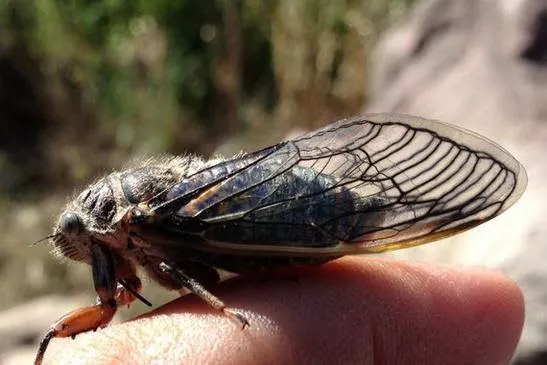
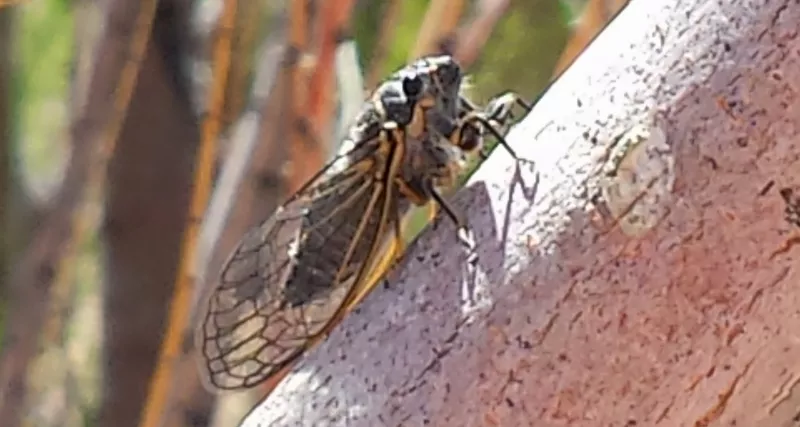
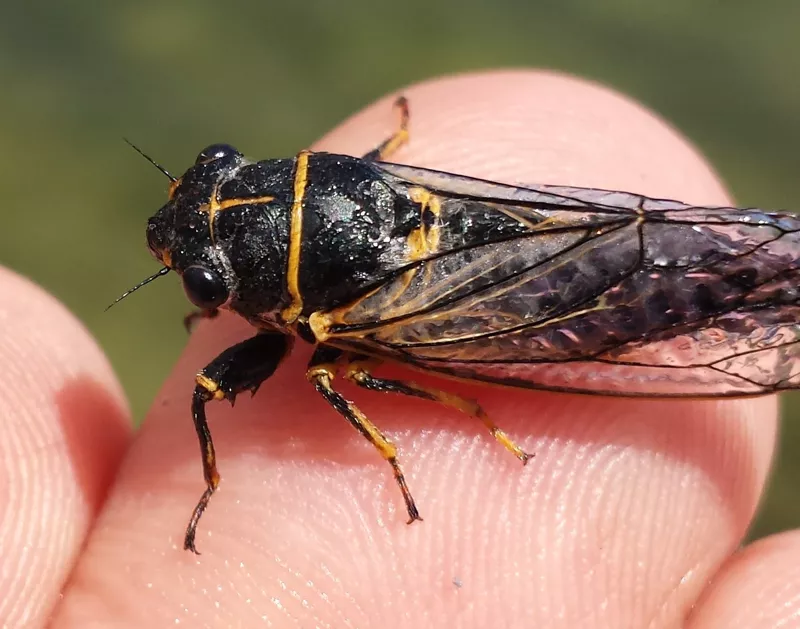
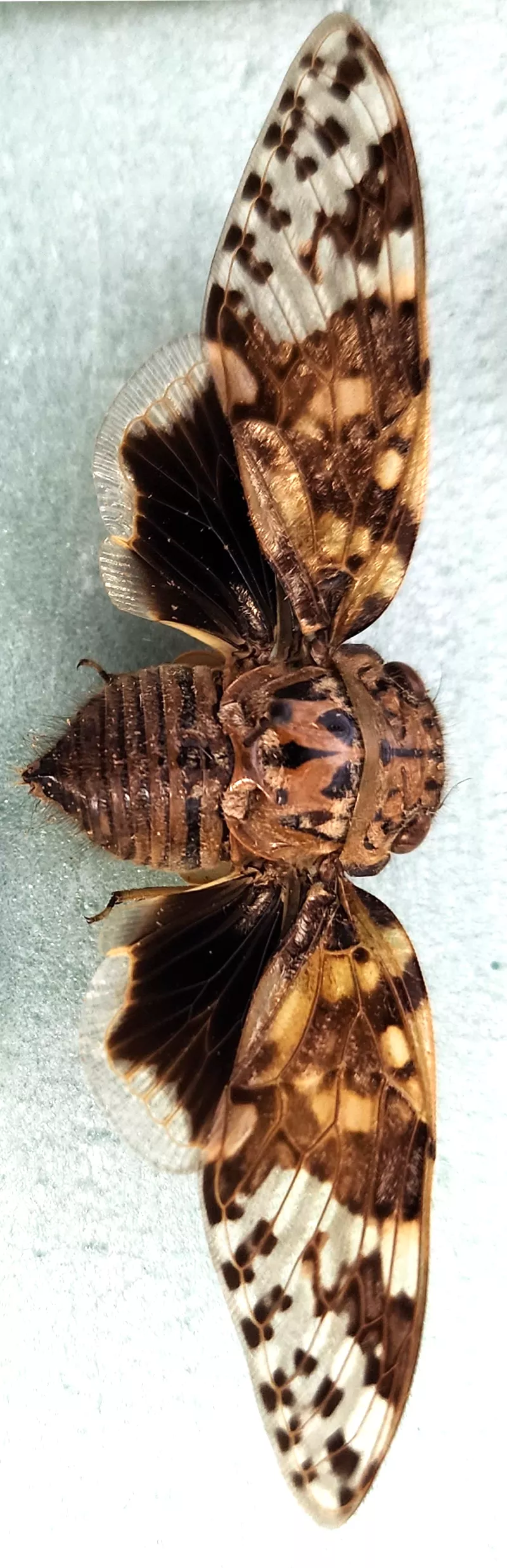
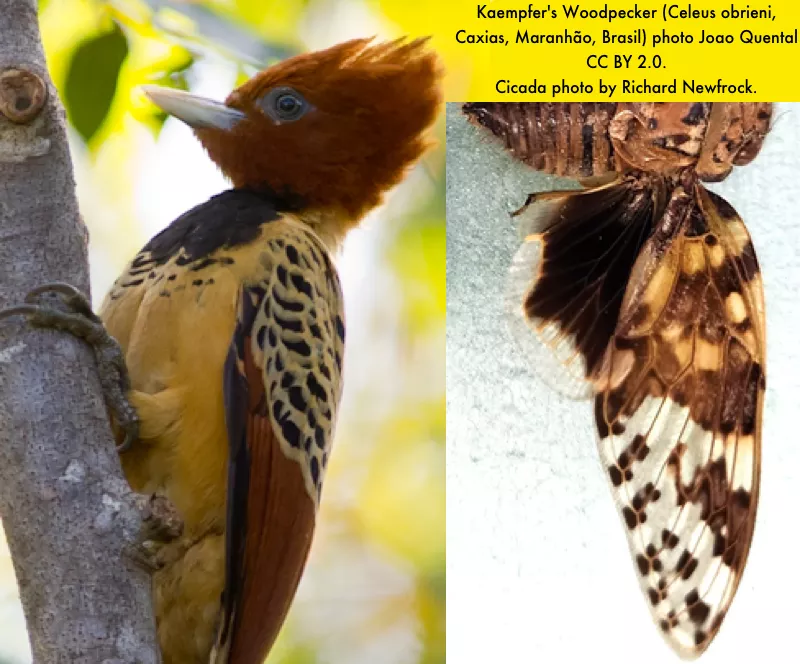
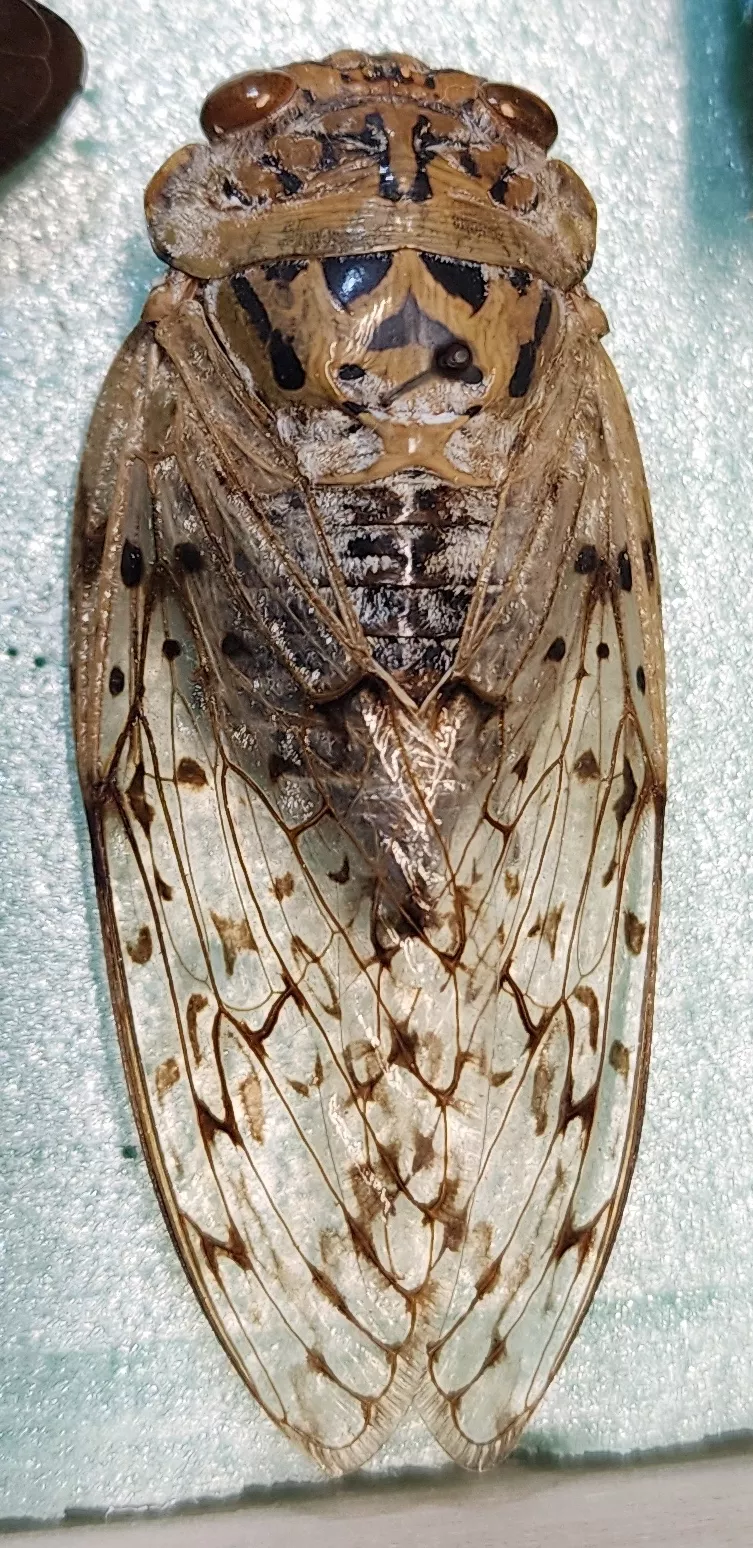
This cicada is a Platypleura kaempferi. The photo comes from us from Richard Newfrock. Platypleura kaempferi is a member of the tribe Platypleurini. P. kaempfer is found in China, South Korea, Japan and other locations — even Poland (but that cicada was likely transported along with produce or in the root ball of a plant). Platypleura means flat/broad sides, and kaempferi likely refers to Emil Kaempfer or Kaempfer’s woodpecker, whose wing resembles the wing of the cicada.

There are three species of Platypleura kaempferi1 (I don’t know what distinguishes them. I don’t see the separate subspecies on iNaturalist either):

  1. P. kaempferi brevipennis Naruse, 1983, which seems to be found in Japan.
  2. P. kaempferi ridleyana Distant, 1905, which seems to be found exclusively in the Malay peninsula.
  3. P. kaempferi kaempferi (Fabricius, 1794), which is found throughout Asia.

Platypleura

Platypleura

Here’s the iNaturalist collection of Platypleura kaempferi photos.

Here’s a comparison of the wing of Kaempfer’s Woodpecker with out possible Platypleura kaempferi:

Wing comparison

Although the woodpecker and cicada resemble each other, Yasumasa Saisho let us know that Platypleura kaempferi was described by the German biologist Engelbert Kämpfer, and its scientific name is derived from it.

Richard Newfrock took the photo of the cicada, and Joao Quental took the photo of Kaempfer’s Woodpecker (Celeus obrieni, Caxias, Maranhão, Brasil) which is under a CC BY 2.0 license.

1 Catalogue of the Cicadoidea (Hemiptera: Auchenorrhyncha). DOI: http://dx.doi.org/10.1016/B978-0-12-416647-9.00001-2 © 2014 Elsevier Inc.

Categories
Madagascar Platypleurini Richard Newfrock Yanga

A Yanga pulverea from Moramanga, Madagascar

This is a Yanga pulverea from Moramonga, Madagascar from the collection of Richard Newfrock.

This is a Yanga pulverea from Moramonga, Mogagascar from the collection of Richard Newfrock.

Yanga pulverea belongs to the cicada tribe Platypleurini, which are known for their prominent pronotal collars and infuscations on their wings. Platy means broad & flat, and pleur means side. Broad side, flat side. I don’t know the root of the word Yanga, but pulverea means power or dust. Here’s photos of living Y. pulvera on iNaturalist.

Categories
Allen F. Sanborn Cacama Maxine E. Heath U.S.A.

Cacama collinaplaga Sanborn and Heath in Sanborn, Heath, Phillips and Heath, 2011 aka Cactus Dodger

Scientific classification:
Family: Cicadidae
Subfamily: Cicadinae
Tribe: Cryptotympanini
SubTribe: Cryptotympanina
Genus: Cacama
Species: Cacama collinaplaga Sanborn and Heath in Sanborn, Heath, Phillips and Heath, 2011

List of sources

  1. Full Binomial Names: ITIS.gov
  2. Common names: BugGuide.net; The Songs of Insects by Lang Elliott and Wil Herschberger; personal memory.
  3. Locations: Biogeography of the Cicadas (Hemiptera: Cicadidae) of North America, North of Mexico by Allen F. Sanborn and Polly K. Phillips.
  4. Descriptions, Colors: personal observations from specimens or photos from many sources. Descriptions are not perfect, but may be helpful.
Categories
Cacama Tacuini (Cryptotympanini) U.S.A. William T. Davis

Cacama variegata Davis, 1919 aka Variegated Cactus Dodger

Scientific classification:
Family: Cicadidae
Subfamily: Cicadinae
Tribe: Cryptotympanini
SubTribe: Cryptotympanina
Genus: Cacama
Species: Cacama variegata Davis, 1919

List of sources

  1. Full Binomial Names: ITIS.gov
  2. Common names: BugGuide.net; The Songs of Insects by Lang Elliott and Wil Herschberger; personal memory.
  3. Locations: Biogeography of the Cicadas (Hemiptera: Cicadidae) of North America, North of Mexico by Allen F. Sanborn and Polly K. Phillips.
  4. Descriptions, Colors: personal observations from specimens or photos from many sources. Descriptions are not perfect, but may be helpful.
Categories
Diceroprocta Tacuini (Cryptotympanini) U.S.A. William T. Davis

Diceroprocta bibbyi Davis, 1928 aka Scrub Cicada

Classification:

Family: Cicadidae
Subfamily: Cicadinae
Tribe: Cryptotympanini
Subtribe: Cryptotympanina
Genus: Diceroprocta
Species: Diceroprocta bibbyi Davis, 1928

List of sources

  1. Full Binomial Names: ITIS.gov
  2. Common names: BugGuide.net; The Songs of Insects by Lang Elliott and Wil Herschberger; personal memory.
  3. Locations: Biogeography of the Cicadas (Hemiptera: Cicadidae) of North America, North of Mexico by Allen F. Sanborn and Polly K. Phillips.
  4. Descriptions, Colors: personal observations from specimens or photos from many sources. Descriptions are not perfect, but may be helpful.
Categories
Diceroprocta Tacuini (Cryptotympanini) U.S.A. William T. Davis

Diceroprocta canescens Davis, 1935 aka Scrub Cicada

Classification:

Family: Cicadidae
Subfamily: Cicadinae
Tribe: Cryptotympanini
Subtribe: Cryptotympanina
Genus: Diceroprocta
Species: Diceroprocta canescens Davis, 1935

List of sources

  1. Full Binomial Names: ITIS.gov
  2. Common names: BugGuide.net; The Songs of Insects by Lang Elliott and Wil Herschberger; personal memory.
  3. Locations: Biogeography of the Cicadas (Hemiptera: Cicadidae) of North America, North of Mexico by Allen F. Sanborn and Polly K. Phillips.
  4. Descriptions, Colors: personal observations from specimens or photos from many sources. Descriptions are not perfect, but may be helpful.
Categories
Diceroprocta Tacuini (Cryptotympanini) U.S.A. William T. Davis

Diceroprocta lata Davis, 1941 aka Scrub Cicada

Classification:

Family: Cicadidae
Subfamily: Cicadinae
Tribe: Cryptotympanini
Subtribe: Cryptotympanina
Genus: Diceroprocta
Species: Diceroprocta lata Davis, 1941

List of sources

  1. Full Binomial Names: ITIS.gov
  2. Common names: BugGuide.net; The Songs of Insects by Lang Elliott and Wil Herschberger; personal memory.
  3. Locations: Biogeography of the Cicadas (Hemiptera: Cicadidae) of North America, North of Mexico by Allen F. Sanborn and Polly K. Phillips.
  4. Descriptions, Colors: personal observations from specimens or photos from many sources. Descriptions are not perfect, but may be helpful.
Categories
Hadoa Tacuini (Cryptotympanini) U.S.A. William T. Davis

Hadoa chisosensis Davis, 1934

Classification:

Family: Cicadidae
Subfamily: Cicadinae
Tribe: Cryptotympanini
Subtribe: Cryptotympanina
Genus: Hadoa
Species: Hadoa chisosensis (Uhler, 1905)

List of sources

  1. Full Binomial Names: ITIS.gov
  2. Common names: BugGuide.net; The Songs of Insects by Lang Elliott and Wil Herschberger; personal memory.
  3. Locations: Biogeography of the Cicadas (Hemiptera: Cicadidae) of North America, North of Mexico by Allen F. Sanborn and Polly K. Phillips.
  4. Descriptions, Colors: personal observations from specimens or photos from many sources. Descriptions are not perfect, but may be helpful.
Categories
Books Magicicada Periodical

Cicadapocalypse a graphic novel about periodical cicadas by Roger McMullan

Roger McMullan has a new graphic novel about periodical cicadas called Cicadapocalypse. You can obtain a copy from Roger’s online store.

As I understand it, “the book is intended as an introduction to periodical cicadas for curious kids during a cicada emergence by creating a fictional narrative around the cicadas rather than hitting them over the head with facts”. A cicada emergence through the eyes of some shocked and surprised cartoon squirrels.

It looks fun to me.

cicadapocalypse

Categories
Neotibicen Teneral

Pink teneral Neotibicen lyricen

Neotibicen cicadas come in a variety of pastel colors when they are in their teneral (soft) phase, when they inflate their wings and harden their bodies after molting their nymphal skins. Teneral Neotibicen can feature the colors pink, yellow and blue, in addition to pastel versions of the oranges, browns and greens we commonly see on their fully-hardened adult bodies.

Here’s an example of a male Neotibicen lyricen that was pink when it was teneral:

Pink teneral Neotibicen lyricen

Pink teneral Neotibicen lyricen

Pink teneral Neotibicen lyricen

Here’s photos of the same cicada as a nymph and a hardened adult. See that its mesonotum are black and brown, not green and brown. It’s closer to a Neotibicen lyricen engelhardti than the Neotibicen lyricen lyricen, which has green on its mesonotum (the cicada’s shield-like back).

Hardened adult:
Hardened Lyricen 02(small)