Categories
Brood I Magicicada Periodical

Is it hot enough for cicadas yet?

Update (4/23): The first Brood I emergence (that we heard of) occurred in Roanoke, Virginia. Unfortunately, the sudden cold, wet weather seems to have hurt the early emerging cicadas.

The rest of this post was originally from March 11th, 2012:

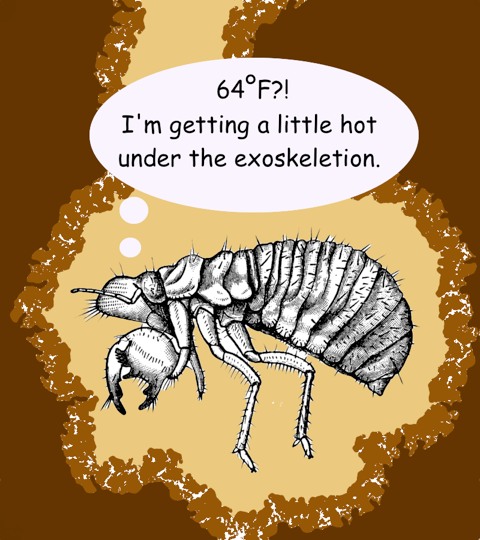
Next week temperatures are forecasted to reach 79°F in the parts of Virginia, where Brood I Magicicadas are expected to emerge this year. That’s hot for March, but is it hot enough for the cicadas? Periodical cicadas typically emerge when the soil 8″ below the surface reaches 64°F. Although temperatures will be in the 70’s all week, that might not be enough to heat the soil to the necessary temperature, but stranger things have happened.

Last year Brood XIX Magicicada started emerging in Abbeville County, South Carolina after only 3 days of temperatures in the 70s.

My guess is temperatures won’t heat the soil enough to launch a full-blown emergence, but a few cicadas will emerge in the warmest and sunniest areas. Keep on the look out. Take photos and video. Report sightings to magicicada.org. locations; places like Rockbridge, Page, Botetourt, and Bath counties…

hot under the exoskeleton

Categories
Brood I Magicicada Periodical

Brood I cicadas will emerge in Virginia and West Virginia in 2012

The Magicicada periodical cicadas belonging to Brood I (one) will emerge in western Virginia and eastern West Virginia in the spring of 2012. Brood I cicadas have a 17-year life cycle. Three species of periodical cicada will emerge: Magicicada cassini, Magicicada septendecim, and Magicicada septendecula.

Brood I is also called the Blue Ridge brood because the emergence occurs in the Blue Ridge Highlands area. Brood I has historically emerged along RT 81 in Virginia, parts of George Washington National Forest, Jefferson National Forest, and around the Spruce Knob-Seneca Rocks National Recreation Area in West Virginia. Visit the Brood I page on Magiciada.org for more information and maps.

Get ready…

Magicicada septendecim

Categories
Brood XIX Magicicada Periodical

Best Cicada News of the Week: Cicada Ice Cream?!

Brood XIX News

You can see the latest 500 cicada sightings on magicicada.org. Visit their “2011 Brood XIX sightings” map. The latest reports are from Illinois and Missouri.

The latest Science Cabaret Podcast is about cicadas, and in particular, the relationship of birds and cicadas. The podcast features Dr. Walt Koenig and is hosted by Dr. Holly.

I enjoyed this blog post Kingdom of the Cicadas. It features photos and videos of the emergence from Joplin, Missouri.

Cicada Ice Cream

There were a lot of news stories about Sparky’s Ice Cream shop in Columbia, Missouri, and their cicada ice cream. After reading dozens of articles, it seems that they only made one batch, and the local health official(s) only advised them not to make the ice cream, but did not specifically or legally stop them from making it.

Related… cicada pie, pizza and tacos courtesy of the University of Maryland’s PDF cookbook. The cookbook is circa 2004 (Brood X) but they still work.

Categories
Brood XIX Magicicada

Best Brood XIX Cicada News of the Week for May 29-June 4

Brood XIX emergence update

Looking at the Cicadas @ UCONN emergence map it appears that the cicadas have emerged everywhere they’re expected to emerge.

The next question is, when will they be gone? Local emergences typically last between four to six weeks, starting from the first emerging nymph, to the last dead cicada. I wouldn’t expect any cicadas around today to be around on Independence Day. Their corpses will be around though – so don’t forget to rake them up.

White Eyed Cicada Contest

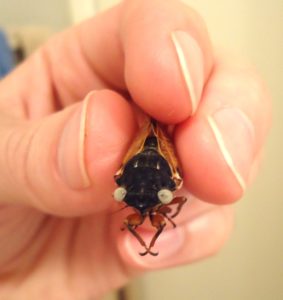
The White Eyed Cicada Contest is over and 10 people won I Love Cicada pins. Congratulations to Joey Simmons of Nashville, TN, Meagan Lang of Nashville, TN, Serena Cochrane of Gerald MO, Melissa Han of Nashville TN, Jane and Evan Skinner of Troy MO, Phyllis Rice of Poplar Bluff MO, Jack Willey of Nashville TN, Chris Lowry of Nashville TN, Nathan Voss of Spring Hill TN, and Paul Stuve of Columbia, MO.

white eyed Magicicada from 2011

Cicada Videos

The Kenyon Media Group produced this video that demonstrates the cicada’s affinity for the sound of power tools. Educational and hilarious. You must watch it. Cicadas are attracted to the sound of power tools and lawn maintenance equipment because they think the sound is coming from other cicadas.

Do you like cicada song parodies? This song parodies Faith Hill’s song Breathe but it’s called Breed. Not sure who the singer is, but she’s fantastic.

This news report from CBS is pretty good, as far as cicada news reports go. It features John Cooley of Cicadas @ UCONN (formerly Magicicada.org), and Elias Bonaros‘ live Magicicada collection. “Betty Nguyen reports from Simpson, Ill on the return of cicadas – as part of their normal, 13-year cycle – and a young boy’s fascination with the bug”. Sorry no embedded video.

Cicada Humor

Rest in Peace Nashville Cicada on Twitter. @TNCicada – his corpse is rotten, but he won’t be soon forgotten.

True story: someone called the police on the cicadas. Who drops a dime on a decim?

Eating Cicadas

Sadly, Sparky’s Ice Cream has sold out of their cicada flavored ice cream.

The art of eating cicadas. Just don’t choke on them.

Cicada Tea! I pity the person who drinks cicada tea!

Categories
Brood XIX Magicicada

Best Brood XIX Cicada News of the Week for May 22-28

Brood XIX emergence update

Every state is accounted for except for Louisiana at this point. Roy Troutman was able to confirm the appearance of Magicicadas in Indiana, and a pocket of Magicicadas were discovered in Maryland. See Team Cicada’s Facebook Page for more information.

There have been a number of reports from Kansas, but that might be Brood IV (a 17 year variety) stragglers emerging 4 years early, or perhaps Brood IV(4) is accelerating to join Brood XIX.

White-eyed Cicada Contest

There’s been two more winners in our White-Eyed Cicada Contest:

Meagan Lang of Nashville, TN:

White-eyed Magicicada from Meagan Lang of Nashville, TN. Brood XIX. 2011.

Serena Cochrane of Gerald MO:
White-eyed cicada from Serena Cochrane of Gerald, MO. Brood XIX. 2011.

Categories
Brood XIX Eye Color Magicicada Video

Cicada Contest: Find a Cicada with White Eyes and Win a Prize

The White-eyed cicada contest is complete!

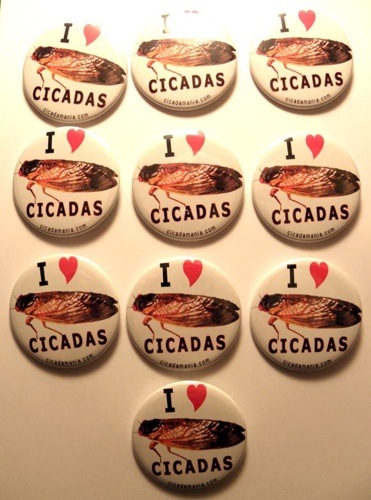
I had ten “I Love Cicada” pins sitting in a bag in my office. Ten people found a white-eyed cicada, sent me a photo and won “I Love Cicadas pins”!

Our first pin winner is Joey Simmons of Nashville, TN:
White eyed Magicicada from Joey Simmons of Nashville, TN. Brood XIX. 2011.

Our second winner is Meagan Lang of Nashville, TN:
White-eyed Magicicada from Meagan Lang of Nashville, TN. Brood XIX. 2011.

Our third winner is Serena Cochrane of Gerald MO:
White-eyed cicada from Serena Cochrane of Gerald, MO. Brood XIX. 2011.

Our fourth winner is Melissa Han of Nashville TN:
White Eyed cicada found by Melissa Ham in Nashville TN

Our fifth winners are Jane and Evan Skinner of Troy MO:
White-Eyed Magicicada found by Jane and Evan Skinner of Troy, MO. Brood XIX. 2011.

Our sixth winner is Phyllis Rice of Poplar Bluff MO:
White-Eyed Magicicada found by Phyllis Rice of Poplar Bluff, MO. Brood XIX. 2011.

Our seventh winner is Jack Willey of Nashville TV:
White-eyed Magicicada found by Jack Willey of Nashville TV

Our eighth winner is Chris Lowry of Nashville TN:
White-eyed cicada from Paul Stuve found in Columbia, MO. Brood XIX. 2011.

Our ninth winner is Nathan Voss of Spring Hill TN :
White-eyed cicada found by Nathan Voss of Spring Hill, TN. Brood XIX. 2011.

Our tenth and final winner is Paul Stuve of Columbia, MO:
White-eyed cicada from Paul Stuve found in Columbia, MO. Brood XIX. 2011.

Here’s the prize pins:

White eyed Magicicada by Dan from Cicada Mania on Vimeo.

Categories
Brood XIX Magicicada Periodical

Best Brood XIX Cicada News of the Week

Here’s a rundown of some of the best Brood XIX cicada news and multimedia from the week.

Emergence status:

It appears that Brood XIX’s emergence is now underway in every state they were supposed to emerge in, with the exception of Louisiana, but that could be that no one has reported in from Louisiana yet. You can see the progress of the emergence on Cicadas @ UCONN (formerly Magicicada.org)’s 2011 Brood XIX Map. I’m starting to hear that the emergence is winding down in Georgia, while it’s just getting started in Illinois.

Brood XIX is truly the first periodical cicada emergence where social media (Facebook, Twitter, Flickr, YouTube, Vimeo) became the primary method that people used to share and learn about cicada news and media. The Cicada Mania Facebook Page has been very active all throughout the emergence with many people sharing excellent photos and videos. I’ve been sharing the latest cicada news stories on the CicadaMania Twitter feed. If you want to keep up with the latest cicada news stories, Twitter is a great place to start.

The first white eyed cicada

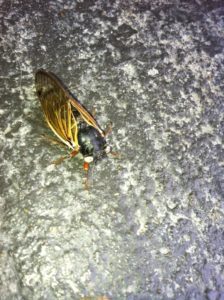
Here is the first image of a white-eyed Brood XIX cicada that I’ve seen. The credit goes to biologizer on Flickr.

White eyed Cicada

If you’re on Flickr, you can add your photos to the Cicada Photos group, or if you simply want to see all the cicada photos showing up daily, search for cicadas.

The first Cicada Mania Brood XIX gallery

Thanks to David Green of North Eastern Arkansas for these photos of a Magicicada tredecassini.

Brood XIX Magicicada photos from North Eastern Arkansas taken by David Green. 2011.

Time Lapse videos of cicadas eclosing

A couple of time lapse videos of a cicada eclosing (leaving their old skin and becoming an adult) caught my eye:

Brood XIX Periodical Cicada 2011 from Mark Dolejs on Vimeo.

Interview of the Week

Dr. John Cooley of Cicadas @ UCONN was interviewed by Ira Flatow on Science Friday. Listen to the interview.

Cicada Humor

Singer / Songwriter Kathy Ashworth wrote a song called Sick of Cicadas, which you can listen to on her website.

This A Basic Guide to the Meaning of the Letters on Cicada Wings (pdf) will help you… figure out what the letters that appear on cicada wings mean.

More cicada videos

Here are some cicada videos that really stood out:

What else?

If you want to send in a cicada news story, video, etc, email us at cicadamania@gmail.com or find us on twitter at @cicadamania.

A word from our sponsor: The best way to remember a cicada emergence is with cicada apparel or mugs.

Categories
Brood XIX Magicicada Video

Watch a cicada transform

There are many interesting aspects of a periodical cicada emergence, including the length of time they spend underground, their massive numbers, their visual appearance, their amazing songs, and the variety of reactions people have to the cicadas. One of most amazing things you can witness during a cicada emergence is to watch cicadas emerge from the earth as nymphs, crawl up a tree, shed their skins, spread their wings and become adults.

Periodical cicadas will typically emerge over a period of several days. If you discover that cicadas have emerged in your yard by finding their skins (exuvia) or adult cicadas, chances are good more cicadas will emerge later that night. Filming a night-time cicada emergence is an excellent opportunity to use your HD Camcorders, Macro camera settings, and other technology you normally don’t get to use.

Here’s a guide to finding cicadas at night and ideas for filming them:

  1. Be prepared: Get your flashlights ready. Read the manual for your camera to learn about its night time settings, HD settings, Macro settings, etc. Make sure your camera is charged.
  2. Once the sun sets, head outside with your flashlight and camera. Carefully walk around beneath the branches of trees, shining your flashlight towards the ground. Cicada nymphs live along the entire root system of a tree, so they can emerge 15 or more feet away from the trunk. Watch this video of cicada nymphs to see what to look for. Listen: you can actually hear them walk through the grass and up the bark of a tree.
  3. Once you’ve spotted nymphs, you can start filming. I usually aim my flashlight at them, and then let the flash in my camera light them up for the photo.
  4. Once a nymph crawls up the tree, and finds a part of the tree that it likes, it will emerge from its skin and become an adult. The process of completely becoming an adult takes several hours, so this is a good opportunity to make a time-lapse movie.

Here is a series of stills from a movie Roy Troutman made of an eclosing Magicicada:

Step 1: The nymph grabs hold of a leaf

Nymphs will crawl around until they find a place to grab hold of with their tiny tarsal claws. Usually, they find part of a tree branch or leaf. Sometimes they find a car tire, a brick wall or a barbecue.
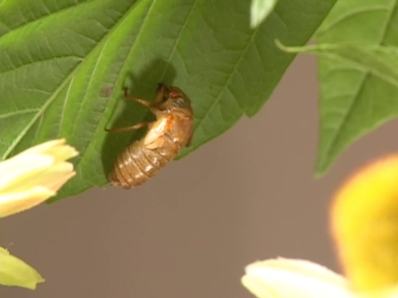
A nymph grabs hold of a leaf.

Step 2: The back of the cicada splits open, and the cicada pushes itself out.

The skin of the nymph splits open along the middle of its back, all the way up to its head. The cicada then pushes itself out back-first. You’ll notice that the cicada is white in color with two black spots on its back. At this point the cicada’s body is very soft — until a cicada’s body has hardened, we call them teneral, which means soft or tender in Latin.
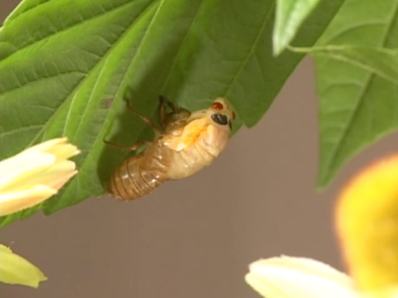
The cicada pushes out of the nymph skin.

Step 3: With its abdomen anchored in the nymph skin, the cicada curls back, freeing its legs and spiracles.

The spiracles are the holes through which the cicada breathes. You’ll notice fine white strands connected to the nymph skin — those were once connected to the spiracles.
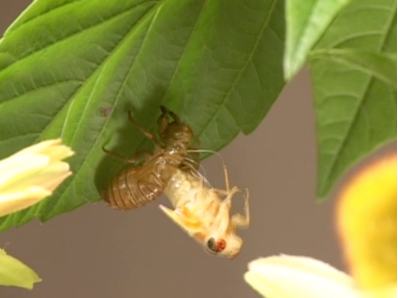
The cicada curls back, freeing its legs and spiracles.

Step 4: The cicada curls forward, grabs hold of its former skin, and frees its abdomen
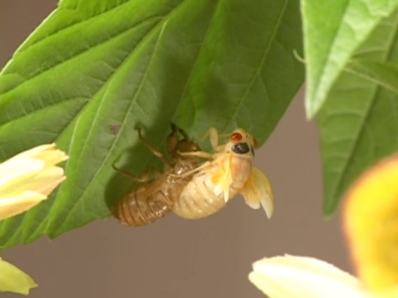
The cicada then curls forward, and grabs hold of its former skin

Step 5: The cicada crawls away from its old skin and prepares to inflate its wings
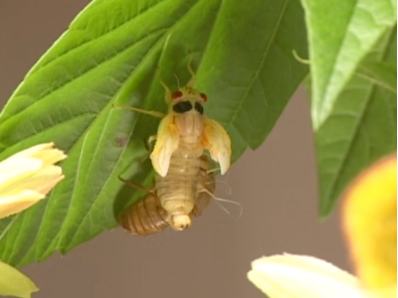
The cicada crawls away from its old skin.

Step 6: The cicadas wings fill with fluid and expand

The cicada inflates its wings using haemolymph, a blood-like fluid also used to transport nutrients in a cicada’s body.
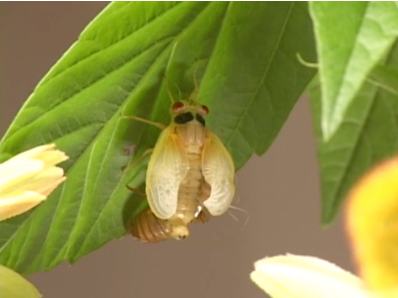
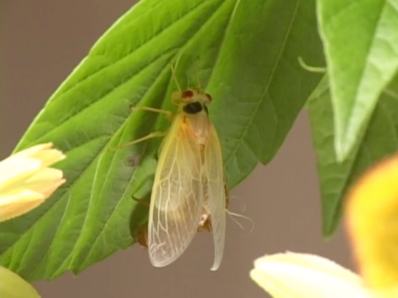
The cicadas wings fill with fluid and expand.

Wings expand to their final shape

Now, watch the entire video:

Magicicada nymph molting from Roy Troutman on Vimeo.

Step 7: The color of the cicada darkens and its body hardens

Once the cicada has expanded its wings, the cicadas will turn their final color and their bodies and wings will harden. Once the body and wings are sufficiently hardened, they are able to fly and sing.

The “finished product” looks like this:

Magicicada on my finger by Dan from Cicada Mania on Vimeo.

I hope you have the opportunity to watch a nighttime cicada emergence! It can be a lot of fun.


Categories
Brood XIX Magicicada

The first photographed 2011 13-year cicada


13-year cicada – brood XIX, originally uploaded by myriorama.

The first photo I’ve seen of Brood XIX Magicicada so far in 2011. Appears to be a Magicicada tredecim.

Abbeville County, South Carolina

You can see this insect on Bug Guide as well.

Update (4/19): here’s the second photographed adult. This one is from Virgina I believe. Right now adults should be showing up here and there, but it won’t be for a few more weeks before things get crazy.

Update (4/26): there’s lots of Brood XIX photos showing up on Flickr now. I started a Brood XIX Gallery in an effort to keep track of them.

Categories
Brood XIX

It’s on! The first Brood XIX Magicicada cicada sightings

Cicadas @ UCONN (formerly Magicicada.org) reported on Facebook that they’ve received their first two Brood XIX sightings. You can see where on their site (check their 2011 Brood XIX sightings map).

Have you seen a cicada, and not reported it yet?

Here’s what to look for to get ready:

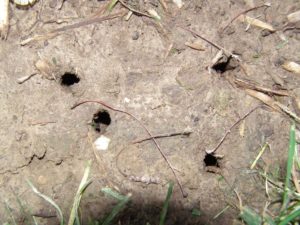
Look for holes in soil. Holes about the diameter of man’s finger. This is a sign that nymphs have dug their way to the surface in preparation to emerge:

Cicada holes

Magicicada holes
Magicicada holes

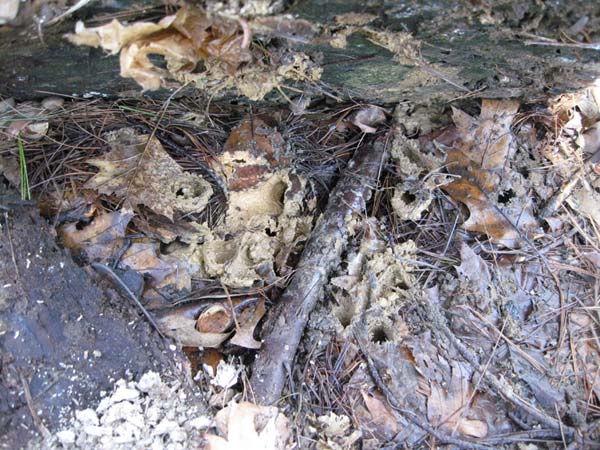
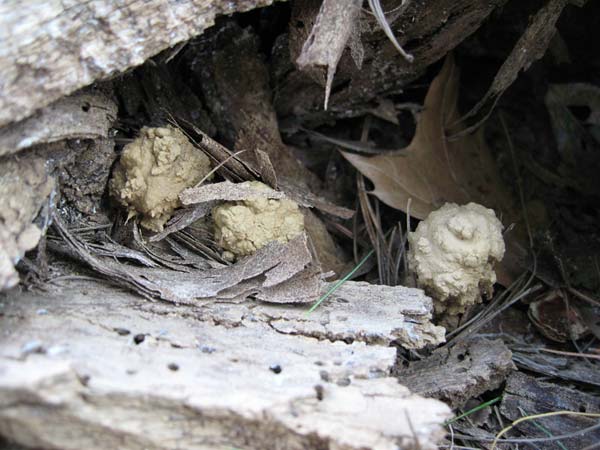
Also Look for cicada chimneys, aka turrets. These are similar to holes in that the nymphs are coming to the surface in preparation to emerge. The cicadas build these structures out of soil where their tunnels meet the surface.

Magicicada chimneys

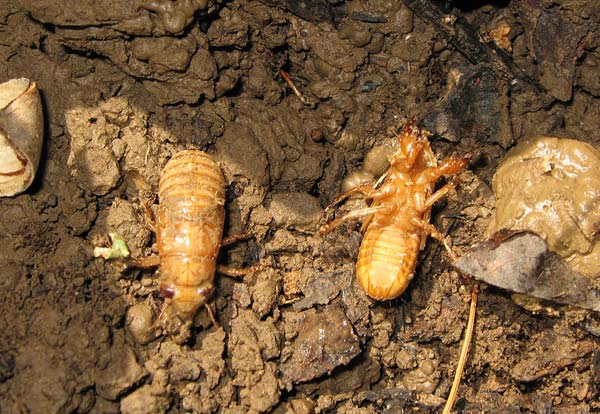
Look for cicada nymphs. This is what Magicicada nymphs look like. They’re golden-brown, they have six prominent legs, and red eyes.

Magicicada nymphs

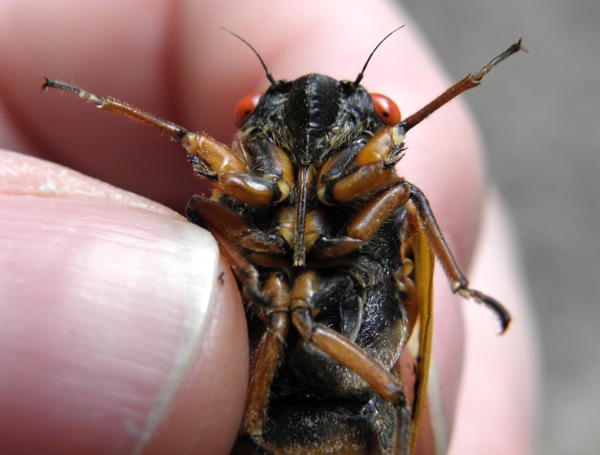
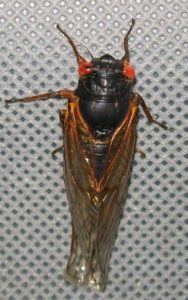
Look for adults. The guy at the top-right side of every Cicada Mania page is a Magicicada. You’ll also find hundreds of Magicicada photos in our gallery on this site.