Categories
Brood XXIII Magicicada

The 2015 Brood XXIII Emergence Revisited

Both Brood XXIII and Brood IV Magicicada periodical cicadas emerged in 2015. It was my plan to go on an epic road trip, see both broods, and report and document everything. I was able to cover a lot of ground, but thanks to cool or atrocious weather, I completely missed Brood IV, and much of Brood XXIII.

The most difficult thing about planning an epic cicada vacation is timing it right. It really depends on the luck of the draw. Cicada behavior depends on the weather, and since we cannot predict the weather months, weeks, or sometimes days in advance, it is difficult to guess exactly which weeks to plan a vacation.

These cicadas like nice weather: dry, sunny, preferably in the high 70s or 80s. If it is too cold, they won’t emerge. If it is too cool, they won’t sing, making it hard to find them when traveling along the highway, because we need to hear them to find them. If the weather is absolutely abysmal, like it was in Texas this year, I’m not even going to try to look for them; I like cicadas a lot, but they aren’t worth having my car washed into a roadside ravine.

That said, I did get to hear and see a lot of Magicicadas, so I’m not complaining.

I traveled through the following states:

Mississippi: ✔️Plenty of cicadas. I heard three 13-year Magicicada species in Jackson, Mississippi, in the woods behind the Mississippi Museum of Natural History.
Louisiana: ❌ I heard no cicadas. Bad/cool weather.
Texas: ❌ I saw the storm clouds, and headed back to Arkansas.
Arkansas: ❌ I heard no cicadas. More bad/cool weather.
Tennesse: ✔️ Plenty of cicadas North of Memphis.
Kentucky: ✔️Plenty of cicadas in the Land Between the Lakes area.
Illinois: ✔️An amazing amount of cicadas in the Giant City State Park area, including all four 13-year Magicicada species.
Indiana: ✔️ A couple exuvia/skins at a welcome center.

Note that the ❌ does not mean that cicadas did not appear in those states this year. It just means I did not see them because of weather conditions & timing.

This is a map of my cicada sightings:
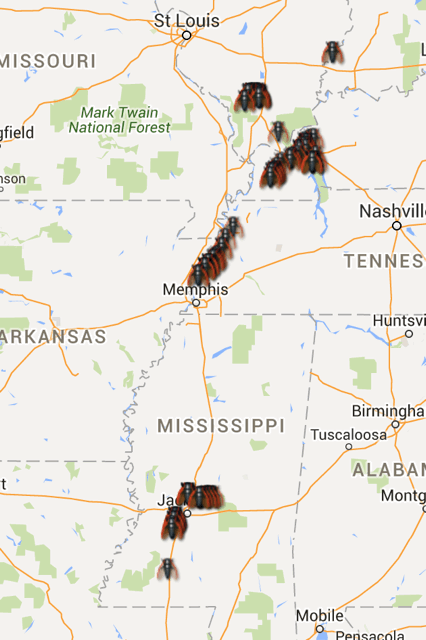
2015 Roadtrip

Visit my 2015 Brood XXIII gallery, to see more photos like this:
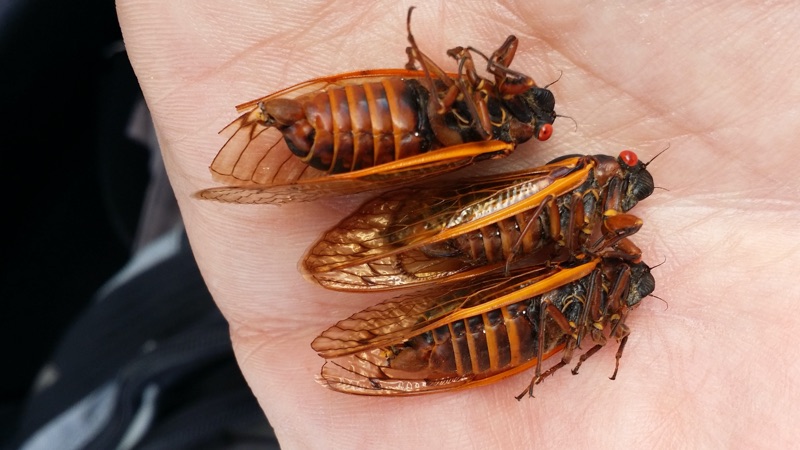
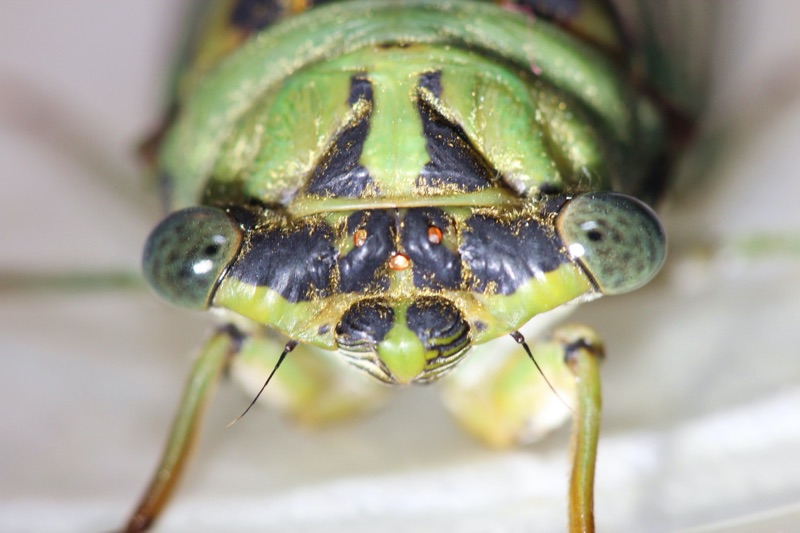
Male Female and Male Magicicada tredecim

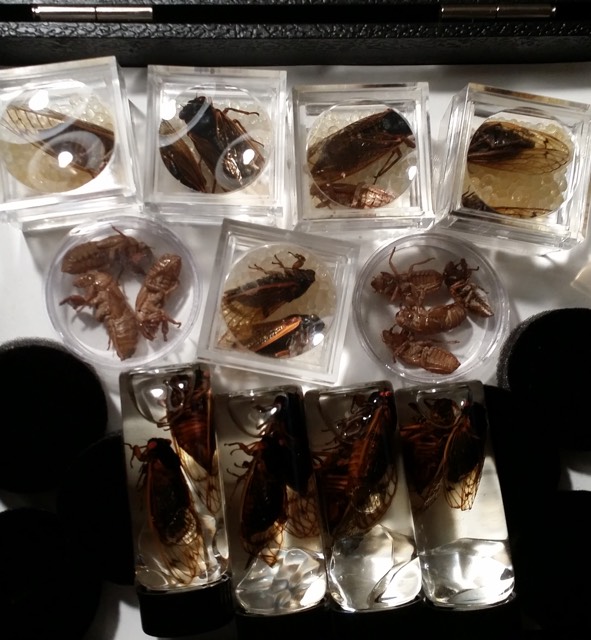
Some specimens:

Magicicada specimens

Some videos:

Cicadas in Giant City Park in Illinois:

Cicadas in the Land Between the Lakes Area in Kentucky:
Categories
Bill Reynolds Neotibicen

Catching Cicadas in North Carolina

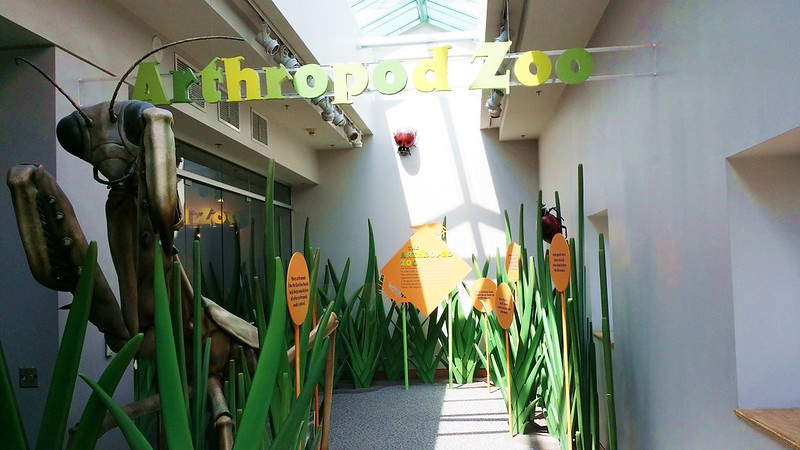
This past summer I had the opportunity to meet cicada expert Bill Reynolds. Bill manages the Arthropod Zoo at the North Carolina Museum of Natural Sciences in Raleigh, North Carolina.

The arthropod zoo in the North Carolina Museum of Natural Science

Bill’s specialty is Neotibicen (formerly Tibicen) cicadas. Neotibicen are a genera of broad-headed, medium-sized, well-cammouflaged cicadas that belong to the tribe Cryptotympanini.

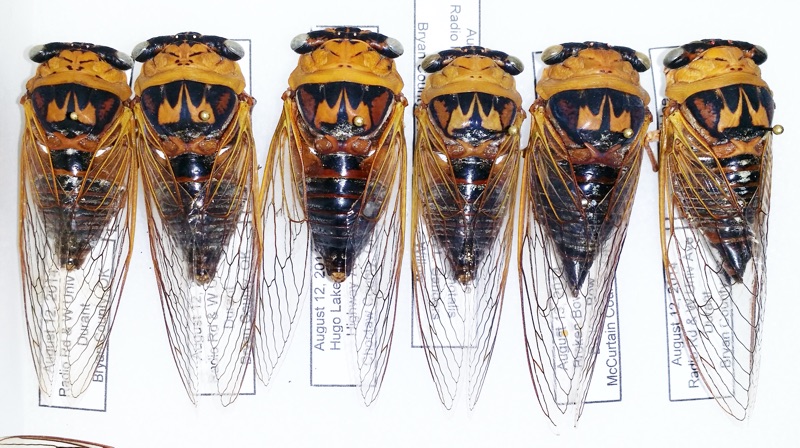
I met Bill at the museum and allowed me to view his massive collection of Neotibicen — box after box of cicadas, all carefully pinned and labeled. See a small portion of Bill’s collection.

Megatibicen pronotalis:
Neotibicen pronotalis from Bill Reynolds collection #2

Later we went for lunch, and listened for N. winnemanna hybrids in the neighborhood surrounding the museum. Close to the entrance of the museum, we heard a cicada that started with the call of the N. winnemanna and ended with the call of N. linnei — likely a hybrid. Around the museum neighborhood we heard other cicadas that sounded like a N. winnemanna but not quite. Very interesting.

Personally, my methods of catching cicadas are: 1) waiting until dark and grabbing them when they are still nymphs or eclosing, 2) grabbing them by hand on a tree or in flight, or 3) waiting for them to die, and collecting them from the ground. Bill introduced me to two new methods: 1) netting cicadas, and 2) finding cicadas under lights in parking lots.

I own a net (purchased from BioQuip) but I haven’t practiced using it. Bill Reynolds is a master of spotting and netting cicadas. He uses a net with 3 or 4 extension poles, which I belive gives him a 20′ reach. Bill is a cicada netting ninja. In a small, roadside patch of trees he caught three N. winnemanna in a matter of minutes.

Here is a video of that grove of N. winnemanna patronized trees. (Listen, don’t watch. The video camera work is erratic and you won’t see any live cicadas):

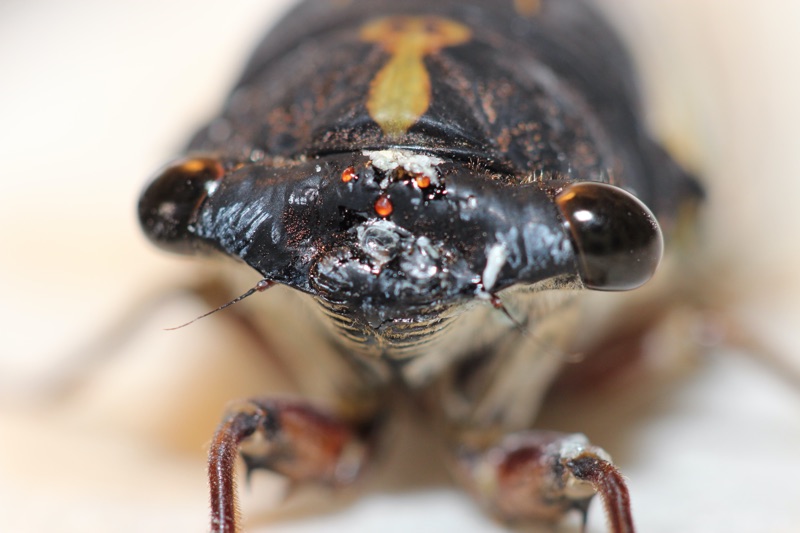
Here is a N. winnemanna Bill caught with a net:
Neotibicen winnemanna Garner NC #2

Finding cicadas under parking lot lights require you to cruise shopping mall parking lots on hot summer nights. Wait until midnight, and slowly drive behind malls looking for cicadas clinging to walls or resting on the ground. It is simple as that.

Here is a N. lyricen engelhardti found by Bill.
Neotibicen lyricen engelhardti Raleigh NC #5

Whenever catching cicadas you should be respectful of private property, don’t cause a disturbance, and be mindful of local laws.

Categories
Parnisini South Africa

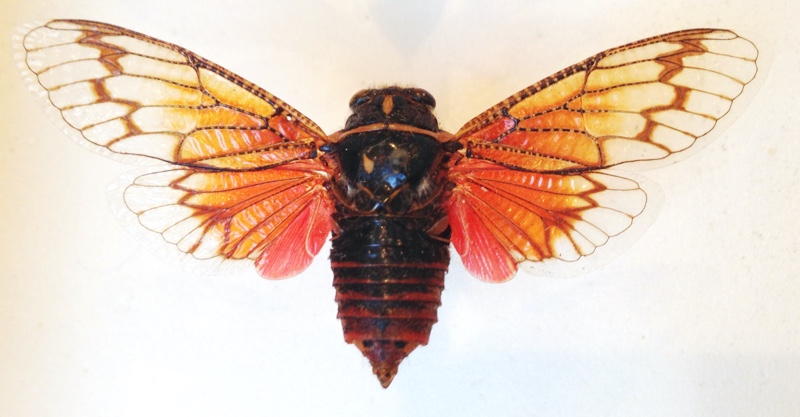
Quintilla aurora cicada of the Republic of South Africa

Quintilia aurora

Thanks to David Emery for sending this photo of the amazing Quintilia aurora (Walker, 1850) cicada which can be found in the Republic of South Africa.

Scientific classification:
Family: Cicadidae
Subfamily: Cicadettinae
Tribe: Parnisini
Genus: Quintilia
Species: Quintilia aurora (Walker, 1850)