Categories
Auritibicen Euterpnosia Graptopsaltria Hyalessa Japan Osamu Hikino Platypleura Tanna Yezoterpnosia

Cicadas of Japan

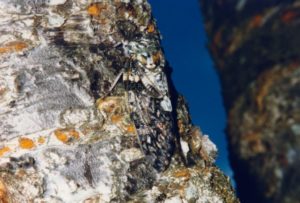
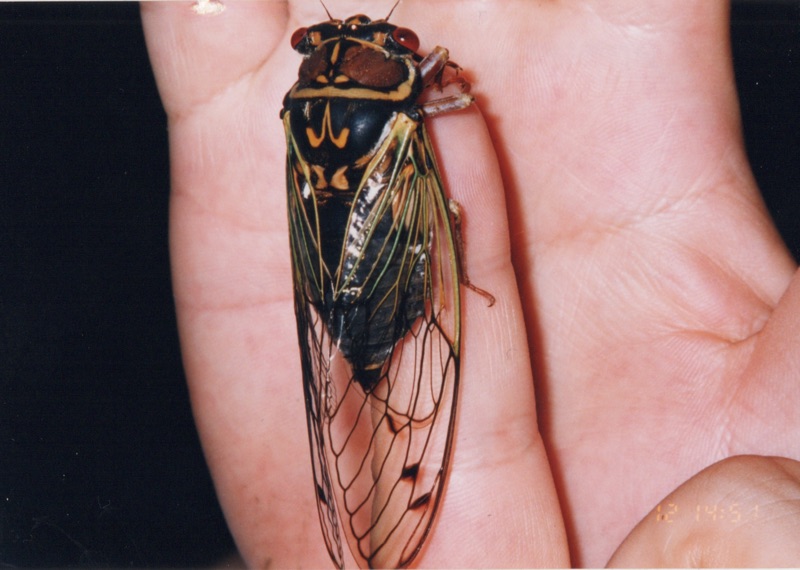
Tibicen japonicus
Photo: Auritibicen japonicus by Osamu Hikino.

Cicada season in Japan, like North America, seems to be best from June to September, peaking in August. Different cicada species emerge at different times of the year, but the majority of them are active during the summer.

The best website for the cicadas of Japan that I’ve come across is Cicadae in Japan which is run by Y. Saisho who co-wrote the amazing The Cicadidae of Japan book & CD.

I don’t have too many photos of cicadas from Japan on this site, but here are some of the more well known (Genus names may have changed recently):

Auritibicen flammatus (formerly Tibicen flammatus, Lyristes flammatus)
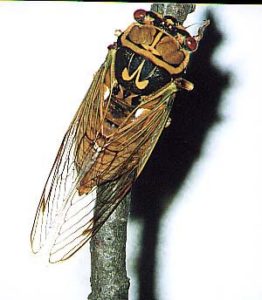
A. flammatus
Photo by Osamu Hikino.

Auritibicen japonicus (formerly Tibicen japonicus, Lyristes japonicus)
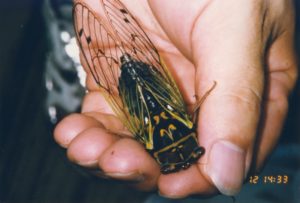
Male Auritibicen japonicus (formerly Tibicen japonicus, Lyristes japonicus)
Photo by Osamu Hikino.

Graptopsaltria nigrofuscata
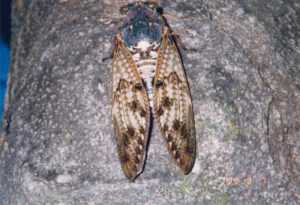
Graptopsaltria nigrofuscata
Photo by Osamu Hikino.

Here’s a video from the YouTube:

Auritibicen kyushyuensis
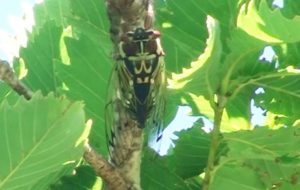
Photo by Osamu Hikino
Photo by Osamu Hikino.

Hyalessa maculaticollis
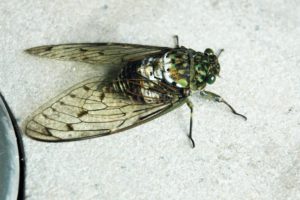
Oncotympana Maculaticollis

Platypleura kaempferi

Platypleura kaempferi (Fabricius, 1794)
Photo by Osamu Hikino.

Tanna japonensis
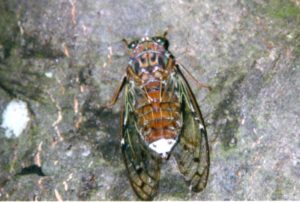
A male Tanna japonensis
Photo by Osamu Hikino.

Euterpnosia chibensis
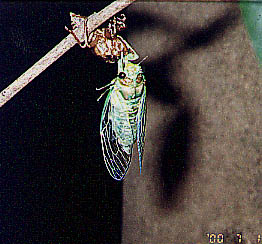
Euterpnosia chibensis photos by Osamu Hikino. Japan.
Photo by Osamu Hikino.

Yezoterpnosia nigricosta
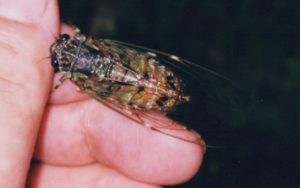
Male Terpnosia nigricosta by Osamu Hikino
Photo by Osamu Hikino.

Cicadas are very popular in Japan, and they find their way into pop culture (Anime, live action kids shows like Ultraman). This photo features a cicada toy when spun, makes a sound, some cicada clicker toys, a plush Oncotympana, a Seminingen (bad guy from Ultraman), and Yotsuba a green-haired girl who has caught a cicada (Lyristes japonicus perhaps):
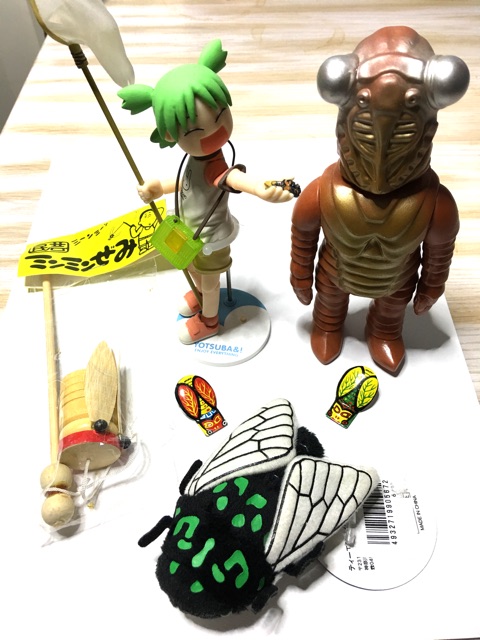
cicada related pop culture items from Japan

Cicada News & Photos

The best place, I’ve found, to keep track of which cicadas are out in Japan is Twitter.

These are many of the Twitter feeds I follow. You don’t need to belong to Twitter to view their feeds, but it’s more fun if you join.

Bonus:

Here’s a video of a Yezoterpnosia nigricosta taken by Elias Bonaros:
Categories
Annual Megatibicen Neotibicen U.S.A.

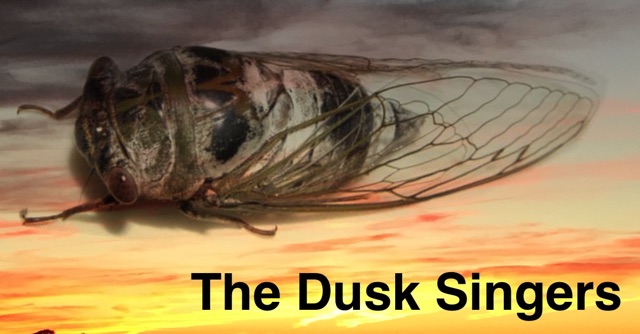
The Dusk Singers

The Dusk Singers

Dusk is the time of day between sunset and night. Many species of Megatibicen & Neotibicen (formerly Tibicen) sing at this time. I’m not sure why they sing at this time — perhaps it helps them avoid audio competition with other singing insects, or perhaps it helps them avoid predators by calling at this specific time of the day.

If you find yourself outdoors in the eastern half of the U.S. after sunset and hear a cicada call, it is likely one of the following Megatibicen or Neotibicen species:

Megatibicen

Megatibicen are LARGE and LOUD cicadas.

Megatibicen auletes aka the Northern Dusk Singing Cicada. This cicada can be found in these states: AL, AR, CT, DE, DC, FL, GA, IL, IN, IA, KS, KY, LA, MD, MA, MI, MS, MO, NE, NJ, NY, NC, OH, OK, PA, SC, TN, TX, VA, WV, WI. Season: July to Fall.

M. auletes Call*:

Megatibicen figuratus aka the Fall Southeastern Dusk-singing Cicada. Found in: AL, AR, FL, GA, LA, MS, NC, SC, TN, TX, VA. Season: July to Fall.

M. figuratus Call*:

Megatibicen resh aka Resh Cicada aka Western Dusk Singing Cicada. Found in: AR, KS, LA, MS, NE, OK, SC, TN, TX. Season: July to Fall.

M. resh Call*:

Megatibicen resonans aka Southern Resonant/Great Pine Barrens Cicada aka Southern Dusk Singing Cicada. Found in AL, FL, GA, LA, MS, NC, SC, TN, TX, VA. Season: July to Fall.

M. resonans Call*:

Neotibicen

Medium-sized, green cicadas with calls that sound like the rhythmic grinding of a scissor on a sharpening wheel (not a common tool in the 21st century).

Neotibicen pruinosus pruinosus aka Scissor(s) Grinder. Found in AL, AR, CO, IL, IN, IA, KS, KY, LA, MI, MN, MS, MO, NE, OH, OK, SC, SD, TN, TX, VA, WV, WI. Season: June – September. Neotibicen pruinosus fulvus aka Pale Scissor(s) Grinder Cicada. Found in: KS, OK. Season: June – September.

N. pruinosus Call*:

Neotibicen winnemanna aka Eastern Scissor(s) Grinder. Found in AL, DE, DC, GA, KY, LA, MD, MS, NC, NJ, PA, SC, TN, TX, VA, WV. Season: June – Fall.

N. winnemanna Call*:

*Audio files are Copyright of InsectSingers.com. Season information gathered from BugGuide.net.

Categories
David Marshall Kathy Hill Neotibicen Papers and Documents U.S.A.

Neotibicen similaris apalachicola, a new cicada subspecies

A new subspecies of the Similar Dog-Day Cicada has been described in the paper A new Neotibicen cicada subspecies (Hemiptera: Cicadidae) from the southeastern USA forms hybrid zones with a widespread relative despite a divergent male calling song by David C. Marshall and Kathy B. R. Hill (Zootaxa, Vol 4272, No 4). The cicada is named Neotibicen similaris apalachicola.

This cicada lives in Florida, Georgia & Alabama, and hybridizes with the other Similar Dog-Day Cicada sub-speces, Neotibicen similaris similaris. The document is available on biotaxa.org.

A morphologically cryptic subspecies of Neotibicen similaris (Smith and Grossbeck) is described from forests of the Apalachicola region of the southeastern United States. Although the new form exhibits a highly distinctive male calling song, it hybridizes extensively where it meets populations of the nominate subspecies in parapatry, by which it is nearly surrounded. This is the first reported example of hybridization between North American nonperiodical cicadas. Acoustic and morphological characters are added to the original description of the nominate subspecies, and illustrations of complex hybrid song phenotypes are presented. The biogeography of N. similaris is discussed in light of historical changes in forest composition on the southeastern Coastal Plain.

You will find song samples and maps on the Insect Singers website.

I think this is an image of the new cicada:

Categories
Australia Max Moulds

Twenty-two new species of cicada identified in Australia

A new paper was published that describes five (5) new cicada genera and twenty-two (22) species of cicadas in Australia.

The paper is Systematics and Phylogeny of the Australian Cicada Genus Pauropsalta Goding and Froggatt, 1904 and Allied Genera (Hemiptera: Cicadidae: Cicadettini), the authors are Christopher L. Owen and M. S. Moulds, and it was published by The Australian Museum.

You can download it from this page. The document is 83 pages long, and contains 6 color pages of the cicadas.

The new genera are:

  1. Atrapsalta n.gen. Includes 9 species.
  2. Haemopsalta n.gen. Includes 4 species.
  3. Falcatpsalta n.gen. Includes 1 species.
  4. Relictapsalta n.gen. Includes 1 species.
  5. Popplepsalta n.gen. Includes 12 species. Note that this genera is named for cicada researcher Lindsay Popple.

The new species are:

  1. Pauropsalta accola n.sp.
  2. Pauropsalta adelphe n.sp.
  3. Pauropsalta agasta n.sp.
  4. Pauropsalta confinis n. sp.
  5. Pauropsalta conflua n.sp.
  6. Pauropsalta contigua n.sp.
  7. Pauropsalta ewarti n.sp.
  8. Pauropsalta herveyensis n.sp.
  9. Pauropsalta juncta n.sp.
  10. Pauropsalta katherina n.sp. Note, this name is in honor of cicada researcher Kathy Hill.
  11. Pauropsalta kriki n.sp.
  12. Pauropsalta similis n.sp.
  13. Pauropsalta sinavilla n.sp.
  14. Atrapsalta n.gen. emmotti n.sp. Note, this name is in honor of naturalist Angus Emmott (thx Henry Cook)
  15. Atrapsalta n.gen. furcilla n.sp.
  16. Atrapsalta n.gen. vinea n.sp.
  17. Haemopsalta n.gen. flammeata n.sp.
  18. Haemopsalta n.gen. georgina n.sp.
  19. Palapsalta Moulds, 2012 palaga n.sp.
  20. Palapsalta Moulds, 2012 serpens n.sp.
  21. Popplepsalta n.gen. aeroides n.sp.
  22. Uradolichos Moulds, 2012 rotunda n.sp.

The paper was announced on Twitter by Lindsay Popple on Twitter:

Categories
Australia Books Nathan Emery

New Cicada Photo Guide by Nathan Emery

Update 2: Listen to an ABC radio interview with Nathan.

Update: Nathan’s books are back from the press. Buy it online, or contact him via Twitter to get yours:

Nature photographer and cicada researcher Nathan Emery is working on a new book called “A Photo Guide to Common Cicadas of the Greater Sydney Region“. It is due out at the end of October, 2016.

Categories
Australia Cystosoma Nathan Emery

An early start to Australia’s cicada season

Cicada researcher and photographer Nathan Emery found his first Bladder Cicada (Cystosoma saundersii) for the year. See this iNaturalist page. It is still winter there, so this is particular interesting.

A Bladder cicada looks like this (Cystosoma saundersii):

Bladder cicadas (Cystosoma saundersii)
Photo by David Emery.

Read more about this cicada on Dr. Pop’s website.

Categories
India Papers and Documents

New paper catalogs the cicadas of India, India, Bangladesh, Bhutan, Myanmar, Nepal and Sri Lanka

A paper titled The cicadas (Hemiptera: Cicadidae) of India, Bangladesh, Bhutan, Myanmar, Nepal and Sri Lanka: an annotated provisional catalogue, regional checklist and bibliography was published in June of 2016 in the Biodiversity Data Journal 4: e8051. The authors of the document include, Benjamin Wills Price, Elizabeth Louise Allan, Kiran Marathe, Vivek Sarkar, Chris Simon, Krushnamegh Kunte, but I think Ben was the lead.

You can access it here: http://bdj.pensoft.net/articles.php?id=8051

Quotes from the abstract:

Background

The cicadas of the Indian subcontinent, like many other insects in the region, have remained understudied since the early part of the 20th Century, and await modern taxonomic, systematic and phylogenetic treatment. This paper presents an updated systematic catalogue of cicadas (Hemiptera: Cicadidae) from India, Bangladesh, Bhutan, Myanmar, Nepal and Sri Lanka, the first in over a century.

New information

This paper treats 281 species, including: India and Bangladesh (189 species), Bhutan (19 species), Myanmar (81 species), Nepal (46 species) and Sri Lanka (22 species). For each species all recognized junior synonyms are included with information on the type material and additional specimens where relevant.

For images of the cicada described in the document, head on over to the Cicadas of India website.

Categories
Platypedia Platypediini U.S.A. William T. Davis

Platypedia affinis Davis, 1939

Platypedia affinis Davis, 1939.

Name, Location and Description

Classification:

Family: Cicadidae
Subfamily: Cicadettinae
Tribe: Platypediini
Subtribe: ?
Genera: Platypedia
Species: Platypedia affinis Davis, 1939

List of sources

  1. Full Binomial Names: ITIS.gov
  2. Common names: BugGuide.net; The Songs of Insects by Lang Elliott and Wil Herschberger; personal memory.
  3. Locations: Biogeography of the Cicadas (Hemiptera: Cicadidae) of North America, North of Mexico by Allen F. Sanborn and Polly K. Phillips.
  4. Descriptions, Colors: personal observations from specimens or photos from many sources. Descriptions are not perfect, but may be helpful.
  5. Tribe information comes from: MARSHALL, DAVID C. et al.A molecular phylogeny of the cicadas (Hemiptera: Cicadidae) with a review of tribe and subfamily classification.Zootaxa, [S.l.], v. 4424, n. 1, p. 1—64, may 2018. ISSN 1175-5334. Available at: https://www.biotaxa.org/Zootaxa/article/view/zootaxa.4424.1.1

Notes:

  • Some descriptions are based on aged specimens which have lost some or a lot of their color.
Categories
Okanagana Tibicinini U.S.A. William T. Davis

Okanagana sugdeni Davis, 1938

Okanagana sugdeni Davis, 1938.

Name, Location and Description

Classification:

Family: Cicadidae
Subfamily: Cicadettinae
Tribe: Tibicinini
Subtribe: Tibicinina
Genera: Okanagana
Species: Okanagana sugdeni Davis, 1938

List of sources

  1. Full Binomial Names: ITIS.gov
  2. Common names: BugGuide.net; The Songs of Insects by Lang Elliott and Wil Herschberger; personal memory.
  3. Locations: Biogeography of the Cicadas (Hemiptera: Cicadidae) of North America, North of Mexico by Allen F. Sanborn and Polly K. Phillips.
  4. Descriptions, Colors: personal observations from specimens or photos from many sources. Descriptions are not perfect, but may be helpful.

Notes:

  • Some descriptions are based on aged specimens which have lost some or a lot of their color.
Categories
Tibicinini Tibicinoides U.S.A. William T. Davis

Tibicinoides minuta (Davis, 1915)

Tibicinoides minuta (Davis, 1915)

Name, Location and Description

From Davis’ key to Okanagana/Tibicinoides1:

A. Male uncus not hooked at the extremity, sometimes sinuate.

BB. Stouter bodied species, the fore and hind wings variegated with orange and black at the base.

CC. Marginal cells short; the third one in the fore wings about one-half as long as the second ulnar area adjoining and immediately behind it.

H. Both pairs of wings clear except near base.

Head including eyes about 4 mm. broad. Expands about 35 mm.

Similar cicada: Tibicinoides mercedita (Davis, 1915).

Classification:

Family: Cicadidae
Subfamily: Cicadettinae
Tribe: Tibicinini
Subtribe: Tibicinina
Genera: Tibicinoides
Species: Tibicinoides minuta (Davis, 1915)

List of sources

  1. Davis, William T. Cicadas of the genera Okanagana, Tibicinoides and Okanagodes, with descriptions of several new species. Journal of the New York Entomological Society. v27. 179-223. 1919. Link.
  2. Full Binomial Names: ITIS.gov
  3. Common names: BugGuide.net; The Songs of Insects by Lang Elliott and Wil Herschberger; personal memory.
  4. Locations: Biogeography of the Cicadas (Hemiptera: Cicadidae) of North America, North of Mexico by Allen F. Sanborn and Polly K. Phillips.
  5. Descriptions, Colors: personal observations from specimens or photos from many sources. Descriptions are not perfect, but may be helpful.

Notes:

  • Some descriptions are based on aged specimens which have lost some or a lot of their color.