Cicada Mania
Dedicated to cicadas, the most amazing insects in the world.

May 14, 2011

Periodical cicada fun facts to help you survive the Brood XIX invasion

Filed under: Brood XIX,Magicicada — by @ 9:24 am

The Brood XIX emergence is well underway in most Southern states and it’s just getting started in Missouri and Illinois. Here’s a list of topics that will help you through the remainder of the emergence.

Cicadas and Temperature

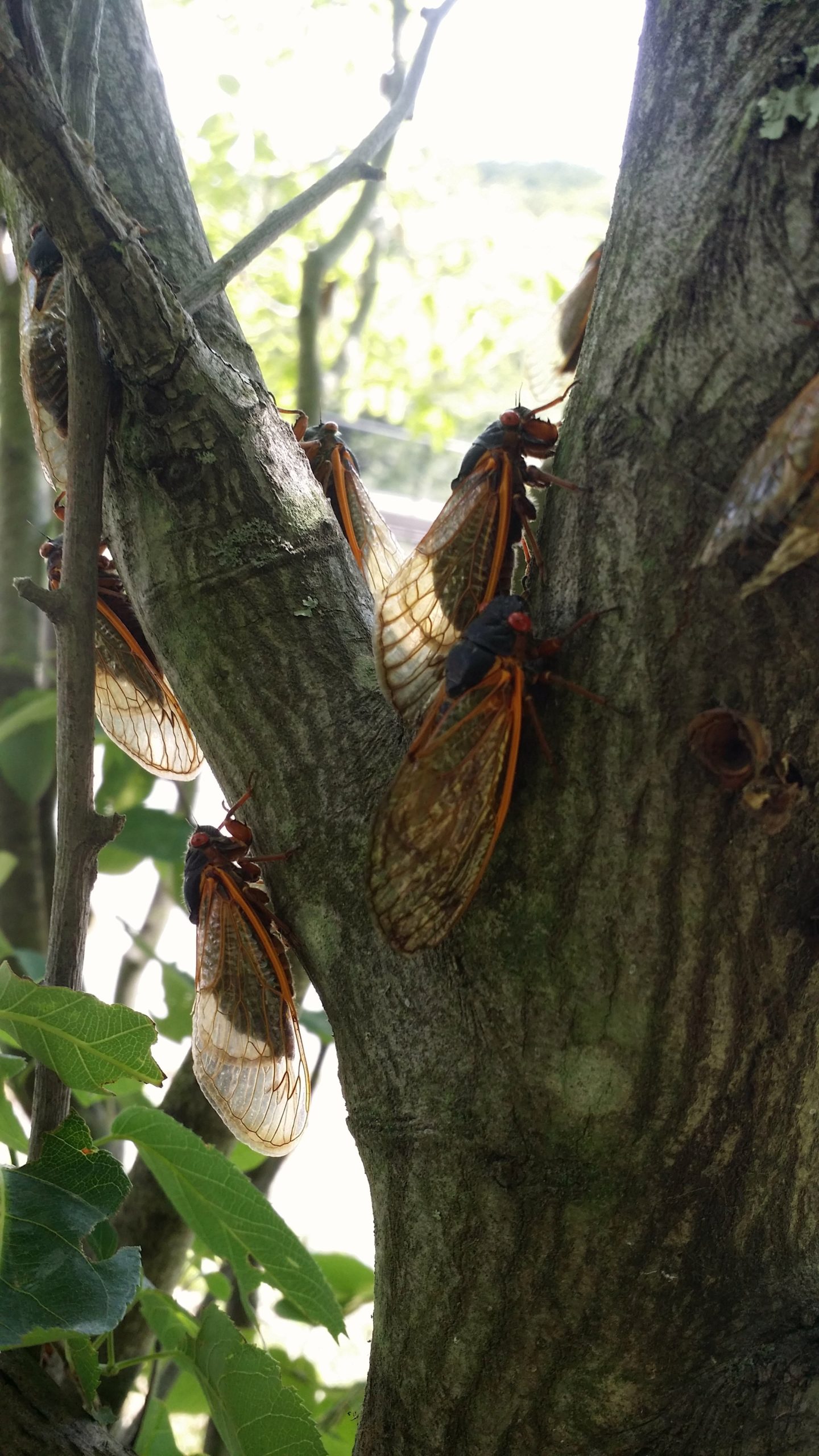
Cold weather across the U.S. seems to have slowed the Magicicada emergence. It is true that cold temperatures will deter nymphs from emerging, and stop adult cicadas from flying around and singing. Cicadas are “cold blooded” so they rely on air temperature and direct sunlight to warm up, and unless their bodies are warm enough, they won’t be able to fly, sing and mate. The black skin color of Magicicadas helps them warm up, just like how a black leather seat in a car gets hot to the touch in the summer.

Soil temperature is one of the indicators of when periodical cicada nymphs will begin to leave the ground. Typically they will start to emerge once the soil temperature reaches 18°C / 64°F or warmer.

Their body temperature needs to be a little warmer than that to fly. Their minimum flight temperature (MFT) is 18-21°C / 65-70°F. The temperature varies depending on the Brood and species. They’ll need a few more degrees before they’re fully functional, and start singing and mating.

Maximum voluntary tolerance temperature (MVT) for periodical cicadas is 31-34°C / 88-93°F, again depending on Brood and species. Maximum voluntary tolerance is the point at which cicadas seek shade and when thermoregulation takes precedence over other behaviors.

So, until their bodies are about 72°F (“room temperature”) they won’t be flying, sining and mating.

See Thermal responses of periodical cicadas: within and between brood parity (Hemiptera: Cicadidae: Magicicada spp.) and Thermoregulation by Endogenous Heat Production in Two South American Grass Dwelling Cicadas (Homoptera: Cicadidae: Proarna) for more information.

The damage they do

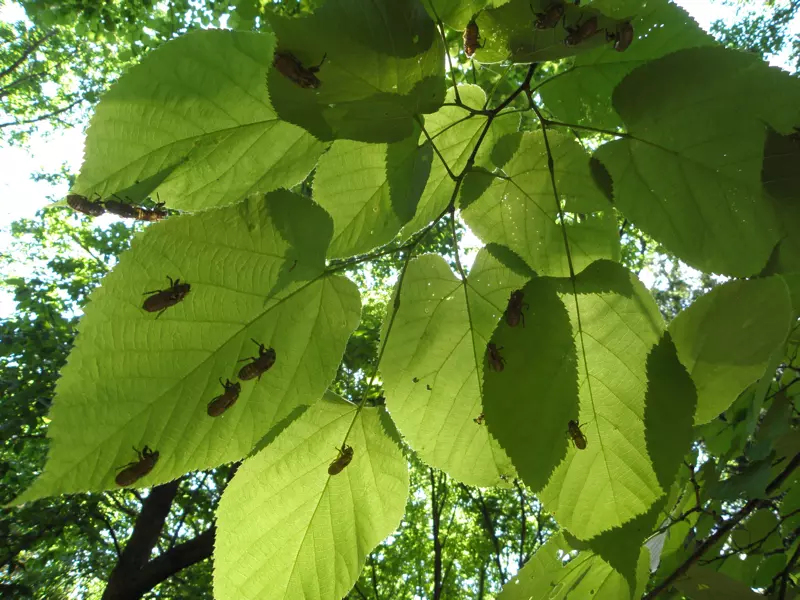
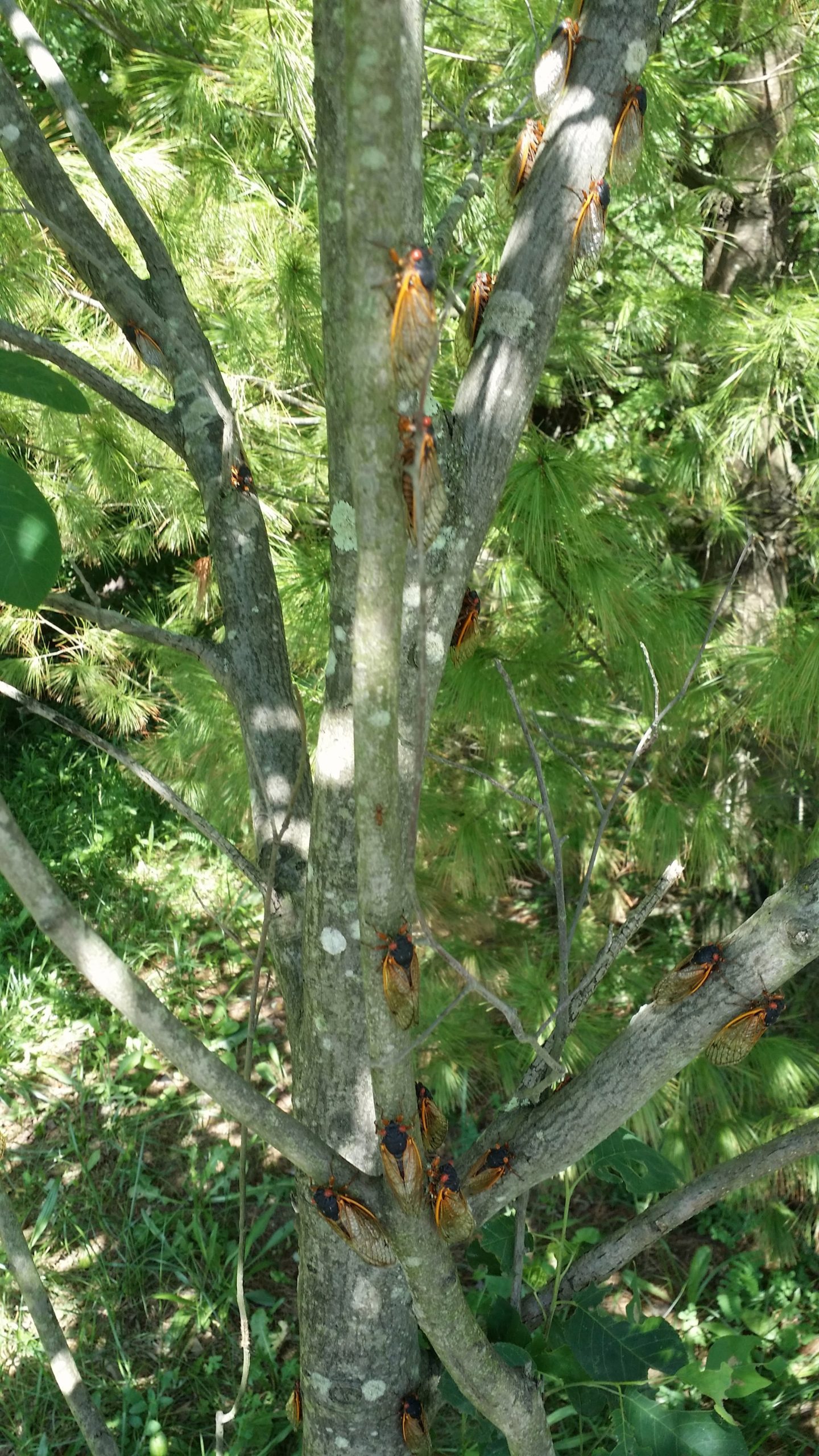
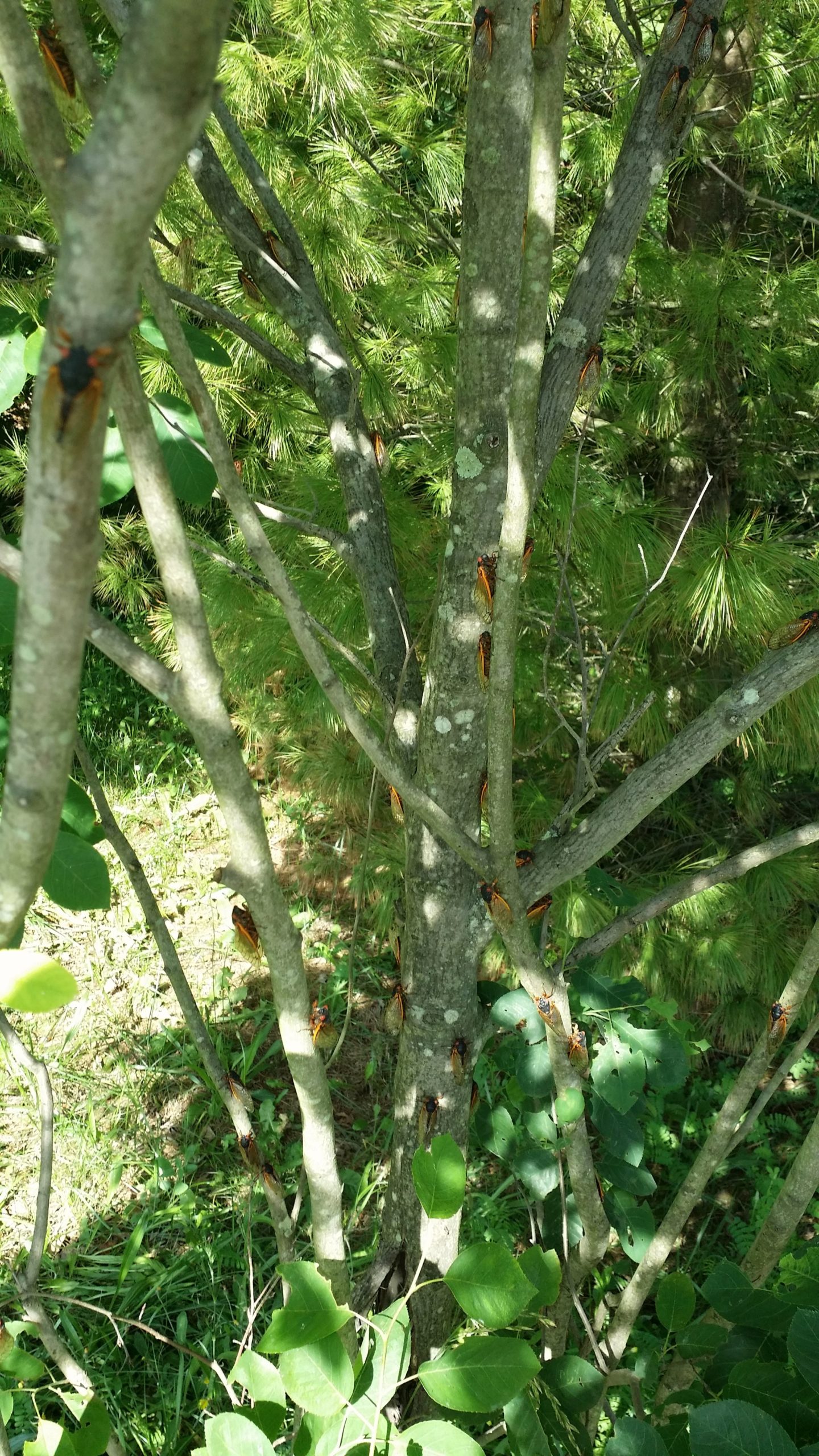
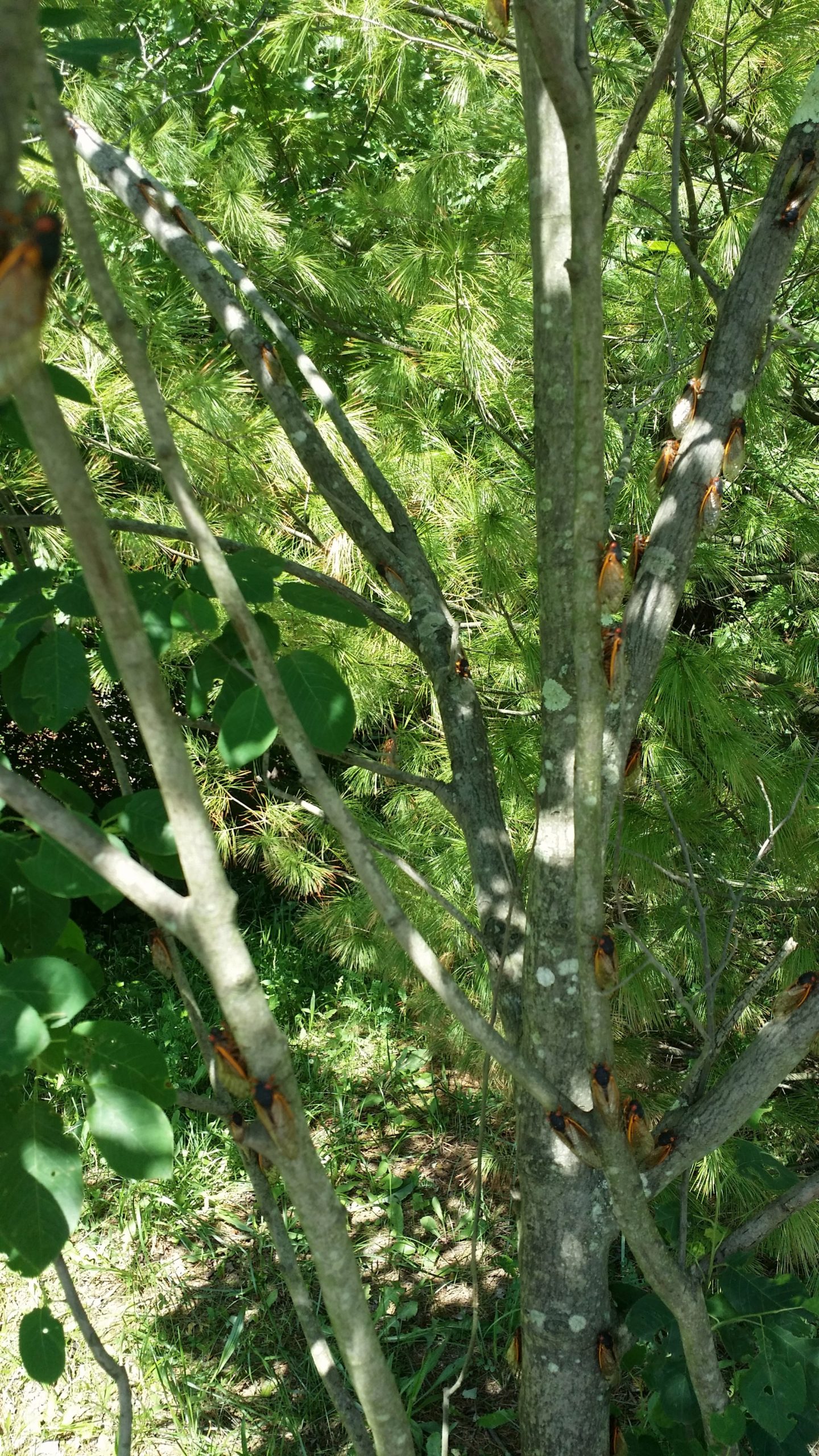
Cicadas don’t cause dammage to trees by chewing leaves like other insects to. Instead the damage is caused because they lay their eggs in grooves in the branches of trees. Cicadas are technically parasites of the trees, and they need the trees to survive throughout their entire life cycle, so killing trees is not in the cicadas best interest.

The weakest limbs of a tree are often temporarily damaged or killed off, the result of which is called flagging, as the leaves of the branch will turn brown and look like a flag. They are doing the trees a favor by pruning their weakest branches.

Young trees, ornamental trees and fruit trees will be more prone to damage as they are typically smaller and weaker than older native hardwood trees. I recommend placing netting around these trees and picking the cicadas off by hand, if you’re concerned. Spraying them off the trees with a hose seems to work as well. I don’t recommend filling a bucket with cicadas and dumping them in your neighbors yard, as they can fly back to your yard, and your neighbor will become enraged.

The blue tape works well too: check out this photo of cicadas that can’t make it past the tape.

Grooves made by a cicada:

grooves

An image of Flagging caused by cicadas:

flagging

Do cicadas stink?!

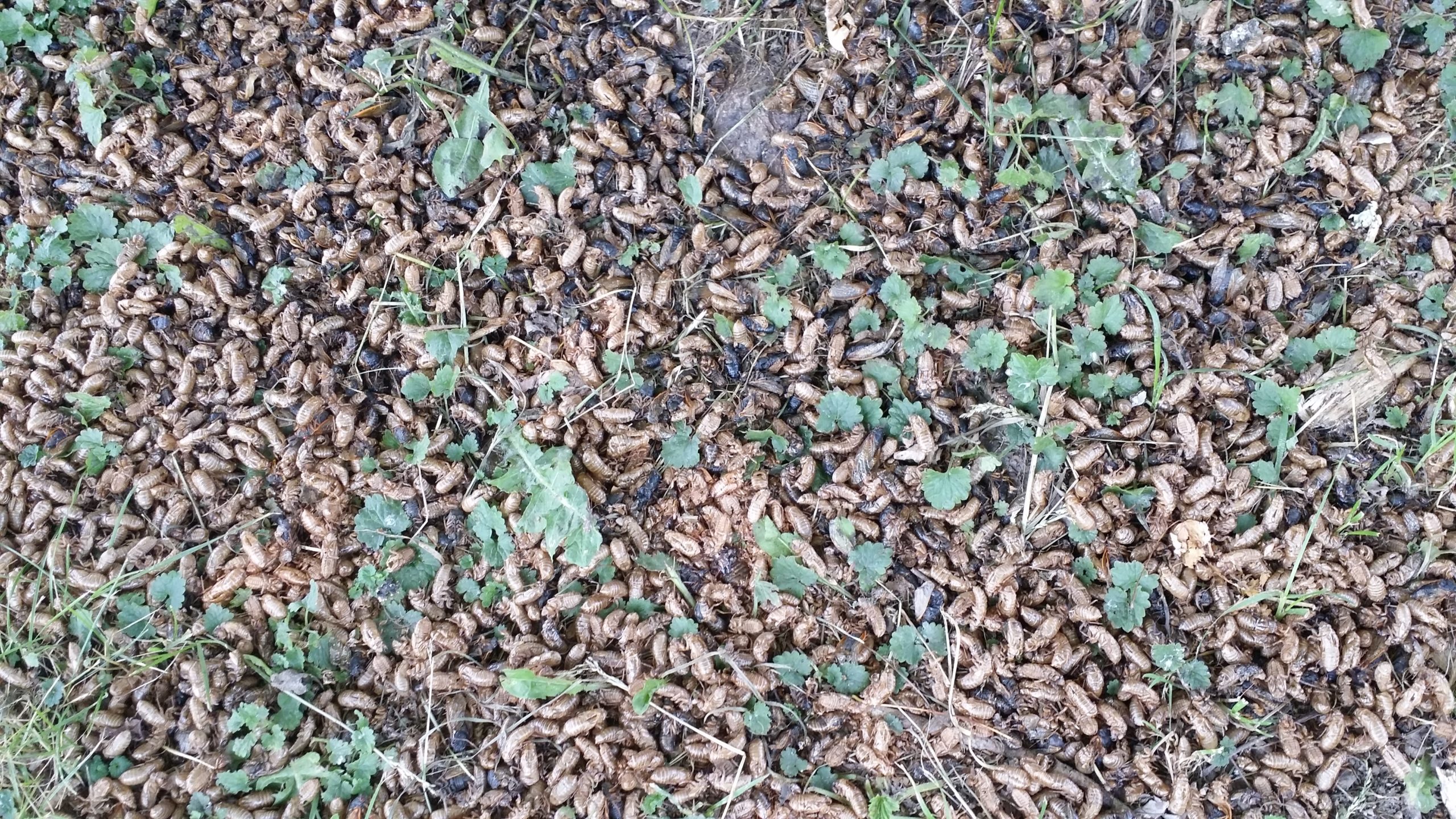
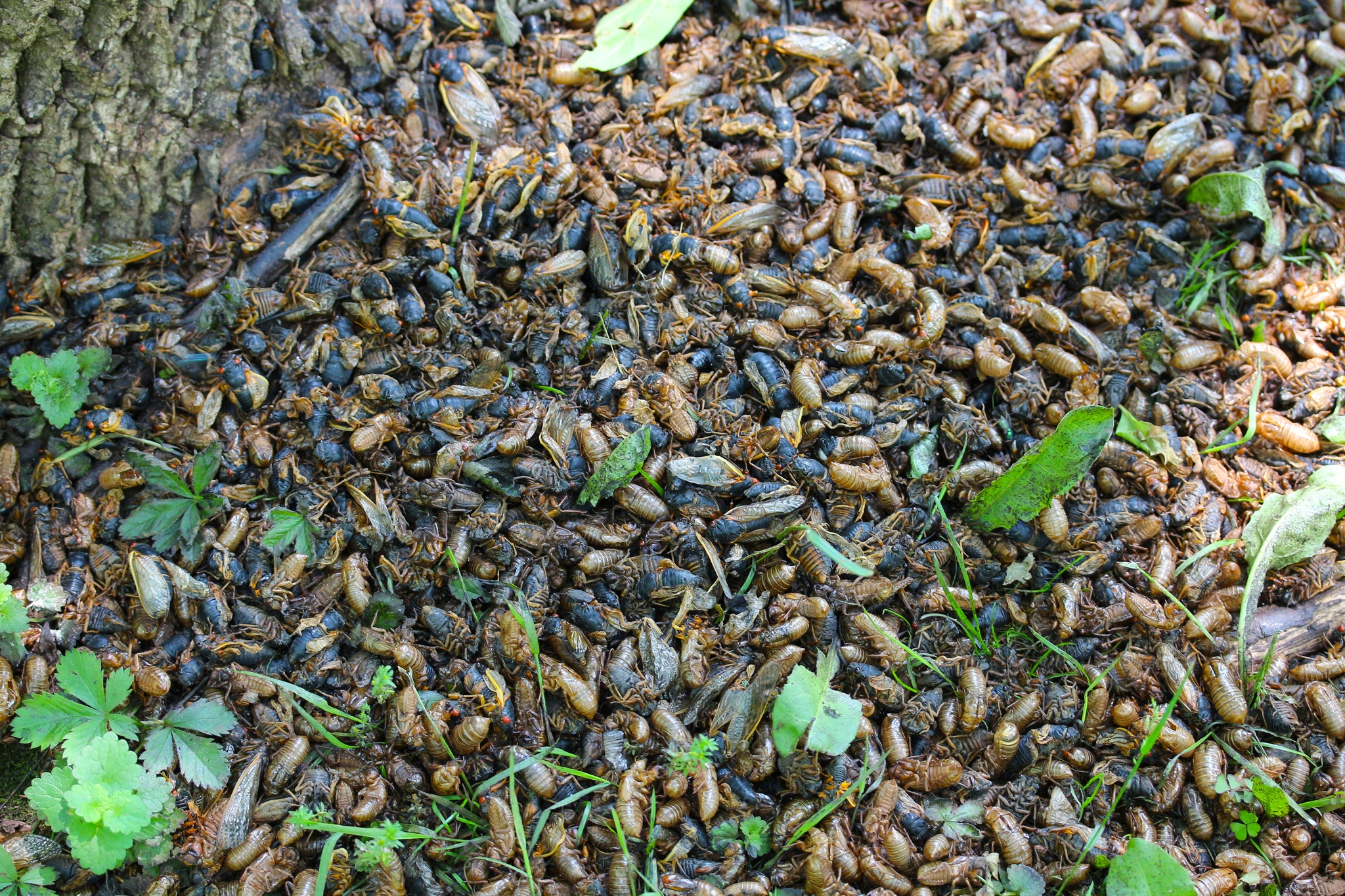
Cicadas do stink, but only once they’re dead and rotting, like most creatures. When you get a pile of dead, wet cicadas they can kick up a serious funk, like putrefying bacon. It’s best to rake up their corpses ASAP, shovel them into a bucket or wheelbarrow, and then bury them, compost them, or use them for catfish or critter bait. Individual cicadas make excellent fish bait.

What do cicadas eat?

Cicadas don’t eat by chewing up leaves; instead they drink their meals. Cicadas use their mouthparts to tap into trees and drink tree fluids called xylem. Occasionally you’ll see cicadas piercing a branch with their mouthparts to take a drink. They aren’t particularly smart, and occasionally mistake people for trees. Luckily cicadas are not venomous.

Do cicadas pee?

Yes, cicadas regularly pee to eliminate excess fluid. Allow me to recommend wearing a cicada hat.

Are cicadas attracted to the sound of lawnmowers and other machinery?

Yes, cicadas are attracted to the sound of lawnmowers, weed wackers, hedge trimmers, etc. Female cicadas think that these machines are males singing, and male cicadas show up to join the other males in what we call a “chorus”.

Why are there so many periodical cicadas?

Their strategy is called “predator satiation”. They reproduce by the millions in order to fill predators up. The idea is that all the squirrels, birds, possums, snakes, lizards, raccoons, varmints, teenagers and other predators will be so full of cicadas and tired of eating them, that a just enough cicadas will escape and get to mate and reproduce.

Think of it this way: Aunt Betsy and Uncle Steve always show up to the barbecue and eat up all the best cuts of meat; few if any meat escapes them. What you want to do is fill Betsy and Steve up with cheap snacks like pork rinds, chips and Coke, so some of the meat will escape their grasp.

How long do they live?

Adults can live a few weeks, but they often don’t get to live that long, as many are born crippled, they get infected with mold, they run out of energy, they get eaten, etc.

An emergence can last locally up to 6 weeks from start to finish. They should all be dead six weeks after you see your first cicadas.

About 98% of cicadas die within the first two years of life. Imagine if they all survived to adulthood! There would be 4800% more of them.

What eats them when they’re underground?

When they’re underground they’re often eaten by moles, but enough of them escape the moles to survive.

Stragglers

If you have a lot of cicadas today, chances are you’ll have a couple next year. Not a lot, just a couple that forgot to emerge this year.

Other ideas to help you enjoy Brood XIX

May 9, 2011

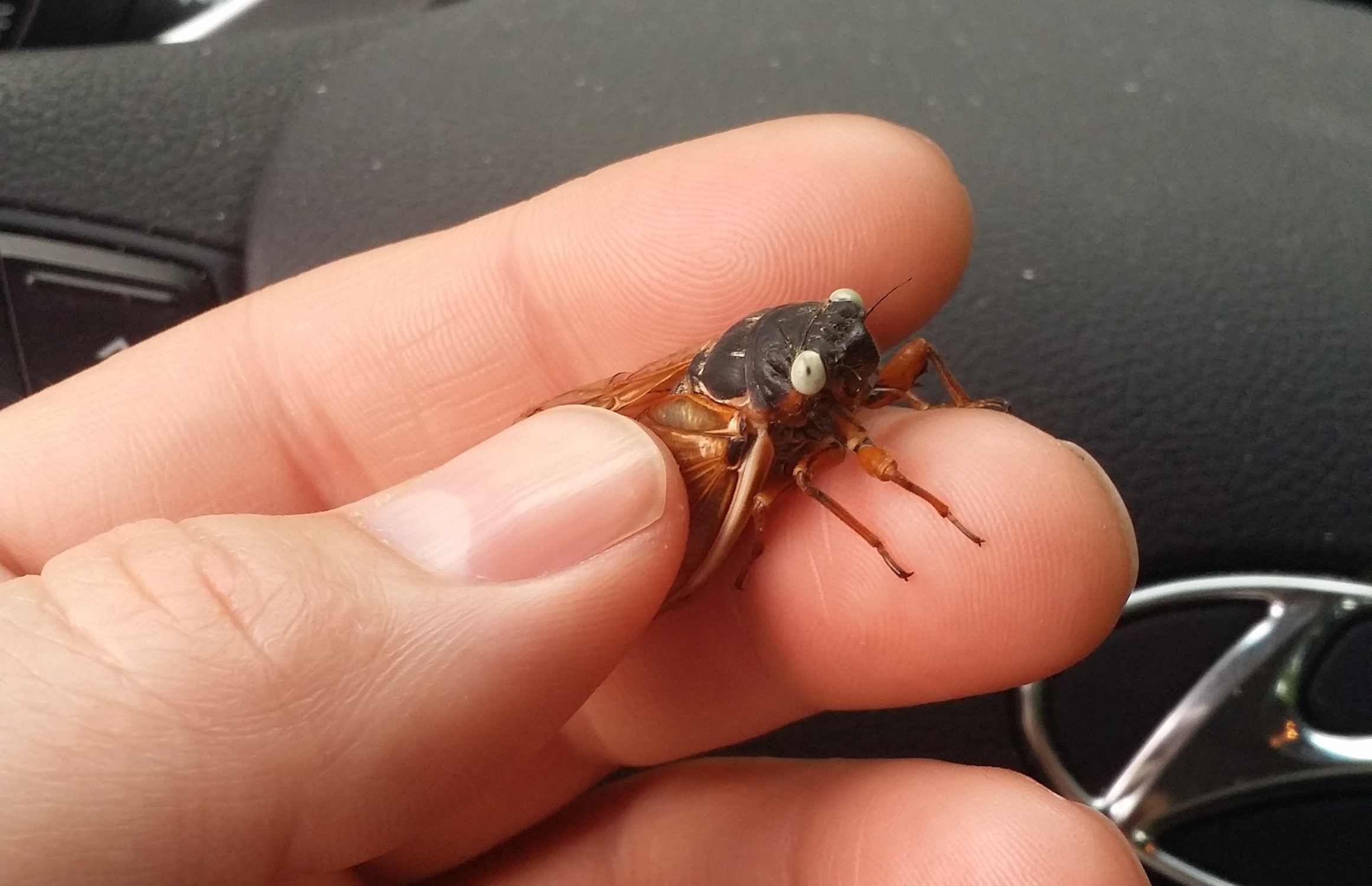
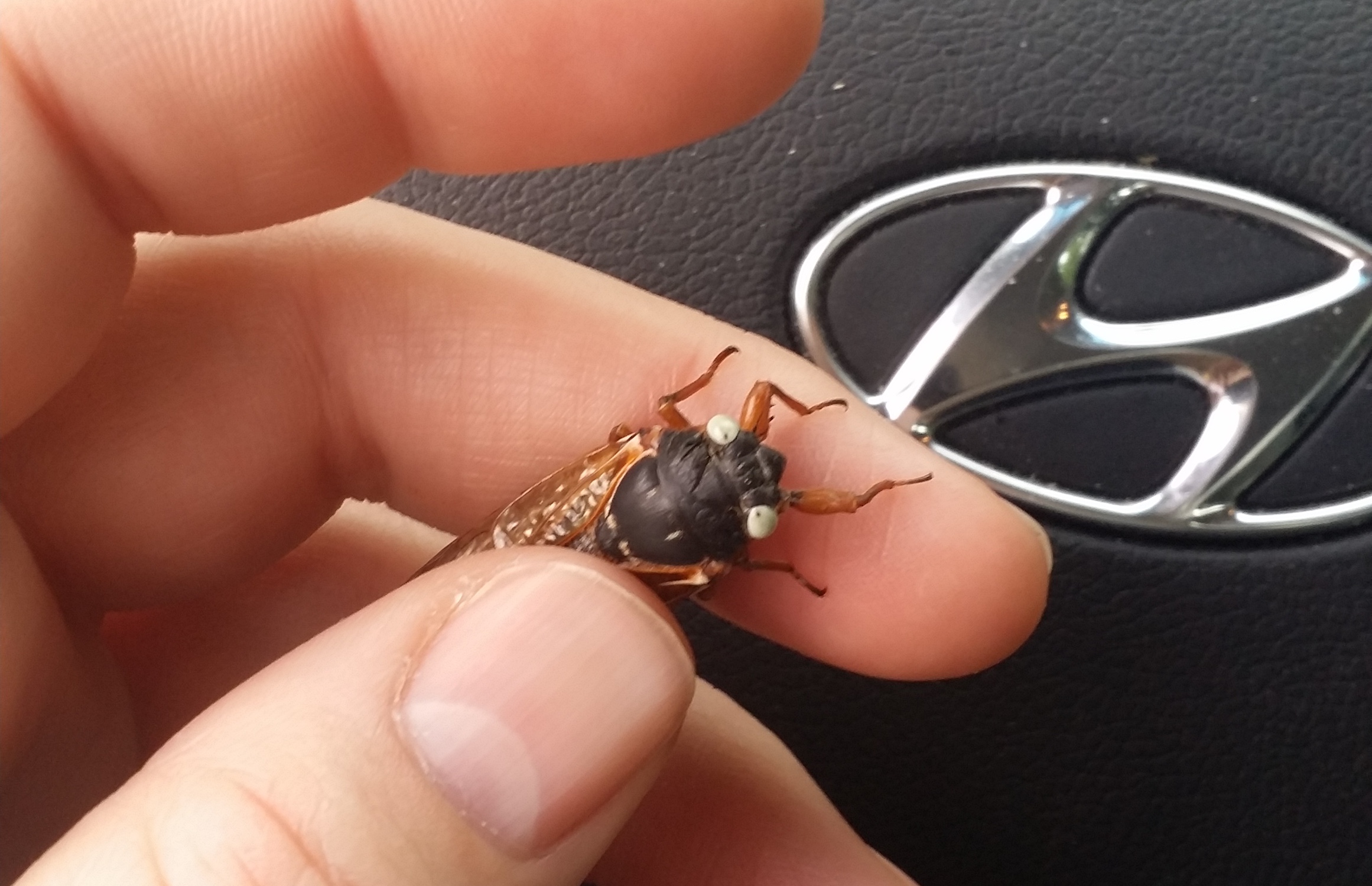
Look out for Magicicadas with white eyes

Filed under: Eye Color,Magicicada — by @ 5:22 pm

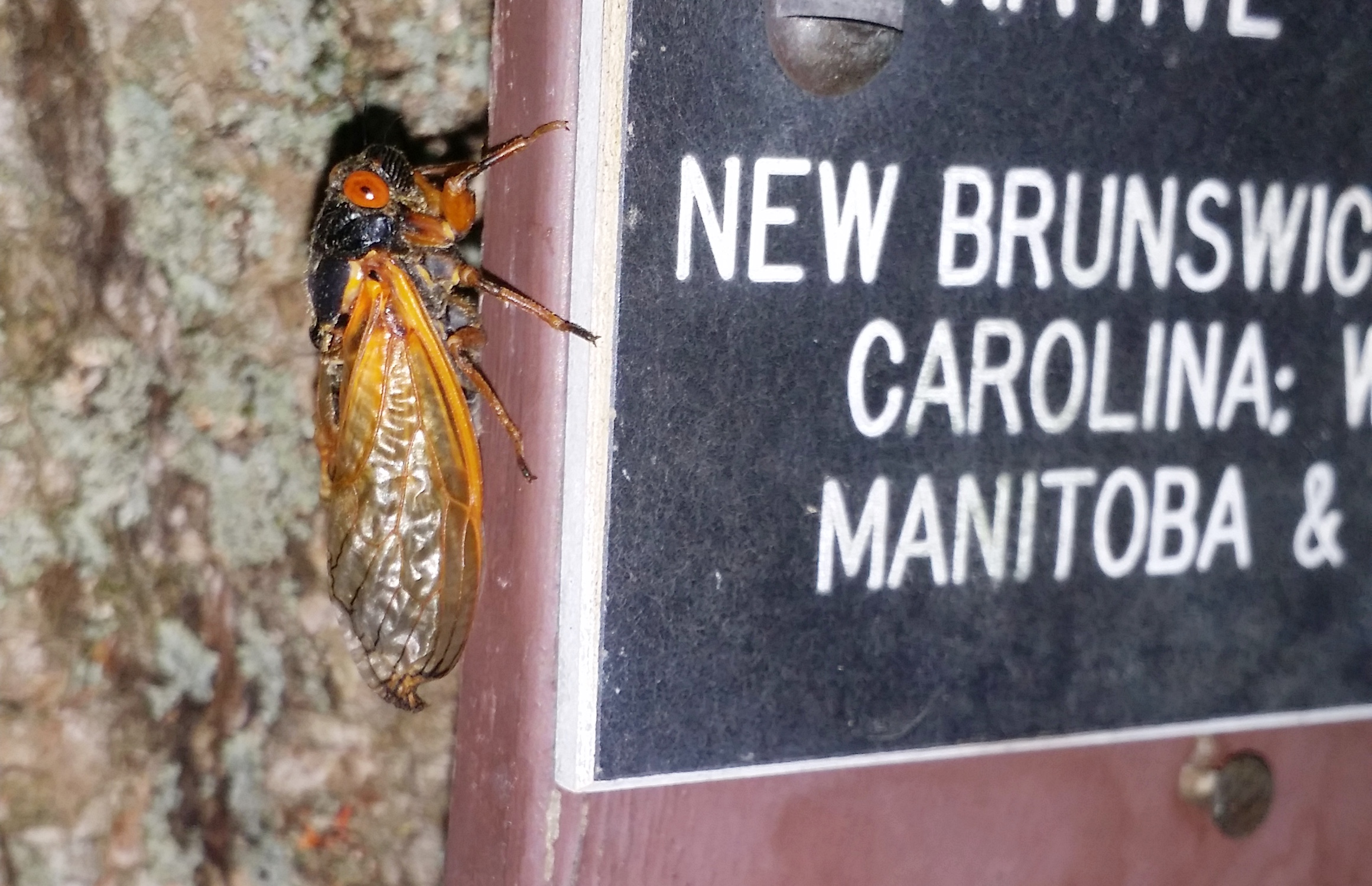
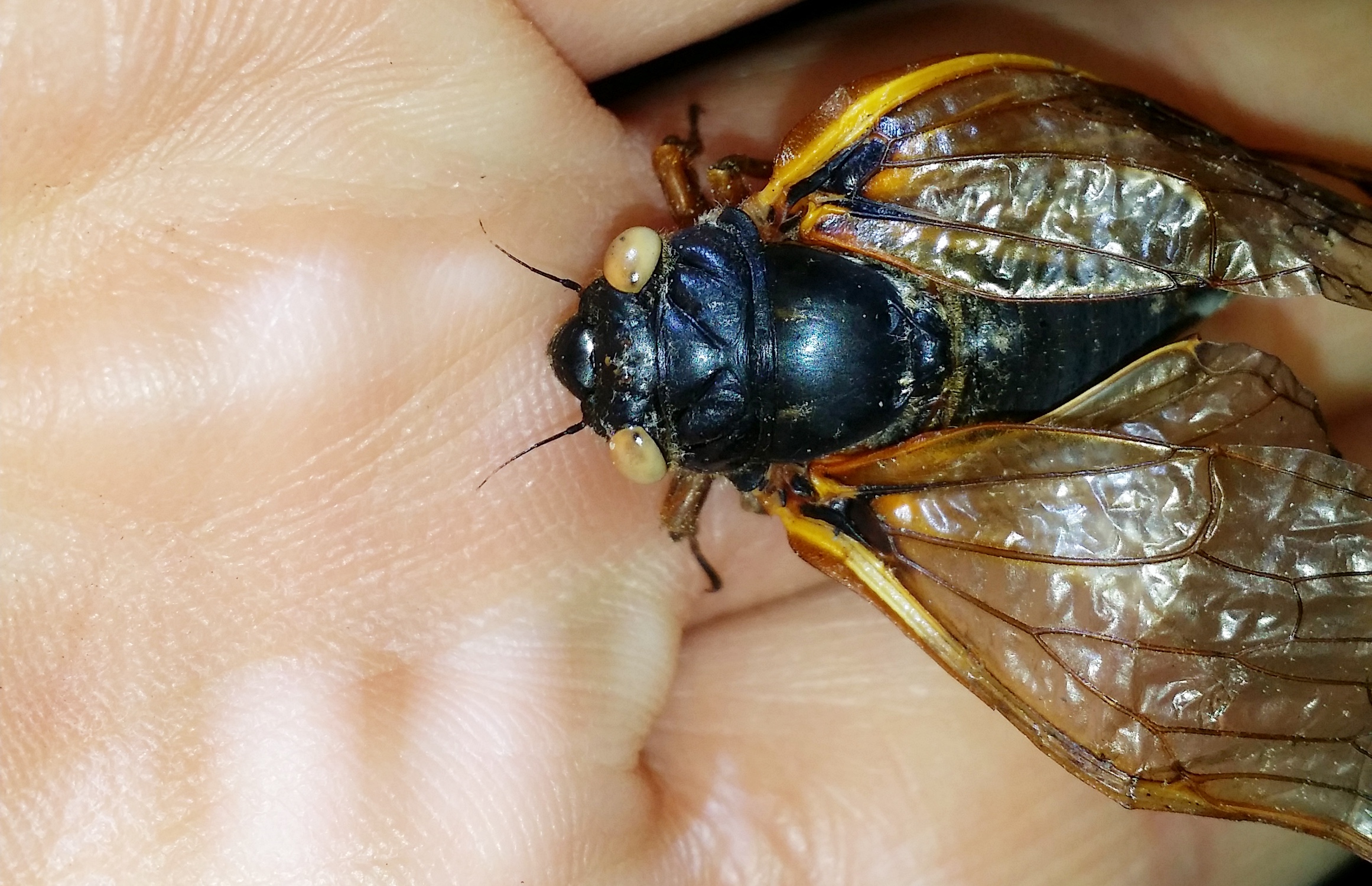
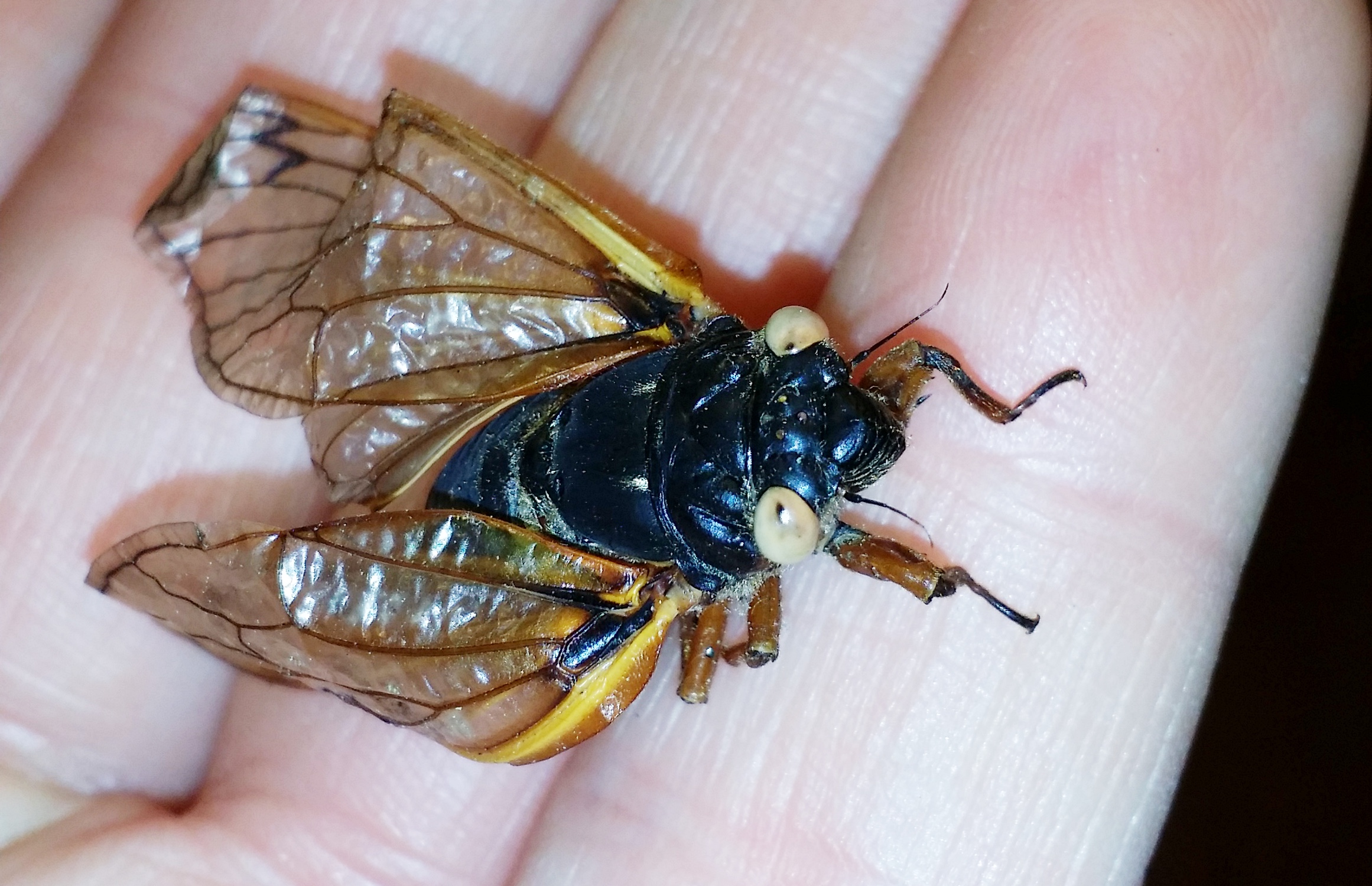
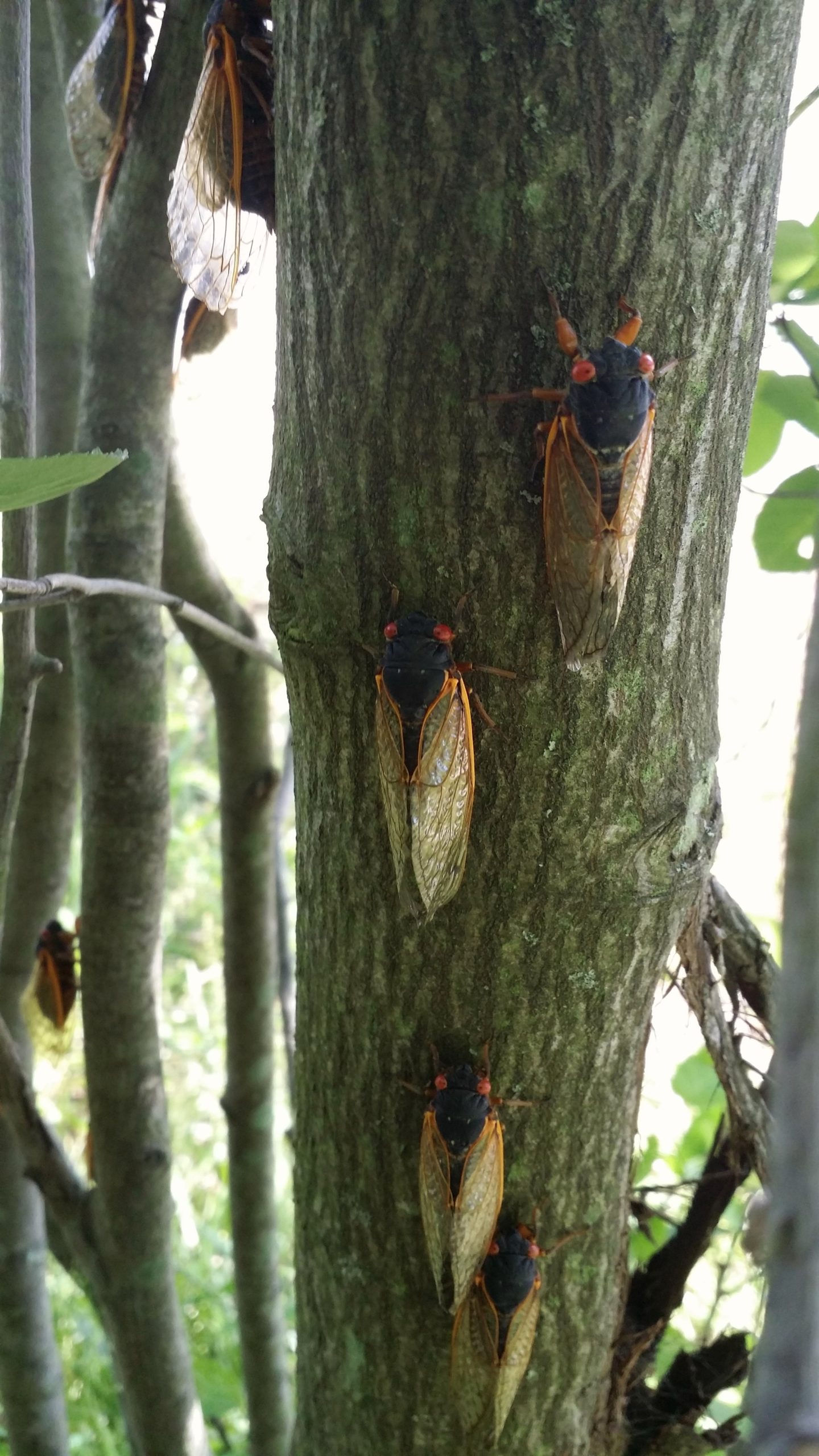
Most of the periodical cicadas you’ll see have red or reddish-orange eyes. A very small number, however, have white, blue, or yellow eyes. Some even have amazing multi-colored eyes. Have you seen any white eyed periodical cicadas yet? Be on the look out for them, and make sure you take a photo or video when you see one. Have a contest with your friends and family to see who can find the first white or blue eyed cicada. If you have a TV station, radio show or local website, you could have a contest for who can find the first white eyed cicada. I personally have only found one white eyed cicada (video below), so I have to guess that the odds are at least one in 10,000.

Here’s a photo of a white eyed Magicicada cicada Roy Troutman found back in 2007:

White Eyed Cicada

Roy took a photo of a blue eyed cicada, and I made a t-shirt from the image (I use the mug version for my morning coffee).

This is a video of white eyed cicada I recorded back in 2007:

All photos of periodical cicadas with different color eyes.

April 24, 2011

Watch a cicada transform

Filed under: Brood XIX,Magicicada — by @ 9:05 pm

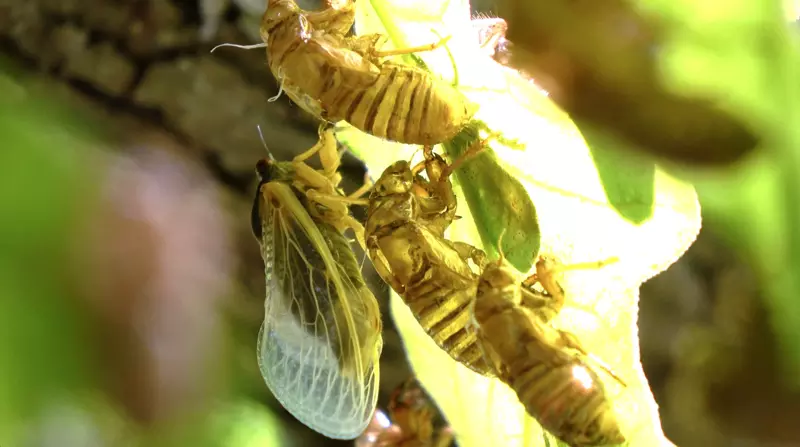
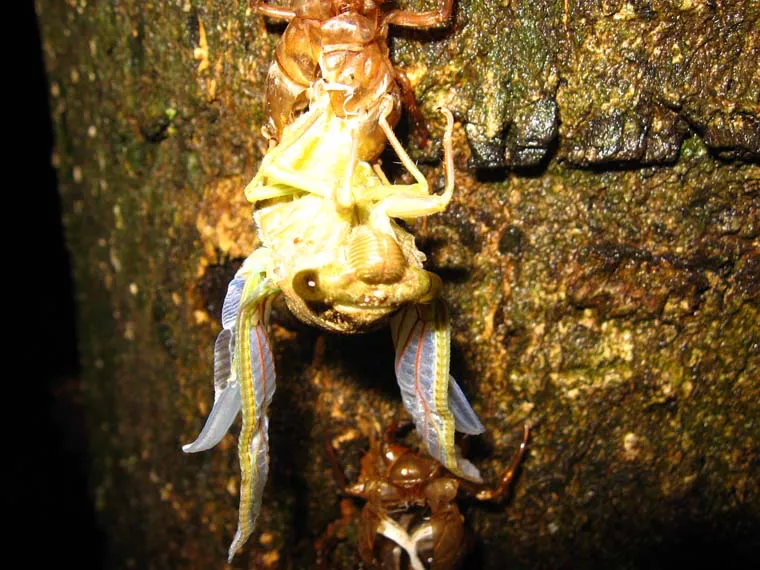
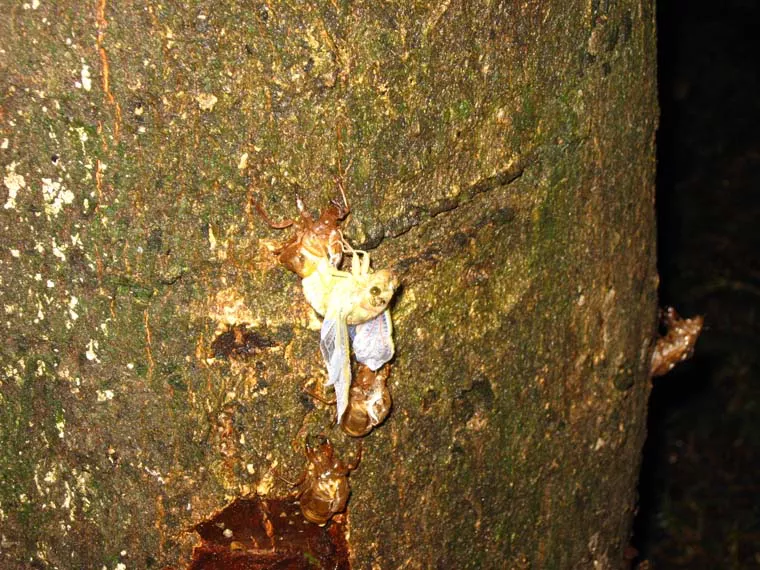
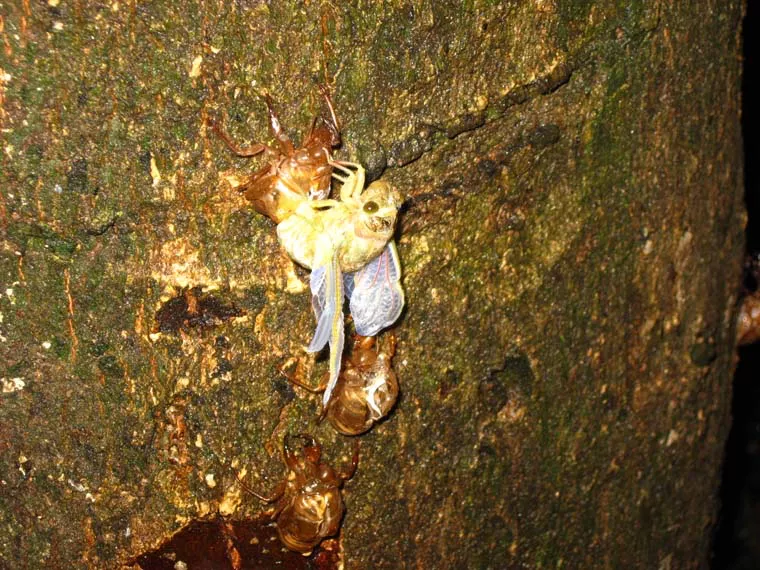
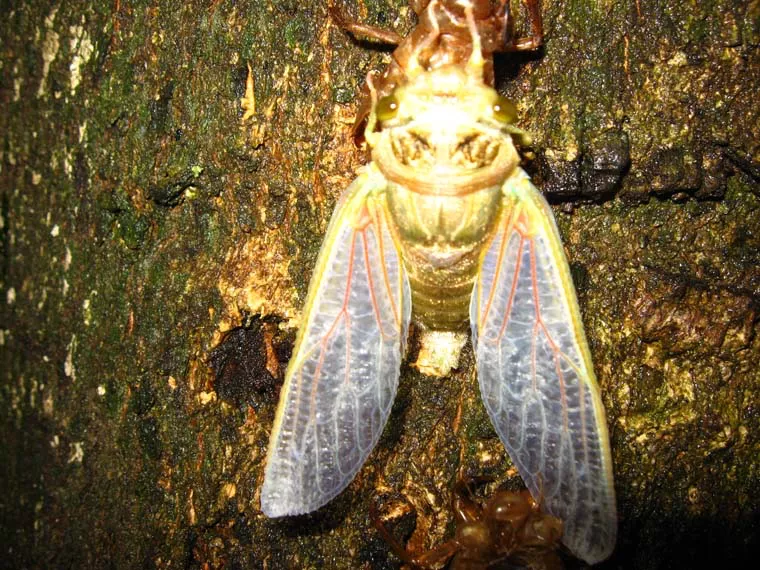
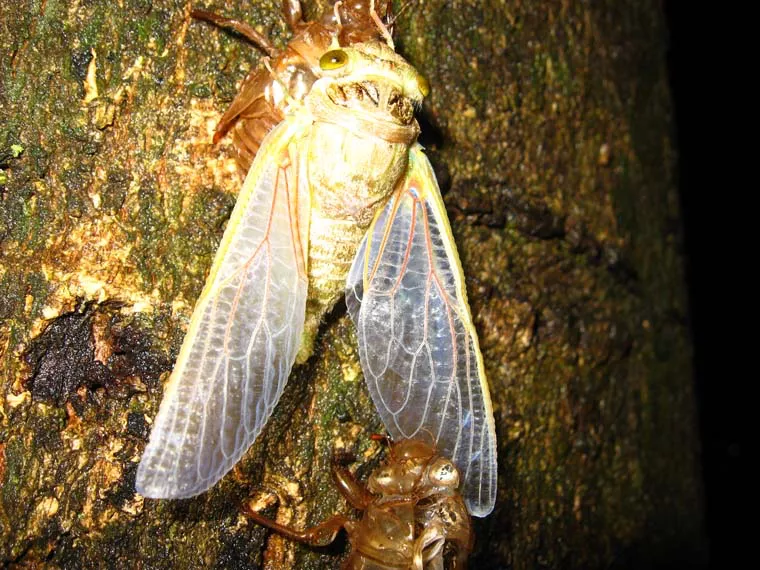
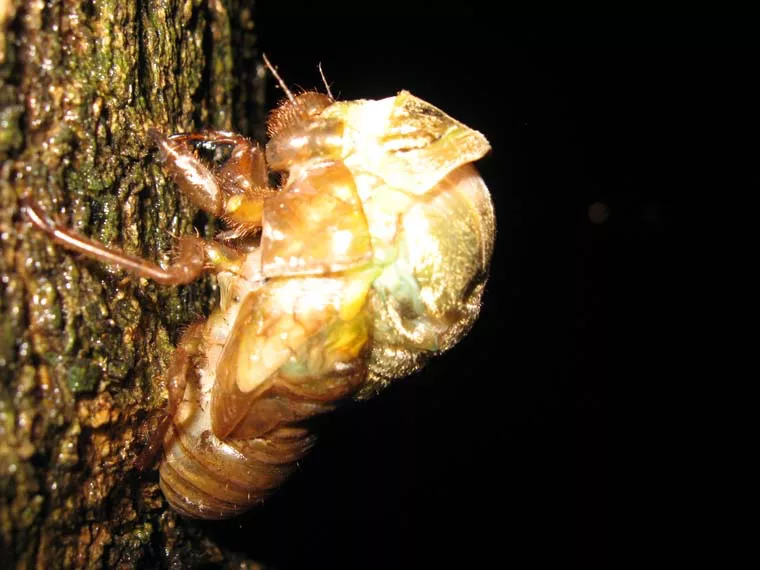
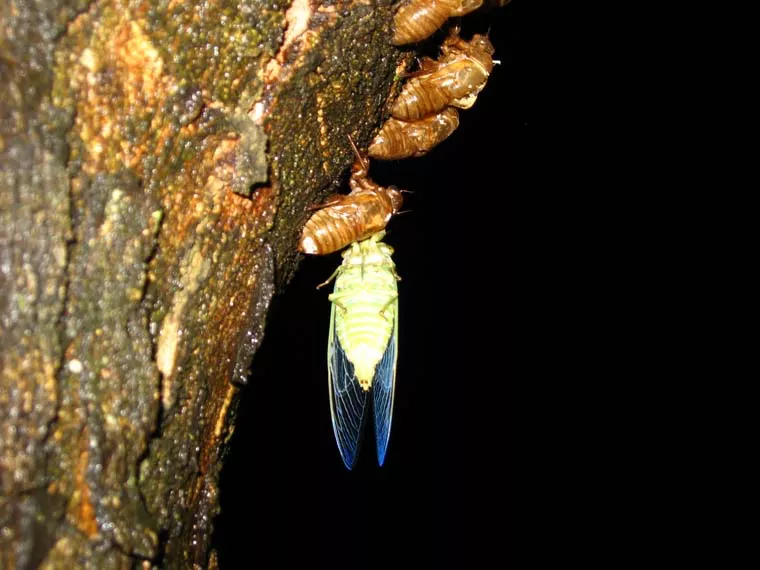
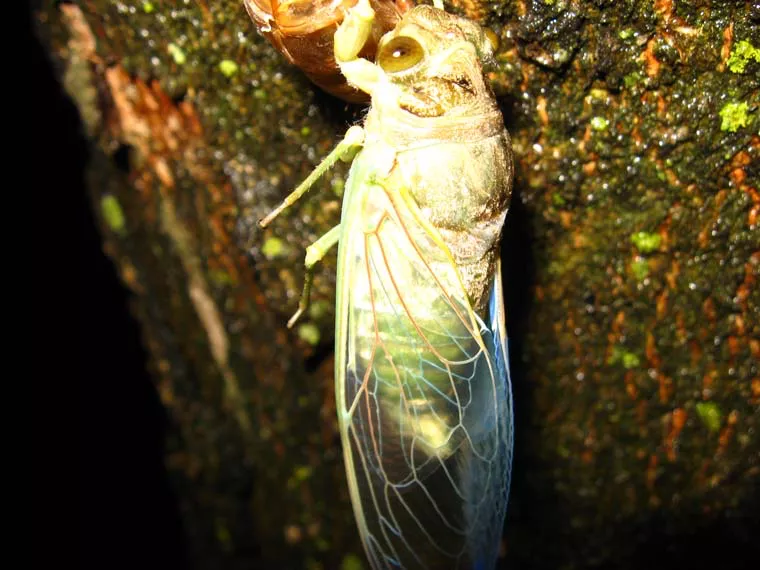
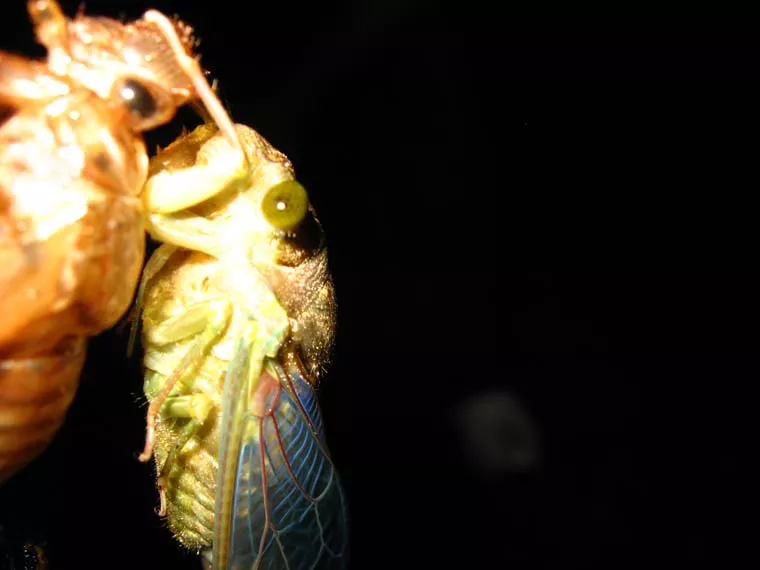
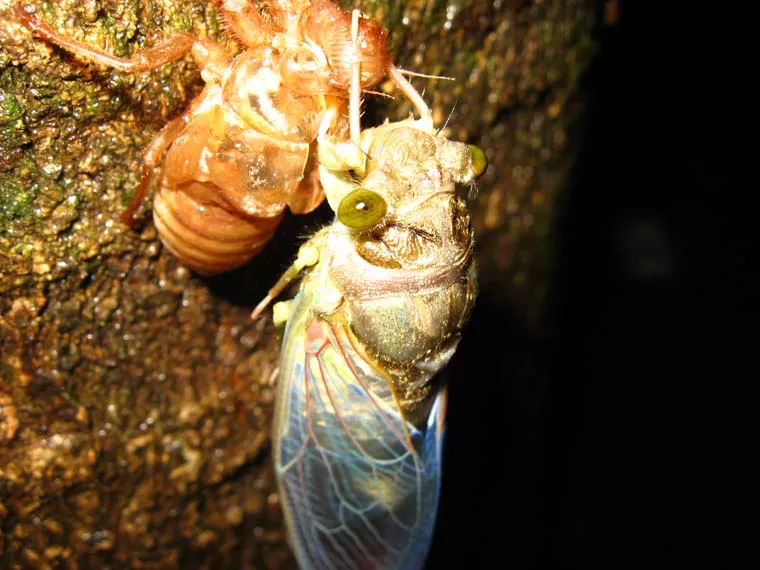
There are many interesting aspects of a periodical cicada emergence, including the length of time they spend underground, their massive numbers, their visual appearance, their amazing songs, and the variety of reactions people have to the cicadas. One of most amazing things you can witness during a cicada emergence is to watch cicadas emerge from the earth as nymphs, crawl up a tree, shed their skins, spread their wings and become adults.

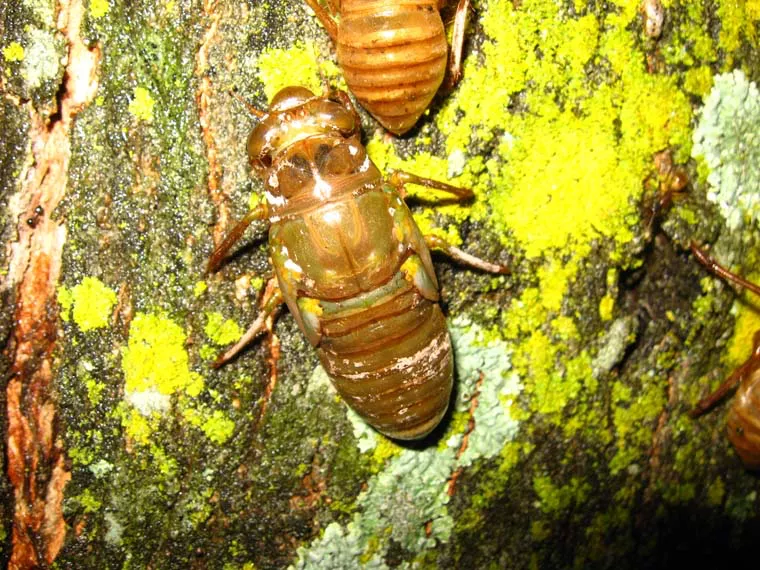
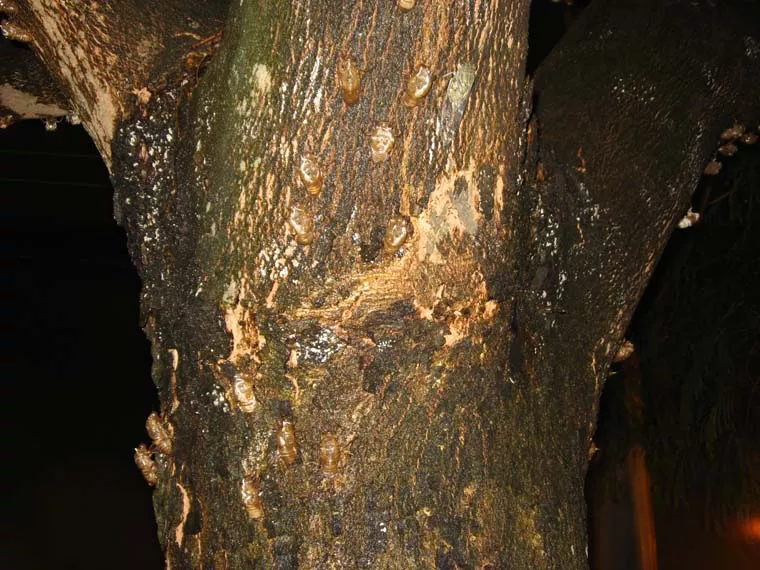
Periodical cicadas will typically emerge over a period of several days. If you discover that cicadas have emerged in your yard by finding their skins (exuvia) or adult cicadas, chances are good more cicadas will emerge later that night. Filming a night-time cicada emergence is an excellent opportunity to use your HD Camcorders, Macro camera settings, and other technology you normally don’t get to use.

Here’s a guide to finding cicadas at night and ideas for filming them:

  1. Be prepared: Get your flash lights ready. Read the manual for your camera to learn about its night time settings, HD settings, Macro settings, etc. Make sure your camera is charged.
  2. Once the sun sets, head outside with your flash light and camera. Carefully walk around beneath the branches of trees, shining your flashlight towards the ground. Cicada nymphs live along the entire root system of a tree, so they can emerge 15 or more feet away from the trunk. Watch this video of cicada nymphs to see what to look for. Listen: you can actually hear them walk through the grass and up the bark of a tree.
  3. Once you’ve spotted nymphs, you can start filming. I usually aim my flashlight at them, and then let the flash in my camera light them up for the photo.
  4. Once a nymph crawls up the tree, and finds a part of the tree that it likes, it will emerge from its skin and become an adult. The process of completely becoming an adult takes several hours, so this is a good opportunity to make a time-lapse movie.

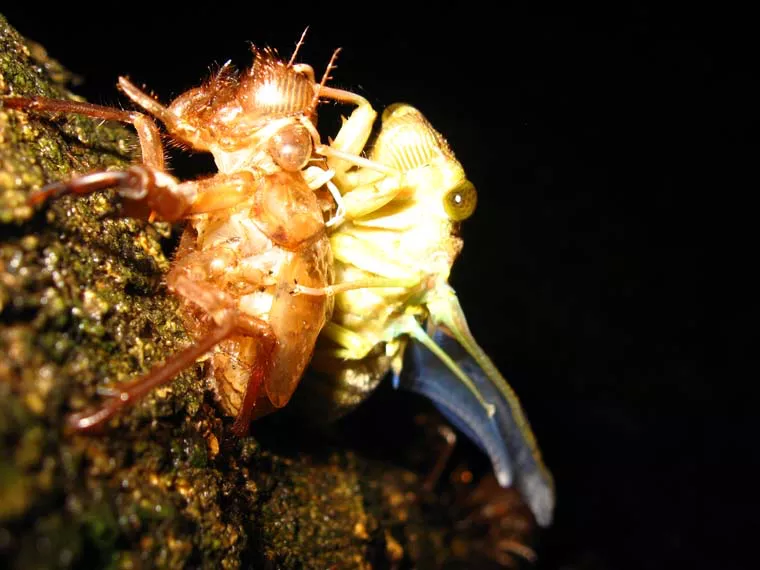
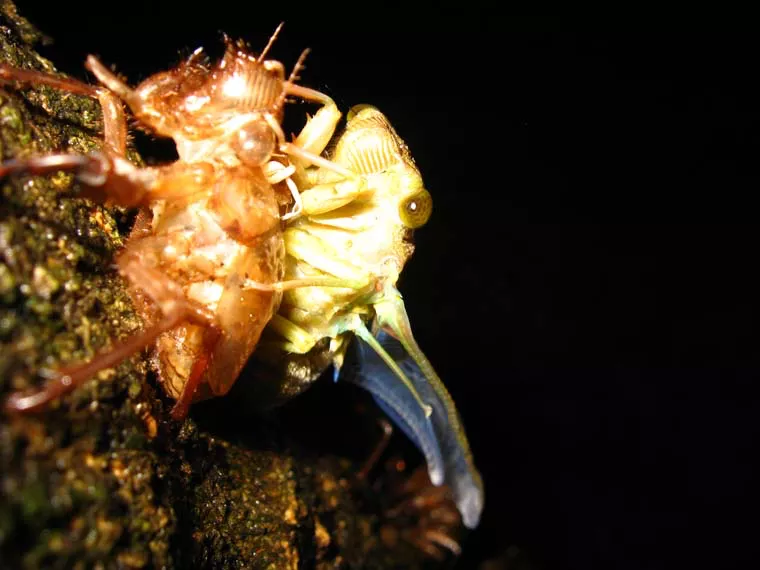
Here is a series of stills from a movie Roy Troutman made of an eclosing Magicicada:

Step 1: The nymph grabs hold of a leaf

Nymphs will crawl around until they find a place to grab hold of with their tiny tarsal claws. Usually they find part of a tree branch or leaf. Sometimes they find a car tire, a brick wall or a barbecue.

A nymph grabs hold of a leaf.

Step 2: The back of the cicada splits open, and the cicada pushes itself out.

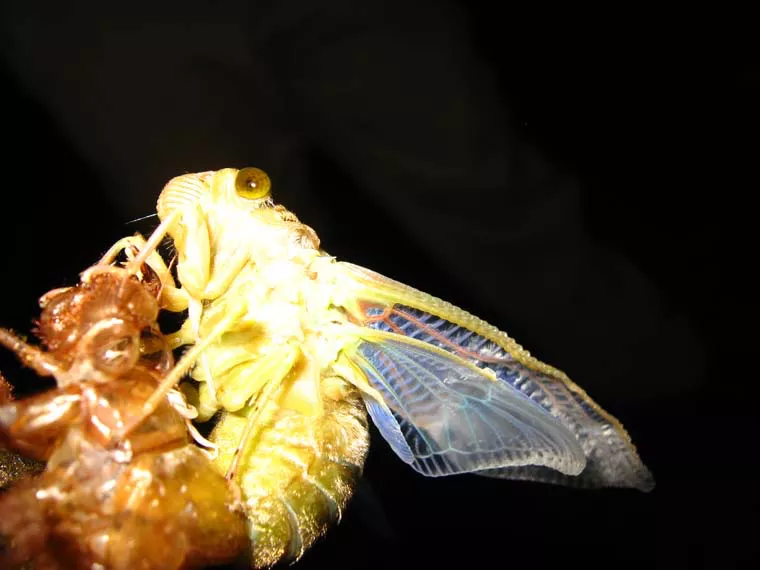
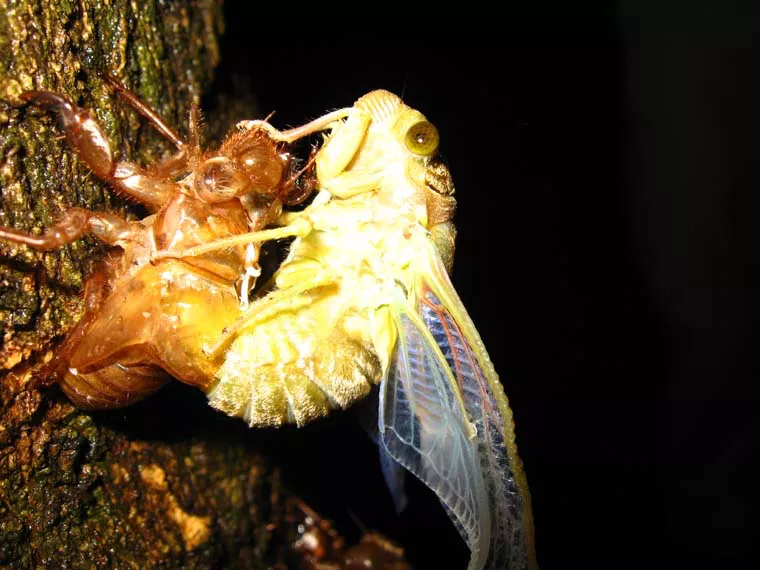
The skin of the nymph splits open along the middle of its back, all the way up to its head. The cicada then pushes itself out back-first. You’ll notice that the cicada is white in color with two black spots on its back. At this point the cicada’s body is very soft — until a cicada’s body has hardened, we call them teneral, which means soft or tender in Latin.

The cicada pushes out of the nymph skin.

Step 3: With its abdomen anchored in the nymph skin, the cicada curls back, freeing its legs and spiracles.

The spiracles are the holes through which the cicada breathes. You’ll notice fine white strands connected to the nymph skin — those were once connected to the spiracles.

The cicada curls back, freeing its legs and spiracles.

Step 4: The cicada curls forward, grabs hold of its former skin, and frees its abdomen

The cicada then curls forward, and grabs hold of its former skin

Step 5: The cicada crawls away from its old skin and prepares inflate its wings

The cicada crawls away from its old skin.

Step 6: The cicadas wings fill with fluid and expand

The cicada inflates its wings using haemolymph, a blood-like fluid also used to transport nutrients in a cicada’s body.

The cicadas wings fill with fluid and expand.

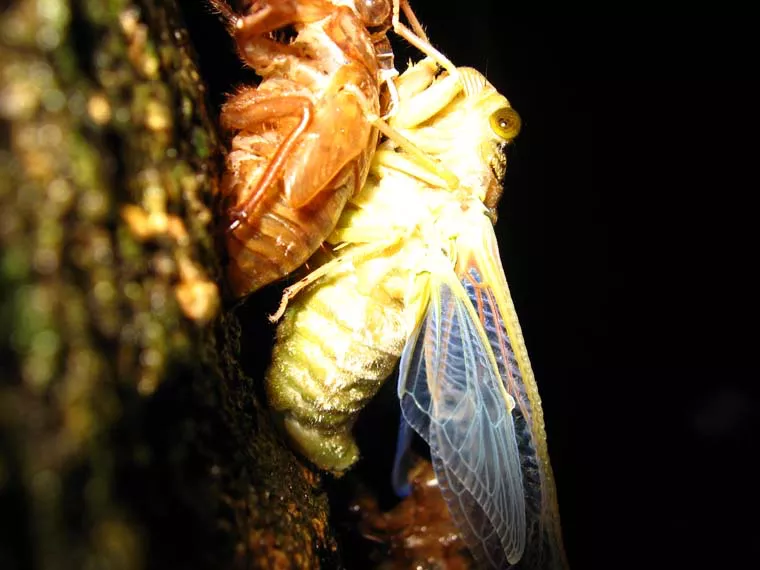
Wings expand to their final shape

Now, watch the entire video:

Step 7: The color of the cicada darkens and its body hardens

Once the cicada has expanded its wings, the cicadas will turn their final color and their bodies and wings will harden. Once the body and wings are sufficiently hardened, they are able to fly and sing.

The “finished product” looks like this:

I hope you have the opportunity to watch a night time cicada emergence! It can be a lot of fun.

April 16, 2011

The first photographed 2011 13-year cicada

Filed under: Brood XIX,Magicicada — by @ 7:11 am


13-year cicada – brood XIX, originally uploaded by myriorama.

The first photo I’ve seen of Brood XIX Magicicada so far in 2011. Appears to be a Magicicada tredecim.

Abbeville County, South Carolina

You can see this insect on Bug Guide as well.

Update (4/19): here’s the second photographed adult. This one is from Virgina I believe. Right now adults should be showing up here and there, but it won’t be for a few more weeks before things get crazy.

Update (4/26): there’s lots of Brood XIX photos showing up on Flickr now. I started a Brood XIX Gallery in an effort to keep track of them.

April 13, 2011

It’s on! The first Brood XIX Magicicada cicada sightings

Filed under: Brood XIX — by @ 5:13 am

Magicicada.org reported on Facebook that they’ve received their first two Brood XIX sightings. You can see where on their site (check their 2011 Brood XIX sightings map).

Have you seen a cicada, and not reported it yet?

Here’s what to look for to get ready:

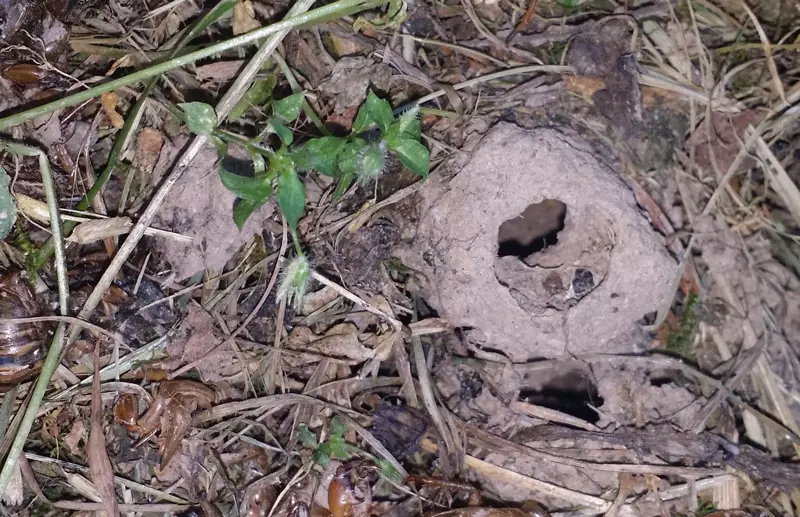
Look for holes in soil. Holes about the diameter of man’s finger. This is a sign that nymphs have dug their way to the surface in preparation to emerge:

Cicada holes

Cicada Holes

Also Look for cicada chimneys, aka turrets. These are similar to holes in that the nymphs are coming to the surface in preparation to emerge. The cicadas build these structures out of soil where their tunnels meet the surface.

Magicicada chimneys

Look for cicada nymphs. This is what Magicicada nymphs look like. They’re golden-brown, they have six prominent legs, and red eyes.

Magicicada nymphs

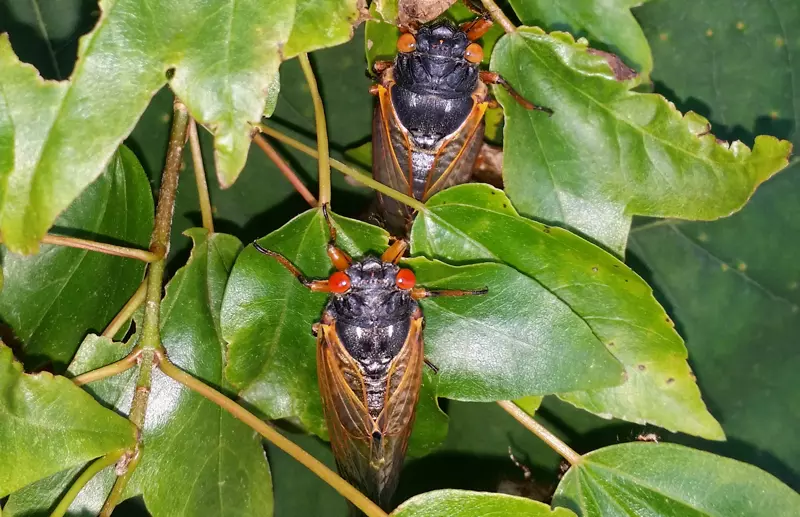
Look for adults. The guy at the top-right side of every Cicada Mania page is a Magicicada. You’ll also find dozens of Magicicada photos in our gallery, and dozens of Magicicada videos on this site.

April 7, 2011

Magicicada nymph 12 day transformation before final molt!

Filed under: Magicicada — by @ 7:16 pm

Roy Troutman provided this video featuring a Magicicada nymph 12 day transformation before final molt. It’s an excellent view of what nymphs look like right before they emerge from the ground and become adults.

Magicicada nymph 12 day transformation before final molt! from Roy Troutman on Vimeo.

April 5, 2011

The Cicadidae of Japan. Cicada book of the year?

Filed under: Japan — by @ 4:37 am

It’s too early to say, but The Cicadidae of Japan might end up being the cicada book of the year. The book was authored by Dr. M. Haysashi and Dr. Yasumasa Saisho (of the incredible Cicadidae of Japan website), and it includes photos and a CD of cicada song.

The book is currently available from Amazon.co.jp.

Information from Dr. Yasumasa Saisho:

Hello. I inform you that “The Cicadidae of Japan” by Dr. M.Hayashi and
myself is published. This book consists of taxonomic exposition, ecological
information, distribution, acoustic attribute of calling songs,
morphological features of Japanese cicadidae with many photos and CD
(including all songs of Japanese species, about 70min).

———-
M. Hayashi and Y. Saisho (2011). The Cicadidae of Japan,
224 pp., Seibundo-shinkosha, Tokyo.
ISBN978-4-416-81114-6
4,600yen

M. Hayashi and Y. Saisho (2011). The Cicadidae of Japan

March 22, 2011

Cicada Mania Twitter

Filed under: CicadaMania.com — by @ 3:22 pm

I’ve been “tweeting” the latest cicada news on Twitter. Follow Cicada Mania on Twitter

March 21, 2011

Lots of cicada videos

Filed under: Video — by @ 8:15 pm

Spent some time tonight dividing up the cicada video page onto 7 easy to view pages:

Magicicada videos

More Magicicada videos

Even More Magicicada videos

Tibicen videos

Neocicada videos

Diceroprocta videos

Miscellaneous cicada related videos

… before this change I had 40 videos on one page which is insane.

March 19, 2011

Wanted: Brood XIX Cicadas

Filed under: Brood XIX — by @ 11:00 am

The temperature got into the 80s for a few days in a row in Georgia. I’m wondering if a few Magicicadas made an appearance.

Cicadas Wanted!

« Newer PostsOlder Posts »

All content on CicadaMania.com is owned and Copyrighted by the content's creator. Terms & Conditions, Privacy Policy, and Help