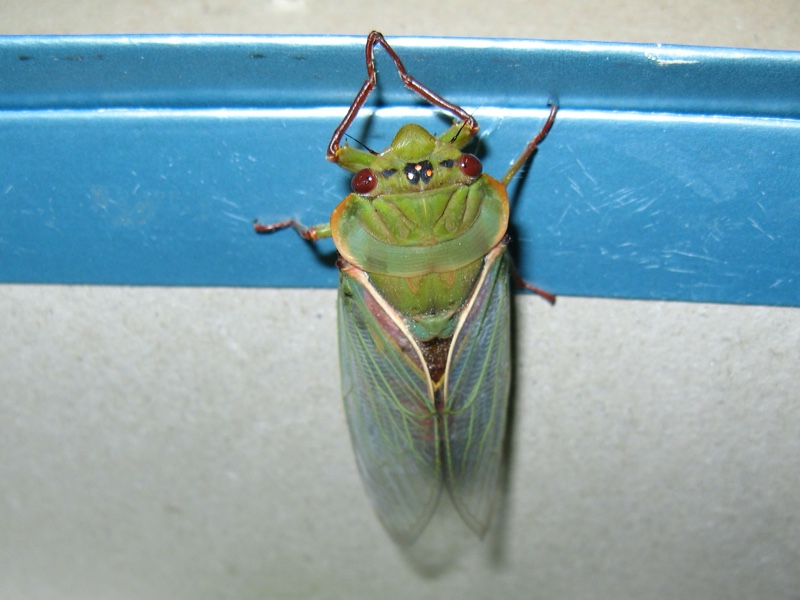
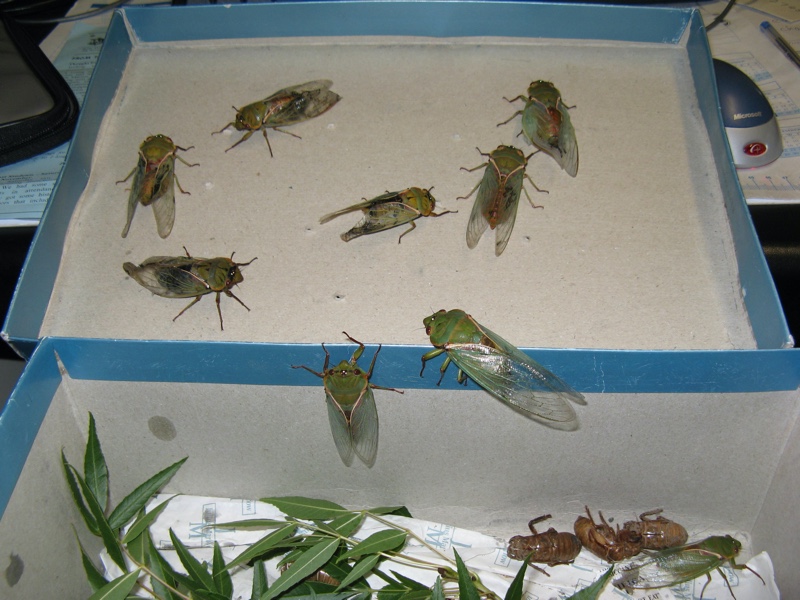
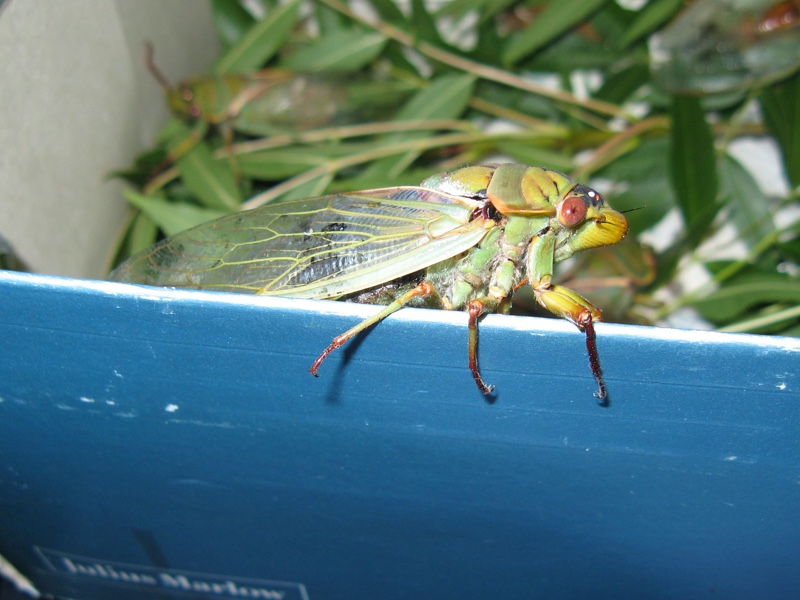
Kevin Lee’s Green Grocer (Cyclochila australasiae) photos:
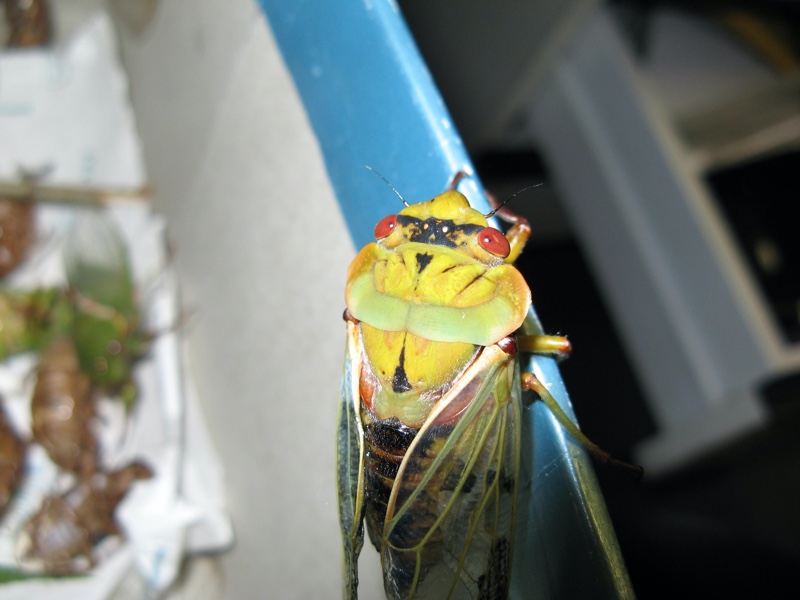
This one is somewhere between a Green Grocer and a Yellow Monday, I think. Check out the “mask” between the eyes:
Dedicated to cicadas, the most amazing insects in the world.
Kevin Lee’s Green Grocer (Cyclochila australasiae) photos:
This one is somewhere between a Green Grocer and a Yellow Monday, I think. Check out the “mask” between the eyes:
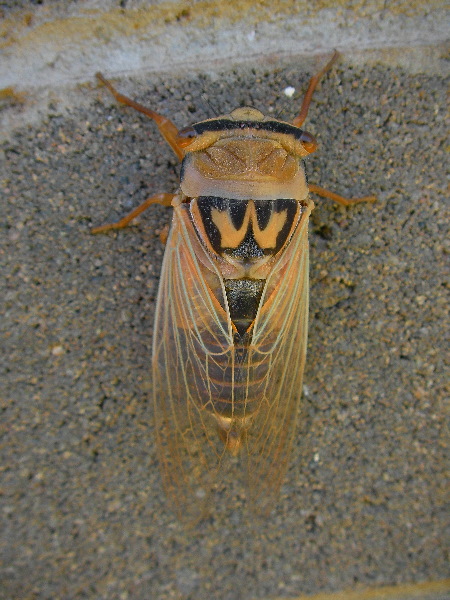
Orange Drummer (Thopha colorata) photos by Jodi from 2007. Australia.
Text for the photos from back in 2007: “Thanks to Jodi for allowing us to post some of her Orange Drummer (Thopha colorata) photos. Two today, two tomorrow! Apparently they’re hatching in droves in Central Australia.”
A molting Orange Drummer (Thopha colorata):
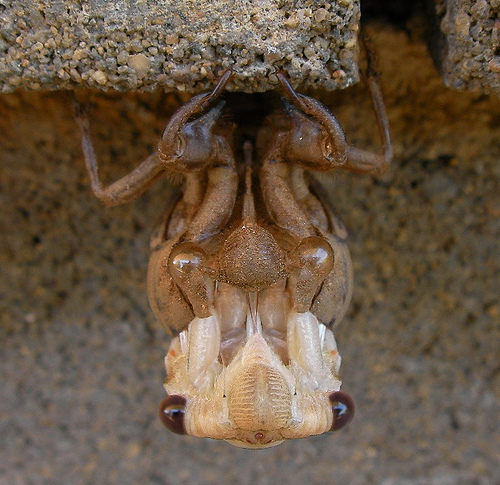
Orange Drummer (Thopha colorata):
Teneral, recently molted Orange Drummer (Thopha colorata):
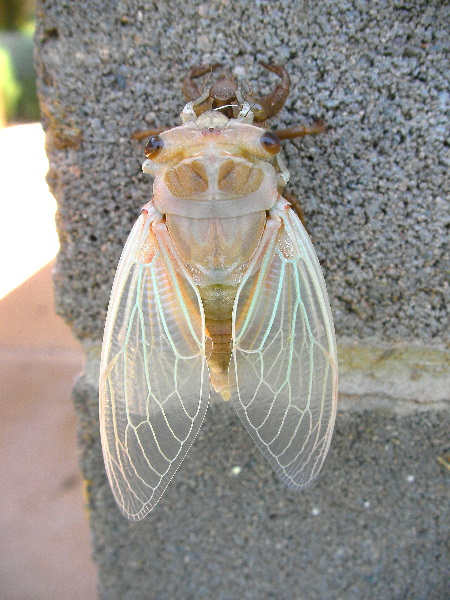
Teneral, recently molted Orange Drummer (Thopha colorata):
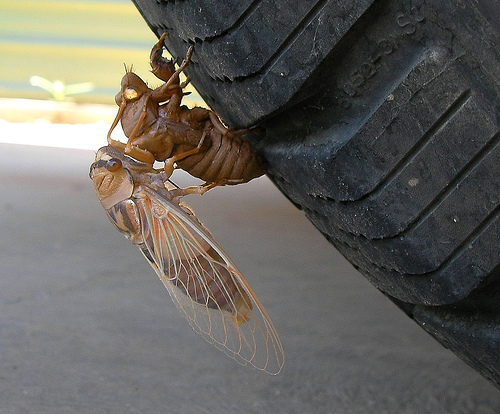
Yellow Monday (Cyclochila australasiae) photos by Tom Katzoulopolopoulous.
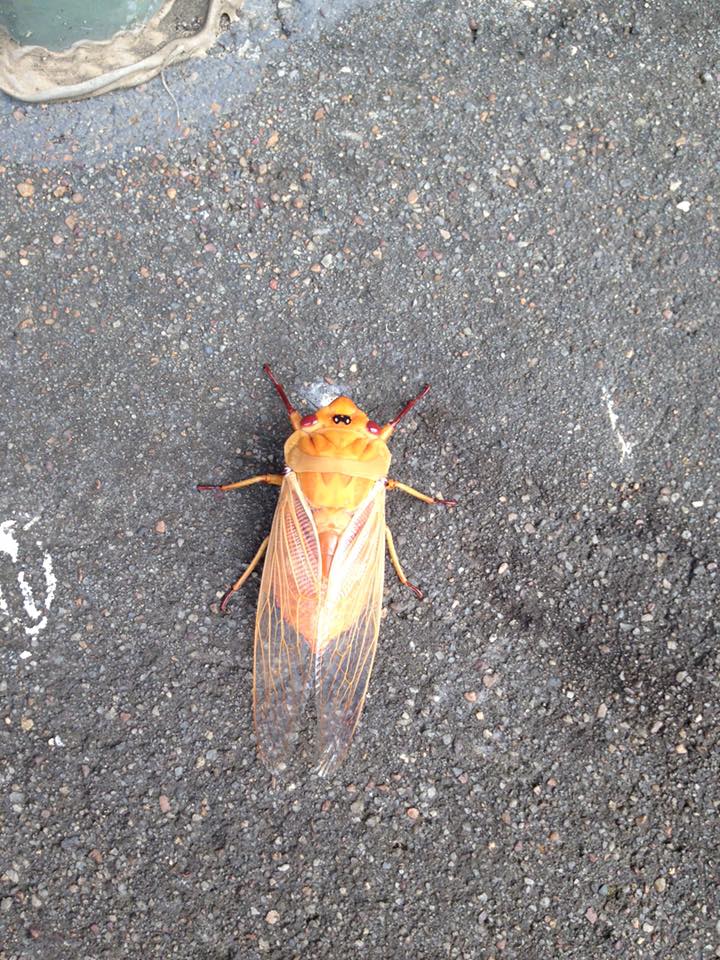
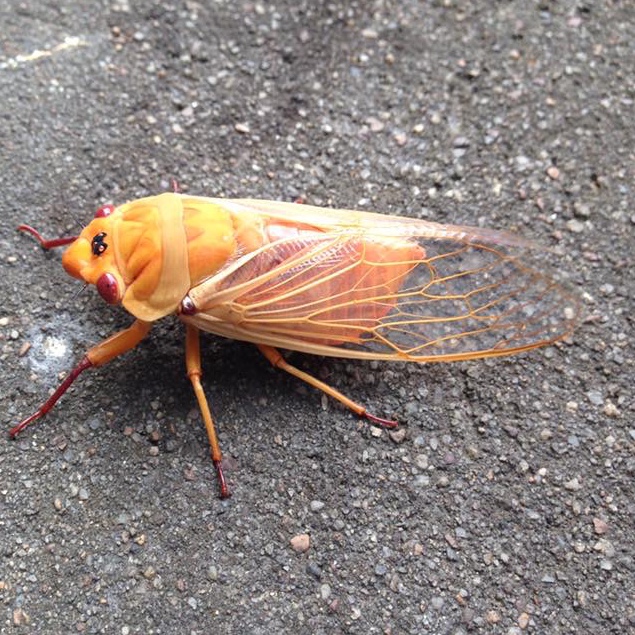
Photos of cicadas from Queensland, Australia by Lisa Morgan.
Australian cicadas found by Lisa Morgan’s kids in the Wet Tropics rainforest located in Far North Queensland, Australia, in the first week of January 2010.
Brown Bunyip?
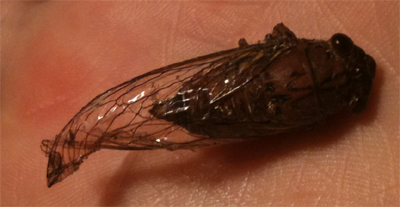
Psaltoda?

Green Grocer (Cyclochila australasiae) photo by Bron. Taken in Australia in 2007.
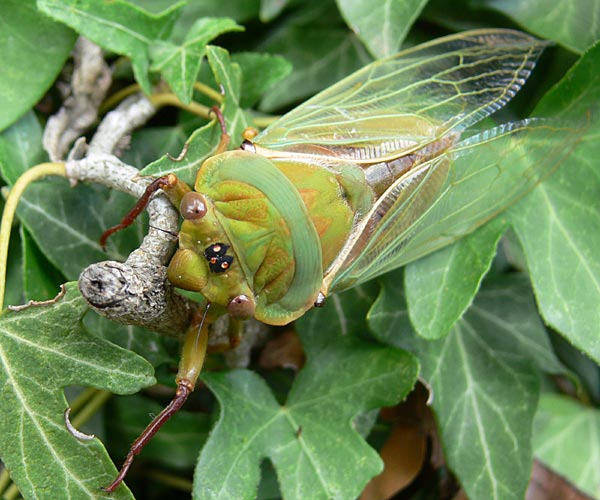
Macrotristria angularis is a cicada found in Australia. It is also known as the Cherry Nose Cicada.
Photo by David Emery:
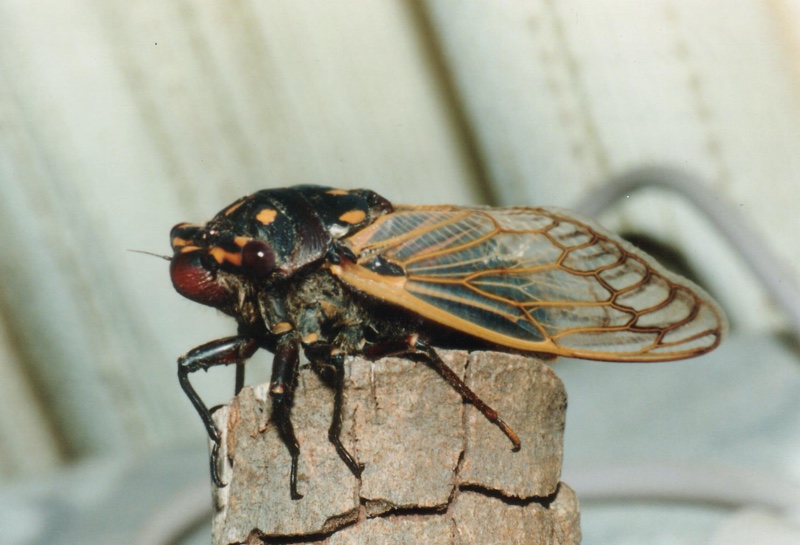
Scientific classification:
Family: Cicadidae
Subfamily: Cicadinae
Tribe: Macrotristriini
SubTribe: ?
Genus: Macrotristria
Species: Macrotristria angularis (Germar, 1834)
For more information about this cicada, visit A web guide to the cicadas of Australia by L. W. Popple.
Tribe information comes from: MARSHALL, DAVID C. et al.A molecular phylogeny of the cicadas (Hemiptera: Cicadidae) with a review of tribe and subfamily classification.Zootaxa, [S.l.], v. 4424, n. 1, p. 1—64, may 2018. ISSN 1175-5334. Available at: https://www.biotaxa.org/Zootaxa/article/view/zootaxa.4424.1.1
Lembeja paradoxa is a cicada found in Australia. It is also known as the Bagpipe Cicada, because it looks like the musical instrument called bagpipes.
Photo by Timothy Emery from Thursday Island, Torres Strait off Cape York, Queensland:
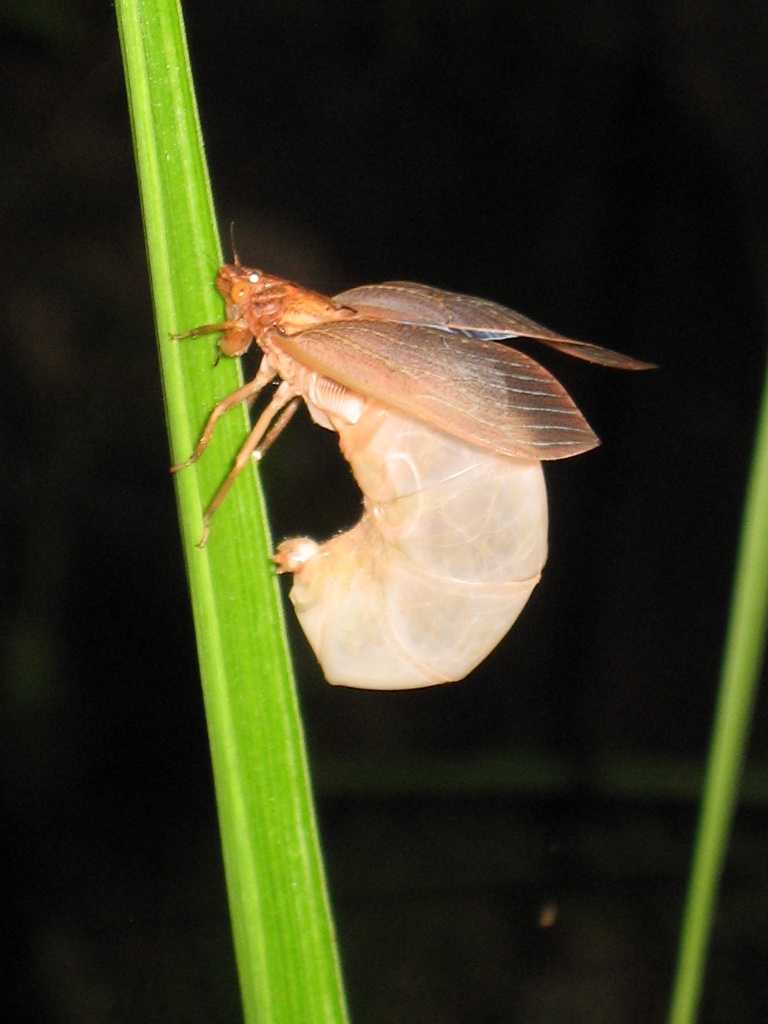
Scientific classification:
Family: Cicadidae
Subfamily: Cicadettinae
Tribe: Prasiini
SubTribe: Prasiina
Genus: Lembeja
Species: Lembeja paradoxa (Karsch, 1890)
For more information about this cicada, visit A web guide to the cicadas of Australia by L. W. Popple.
Psaltoda moerens is a cicada found in Australia. It is also known as the Redeye Cicada or Cherryeye Cicada.
Photo by David Emery:
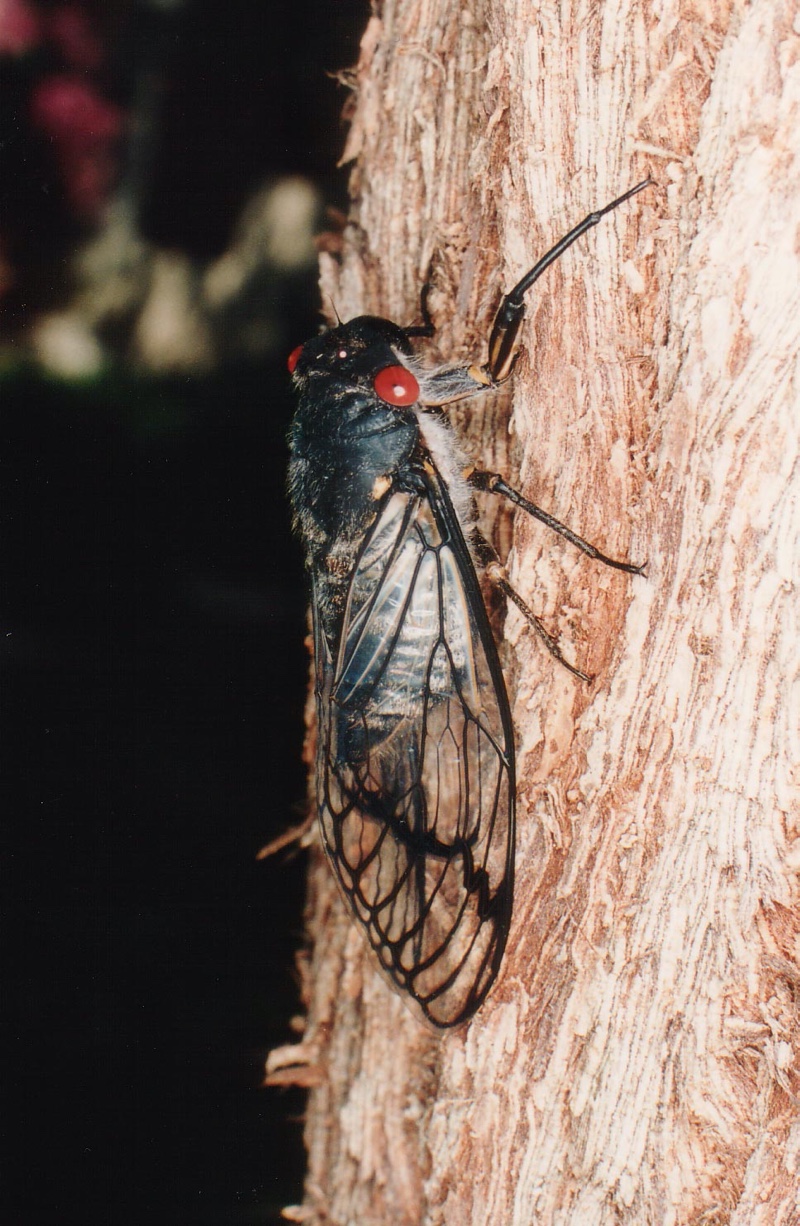
Scientific classification:
Family: Cicadidae
Subfamily: Cicadinae
Tribe: Psaltodini
SubTribe: ?
Genus: Psaltoda
Species: Psaltoda moerens (Germar, 1834)
For more information about this cicada, visit A web guide to the cicadas of Australia by L. W. Popple.
Tribe information comes from: MARSHALL, DAVID C. et al.A molecular phylogeny of the cicadas (Hemiptera: Cicadidae) with a review of tribe and subfamily classification.Zootaxa, [S.l.], v. 4424, n. 1, p. 1—64, may 2018. ISSN 1175-5334. Available at: https://www.biotaxa.org/Zootaxa/article/view/zootaxa.4424.1.1
Thopha saccata is a cicada found in Australia. It is also known as the Eastern Double Drummer.
Photo by Dan Mozgai:
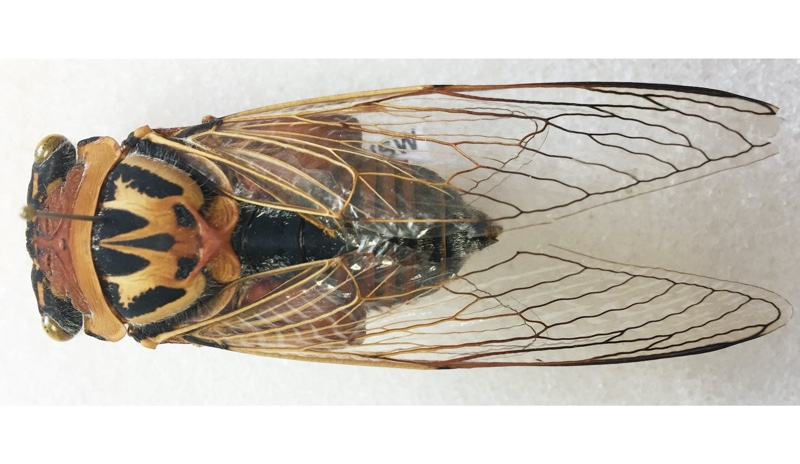
Photo by Kevin Lee:
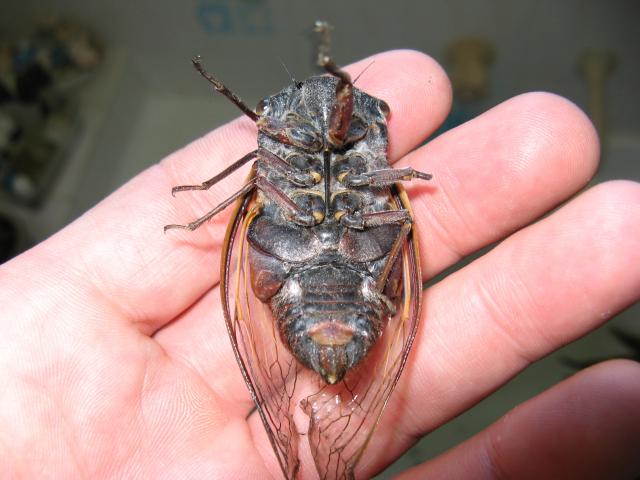
Scientific classification:
Family: Cicadidae
Subfamily: Cicadinae
Tribe: Thophini
Genus: Thopha
Species: Thopha saccata (Fabricius, 1803)
For more information about this cicada, visit A web guide to the cicadas of Australia by L. W. Popple.
Thopha colorata is a cicada found in Australia. It is also known as the Orange Drummer and W Bug because of the W on its back (mesonotum) (thanks David Emery).
Photo by Jodi:
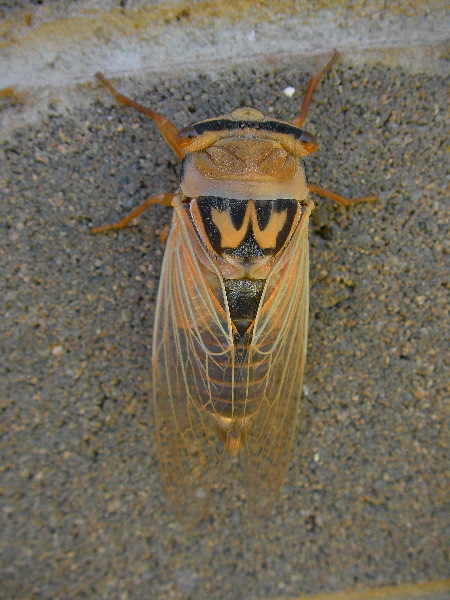
A gallery of more of Jodi’s photos.
Scientific classification:
Family: Cicadidae
Subfamily: Cicadinae
Tribe: Thophini
Genus: Thopha
Species: Thopha colorata Distant, 1907
For more information about this cicada, visit A web guide toThe cicadas of Australia by L. W. Popple.